




- Processed Food
- Organic Gummy Worms Market
Organic Gummy Worms Market Size, Share, Growth, and Regional Forecast, 2026 to 2033
The Organic Gummy Worms Market by Flavor (Cherry, Grapefruit, Watermelon, Strawberry, Orange, Raspberry, Mango, Others), by Sales Channel (Supermarkets/Hypermarkets, Specialty Stores, Convenience Stores, Online Retail, Others), by Regional Analysis, 2026-2033

Organic Gummy Worms Market Size and Trends Analysis
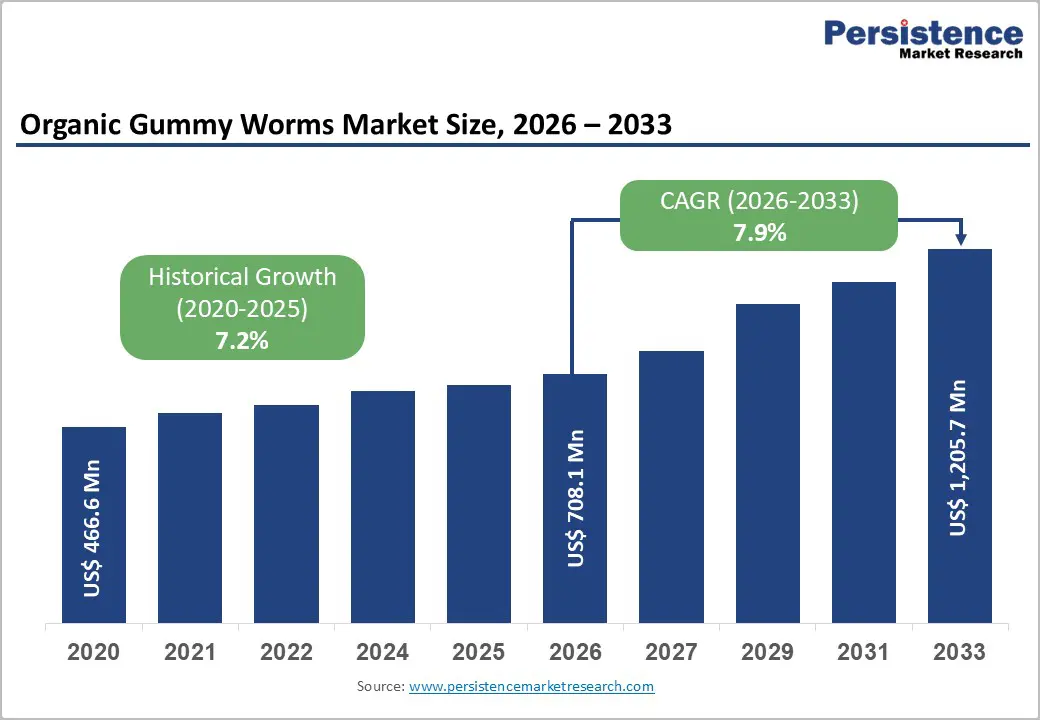
The global Organic Gummy Worms market size is expected to be valued at US$ 708.1 million in 2026 and projected to reach US$ 1,205.7 million by 2033, growing at a CAGR of 7.9% between 2026 and 2033
The market's robust expansion is primarily driven by the escalating consumer demand for clean-label confectionery and the widespread rejection of synthetic additives in children’s treats. Modern consumers are increasingly prioritizing wellness, leading to a significant migration from traditional gelatin-based candies to organic, plant-based alternatives that utilize natural pectin and organic fruit juice concentrates. This trend is bolstered by the aggressive expansion of the Organic Food Market, where the visibility of better-for-you snacks in mainstream retail has reached an all-time high. Furthermore, the rise of permissible indulgence encourages adults to choose organic gummies that align with their dietary goals without sacrificing the nostalgic sensory experience of gummy candies.
Key Industry Highlights
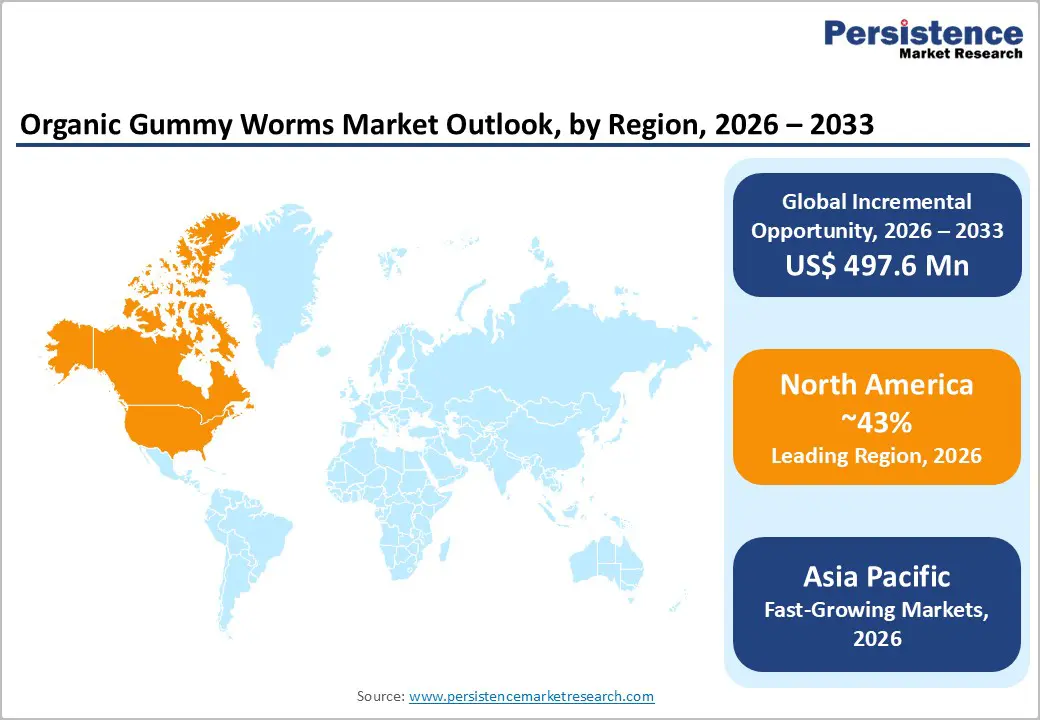
- North America remains the dominant region due to high health awareness and the presence of industry leaders like Black Forest Organic and Surf Sweets, holding a 43% market share.
- Asia Pacific is the fastest-growing region, fueled by rising disposable incomes in China and India, alongside an increasing preference for organic-certified western confectionery products among urban youth.
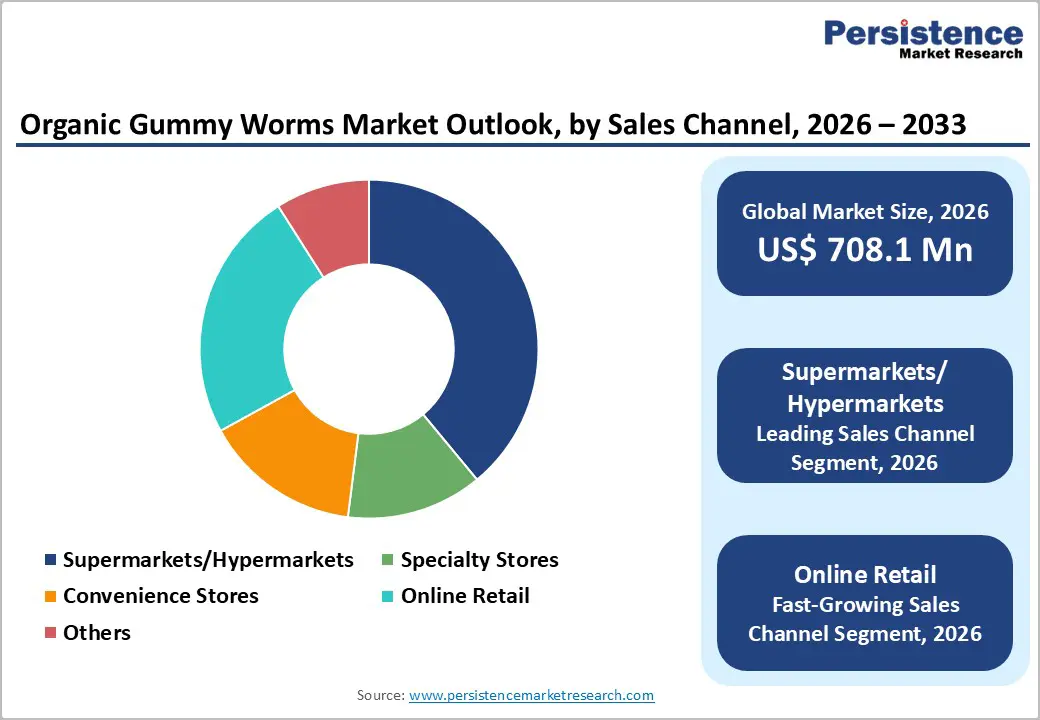
- Supermarkets/Hypermarkets represent the dominant sales channel, providing consumers with the convenience of one-stop shopping and a wide variety of Better-for-You organic gummy options in dedicated health aisles.
- Online Retail is the fastest-growing segment, as e-commerce platforms allow niche organic brands to reach global consumers directly, supported by the rise of subscription-based healthy snack services.
- Functional Fortification is the key market opportunity, with brands increasingly infusing organic gummy worms with vitamins and probiotics to capitalize on the growing demand for Permissible and Health-Enhancing Indulgence.
| Global Market Attributes | Key Insights |
|---|---|
| Global Organic Gummy Worms Market Size (2026E) | US$ 708.1 Mn |
| Market Value Forecast (2033F) | US$ 1,205.7 Mn |
| Projected Growth (CAGR 2026 to 2033) | 7.9% |
| Historical Market Growth (CAGR 2020 to 2025) | 7.2% |
Market Dynamics
Driver – Growing Awareness Regarding Clean-Label and Synthetic-Free Confectionery
The fundamental driver for the Organic Gummy Worms market is the global shift toward Clean-Label transparency, as consumers actively scrutinize ingredient lists for artificial dyes like Red 40 or Yellow 5. According to the National Confectioners Association (NCA), modern shoppers are more likely to purchase candies that clearly state No Artificial Colors or Flavors. Organic gummy worms utilize botanical extracts such as Turmeric, Black Carrot Juice, and Spirulina to achieve vibrant hues, which resonates with parents concerned about the behavioral and health impacts of synthetic food dyes. This transition is not merely a niche preference but a mainstream movement within the broader Natural Sweeteners Market, where organic cane sugar and agave syrup are replacing high-fructose corn syrup, thus driving volume sales across premium grocery chains.
Restraints – Higher Production Costs and Pricing Pressures
A primary barrier to the accelerated growth of the Organic Gummy Worms market is the substantial cost differential between organic and conventional raw materials. According to data from the USDA (United States Department of Agriculture), organic-certified ingredients such as organic sugar, organic fruit juice concentrates, and natural gelling agents can cost anywhere from 20% to 50% more than their synthetic counterparts. These elevated input costs must either be absorbed by the manufacturer squeezing profit margins or passed on to the consumer, resulting in a premium retail price. In price-sensitive markets or during periods of economic volatility, this organic premium can deter middle-income households, potentially limiting the market’s reach to affluent urban demographics and specialized health-conscious consumers.
Opportunity – Expansion of Functional Gummy Worms into the Wellness Sector
There is a profound opportunity for market participants to bridge the gap between confectionery and nutraceuticals by introducing functional organic gummy worms. As the Health and Wellness Market continues to boom, consumers are looking for functional snacks that offer more than just flavor. Infusing organic gummy worms with Vitamin C, Elderberry, Probiotics, or Omega-3s allows brands to position their products as both a treat and a health supplement. Data suggests that the functional gummy segment is growing faster than standard candy, as adults find the gummy format more palatable than pills. By securing certifications such as Non-GMO Project Verified and adding functional claims, manufacturers can command a higher price point and secure shelf space in the pharmacy and supplement aisles of major retailers like CVS or Walgreens.
Category-wise Analysis
Flavor Analysis
The Strawberry and Cherry segments currently dominate the flavor landscape, with Strawberry holding a significant market share of approximately 22% in 2025. These classic red flavors are perennial favorites because they are easily replicated using organic beet juice and black carrot extracts, maintaining a vibrant appearance that appeals to children. The shift toward tangy, multi-flavored organic gummy worms often combining two flavors in a single worm is driving consumer engagement. Manufacturers are increasingly utilizing organic citric acid and malic acid derived from natural citrus fruits to provide the sour punch that is currently trending in the Confectionery Market, especially among younger demographics seeking intense sensory experiences.
Sales Channel Analysis
Supermarkets/Hypermarkets remain the leading sales channel, commanding a dominant 39% market share as of 2025. This leadership is attributed to the extensive reach of global giants like Walmart, Tesco, and Carrefour, which have significantly expanded their Organic and Natural Foods aisles. The ability for consumers to physically inspect product labels and the convenience of one-stop shopping make these brick-and-mortar outlets the primary point of purchase. Conversely, Online Retail is recognized as the fastest-growing segment, fueled by the convenience of bulk purchases and the rise of specialty health-focused e-grocers. As digital payment infrastructure improves and delivery times shorten, the online segment is expected to capture a larger portion of the market, particularly through subscription services where health-conscious families receive monthly deliveries of their favorite organic snacks.
Region-wise Insights
North America Organic Gummy Worms Market Trends and Insights
North America is the powerhouse of the global organic gummy worms industry, holding a staggering 43% market share in 2025. The region’s dominance is anchored by the United States, which possesses a highly mature innovation ecosystem and a consumer base that is exceptionally receptive to health-oriented branding. The U.S. Food and Drug Administration (FDA) and the USDA National Organic Program (NOP) provide a robust regulatory framework that ensures high levels of consumer trust in organic labeling.
Key trends in this region include the Premiumization of organic snacks and the integration of sustainable packaging solutions. Brands like Black Forest Organic and SmartSweets have redefined the category by focusing on low-sugar, organic-certified formulations that appeal to both children and adults. Furthermore, the strong presence of specialty health retailers such as Whole Foods Market provides a dedicated launchpad for new organic confectionery innovations. The regional market is also characterized by heavy investment in R&D, where companies are experimenting with fiber-enriched and protein-fortified gummies to align with the active lifestyle trend prevalent across North American urban centers.
Asia Pacific Organic Gummy Worms Market Trends and Insights
Asia Pacific is the fastest-growing region for the Organic Gummy Worms market, driven by a burgeoning middle class and rapid westernization of snack habits in China and India. The regional growth is supported by manufacturing advantages in Southeast Asia, where raw materials like organic tropical fruit juices and plant-based gelling agents are abundant.
In China, the Premium Gift culture and a rising focus on food safety following various domestic scandals have made organic-certified imports highly desirable. Meanwhile, in Japan and South Korea, the trend toward Beauty-from-Within has seen organic gummy worms being marketed with added Collagen or Hyaluronic Acid, targeting the skincare-conscious female demographic. The ASEAN countries are also witnessing a surge in demand as modern hypermarkets expand into second-tier cities. Despite being a relatively new market for organic confectionery, the sheer population size and increasing disposable incomes suggest that Asia Pacific will be a primary revenue generator for global brands over the next decade.
Market Competitive Landscape
The global Organic Gummy Worms market is characterized by a Fragmented-to-Consolidated transition. While legacy confectionery giants like Ferrara Candy Company (owners of Black Forest) hold significant market share, the space is increasingly populated by agile Digital-Native brands such as SmartSweets and YumEarth. These smaller players differentiate themselves through radical transparency, often listing the exact source of their colors and flavors. Key strategies for growth include strategic mergers and acquisitions as seen with larger firms acquiring niche organic brands to instantly gain a foothold in the health segment and aggressive R&D focusing on sugar reduction. Emerging business models are emphasizing Sustainable Luxury, where artisanal gummy worms are packaged in compostable materials and sold at a high premium in boutique wellness stores.
Key Developments:
- In November 2024, Black Forest transitioned 80% of its gummy worm lineup to recyclable packaging, aiming for 100% sustainability by 2027 to meet the growing consumer demand for eco-friendly products.
Companies Covered in Organic Gummy Worms Market
- Black Forest Organic
- Surf Sweets
- YumEarth
- Annie's Homegrown
- Wholesome
- SmartSweets
- Torie & Howard
- The Organic Candy Factory
- Project 7
- Squish Candies
- Candy Consumers
- Others
Frequently Asked Questions
The global Organic Gummy Worms market is projected to be valued at US$ 708.1 Mn in 2026
Growing Awareness Regarding Clean-Label and Synthetic-Free Confectionery is driving demand for Organic Gummy Worms market.
The Global Organic Gummy Worms market is poised to witness a CAGR of 7.9% between 2026 and 2033
Expansion of Functional Gummy Worms into the Wellness Sector is key opportunity for leading players in the market.
Major players include Black Forest Organic, YumEarth, SmartSweets, and Surf Sweets, all of whom are leading the market through product innovation and transparency-focused marketing strategies.


