




- Nutraceuticals & Functional Foods
- Collagen Supplements Market
Collagen Supplements Market Size, Share, Growth, and Regional Forecast, 2026 - 2033
Collagen Supplements Market by Product (Hydrolyzed Collagen, Gelatin, Native Collagen, and Others), Form (Powder, Capsules, Gummies, Liquid, and Soft gels), by Source (Bovine, Marine, Porcine, Poultry, and Plant-based) Application (Skin Health & Anti-aging, Bone & Joint Health, Hair & Nail Health, Sports Nutrition & Muscle Recovery, Gut Health, and General Wellness) Distribution Channel, and Regional Analysis from 2026 to 2033

Collagen Supplements Market Share and Trend Analysis
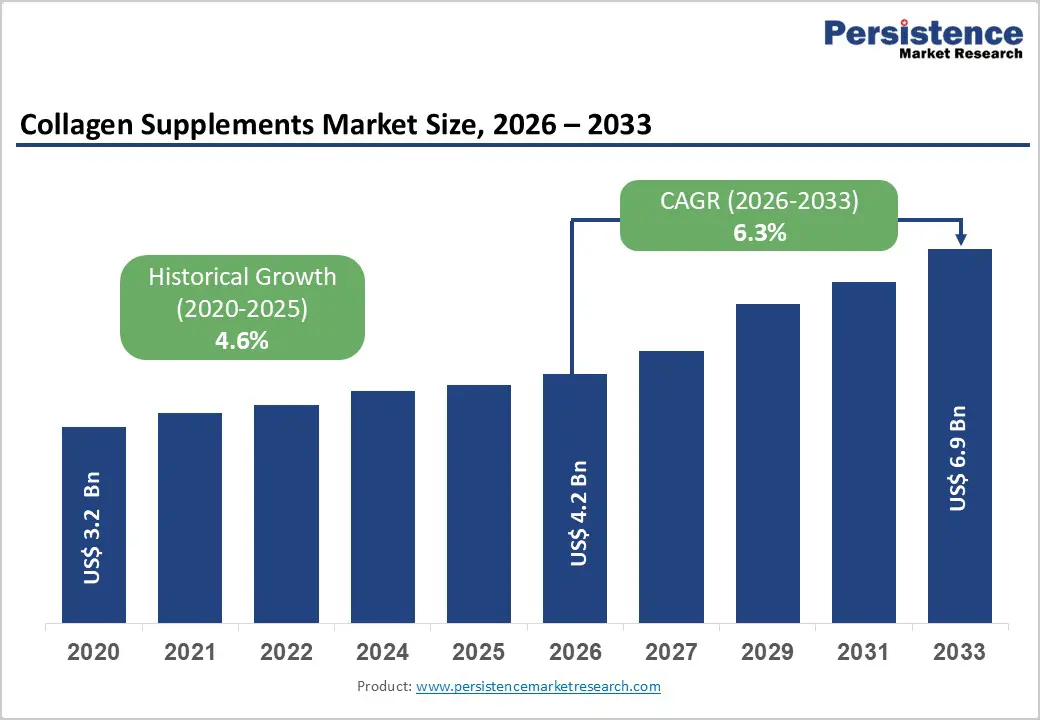
The global collagen supplements market size is estimated to grow from US$ 4.2 billion in 2026 to US$ 6.9 billion by 2033. The market is projected to record a CAGR of 6.3% during the forecast period from 2026 to 2033.
The global consumption of collagen supplements is expanding steadily as consumers increasingly prioritize preventive healthcare, aesthetic wellness, and functional nutrition. Collagen peptides and related formulations are widely incorporated into dietary supplements, functional beverages, and fortified foods to support skin elasticity, joint mobility, and overall structural health. The growing shift toward “beauty-from-within” solutions has significantly influenced purchasing behavior, particularly among aging populations and younger consumers seeking long-term wellness benefits.
Additionally, collagen is gaining traction in sports nutrition and medical nutrition due to its role in muscle recovery, bone strength, and tissue repair. Advancements in hydrolysis technologies have improved bioavailability and product performance, while innovation in delivery formats such as powders, gummies, and ready-to-drink products has enhanced convenience. Additionally, increasing demand for clean-label, high-protein, and multifunctional supplements is encouraging manufacturers to expand their portfolios. Strategic partnerships, expanding online retail channels, and rising investments in R&D are further supporting global market penetration across both developed and emerging economies.
Key Industry Highlights:
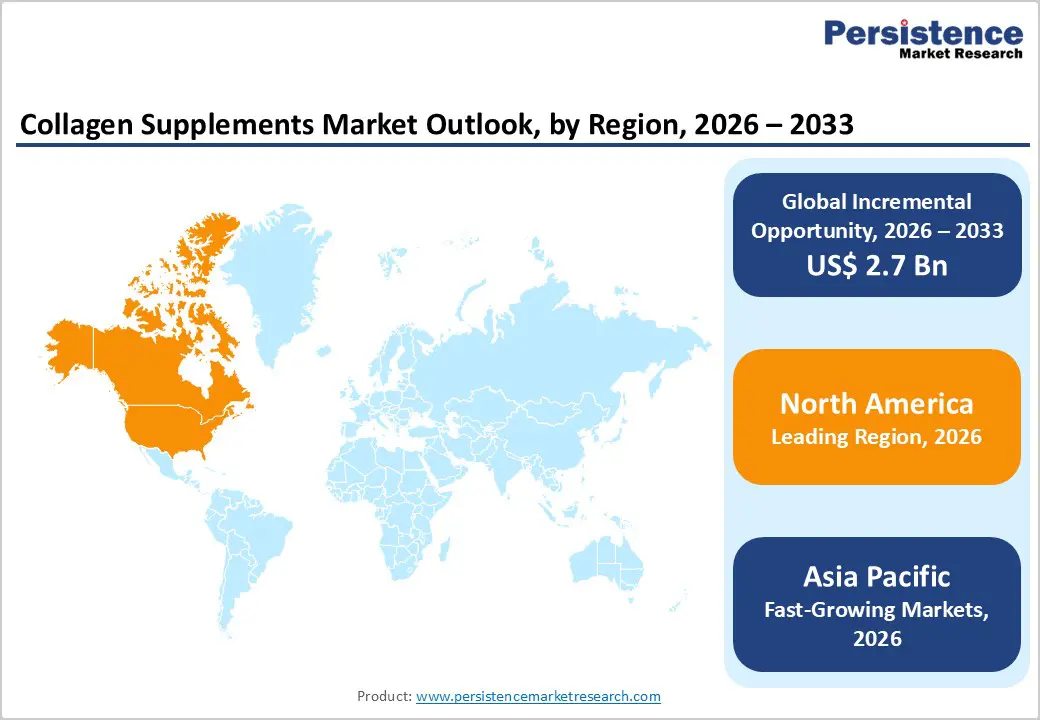
- Leading Region: North America accounts for 46.7% of the global market, driven by strong consumer awareness, a well-established nutraceutical industry, high adoption of preventive healthcare, and continuous product innovation.
- Fastest-Growing Region: Asia Pacific is witnessing the highest growth, supported by rising disposable incomes, increasing beauty and wellness awareness, expanding middle-class population, and growing demand for ingestible skincare products.
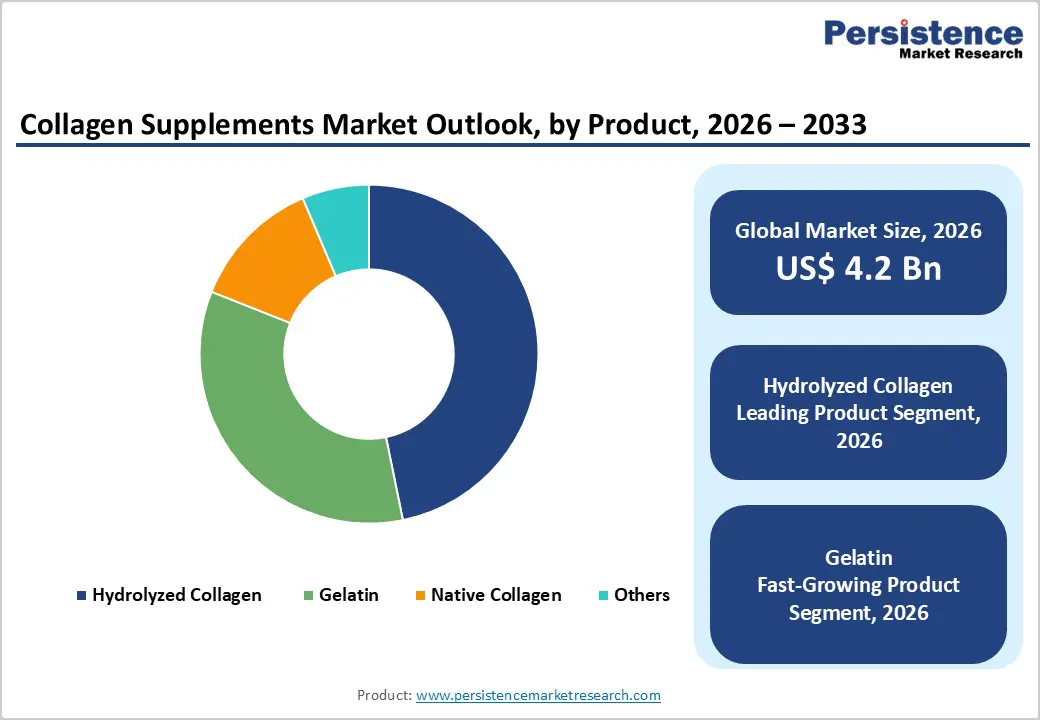
- Leading Product Segment: Hydrolyzed collagen holds a dominant share of 56.8%, attributed to its superior absorption, high solubility, and extensive use across dietary supplements and functional food applications.
- Fastest-Growing Product Segment: Gelatin is gaining momentum due to expanding applications in gummies, functional foods, and specialized nutrition products, supported by ongoing improvements in processing technologies.
- Leading Application Segment: Skin health & anti-aging leads with 38.7%, driven by strong consumer demand for wrinkle reduction, improved skin hydration, and overall aesthetic enhancement through ingestible solutions.
- Fastest-Growing Application Segment: Bone & joint health is experiencing rapid growth as aging populations and active consumers increasingly seek solutions for mobility, flexibility, and long-term skeletal support.
| Key Insights | Details |
|---|---|
| Collagen Supplements Market Size (2026E) | US$ 4.2 Bn |
| Market Value Forecast (2033F) | US$ 6.9 Bn |
| Projected Growth (CAGR 2026 to 2033) | 6.3% |
| Historical Market Growth (CAGR 2020 to 2025) | 4.6 % |
Market Dynamics
Driver - Rising Demand for Beauty-from-Within and Preventive Healthcare Solutions
Growing consumer focus on preventive healthcare and aesthetic wellness is significantly driving the adoption of collagen supplements across global markets. Increasing awareness regarding skin aging, joint deterioration, and bone health has positioned collagen as a key functional ingredient supporting structural health and appearance. Consumers are actively shifting toward ingestible solutions that improve skin elasticity, hydration, and reduce visible signs of aging. This trend is particularly strong within the expanding nutricosmetics segment, where collagen is widely used in powders, beverages, and gummies. Additionally, the global aging population is contributing to sustained demand, as older consumers seek solutions for mobility, joint flexibility, and bone strength.
Additionally, younger demographics are increasingly adopting collagen as part of daily wellness and fitness routines, particularly for muscle recovery and long-term health maintenance. Product innovation has enhanced accessibility, with convenient formats improving consumer compliance. Technological advancements in hydrolyzed collagen production have further improved absorption efficiency and functional performance. Moreover, the growing preference for clean-label, protein-rich, and multifunctional supplements continues to reinforce demand, positioning collagen as a core ingredient in modern preventive nutrition strategies.
Restraints - Fluctuations in Raw Material Availability and Quality Standardization Challenges
Variability in raw material sourcing remains a key challenge for collagen supplement manufacturers, as production is heavily dependent on animal-derived inputs such as bovine, marine, and poultry sources. Supply disruptions caused by environmental changes, livestock health issues, and regulatory restrictions can lead to inconsistent availability and fluctuating input costs. These uncertainties directly impact production planning and pricing strategies, particularly for companies operating at scale. Additionally, sourcing high-quality raw materials that meet safety and traceability standards adds further complexity to the supply chain.
Moreover, maintaining consistent product quality across batches is another significant concern. Collagen extraction and hydrolysis processes require precise control to preserve amino acid composition and ensure functional efficacy. Any deviation can affect product performance, taste, and consumer trust. Regulatory compliance across different regions also presents challenges, as manufacturers must adhere to varying standards related to labeling, safety, and ingredient sourcing. Furthermore, ethical concerns and dietary restrictions associated with animal-based products can limit consumer adoption in certain segments. These combined factors create operational constraints that may hinder market expansion despite growing demand.
Opportunity - Expansion into Functional Foods, Personalized Nutrition, and Alternative Collagen Sources
The increasing convergence of nutrition and convenience is creating strong opportunities for collagen supplements across functional food and beverage applications. Manufacturers are incorporating collagen into a wide range of products such as protein bars, fortified drinks, and ready-to-consume formulations, enabling broader consumer reach beyond traditional supplement users. This integration supports daily consumption habits while delivering targeted health benefits, making collagen more accessible and appealing to mainstream audiences. The expansion of on-the-go nutrition formats is further accelerating product innovation and category growth.
Furthermore, personalized nutrition is emerging as a key growth avenue, with brands developing tailored collagen formulations addressing specific health concerns such as skin health, joint support, and sports recovery. Advances in biotechnology are also enabling the development of sustainable alternatives, including marine-based and fermentation-derived collagen, which cater to evolving consumer preferences for traceability and environmental responsibility. Continuous research into collagen peptides is uncovering new functional benefits, including support for gut health and metabolic function. As innovation and consumer awareness progress, these factors collectively position collagen supplements for long-term expansion across diverse application areas.
Category-wise Analysis
By Product Insights
Hydrolyzed collagen is expected to dominate the global collagen supplements market in 2026, accounting for 46.8% of total revenue. Its strong market position is primarily driven by its high absorption efficiency and ease of digestion compared to other collagen forms. The ingredient is widely incorporated into powders, beverages, capsules, and functional foods due to its neutral taste and excellent solubility. It supports multiple health benefits including skin elasticity, joint support, and muscle recovery, making it highly versatile across consumer segments.
Manufacturers favor hydrolyzed collagen for its compatibility with various formulations and its ability to deliver targeted nutritional outcomes. Increasing consumer inclination toward preventive healthcare and beauty-from-within solutions further accelerates its adoption. Additionally, advancements in enzymatic hydrolysis and purification technologies have improved product quality, consistency, and efficacy. As demand for multifunctional and convenient nutritional solutions grows, hydrolyzed collagen continues to sustain its leadership globally.
By Application Insights
The skin health & anti-aging segment is projected to hold the largest share of the collagen supplements market in 2026, contributing 33.5% of total revenue. This dominance is largely driven by increasing consumer focus on maintaining youthful appearance, skin hydration, and elasticity through ingestible solutions. Collagen supplements are widely used to reduce visible signs of aging such as wrinkles and fine lines, making them highly popular among both aging populations and younger consumers adopting preventive skincare approaches.
The rise of nutricosmetics and ingestible beauty products has significantly expanded the application scope of collagen across global markets. Additionally, growing awareness regarding the role of collagen in dermal structure and skin regeneration supports consistent product demand. Brands are increasingly launching innovative formats such as flavored powders, ready-to-drink beverages, and gummies to enhance consumer convenience and compliance. With rising disposable incomes and increased spending on personal wellness, this segment continues to anchor overall market growth.
By Distribution Channel Insights
Pharmacies are anticipated to account for 26.5% of the total collagen supplements market revenue in 2026, maintaining their position as the leading distribution channel. Their dominance is supported by strong consumer trust, professional recommendations, and the perception of higher product authenticity and quality. Collagen supplements sold through pharmacies are often associated with clinically backed formulations targeting joint health, bone strength, and dermatological benefits. This channel also benefits from the presence of trained pharmacists who guide consumers toward appropriate supplement choices based on health needs.
Furthermore, pharmaceutical retail chains maintain well-established supply networks, ensuring consistent product availability across urban and semi-urban regions. Regulatory compliance and quality assurance standards further strengthen consumer confidence in pharmacy-distributed products. While online channels are expanding rapidly, pharmacies continue to play a crucial role in influencing purchase decisions, particularly among older consumers and individuals seeking therapeutic benefits, thereby reinforcing their leading position.
Region-wise Insights
North America Collagen Supplements Market Trends
North America is expected to capture 46.7% of the global collagen supplements market in 2026, with the U.S. acting as the primary growth engine. The region benefits from a highly developed nutraceutical ecosystem, strong consumer awareness, and early adoption of preventive health solutions. Collagen supplements are widely consumed across diverse applications including beauty, sports nutrition, and joint health, supported by a well-established dietary supplement culture. Increasing demand for clean-label, high-protein, and functional products has encouraged manufacturers to integrate collagen into everyday nutrition formats such as beverages, bars, and fortified foods.
Innovation remains a key differentiator, with companies investing in advanced processing technologies to enhance bioavailability and product efficacy. The presence of leading supplement brands, robust distribution infrastructure, and strong e-commerce penetration further supports market expansion. Additionally, the growing aging population and rising interest in anti-aging solutions continue to drive consistent demand. Regulatory clarity and high consumer purchasing power also contribute to sustained product adoption, positioning North America as a mature yet innovation-driven market.
Europe Collagen Supplements Market Trends
Europe represents a well-established and steadily progressing market for collagen supplements, supported by strong regulatory frameworks and increasing consumer emphasis on health and sustainability. Key countries such as Germany, United Kingdom, France, and Italy are major contributors, driven by their advanced nutraceutical and functional food industries. Consumers across the region show a clear preference for high-quality, traceable, and naturally sourced ingredients, which supports demand for premium collagen products, particularly marine-based variants.
The market is also influenced by growing interest in holistic wellness, including joint care, skin health, and active aging. Regulatory bodies emphasize transparency in labeling and product safety, which enhances consumer trust and encourages consistent consumption. In addition, sustainability trends are shaping product development, with companies focusing on responsibly sourced collagen and eco-friendly packaging solutions. Increasing availability of collagen-enriched functional foods and beverages further expands market reach. With continuous innovation and strong alignment with clean-label trends, Europe maintains stable growth with significant long-term potential.
Asia Pacific Collagen Supplements Market Trends
Asia Pacific is projected to be the fastest-growing region in the collagen supplements market, expanding at a CAGR of approximately 8.5% from 2026 to 2033. Rapid urbanization, increasing disposable incomes, and rising health awareness are key factors driving regional demand. Countries such as China, India, Japan, and South Korea are witnessing significant growth, particularly in beauty and wellness segments. The concept of ingestible beauty is deeply rooted in several Asian cultures, which accelerates adoption of collagen-based products for skin health and anti-aging benefits. Additionally, the expanding middle-class population and increasing influence of social media and beauty trends are driving consumer interest in premium nutraceuticals. Local manufacturers are actively collaborating with global brands to enhance product innovation and distribution reach. The market also benefits from growing investments in biotechnology and ingredient processing, improving product availability and affordability. With a large consumer base and evolving lifestyle patterns, Asia Pacific continues to emerge as the most dynamic growth hub globally.
Competitive Landscape
The global collagen supplements market is highly competitive, with strong participation from Further Food, Inc., Glanbia plc., Hunter & Gather Foods Ltd., TCI Co., Ltd., The Bountiful Company, and The Clorox Company. These companies leverage advanced processing technologies, diversified sourcing, and global distribution networks to strengthen their market presence while enhancing bioavailability, product formats, and functional benefits of collagen supplements. Growing demand for beauty-from-within and functional nutrition is accelerating innovation. Manufacturers are expanding production, improving formulation, ensuring compliance, and increasing R&D investments.
Key Developments:
- In April 2026, Shaklee introduced Liquid BioCell® Life+, an advanced collagen supplement built on its established BioCell® platform. The new formulation incorporates proprietary TriPlex Technology™ to enhance collagen protection, support natural regeneration, and improve structural strength, positioning it as a next-generation solution in longevity and beauty-focused nutrition.
- In April 2026, GELITA made its debut at Vitafoods Europe as the official collagen sponsor, introducing its new bioactive collagen peptide CURADERM designed for skin repair and gum health, while also showcasing its existing portfolio of targeted peptide solutions for aging athletes and women’s health.
- In June 2024, Tranont launched Glow-M, a marine-based collagen supplement formulated to support skin radiance, hair strength, and nail health, offering enhanced absorption for effective beauty-from-within benefits. The product reflects growing consumer demand for premium, high-bioavailability marine collagen solutions in the nutricosmetics segment.
Companies Covered in Collagen Supplements Market
- Further Food, Inc.
- Glanbia plc.
- Hunter & Gather Foods Ltd.
- TCI Co., Ltd.
- The Bountiful Company
- The Clorox Company
- Shiseido Company, Limited
- Amorepacific Corporation
- Optimum Nutrition, Inc.
- Vital Proteins LLC
- Codeage LLC
- Nestlé S.A.
- GELITA AG
- Rousselot B.V.
- Ancient Nutrition
- Others
Frequently Asked Questions
The global collagen supplements market is projected to be valued at US$ 4.2 Bn in 2026.
Rising demand for beauty-from-within, increasing aging population, and growing awareness of joint, skin, and overall wellness benefits are driving collagen supplement consumption.
The global collagen supplements market is poised to witness a CAGR of 6.3 % between 2026 and 2033.
Expansion in marine and plant-based collagen, growth of functional foods & RTD formats, and rapid penetration of e-commerce and personalized nutrition offer strong future opportunities.
Further Food, Inc., Glanbia plc., Hunter & Gather Foods Ltd., TCI Co., Ltd., The Bountiful Company, and The Clorox Company are some of the key players in the collagen supplements market.


