




- Processed Food
- Organic Plantain Crisps Market
Organic Plantain Crisps Market Size, Share, and Growth Forecast, 2026 - 2033
Organic Plantain Crisps Market by Product Type (Baked, Fried, Roasted, Sweet, Savory, Plain, Flavored), Flavor (Salted, Sweet, Spicy, Exotic), End-User (Individual Consumers, Institutional Buyers), and Regional Analysis for 2026 - 2033

Organic Plantain Crisps Market Share and Trends Analysis
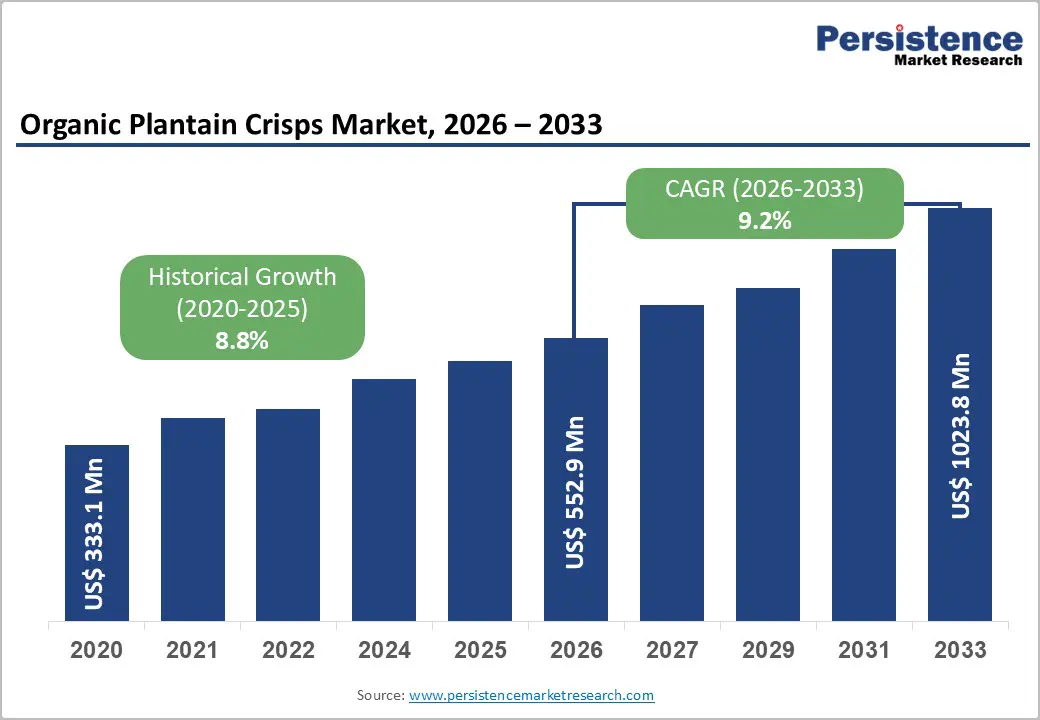
The global organic plantain crisps market size is likely to be valued at US$ 552.9 million in 2026, and is projected to reach US$ 1023.8 million by 2033, growing at a CAGR of 9.2% during the forecast period 2026 - 2033.
Market expansion is driven by rising consumer preference for plant-based snacks, supported by greater awareness of the health and dietary benefits of organic products. Demographic shifts, including urban population growth and rising disposable income, amplify consumption of nutritious snack alternatives. Technological integration in food processing and preservation enhances product quality, shelf-life, and distribution efficiency, enabling wider market access. Regulatory support for organic certification and labeling strengthens consumer confidence and adoption.
Retail expansion across online platforms and specialty stores facilitates market penetration and accessibility. Clinical recognition of plantain's nutrients and dietary fibers supports positioning products as functional snacks.
Key Industry Highlights
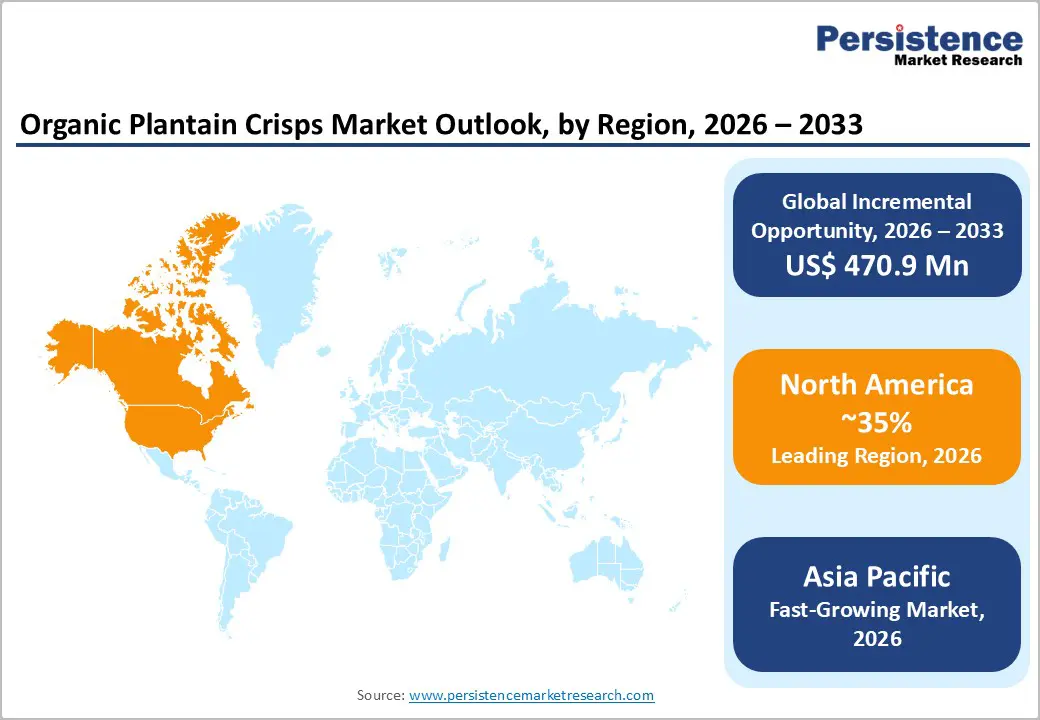
- Dominant Region: North America is estimated to lead in 2026 with a 35% share, driven by health-conscious consumer trends and established retail and digital channels.
- Fastest-growing Market: Asia Pacific is projected to be the fastest-growing market through 2033, supported by a massive scale of urbanization and increasing adoption of health-focused diets.
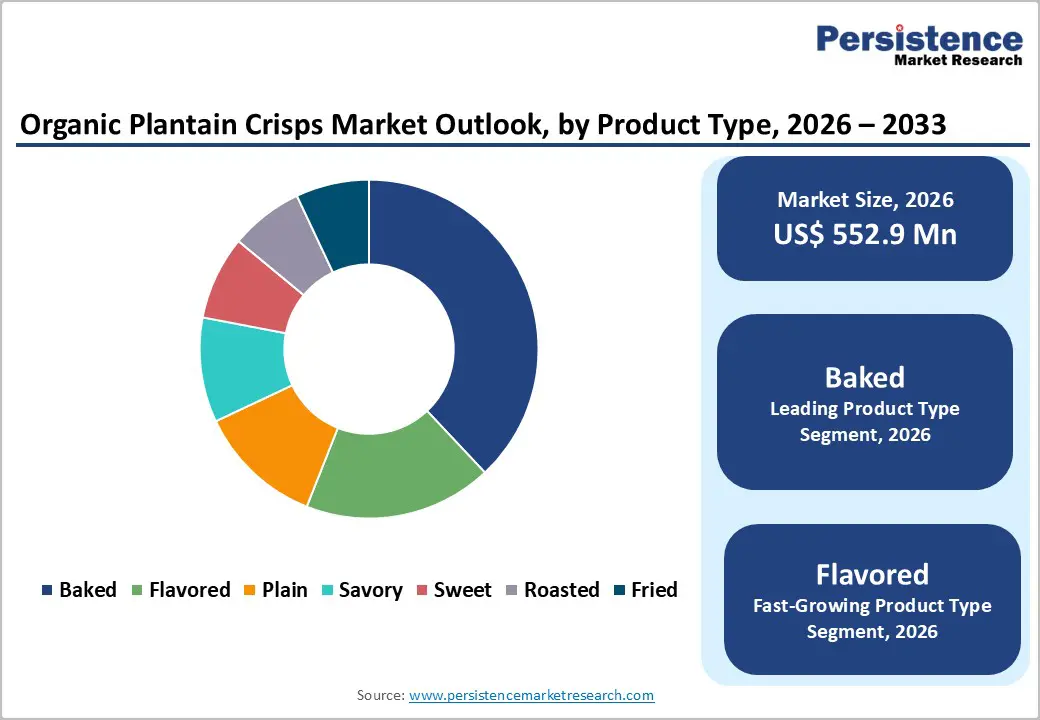
- Leading Product Type: Baked organic plantain crisps are expected to lead with a 38% revenue share in 2026, driven by health-conscious consumer preferences and clinical recognition.
- Fastest-growing Product Type: Flavored plantain crisps are set to grow fastest between 2026 and 2033, driven by taste innovation, regional customization, and flavor-stability technologies.
| Key Insights | Details |
|---|---|
| Organic Plantain Crisps Market Size (2026E) | US$ 552.9 Mn |
| Market Value Forecast (2033F) | US$ 1023.8 Mn |
| Projected Growth (CAGR 2026 to 2033) | 9.2% |
| Historical Market Growth (CAGR 2020 to 2025) | 8.8% |
Market Factors - Growth, Barriers, and Opportunity Analysis
Consumer Shift toward Healthier Snacking Alternatives
Rising consumer preference for healthier snacking alternatives represents a pivotal driver, reflecting a structural shift in dietary behavior toward nutrition-conscious choices. Awareness of long-term health implications has prompted individuals to evaluate snacks through the lens of nutrient density, caloric content, and ingredient transparency. Surveys indicate that 63% of Indian consumers prioritize options with functional benefits over conventional processed snacks, demonstrating measurable adoption of mindful consumption.
Urbanization and exposure to wellness content on digital platforms accelerate knowledge dissemination, influencing purchasing decisions across age groups. Retail strategies that emphasize visibility of nutrient-rich offerings further reinforce habitual consumption, shaping a purchasing environment aligned with preventive health objectives.
Consumer perception of value increasingly incorporates functional benefits alongside convenience, driving acceptance of alternatives positioned as supportive of weight management, cardiovascular health, and metabolic balance. Brands that offer credible health credentials, standardized processing, and low-impact formulations gain trust and strengthen customer retention. The shift extends to product innovation, with emphasis on low-fat, high-fiber, and plant-based options, reflecting alignment with evolving lifestyle needs. Strategic focus on this preference enables penetration into both core and emerging demographics, creating revenue predictability and brand differentiation.
Shelf-Life Constraints and Regulatory Compliance Requirements
Limitations related to product shelf life significantly impact the production, distribution, and inventory management of organic plantain crisps. Natural preservation methods limit product longevity, requiring strict control over storage conditions such as temperature and humidity during transportation and retail display. Perishable characteristics increase operational costs for cold storage, frequent replenishment, and monitoring, thereby affecting profit margins.
Retailers often face challenges in balancing stock availability with minimizing waste, while suppliers must invest in advanced packaging technologies to extend freshness without compromising nutrient integrity. Limited shelf-life can hinder penetration into distant or emerging markets, where distribution networks may not support rapid product turnover, restricting overall market scalability.
Regulatory compliance requirements further influence production strategies and cost structures. Organic certification mandates adherence to stringent standards regarding raw material sourcing, processing, labeling, and traceability. Food safety regulations impose testing, documentation, and inspection protocols that increase administrative and operational burden. Variations in standards across regions necessitate customized processes to meet local legal frameworks, complicating cross-border trade and market expansion.
Compliance enforcement delays product launch timelines and adds to certification costs, influencing pricing strategies. Firms must maintain meticulous quality management systems to mitigate risk of non-compliance, which can result in penalties, recalls, or reputational damage.
Product Diversification and Flavor Innovation
The expansion of product portfolios through differentiated taste profiles and continuous flavor development represents a primary growth opportunity in the organic plantain crisps sector, driven by evolving consumer preferences for unique and experience-oriented snack options. Shifts in dietary behavior among younger and urban populations favor snacks that combine taste appeal with perceived health benefits. Expanding product portfolios through new flavors, such as turmeric and chili, garlic herb, or exotic tropical blends, enhances brand differentiation and portfolio resilience.
Tailoring offerings to regional taste profiles strengthens market penetration across diverse demographic segments. Advanced processing and preservation technologies maintain flavor integrity, texture, and nutritional value, supporting repeat consumption and fostering consumer loyalty.
Innovation in flavor and product variety also stimulates growth across retail and digital commerce channels, as novelty encourages trial purchases and repeat engagement. Customization of product formats, seasoning intensity, and packaging aligns with consumer lifestyles, including on-the-go and portion-controlled consumption. Introduction of culturally inspired or premium flavors positions products in higher-value segments and encourages margin expansion. Data-driven insights into consumption patterns and preference trends inform targeted product development, enabling rapid response to evolving tastes.
Category-wise Analysis
Product Type Insights
Baked organic plantain crisps are likely to be the leading segment with a 38% revenue share in 2026 due to their widespread acceptance as a healthier alternative to fried snacks. The preference for baked variants arises from growing consumer awareness of fat content and caloric intake, with baked crisps presenting a cleaner, more nutrient-preserving option. Clinical recognition of low-fat processing enhances credibility, encouraging adoption among health-conscious populations. Widespread retail distribution ensures easy accessibility, while adherence to international quality and safety standards strengthens consumer trust. Advanced baking technologies, including controlled temperature systems and uniform slicing mechanisms, improve texture, taste, and shelf-life consistency.
Flavored plantain crisps are expected to witness the fastest growth between 2026 and 2033, driven by innovation in taste profiles and regional customization. Manufacturers are experimenting with diverse seasoning blends, ranging from traditional spices to exotic international flavors, increasing cross-demographic appeal. Flavor diversification enhances repeat consumption, as consumers are incentivized to try multiple variants. Technological improvements in seasoning application and preservation ensure flavor stability without compromising crispness, improving overall product satisfaction. Expansion through modern trade networks and digital commerce platforms accelerates reach, particularly among younger, experience-driven consumers.
Flavor Insights
Salted flavor is poised to dominate with around 45% of the organic plantain crisps market revenue share in 2026, owing to its alignment with traditional snacking preferences and ease of production. The classic taste profile resonates across age groups, reinforcing habitual consumption and generating steady demand. Familiarity drives consumer trust, while perceived safety compared with more complex flavor variants contributes to consistent adoption. Extensive retail penetration across supermarkets, convenience stores, and online grocery platforms ensures broad accessibility. Integration of minimally processed salted variants into preventive nutrition routines aligns with health-conscious behaviors.
Exotic flavors are anticipated to be the fastest-growing segment between 2026 and 2033, driven by consumer interest in culturally diverse and premium snack experiences. Novel seasoning combinations inspired by global cuisines attract younger, experience-oriented consumers seeking differentiated taste experiences. Digital commerce platforms facilitate the discovery of these products, while social media trends amplify awareness and stimulate trial purchases. Incorporation of natural ingredients and functional components enhances perceived nutritional and sensory benefits, adding value beyond taste. Expanding distribution through modern retail and targeted marketing campaigns accelerates penetration in urban and semi-urban populations.
End-User Insights
Individual consumers are positioned as the leading segment with nearly 70% of the organic plantain crisps market share in 2026, supported by direct access through retail and e-commerce platforms. Convenience drives frequent purchases, as packaging sizes and formats cater to on-the-go consumption and household needs. Cost efficiency reinforces value perception, making products accessible across income groups. Alignment with daily dietary routines, particularly for health-conscious individuals, sustains consistent adoption. Clinical validation of nutritional benefits, including low-fat content and nutrient retention, enhances consumer trust. Digital platforms facilitate personalized marketing, loyalty programs, and targeted promotions, improving engagement.
Institutional buyers are expected to be the fastest-growing segment between 2026 and 2033, driven by increased procurement from corporate wellness programs, educational institutions, and hospitality providers. Bulk procurement provides cost advantages and guarantees a steady demand pipeline. Integration of technology into ordering, inventory management, and supply chain logistics enhances operational efficiency, supporting large-scale adoption. Growing awareness of employee health, student nutrition, and guest satisfaction motivates institutions to incorporate nutritious snack options. Customized product offerings, including specific flavors, packaging, or portion sizes, improve alignment with institutional needs.
Regional Insights
North America Organic Plantain Crisps Market Trends
North America is estimated to hold a dominant share of over 35% in the organic plantain crisps market in 2026, reflecting strong consumer alignment with health-conscious and convenient snacking trends. High awareness of nutritional benefits associated with organic, low-fat, and minimally processed products drives preference for baked and naturally flavored variants. Established retail networks, including supermarkets, specialty health stores, and digital commerce platforms, provide seamless access to a wide range of product formats, ensuring consistent consumer adoption. Advanced supply-chain infrastructure supports efficient procurement of raw materials and adherence to quality standards, maintaining product consistency and shelf life. Strategic partnerships between manufacturers and distributors optimize reach across urban and suburban centers, further reinforcing market leadership.
Innovation in product development serves as a critical factor sustaining dominance. Investment in flavor diversification, portion-controlled packaging, and functional ingredient integration addresses evolving consumer expectations for variety and health benefits. Rapid technological adoption in processing, preservation, and packaging enhances flavor retention and texture, strengthening repeat purchases. Demographic trends, such as urbanized populations with high disposable income and a preference for experiential consumption, encourage trial of premium and exotic product variants. Marketing initiatives leveraging digital platforms, social media, and wellness endorsements amplify visibility and reinforce trust in product quality.
Europe Organic Plantain Crisps Market Trends
Europe holds a significant position in the market for organic plantain crisps, underpinned by strong consumer focus on health, wellness, and sustainable food choices. Increasing demand for organic and minimally processed snacks drives adoption of baked and naturally flavored variants. Advanced retail infrastructure, including supermarkets, health-focused stores, and e-commerce platforms, ensures wide product availability and seamless consumer access. Regulatory frameworks enforcing stringent quality, safety, and labeling standards enhance trust in organic offerings. Rising awareness of low-fat, nutrient-preserving snacking aligns with preventive nutrition trends, positioning products as both convenient and health-conscious alternatives. Urbanized populations demonstrate consistent willingness to invest in premium snacks, supporting sustained revenue growth.
Innovation in flavors and product formats further strengthens market relevance. Manufacturers introduce diverse and regionally inspired variants, such as Mediterranean herb blends, smoky paprika, and garlic-rosemary flavors, enhancing appeal to taste-conscious consumers. Technological integration in processing and packaging maintains texture, flavor, and nutritional integrity, encouraging repeat purchases. Retail and digital channels leverage targeted marketing strategies, including health endorsements and communications about sustainable sourcing, to influence buying behavior. Institutional adoption, particularly in corporate wellness programs and hospitality, reinforces consistent demand. Europe market is characterized by mature consumer segments, high health awareness, and strong regulatory compliance, creating an environment for incremental innovation and stable growth.
Asia Pacific Organic Plantain Crisps Market Trends
Asia Pacific is anticipated to be the fastest-growing regional market for organic plantain crisps during the 2026-2033 forecast period, powered by rising urbanization, increasing disposable incomes, and shifting dietary preferences toward healthier snacking options. Expanding middle-class populations demonstrate growing demand for convenient, nutrient-preserving products, particularly baked and flavored variants that combine taste and wellness benefits. Local production hubs and proximity to raw material sources enable cost-efficient manufacturing, supporting competitive pricing and reliable supply. Expansion of modern retail chains, convenience stores, and digital commerce platforms ensures broad accessibility, while exposure to international food trends encourages experimentation with novel flavors and premium product experiences. Younger, experience-driven consumers actively seek diverse taste profiles, accelerating adoption across urban and semi-urban markets.
Innovation in flavor, format, and functional positioning is a key driver of growth in the regional market. Companies introduce region-specific and culturally inspired variants, including tropical fruit blends, chili-lime, and herb-infused flavors, enhancing appeal across demographic segments. Advanced processing, preservation, and packaging technologies maintain flavor, texture, and nutritional quality, strengthening repeat purchases. Institutional adoption through corporate wellness programs and educational procurement provides consistent demand. Data-driven insights into consumption patterns enable targeted product launches and marketing strategies. This combination of favorable demographics, technological integration, and evolving taste preferences positions Asia Pacific as the fastest-growing regional market, creating significant opportunities for domestic manufacturers and international brands to capture expanding demand and establish long-term growth.
Competitive Landscape
The global organic plantain crisp market is moderately fragmented, with a mix of multinational snack producers and regional specialists sharing significant revenue. Leading players, such as Barnana, ARA Food Corp., Amazi Foods, Hain Celestial Group, and General Mills, leverage brand recognition, extensive distribution networks, and established production capabilities to maintain market leadership. Competitive strategies among these companies emphasize product innovation, including flavor diversification, integration of functional ingredients, and packaging improvements that enhance convenience and freshness. Quality assurance, organic certification, and adherence to regulatory standards further strengthen their positioning, appealing to health-conscious and premium-seeking consumers.
Smaller regional players focus on niche segments and local flavors to differentiate themselves in a competitive environment. Emphasis on culturally inspired seasonings, limited-edition products, and small-batch production allows these companies to capture specific consumer demographics and emerging urban markets. Strategic partnerships with local retailers and participation in digital marketplaces expand reach while mitigating operational scale limitations. Market fragmentation encourages continuous innovation, as both large and small players seek to capture evolving consumer preferences for healthy, convenient snacks.
Key Industry Developments
- In January 2026, Ciranda launched two new organic, plant-based baking chips - white chips with 45% cocoa butter and semi-sweet vanilla notes, and 70% bittersweet chocolate chips sweetened with coconut sugar. Both are dairy-free, gluten-free, non-GMO, produced in a top-9 allergen-free facility, and sourced from Peruvian farmers to meet demand for clean-label sweets.
- In December 2025, SNAX-Sational Brands announced the nationwide launch of Chiquita plantain chips in the U.S. snack aisle, with five flavors and a farm-to-bag freshness approach to meet growing demand for convenient, gluten-free, and vegan options.
- In June 2025, Ghanaian-born UK boxer Freezy Macbones announced the launch of his Freezy Chips organic plantain chips brand and shared a behind-the-scenes video of the production process, showcasing packaging design, hygiene standards, and product preparation to his social media followers.
Companies Covered in Organic Plantain Crisps Market
- Barnana
- ARA Food Corp.
- Amazi foods
- Hain Celestial group
- General mills
- Rhythm superfoods
- Luke organics
Frequently Asked Questions
The global organic plantain crisps market is projected to reach US$ 552.9 million in 2026.
Rising consumer health awareness, demand for plant-based snacks, and technological advancements in processing drive the market.
The market is poised to witness a CAGR of 9.2% from 2026 to 2033.
Expansion in emerging economies and product diversification with innovative flavors represent key market opportunities.
Barnana, ARA Food Corp., Amazi Foods, Hain Celestial Group, and General Mills are few of the key players in the market.


