




- Nutraceuticals & Functional Foods
- Energy Gel Market
Energy Gel Market Size, Share, Growth, and Regional Forecast, 2026 to 2033
Energy Gel Market by Product Type (Unflavored, Flavored), by Caffeine Content (Caffeine-free, Low caffeine, High caffeine), by Sales Channel (Hypermarkets/Supermarkets, Convenience Stores, Specialty Stores, Online Retail, Others), and Regional Analysis from 2026 to 2033

Energy Gel Market Share and Trends Analysis
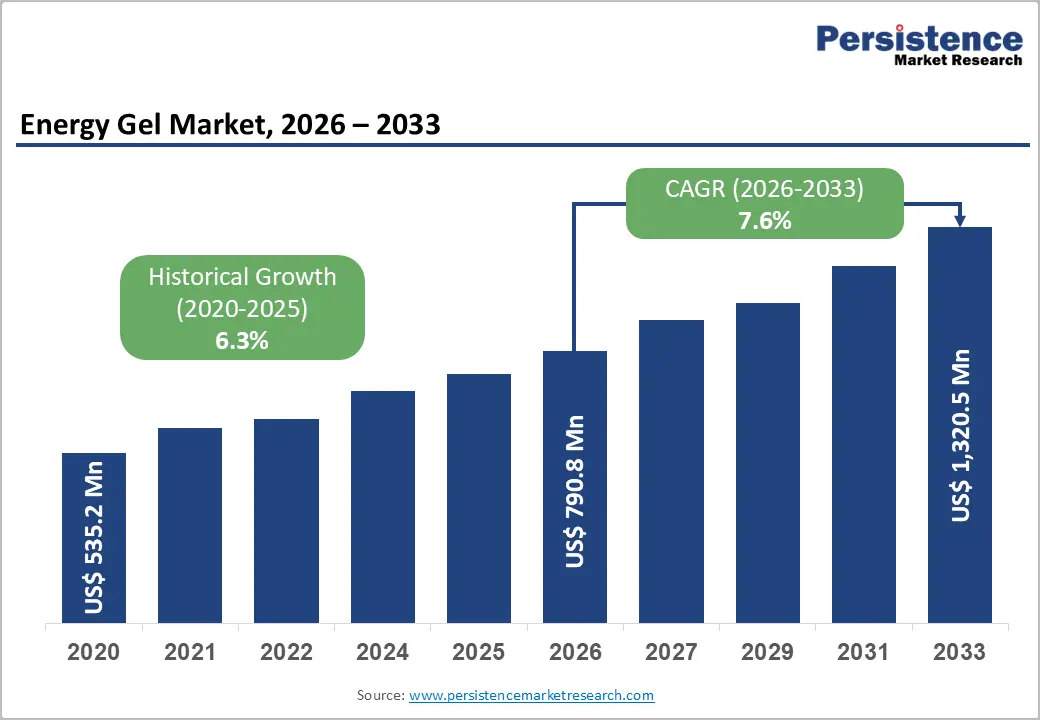
The global energy gel market size is likely to be valued at US$ 790.8 million in 2026 and US$ 1,320.5 million by 2033, growing at a CAGR of 7.6% over the forecast period from 2026 to 2033.
Energy gels are redefining endurance nutrition, combining convenience, rapid energy delivery, and innovative ingredients to meet the evolving demands of athletes worldwide. From flavor innovation to clean-label formulations, the market is poised for dynamic growth across regions, product types, and caffeine preferences.
Key Industry Highlights:
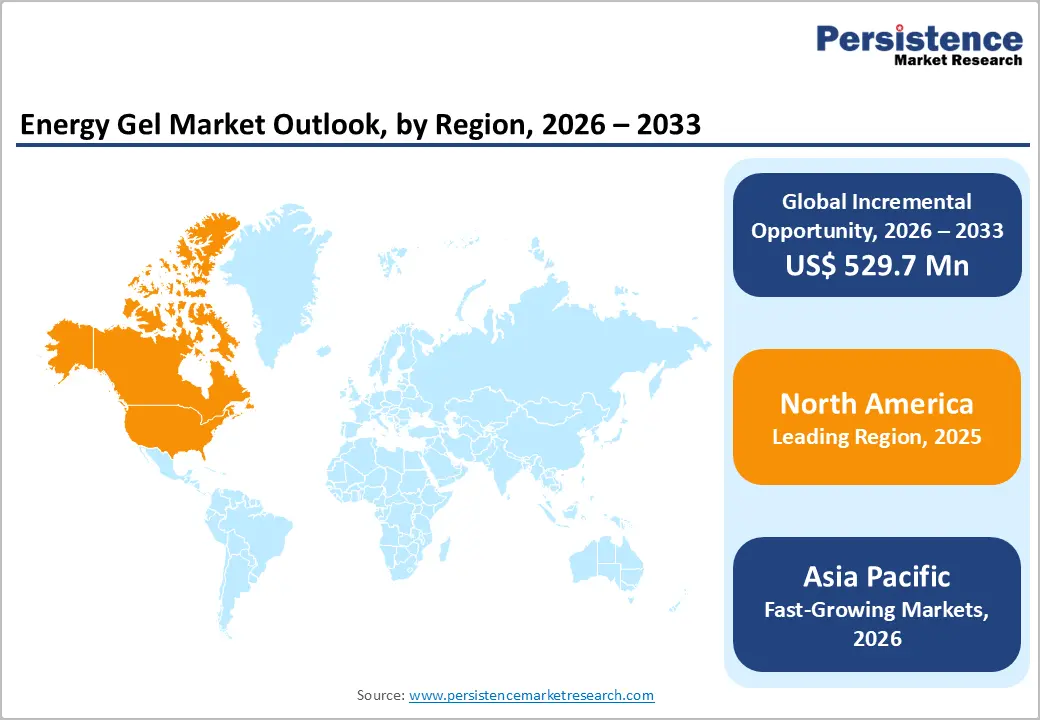
- Leading Region: North America, holding approximately 41% market share, driven by strong endurance sports culture, digital retail penetration, and demand for functional, gut-friendly nutrition.
- Fastest-Growing Region: Asia Pacific, expected to grow at a CAGR of 10.1%, fueled by rising fitness participation in India, China, Japan, and South Korea, along with influencer-led nutrition education.
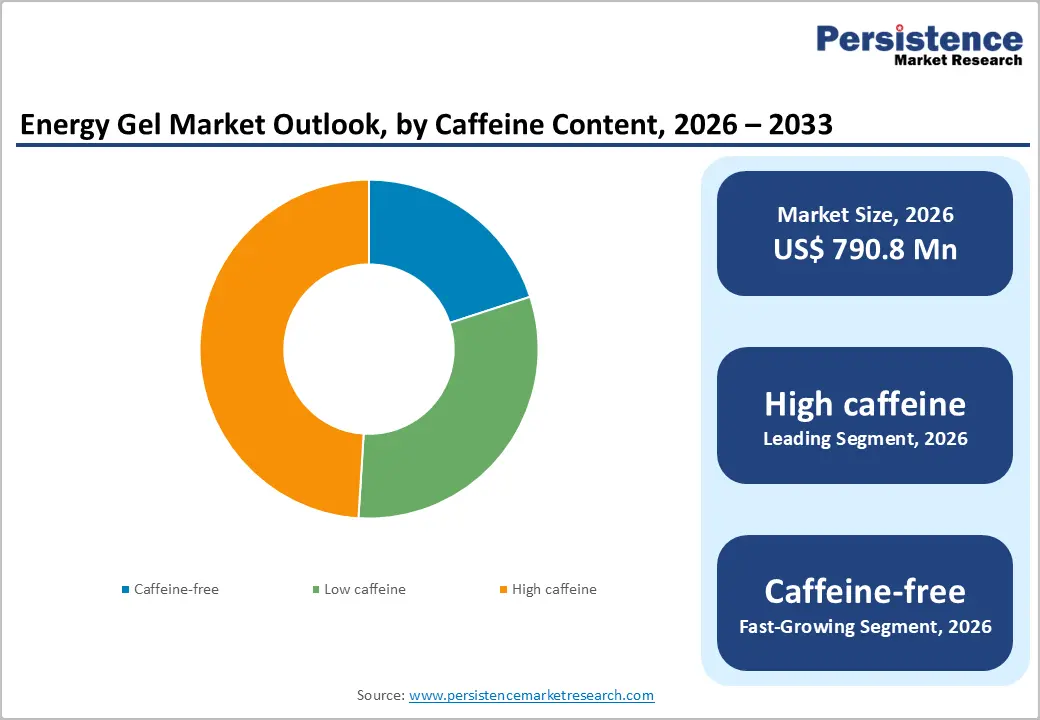
- Fastest-Growing Segment: Caffeine-free energy gels, projected to grow at a CAGR of 9.8%, catering to health-conscious and stimulant-sensitive consumers.
- Market Drivers: Rising participation in endurance sports and fitness events sustains energy gel consumption, driving global adoption among amateur and professional athletes.
- Opportunities: Expanding clean-label, plant-based, and natural-ingredient energy gels for health-conscious, vegan, and allergen-sensitive consumers.
- Key Developments: In October 2025, Puresport launched a new energy gel with 30g of carbohydrates per 30 minutes. In October 2025, 226ers expanded its High Energy Gel and High Fructose Gel ranges with new flavors. In January 2025, Scottish Bee launched B-Fuel honey sachets for natural, on-the-go energy.
| Key Insights | Details |
|---|---|
| Energy Gel Market Size (2026E) | US$ 790.8 Mn |
| Market Value Forecast (2033F) | US$ 1,320.5 Mn |
| Projected Growth (CAGR 2026 to 2033) | 7.6% |
| Historical Market Growth (CAGR 2020 to 2025) | 6.3% |
Market Dynamics
Driver - Rising participation in endurance sports and fitness events drives sustained energy gel consumption
Weekend streets turning into race tracks and calendars filling with marathons, triathlons, cycling tours, and ultra-distance challenges signal a structural shift in how consumers engage with fitness. Endurance sports are no longer niche pursuits reserved for elite athletes; they are lifestyle choices embraced by amateurs, corporate professionals, and aging but performance-driven consumers. This surge in participation directly fuels demand for compact, fast-acting nutrition, positioning energy gels as a default fueling solution during prolonged physical exertion where convenience and rapid carbohydrate delivery matter most.
Training intensity has increased alongside event participation, extending energy gel consumption beyond race day into daily practice sessions. Athletes now integrate gels into structured fueling strategies to maintain glycogen levels, delay fatigue, and optimize performance consistency. As endurance participation expands geographically and demographically, energy gels transition from specialty products to recurring essentials, underpinning sustained volume growth in the global market.
Restraints - High sugar content perceptions raise concerns among health-conscious consumers
Sticky textures and dense sweetness have become a psychological barrier for a growing segment of health-conscious consumers evaluating energy gels. As nutritional awareness deepens, sugar grams are increasingly scrutinized, especially among recreational athletes who associate high sugar intake with energy crashes, weight gain, and metabolic concerns. This perception creates hesitation around regular usage, limiting adoption beyond competitive endurance circles and narrowing the consumer base.
The challenge intensifies as cleaner diets and reduced-sugar lifestyles gain traction across fitness communities. Consumers accustomed to whole-food fueling options such as dates, fruit purees, or low-glycemic snacks often view traditional energy gels as overly processed. Unless formulations evolve toward a perceived balance in energy delivery, sugar-centric positioning continues to restrain broader acceptance in the global energy gel market.
Opportunity - Expanding clean-label, plant-based, and natural ingredient energy gels to attract health-conscious athletes
Ingredient lists are becoming performance metrics in themselves as athletes increasingly judge products by transparency and source credibility. Clean-label energy gels made from fruit-derived carbohydrates, botanical extracts, and minimally processed ingredients offer a compelling pathway to win trust among health-conscious endurance participants. Plant-based positioning aligns strongly with vegan, allergen-sensitive, and sustainability-driven athletes, creating space for differentiation beyond traditional sugar-and-caffeine formulations.
This shift opens strategic room for both established brands and startups to innovate with organic inputs, recognizable sweeteners, and simplified formulations without compromising performance fueling. Natural ingredient narratives also support premium pricing and brand storytelling, especially in direct-to-consumer channels. As endurance nutrition becomes more personalized and values-driven, clean-label energy gels represent a scalable growth opportunity across global markets.
Category-wise Analysis
By Product Type Insights
Flavored energy gels accounted for nearly 79% of the market share as of 2025, reflecting how taste has become a decisive factor in endurance nutrition compliance. During prolonged physical exertion, palatability directly influences intake frequency, making flavored variants easier to consume repeatedly under fatigue. Citrus, berry, and tropical profiles help mask carbohydrate density while reducing flavor fatigue, especially during long races or training sessions. Brands leverage flavor innovation to differentiate products, integrate natural fruit notes, and pair taste with functional claims such as electrolytes or caffeine, reinforcing habitual use among athletes.
Unflavored energy gels serve a smaller, functional niche, primarily favored by purists or athletes stacking gels with flavored hydration products. Their limited sensory appeal restricts mass adoption, keeping flavored formats firmly dominant in the global energy gel market.
By Caffeine Content Insights
Caffeine-free energy gels are projected to grow at a CAGR of 9.8% during the forecast period in the global energy gel market, driven by changing athlete preferences around cleaner and more controlled fueling strategies. A rising share of endurance participants actively manage stimulant intake to avoid jitters, digestive discomfort, and disrupted sleep cycles, especially during evening training sessions or multi-day events. This behavioral shift expands demand beyond elite athletes to recreational runners and fitness enthusiasts seeking steady energy without neurological stimulation.
Broader health awareness further accelerates adoption, as caffeine-free formulations appeal to sensitive users, younger athletes, and consumers following balanced nutrition routines. These gels integrate seamlessly into carbohydrate-loading plans, allow flexible stacking with other performance products, and support repeat consumption, positioning them for sustained volume growth.
Region-wise Insights
North America Energy Gel Market Trends
North America holds approximately 41% of the global energy gel Market, driven by a deeply ingrained endurance culture and rising participation in marathon running, triathlons, and cycling events across the United States and Canada. Consumers increasingly demand functional nutrition with performance benefits, driving brands to innovate around tailored carbohydrate blends, gut-friendly formulas, and convenient formats suited for long-distance training. In the U.S., a noticeable shift toward hybrid gels that combine sustained energy sources with electrolytes and amino acids reflects athletes’ desire for comprehensive fueling solutions.
In Canada, trends emphasize cleaner ingredient profiles and sustainable packaging as environmentally conscious consumers influence product development. Cross-border retail expansion and digital direct-to-consumer strategies amplify accessibility, while localized flavor launches cater to regional taste preferences, reinforcing North America’s leadership in energy gel innovation and adoption.
Asia Pacific Energy Gel Market Trends
Asia Pacific energy gel market is expected to reach a CAGR of 10.1% by 2033, fueled by rapidly expanding fitness lifestyles and a surge in endurance events across urban centers. In India, running clubs and obstacle races are gaining traction, prompting local brands to formulate gels with regional flavors and gentle carbohydrate blends suited for varied climates. China’s youth fitness boom and increased gym memberships are accelerating demand for convenient, on-the-go nutrition, with retailers in tier-1 and tier-2 cities stocking gels alongside traditional sports drinks.
Japan’s precision-driven consumers are pushing innovation toward functional enhancements such as gut-comfort enzymes and sustained-release carbohydrate profiles, while South Korea’s K-fitness culture is embracing aesthetic and performance hybrid formulations. Across the region, digital fitness communities and influencer-led nutrition education are amplifying energy gel adoption as part of holistic training regimens.
Competitive Landscape
The global Energy Gel Market is moderately consolidated, with a handful of established sports nutrition brands competing alongside agile startups. Leading companies are intensifying product innovation by introducing clean-label ingredients, tailored carbohydrate blends, and functional add-ins such as electrolytes or adaptogens to satisfy evolving performance and health priorities. Startups are carving niche positions through bold flavor profiles, plant-based formulations, and transparent sourcing stories that resonate with conscious consumers. Collaboration is rising across the value chain, with gel brands partnering with sports teams, event organizers, and endurance coaches to deepen engagement and sponsor high-visibility races.
Brands are expanding exports into emerging regions, leveraging digital channels to educate consumers on effective fueling strategies. Heightened consumer awareness about ingredient quality and regulatory scrutiny around labeling are pushing companies toward greater transparency and compliance, further shaping competitive dynamics.
Key Developments:
- In October 2025, Puresport launched a new energy gel for runners developed with performance nutritionist Dr. Sam Impey. The formulation delivers 30g of carbohydrates per 30 minutes to support sustained endurance performance.
- In October 2025, 226ers expanded its High Energy Gel and High Fructose Gel ranges with new flavors. The launch is designed to address varying energy needs based on workout intensity and duration.
- In January 2025, Scottish Bee launched B-Fuel honey sachets targeting natural energy and endurance use. The on-the-go format positions honey as a clean, functional fuel for active consumers.
Companies Covered in Energy Gel Market
- GU Energy Labs
- The UCAN Company
- Honey Stinger
- Huma Gel
- Decathlon
- Hammer Nutrition
- Maurten
- PowerBar
- Puresport
- 226ers
- Scottish Bee
- Others
Frequently Asked Questions
The global energy gel market is projected to be valued at US$ 790.8 Mn in 2026.
Rising participation in endurance sports and fitness events drives sustained energy gel consumption is driving the growth of the global Energy Gel market.
The global Energy Gel market is poised to witness a CAGR of 7.6% between 2026 and 2033.
Expanding clean-label, plant-based, and natural ingredient energy gels to attract health-conscious athletes is a key opportunity.
Major players in the global Energy Gel market include GU Energy Labs, The UCAN Company, Honey Stinger, Huma Gel, Decathlon, Hammer Nutrition, Maurten, and others.


