




- Processed Food
- Energy Ball Market
Energy Ball Market Size, Share, and Growth Forecast, 2025 - 2032
Energy Ball Market By Product Type (Protein-based, Nut-based, Others), Application (Sports Nutrition, Meal Replacement, Others), End-use, and Regional Analysis for 2025 – 2032

Energy Ball Market Size and Trends Analysis
The global energy ball market size is likely to be valued US$350.4 Million in 2025, estimated to reach US$559.0 Million by 2032, achieving a CAGR of 6.9% during the forecast period from 2025 to 2032.
The market is experiencing robust growth driven by rising health consciousness, increasing demand for convenient and nutrient-dense snacks, and growing adoption of plant-based and clean-label products.
Energy balls are gaining popularity as portable, natural alternatives to traditional energy bars, especially among fitness enthusiasts, athletes, and busy professionals seeking quick, healthy nutrition.
The market is further propelled by innovations in organic, vegan, and low-sugar formulations, catering to dietary preferences and wellness trends. The growing acceptance of energy bites as functional snacks for sports nutrition and meal replacement is a key growth driver.
Key Industry Highlights:
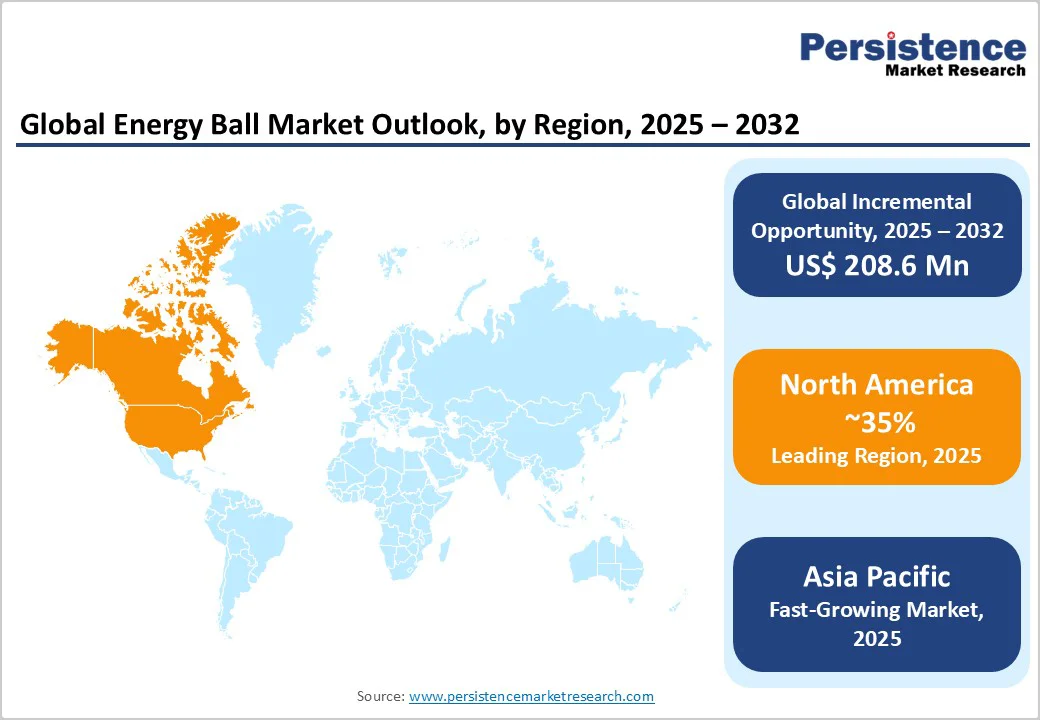
- Leading Region: North America, commanding a 35% market share in 2025, driven by strong fitness culture and premium snack demand in the U.S.
- Fastest-growing Region: Asia Pacific, fueled by rising urbanization, health awareness, and retail expansion in China and India.
- Dominant Product Type: Protein-based, holding approximately 40% of the market share, due to high demand in sports nutrition.
- Leading Application: Sports Nutrition, accounting for over 45% of market revenue, driven by athlete endorsements and gym culture.
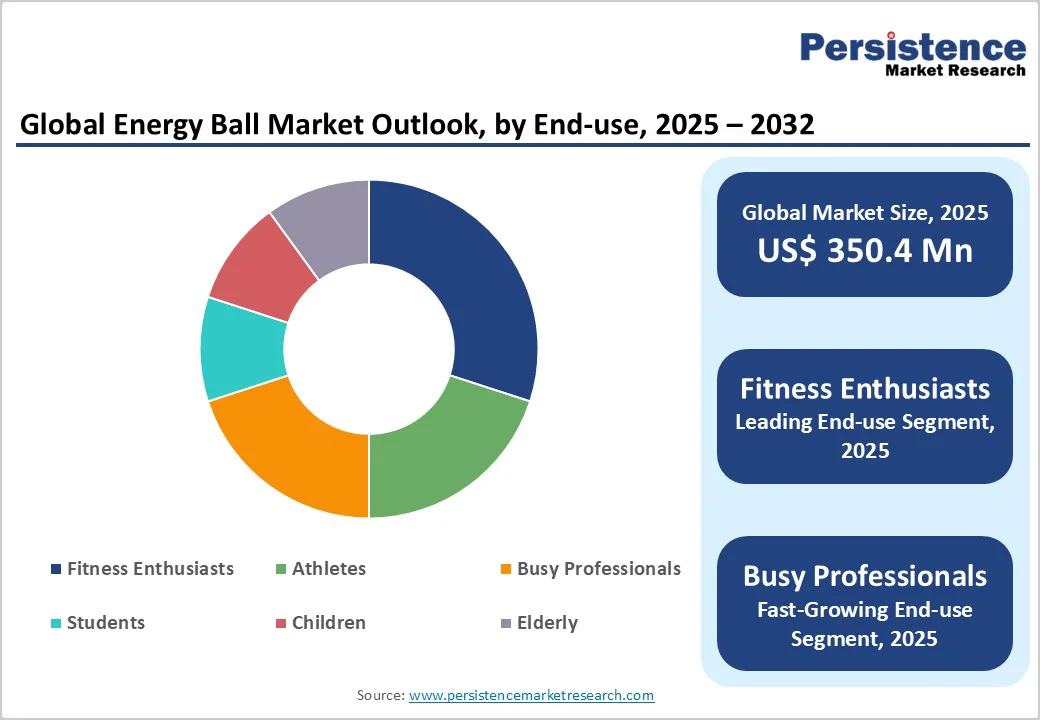
- Leading End-use: Fitness Enthusiasts, contributing nearly 50% of market revenue, owing to workout snacking trends.
- Key Market Driver: Growing awareness of nutrition and wellness is driving demand for natural, high-protein, and functional energy bites.
- Growth Opportunity: Expansion in organic and low-sugar energy bites for children and elderly nutrition.
| Key Insights | Details |
|---|---|
|
Energy Ball Market Size (2025E) |
US$350.4 Mn |
|
Market Value Forecast (2032F) |
US$559.0 Mn |
|
Projected Growth (CAGR 2025 to 2032) |
6.9% |
|
Historical Market Growth (CAGR 2019 to 2024) |
6.0% |
Market Factors – Growth, Barriers, and Opportunity Analysis
Rising Health Consciousness and Demand for Convenient Nutrition
The increasing health awareness and demand for portable, nutrient-rich snacks are the primary drivers of the energy ball market. Modern consumers are increasingly aware of the link between diet and overall well-being, leading to a preference for snacks that offer functional benefits, such as sustained energy, high protein, and essential nutrients. Busy lifestyles, long working hours, and frequent travel have amplified the need for on-the-go, ready-to-eat options that do not compromise nutritional quality.
Energy bites fit this demand perfectly, providing a compact, portable source of energy derived from natural ingredients such as nuts, seeds, oats, and superfoods. The trend toward clean-label products free from artificial additives, preservatives, and refined sugars further aligns with consumer expectations for transparency and health-focused choices.
Additionally, specific lifestyle segments, including fitness enthusiasts, athletes, and busy professionals, are increasingly incorporating protein bites into pre- and post-workout routines or as quick meal replacements. E-commerce platforms and health-focused retail channels have also enhanced accessibility, making it easier for consumers to adopt nutritious snacking habits.
High Ingredient Costs and Short Shelf Life
High costs of premium organic ingredients and the limited shelf life of natural energy balls pose significant restraints on market growth. The use of premium ingredients such as nuts, seeds, dried fruits, and plant-based proteins increases production expenses, as these components are often imported, organic, and subject to fluctuating global prices. The industry’s focus on clean-label and preservative-free formulations, while appealing to health-conscious consumers, limits the use of artificial stabilizers that could extend shelf life.
Energy balls made with natural oils and moisture-rich ingredients are prone to spoilage, texture changes, and loss of freshness over time. Maintaining product quality during storage and transportation requires advanced packaging solutions, such as vacuum sealing and temperature control, which further add to costs. These challenges are especially difficult for small and emerging brands with limited scale and supply chain flexibility.
Expansion in Vegan and Gluten-Free Innovations
The expansion in vegan and gluten-free innovations is transforming the energy ball market, catering to the growing demand for clean, inclusive, and health-oriented snacking options. As consumers increasingly avoid animal-derived ingredients and gluten due to lifestyle choices or dietary sensitivities, manufacturers are reformulating products using plant-based proteins, natural binders, and alternative grains such as quinoa, millet, and oats.
These innovations not only meet ethical and dietary preferences but also enhance product digestibility and nutritional value. Brands are focusing on ingredients such as nuts, seeds, dates, and superfoods such as chia, spirulina, and cacao to deliver both flavour and functionality.
Certifications for “vegan,” “gluten-free,” and “non-GMO” labels have become important purchase drivers, building consumer trust and transparency. Companies are also experimenting with new textures and flavour profiles to attract a broader audience beyond traditional health enthusiasts.
Category-wise Analysis
Product Type Insights
Protein-based products dominate the market, accounting for 40% of the share in 2025. Their popularity stems from high protein content that supports muscle recovery, strength building, and sustained energy. Favored by athletes and fitness enthusiasts, these formulations often include plant or whey proteins, making them ideal for pre- and post-workout nutrition and active lifestyle needs.
Vegan is the fastest-growing segment, driven by the global rise in plant-based eating and ethical consumption. Consumers are increasingly opting for dairy-free, cruelty-free, and sustainably sourced snacks. Vegan protein bites made with nuts, seeds, and natural sweeteners appeal to health-conscious individuals seeking clean, nutrient-rich, and environmentally responsible alternatives.
Application Insights
Sports Nutrition leads with 45% share, fueled by the expanding gym culture and rising focus on performance enhancement. Athletes and fitness enthusiasts increasingly use energy bites for quick energy replenishment, muscle recovery, and endurance support. Their protein-rich, clean-label formulations align with modern sports nutrition demands for natural, functional, and portable snacks.
Meal Replacement is the fastest-growing, driven by the increasing preference for convenient, nutrient-dense alternatives to traditional meals. As busy consumers seek quick yet balanced nutrition, energy bites offer an ideal solution combining proteins, healthy fats, and fibres in portable formats suitable for breakfast, travel, or mid-day energy boosts.
End-use Insights
Fitness Enthusiasts hold a 50% share, using them as convenient sources of pre- and post-workout nutrition. Packed with protein, fiber, and natural sugars, energy bites support muscle recovery and sustained energy. Their clean-label, high-protein formulations align with active lifestyle needs, making them a staple in fitness and sports nutrition routines.
Busy Professionals are the fastest-growing, driven by their need for convenient, nutritious, and portable snacking options. With hectic schedules and increasing health awareness, they prefer energy bites as quick meal replacements or pre/post-workout snacks, offering sustained energy, high protein, and balanced nutrition without compromising on taste or quality.
Regional Insights
North America Energy Ball Market Trends
North America accounts for 35% in 2025, driven by the United States’ robust fitness industry and the growing demand for high-protein, functional snacks. Consumers are increasingly turning to energy bites as convenient, nutritious options that support active lifestyles and align with clean-label, low-sugar, and plant-based preferences. The strong presence of leading brands such as RXBAR, Larabar, and Perfect Snacks, combined with innovative launches featuring superfoods, nut butters, and vegan proteins, continues to fuel market expansion.
E-commerce platforms, gym retail outlets, and health-focused grocery chains such as Whole Foods and Trader Joe’s have amplified product visibility and accessibility. Interestingly, the U.K. market, though part of Europe, reflects similar dynamics, with rising adoption driven by wellness trends, a busy urban workforce, and growing vegan and gluten-free snack demand. Brands in both regions are focusing on sustainable packaging, clean ingredients, and diverse flavour profiles to attract modern consumers.
Europe Energy Ball Market Trends
Europe holds about 30% market share, led by Germany and France Germany and France leading regional demand. The market’s growth is largely driven by the region’s strong emphasis on clean-label, organic, and sustainable food products, supported by stringent EU regulations promoting ingredient transparency and quality standards. Consumers across Europe are highly aware of nutritional content and increasingly favor snacks that combine convenience with health benefits, such as nutri balls made from natural, minimally processed ingredients.
Germany’s robust organic retail infrastructure and France’s expanding health food sector have created fertile ground for premium, plant-based snack brands. Moreover, the presence of established organic supermarket chains and health-focused e-commerce platforms has made these products widely accessible. Countries like the UK, the Netherlands, and Scandinavia are also witnessing rising adoption, fueled by veganism, sports nutrition trends, and growing preference for ethical sourcing.
Asia Pacific Energy Ball Market Trends
Asia Pacific commands around a 25% share and is the fastest-growing region, driven by rapid lifestyle changes and a rising focus on health and wellness. China’s expanding health food sector, supported by increasing disposable incomes and growing awareness of balanced nutrition, has significantly boosted demand for convenient, nutrient-dense snacks such as protein bites. In India, urbanization, and the booming fitness culture, particularly among millennials and young professionals, are fueling the consumption of on-the-go, protein-rich snacks that support active lifestyles.
Japan, South Korea, and Australia are witnessing rising interest in plant-based and clean-label products, further stimulating market growth. Local manufacturers are introducing region-specific flavours and ingredients such as matcha, sesame, coconut, and chia to appeal to regional tastes while maintaining global health standards. The growing influence of e-commerce and health-focused retail chains has enhanced accessibility across urban and semi-urban areas.
Competitive Landscape
The global energy ball market is witnessing intense competition as brands strive to appeal to the growing segment of health-conscious consumers.
Key players such as GoMacro, RXBAR, Larabar, and Perfect Snacks are emphasizing the use of natural, plant-based, and minimally processed ingredients to align with the clean-label trend. Consumers are increasingly seeking products free from artificial additives, refined sugars, and preservatives, prompting companies to innovate with organic superfoods, nuts, seeds, and plant proteins.
E-commerce has become a crucial growth channel, enabling brands to reach wider audiences through direct-to-consumer platforms and online health stores. Social media and influencer marketing are being leveraged to strengthen brand visibility and authenticity.
Companies are also focusing on sustainable packaging and ethical sourcing to appeal to environmentally conscious buyers. Product diversification into vegan, gluten-free, and keto-friendly options further intensifies market rivalry.
Key Developments
- In August 2024, GoMacro launched a limited-edition flavor, Cherries + Berries, in collaboration with the Keep a Breast Foundation to support breast cancer awareness.
- In June 2025, RXBAR introduced its High Protein Bars, offering 18g of plant-based protein with just six ingredients and no artificial sweeteners.
Companies Covered in Energy Ball Market
- GoMacro
- Health Warrior
- Kuli Kuli
- Thunderbird Real Food Bars
- RXBAR
- The GFB Gluten Free Bar
- R.e.d.d
- Perfect Snacks
- Navitas Organics
- Bearded Brothers
- Liv Bar
- Pro Bar
- Bobo's Oat Bars
- Made Good
- Larabar
- Picky Bars
- Kate's Real Food
Frequently Asked Questions
The global energy ball market is projected to reach US$350.4 Million in 2025, driven by demand for healthy, portable snacks.
The market is poised to witness a CAGR of 6.9% from 2025 to 2032, supported by vegan and gluten-free innovations.
Expansion in vegan energy bite for dietary supplements offers key opportunities in wellness and sports nutrition.
GoMacro, RXBAR, Health Warrior, Larabar, and Kuli Kuli lead through natural and protein-based energy bite formulations.


