




- Pharmaceuticals
- Traditional Chinese Medicine Market
Traditional Chinese Medicine Market Size, Share, and Growth Forecast 2026 – 2033
Traditional Chinese Medicine Market by Product Type (Herbal Medicines, Acupuncture, Cupping Therapy, TCM Functional Foods & Dietary Supplements, Others), Source (Plant-Based Medicines, Animal-Based Medicines, Mineral-Based Medicines, Marine-Based Medicines, Others), Application (Pain Management, Respiratory Disorders, Cardiovascular Diseases, Musculoskeletal Disorders, Others), Distribution Channel (Hospital Pharmacies, Retail Pharmacies, Clinics & Wellness Centers, Online Pharmacies, Others), and Regional Analysis, 2026–2033

Traditional Chinese Medicine Market Size and Trend Analysis
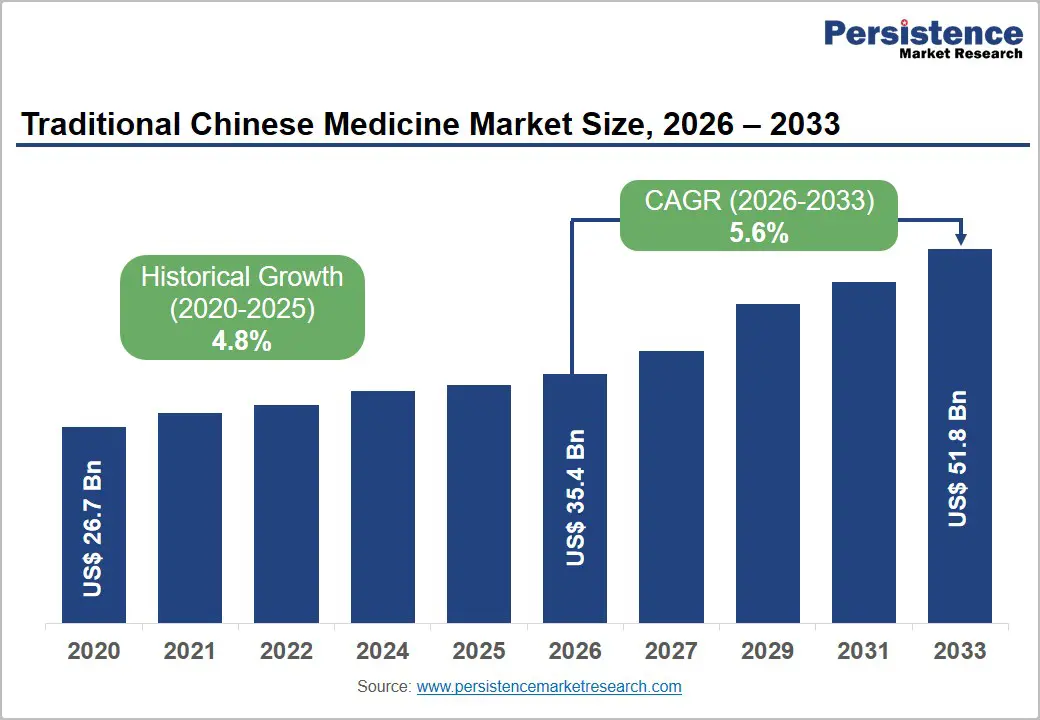
The global traditional Chinese medicine (TCM) market size is expected to be valued at US$ 35.4 billion in 2026 and projected to reach US$ 51.8 billion, growing at a CAGR of 5.6% between 2026 and 2033.
This expansion is driven by a powerful convergence of factors such as global consumer shifts toward holistic, preventive, and natural healthcare approaches; growing scientific validation of TCM efficacy in peer-reviewed research; and active government promotion of TCM integration into national healthcare systems led by China's National Administration of Traditional Chinese Medicine (NATCM).
The World Health Organization (WHO)'s inclusion of TCM diagnoses in its International Classification of Diseases (ICD-11) effective 2022 represents a landmark global recognition of traditional medicine as a legitimate healthcare practice, expanding insurance reimbursement possibilities and clinical integration in multiple countries. Rising chronic disease burden, including pain disorders, cardiovascular conditions, and respiratory diseases, is further amplifying patient interest in complementary TCM modalities globally through the forecast period.
Key Industry Highlights:
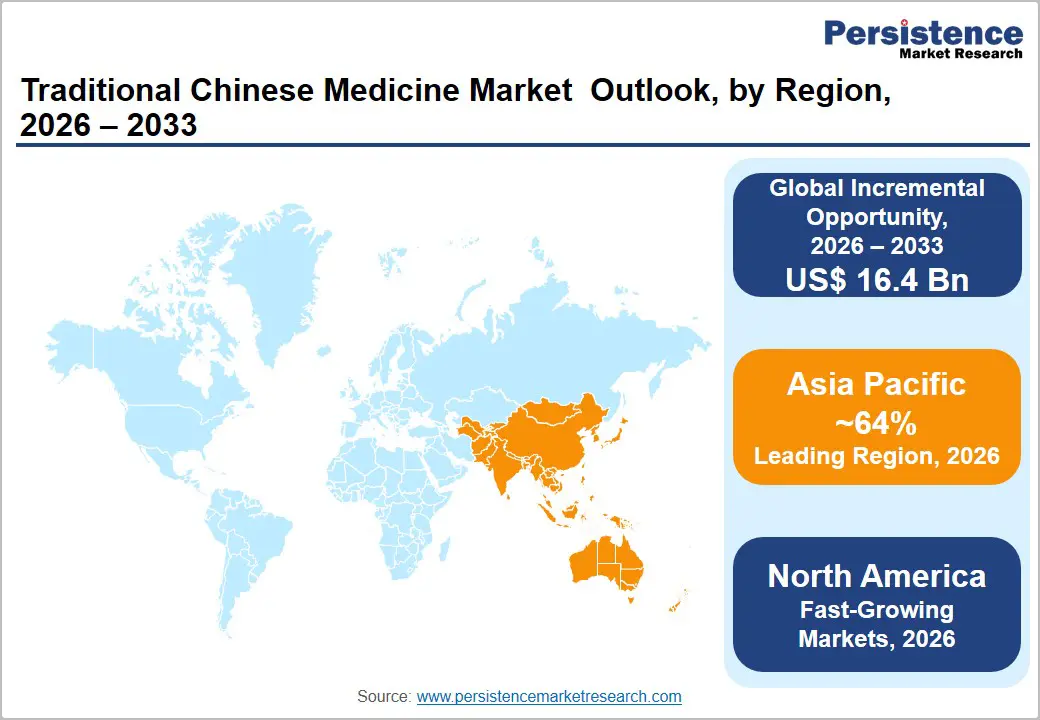
- Leading Region: Asia Pacific is likely to dominate the global market with approximately 64% revenue share in 2026, anchored by China's government-mandated TCM integration across 70,000+ medical institutions, the Traditional Chinese Medicine Law (2017), and Japan's reimbursed Kampo system prescribed by over 80% of Japanese physicians.
- Fast-growing Market: North America is the fast-growing regional TCM market, driven by 42% of U.S. hospitals now offering integrative medicine services (AHA data), NIH/NCCIH clinical research investment, and expanding acupuncture insurance coverage across major U.S. health plans serving the pain management patient population.
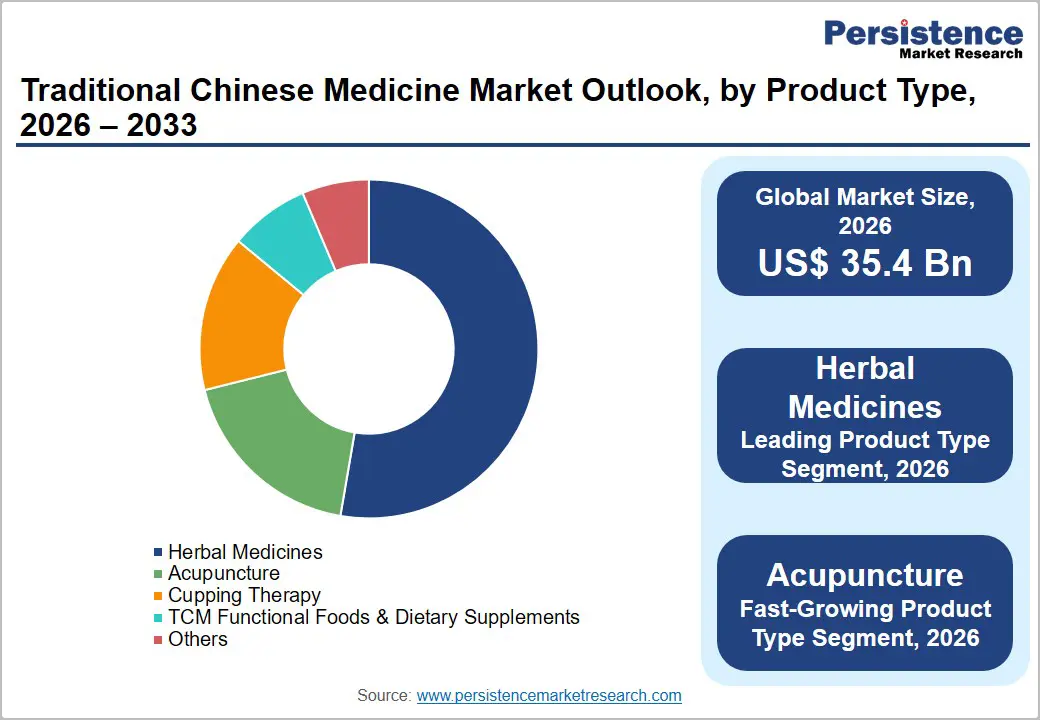
- Leading Product Category: Herbal Medicines dominate the product type category with approximately 53% global share in 2026, anchored by China's NMPA-approved proprietary TCM patent medicine portfolio, with blockbuster products including Lianhua Qingwen and Yunnan Baiyao achieving multi-billion-renminbi annual revenues and growing international distribution.
- Fast-growing Product: Acupuncture is the fast-growing TCM product, propelled by NIH-funded clinical trials documenting efficacy for chronic pain, U.S. VA Whole Health program deployment across 170+ medical centers, and broadening private health insurance reimbursement coverage in North America and Germany.
- Opportunity: The North American integrative medicine mainstreaming opportunity with over 38,000 licensed U.S. acupuncturists (AAAOM), WHO ICD-11 TCM diagnosis inclusion enabling insurance pathway development, and the Academic Consortium for Integrative Medicine comprising 70+ academic health centers defines the most commercially dynamic TCM market expansion frontier.
Market Dynamics
Drivers - WHO ICD-11 Recognition and Global Policy Integration Legitimizing Traditional Chinese Medicine
The formal recognition of Traditional Chinese Medicine within the World Health Organization's International Classification of Diseases 11th Revision (ICD-11), which came into effect in January 2022, represents the most significant global policy development in TCM's international legitimization. This landmark inclusion covering over 150 TCM conditions and 196 TCM patterns provides health systems, insurers, and regulators worldwide with a standardized classification framework for TCM diagnoses, laying the groundwork for insurance reimbursement expansions, clinical research funding, and healthcare system integration across WHO member states.
China's 14th Five-Year Plan (2021–2025) explicitly mandates TCM integration into all primary healthcare facilities, and the National Administration of Traditional Chinese Medicine (NATCM) has set national targets for expanding TCM service coverage to 100% of government-run primary healthcare institutions, directly driving domestic product demand and establishing a policy template being replicated across ASEAN and African Union member states.
Rising Global Chronic Disease Burden and Preventive Healthcare Trend Amplifying TCM Adoption
The escalating global prevalence of chronic conditions including musculoskeletal pain, cardiovascular disease, respiratory disorders, and mental health challenges is driving patient and physician interest in TCM modalities as complementary or integrative treatment approaches. The World Health Organization (WHO) estimates that chronic non-communicable diseases (NCDs) account for 74% of all global deaths annually, with musculoskeletal conditions alone affecting over 1.71 billion people worldwide according to WHO Global Burden of Disease data.
Growing evidence published in journals including the Journal of Ethnopharmacology and Evidence-Based Complementary and Alternative Medicine documents the efficacy of TCM herbal formulations and acupuncture in chronic pain management and cardiovascular risk reduction, providing the clinical evidence base that is converting practitioner skepticism into integrative prescription behavior across Western healthcare systems.
Restraints - Regulatory Complexity and Variable Approval Standards Across Jurisdictions Limiting Global Expansion
Traditional Chinese Medicine products face highly heterogeneous and complex regulatory environments across global markets that create significant barriers to international commercialization. The U.S. FDA regulates most TCM herbal products as dietary supplements under DSHEA (Dietary Supplement Health and Education Act) restricting disease claim labeling and preventing TCM products from being marketed as drugs without extensive clinical trial evidence.
EU Directive 2004/24/EC on traditional herbal medicinal products requires a 30-year documented traditional use history for simplified registration, a standard that Chinese-origin products often struggle to meet for European markets. These fragmented regulatory requirements substantially increase global market entry costs and timelines for TCM manufacturers seeking international sales beyond China and ASEAN markets.
Concerns Over Heavy Metal Contamination and Adulteration in TCM Herbal Products
Product quality and safety concerns, including heavy metal contamination, pesticide residues, adulteration with undisclosed pharmaceutical compounds, and misidentification of botanical ingredients, remain persistent reputational challenges for the TCM herbal medicines category globally. Regulatory surveillance actions by U.S. FDA, the European Food Safety Authority (EFSA), and Health Canada have identified contamination issues in imported TCM products, generating negative consumer media coverage and prompting retail pharmacy delisting in multiple markets.
These quality concerns erode consumer trust, create liability exposure for distributors, and complicate efforts by reputable TCM manufacturers to differentiate their standardized, quality-assured products in markets where consumer ability to distinguish between compliant and non-compliant products remains limited.
Opportunities - Acupuncture: Fast-Growing TCM Product Segment with Expanding Clinical Evidence and Insurance Coverage
Acupuncture represents the fastest-growing product segment in the TCM market globally, propelled by an expanding body of randomized controlled trial evidence, broadening insurance reimbursement coverage, and growing practitioner training infrastructure outside China. The National Center for Complementary and Integrative Health (NCCIH) at the U.S. National Institutes of Health (NIH) has funded multiple large-scale acupuncture clinical trials documenting statistically significant efficacy for chronic low back pain, neck pain, and osteoarthritis conditions affecting hundreds of millions globally.
U.S. Veterans Affairs (VA) has implemented a Whole Health program incorporating auricular acupuncture across its 170+ medical centers for opioid reduction in pain management. The American Academy of Acupuncture and Oriental Medicine (AAAOM) reports growing insurance reimbursement coverage across major U.S. health plans, creating the commercial infrastructure for sustained market volume expansion through the 2033 forecast horizon.
North America: Fastest-Growing Regional Market Driven by Integrative Medicine Mainstreaming
North America represents the fastest-growing regional market for Traditional Chinese Medicine through 2032, driven by the rapid mainstreaming of integrative medicine practices within the U.S. healthcare system and growing consumer wellness investment. The American Hospital Association (AHA) reports that over 42% of U.S. hospitals now offer some form of complementary or integrative medicine service, including acupuncture, herbal consultations, and TCM nutritional therapy, reflecting institutional acceptance that is translating into growing TCM product procurement.
The Integrative Medicine for the Underserved (IM4US) initiative and the Academic Consortium for Integrative Medicine and Health (ACIMH), comprising over 70 leading U.S. academic health centers, are systematically embedding TCM modalities into clinical training and care delivery. Growing Chinese-American and Asian-American community demographics in U.S. urban centers further anchor domestic demand for authentic TCM herbal formulations, dietary supplements, and clinical acupuncture services.
Category-wise Analysis
Product Type Insights
Herbal medicines dominate the traditional Chinese medicine market by product type, commanding approximately 53% of global revenues in 2026. This leadership reflects the foundational role of herbal formulations encompassing raw herbal materials, granule extracts, patent medicines (zhongyaocheng yao), and standardized TCM preparations across both domestic Chinese healthcare and international markets. China's National Medical Products Administration (NMPA) has approved thousands of proprietary TCM patent medicine formulas for clinical prescription use, with herbal preparations dispensed across China's 70,000+ TCM hospitals and clinics.
Leading products including Lianhua Qingwen (respiratory health), Compound Danshen Dripping Pills (cardiovascular), and Yunnan Baiyao (hemostasis) have achieved multi-billion-renminbi annual revenues and growing international market presence, exemplifying the commercial scale achievable in the herbal medicines segment by quality-certified TCM manufacturers.
Application Insights
Pain management represents the leading application segment in the TCM market, accounting for approximately 34% of global revenues in 2026. Chronic pain encompassing musculoskeletal pain, joint pain, lower back pain, headache, and neuropathic pain is the application area where TCM has accumulated the strongest clinical evidence base and achieved the broadest mainstream healthcare acceptance. WHO Global Burden of Disease data estimates that musculoskeletal conditions alone affect over 1.71 billion people globally, representing an enormous patient population seeking effective chronic pain management.
The U.S. National Institutes of Health (NIH) has invested over USD 500 million in acupuncture and TCM herbal pain management clinical trials since 2000, with multiple Cochrane systematic reviews documenting acupuncture's statistically significant superiority over sham acupuncture for chronic low back pain, neck pain, and osteoarthritis, supports growing clinical adoption across Western integrative medicine settings.
Distribution Channel Insights
Clinics & wellness centers represent the leading distribution channel for traditional Chinese medicine products and services, accounting for approximately 38% of global revenues in 2025. This distribution model reflects TCM's fundamentally practitioner-dependent delivery mechanism where TCM physicians, licensed acupuncturists, and herbalists prescribe individualized formulations and perform therapeutic procedures within clinic settings, generating both service revenue and product dispensing revenue from customized herbal preparations.
China's National Health Commission reports over 60,000 TCM medical institutions and specialized TCM departments within general hospitals operating across the country, creating a vast institutional distribution infrastructure. Internationally, the growing network of licensed TCM clinics and integrative wellness centers in North America, Europe, and Australia operating under national practitioner licensing frameworks constitutes the primary professional channel through which TCM products and services reach consumers outside Asia.
Regional Insights
North America Traditional Chinese Medicine Market Trends and Insights
North America is emerging as the fastest-growing regional market for Traditional Chinese Medicine (TCM), projected to register a CAGR of around 8.9% through 2032. Market growth is supported by rising integration of complementary medicine into mainstream healthcare systems, increasing insurance reimbursement for acupuncture therapies, and growing clinical research on herbal medicine applications. Expanding wellness culture, chronic pain prevalence, and consumer preference for plant-based therapies are further accelerating demand across the region.
U.S. Traditional Chinese Medicine Market Trends and Insights
The U.S. accounts for nearly 78.4% of the North American TCM market, driven by increasing adoption of acupuncture and integrative medicine programs in hospitals and rehabilitation centers. More than 40% of hospitals provide complementary therapy services, while growing NIH-backed research on pain management and neurological disorders is strengthening clinical acceptance of TCM-based treatments. Rising consumer spending on herbal supplements also supports sustained market expansion.
Canada Traditional Chinese Medicine Market Trends and Insights
Canada holds an estimated 14.8% regional market share and continues to witness stable growth due to supportive Natural Health Product regulations and rising demand for holistic wellness solutions. Provinces such as Ontario and British Columbia are expanding acupuncture coverage under provincial healthcare programs. Increasing penetration of herbal medicines, combined with multicultural consumer adoption and growing wellness clinic infrastructure, is supporting the country’s expanding TCM ecosystem.
Europe Traditional Chinese Medicine Market Trends and Insights
Europe represents a steadily expanding TCM market, accounting for approximately 11.9% of global revenue in 2026. Growth is supported by increasing acceptance of alternative medicine, rising demand for botanical therapeutics, and growing evidence supporting acupuncture efficacy in chronic disease management. Favorable regulatory pathways for traditional herbal medicines and expanding practitioner networks are further strengthening regional adoption, particularly across Western European healthcare systems.
Germany Traditional Chinese Medicine Market Trends and Insights
Germany leads the European TCM market with nearly 29.6% regional share, supported by strong reimbursement policies for acupuncture therapies treating chronic musculoskeletal conditions. Statutory health insurance programs continue to expand patient access to complementary therapies. Increasing consumer demand for herbal medicines and high awareness regarding preventive healthcare are contributing to continued market growth across clinics and wellness institutions.
UK Traditional Chinese Medicine Market Trends and Insights
The UK contributes approximately 18.7% of the European TCM market and is witnessing increasing demand for herbal medicine and acupuncture services. The Traditional Herbal Registration (THR) framework supports regulated commercialization of botanical products, while rising interest in integrative healthcare and stress management therapies continues to drive consumer adoption. Growth in professional acupuncture associations and private wellness clinics is further enhancing market penetration.
Asia Pacific Traditional Chinese Medicine Market Trends and Insights
Asia Pacific dominates the global Traditional Chinese Medicine market with an estimated 64.2% revenue share in 2026. The region benefits from deep-rooted cultural acceptance, strong government support for traditional medicine systems, and extensive manufacturing infrastructure for herbal therapeutics. Rapid expansion of wellness tourism, aging populations, and increasing integration of traditional medicine into national healthcare systems continue to strengthen regional demand across both therapeutic and preventive healthcare applications.
China Traditional Chinese Medicine Market Trends and Insights
China represents nearly 72.5% of the Asia Pacific TCM market and remains the global center for production, consumption, and innovation in traditional medicine. Government-backed healthcare initiatives, expanding TCM hospital infrastructure, and strong domestic demand for herbal formulations continue to drive market leadership. Increasing investments in TCM modernization and exports are also strengthening China’s international market position.
Japan Traditional Chinese Medicine Market Trends and Insights
Japan accounts for approximately 11.8% of the regional market, supported by widespread adoption of Kampo medicines under the National Health Insurance system. A significant percentage of physicians prescribe traditional botanical formulations alongside modern therapies for gastrointestinal, respiratory, and chronic disease management. Rising aging demographics and strong consumer trust in preventive medicine are contributing to steady long-term market growth.
Competitive Landscape
The global traditional chinese medicine market is highly fragmented, with thousands of domestic Chinese manufacturers, international herbal supplement companies, and acupuncture equipment suppliers competing across different product and geographic segments. Chinese state-owned and large private TCM enterprises including Tongrentang, China Resources Sanjiu Medical & Pharmaceutical, and Yunnan Baiyao Group dominate the domestic patent medicine segment through brand heritage and regulatory approvals. International players including Tasly Pharmaceutical and Eu Yan Sang compete in diaspora and export markets. Key differentiators include NMPA and international pharmacopoeia compliance, standardized extract manufacturing (GMP certification), and clinical evidence investments. Emerging business models encompass direct-to-consumer TCM wellness e-commerce, digital TCM diagnosis platforms, and contract manufacturing for international botanical supplement brands.
Key Developments:
- In March 2026, the Association of Acupuncture and Traditional Chinese Medicine announced initiatives to strengthen research leadership and expand international collaboration in Traditional Chinese Medicine, with a focus on advancing clinical evidence, academic partnerships, and global integration of acupuncture and TCM practices.
- In March 2026, HKTDC Research highlighted the growing demand for preventive healthcare and wellness solutions across Asia, with increasing investment and trade activity supporting the expansion of the Traditional Chinese Medicine (TCM) market. The report emphasized rising consumer preference for herbal therapies, functional wellness products, and complementary medicine practices, creating favorable growth opportunities for TCM manufacturers and healthcare providers across regional markets.
Global Traditional Chinese Medicine Market – Key Insights
| Key Insights | Details |
|---|---|
|
Historical Market Value (2020) |
US$ 26.7 Bn |
|
Current Market Value (2026) |
US$ 35.4 Bn |
|
Projected Market Value (2033) |
US$ 51.8 Bn |
|
CAGR (2026-2033) |
5.6% |
|
Leading Region |
Asia Pacific, 64% share |
|
Dominant Source |
Plant-Based Medicines, 68.3% share |
|
Top-ranking Product Type |
Herbal Medicines, 52.7% |
|
Incremental Opportunity |
US$ 16.4 Bn |
Companies Covered in Traditional Chinese Medicine Market
- MiMedx Group, Inc.
- BioTissue Holdings, Inc.
- TissueTech, Inc.
- Organogenesis Holdings Inc.
- Integra LifeSciences Holdings Corporation
- Amnio Technology, LLC
- Applied Biologics, LLC
- Celularity Inc.
- Skye Biologics Holdings, LLC
- Smith & Nephew plc
- Katena Products, Inc.
- Surgenex, LLC
- VIVEX Biologics, Inc.
- Human Regenerative Technologies, LLC
- NuVision Biotherapies Ltd.
Frequently Asked Questions
The global traditional chinese medicine market is estimated to be valued at US$ 35.4 billion in 2026, growing from US$ 26.7 billion in 2020 at a historical CAGR of 4.8%. The market is projected to reach US$ 51.8 billion by 2033 at a forecast CAGR of 5.6%, driven by WHO ICD-11 TCM recognition, China's government-mandated TCM integration programs under the 14th Five-Year Plan, and accelerating acupuncture and herbal medicine adoption in North America and Europe.
Rising consumer preference for natural and holistic therapies, increasing prevalence of chronic diseases, and growing adoption of integrative healthcare practices are major demand drivers for the market. Expanding awareness regarding preventive healthcare and herbal medicines further supports global market growth.
Asia Pacific leads with approximately 64% of global revenues in 2025, overwhelmingly anchored by China as the origin and largest consumer market. China's Traditional Chinese Medicine Law (2017), over 70,000 TCM medical institutions, NATCM promotional programs, and government healthcare investment exceeding USD 10 billion annually in TCM infrastructure collectively sustain Asia Pacific's dominant position. Japan's Kampo reimbursement system with over 80% of Japanese physicians prescribing Kampo per the Japan Society for Oriental Medicine reinforces regional leadership beyond China.
The key growth opportunity lies in the increasing integration of TCM therapies into mainstream healthcare systems and the rapid expansion of herbal supplements and wellness products through e-commerce channels. Growing research validation and international regulatory acceptance are also creating new commercialization opportunities.
The leading companies in the global TCM market include Beijing Tong Ren Tang Co., Ltd., Yunnan Baiyao Group Co., Ltd., China Resources Sanjiu Medical & Pharmaceutical Co., Ltd., Tasly Pharmaceutical Group Co., Ltd., Guangzhou Pharmaceutical Holdings Limited (GPHL), Eu Yan Sang International Ltd., Tsumura & Co. (Japan), Kracie Pharmaceutical Co., Ltd. (Japan), Sino Biopharmaceutical Limited, Shanghai Pharmaceutical Group Co., Ltd., New Chapter, Inc., and Nature's Sunshine Products, Inc., among other regional and international TCM manufacturers, distributors, and clinical service providers operating across the global traditional medicine market.


