




- Processed Food
- U.S. Frozen Bakery Products Market
U.S. Frozen Bakery Products Market Size, Share, Growth, and Country-level Forecast, 2026 - 2033
U.S. Frozen Bakery Products Market by Product (Bread, Cakes & Pastries, Cookies & Biscuits, Pies & Tarts, Others), Nature {Ready-to-Bake (RTB), Ready-to-Eat (RTE)}, Distribution Channel {Retail (Off-Trade), Online Retail / E-commerce, Bakery Stores / In-store Bakeries, Foodservice (On-Trade), Others)}, Analysis from 2026 - 2033

U.S. Frozen Bakery Products Market Share and Trends Analysis
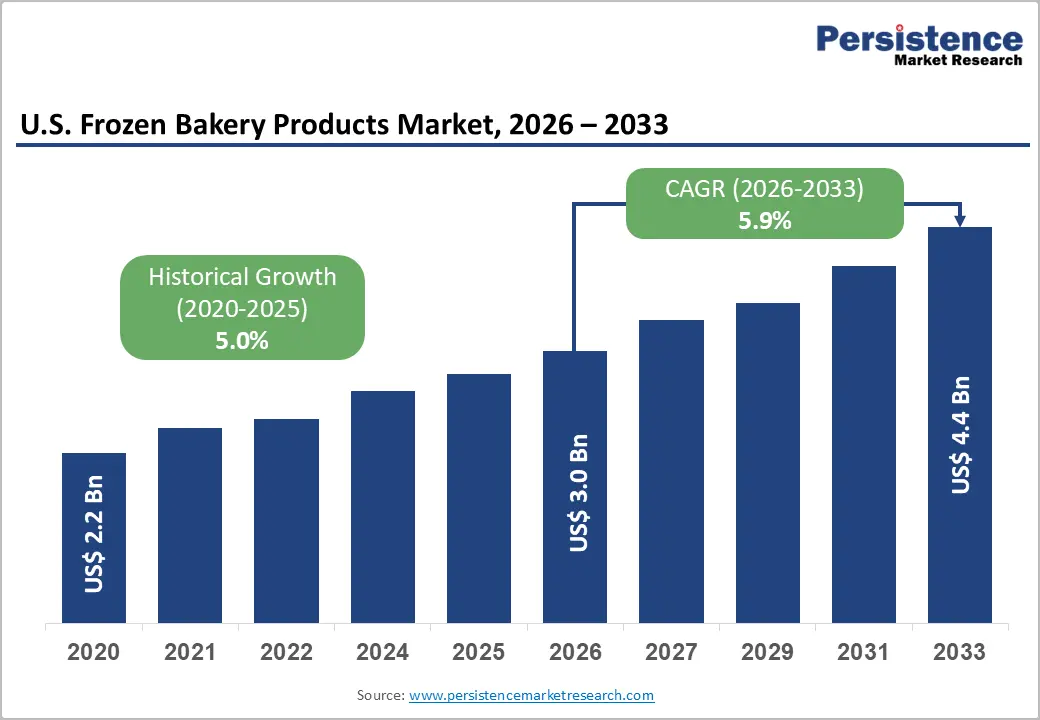
The U.S. frozen bakery products market is estimated to grow from US$ 3.0 billion in 2026 to US$ 4.4 billion by 2033, it is projected a CAGR of 5.9% during the forecast period from 2026 to 2033.
It is growing steadily, driven by rising demand for convenience, clean-label offerings, and premium baked goods. Strong retail infrastructure and foodservice expansion support consumption, while innovation in gluten-free and high-protein products fuels growth. Increasing preference for ready-to-bake formats and artisanal quality further accelerates market expansion nationwide.
Key Industry Highlights
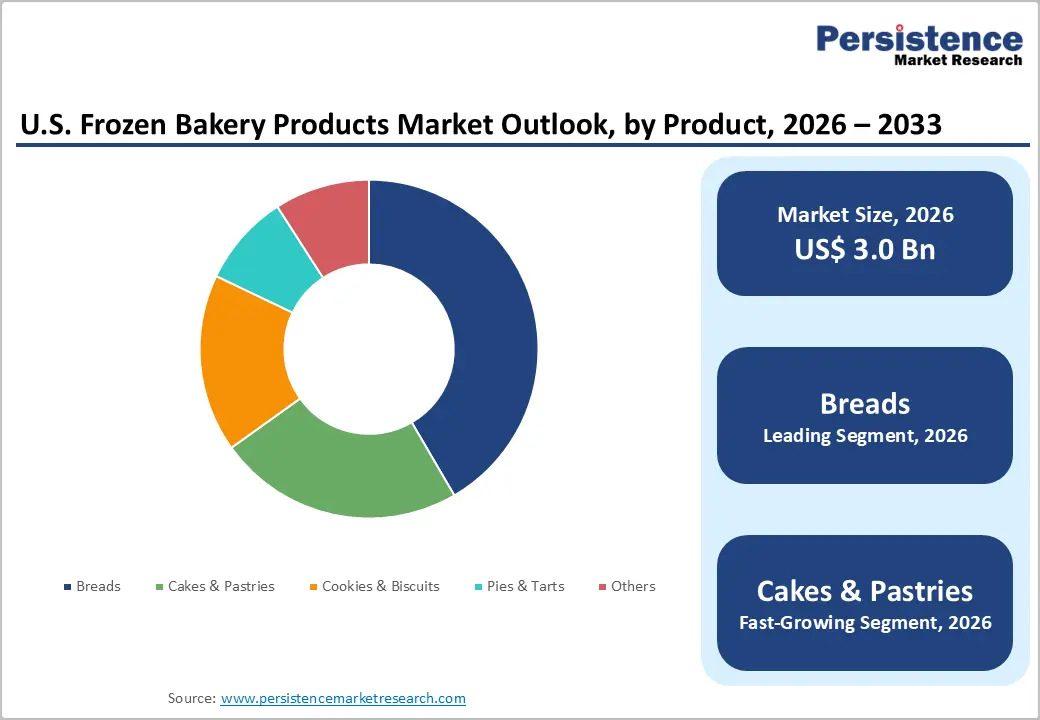
- Dominant Product Type: Breads hold the largest share in 2025, driven by high daily consumption, strong demand across retail and foodservice, wide product availability, and preference for staple, versatile frozen bakery items such as rolls, buns, and sandwich bread.
- Dominant Zone: The Southern zone leads the market with the highest share in 2025, supported by a large population base, strong consumption of convenience foods, extensive supermarket presence, and high demand for frozen bakery products across households and foodservice outlets.
- Growth Indicators: Growth is driven by rising demand for convenient and ready-to-bake products, increasing preference for clean-label and premium bakery items, expansion of foodservice chains, busy consumer lifestyles, and continuous innovation in gluten-free, organic, and high-protein baked goods.
- Opportunity: Opportunities lie in premium artisanal frozen bakery, expansion of gluten-free and functional products, growth of e-commerce grocery channels, increasing demand for plant-based bakery options, and innovation in clean-label, preservative-free, and health-focused formulations.
Market Dynamics
Driver: Rising Demand for Convenience and Ready-to-Bake Products
The U.S. frozen bakery products market is significantly driven by increasing demand for convenience foods, supported by shifting lifestyle patterns. According to the United States Bureau of Labor Statistics, over 60% of U.S. households are dual-income, limiting time available for meal preparation.
In addition, the Bureau reports that Americans spend relatively limited time on food preparation daily, reinforcing reliance on ready-to-use or quick-preparation products. Frozen bakery items such as ready-to-bake breads and pastries directly address this need by reducing preparation complexity while offering near-fresh outcomes, making them highly compatible with modern consumption behavior. This trend is further supported by consumption data from the United States Department of Agriculture, which highlights sustained demand for processed and convenience-oriented foods due to urbanization and changing household structures.
The USDA has also emphasized that frozen foods help reduce food waste through longer shelf life, aligning with consumer efforts to manage food efficiently. Moreover, rising participation in the workforce and increased reliance on quick meal solutions contribute to the growth of frozen bakery formats. These structural factors collectively establish convenience and ready-to-bake formats as a primary growth driver in the U.S. frozen bakery products market.
Restraint: Growing Consumer Preference for Fresh and In-Store Baked Products
A key restraint for the U.S. frozen bakery products market is the strong consumer preference for fresh and in-store baked goods. According to the United States Department of Agriculture, fresh bakery products continue to dominate consumption patterns due to their perceived superior taste, texture, and quality. Fresh bread and baked goods are widely available across supermarkets and retail bakeries, often produced daily, which reinforces consumer perception of freshness. This preference creates a competitive disadvantage for frozen bakery items, particularly in premium and artisanal segments where sensory attributes play a crucial role in purchasing decisions.
Additionally, data from the Food and Drug Administration indicates increasing consumer awareness around food processing and ingredient transparency. Many consumers associate frozen foods with higher levels of processing or preservatives, even when modern freezing technologies maintain nutritional quality. This perception, combined with the convenience of readily available fresh bakery items that require no reheating or preparation, limits the adoption of frozen alternatives. As a result, despite advancements in freezing and packaging technologies, the preference for fresh products continues to restrain the growth potential of frozen bakery products in the U.S. market.
Opportunity: Rising Demand for Gluten-Free and Functional Frozen Bakery Products
The growing demand for gluten-free and functional foods presents a strong opportunity for the U.S. frozen bakery products market. According to the Centers for Disease Control and Prevention, about 1% of the U.S. population is affected by celiac disease, requiring strict adherence to gluten-free diets. Additionally, a larger share of consumers voluntarily reduces gluten intake due to perceived health benefits. This expanding consumer base has increased demand for gluten-free bakery alternatives, including frozen formats that offer convenience and accessibility. Frozen bakery manufacturers can capitalize on this trend by developing specialized products tailored to dietary restrictions.
Further supporting this opportunity, the United States Department of Agriculture highlights growing consumer interest in healthier eating patterns, including higher protein intake, whole grains, and clean-label ingredients. Functional foods that provide added nutritional benefits are gaining traction across U.S. households. Frozen bakery products enriched with protein, fiber, or alternative grains align well with these trends, offering both health benefits and convenience. As consumers increasingly seek products that combine nutrition with ease of preparation, the demand for functional and gluten-free frozen bakery items is expected to expand, creating significant innovation and growth opportunities.
Category-wise Analysis
By Product, Breads Dominate the U.S. Frozen Bakery Products Market
Breads dominate the U.S. frozen bakery products market primarily due to their role as a staple food in the American diet. According to the United States Department of Agriculture, grain-based foods, including bread, contribute a significant portion of daily caloric intake in the U.S., reflecting consistent and high consumption levels. This habitual consumption makes bread a high-frequency purchase across households.
Additionally, breads are widely used across multiple eating occasions, breakfast, lunch, and dinner, unlike desserts or specialty bakery items. Their compatibility with foodservice formats such as sandwiches and burgers further strengthens demand, making frozen bread a reliable, high-volume category.
Cakes and pastries are emerging as the fastest-growing segment due to increasing demand for indulgence and premium bakery experiences. The United States Census Bureau highlights that frozen food manufacturing includes value-added items like pastries, waffles, and desserts, reflecting diversification beyond staples. Changing consumer behavior, driven by higher disposable incomes and demand for convenient indulgent foods, supports growth in this segment.
Additionally, younger consumers show a stronger preference for ready-to-eat dessert formats and premium baked goods. This shift toward occasional, experience-driven consumption is accelerating the growth of cakes and pastries within the frozen bakery category.
By Nature, Ready-to-Bake (RTB) Dominates the U.S. Frozen Bakery Products Market
Ready-to-bake (RTB) products dominate the U.S. frozen bakery products market because they effectively combine convenience with freshness. According to the United States Department of Agriculture, frozen foods are widely used due to their ability to be quickly prepared while maintaining quality and safety. RTB products allow consumers to bake items at home, delivering a fresh aroma and texture that closely resembles in-store bakery products. This “fresh-from-oven” experience is a key differentiator over fully ready-to-eat products. Additionally, RTB formats are heavily utilized in foodservice operations, where consistency and ease of preparation are critical, further strengthening their dominance.
Ready-to-eat (RTE) frozen bakery products are the fastest-growing segment due to increasing demand for instant consumption. Government-backed food safety surveys indicate that frozen foods are widely used for quick preparation, especially among busy households. RTE products eliminate the need for baking or preparation, aligning with time-constrained lifestyles. Moreover, data from public health surveys show that a significant share of consumers regularly consume frozen foods, reinforcing their role in daily diets.
Growth is further supported by rising demand for breakfast and snacking options such as waffles, pancakes, and packaged baked goods. This shift toward immediacy and minimal effort is accelerating the expansion of the RTE segment.
Competitive Landscape
The U.S. frozen bakery products market is moderately competitive, driven by established manufacturers and foodservice suppliers focusing on product quality, consistency, and efficient distribution. Companies emphasize clean-label ingredients, premiumization, and innovation in frozen formats. Competition is increasing due to rising convenience demand, expanding retail presence, and growth in ready-to-bake and functional bakery products.
Key Developments:
- In April 2026, Bimbo Bakeries relocated its corporate headquarters to Texas, marking a strategic move to strengthen its operational efficiency and regional presence in the United States. The company shifted its HQ from Pennsylvania to the Dallas-Fort Worth area to benefit from better logistics connectivity, business-friendly policies, and proximity to key markets.
- In June 2025, Conagra Brands introduced more than 50 new frozen food products, expanding its portfolio to enhance convenience, variety, and flavor offerings for consumers. The launch included a wide range of frozen meals, snacks, and bakery items designed to meet evolving consumer preferences for quick, easy-to-prepare food options.
U.S. Frozen Bakery Products Market - Key Insights & Details
| Key Insights | Details |
|---|---|
| Historical Market Value (2020) | US$ 2.2 Bn |
| Current Market Value (2026) | US$ 3.0 Bn |
| Projected Market Value (2033) | US$ 4.4 Bn |
| CAGR (2026 - 2033) | 5.9% |
| Top-ranking Product | Breads, 41.6% |
| Incremental Opportunity | US$ 1.5 Bn |
Companies Covered in U.S. Frozen Bakery Products Market
- Grupo Bimbo
- Conagra Brands
- Sara Lee Frozen Bakery
- Kellanova
- General Mills
- Aspire Bakeries
- Bridgford Foods Corporation
- J&J Snack Foods Corp.
- Furlani Foods
- Dawn Food Products, Inc.
- Premier Frozen Foods
- Others
Frequently Asked Questions
The U.S. frozen bakery products market is projected to be valued at US$ 3.0 Bn in 2026.
Rising demand for convenience foods, ready-to-bake products, busy lifestyles, foodservice expansion, and clean-label innovation.
The U.S. frozen bakery products market is poised to witness a CAGR of 5.9% between 2026 and 2033.
Growth in gluten-free, premium bakery, e-commerce expansion, plant-based products, and functional ingredient innovation.
Grupo Bimbo, Conagra Brands, Sara Lee Frozen Bakery, Kellanova, General Mills, Aspire Bakeries.


