




- Medical Devices
- Skin Barriers Market
Skin Barriers Market Size, Share, and Growth Forecast 2026 - 2033
Skin Barriers Market by Product (Skin Barrier Sprays, Moisture Barrier Creams, Protective Ointments, Others), by Indication (Incontinence and Ostomy, Chronic Wounds, Pressure Ulcers, Skin Rash and Dry Skin, Atopic Dermatitis), by Distribution Channel (Institutional Sales, Retail Sales), by Regional Analysis, 2026 - 2033

Skin Barriers Market Size and Trend Analysis
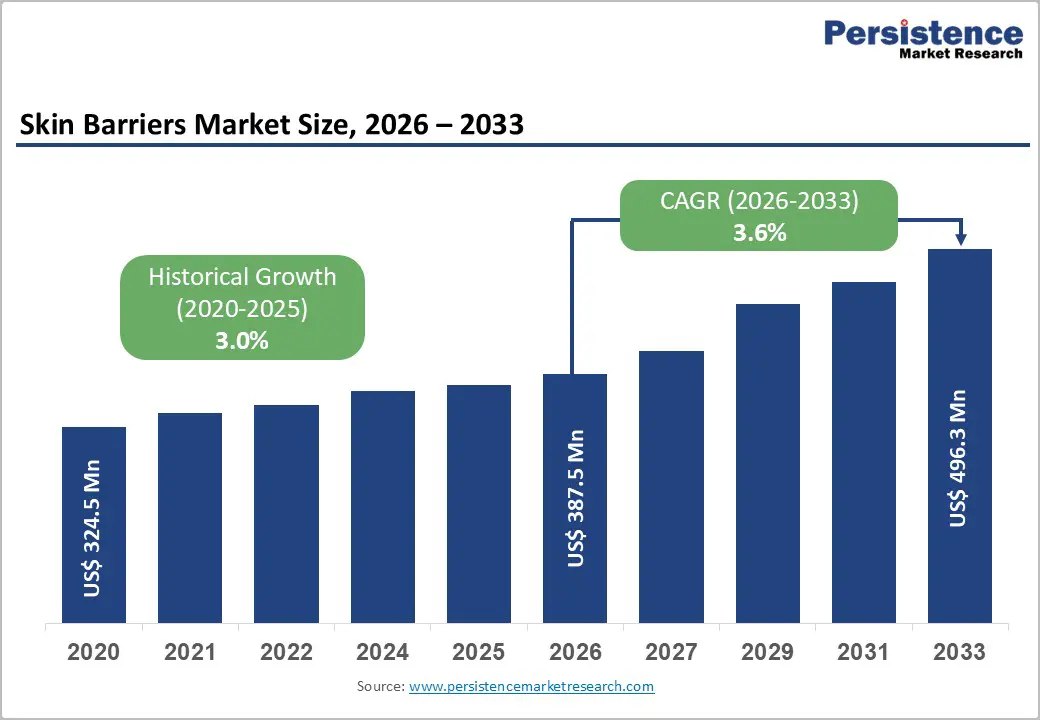
The global skin barrier market size is expected to be valued at US$ 387.5 million in 2026 and projected to reach US$ 496.3 million by 2033, growing at a CAGR of 3.6% between 2026 and 2033.
The skin barrier market focuses on topical products designed to protect the stratum corneum, the skin’s outermost layer that prevents moisture loss and blocks external irritants. Damage to this layer can lead to inflammation, dryness, and heightened sensitivity, driving demand for creams, ointments, lotions, sprays, and protective formulations that restore hydration and reinforce surface integrity.
Current market trends emphasize multifunctional formulations combining occlusives and humectants to maintain moisture balance and accelerate repair. Manufacturers are increasingly incorporating ceramides, vitamin B3, and bioactive extracts to support barrier regeneration. Growing dermatology awareness, rising prevalence of sensitive-skin conditions, and consumer preference for clinically backed skincare solutions continue to shape innovation and product differentiation across global markets.
Key Market highlights
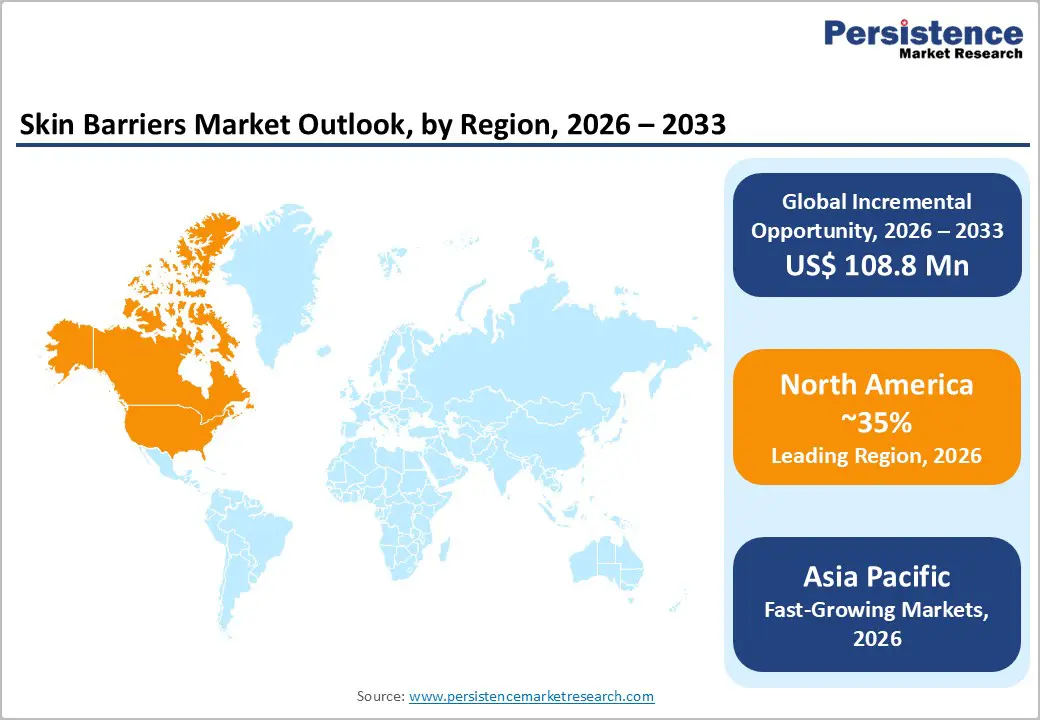
- North America leads the skin barriers market, supported by high institutional adoption, strong reimbursement coverage, aging populations, and widespread continence-care programs.
- Asia Pacific is the fastest-growing region, driven by an aging population, expanding healthcare infrastructure, rising awareness of skin protection, and regulatory approvals.
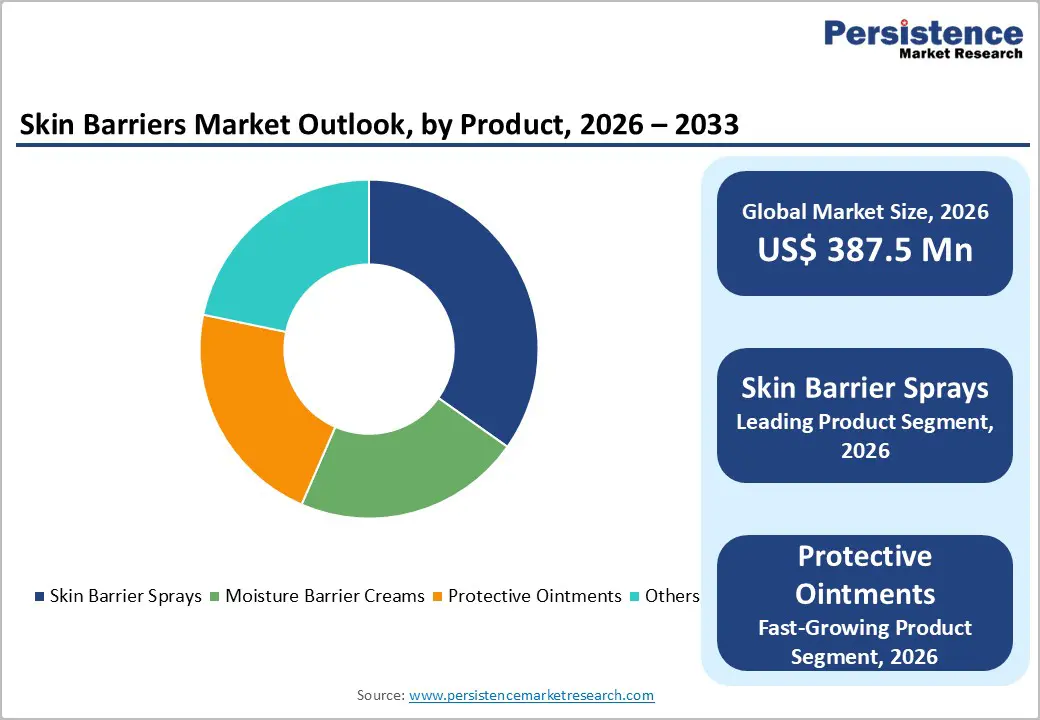
- Barrier sprays and creams hold the largest product share due to ease of application, high-volume institutional use, and effectiveness in preventing moisture-associated skin damage.
- Medicated and bioactive barrier formulations are the fastest-growing segment, supported by ceramides, vitamin-based innovations, sensitive-skin demand, and home-care expansion.
| Key Insights | Details |
|---|---|
|
Skin Barriers Market Size (2026E) |
US$ 387.5 million |
|
Market Value Forecast (2033F) |
US$ 496.3 million |
|
Projected Growth CAGR (2026-2033) |
3.6% |
|
Historical Market Growth (2020-2025) |
3.0% |
Market Dynamics
Driver: Rising Incontinence, Skin Injuries, and Industry Consolidation Fueling Market Growth
The skin barriers market is being strongly driven by the increasing global prevalence of urinary incontinence and the growing number of ostomy procedures. Large-scale epidemiological studies highlight high incidence among older adults, particularly women, while millions of people in the United States alone live with ostomies and undergo related surgeries annually. Alongside these trends, hospital-acquired skin complications such as medical adhesive–related skin injuries, moisture-associated skin damage, and pressure ulcers are becoming more widely recognized, especially among elderly and neonatal patients. Clinical studies reporting significant MARSI and MASD rates following surgical dressing use are prompting healthcare systems to adopt preventive skin barrier products more systematically. These factors collectively expand routine use across acute care, long-term care, and home-care environments.
Consolidation within the industry is further accelerating growth, as manufacturers pursue mergers, acquisitions, and distribution partnerships to strengthen geographic reach and portfolio breadth. Strategic collaborations between innovators and established distributors are improving product availability, expanding sales networks, and supporting penetration into new hospital systems and national healthcare markets, reinforcing sustained market expansion.
Restraint: Lack of knowledge and awareness about urinary incontinence and reluctance to purchase adult incontinence products can hamper the market
Adult incontinence is a condition with which a lot of social taboo is attached. Many individuals find it socially embarrassing to get linked with incontinence. It is because they remain reluctant to enquire or purchase incontinence products.
Similarly, the less knowledge regarding the incontinence is restraining the market. For instance, in a recent study on Knowledge of Pelvic Floor Disorders in Obstetrics by Mckay et al. submitted in International Journal of Environmental Research and Public Health in 2018, they found that over 399 varied pregnant and postpartum women lacked information about UI and POP in 74.2% of their participants. In the same study, primiparous women, Hispanic women, and those with lower levels of education were more likely to lack UI knowledge competency. Hence, the above-mentioned reasons will be restraints for the global skin barrier market.
Opportunity: Awareness Campaigns and Untapped Emerging Markets Creating Expansion Potential
Significant opportunity exists in expanding awareness and diagnosis of urinary incontinence and related skin complications, particularly in developing regions where these conditions often remain underreported and undertreated. Public campaigns aimed at reducing stigma around incontinence are encouraging earlier medical consultation and increasing demand for protective skincare solutions. High-visibility outreach initiatives, including creative advertising and community-based education programs, are gradually shifting patient behavior in mature markets while laying the groundwork for adoption in underserved populations. Greater clinical engagement and caregiver training can further broaden acceptance of preventive skin barrier use in everyday management.
Emerging economies in Africa and Asia Pacific present substantial long-term potential due to limited access to specialized continence care products and dermatology services. As healthcare infrastructure improves and distribution networks expand, manufacturers can introduce affordable product lines and build partnerships with hospitals, pharmacies, and public-health agencies. These strategies position companies to capture unmet demand while establishing early leadership in high-growth, underpenetrated markets.
Category-wise Insights
Product Analysis
Skin barrier sprays accounted for an estimated 32% of total market share in 2025, reflecting growing preference for products that combine clinical efficacy with low physiological toxicity. Their rapid application and ability to deliver uniform coverage across irregular or sensitive skin surfaces make sprays especially valuable in wound-care and post-procedural settings. Healthcare providers increasingly favor spray formats because they minimize physical contact with damaged tissue, reducing discomfort and infection risk while shortening treatment time. The convenience of treating large areas or difficult anatomical contours further supports adoption in both institutional and home-care environments.
Manufacturers are investing in improved nozzle systems, aerosol-free delivery mechanisms, and advanced polymer blends that form durable yet breathable films. Formulations incorporating skin-soothing agents and barrier-repair compounds enhance therapeutic value and patient adherence. As outpatient care expands and demand rises for easy-to-use protective products, skin barrier sprays are expected to maintain a strong growth trajectory within the overall market.
Indication Analysis
Incontinence and ostomy applications dominated the skin barriers market in 2025 with approximately 72% share, driven by the need to protect vulnerable skin from prolonged exposure to moisture and irritants. Barrier creams and films form a physical shield between the epidermis and bodily waste, helping prevent dermatitis, maceration, and secondary infections. Clinical research highlights that combined exposure to urine and feces causes significantly greater skin breakdown than either alone, reinforcing the importance of preventive skin-care protocols in hospitals and long-term care facilities.
Rising geriatric populations and increasing surgical procedures involving ostomies are expanding the patient base worldwide. Home-care adoption is also accelerating as caregivers seek reliable, easy-to-apply solutions for chronic management. Product innovation focusing on breathable coatings, hypoallergenic formulations, and longer-lasting protection is strengthening user confidence. These dynamics continue positioning incontinence and ostomy care as the central demand driver for skin barrier products globally.
Distribution Channel Analysis
Institutional sales represented about 56% of total market revenue in 2025, underscoring the importance of hospitals, laboratories, and outpatient surgery centers as primary purchasers of skin barrier products. Bulk procurement agreements allow healthcare facilities to secure a consistent supply while controlling costs, making this channel attractive for manufacturers seeking predictable, high-volume orders. Institutional use is particularly high in surgical wards, intensive-care units, and long-term care centers, where skin protection is integral to infection prevention and pressure-injury protocols.
Suppliers are increasingly partnering with group purchasing organizations and regional distributors to expand penetration across public and private healthcare networks. Training programs for nurses and wound-care specialists further encourage standardized use of specific brands, strengthening customer loyalty. As healthcare systems emphasize preventive care and shorter hospital stays, institutional demand for protective skin products is expected to remain robust, continuing to dominate overall market distribution patterns.
Regional Insights
North America Skin Barriers Market Trends and Insights
North America continues to represent a significant market for skin barrier products, supported by a rapidly aging population and increasing prevalence of chronic skin conditions linked to incontinence and long-term care. The U.S. accounted for roughly 34.0% of regional revenue in 2025, reflecting high healthcare spending, broad institutional adoption, and strong awareness among clinicians and caregivers. The expanding elderly population is intensifying demand for protective formulations in hospitals, nursing facilities, and home-care settings, particularly for managing moisture-associated skin damage and pressure injuries. Government demographic projections highlight steady growth in the older-adult population, reinforcing long-term consumption patterns for barrier creams, sprays, and films.
Research and development activity remains a defining regional trend. Manufacturers are investing in next-generation bowel-management systems and advanced protective formulations to reduce irritation and infection risk in patients with fecal incontinence. Continuous innovation, combined with reimbursement support and clinical training programs, is strengthening product penetration and sustaining North America’s leadership in the global skin barriers market.
Asia Pacific Skin Barriers Market Trends and Insights
Asia Pacific is emerging as an increasingly dynamic region for skin barrier products, shaped by climatic diversity, regulatory approvals, and active collaboration between industry and academic stakeholders. In East Asia, China represented about 6% of market share in 2025, supported by growing awareness of ultraviolet-related skin damage and rising demand for preventive skincare solutions. Localized product development tailored to regional skin characteristics and environmental conditions is gaining traction, while regulatory clearances for new formulations are broadening commercial availability. Approvals for novel ingredients and barrier products are encouraging multinational brands to deepen their presence across Chinese healthcare and consumer markets.
Japan also plays an influential role, holding roughly 5% of the skin barrier market in 2025. Ongoing manufacturer-led research initiatives and scientific collaborations continue to stimulate innovation. Industry-supported dermatology symposia and research partnerships foster knowledge exchange on barrier repair technologies, strengthening adoption across clinical and cosmetic segments and positioning the Asia Pacific as a rising growth engine globally.
Competitive Landscape
The skin barrier market is increasingly competitive, with established manufacturers and emerging brands pursuing aggressive growth strategies through mergers, acquisitions, and global distribution partnerships. Companies are strengthening portfolios by adding innovative formulations, advanced delivery formats, and bioactive ingredients that address moisture control, skin repair, and irritation prevention. Strategic collaborations with hospital networks, long-term care providers, and pharmacy chains help expand geographic reach and secure high-volume procurement contracts. Firms are also investing in research and development to differentiate products through clinical validation and regulatory clearances. Expansion into emerging markets and private-label manufacturing further intensify rivalry as players compete for institutional and home-care demand worldwide.
Key Market Developments
- In December 2022, Dr. Scott and Jill Kelley introduced the LeakGuard™ Biodegradable Stent, an innovative device designed to prevent surgical leaks that contribute significantly to mortality and healthcare costs.
- In July 2022, Hollister Corporation, a major ostomy and continence-care company, announced two major initiatives reinforcing its commitment to improving patients' quality of life through advanced care solutions.
Companies Covered in Skin Barriers Market
- ConvaTec Inc.
- Hollister Inc.
- DermaRite Industries LLC
- 3M
- Coloplast Corp,
- Stryker
- Integra Lifesciences Corp
- Smith & Nephew
- GOJO Industries
- Medlline Industries
- B Braun Melsungen AG
- Sonoma Pharmaceuticals Inc.
- Welland Medical Ltd.
- Others
Frequently Asked Questions
The global skin barriers market is valued at US$ 387.5 million in 2026.
Rising incontinence prevalence, aging populations, ostomy surgeries, hospital-acquired skin injuries, moisture damage, pressure ulcers, and institutional purchasing growth.
North America leads with 35% share in 2025.
Expansion into emerging Asia and Africa markets, awareness campaigns, affordable products, home-care adoption, regulatory approvals, and distribution partnerships.
Leaders include ConvaTec Inc., Hollister Inc., DermaRite Industries LLC, 3M, Coloplast Corp, Stryker.


