




- Beauty & Personal Care
- Facial Water Spray Market
Facial Water Spray Market Size, Share, and Growth Forecast, 2026 - 2033
Facial Water Spray Market by Type (Purified Water, Spring Water, and Ocean Water), Skin Concern (Dryness, Wrinkles, Breakouts & Acne), End-User (Male, Female, and Unisex), and Regional Analysis for 2026 - 2033

Facial Water Spray Market Share and Trends Analysis
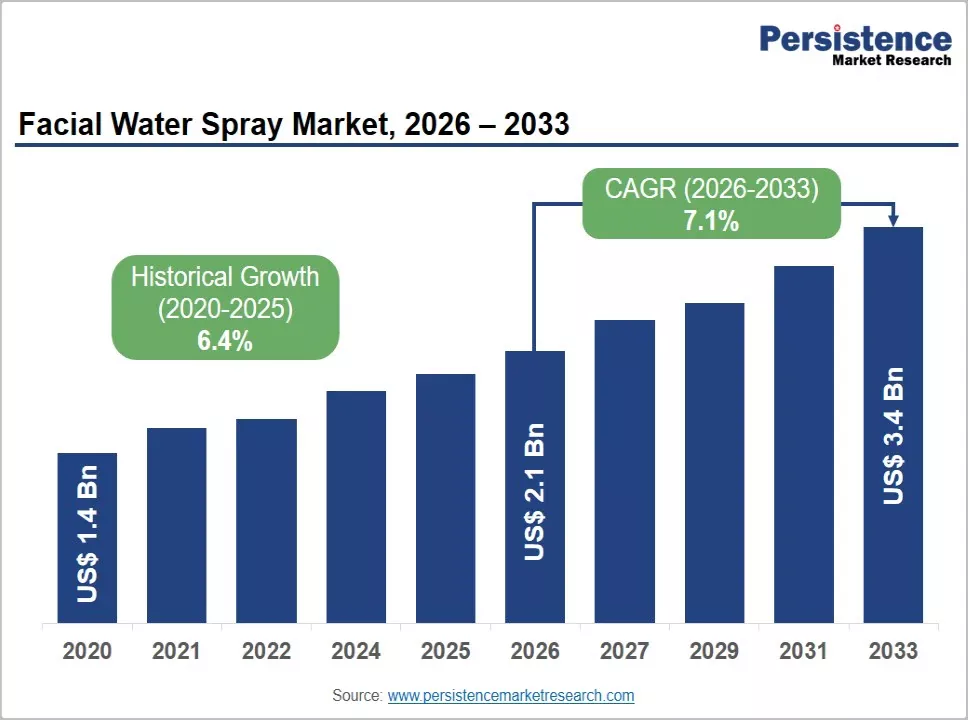
The global facial water spray market size is likely to be valued at US$2.1 billion in 2026, and is estimated to reach US$3.4 billion by 2033, growing at a CAGR of 7.1% during the forecast period from 2026 to 2033, driven by growing consumer focus on hydration and skin barrier care, the popularity of portable and multi-use skincare formats, and expanding premiumization through dermatologist-recommended thermal water brands.
The market has been experiencing healthy growth, although price sensitivity and packaging compliance costs affected margins in some categories. The forecast period anticipates stronger acceleration as brands prioritize sustainable packaging, microbiome-friendly formulations, and wider gender-inclusive positioning.
Key Industry Highlights:
- Dominant Types: Spring water sprays are set to command around 47% of the revenue share in 2026, while ocean water sprays are likely to grow the fastest at 8.4% CAGR through 2033, as marine mineral and thalassotherapy positioning gains appeal.
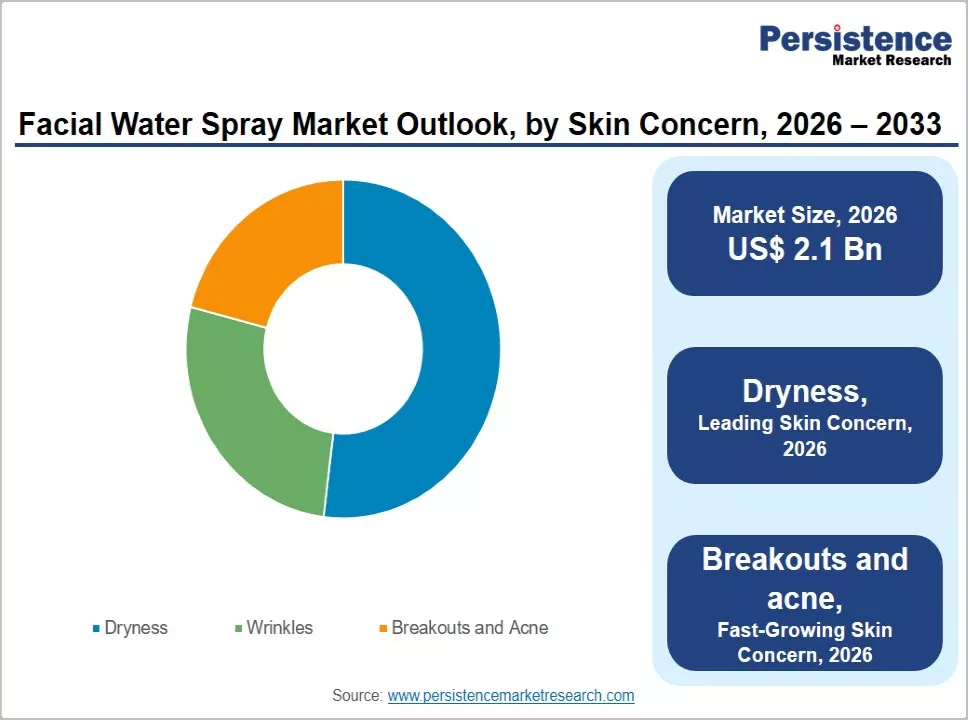
- Leading Skin Concerns: Dryness is expected to lead with 44% in 2026, while breakouts and acne are likely to be the fastest-growing at about 8.0% CAGR during 2026 - 2033, reflecting demand for soothing, non-comedogenic mists.
- Dominant End-User: Female consumers are anticipated to lead with an estimated 68% share in 2026, while male consumers are slated to represent the fastest-growing segment at 8.6% CAGR from 2026 to 2033.
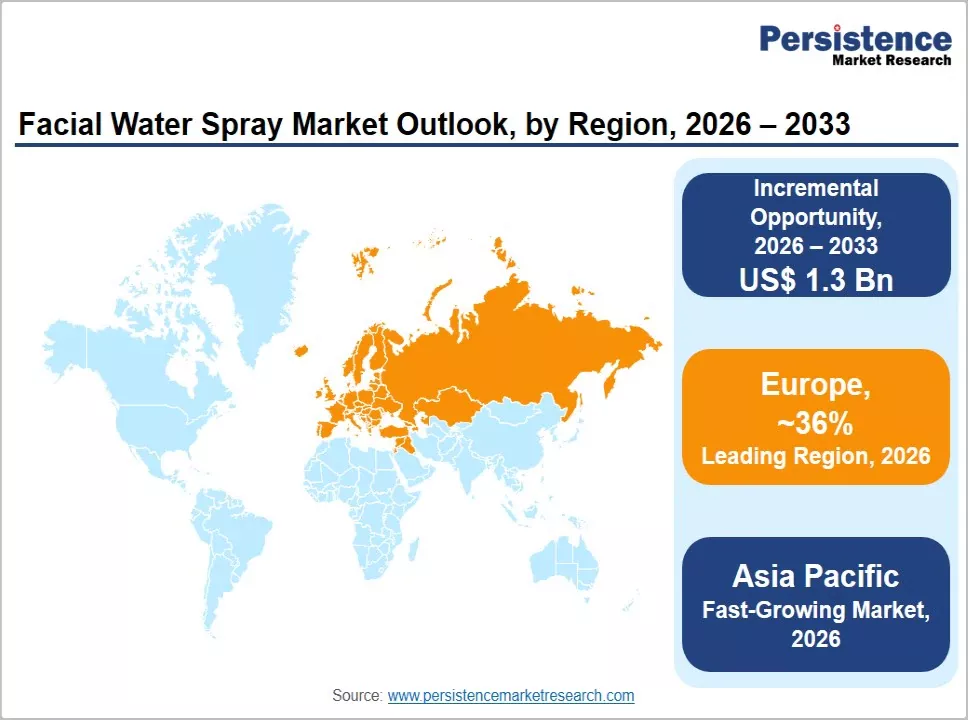
- Regional Leadership: Europe is poised to lead with an estimated 36% share in 2026, while Asia Pacific is expected to be the fastest-growing region at 8.5% CAGR through 2033, led by China, South Korea, Japan, and India.
- Competitive Environment: Competitive dynamics include consolidation among major beauty groups, premium thermal water brand extensions, and a shift toward refillable and recyclable packaging formats.
- October 2025: L'Oréal announced an agreement to acquire Kering Beauté, underscoring continuing consolidation among major beauty groups that also own leading dermocosmetic and thermal water brands such as La Roche-Posay and Vichy.
DRO Analysis
Driver: Hydration, Skin Barrier Care, and Multi-Use Skincare Formats as Primary Growth Catalyst
Growing consumer attention to hydration and skin barrier health is the leading force driving the facial water spray market growth, as people look for simple, quick-use products that refresh the skin throughout the day. Facial sprays deliver a fine mist of purified, thermal, or marine water, often enriched with minerals, hyaluronic acid, glycerin, or botanical extracts, which offers an easy way to soothe dryness, set makeup, and calm irritation. Their portability suits commuters, travelers, and office workers, while dermatologist-backed thermal water brands benefit from long-standing credibility for sensitive and reactive skin. Consumers are also adopting mists as a step in minimalist routines, valuing products that perform several functions at once.
Climate and lifestyle factors add momentum, as air conditioning, urban pollution, and extended screen time increase skin dryness and discomfort, and warm regions use cooling mists for refreshment. Brands are broadening the category with SPF mists, antioxidant sprays, prebiotic and postbiotic formulas, and sprays designed for scalp and body use. Social media tutorials and beauty influencers have introduced facial sprays to younger consumers, while retailers expand dedicated mist displays in pharmacies and beauty stores. This convergence of skin health awareness, formulation innovation, and convenience ensures sustained growth in the facial water spray market in the coming years.
Restraints: Perceived Limited Efficacy, Price Competition, and Packaging Regulations
Perceived limited efficacy is a major challenge for the facial water spray market, as some consumers and dermatologists consider plain water mists to offer only temporary refreshment, with evaporation potentially leaving skin drier if not followed by moisturizer. Premium thermal water products are priced significantly above generic mists, and consumers question whether the added cost reflects real performance benefits. The category also faces competition from serums, essences, and toners that make more specific skin claims, along with low-priced private-label mists that pressure margins for established brands.
Packaging and compliance issues add further complexity. Pressurized aerosol cans and pump sprays use materials that are increasingly scrutinized for recyclability and environmental impact, and the EU Packaging and Packaging Waste Regulation, which entered into force in February 2025 and applies from August 2026, introduces stricter recyclability, reuse, and labeling requirements. Compliance may require redesign of sprayers, caps, and cans, raising costs for brands and contract fillers.
Furthermore, microbial contamination risks in water-based products require preservative systems or sterile filling, and consumers seeking preservative-free formulations create technical challenges. These factors collectively restrain faster adoption despite the convenience of facial sprays, highlighting the need for clear efficacy claims, sustainable packaging, and robust formulation safety.
Opportunities: Male Grooming Expansion and Premium Skincare Demand in Asia Pacific
Emerging economies are propelling the market through rising disposable incomes, urbanization, and the rapid growth of organized beauty retail and e-commerce. Asia Pacific, the Middle East, and Latin America are home to young, digitally active consumers who are experimenting with skincare and willing to pay for imported thermal water and dermocosmetic brands. Hot and humid climates and high pollution levels in many cities increase interest in cooling, soothing, and cleansing mists, while travel retail recovery is boosting sales of compact formats.
Male grooming is an additional growth avenue, as men adopt simple skincare routines and look for fast, low-effort products such as post-shave and sun-exposure mists. Brands are launching unisex and men-focused sprays with fresher scents and lightweight textures to reduce barriers to entry. India exemplifies emerging market potential, with growing interest in dermocosmetics, pharmacy-led skincare, and quick-commerce delivery of beauty products. Consequently, emerging markets are expected to increase their share of the global facial water spray market substantially, creating additional opportunities in localized production, refill programs, and technology partnerships that foster ecosystem expansion and sustainable growth.
Category-wise Analysis
Type Insights
Spring water sprays are the leading type segment, expected to hold about 47% of the facial water spray market revenue share in 2026. These products use thermal or natural spring water, valued for its mineral content, including calcium, magnesium, silica, and selenium, and its association with soothing sensitive skin. Heritage brands, particularly from France, have built strong credibility through dermatologist recommendations and use in post-procedure care. Their positioning supports premium pricing, and sales are bolstered by pharmacy distribution and a loyal consumer base seeking reliable, gentle products for daily use.
Ocean water sprays are likely to grow the fastest through 2033, at an estimated 8.4% CAGR. Sourced from deep or coastal marine waters, they are marketed for their trace elements and mineral richness, often connected to thalassotherapy traditions and sustainability narratives around marine resources. Purified water sprays, typically blended with humectants, plant extracts, or active ingredients, remain popular in mass and mid-priced segments because of their lower cost and formulation flexibility. Brands increasingly add prebiotics, ceramides, and antioxidants to distinguish products and respond to consumer demand for functional benefits beyond hydration.
Skin Concern Insights
Dryness is poised to lead with an estimated 44% share in 2026, as the need to refresh and hydrate the skin throughout the day is the most common reason for facial spray use. Consumers living in air-conditioned environments, cold climates, or polluted cities report frequent tightness and flaking, and mists are used to restore comfort, prepare skin for moisturizer, and set makeup. Formulas containing glycerin, hyaluronic acid, aloe, and mineral-rich water are especially popular, and brands increasingly recommend following sprays with occlusive creams to lock in moisture.
Breakouts and acne are the fastest-growing skin concern segment, expected to showcase an approximate 8.0% CAGR through 2033. Gentle, non-comedogenic mists that calm irritation, reduce redness, and support skin barrier recovery during acne treatments with retinoids or benzoyl peroxide are attracting teenagers and young adults. Formulations with zinc, niacinamide, tea tree, and prebiotics are positioned for blemish-prone skin, while wrinkle-focused sprays containing peptides, antioxidants, and vitamin derivatives target mature consumers who want convenient anti-aging steps. Although efficacy claims in this area are more limited, the category benefits from the broad popularity of multi-functional skincare.
End-User Insights
Female consumers lead the end-user segment, anticipated to account for around 68% of the revenue share in 2026. Women remain the primary buyers of skincare and makeup-related products and are typically more engaged in multi-step routines that include mists for hydration, makeup setting, and mid-day refreshment. Brand marketing, influencer collaborations, and in-store sampling target this group heavily, and premium sets and travel sizes are popular gifting items. The segment is therefore mature in developed markets but retains growth potential in emerging economies where beauty penetration is rising.
Male consumers are likely to be the fastest-growing end-user segment, expected to achieve about 8.6% CAGR during the 2026 - 2033 period, as men become more comfortable with skincare and look for simple, quick products. Light, fresh, and fragrance-neutral mists suit post-shave care, post-workout refreshment, and sun exposure relief. The unisex segment is also expanding, as brands drop gendered branding in favor of skin concern-based positioning, which broadens appeal and simplifies product lines. Retailers and dermatology clinics are supporting this trend with inclusive marketing, and travel-friendly and gym-friendly formats are gaining shelf space.
Regional Insights
Europe Facial Water Spray Market Trends
Europe is predicted to command an estimated 36% of the facial water spray market share in 2026. France is the heartland of thermal water brands such as Avène, La Roche-Posay, Vichy, and Uriage, which are widely distributed through pharmacies and have strong dermatological endorsements. Germany, the U.K., Italy, and Spain also contribute through large pharmacy and drugstore networks. The EU Packaging and Packaging Waste Regulation, in force since February 2025 and applicable from August 2026, is pushing brands toward recyclable and refillable formats, while consolidation among beauty groups, including L'Oréal's agreement to acquire Kering Beauté in October 2025, shapes competitive dynamics.
The Europe market is characterized by a strong emphasis on dermatological credibility, sustainability, and strict cosmetic safety regulations, with brands competing through clinical testing, hypoallergenic claims, and eco-designed packaging. Eastern European countries such as Poland, the Czech Republic, and Romania represent emerging opportunity zones, with rising pharmacy chain penetration and growing demand for French and German dermocosmetic brands.
North America Facial Water Spray Market Trends
North America is likely to hold 25% of the global market share in 2026. The U.S. provides the regional growth anchor, with strong demand for hydrating mists, SPF mists, and makeup-setting sprays through drugstores, mass retailers, specialty beauty chains, and social commerce. Indie brands and celebrity-backed lines have broadened the category beyond traditional thermal water, while established groups such as Estée Lauder have been restructuring and streamlining portfolios to focus on high-growth categories and channels.
Canada's market is supported by a strong natural skincare segment and pharmacy distribution. The North America market is characterized by intense competitive dynamics, with multinational beauty groups, pharmacy-oriented dermocosmetic brands, and agile indie labels competing on formulation, marketing, and price.
Asia Pacific Facial Water Spray Market Trends
Asia Pacific is anticipated to be the fastest-growing region, accounting for an estimated 29% in 2026 and projected to achieve an 8.5% CAGR through 2033. China provides the dominant regional growth engine, with rapidly rising spending on skincare, a thriving e-commerce and livestream retail ecosystem, and strong demand for imported thermal water brands alongside domestic competitors. South Korea and Japan are innovation hubs where hydrating mists, essence sprays, and multi-functional products are popular and often set trends adopted globally.
India is expected to offer the most dynamic growth opportunities, supported by rising urban incomes, hot climate conditions, and growing awareness of dermocosmetic skincare. The India market is attracting aggressive competition from both multinational corporations and emerging domestic brands, with quick-commerce platforms accelerating trial. Southeast Asia and Australia are also experiencing accelerated deployment, driven by humid climates, sun protection needs, and expanding modern retail channels.
Competitive Landscape
The global facial water spray market structure is moderately consolidated, with the top vendors, including L'Oréal, Pierre Fabre, Danone (Evian), and Beiersdorf, controlling a significant portion of the revenue share. These established players leverage strong brand equity, dermatological endorsements, and extensive pharmacy and retail distribution. They are also known to invest heavily in R&D and marketing to maintain leadership in formulation, packaging innovation, and clinical substantiation of skin benefits.
Regional and niche competitors such as Shiseido, Amorepacific, Caudalie, and Mario Badescu are focusing on specialized segments, botanical and marine positioning, and geographic strongholds. Barriers such as brand credibility, regulatory compliance, and retail access limit new entrants, but social media and direct-to-consumer models allow smaller brands to reach consumers cost-effectively. Market consolidation is expected to increase gradually as global leaders acquire smaller brands to expand portfolios, while packaging suppliers and brands continue collaborating on refillable and recyclable designs.
Key Industry Developments:
- In October 2025, L'Oréal announced an agreement to acquire Kering Beauté, expanding its prestige beauty portfolio and highlighting continuing consolidation within the global beauty industry. As leading groups strengthen their positions, they are expected to invest further in dermocosmetic and hydration-focused categories, including facial mists, supported by large research and distribution networks.
- In March 2025, brands and suppliers at Cosmoprof Worldwide Bologna showcased refillable packaging, skin barrier care, and sun care formats, including mists and sprays. The exhibition reflected a strong industry focus on sustainability, multi-functional products, and convenient application formats, all of which are relevant to the facial water spray category.
- In February 2025, the EU Packaging and Packaging Waste Regulation entered into force, with most provisions applying from August 2026. The regulation sets stricter requirements on recyclability, reuse, and labeling of packaging, prompting cosmetics brands and contract fillers to review spray pumps, aerosol cans, and caps, and accelerating the adoption of refill systems and mono-material designs.
Companies Covered in Facial Water Spray Market
- L'Oréal S.A.
- Pierre Fabre Group
- Danone S.A. (evian)
- Beiersdorf AG
- Shiseido Company, Limited
- Amorepacific Corporation
- The Estée Lauder Companies Inc.
- Unilever PLC
- Laboratoires Caudalie
- Mario Badescu Skin Care, Inc.
- Laboratoires Dermatologiques Uriage
Frequently Asked Questions
The global facial water spray market is projected to reach US$2.1 billion in 2026.
Growing consumer focus on hydration and skin barrier care, the popularity of portable, multi-use skincare formats, and expanding premiumization through dermatologist-recommended thermal water brands are driving the market.
The facial water spray market is poised to witness a CAGR of 7.1% from 2026 to 2033.
Male grooming expansion, refillable and sustainable packaging, and premium skincare demand in Asia Pacific are key market opportunities.
L'Oréal S.A., Pierre Fabre Group, Danone S.A. (Evian), and Beiersdorf AG are some of the key players in the facial water spray market.


