




- Food Ingredients & Additives
- Europe Truffle Market
Europe Truffle Market Size, Share, and Growth Forecast 2026 - 2033
Europe Truffle Market by Product Type (Black Truffles, White Truffles, Others), Nature (Conventional, Organic), Form (Fresh, Processed), Distribution Channel (B2C, B2B), Country-wise, 2026 - 2033

Europe Truffle Market Size and Trend Analysis
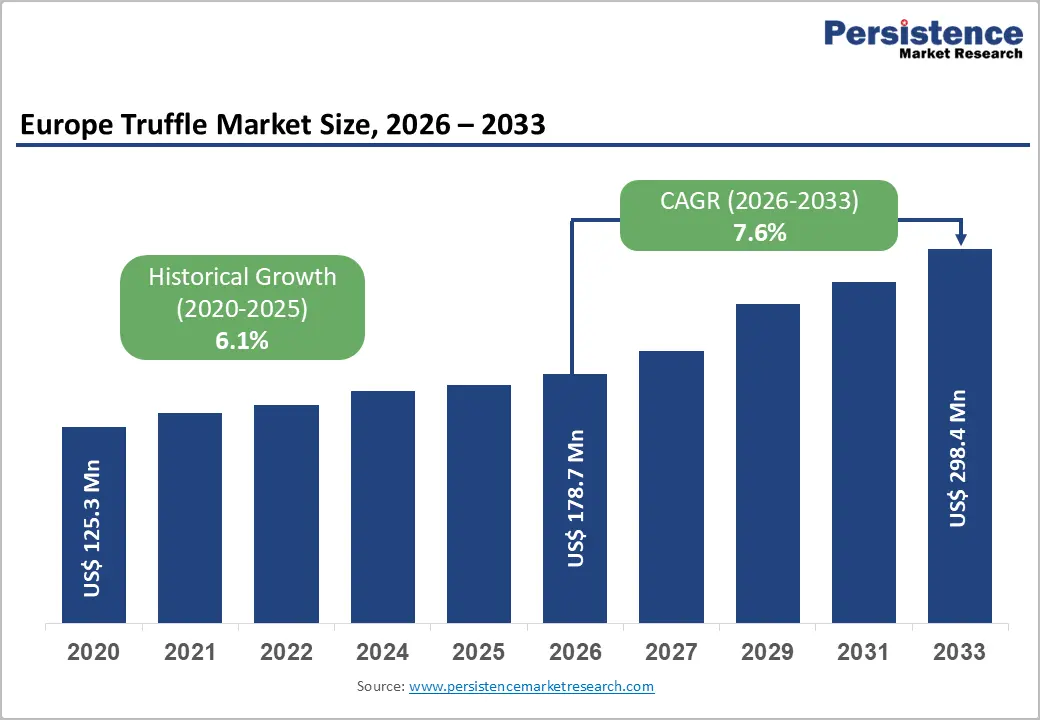
Europe truffle market size is expected to be valued at US$ 178.7 million in 2026 and projected to reach US$ 298.4 million by 2033, growing at a CAGR of 7.6% between 2026 and 2033.
The market has witnessed significant growth due to increasing demand for gourmet and luxury food products. Black truffles, particularly the Périgord variety, dominate the market, driven by their rich flavor, versatility, and consistent availability. The rise of fine dining, food tourism, and growing consumer awareness of premium ingredients have fueled truffle consumption. While conventional truffles lead the market due to their broader availability and affordability, the organic truffle segment is gaining attention as sustainability trends influence consumer choices.
High production costs and limited supply keep organic truffles in a niche category. The market is expected to continue expanding as truffle-based products and innovative culinary applications rise in popularity.
Key Industry Highlights:
- Leading Region – Germany holds ~26% share in 2025, driven by a high-income consumer base, strong fine dining culture, and well-established import networks sourcing premium truffles from France, Italy, and Spain.
- Fastest Growing Region – The UK is the fastest-growing market through 2033, supported by emerging domestic cultivation and strong demand via gourmet retail and premium foodservice channels.
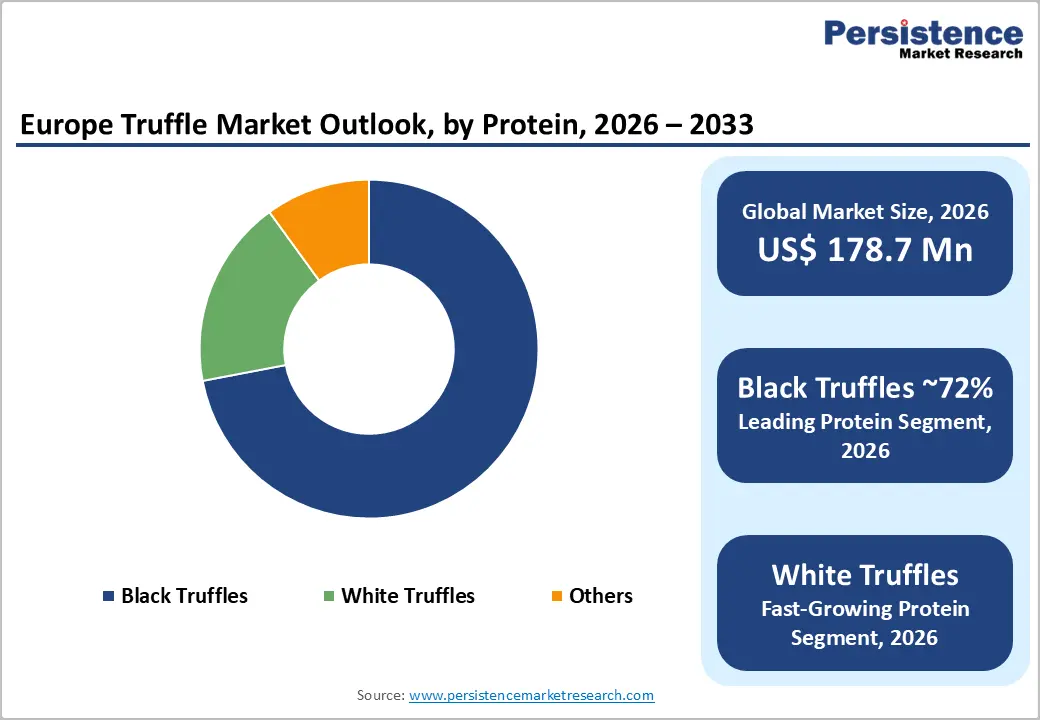
- Dominant Product Type – Black truffles lead with ~72% share in 2025, supported by longer harvesting seasons, culinary versatility, and relatively accessible pricing compared to white varieties.
- Fastest Growing Segment – White truffles will grow fastest through 2033, driven by rising demand in luxury dining and premium gifting, despite limited seasonal availability and cultivation challenges.
- Key Market Opportunity – Cosmetics and functional food diversification offer strong potential, with increasing use of truffle-derived bioactive compounds and growing adoption in premium skincare and high-value product formulations.
Market Dynamics
Drivers - Craft Rum Demand to Skyrocket with Need for Authenticity in Terms of Flavor
Millennial consumers have recently started looking for genuine alcoholic beverages, which are set to accelerate sales of craft spirits market, including rum. Several beverage producers are nowadays promoting their craft rum ranges through social media platforms like Instagram and Facebook to gain momentum.
Demand for commercial rum has declined in the past few years as craft rum provides a highly authentic flavor profile, superior quality, and smooth taste. Hence, craft rum producers are expected to manufacture their drinks in small batches to control the experience, quality, and taste of the rum. For instance, Prichard's Distillery, based in the U.S., prepares its American Craft Rum Series in the style of the 1776 era. Bayou Rum, on the other hand, uses a blend of unique technology and conventional methods for bottling, maturation, distillation, and fermentation to make craft rum in the U.S.
Growing Demand for Gourmet and Luxury Food Products
The growing demand for gourmet and luxury food products is a major driver of the European truffle market. As consumers become more interested in high-end culinary experiences, truffles have gained prominence as a prized ingredient in fine dining, particularly in countries like France and Italy, known for their gastronomic heritage.
Truffles' unique flavor and status as a rare delicacy make them a sought-after item among chefs and food enthusiasts alike. Additionally, the rise of food tourism and the increasing appeal of premium, locally sourced ingredients have further amplified the demand for truffles, solidifying their position in the gourmet food market.
Restraints - Authenticity Concerns and Regulatory Fragmentation
Inconsistent regulatory frameworks governing truffle labeling, origin verification, and species declaration across European member states present a significant market restraint. While the EU protects specific truffle designations under Protected Designation of Origin (PDO) schemes, many commercial truffle products, particularly truffle oils and pastes, contain synthetic aromatic compounds such as 2,4-dithiapentane rather than authentic truffle derivatives, eroding consumer trust. This counterfeiting risk devalues genuine products and creates unfair competitive pressure on legitimate producers. The absence of a harmonized EU-wide authentication standard further complicates cross-border trade, regulatory compliance for exporters, and informed purchasing decisions for B2B buyers such as restaurants and food manufacturers. Addressing this fragmentation will be critical to protecting market integrity and sustaining premium price positioning.
Opportunities - Growth of Organic Truffle Certification and Sustainable Sourcing
The surging consumer demand for organic, clean-label, and sustainably sourced food products presents a compelling strategic opportunity for truffle producers. The organic truffle segment is among the fastest-growing categories within the broader market, driven by health-conscious consumers and environmentally aware buyers increasingly willing to pay premium prices for certified organic produce. In March 2025, Italian brand La Rustichella unveiled a new range of 100% certified organic truffle products, including organic truffle oil, organic truffle pâté, and organic truffle carpaccio, targeted specifically at foodservice channels, reflecting growing institutional appetite for organic variants.
Regulatory aspects, including the EU's Farm to Fork Strategy targeting 25% of EU agricultural land under organic farming by 2030, are creating structural incentives for conversion to organic cultivation methods. Producers who invest early in certification infrastructure and sustainable supply chains are well-positioned to capture this premium, fast-growing market segment.
Category-wise Analysis
Product Insights
Black truffles command the dominant position within the Europe Truffle market, accounting for approximately 72% of total market revenue in 2025. It is projected to reach a CAGR of 8.4% through the forecast period, driven by increasing demand for truffle-infused retail products and health-associated benefits, including anti-inflammatory and antioxidant properties. This leadership is underpinned by several structural advantages over competing varieties.
Black truffles, primarily the Tuber melanosporum (Périgord) variety, benefit from a comparatively longer harvesting season extending from November through March, broader geographical cultivation suitability, and significantly more accessible pricing relative to white truffles. Their versatility across culinary applications from risottos and pastas to sauces, oils, and butters, makes them the preferred choice for both fine dining establishments and processed food manufacturers.
White truffles, while commanding exceptional premium pricing often exceeding £2,900 per kilogram, remain a niche segment constrained by severe supply limitations and narrow seasonal availability.
Distribution Channel Insights
The B2B distribution channel holds the leading position in Europe Truffle market, capturing approximately 69% of the total share in 2025. This dominance reflects the structural concentration of high-value truffle consumption within the foodservice, hospitality, and food manufacturing industries. Fine dining establishments, luxury hotels, caterers, and gourmet food producers are the primary buyers of both fresh and processed truffles, purchasing directly from truffle brokers, cooperatives, or specialist distributors. Over 14,000 restaurants across the EU featured truffle dishes on their winter menus in 2024, with average order volumes of 2 to 5 kilograms per venue per season, as documented by market research.
Luxury hotel groups, including Accor and Marriott source truffles through dedicated gourmet procurement networks for spa menus and private dining events. The B2C channel, while smaller, is the fastest-growing distribution segment, fueled by the expansion of online specialty food retail platforms, direct-to-consumer subscription services, and the growing availability of truffle-infused products in premium supermarkets.
Country-wise Insights
Germany Truffle Market Trends and Insights
Germany leads the Europe truffle market due to its strong culinary culture, high consumer purchasing power, and established trade networks. The country’s thriving fine dining scene creates a significant demand for luxury ingredients like truffles, while its affluent consumers are willing to spend on gourmet products.
Germany’s robust import channels ensure a steady supply of truffles from top producers like France and Italy, supported by efficient logistics. Additionally, growing awareness of premium, sustainable food products among Consumers in Germany further drives truffle consumption. This combination of demand, supply, and consumer interest solidifies Germany’s leadership in the Europe truffle market.
UK Truffle Market Trends and Insights
The United Kingdom represents the fastest-growing market in the Europe truffle landscape, supported by emerging domestic cultivation and strong premium food demand. Commercial production began with Black Périgord truffles in Leicestershire, followed by Wales and Scotland, driven by research from Mycorrhizal Systems Ltd. Suitable regions such as Hampshire, Wiltshire, and Dorset enable yields of ~60 kg per hectare, with premium pricing strengthening producer economics.
The UK continues to rely on imports while expanding exports to markets like South Korea, the U.S., and Singapore. Growth is supported by the hospitality sector, with chefs like Tom Kitchin promoting local truffles. Expanding gourmet retail, media attention to British produce, and supportive post-Brexit policies are expected to sustain strong market growth through 2033.
Competitive Landscape
The competitive landscape of Europe truffle market is characterized by a mix of established producers, gourmet food companies, and niche players specializing in truffle-related products. Key countries such as France, Italy, and Spain dominate the market, with traditional truffle hunting practices and a rich culinary heritage contributing to their strong position.
Leading players often engage in collaborations with local truffle growers to secure high-quality supplies while also investing in branding and marketing strategies to enhance their visibility in the luxury food segment. The rise of artisanal producers and small-scale farms has introduced increased competition, focusing on organic and sustainably sourced truffles to cater to the growing consumer demand for eco-friendly products. As the market continues to evolve, innovation in product offerings and distribution channels will play a crucial role in shaping competitive dynamics and positioning within the European truffle market.
Key Developments:
- In June 2025, Laumont, a company specializing in high-quality truffles and mushrooms, renewed its partnership with La Liste, a leading gastronomic guide. Laumont will continue as the official and exclusive truffle and mushroom partner for the 2025-2026 season.
- In February 2025, the municipality of Abejar, Soria, in Spain hosted the 22nd Black Truffle Fair. The event brought together producers, distributors, chefs, and food enthusiasts to celebrate this highly valued culinary ingredient.
- In April 2024, Sabatino Announces Strategic Investment by Traub Capital Partners, to Further Enhance Its Positioning as the Premier Manufacturer and Distributor of Truffle-Based Products
Europe Truffle Market – Key Insights & Scope
| Key Insights | Details |
|---|---|
|
Historical Market Value (2020) |
US$ 125.3 Million |
|
Projected Market Value (2026) |
US$ 178.7 Million |
|
Projected Market Value (2033) |
US$ 298.4 Million |
|
CAGR (2026-2033) |
7.6% |
|
Top-ranking Product |
Black Truffles, 72% |
|
Incremental Opportunity |
US$ 119.7 Million |
Companies Covered in Europe Truffle Market
- Arotz Foods, SA
- Old World Truffle
- Truffle Hunter, Inc.
- Urbani Truffles (Urbani Tartufi S.r.l)
- Sabatino Tartufi
- The Welsh Truffle Company
- Truffle Hill
- Tartufi Morra Srl
- Angellozzi Tartuficoltura
- Great Southern Truffles
- Others
Frequently Asked Questions
Europe truffle market is estimated to be valued at US$ 178.7 million in 2026.
Growing Demand for Gourmet and Luxury Food Products is driving demand for Truffle in Europe.
Germany holds the leading position in the Europe Truffle market, commanding ~26% market share in 2025.
Expanding truffle cultivation presents is a key market opportunity.
Major players in the Europe Truffle Market include Urbani Truffles (Urbani Tartufi S.r.l), Sabatino Tartufi, Arotz Foods, SA, Truffle Hunter, Inc., Tartufi Morra Srl, Truffle Hill, and others.


