




- Processed Food
- Europe Foodservice Disposables Distribution Systems Market
Europe Foodservice Disposables Distribution Systems Market Size, Share, Growth, and Regional Forecast, 2025 to 2032
Europe Foodservice Disposables Distribution Systems Market by Product Type (Tableware Disposables, Finger Food Disposables, Cutlery, Others), Raw Material (Plastic, Paper & Paperboard, Biodegradable Materials, Aluminum, Others), End-user (Restaurants, Hotels, Motels & Resorts, Foodservice Providers/Caterers, Others), Distribution Channel, and Regional Analysis from 2025 to 2032

Europe Foodservice Disposable Distribution Systems Market Share and Trends Analysis
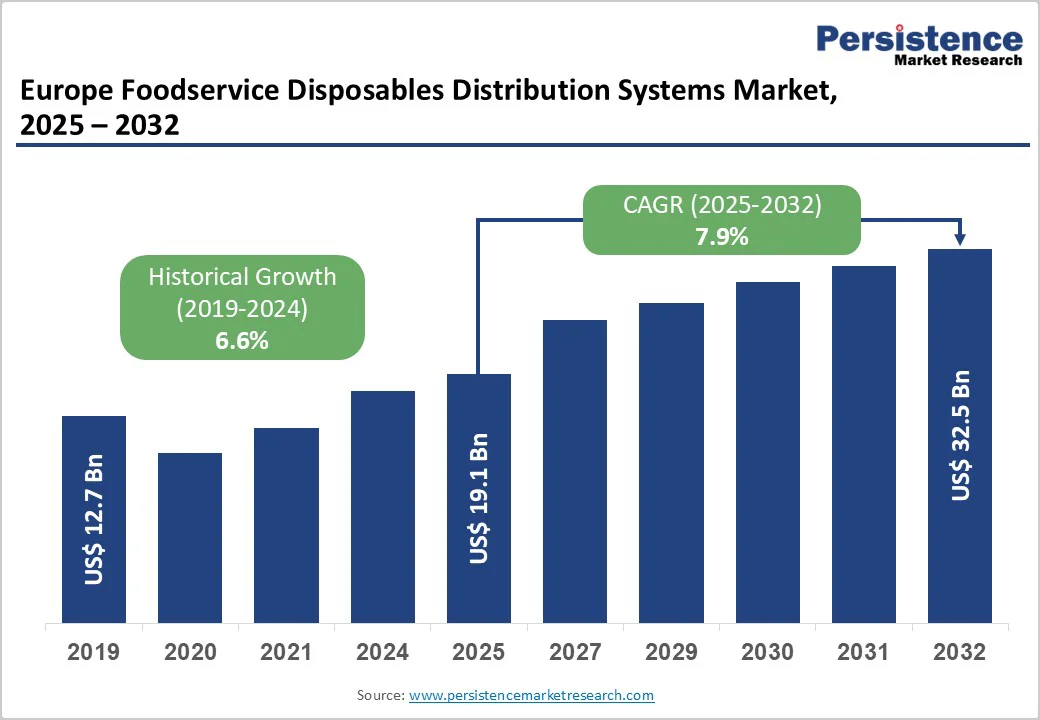
Europe foodservice disposables distribution systems market size is valued at US$ 19.1 billion in 2025 and projected to reach US$ 32.5 billion at a CAGR of 7.9% during the forecast period from 2025 to 2032.
Europe’s foodservice disposables distribution ecosystem is entering a rapid transformation phase, shaped by advanced sustainability demands, evolving HORECA consumption cycles, and accelerated operational digitization.
Key Industry Highlights:
- Leading Country: U.K., holding 39% market share, supported by strong sustainability adoption, rapid HORECA expansion, and a decisive shift toward plastic-free, compostable serviceware across high-street food chains and cloud kitchens.
- Fastest-Growing Country: France, propelled by eco-designed packaging regulations, premium bakery and patisserie requirements, and rising demand for compliant, compact, heat-stable disposables across travel, tourism, and office-delivery platforms.
- Fastest-Growing Product Type Segment: Tableware Disposables, benefiting from high usage frequency in cafés, QSR chains, and catering operations due to their operational efficiency, grease resistance, and suitability for both hot and cold menus.
- Market Driver: Tourism recovery is accelerating demand for cups, cutlery, trays, and grab-and-go packaging as airports, transport hubs, hotels, and street-food zones experience heavier footfall and require quicker, more hygienic service cycles.
- Opportunity: Subscription-based supply models offer predictable monthly procurement for cafés, QSRs, and cloud kitchens, allowing distributors to secure recurring revenue while helping operators stabilize inventory and control operational costs.
- Key Developments: In June 2025, Booker introduced its CaterPro range targeted at takeaways, cafés, and grab-and-go outlets. In April 2025, Eco-Products® received a Bronze Stevie® Award for its Veda™ reusable container line, reinforcing market momentum toward circular, durable packaging solutions.
| Key Insights | Details |
|---|---|
| Europe Foodservice Disposables Distribution Systems Market Size (2025E) | US$ 19.1 Bn |
| Market Value Forecast (2032F) | US$ 32.5 Bn |
| Projected Growth (CAGR 2025 to 2032) | 7.9% |
| Historical Market Growth (CAGR 2019 to 2024) | 6.6% |
Market Dynamics
Driver - Tourism Recovery Drives Higher Demand for Disposable Cups, Cutlery, and On-The-Go Packaging
A strong rebound in domestic and international travel is reshaping demand patterns across Europe, creating fresh momentum for disposable foodservice packaging. As tourism accelerates, hotels, quick-service restaurants, cafés, and travel hubs require higher volumes of cups, cutlery, trays, and takeaway containers to handle growing footfall and faster service cycles.
Rising mobility through airports, train stations, and tourist hotspots fuels the need for hygienic, single-use solutions that streamline operations and reduce contamination risks. Street-food vendors and pop-up food stalls, which thrive in high-traffic tourist zones, are expanding their reliance on lightweight, transport-friendly disposables.
This surge is pushing distributors to diversify material choices, strengthen supply continuity, and adopt eco-responsive product lines that satisfy evolving sustainability expectations across the European hospitality ecosystem.
Restraints - High Production Costs for Compostable and Bio-Based Materials Reduce Distributor Margins
High production costs for compostable and bio-based materials are tightening margins across Europe’s foodservice disposables distribution landscape. The shift toward eco-friendly products demands inputs such as PLA, bagasse, and specialty fibers that carry significantly higher manufacturing expenses than conventional plastics.
Distributors absorbing these elevated costs face pressure when negotiating prices with restaurants, catering firms, and retail chains that remain highly price-sensitive.
Energy-intensive molding, sustainability certifications, and stricter quality-control standards further increase operational overheads. Many distributors struggle to balance competitive pricing with the need to stock greener alternatives, slowing adoption despite growing regulatory urgency.
As a result, profitability weakens for mid-tier players lacking economies of scale, creating a challenging environment for companies trying to expand sustainable product portfolios without eroding financial stability.
Opportunity - Offering subscription-based supply models for cafés, QSRs, and cloud kitchens seeking predictable monthly procurement
Offering subscription-based supply models is emerging as a compelling opportunity as cafés, QSRs, and cloud kitchens across Europe look for predictable, streamlined procurement. These foodservice operators face fluctuating demand, tight staffing, and rising operational complexity, making monthly bundled deliveries of cups, containers, cutlery, and hygiene items highly attractive.
Distributors adopting subscription frameworks can lock in recurring revenue, optimize inventory planning, and deepen customer loyalty through personalized SKU mixes.
Startups can differentiate by adding digital dashboards that track consumption patterns, trigger automated replenishment, and forecast seasonal demand. Value-added perks such as discounted bundle tiers, sustainable product options, and emergency top-up deliveries further strengthen the model. This shift helps operators stabilize costs while giving distributors a scalable, margin-friendly pathway to long-term client retention.
Category-wise Analysis
By Product Type Insights
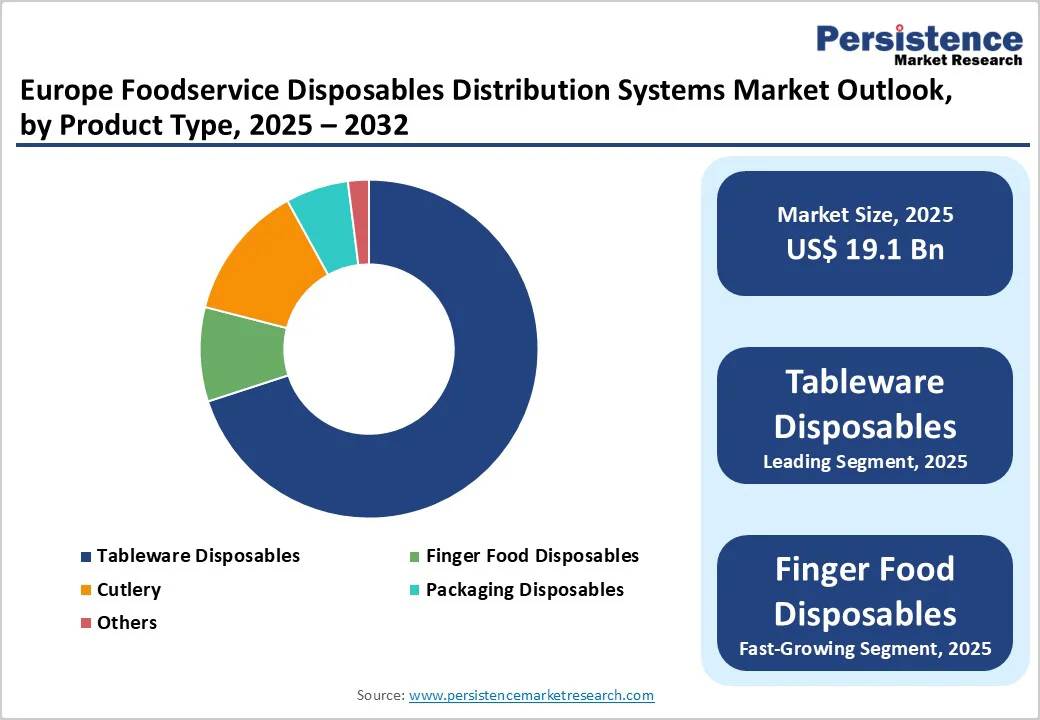
Tableware disposables accounts for 74% share as of 2025, reflecting how deeply they anchor daily operations across Europe’s cafés, casual dining outlets, QSR chains, and institutional catering. Plates, bowls, trays, and meal boxes remain indispensable as operators prioritize speed, hygiene, and standardized portioning amid rising footfall and expanding delivery volumes.
Their compatibility with both hot and cold menus strengthens their role in everything from buffet setups to takeaway meal kits. Finger food disposables such as cones and mini trays are gaining traction in catering and event segments driven by bite-sized menus and mobile snacking. Cutlery and packaging disposables continue to support high-volume delivery and grab-and-go formats, yet they trail tableware due to lower per-meal utilization and narrower SKU rotation.
By Raw Material Insights
Biodegradable material is likely to achieve a CAGR of 9.8% during the forecast period, driven by Europe’s accelerating shift toward low-impact packaging ecosystems and mounting pressure from regulators and municipalities to curb single-use plastic waste. Foodservice operators are increasingly adopting compostable cups, plates, cutlery, and delivery packaging as consumer expectations tilt toward environmentally responsible dining experiences.
The rise of closed-loop waste programs in universities, airports, festivals, and corporate campuses is further improving adoption by ensuring proper collection and composting infrastructure. Suppliers are responding with improved material performance, offering heat-resistant, grease-proof, and sturdier biodegradable formats that match the functionality of traditional plastics.
As procurement teams prioritize ESG alignment and waste-reduction targets, biodegradable materials gain strong momentum across both dine-in and delivery-driven foodservice models.
Country-wise Insights
U.K. Foodservice Disposables Distribution Systems Market Trends
U.K. holds approximately 39% market share in the Europe Foodservice Disposables Distribution Systems Market followed by Germany, and its rapid shift toward low-waste dining formats is reshaping distributor strategies across the country. The U.K. market is witnessing a surge in demand for compostable tableware, fiber-based packaging, and plastic-free cutlery as hospitality chains prepare for tighter environmental compliance and retailer-driven sustainability pledges.
Cloud kitchens and QSR brands are standardizing greener SKU portfolios to streamline procurement while boosting brand perception among eco-aware consumers.
Distributors are expanding next-day delivery networks, integrating real-time inventory visibility, and partnering with recycling firms to build circular recovery pathways. The rise of festival catering, high-street food kiosks, and expanding ready-to-eat retail formats is driving stronger adoption of durable, heat-stable, and grease-resistant disposable solutions tailored to U.K. operational conditions.
France Foodservice Disposables Distribution Systems Market Trends
France Foodservice Disposables Distribution Systems Market is expected to grow at a CAGR of 8.3%, propelled by the country’s accelerated shift toward eco-designed packaging and stringent national regulations targeting single-use plastics. French cafés, brasseries, and gourmet takeaway chains are increasingly adopting molded fiber bowls, wooden cutlery, and compostable hot cup lids as consumer preference leans toward low-impact dining solutions.
Artisanal bakeries and patisseries are driving high demand for premium, grease-resistant paper formats tailored for delicate pastries and reheatable meal kits. Distributors are strengthening partnerships with sustainable material innovators to supply heat-stable, allergen-safe, and food-contact-compliant disposables that meet evolving French labeling norms.
Growth in high-traffic railway hubs, tourism districts, and office lunch-delivery platforms is boosting adoption of compact, stackable, and quick-fulfillment packaging systems across the country.
Competitive Landscape
The market landscape remains moderately fragmented, shaped by established distributors expanding capacity and emerging players pushing sustainability-focused innovation. Leading companies are investing in automated sorting, advanced molding, and high-efficiency conversion lines to boost output of compostable and recyclable formats.
Startups are gaining traction with niche offerings such as tree-free fiberware, plant-based coatings, and reusable distribution loops tailored for cafés and catering chains. Certifications around food safety, compostability, and environmental compliance are becoming critical differentiators as buyers prioritize traceability and low-impact materials.
Government regulations restricting single-use plastics, rising consumer awareness of waste reduction, and the accelerating growth of the HoReCa sector are reinforcing demand for high-performance disposables. Tourism recovery across key European destinations is further strengthening system-level distribution requirements.
Key Industry Developments:
- In June 2025, Booker launched its CaterPro range designed specifically for takeaways, cafés, and grab-and-go operators. The introduction expands Booker’s foodservice disposable offering, strengthening its reach in fast-turnover convenience and on-the-go segments.
- In April 2025, Novolex® brand Eco-Products® received the Bronze Stevie® Award in the Reuse and Recycle category for its Veda™ line of reusable containers. The recognition reinforces the brand’s push toward circular, durable solutions within the evolving foodservice packaging landscape.
- In June 2024, Graphic Packaging International and Moy Park introduced a new paperboard packaging solution that delivers major plastic reduction for Sainsbury’s. The collaboration strengthens the shift toward sustainable, fiber-based alternatives within the UK food retail sector.
Companies Covered in Europe Foodservice Disposables Distribution Systems Market
- Huhtamaki Group
- Pactiv Evergreen Inc.
- Berry Global Inc.
- WestRock Company
- Graphic Packaging International, LLC
- Sealed Air Corporation
- Sonoco Products Company
- Amcor plc
- Bunzl plc
- Novolex
- Go-Pak Group
- Others
Frequently Asked Questions
The Europe Foodservice Disposables Distribution Systems market is projected to be valued at US$ 19.1 Bn in 2025.
Tourism’s rebound is fueling increased demand for disposable cups, cutlery, and on-the-go packaging, strengthening growth across Europe’s foodservice disposables distribution market.
The Europe Foodservice Disposables Distribution Systems market is poised to witness a CAGR of 7.9% between 2025 and 2032.
Providing recurring, subscription-style supply programs for cafés, QSRs, and cloud kitchens looking for steady, predictable monthly procurement presents a strong market opportunity.
Major players in the Europe Foodservice Disposables Distribution Systems market include Huhtamaki Group, Pactiv Evergreen Inc., Berry Global Inc., WestRock Company, Graphic Packaging International, LLC, Sealed Air Corporation, Sonoco Products Company, and others.


