




- Food Ingredients & Additives
- Europe Olive Oil Market
Europe Olive Oil Market Size, Share, and Growth Forecast 2026 - 2033
Europe Olive Oil Market by Product Type (Extra Virgin Olive Oil, Virgin Olive Oil, Pomace Olive Oil), Nature (Organic, Conventional), End-use (Food Processing, Foodservice, Household/Retail, Cosmetics & Personal Care, Others), Distribution Channel (B2B, B2C), by Regional Analysis, 2026 - 2033

Europe Olive Oil Market Size and Trend Analysis
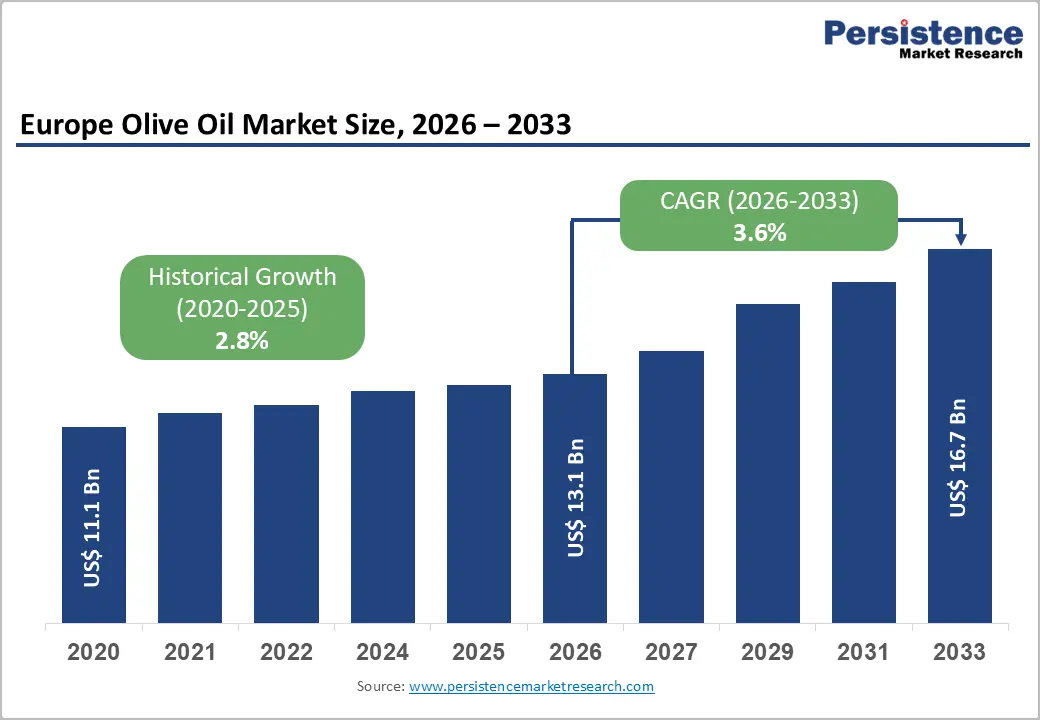
Europe Olive Oil market size is expected to be valued at US$ 13.1 billion in 2026 and projected to reach US$ 16.7 billion by 2033, growing at a CAGR of 3.6% between 2026 and 2033. Countries such as Spain, Italy, Greece, and Portugal dominate both production and exports due to favorable climatic conditions and well-established agricultural infrastructure.
Rising consumer preference for healthy diets, clean-label products, and organic food choices continues to drive demand for premium olive oil varieties, including extra virgin olive oil. The popularity of the Mediterranean diet further strengthens consumption across the region. However, climate change, fluctuating harvest yields, and rising labor and production costs present challenges. Producers are increasingly focusing on sustainability, innovation, and export expansion to maintain long-term market competitiveness.
Key Industry Highlights:
- Leading Region –Spain dominates the Europe Olive Oil market with approximately 34% share in 2025, underpinned by its status as the world's largest producer, generating over 1.7 million tonnes annually and deeply embedded domestic consumption culture.
- Fastest Growing Region – Germany and France are recording the fastest retail growth rates, driven by rising health consciousness, Mediterranean diet adoption, and expanding premium and organic olive oil product launches.
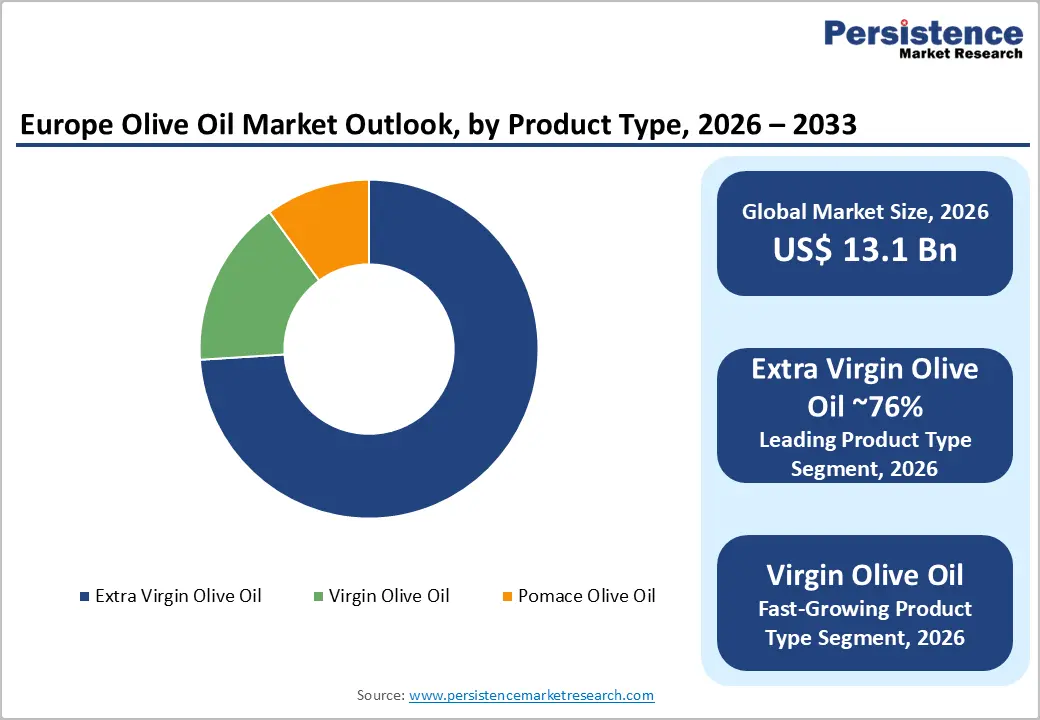
- Dominant Product Segment – Extra virgin olive oil leads all product type segments with approximately 74% market share in 2025, supported by EFSA-endorsed health claims, stringent EU quality regulations, and strong consumer premiumisation trends across Europe.
- Fast-Growing Product Segment – Virgin olive oil is the fast-growing product type segment, while organic olive oil is the most rapidly expanding nature segment, both benefitting from EU Green Deal incentives and consumer willingness to pay premium prices for quality-certified products.
- Key Opportunity – Online retail presents the most significant near-term opportunity, with European online food sales growing at a ~14% CAGR. DTC models allow premium producers to capture higher margins while engaging directly with health-focused and gourmet consumer segments.
Market Dynamics
Drivers - Rising Health Consciousness and Mediterranean Diet Adoption
The growing body of clinical evidence supporting olive oil's cardioprotective properties is a primary catalyst for market expansion across Europe. Studies published in the New England Journal of Medicine and endorsed by the European Food Safety Authority (EFSA) have confirmed that regular consumption of Extra Virgin Olive Oil rich in polyphenols reduces the risk of cardiovascular disease by up to 30%. The World Health Organization (WHO) continues to recommend the Mediterranean dietary pattern, which is centred on olive oil, as a globally beneficial nutritional framework.
As a result, household olive oil consumption has climbed steadily, with Eurostat data indicating a 4.2% year-on-year increase in olive oil retail sales in Germany and France between 2021 and 2024, signalling structurally durable demand growth.
Restraints - Climate-Induced Production Volatility and Supply Chain Disruptions
Olive oil supply is highly susceptible to climatic disruptions, a vulnerability that intensified markedly during 2022–2024. The IOC reported that European olive oil production fell by nearly 26% in 2023 due to prolonged drought and extreme heat across key producing nations, particularly Spain and Italy. This directly resulted in wholesale price increases exceeding 100% on global commodity markets, squeezing margins for processors and deterring price-sensitive consumers. Continued climate instability threatens the predictability of harvests, raises raw material procurement costs, and may prompt consumer substitution toward lower-cost edible oils, thereby undermining volume growth across retail and foodservice channels.
Opportunities - Growth of Organic Olive Oil Supported by EU Green Deal Policies
The organic olive oil segment represents a compelling growth frontier. The European Commission's Organic Action Plan targets expanding organic farmland to 25% of total agricultural land in the EU by 2030, with direct subsidies and transition grants channelled to olive growers converting to certified organic production. Eurostat data indicate that organically certified olive cultivation in Spain and Italy grew by over 18% between 2020 and 2023.
Consumer demand for certified organic, sustainably produced food is also rising a 2024 EIT Food survey found that 61% of European consumers are willing to pay a premium of over 15% for organically labelled cooking oils. This policy-consumer convergence creates significant revenue upside for producers investing in organic certification and sustainable supply chain infrastructure.
Category-wise Analysis
Product Type Insights
Extra virgin olive oil (EVOO) continues to dominate the European market due to its exceptional nutritional value and well-established heart-health benefits. Rich in monounsaturated fats, antioxidants, and anti-inflammatory compounds, EVOO is widely regarded as one of the healthiest edible oils. Its regular consumption has been linked to a reduced risk of cardiovascular diseases, making it especially appealing to Europe’s increasingly health-conscious population. As lifestyle-related illnesses such as obesity, hypertension, and heart disease become more prevalent, consumers are actively seeking natural, functional foods such as EVOO to support their well-being.
Extra virgin olive oil (EVOO) is a vital component of the Mediterranean diet, highly regarded by health experts and supported by public institutions. Its market appeal is bolstered by European Union certifications such as PDO and PGI, which ensure authenticity and traceability. These factors collectively contribute to EVOO’s reputation as both a premium and health-forward choice across European households and restaurants.
End-user Insights
Olive oil is expected to rise rapidly in the cosmetics and personal care market owing to its natural composition, skin-nourishing benefits, and rising consumer preference for clean-label beauty products. Olive oil is rich in vitamins A, D, E, and K, antioxidants, and essential fatty acids. It provides deep hydration, offers anti-aging benefits with skin-soothing effects, making it a popular ingredient in moisturizers, cleansers, soaps, and hair care products.
With the rise in awareness of chemical-free formulations, companies leverage olive oil's natural appeal to create luxury personal care products. Albogroup, a well-known Italian maker of high-quality cosmetic and toiletry products for hotels across the world, is one such example. Their Olive Collection features exquisite mini-size formats, and eco-friendly dispensers contain olive oil-based formulas to enhance the stay experience of guests.
Distribution Channel Insights
Hypermarkets and Supermarkets represent the dominant distribution channel for olive oil in Europe, accounting for an estimated 52% of total retail volumes in 2026. The dominance of organised retail is reflective of high grocery consolidation in markets such as Germany (REWE, Edeka), France (Carrefour, Leclerc), and the UK (Tesco, Sainsbury's). These retailers exercise significant shelf-space influence and tend to favour well-established brands and private-label offerings. Online retail is the fastest-growing distribution channel, reflecting accelerated digital grocery adoption, with European online food and beverage sales expanding at a CAGR of approximately 14% per Eurocommerce. Specialty stores particularly those focused on gourmet, artisanal, or health food products are also gaining relevance as premium olive oil consumption increases.
Regional Insights
Spain Olive Oil Market Trends and Insights
Spain is the leading regional market for olive oil in Europe, holding approximately 34% of total market share in 2025. As the world's largest olive oil producer, generating over 1.7 million tonnes annually according to the IOC, Spain benefits from a deeply integrated value chain encompassing cultivation, milling, refining, and export. Premium EVOO certifications such as Denominación de Origen Protegida (DOP) continue to underpin high-value product positioning, while domestic consumption per capita remains among the highest globally at approximately 10 litres per person per year.
Italy Olive Oil Market Trends and Insights
The Italian olive oil market is expected to grow at a CAGR of 4.6% during the forecast period. One of the most popular trends is the growing demand for family-run, artisanal olive oils, which are made in small quantities and focus on quality, tradition, and traceability. These premium oils, frequently cold-pressed and harvested by hand, appeal to health-conscious consumers seeking genuine products with rich flavor profiles and nutritional value. The Mediterranean diet, deeply rooted in Italian culinary culture, continues to play a pivotal role in driving olive oil consumption.
Best known for its heart-health benefits and nutrient-rich profile, this diet places olive oil at its core, encouraging its daily use in both home cooking and gourmet applications. As Italians prioritize wellness and provenance, the Italian olive oil market is responding with innovation in packaging, storytelling, and direct-to-consumer models, all while preserving its centuries-old artisanal traditions.
Competitive Landscape
Europe olive oil market is highly competitive, fueled by innovation, premiumization, and rising demand for clean-label products. Key players are focusing on organic, cold-pressed, and extra virgin olive oils, while emerging brands promote artisanal offerings. Strategic mergers, R&D investments, and collaborations are becoming critical for expanding product portfolios and market reach.
The market also benefits from powerful export markets, with organizations such as the International Olive Council (IOC) promoting global trade and quality standards. Government initiatives such as the European Union’s funding for olive oil research and quality certifications further bolster the industry’s growth, positioning it well in both mature and emerging markets.
Key Developments:
- In April 2026, Minister of Agriculture and Rural Development Andis Salla introduced a new agricultural cooperation model in Lushnjë, alongside Mayor Eriselda Sefa, with the launch of an Agricultural Cooperation Society (SHBB) focused on the olive oil sector.
- In March 2025, Citizens of Soil, a London-based DTC company specializing in premium extra virgin olive oil sourced from small-batch, family-run farms, secured €2.1 million in Seed funding.
- In December 2024, Unaprol and France Olive formed a partnership to promote certified extra virgin olive oil. They emphasized quality, origin, and tradition, highlighting PDO, PGI, and EU Organic labels as symbols of Mediterranean culture and excellence.
Europe Olive Oil Market - Key Insights
| Key Insights | Details |
|---|---|
|
Historical Market Value (2020) |
US$ 11.1 Billion |
|
Current Market Value (2026) |
US$ 13.1 Billion |
|
Projected Market Value (2033) |
US$ 16.7 Billion |
|
CAGR (2026–2033) |
3.6% |
|
Leading Region |
Spain, 34% market share (2025) |
|
Dominant Category (Product Type) |
Extra Virgin Olive Oil, ~74% market share (2025) |
|
Top-ranking Category (Nature) |
Conventional Olive Oil, ~78% market share (2025) |
|
Incremental Opportunity |
US$ 3.6 Billion |
Companies Covered in Europe Olive Oil Market
- Cargill, Incorporated
- Bunge Global
- Deoleo
- Sovena Group
- Gallo Worldwide (Victor Guedes S.A.)
- Salov S.p.A.
- Oro del desierto
- Sucesores de Hermanos López SA
- Hacienda El Palo Oils SL
- Frantoio Romano
- Knolive Oils
- Monini
- Hispasur Aceites S.L.
- LIÁ Olive Oil
- Nicola Pantaleo S.p.A.
- Farchioni Olii S.P.A.
- Finiki Lakonias
- Olive Line International S.L.
- La Española Olive Oil Inc.
- Marmara GmbH
Frequently Asked Questions
Europe olive oil market is estimated to be valued at US$ 13.1 billion in 2026.
Rising Consumer Shift Toward Heart-Healthy Edible Oils Is Driving Europe Olive Oil Market.
Spain is the leading country in the Europe Olive Oil market, holding approximately 34% of the total regional market share in 2025.
Companies can introduce eco-friendly and aesthetically appealing packaging solutions to attract sustainability-conscious consumers, which presents a key market opportunity.
Key players in Europe olive Oil market include Bunge Global, Deoleo, Sovena Group, Gallo Worldwide (Victor Guedes S.A.), Salov S.p.A., Monini, and others.


