




- Food Ingredients & Additives
- Roasted Barley Market
Roasted Barley Market Size, Share, and Growth Forecast 2026 - 2033
Roasted Barley Market by Form (Whole, Flour), by Nature (Organic, Conventional), by End Use (Beverages, Bakery, Snacks & Convenience Food, Animal Feed, Others), by Regional Analysis, 2026-2033

Roasted Barley Market Size and Share Analysis
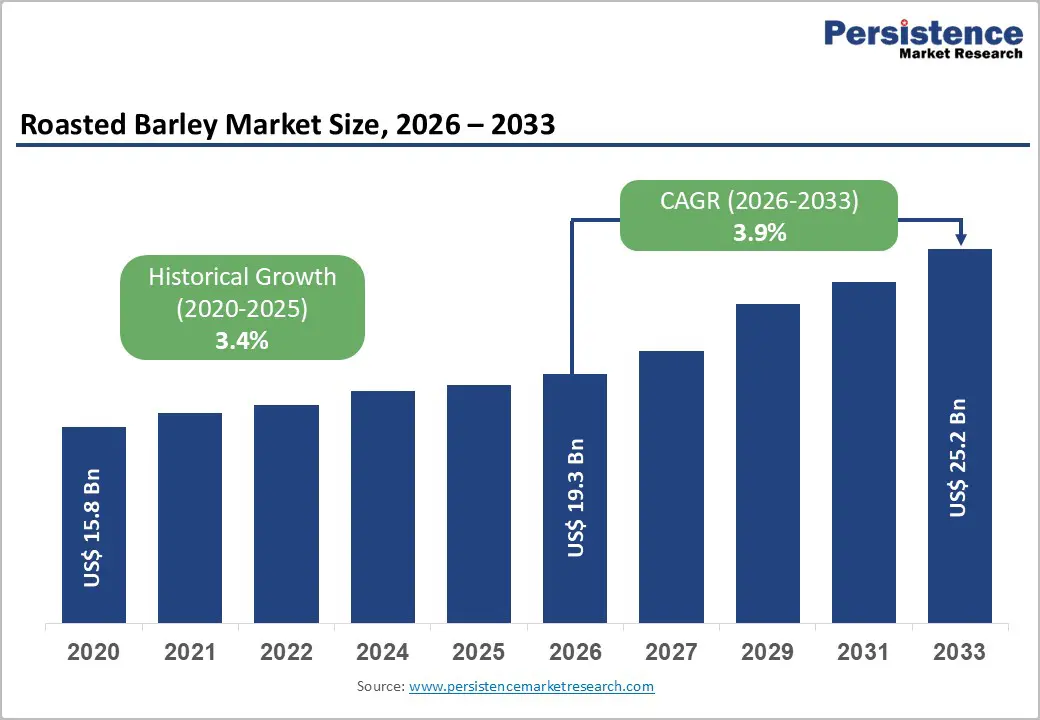
The global Roasted Barley Market size is expected to be valued at US$ 19.3 billion in 2026 and projected to reach US$ 25.2 billion by 2033, growing at a CAGR of 3.9% between 2026 and 2033
The market expansion is fundamentally driven by the resurgence of the global craft brewing industry and a paradigm shift in consumer preferences toward natural, clean-label ingredients. As health consciousness rises, Roasted Barley has emerged as a preferred nutrient-dense additive in functional foods and beverages, valued for its high fiber content and unique flavor-enhancing properties. Furthermore, the increasing adoption of sustainable and regenerative agricultural practices by major maltsters has bolstered the supply chain's resilience and appeal to environmentally-conscious food processors. The market's steady growth is also supported by the expanding use of barley as a caffeine-free coffee alternative, particularly in Asia Pacific and Europe.
Key Industry Highlights
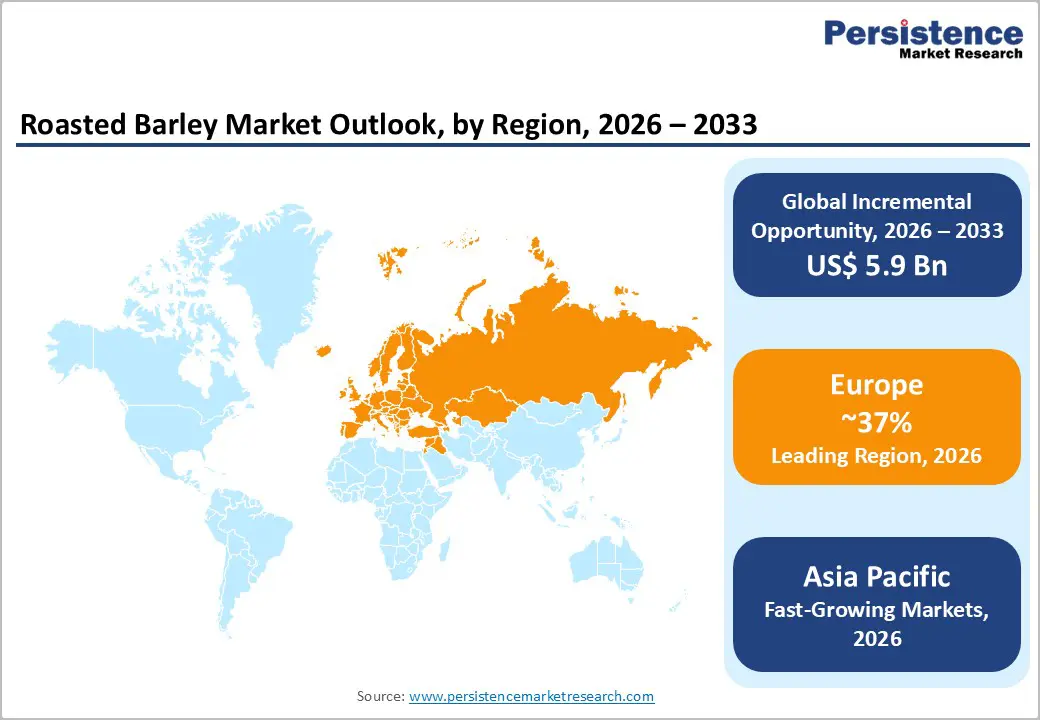
- Europe dominates the global landscape with a 37% market share, supported by a rich brewing heritage and a sophisticated regulatory environment that favors sustainable and high-quality grain processing.
- Asia Pacific is the fastest-growing region, driven by the expanding middle class in China and India and the traditional use of roasted barley in health-centric caffeine-free beverages.
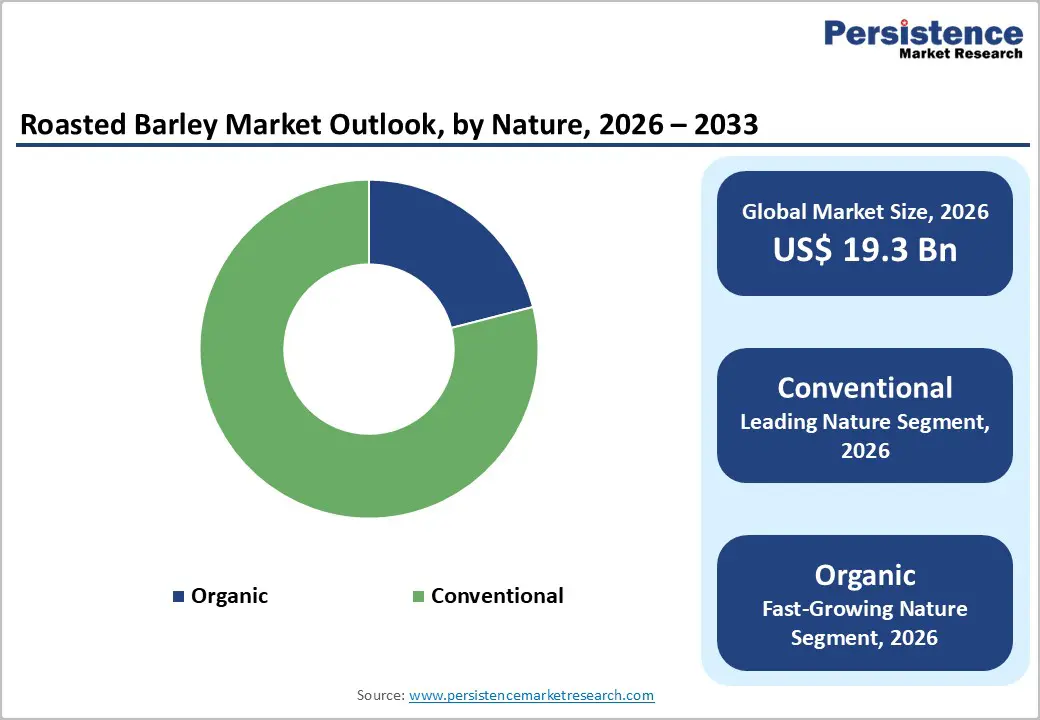
- Conventional Barley remains the dominant segment with a 79% share, though it faces increasing competition from the Organic segment as health and environmental consciousness grows globally.
- The Beverages segment is the leading end-use category, as the global Craft Revolution continues to demand specialized roasted malts for premium stouts, porters, and grain-based teas.
- Climate Change remains the most critical restraint, forcing market leaders to invest in regenerative agricultural practices and resilient supply chains to stabilize raw material costs.
| Report Attribute | Details |
|---|---|
|
Global Roasted Barley Market Size (2026E) |
US$ 19.3 Bn |
|
Market Value Forecast (2033F) |
US$ 25.2 Bn |
|
Projected Growth (CAGR 2026 to 2033) |
3.9% |
|
Historical Market Growth (CAGR 2020 to 2025) |
3.4% |
Market Dynamics
Driver – Surging Global Demand for Craft Beverages and Artisanal Brewing
The primary catalyst for the Roasted Barley Market is the relentless expansion of the craft beer and artisanal distillery segments. Roasted Barley is a non-malted grain that undergoes high-temperature roasting, typically between 220°C and 230°C, to achieve dark color profiles and distinct coffee-like or acrid flavor notes essential for producing Stouts and Porters. According to the Brewers Association, the craft brewing segment has shown resilience even during economic fluctuations, with consumers increasingly opting for premium, flavor-rich beers over mass-produced lagers. This trend has compelled major maltsters like Muntons Malted Ingredients Inc. and Bairds Malt to innovate their roasting profiles to provide brewers with specific EBC (European Brewery Convention) color units, ranging from 1000 to over 1500. The demand is not limited to alcoholic drinks; the rise of malt-based non-alcoholic beverages, which utilize roasted grains for natural coloring and mouthfeel, further accelerates market volume.
Restraints – Susceptibility to Climate Change and Volatile Agricultural Yields
A significant barrier to the consistent growth of the Roasted Barley Market is the vulnerability of the primary raw material barley to erratic weather patterns. Barley is highly sensitive to heat stress and moisture levels during its critical growth stages. Data from the United States Department of Agriculture (USDA) and the European Commission's MARS report indicate that prolonged droughts in major producing regions like Western Australia and the European Union have led to significant yield variations. Lower yields not only drive up the price of raw barley but also affect the protein content and plumpness of the grain, which are vital parameters for successful roasting. When protein levels are too high or moisture is inconsistent, the roasting process becomes less predictable, leading to higher waste percentages and increased production costs for companies like Boortmalt and Malteurop Group.
Opportunity – Expansion into the Caffeine-Free Beverage and Coffee Alternative Sector
A burgeoning opportunity for market participants lies in the global shift toward caffeine-free lifestyle choices. Roasted Barley is the foundational ingredient for traditional beverages like Mugicha in Japan and Boricha in South Korea, as well as the increasingly popular Barley Coffee (Orzo) in Europe. As the International Coffee Organization (ICO) notes a rise in coffee prices and a parallel trend of caffeine detoxing among Gen Z and Millennials, the demand for roasted grain infusions is skyrocketing. Manufacturers can capitalize on this by developing instant-soluble roasted barley powders and ready-to-drink (RTD) bottled grain teas. This segment is expected to be one of the fastest-growing end-use categories, particularly as brands market these products as alkaline-forming and digestive-friendly alternatives to acidic coffee.
Category-wise Analysis
Form Analysis
The Conventional segment currently leads the market with a 79% share as of 2025. This dominance is attributed to the established agricultural supply chains and the lower price point of conventional barley, which makes it highly accessible for high-volume industrial applications. The United Nations Food and Agriculture Organization (FAO) indicates that conventional farming remains the primary mode of production for feed and malt-grade barley globally. However, the Organic segment is the fastest-growing nature category. Driven by stringent regulations in the European Union and the USDA Organic certification standards, consumers are increasingly willing to pay a premium for grains free from synthetic pesticides and fertilizers. Major players like Castle Malting have expanded their organic portfolios to cater to the booming artisanal and organic craft beer movement in North America and Europe.
End Use Analysis
The Beverages segment is the leading end-user of Roasted Barley, largely sustained by the worldwide demand for dark ales and porters. In the United Kingdom and Ireland, the cultural heritage of stouts makes roasted barley a staple ingredient. Beyond alcohol, the Barley Tea market in East Asia consumes thousands of metric tons of roasted grain annually. The Bakery segment follows closely, where roasted barley is used not only for color but also to extend the shelf life of products due to its natural antioxidant properties. Meanwhile, the Animal Feed segment is finding new applications; roasted grains are being included in specialized high-palatability feeds for horses and young livestock, where the toasted aroma encourages feed intake. The Snacks & Convenience Food segment is also emerging as a high-potential area, with puffed roasted barley being marketed as a healthy, low-calorie alternative to popcorn and potato chips.
Region-wise Insights
North America Roasted Barley Market Trends and Insights
North America represents a highly innovative and competitive landscape for the Roasted Barley Market. The United States is home to the world's most vibrant craft brewing scene, with over 9,000 craft breweries contributing to a massive demand for specialty roasted malts. The regulatory framework provided by the Tobacco Tax and Trade Bureau (TTB) ensures high standards for brewing ingredients, favoring premium roasted grains.
A key trend in this region is the Innovation Ecosystem where maltsters like Proximity Malt and Rahr Malting Company are collaborating with micro-distillers to create unique, grain-forward whiskeys. Additionally, the U.S. is seeing a rise in the use of roasted barley in plant-based meat formulations to provide a savory, umami flavor. The innovation is also driven by consumer interest in non-GMO and locally sourced grains, pushing maltsters to establish closer ties with regional farmers in the Barley Belt of the Northern Plains.
Asia Pacific Roasted Barley Market Trends and Insights
Asia Pacific is the fastest-growing region for the Roasted Barley Market, with a projected high CAGR through 2032. This growth is primarily driven by the massive consumer bases in China, India, and Japan. In China, the modernization of the brewing industry and the entry of global craft beer brands have created a significant demand for premium roasted ingredients. Australia serves as a key supplier of high-quality malting and roasting barley to the entire ASEAN region.
The Manufacturing Advantages in Asia, coupled with the traditional consumption of roasted grain teas, provide a unique dual-growth engine. In India, the rising middle class and increasing urbanization are leading to a surge in health-conscious consumption, where roasted barley is appearing in multi-grain flours and health supplements. Furthermore, Japanese companies are leading the way in Functional Barley Teas that are enriched with vitamins, tapping into the aging population's needs for hydration and nutrition. The regional dynamics are also influenced by government subsidies in countries like India to promote Millets and Coarse Grains, which indirectly benefits the broader barley market by increasing awareness of ancient cereal grains.
Market Competitive Landscape
The Roasted Barley Market is a Consolidated yet evolving landscape, where long-established maltsters hold significant market power due to their extensive infrastructure and global distribution networks. Leaders like Boortmalt (the world's largest maltster) and Malteurop have achieved scale through vertical integration, owning everything from seed programs to high-capacity roasting facilities.
However, the market is witnessing a trend of Specialization, where smaller, boutique maltsters like Simpsons Malt and Bairds Malt focus on high-margin, ultra-premium roasted products for the craft segment. Strategies for expansion often involve Strategic Partnerships with local agricultural cooperatives to ensure a steady supply of high-quality grains amidst climate uncertainties. The emerging business model focuses on Custom Roasting Services, where maltsters provide bespoke color and flavor profiles tailored to a specific brewery's or food brand's requirements, moving away from a one-size-fits-all commodity approach.
Key Developments:
- In September, 2025: Muntons announced a new distribution partnership with Best Way Foods in Ukraine, aimed at strengthening its presence in the Eastern European food and beverage sectors
Companies Covered in Roasted Barley Market
- Muntons Malted Ingredients Inc.
- Boortmalt
- Malteurop Group
- Bairds Malt
- Simpsons Malt
- Interquell
- Proximity Malt
- Rahr Malting Company
- Catle Malting
- IREKS GmbH
- Others
Frequently Asked Questions
The global market is expected to be valued at approximately US$ 19.3 billion in 2026, driven by the rising demand for craft beer and natural food colorants.
The primary driver is the expansion of the Craft Brewing sector, where roasted barley is essential for providing the color and flavor profiles of dark beers like Stouts and Porters.
Europe is the leading region, accounting for a 37% market share in 2025, supported by strong brewing traditions in the U.K., Ireland, and Germany.
The fastest-growing opportunity lies in the Caffeine-Free Beverage sector, as consumers increasingly seek barley-based coffee alternatives and grain teas for their health benefits.
Key players include Muntons Malted Ingredients Inc., Boortmalt, Malteurop Group, Bairds Malt, and Simpsons Malt, among others.


