




- Medical Devices
- Disposable Oral Care Devices Market
Disposable Oral Care Devices Market Size, Share, and Growth Forecast, 2026 - 2033
Disposable Oral Care Devices Market by Product Type (Disposable Toothbrushes, Others), Material Type (Plastic-Based Disposable Devices, Others), End-user (Hospitals, Nursing Homes, Specialty Clinics, Dental Clinics, Home Care Settings, Hospitality Industry, Others), and Regional Analysis for 2026 - 2033

Disposable Oral Care Devices Market Share and Trends Analysis
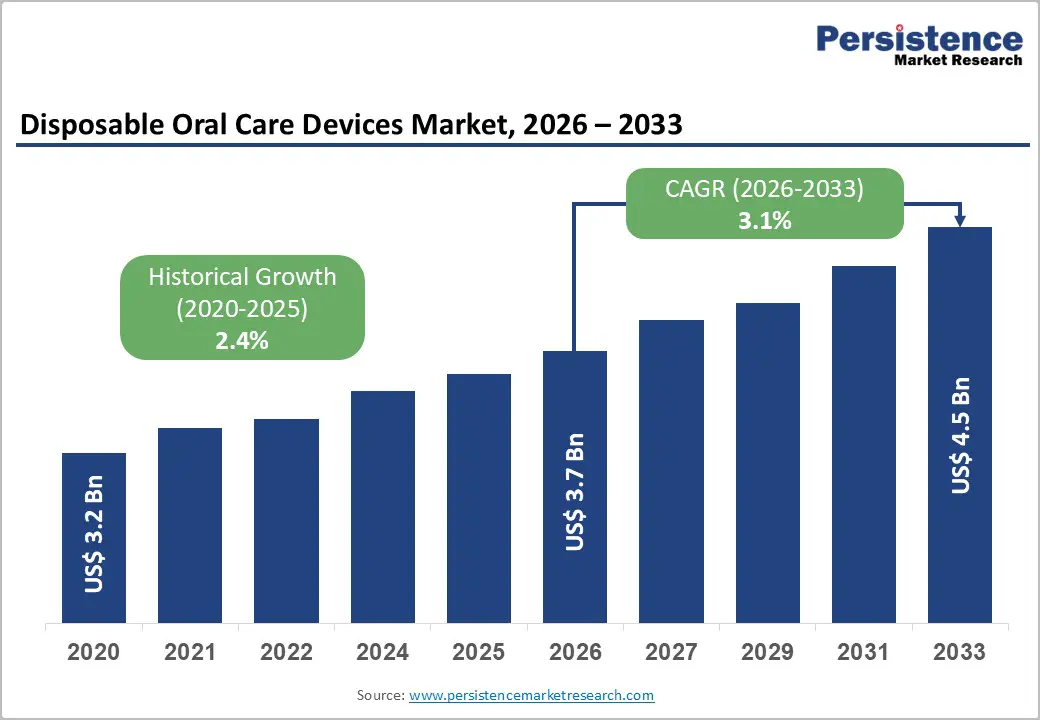
The global disposable oral care devices market size is likely to be valued at US$3.7 billion in 2026 and is estimated to reach US$4.5 billion by 2033, growing at a CAGR of 3.1% during the forecast period 2026 - 2033, driven by increasing infection prevention requirements across healthcare facilities, rising elderly population levels, and expanding institutional oral hygiene protocols. Demand acceleration is being supported by higher hospitalization rates and growing awareness regarding oral health management among dependent patient populations.
Regulatory emphasis on hospital-acquired infection reduction is strengthening procurement of single-use oral hygiene products across acute and long-term care settings. Technology integration in suction-based oral care systems is improving patient safety outcomes in critical care environments.
Key Industry Highlights:
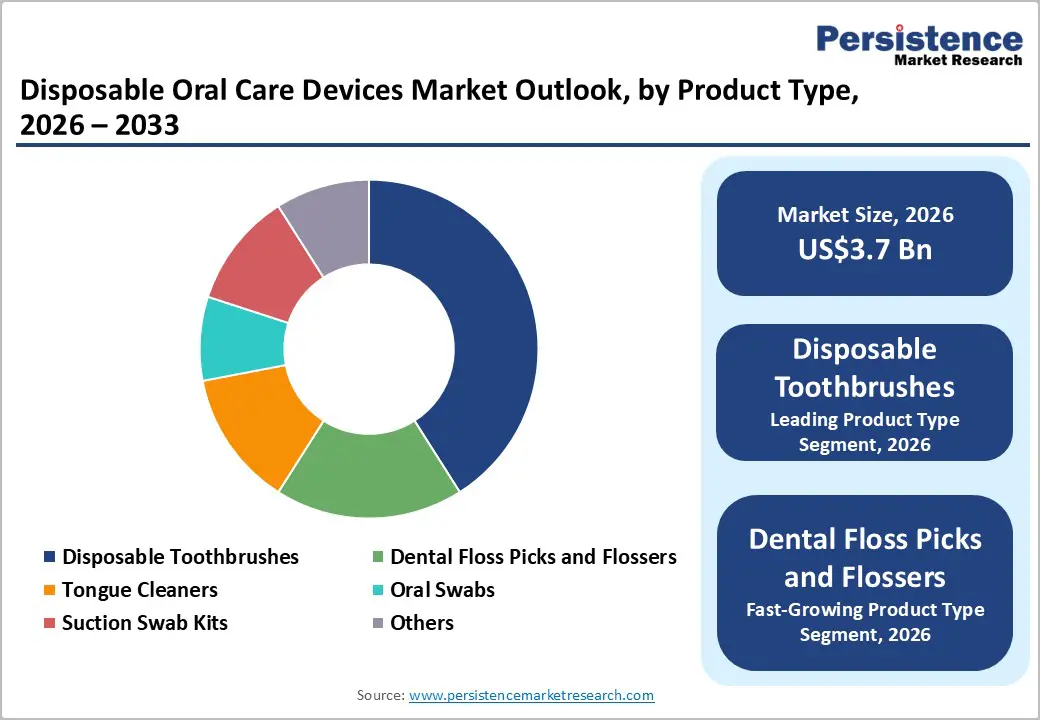
- Leading Product Type: Disposable toothbrushes are set to hold around 41% revenue share in 2026, driven by high volume demand across international hospitality networks and transit commercial spaces.
- Fastest-growing Product Type: Dental floss picks and flossers are projected as the fastest-growing segment, supported by shifting consumer preferences toward portable, on-the-go interdental hygiene solutions.
- Leading End-user: Hospitals are estimated to hold roughly 38% revenue share in 2026, due to strict compliance mandates regarding hospital-acquired pneumonia reduction bundles in critical care units.
- Fastest-growing End-user: Nursing homes are forecast to record the fastest growth, driven by the rapid expansion of the global geriatric population requiring assisted daily hygiene routines.
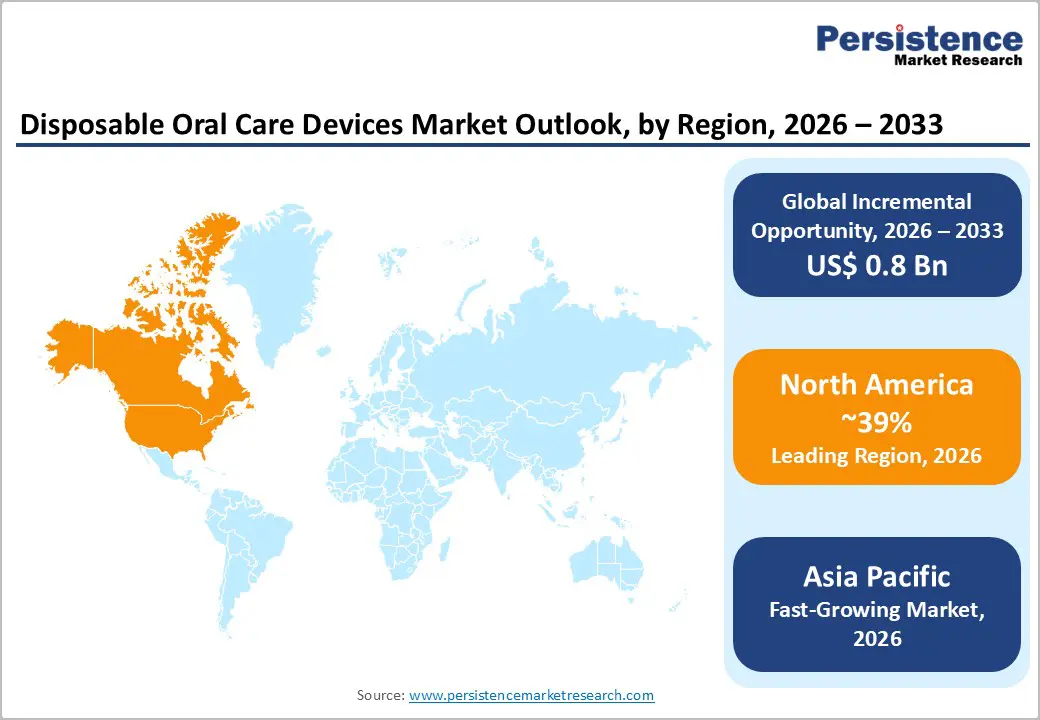
- Regional Leadership: North America is projected to capture roughly 39% of the market share by 2026, while Asia Pacific is forecast to record the fastest growth due to rapid healthcare infrastructure development.
- Competitive Environment: The market reflects a moderately fragmented structure, with established medical supply corporations utilizing bulk distribution networks and long-term group purchasing contracts to maintain market position.
- Innovation Trends: Technological transitions toward certified biodegradable bio-resins and the integration of specialized suction mechanics within single-use swabs are shaping long-term product development strategies.
DRO Analysis
Driver - Increasing Hospital Infection Prevention Initiatives
Healthcare institutions are strengthening infection prevention frameworks due to rising concerns regarding cross-contamination risks associated with reusable oral care products. Disposable oral care devices support single-patient usage protocols, reducing microbial transmission in intensive care units, long-term care centers, and surgical recovery wards. The U.S. Centers for Disease Control and Prevention reported in 2025 that nearly 1 in 31 hospitalized patients acquires at least one healthcare-associated infection during treatment exposure, reinforcing the adoption of disposable hygiene tools.
Healthcare accreditation standards are creating measurable pressure on facilities to implement safer oral hygiene practices for ventilated and immobile patients. Oral swabs and suction swab kits are gaining preference due to integrated fluid management systems that reduce aspiration-related complications. Procurement growth among hospitals is encouraging manufacturing scale expansion and product standardization. Medical training programs are also promoting structured oral care procedures, increasing routine usage frequency across institutional healthcare environments.
Restraint - Environmental Regulations and Plastic Single-Use Elimination Mandates
Global regulatory bodies are intensifying legal frameworks designed to restrict or eliminate single-use plastic commodities to mitigate municipal solid waste accumulation. Due to a significant proportion of disposable oral cleansing implements utilizing non-biodegradable polymers, manufacturing networks face strict compliance penalties and localized distribution prohibitions. These legal barriers restrict access to high-volume municipal and institutional markets, altering traditional distribution models.
The enforced transition away from conventional petroleum-based resins requires immediate capital reinvestment into manufacturing infrastructures to support alternative material processing. This reconfiguration directly compresses operational margins due to the higher raw material costs associated with bio-based or water-soluble substrates. Small and medium-sized enterprise manufacturers struggle to scale production efficiently, limiting geographic expansion and slowing product rollouts.
Opportunity - Strategic Shift toward Certified Eco-Friendly and Circular Material Formulations
Heightened consumer awareness regarding corporate environmental footprints creates a distinct market opening for products derived from renewable, compostable, or highly recyclable resources. Processing technologies now allow the integration of bamboo, cornstarch-based polylactic acid, and biodegradable cellulose into high-strength handles and protective packaging structures. Manufacturers can leverage these advanced material formulations to position premium lines that appeal directly to environmentally conscious consumers and corporate procurement teams.
Establishing verified closed-loop recycling partnerships with large hospitality groups and private healthcare networks offers a clear pathway to securing long-term supply agreements. Aligning product designs with global sustainability standards permits manufacturers to circumvent single-use plastic taxes and regulatory restrictions. This strategic positioning allows corporations to capture market share in regions with strict environmental oversight, converting regulatory challenges into long-term commercial advantages.
Category-wise Analysis
Product Type Insights
Disposable toothbrushes are anticipated to secure around 41% of the disposable oral care devices market share in 2026, reflecting the continuous requirements of the global travel, hospitality, and healthcare infrastructure networks. Institutional purchasers order these implements in large quantities to satisfy daily consumer turnover and patient hygiene mandates. For example, commercial airlines routinely include pre-pasted manual brushes within overnight travel kits distributed to premium passengers during long-haul international flights.
Dental floss picks and flossers are expected to be the fastest-growing segment, propelled by rising consumer preference for preventative interdental hygiene and portable personal care options. Consumers increasingly select individual, single-use flossing tools that offer immediate usability without requiring access to traditional washing facilities. Corporate professionals frequently utilize individual plastic-framed flossers within office settings following midday meals to maintain oral cleanliness.
Material Type Insights
Plastic-based disposable devices are poised to dominate with a forecast market share of over 52% in 2026, powered by low raw material costs, ease of thermal processing, and excellent structural durability. High-speed injection molding infrastructures globally optimize the output of polystyrene and polypropylene matrices to meet high institutional volume demands. For example, high-volume healthcare supply syndicates purchase millions of standard polypropylene toothbrushes annually to supply state-funded correctional facilities and public hospitals.
Biodegradable disposable devices are estimated to be the fastest-growing segment, fueled by shifting consumer preferences and new municipal regulations targeting the reduction of non-biodegradable waste streams. Corporate entities invest in advanced polylactic acid formulations derived from cornstarch and sugarcane to create functional alternatives to petroleum resins. Premium eco-lodges provide guests with single-use toothbrushes made from certified compostable bioplastics that break down within municipal composting facilities.
End-user Insights
Hospitals are likely to be the leading segment with a projected 38% of the disposable oral care devices market share in 2026, due to extensive patient admission volumes and strict compliance with national healthcare-associated infection reduction programs. Medical institutions utilize standardized single-use kits across emergency, surgical, and intensive care departments to reduce cross-contamination risks. Acute care hospitals deploy specialized single-use suction tools across intensive care units to manage oral pathogens in long-term patients.
Nursing homes are anticipated to be the fastest-growing segment, fueled by the rapid expansion of the global geriatric population and the increasing prevalence of age-related physical limitations that necessitate assisted oral hygiene routines. Long-term care facilities invest in pre-packaged, single-use hygiene systems to optimize care workflows and ensure high standards of patient sanitation. For example, assisted living facilities utilize pre-moistened disposable oral swabs to maintain oral health in residents with advanced dementia.
Regional Insights
North America Disposable Oral Care Devices Market Trends
North America is expected to lead with an estimated 39% of the disposable oral care devices market share in 2026, supported by strict institutional infection control frameworks and high healthcare expenditure across public and private hospital networks. The regional market faces rigorous regulatory penalties for healthcare-acquired conditions, forcing procurement departments to prioritize single-use preventative medical devices.
U.S. Disposable Oral Care Devices Market Insights
The U.S. market is likely to be driven by acute care hospital networks enforcing standardized ventilator-associated pneumonia prevention bundles. The Centers for Medicare & Medicaid Services increased emphasis on patient hygiene quality metrics during 2025, encouraging broader deployment of standardized oral care kits. Companies, including Cardinal Health, expanded disposable oral care distribution through acute care procurement networks. Rising home healthcare utilization is also increasing retail demand for caregiver-oriented disposable oral hygiene products.
Canada Disposable Oral Care Devices Market Insights
The Canada market is expected to expand, due to increasing infrastructure investments in long-term care and public nursing facilities across Ontario and Quebec. Public health initiatives launched in early 2026 prioritize advanced oral care routines for institutionalized populations to lower secondary respiratory admissions. This policy focus accelerates institutional procurement of specialized single-use foam swabs and safety flossers, benefiting regional medical distributors that offer eco-friendly product variations.
Europe Disposable Oral Care Devices Market Trends
The Europe market is likely to be defined by strict environmental compliance standards alongside advanced clinical protocols across Western European healthcare frameworks. The implementation of updated microplastic restrictions across the European Union in 2025 forces manufacturers to redesign single-use consumer hygiene products.
Germany Disposable Oral Care Devices Market Insights
Germany is forecast to hold a substantial share of the European market, driven by an aging demographic and an expanding network of specialized dental clinics. The implementation of strict hygiene guidelines by the Commission for Hospital Hygiene and Infection Prevention drives continuous institutional use of single-use oral care tools.
U.K. Disposable Oral Care Devices Market Insights
The U.K. market is expected to experience steady growth due to procurement updates within National Health Service trusts aimed at lowering hospital-acquired infections. Revised clinical frameworks introduced in early 2026 emphasize the role of regular oral care in non-ventilated patients, driving bulk procurement of disposable suction devices.
Asia Pacific Disposable Oral Care Devices Market Trends
Asia Pacific is forecast to be the fastest-growing market for disposable oral care devices, stimulated by rapid healthcare infrastructure expansion, rising middle-class disposable income, and booming hospitality sectors across emerging economies. Government initiatives aimed at expanding rural health clinic access drive higher demand for low-cost, single-use medical consumables.
China Disposable Oral Care Devices Market Insights
China is projected to contribute significant volume to the regional market, supported by massive injection molding manufacturing capacities and expanding domestic healthcare networks. The continuous growth of the domestic travel and hospitality sectors drives steady demand for single-use dental kits across economy and premium hotel chains.
India Disposable Oral Care Devices Market Insights
The India market is expected to grow rapidly, driven by the expansion of private corporate hospital chains and rising public awareness of preventative dental hygiene. National healthcare initiatives focused on improving sanitation standards across public medical facilities are driving increased procurement of essential disposable medical supplies.
Competitive Landscape
The global disposable oral care devices market is moderately fragmented, characterized by participation from multinational healthcare suppliers and regional oral hygiene manufacturers competing across institutional and retail distribution channels. Key companies include Medline Industries, Cardinal Health, Dynarex Corporation, The Humble Co., and Colgate-Palmolive Company.
Competition is centered on infection prevention performance, sustainable material innovation, pricing efficiency, and institutional procurement relationships. Companies continue expanding manufacturing automation and product customization capabilities to improve operational scalability. Healthcare distribution partnerships and environmentally compliant product portfolios are strengthening competitive differentiation across hospitals, long-term care facilities, and home healthcare applications globally.
Key Industry Developments:
- In March 2026, Innovative Products & Design launched SimplyBrush, a biodegradable prepasted disposable toothbrush designed for portable oral hygiene applications across travel, hospitality, and on-the-go healthcare settings.
Companies Covered in Disposable Oral Care Devices Market
- Colgate-Palmolive Company
- Medline Industries, LP
- Cardinal Health, Inc.
- Stryker Corporation
- Owens & Minor, Inc.
- Procter & Gamble Company
- Unilever PLC
- Johnson & Johnson Services, Inc.
- DenTek Oral Care, Inc.
- Ranir, LLC
- Plackers
- Oral Care Technologies, Inc.
- Intersurgical Ltd.
- Dynarex Corporation
- Medline Canada Corporation
Frequently Asked Questions
The global disposable oral care devices market is projected to reach US$3.7 billion in 2026.
Rising infection prevention requirements in healthcare facilities, expanding elderly population, and increasing adoption of single-use oral hygiene products in hospitals and home care settings are driving the disposable oral care devices market.
The disposable oral care devices market is poised to witness a CAGR of 3.1% from 2026 to 2033.
Expansion of home healthcare services, growing demand for sustainable biodegradable oral care products, and increasing institutional adoption across long-term care facilities are creating key market opportunities in the disposable oral care devices market.
Some of the key market players include Medline Industries, Cardinal Health, Dynarex Corporation, The Humble Co., and Colgate-Palmolive Company.


