




- Food Ingredients & Additives
- Banana Flakes Market
Banana Flakes Market Size, Share, and Growth Forecast 2026 - 2033
Banana Flakes Market by Nature (Organic, Conventional), by End-user (Food Processing Industry, Nutraceutical, Retail/Household, Foodservice Industry, Others), by Distribution Channel, by Regional Analysis, 2026 - 2033

Banana Flakes Market Size and Trend Analysis
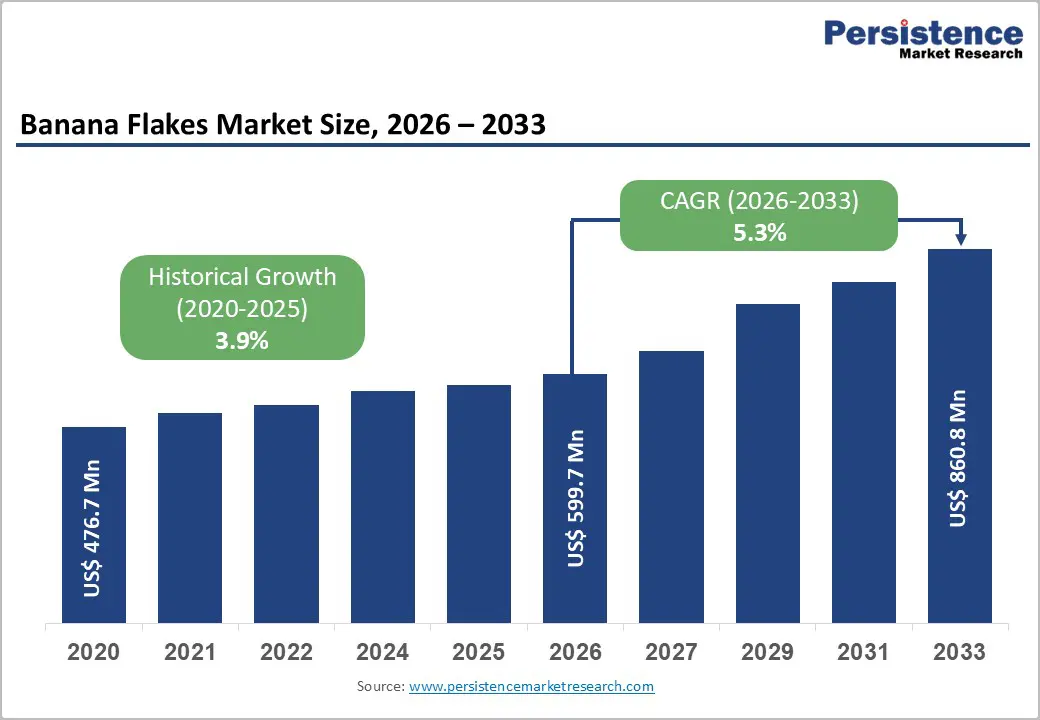
The global banana flakes market size is expected to be valued at US$ 599.7 million in 2026 and projected to reach US$ 860.8 million by 2033, growing at a CAGR of 5.3% between 2026 and 2033.
The banana flakes market is experiencing steady growth due to increasing demand for convenient, nutritious, and clean-label food ingredients. Banana flakes are produced from dehydrated bananas and are widely used in infant nutrition, bakery products, breakfast cereals, smoothies, and snack formulations. Their natural sweetness, long shelf life, and easy digestibility make them a preferred alternative to artificial flavoring and refined sugar-based ingredients. Rising health consciousness, expanding vegan and plant-based diets, and the growing popularity of ready-to-eat foods are key factors driving market expansion. Additionally, food manufacturers are increasingly incorporating banana flakes for their functional benefits, including fiber content, energy density, and flavor enhancement.
Key Industry Highlights:
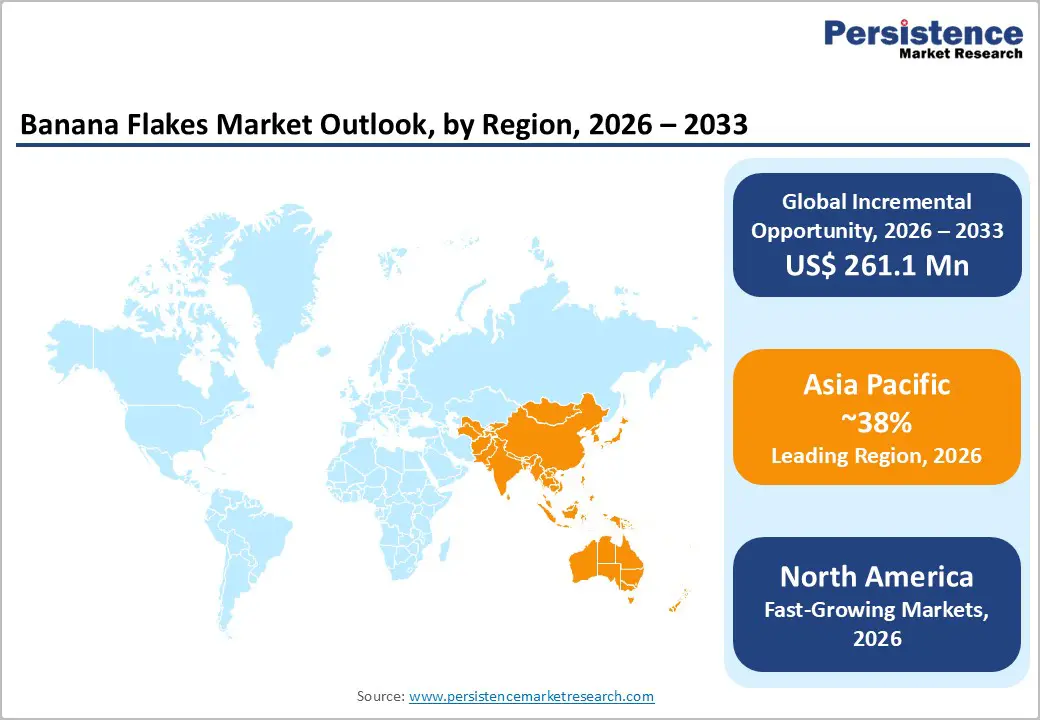
- Asia Pacific leads the banana flakes market with ~38% share in 2025, supported by strong production in India, China, and the Philippines, supplying global processors.
- North America is the fastest-growing region, driven by high U.S. banana imports and rising demand for infant cereals and clean-label snack innovations.
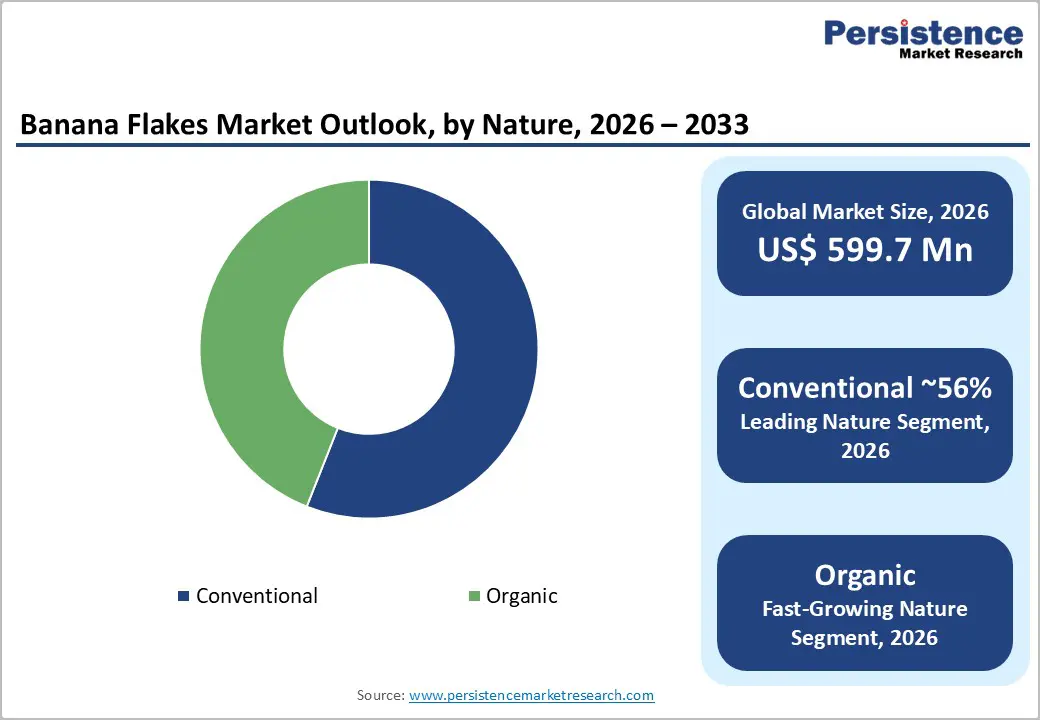
- Conventional banana flakes dominate with ~56% share in 2025 due to cost efficiency, large-scale availability, and strong adoption in mass-market food processing applications.
- Organic banana flakes show the highest growth rate, supported by increasing demand in premium infant nutrition and nutraceutical products across developed and emerging markets.
- Organic and infant nutrition segments offer highest margins, driven by clean-label trends, premium pricing, and growing consumer preference for natural, safe, and high-quality ingredients.
| Key Insights | Details |
|---|---|
| Banana Flakes Market Size (2026E) | US$ 599.7 million |
| Market Value Forecast (2033F) | US$ 860.8 million |
| Projected Growth CAGR (2026 - 2033) | 5.3% |
| Historical Market Growth (2020 - 2025) | 3.9% |
DRO Analysis
Drivers - Expanding Infant Nutrition and Breakfast Cereal Demand
Banana flakes are increasi;ngly used in infant nutrition and breakfast cereals due to their mild taste, easy digestibility, and strong nutritional profile. Rich in potassium, dietary fiber, and natural carbohydrates, they are well-suited for early-life nutrition products such as weaning foods and toddler cereals. Their rapid rehydration and smooth texture make them ideal for formulations requiring consistency and ease of preparation. Additionally, banana flakes align with clean-label preferences, often listed simply as “banana,” which enhances consumer trust and acceptance in sensitive product categories like baby food.
Growing awareness of pediatric nutrition and the importance of fruit-based complementary feeding is further driving demand. As working parents seek convenient, nutritious, and ready-to-use options, manufacturers are incorporating banana flakes into fortified cereals and infant food products. Their ability to provide natural sweetness while maintaining product stability supports wider adoption, contributing to steady growth in both developed and emerging markets.
Clean Label and Sugar Reduction Trends Driving Banana Flakes Demand
The growing consumer shift toward clean-label products is significantly driving the adoption of banana flakes across snacks, bakery, and confectionery applications. Banana flakes serve as natural sweeteners and functional texturizers, aligning with demand for minimally processed, recognizable ingredients. According to the U.S. Department of Agriculture (USDA), bananas rank among the most consumed fruits in the United States, with processed forms gaining traction as manufacturers respond to evolving dietary preferences. Increasing awareness of health and wellness is encouraging consumers to avoid artificial additives and refined sugars, positioning banana flakes as a preferred ingredient in product reformulation strategies.
Global sugar reduction initiatives are further accelerating this trend, particularly with guidelines recommending added sugars be limited to 10% of daily energy intake. Banana flakes enable 20-30% sugar replacement in products such as granola bars, muffins, and cookies, while maintaining moisture, texture, and natural flavor. Additionally, major cereal manufacturers have reformulated 15-20% of their product portfolios using fruit-based ingredients, enhancing product appeal and supporting premium pricing in health-focused retail channels.
Restraints - Intense Competition from Alternative Flake Products and Food Safety Concerns Restraining Market Growth
The banana flakes market faces strong competition from widely available cereal-based alternatives such as oats, corn, rice, and wheat flakes. These products offer well-established nutritional benefits, including high fiber, vitamins, and minerals, and are deeply integrated into daily diets across regions. Their affordability, longer shelf life, and easy availability make them convenient options for consumers, particularly in breakfast and snack categories. As a result, many consumers continue to prefer these traditional flakes, limiting the adoption of banana flakes despite their natural and clean-label appeal. This substitution effect can slow market penetration and restrict overall demand growth.
Additionally, certain health-related concerns may act as a restraint for the market. While bananas are nutritionally rich, excessive consumption may disrupt dietary balance, particularly due to high potassium levels. There are also concerns related to microbial contamination if processing and storage conditions are not properly maintained. Potential risks such as bacterial contamination and digestive issues can influence consumer perception and purchasing behavior. These factors highlight the importance of strict quality control, proper processing, and safety standards, as manufacturers work to build consumer confidence and sustain market growth.
Opportunities - Organic Banana Flakes Premiumization Creating High-Value Growth Opportunities
Organic banana flakes present a strong premiumization opportunity as global demand for organic food continues to expand. According to Organic Trade Association data, organic food sales are growing at approximately 12% annually, reflecting increasing consumer preference for clean-label and chemical-free products. Studies indicate that nearly 56% of consumers are willing to pay a premium of up to 25% for organic offerings, enabling manufacturers to achieve higher margins. This trend is particularly prominent in infant nutrition and nutraceutical segments, where certified organic ingredients can command price uplifts of 30-50% due to stringent safety and quality expectations.
In response, producers in Latin America are expanding certified organic banana cultivation to meet rising export demand from North America and Europe. Major baby food brands are increasingly reformulating products to align with clean-label trends, especially among millennial parents seeking non-GMO and pesticide-free ingredients. As awareness of sustainable sourcing and transparency grows, organic banana flakes are positioned to capture significant value, offering both differentiation and profitability for manufacturers.
Category-wise Analysis
Nature Insights
Conventional banana flakes dominate the market, accounting for approximately 56% share in 2025, primarily due to their cost efficiency and large-scale availability. Global banana production exceeds 135 million tons annually, with more than 95% categorized as conventional, ensuring a consistent and reliable raw material supply for high-volume processing industries. This abundance supports large food manufacturers, particularly in infant nutrition, bakery, and snack segments, where bulk procurement and stable pricing are critical. Conventional flakes are typically priced 20-30% lower than organic alternatives, making them highly attractive for private-label and mass-market products.
In addition, stringent global food safety frameworks, including maximum residue limits under international standards, help maintain consumer confidence in conventional banana flakes. Manufacturers prioritize these flakes for their scalability and predictable quality, enabling efficient formulation in cost-sensitive applications. While organic variants are gaining traction, the dominance of conventional banana flakes is expected to continue, supported by their strong supply chain, affordability, and widespread industrial acceptance.
Distribution Channel Insights
Business-to-business (B2B) channels dominate the banana flakes market, accounting for approximately 68% share in 2025. Bulk procurement by large multinational food processors drives this dominance, as companies rely on consistent supply for large-scale production of cereals, infant foods, and snack products. Long-term contracts and direct supplier relationships enable manufacturers to secure stable pricing, quality assurance, and timely delivery, which are critical for maintaining standardized product formulations.
B2B channels also allow for customization of product specifications, including moisture content, particle size, and microbiological parameters, ensuring compliance with strict food safety and quality standards. This level of customization is essential for meeting regulatory requirements and maintaining product consistency across global markets. The strong reliance on B2B procurement reflects the industrial nature of banana flakes demand, with repeat business and supplier reliability playing a key role in sustaining long-term partnerships and market stability.
Regional Insights
North America Banana Flakes Market Trends and Insights
North America represents a mature yet innovation-driven market for banana flakes, supported by strong banana import volumes and a well-established food processing industry. The U.S. imports significant quantities of bananas annually, which supports domestic processing into value-added formats such as flakes for use in infant nutrition, breakfast cereals, and snack products. Regulatory frameworks emphasize ingredient safety and digestibility, particularly in infant and toddler nutrition, where banana flakes are preferred due to their low allergen profile and natural composition. This has positioned banana flakes as a reliable alternative to more allergenic ingredients in early-life nutrition products.
Innovation remains a key growth pillar in the region, with leading food manufacturers continuously expanding banana-based product portfolios. Industry platforms and food innovation ecosystems are encouraging the use of banana flakes in functional foods such as protein bars, ready-to-drink beverages, and clean-label snacks. Certifications and quality standards further support rapid product development and commercialization. As consumer demand for natural, minimally processed ingredients grows, banana flakes continue to gain traction across multiple food categories in North America.
Europe Banana Flakes Market Trends and Insights
Europe is a significant consumer of banana-based products, with strong demand driven by high consumption levels across major economies such as Germany, the United Kingdom, France, and Spain. The region has a well-developed processed food industry where banana flakes are widely used in baby food, bakery products, cereals, and snacks. Regulatory standards across the European Union strongly favor organic and certified food ingredients, which has encouraged the adoption of high-quality banana flakes in premium and organic product segments. This trend is particularly evident in infant nutrition, where stringent safety and quality requirements shape ingredient selection.
Sustainability is a central theme influencing the banana flakes market in Europe. Policy initiatives focused on reducing food waste and promoting environmentally responsible production are encouraging efficient banana processing and utilization of surplus or imperfect fruit. Harmonized regulatory frameworks ensure consistent compliance across member states, simplifying trade and product distribution. At the same time, rising consumer preference for clean-label and sustainably sourced ingredients is reinforcing demand for banana flakes, supporting steady market expansion across the region.
Asia Pacific Banana Flakes Market Trends and Insights
Asia Pacific is the leading region in the banana flakes market, supported by its strong position as the world’s largest banana-producing region. Countries such as India, China, and the Philippines contribute significantly to global banana output, ensuring abundant raw material availability for processing industries. The presence of cost-effective manufacturing hubs across Southeast Asia further enhances competitiveness, enabling producers to supply banana flakes at relatively lower prices compared to other regions. This combination of supply advantage and cost efficiency has made the region a key exporter as well as a growing domestic market.
Rising population, urbanization, and income levels are driving demand for convenient and nutritious food products across Asia Pacific. Government-led nutrition programs and increasing focus on fortified foods are supporting the use of banana flakes in infant cereals and health-oriented products. Regulatory support and streamlined approval processes are facilitating market entry for new products, while expanding food processing capabilities continue to strengthen the regional value chain. As demand for natural and functional ingredients increases, Asia Pacific is expected to maintain strong growth momentum in the banana flakes market.
Competitive Landscape
The banana flakes market shows a moderately consolidated structure, where key players account for nearly 65% of global volume, alongside several regional and niche manufacturers. Leading companies focus on vertical integration through long-term farm contracts in major producing countries such as Ecuador and the Philippines, ensuring stable raw material supply and price control. Investment in R&D is centered on developing instantized banana flakes with faster dispersion and improved solubility, along with expanding organic production capacity. Competitive differentiation is driven by certifications like SQF Level 3, kosher, and halal standards, along with advanced application labs that accelerate customer product development and adoption.
Key Developments:
- In June 2025, Symrise reinforced its position in the natural ingredients market by upgrading its Pasaje facility in Ecuador, enhancing the production of banana flakes and tropical fruit powders.
- In February 2022: A study evaluated how the ripeness level of bananas used to make banana flour influences the sensory attributes of banana flakes including color, taste, aroma, texture, and overall acceptance using a hedonic test with panelists. It identified preferred formulations based on sensory scores.
Companies Covered in Banana Flakes Market
- Om Foods Inc
- Z Natural Foods
- Van Duren Farms
- Orkla Group
- Raeler Fruchtchips GmbH
- Symrise
- Seawind International LLC
- Johs. Thoms GmbH & Co. KG
- Tradal Brazil
- Nutritional Designs, Inc.
- Futurcorp S.A.
- Cosmo Foods
- Agro America
- VINJ-Food
- Others
Frequently Asked Questions
Global banana flakes market reaches US$ 599.7 million in 2026, propelled by infant nutrition demand and clean-label cereal/snack reformulations.
Infant nutrition demand, sugar reduction trends, and clean-label preferences drive banana flakes usage as natural sweetener and fiber-rich ingredient.
Asia Pacific leads globally with 38% share, supported by strong production base in India, China, and Philippines.
Organic banana flakes and infant nutrition/nutraceutical applications offer highest growth potential with strong premium pricing and clean-label demand.
Major players include Om Foods Inc, Symrise, Orkla Group, Z Natural Foods, Raeler Fruchtchips GmbH, Seawind International LLC, Johs. Thoms.


