




- Agrochemicals
- Zinc Methionine Chelates Market
Zinc Methionine Chelates Market Size, Share, and Growth Forecast 2026-2033
Zinc Methionine Chelates Market by Form (Powder, Liquid, Granules), Product Grade (Feed Grade, Food Grade, Pharmaceutical Grade), Animal Type (Swine, Poultry, Ruminants, Aquaculture, Pets, Equine), Distribution Channel (Direct Sales, Distributors & Dealers, Online Retail, Specialty Channels), End-user (Animal Feed, Dietary Supplements, Pharmaceuticals, Food & Beverage Fortification, Veterinary Products), and Regional Analysis, 2026 - 2033

Zinc Methionine Chelates Market Size and Trend Analysis
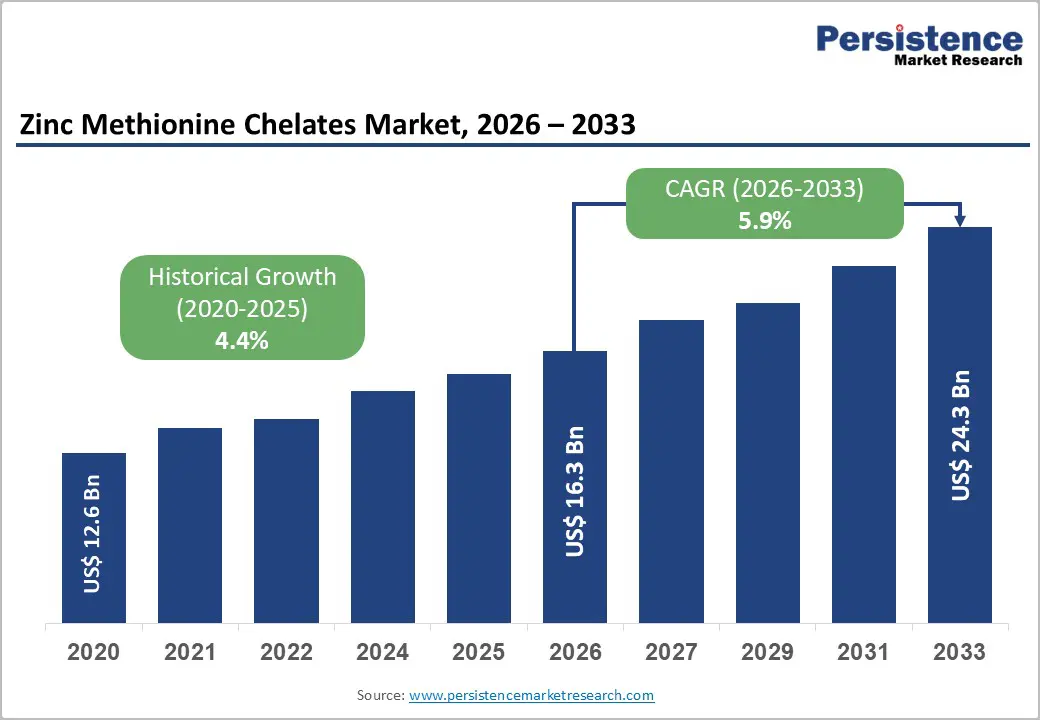
The global zinc methionine chelates market size is likely to be valued at US$ 16.3 billion in 2026 and is expected to reach US$ 24.3 billion by 2033, growing at a CAGR of 5.9% during the forecast period from 2026 to 2033.
Market growth is primarily driven by escalating demand for superior bioavailable mineral supplements in livestock and poultry production systems, coupled with stringent regulatory transitions away from antibiotic growth promoters worldwide.
Key Industry Highlights:
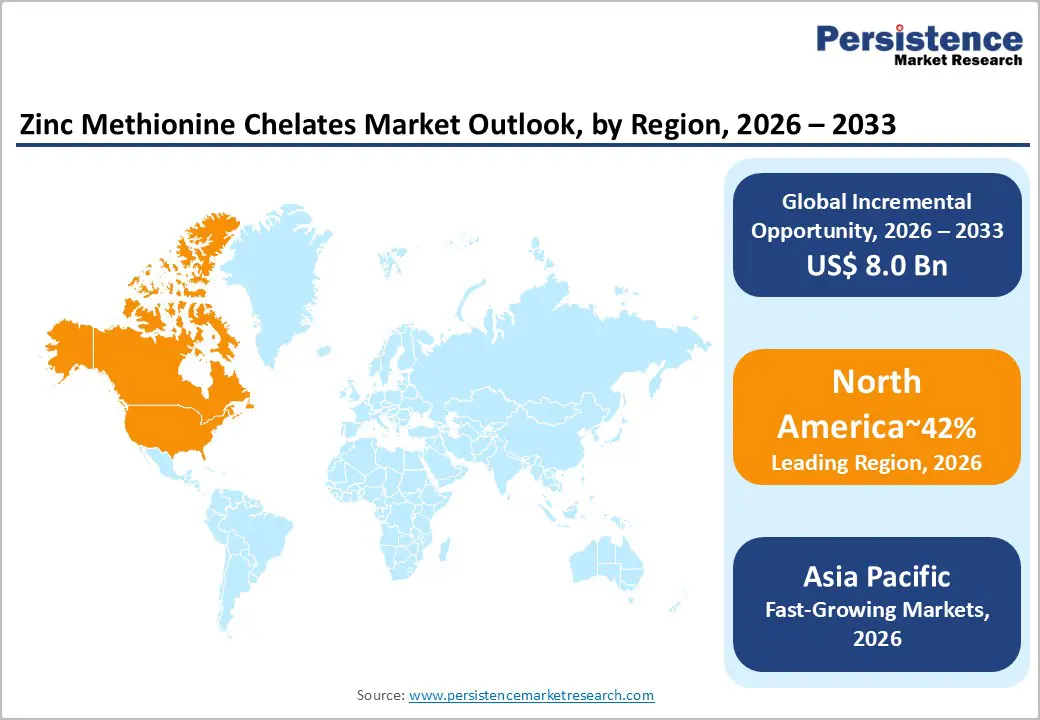
- Leading Region: North America commands global zinc methionine chelates market leadership holding 42% share through advanced regulatory frameworks and premium pricing positioning supporting sustained investment in research and market development across livestock and companion animal segments.
- Fastest Growing Region: Asia Pacific demonstrates exceptional market expansion through 2033 with a rising CAGR of 8.2%, driven by intensive livestock intensification, escalating protein consumption, and government-backed agricultural modernization initiatives across China, India, and Southeast Asian nations.
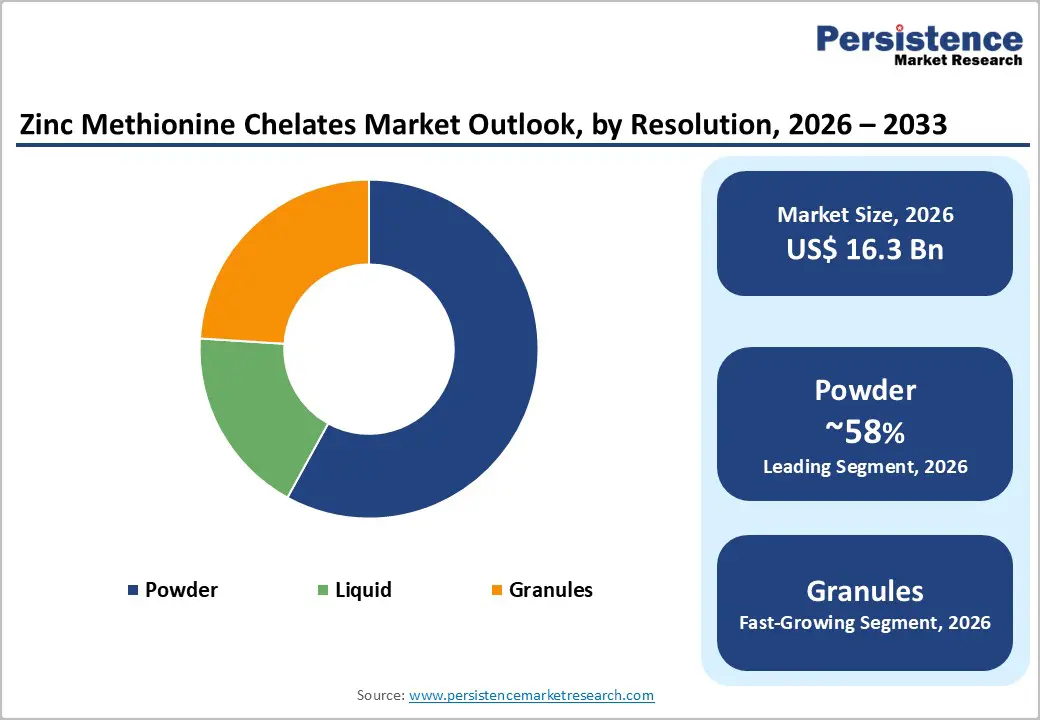
- Dominant Segment (Form): Powder form zinc methionine chelates maintains market dominance with 58% market share, supported by superior blending capabilities and cost-effectiveness enabling widespread adoption across diverse livestock formulation applications.
- Fastest Growing Segment (Animal Type): Aquaculture segment represents the fastest expansion opportunity, driven by global shrimp and fish production growth, demonstrating 55% improved feed conversion efficiency and 94-96% survival rate enhancement with chelated mineral supplementation.
- Key Market Opportunity: Aquaculture-specific and premium pet nutrition applications represent the highest-growth market segments, with double-digit expansion potential, particularly as pharmaceutical-grade formulations command premium pricing for specialized applications through 2033.
| Key Insights | Details |
|---|---|
| Zinc Methionine Chelates Market Size (2026E) | US$ 16.3 Billion |
| Market Value Forecast (2033F) | US$ 24.3 Billion |
| Projected Growth CAGR (2026 - 2033) | 5.9% |
| Historical Market Growth (2020 - 2025) | 4.4% |
Market Dynamics
Drivers - Global Antibiotic Bans Accelerate Shift Toward Zinc Methionine as a Natural and Effective Growth Promoter Alternative
The global ban on antibiotic growth promoters, first implemented by the European Union in 2006 and later adopted by China in 2021, has significantly reshaped livestock nutrition practices worldwide. These regulatory changes have forced producers to replace antibiotics with safe, natural, and scientifically proven performance enhancers. Zinc methionine chelates have emerged as a reliable alternative, supporting immune health, growth performance, and overall animal productivity without contributing to antimicrobial resistance.
Research confirms that organic zinc supplementation effectively reduces somatic cell counts in dairy cattle while improving gut integrity and nutrient absorption across multiple species. These benefits closely replicate the functions once delivered by antibiotics. Adoption is particularly strong in North America and Europe, where strict regulations align with growing consumer demand for antibiotic-free meat, milk, and eggs. As premium feed formulations gain traction, integrated livestock producers increasingly specify zinc methionine chelates, creating sustained demand growth across regulated and high-value markets.
Rising Protein Demand and Intensive Livestock Farming in Emerging Economies Drive Adoption of Bioavailable Zinc Chelates
Rapid growth in protein consumption across the Asia Pacific, particularly in China, India, and Southeast Asia, is driving large-scale modernization of livestock production systems. As farming operations shift toward intensive, high-density models, producers face rising disease risks and nutrient absorption challenges. This transition has increased demand for highly bioavailable mineral supplements that can improve animal performance under stress-intensive conditions. Studies show that zinc methionine chelates deliver approx 15% higher weight gain and better feed conversion ratios than traditional inorganic zinc sources.
Governments across emerging economies actively support this shift through livestock modernization programs and nutrition-focused regulations. For example, Brazil’s MAPA regulations encourage the use of organic trace minerals, whereas India’s expanding aquaculture subsidies promote premium feed additives. These policy initiatives, combined with commercial pressure to improve efficiency, are accelerating the adoption of zinc methionine across the poultry, swine, and aquaculture sectors in fast-growing markets.
Restraint - High Cost of Zinc Methionine Chelates Limits Adoption Among Price-Sensitive Feed Manufacturers and Small Producers
Zinc methionine chelates are priced significantly higher than inorganic zinc sources, creating cost-related challenges for widespread adoption. Feed compounders operating in price-sensitive markets often hesitate to absorb higher formulation costs, especially where profit margins remain tight. This resistance is particularly evident in developing regions, where cost competitiveness remains a key purchasing factor despite the clear performance benefits of chelated minerals.
Additional pressures, such as raw material price volatility, currency fluctuations, and complex manufacturing processes, further increase production costs. These factors reduce supplier margins and limit affordability for small and mid-sized feed producers. As a result, many buyers continue to rely on lower-cost inorganic alternatives, slowing penetration into mass-market feed applications. Until pricing structures become more competitive or regulatory pressure increases, cost sensitivity will remain a limiting factor for broader market expansion.
Fragmented Regulatory Frameworks and Lengthy Approval Processes Increase Market Entry Complexity across Regions
The zinc methionine chelates market faces significant regulatory challenges due to inconsistent approval frameworks across regions. Regulatory authorities such as the FDA, EFSA, and national agencies impose different documentation and labeling. Manufacturers must navigate through varying approval timelines, efficacy requirements, and region-specific formulation rules, increasing both cost and time to market. The lack of harmonized global standards creates barriers, especially for smaller companies with limited regulatory expertise and financial resources.
In emerging markets, unclear or evolving regulatory guidelines further delay commercialization and discourage investment. These complexities often require companies to customize products for each market, thereby increasing operational costs and limiting scalability. As a result, regulatory fragmentation continues to slow market development and restrict entry for manufacturers that cannot efficiently manage multi-region compliance.
Opportunity - Rapid Expansion of Global Aquaculture Creates Strong Demand for High-Performance and Species-Specific Zinc Chelate Formulations
Aquaculture has become the fastest-growing global protein source, creating strong demand for advanced nutritional solutions such as chelated minerals. Intensive fish and shrimp farming systems require precise mineral supplementation to support growth, immunity, and survival rates. Research shows that zinc chelate supplementation can increase feed conversion efficiency by more than 50% and achieve survival rates above 94% in species such as hybrid grouper and whiteleg shrimp.
Recirculating aquaculture systems, increasingly adopted in Brazil, Southeast Asia, and China, further drive demand for highly bioavailable minerals that minimize waste and environmental impact. Producers are now seeking pharmaceutical-grade and species-specific zinc methionine formulations to meet performance and sustainability goals. These specialized products command premium pricing and offer suppliers strong value-added growth opportunities, positioning aquaculture as a high-potential segment through 2033.
Growth in Premium Pet Nutrition and Human Supplements Unlocks New High-Margin Opportunities for Zinc Methionine
The rapidly growing pet nutrition market is creating new opportunities for zinc methionine chelates, particularly in premium dietary supplements. Pet owners increasingly prioritize immune health, skin condition, and joint support, driving demand for highly absorbable mineral formulations. Chelated zinc offers proven bioavailability advantages, making it a preferred ingredient in high-end pet foods and supplements.
At the same time, the human dietary supplement market continues to expand as consumers become more aware of zinc’s role in immunity, skin health, and cellular function. Clinical studies supporting zinc methionine’s superior absorption strengthen its positioning in nutraceutical products. Additionally, food and beverage fortification programs targeting zinc deficiency in developing regions are expanding the scope of applications. Together, these trends support steady growth across both animal and human nutrition markets.
Category-wise Analysis
Form Insights
Powdered zinc methionine chelates dominate the market, accounting for approximately 58% of total demand. This leadership is driven by the powder form’s superior blending properties, formulation flexibility, and compatibility with a wide range of feed systems. Powdered chelates allow uniform distribution in complete feed, premixes, and medicated formulations, making them suitable for multiple livestock species. They also offer better storage stability and lower handling costs compared to liquid alternatives, reinforcing preference among large-scale feed manufacturers.
Intensive poultry and swine operations, where high-volume efficiency is critical, particularly favor dry ingredient formats. Ongoing advancements in encapsulation and coating technologies are further improving powder bioavailability, strengthening this segment’s competitive position and supporting continued dominance throughout the forecast period.
Product Grade Insights
Feed-grade zinc methionine chelates nearly hold 52% share in 2026, due to their widespread use in global livestock production. These formulations balance performance benefits with cost efficiency, enabling adoption across poultry, swine, and ruminant operations. Regulatory approvals for animal nutrition further support feed-grade dominance. In contrast, food-grade and pharmaceutical-grade chelates represent smaller but fast-growing premium segments.
The demand is rising for these grades in human dietary supplements and fortified food applications. Pharmaceutical-grade zinc methionine commands significantly higher prices due to strict purity standards and complex manufacturing requirements. Although volumes are lower, these high-value applications contribute disproportionately to revenue growth, offering attractive margins for specialized manufacturers.
Animal Type Insights
Swine production accounts for 45.1% of the zinc methionine chelates market, reflecting intensive farming practices that require advanced mineral nutrition. Zinc methionine plays a key role in improving gut health, immunity, and survival rates during critical growth stages, particularly in weaned piglets. The ruminant segment accounts for 20.5% of demand, supported by benefits for hoof health, mastitis reduction, and improved milk yield.
Poultry accounts for 16.2% of market consumption, driven by skeletal development and immune-support needs. Aquaculture, while currently at 9.4%, shows the fastest growth due to expanding global fish and shrimp production. Pet nutrition and equine applications, though smaller, represent premium niches with rising adoption.
Distribution Channel Insights
Direct sales remain the dominant distribution channel, particularly among large integrated feed producers and commercial livestock operations. This approach allows suppliers to provide technical support, formulation guidance, and customized solutions. Distributors and dealers play a critical role in reaching fragmented feed markets, especially across the Asia Pacific and Latin America.
Online retail channels are expanding rapidly for pet nutrition and dietary supplements, supported by e-commerce growth and direct-to-consumer strategies. Specialty channels, including veterinary consultants and aquaculture nutrition advisors, are growing fastest, reflecting increasing demand for premium, performance-driven nutrition solutions.
End-user Insights
The animal feed segment dominates the zinc methionine chelates market, accounting for approximately 80% of total end-use demand, driven by its essential role in modern livestock nutrition. Zinc methionine chelates are widely incorporated into poultry, swine, ruminant, and aquaculture feeds due to their superior bioavailability and proven effectiveness in improving immune response, gut health, and overall productivity. As global consumption of meat, dairy, eggs, and aquaculture products continues to rise, commercial livestock producers are increasingly focused on maximizing feed efficiency and reducing disease-related losses.
This has accelerated the adoption of advanced nutritional solutions, particularly organic trace minerals, within intensive and large-scale farming operations. Additionally, growing regulatory restrictions on antibiotic growth promoters have further strengthened the reliance on zinc methionine chelates as a natural alternative to support animal performance. The segment also benefits from strong backing by feed manufacturers and integrators seeking consistent production outcomes, making animal feed the most stable and revenue-generating end-use category in the market.
Regional Insights
North America Zinc Methionine Chelates Market Trends
North America, led by the United States, represents a mature and high-value market for zinc methionine chelates, supported by advanced regulatory frameworks and strong research and development capabilities. The FDA’s Veterinary Feed Directive has significantly raised entry barriers, favoring established suppliers such as Zinpro Corporation and Novus International that possess regulatory expertise and proven product portfolios. Increasing consumer preference for antibiotic-free meat, milk, and eggs continues to accelerate adoption of organic trace minerals across commercial poultry and swine operations.
Livestock producers in the region increasingly apply precision nutrition strategies, integrating chelated minerals to improve feed efficiency, gut health, and disease resistance while lowering overall mineral inclusion rates. In addition, the rapidly expanding pet nutrition and dietary supplement markets in the United States and Canada are creating incremental demand for premium zinc formulations, enabling suppliers to diversify revenue streams beyond conventional livestock feed applications.
Europe Zinc Methionine Chelates Market Trends
Europe maintains strong and stable growth in the zinc methionine chelates market due to long-standing bans on antibiotic growth promoters and stringent EFSA feed additive approval standards. Germany leads regional adoption, with large feed manufacturers systematically incorporating chelated zinc into cattle, poultry, and aquaculture feed formulations. Regulatory emphasis on environmental sustainability, including limits on mineral excretion and nutrient runoff, strongly favors organic trace minerals over inorganic alternatives.
Markets such as France, Spain, and the United Kingdom are witnessing increased demand driven by premium livestock production, export-oriented compliance requirements, and organic farming certifications. The United Kingdom’s well-developed pet food industry further supports growth in companion animal nutrition applications. Across Europe, transparency, traceability, and sustainability reporting remain critical purchasing criteria, encouraging manufacturers to invest in certified, high-purity zinc methionine products aligned with evolving regulatory and consumer expectations.
Asia Pacific Zinc Methionine Chelates Market Trends
Asia Pacific is the fastest-growing regional market for zinc methionine chelates, driven by rapid livestock sector expansion and rising protein consumption. China’s large-scale poultry and swine industries are increasingly adopting organic trace minerals as antibiotic restrictions tighten and productivity requirements rise. Government-led livestock modernization initiatives actively encourage the use of advanced feed additives to improve feed efficiency and disease management.
India is emerging as a key high-growth market, supported by expanding poultry production, strong aquaculture development, and targeted government subsidies. Southeast Asian countries, including Indonesia, Vietnam, and Thailand, are experiencing rising demand from intensive shrimp and tilapia farming operations that require highly bioavailable mineral formulations. Additionally, export-driven food safety and residue compliance standards are accelerating adoption across the region, establishing strong long-term growth prospects for zinc methionine chelates.
Competitive Landscape
The zinc methionine chelates market is moderately consolidated, led by major players such as Zinpro Corporation and Novus International. Zinpro maintains leadership through decades of innovation and a strong global distribution network. Novus strengthened its position in 2025 by creating dedicated methionine business units to accelerate product development.
Other competitors, including Balchem and Alltech, focus on specialized formulations tailored to specific species and regions. Competitive dynamics increasingly favor companies offering integrated nutrition solutions that combine chelated minerals with complementary technologies, reflecting the industry’s shift toward holistic animal health strategies.
Key Developments:
- January 21, 2025: Zinpro® Corporation launched its global “Bring Out Their Best” marketing campaign to highlight the role of performance organic trace minerals in improving animal health, productivity, and producer profitability across poultry, swine, ruminant, and aquaculture operations worldwide.
- June 24, 2025: Novus International announced a strategic business realignment, forming two dedicated business units focused on methionine solutions and specialty feed ingredients. This restructuring aims to accelerate product innovation, improve customer focus, and strengthen Novus’ competitive positioning across global animal nutrition markets.
Companies Covered in Zinc Methionine Chelates Market
- Zinpro Corporation
- Novus International Inc.
- Balchem Inc.
- Alltech Inc.
- Titan Biotech Ltd.
- American Elements
- JH Biotech Inc.
- Global Animal Products Inc.
- Uno Vetchem
- Chengdu Chelation Biology Technology Co. Ltd.
- Brihans Laboratories Pvt. Ltd.
- ADM
- Chengdu Sustar Feed Co. Ltd.
- Lonza Group Ltd.
- Priya Chemicals
Frequently Asked Questions
The zinc methionine chelates market is projected to reach US$ 16.3 billion in 2026 and grow at a 5.9% CAGR to US$ 24.3 billion by 2033.
Adoption is driven by antibiotic bans, superior bioavailability, livestock intensification, regulatory support for organic minerals, and proven performance benefits.
Powdered zinc methionine chelates make up about 58% of the market due to their superior blending, formulation flexibility, and compatibility with various feed systems.
North America leads the market due to strict regulations, advanced nutrition technologies, and strong demand for antibiotic-free animal protein.
Key opportunities include rapid aquaculture expansion, premium pet nutrition growth, human dietary supplements, and pharmaceutical-grade formulations.
Zinpro Corporation and Novus International dominate through innovation-driven platforms, precision nutrition strategies, and strong global distribution networks.


