




- Food Ingredients & Additives
- Mustard Flour Market
Mustard Flour Market Size, Trends, Share, Growth, and Regional Forecast, 2025 to 2032
Mustard Flour Market by Product Type (Yellow, Brown, Oriental, Blended), Application (Food and Beverage, Foodservice, Retail/Household), Distribution Channel (Business to Business, Business to Consumer), and Regional Analysis from 2025 to 2032

Mustard Flour Market Share and Trends Analysis
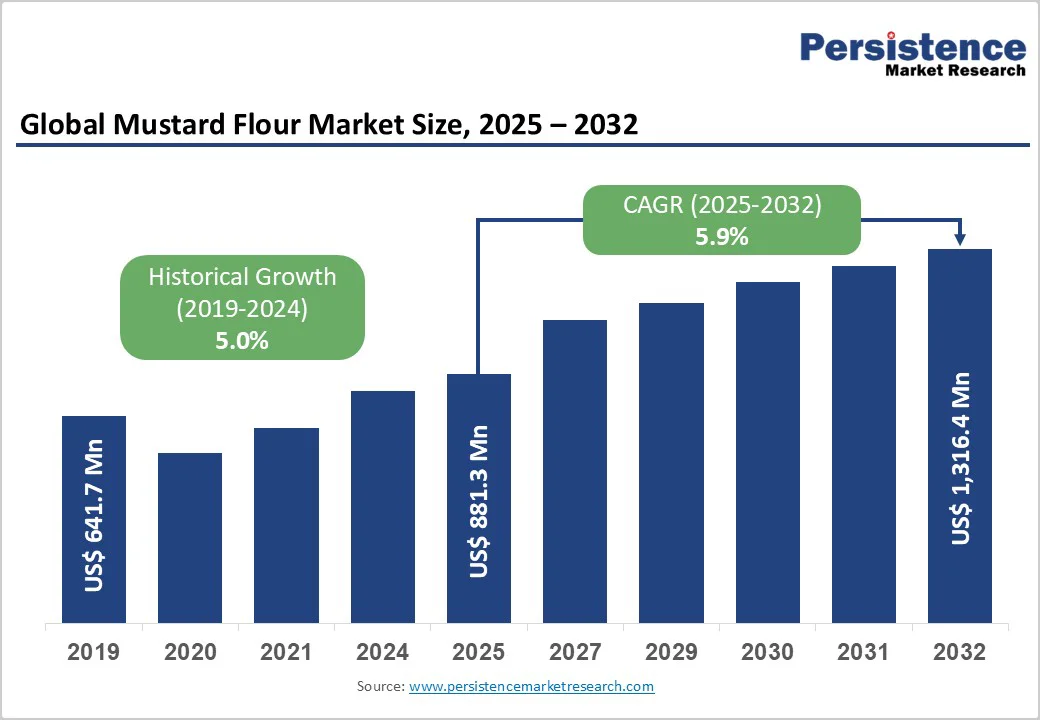
The global mustard flour market is likely to value US$ 881.3 million in 2025 and is projected to reach US$ 1,316.4 million at a CAGR of 5.9% during the forecast period from 2025 to 2032.
The global mustard flour market is growing steadily, fueled by demand for natural and clean-label ingredients in foods, sauces, and condiments. North America leads due to health-conscious consumers, while Europe benefits from a developed organic industry.
Asia Pacific is the fastest-growing region, driven by urbanization, rising incomes, and strong culinary preferences for mustard-based products.
Key Industry Highlights
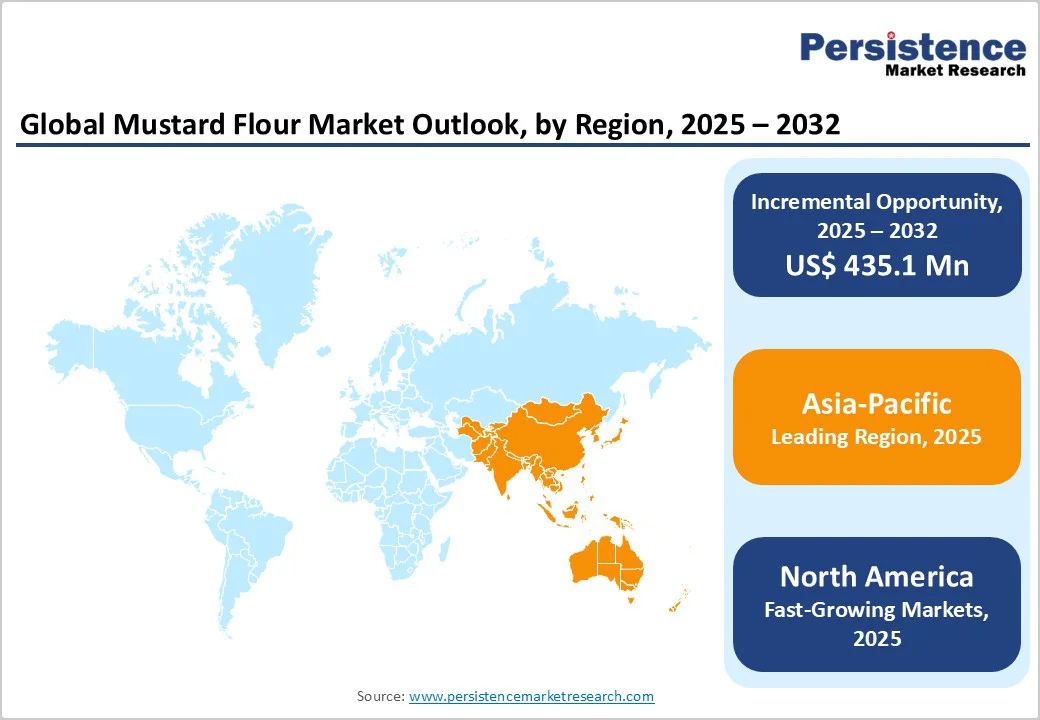
- Leading Region: Asia Pacific leads the mustard flour market with 43.8% share in 2025, driven by strong culinary traditions, rising disposable incomes, and rapid urbanization. Countries like India, China, and Japan are witnessing increasing adoption of mustard-based products in foods, sauces, and condiments.
- Fastest-Growing Region: North America is the fastest-growing region, fueled by growing health-conscious consumers and demand for natural, clean-label ingredients, supported by established wellness-focused brands in the U.S. and Canada.
- Investment Plans: Europe is investing in sustainable and organic mustard flour production, emphasizing eco-friendly processing, traceable sourcing, and R&D for clean-label applications in foods, sauces, dressings, and nutraceuticals.
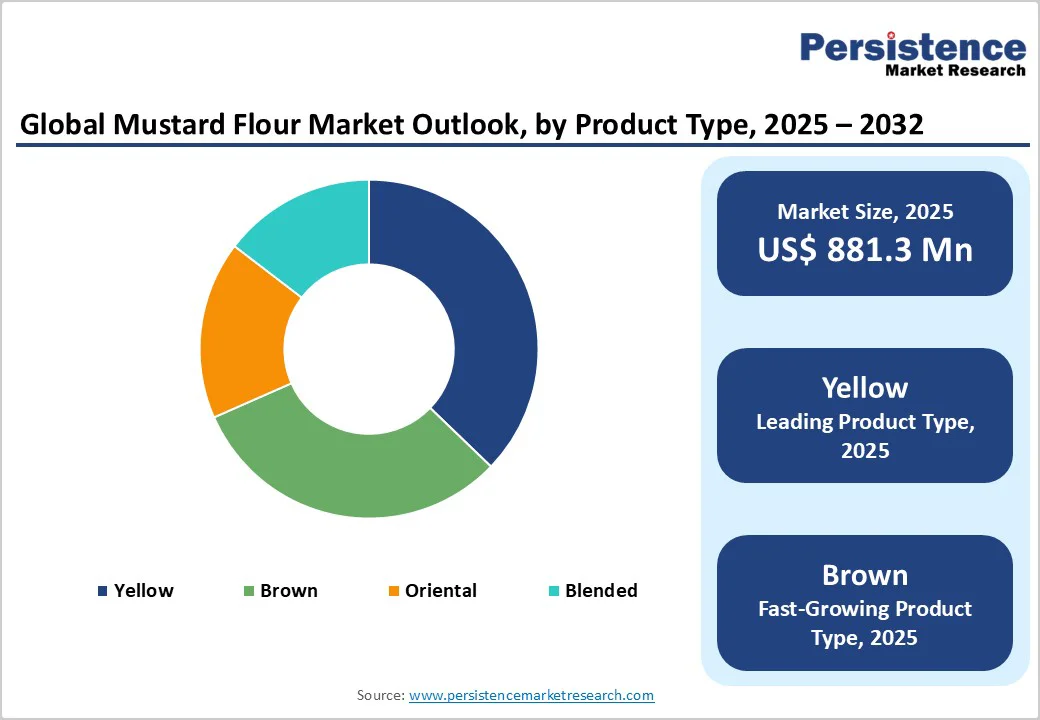
- Dominant Product Type: yellow mustard flour leads the market, accounting for 37.2% share in 2025, driven by its mild flavor, versatility, and increasing adoption in sauces, dressings, and condiments. Continuous R&D is enhancing its functional and sensory properties, expanding use in both mass-market and premium food products.
| Key Insights | Details |
|---|---|
| Global Mustard Flour Market Size (2025E) | US$ 881.3 Mn |
| Market Value Forecast (2032F) | US$ 1,316.4 Mn |
| Projected Growth (CAGR 2025 to 2032) | 5.9% |
| Historical Market Growth (CAGR 2019 to 2024) | 5.0% |
Market Dynamics
Driver - Rising Demand for Natural and Clean-Label Ingredients
The rising demand for natural and clean-label ingredients is a significant driver of the mustard flour market. Consumers are increasingly seeking products with fewer artificial additives and preservatives, favoring ingredients that are perceived as healthier and more transparent. Mustard flour, derived from mustard seeds, aligns with this trend due to its natural origin and minimal processing.
In India, a leading producer of mustard, the government reported a record production of 132.59 lakh metric tonnes of rapeseed and mustard in the 2023-24 season, indicating a robust supply of mustard seeds. This abundant supply supports the growing demand for mustard flour in various applications, including sauces, dressings, and condiments.
Furthermore, the clean-label movement is gaining momentum globally, with consumers increasingly scrutinizing ingredient lists for simplicity and transparency. Mustard flour's natural composition makes it an attractive option for manufacturers aiming to meet these consumer preferences.
In summary, the combination of consumer demand for natural ingredients and the availability of mustard seeds positions mustard flour as a key player in the clean-label ingredient market.
Restraints - Strong and Pungent Flavor of Mustard Flour Limits Its Versatility and Adoption Across Various Food Product
The strong and pungent flavor of mustard flour, especially from brown and black mustard seeds, can limit its versatility and adoption across various food products. Brown mustard seed flour offers a more robust and pungent flavor compared to its yellow counterpart, making it a preferred choice for chefs and food service providers looking to create bold and flavorful dishes.
However, this intensity can be a barrier in products targeting broader consumer bases who may prefer milder flavors. In culinary applications, mustard flour is valued for its pungent flavor, nutritional profile, and functional properties. It serves as a spice and thickening agent in various food products.
The versatility of mustard seed flour extends beyond simply adding spice; it also serves as a thickening agent, emulsifier, and contributes to textural complexity in food products. Despite its functional benefits, the strong flavor profile can limit its use in certain dishes where a milder taste is desired. Therefore, while mustard flour offers unique culinary advantages, its potent flavor can restrict its application in products aiming for broader consumer appeal.
Opportunity - Growth in Health-Conscious Consumer Base
The growing health-conscious consumer base presents a significant opportunity for the mustard flour market. Consumers are increasingly seeking natural, minimally processed ingredients that offer nutritional benefits and functional properties. Mustard flour, rich in antioxidants, omega-3 fatty acids, and essential nutrients, aligns well with this trend.
In countries like India, the food processing and retail sectors are witnessing increased demand for health-oriented products, reflecting a broader shift towards healthier diets. Mustard flour’s versatility allows its incorporation into sauces, dressings, snacks, baked goods, and dietary supplements, making it attractive to manufacturers targeting wellness-focused consumers.
Additionally, global awareness of the benefits of plant-based and natural ingredients is driving adoption in both home cooking and commercial food production. As more consumers prioritize clean-label, nutrient-rich ingredients, mustard flour is positioned to capture growing interest and expand its application across health-conscious food products.
Category-wise Analysis
By Product Type Insights
Yellow mustard flour dominates the market with 37.2% share in 2025 due to several key factors. Yellow mustard seeds, primarily Sinapis alba, are widely cultivated across various regions, including India, where they are integral to local cuisines and food processing industries. The versatility of yellow mustard flour allows its incorporation into a variety of products, such as sauces, dressings, and condiments, catering to diverse consumer preferences.
Additionally, the milder flavor profile of yellow mustard flour makes it more appealing to a broader audience, facilitating its adoption in both traditional and contemporary culinary applications. The established production and processing infrastructure further supports its widespread availability and use, reinforcing yellow mustard flour's leading role in the market.
By Application Insights
Bakery Goods holds a 68.9% share in the global market in year 2025, due to its diverse applications and nutritional benefits. According to the Ministry of Food Processing Industries (MoFPI), mustard oil holds a significant position in India's edible oil market, contributing approximately 36% to the total oil basket. This widespread use underscores the importance of mustard-based products in culinary practices across the country.
Furthermore, the Indian government's initiatives, such as the Pradhan Mantri Formalization of Micro Food Processing Enterprises (PMFME) Scheme, aim to promote mustard-based micro-food processing units. These efforts are designed to empower entrepreneurs and enhance the competitiveness of existing micro-enterprises in the unorganized segment of the food processing industry.
Regional Insights
Asia Pacific Mustard Flour Market Trends
The Asia Pacific market dominates the global market with 43.8% share in 2025, driven by extensive mustard cultivation and increasing demand for mustard-based products. India, a major producer, harvested approximately 8.5 million metric tonnes of mustard in 2022, accounting for over 70% of Asia's output. This abundant supply supports both domestic consumption and export activities.
Countries like China and Japan also contribute significantly to the market, utilizing mustard in various culinary applications. The region's growing middle class and urbanization have led to a surge in demand for processed foods, including mustard-based sauces and condiments. Additionally, government initiatives aim to enhance mustard production and processing, further bolstering the market's growth in Asia Pacific.
Europe Mustard Flour Market Trends
Europe is a significant player in the global mustard flour market due to its robust agricultural practices, diverse culinary traditions, and strong demand for mustard-based products. According to Eurostat, mustard (Sinapis alba L.) is among the oilseed crops cultivated in Europe, with production data available through the Annual Crop Statistics Handbook.
Countries like France, Germany, and the UK are notable producers and consumers of mustard seeds and their derivatives. The European Union's emphasis on sustainable agriculture and local sourcing has further bolstered the mustard industry's growth. Additionally, the increasing popularity of mustard-based condiments and sauces in European cuisine has driven demand, making Europe a key region in the mustard flour market.
North America Mustard Flour Market Trendsa
North America is experiencing rapid growth in the mustard flour market due to several key factors. The U.S., particularly North Dakota, is a significant producer of mustard seeds, contributing to a steady supply of raw material. This region has a well-established food processing infrastructure, enabling efficient production of mustard-based products.
Consumer demand for mustard flour is rising, driven by its use in various culinary applications and its perceived health benefits. Additionally, trade agreements like the United States-Mexico-Canada Agreement (USMCA) facilitate smoother cross-border commerce, expanding market reach. These combined elements position North America as a rapidly expanding hub in the global mustard flour market.
Competitive Landscape
The global mustard flour market is growing as manufacturers adopt advanced processing like cold-pressing and enzymatic milling to enhance flavor, aroma, and nutrition. Leading producers focus on natural, high-protein, and stable formulations, while emerging companies target clean-label, gluten-free products. Innovations in roasting, grinding, and blending expand versatility, meeting rising demand in food, condiments, and snacks.
Key Industry Developments:
- In October 2025, Kiril Mischeff Group, a Nottinghamshire-based food and beverage supplier, completed the acquisition of East Yorkshire-based Primepak Foods Ltd. This strategic move enhances Kiril Mischeff’s portfolio in cheese, cooked meats, and sandwich fillers, produced under the Wolds Edge brand and private labels.
- In August 2025, McCormick & Company, Inc. acquired an additional 25% stake in McCormick de Mexico from Grupo Herdez for $750 million, raising its ownership to 75%. This move strengthens McCormick’s position in Mexico’s mustard and condiment segment, especially in products using mustard flour for sauces and seasonings.
- In April 2023, Henry Simon successfully commissioned a state-of-the-art 200 TPD (tons per day) flour mill at KPS Agro Products' new manufacturing unit in Binodbati, near Tarakeshwar, Hooghly, West Bengal.
Companies Covered in Mustard Flour Market
- Ddev Spices Private Limited
- Factoria-Agro, Ltd.
- Great American Spice Company
- G.S. Dunn Dry Mustard Millers
- Sunrise Pure (ITC Limited)
- Lanna Products Co., Ltd.
- McCormick & Company, Inc.
- Mincing Spice
- Minn-Dak Growers, Ltd.
- S&B Foods Inc.
- Sakai Spice Corporation
- Schlüter & Maack
- Sujino Co., Ltd.
- Unilever PLC
- Wisconsin Spice, Inc.
- Woodland Foods
- Schlüter & Maack GmbH
- Kiril Mischeff Ltd.
- VehGro
- Black River Industries
- Others
Frequently Asked Questions
The global mustard flour market is projected to be valued at US$ 881.3 Mn in 2025.
Rising demand for natural, protein-rich, and functional foods, clean-label trends, and innovations in processing drive the global mustard flour market.
The global mustard flour market is poised to witness a CAGR of 5.9% between 2025 and 2032.
Opportunities include clean-label products, plant-based formulations, functional food applications, expanding condiment use, and growth in health-conscious and protein-focused consumer segments.
Major players in the global are Ddev Spices Private Limited, Factoria-Agro, Ltd., Great American Spice Company, G.S. Dunn Dry Mustard Millers, Sunrise Pure (ITC Limited), Lanna Products Co., Ltd., and Others.


