




- Food Ingredients & Additives
- Flax Protein Powder Market
Flax Protein Powder Market Size, Share, Growth, and Regional Forecast, 2026 to 2033
Flax Protein Powder Market by Source (Brown Flaxseed, Golden Flaxseed), by Nature (Organic, Conventional), by End-user (Food Processing, Sports Nutrition, Nutraceuticals, Animal Feed, Infant Nutrition, Others), and Regional Analysis from 2026 to 2033

Flax Protein Powder Market Share and Trends Analysis
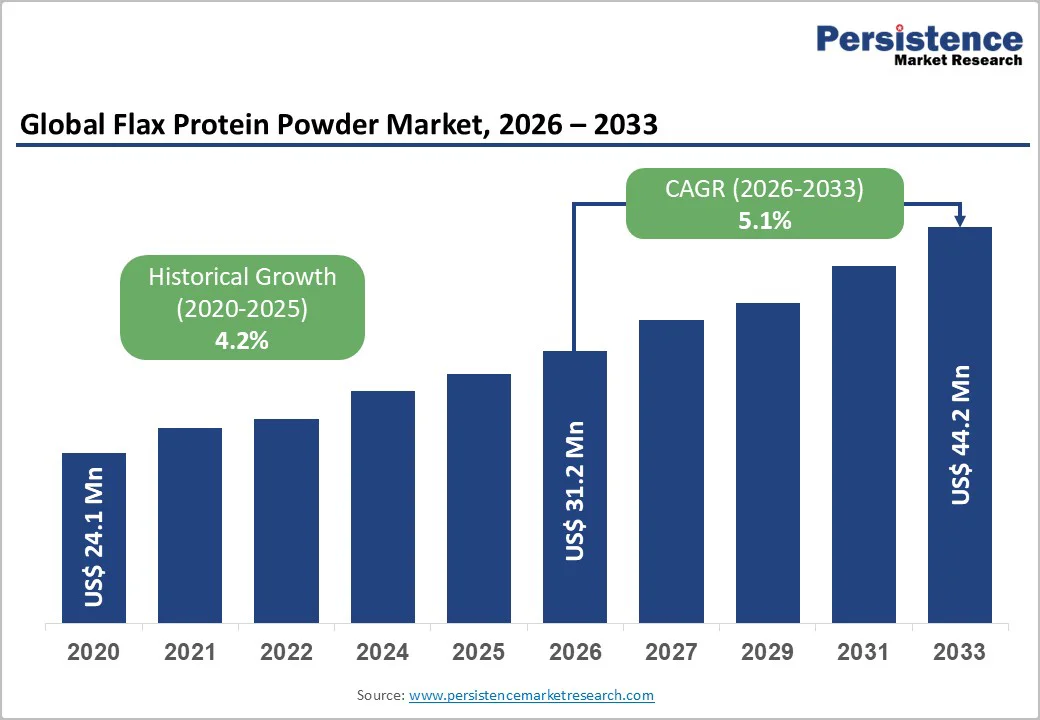
The global flax protein powder market size is valued at US$ 31.2 million in 2026 and is projected to reach US$ 44.2 million by 2033. The market is projected to record a CAGR of 5.1% during the forecast period from 2026 to 2033.
The global food market trend is witnessing a shift from niche adoption to broader functional use as clean-label demand, sustainable sourcing, and hybrid-protein innovation reshape industry priorities. Strong regional momentum and rapid formulation shifts are creating clear leadership zones and high-growth pockets across the value chain.
Key Industry Highlights:
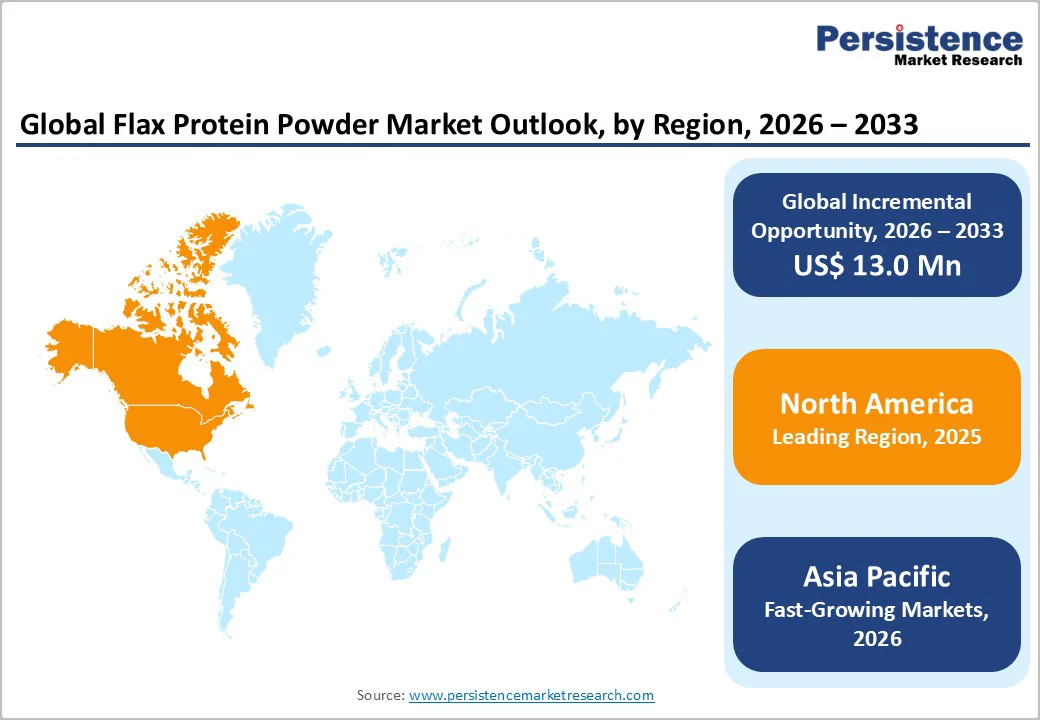
- Leading Region: North America, holding approximately 41% market share, supported by strong plant-based uptake, clean-label preferences, and expansion of flax-based blends across retail and DTC channels.
- Fastest-Growing Region: Asia Pacific, propelled by rising wellness trends, lactose intolerance awareness, and increased use of flax protein in smoothies, bakery, and flavored protein mixes across China, India, Japan, and South Korea.
- Fastest-Growing Segment by Nature: Organic flax protein powder, gaining traction due to consumer demand for pesticide-free, transparent, and traceable ingredient sourcing.
- Market Drivers: Surge in vegan, flexitarian, and clean-label diets that prioritize minimally processed, allergen-friendly, and sustainable protein sources aligned with long-term wellness outcomes.
- Market Restraints: Low mainstream awareness compared with established proteins like soy and pea, leading to slower trial, limited shelf visibility, and weaker brand recall.
- Opportunities: Rising integration of flax protein into hybrid blends as brands seek differentiated textures, balanced amino profiles, and cleaner labels for shakes, bars, and fortified foods.
- Key Developments: In November 2025, Bioriginal Food & Science Corp. announced the formation of the Bioriginal Group of Companies, unifying global innovation and supply chain capabilities to accelerate product development and value delivery.
| Key Insights | Details |
|---|---|
| Global Flax Protein Powder Market Size (2026E) | US$ 31.2 Mn |
| Market Value Forecast (2033F) | US$ 44.2 Mn |
| Projected Growth (CAGR 2026 to 2033) | 5.1% |
| Historical Market Growth (CAGR 2020 to 2025) | 4.2% |
Market Dynamics
Driver - Surge in vegan, flexitarian, and clean-label diets
A fast-shifting dietary mood is pushing flax protein powder into the mainstream as vegan, flexitarian, and clean-label preferences accelerate worldwide. Consumers are reassessing how protein fits into long-term wellness, favouring sources that feel lighter, minimally processed, and traceable. Flax protein aligns with this shift by delivering plant-based amino acids, digestive ease, and a clean ingredient profile that matches rising scrutiny over formulation transparency.
The demand curve strengthens further as food and beverage brands reformulate toward allergen-free, dairy-free, and sustainable protein bases. Retailers amplify this pull by expanding plant-centric assortments and highlighting functional benefits. This convergence positions flax protein powder as a credible, future-proof ingredient for health-focused product developers.
Restraints - Low Awareness Among Mainstream Consumers Compared with More Established Plant Proteins
A surprising blind spot persists in the protein aisle as mainstream consumers remain far less familiar with flax protein compared with more established plant proteins. This awareness gap restricts market momentum because shoppers default to options like soy, pea, and almond that are already embedded in fitness culture and everyday nutrition.
Limited consumer education, minimal brand storytelling, and fragmented product visibility make flax protein appear niche rather than versatile. The result is slower trial rates, weaker repeat purchases, and reduced category pull-through.
Without stronger communication on functional benefits, digestibility, and sustainability, manufacturers face an uphill battle converting casual health seekers who gravitate toward recognizable protein formats, leaving flax protein underleveraged despite its strong nutritional profile.
Opportunity - Integration into Hybrid-Protein Blends as Brands Seek Differentiated Formulations
A new wave of formulation creativity is opening the door for flax protein to gain strategic relevance through hybrid-protein blends. As brands search for differentiated profiles that balance texture, nutrition, and cost, flax protein becomes a compelling component thanks to its omega-3 richness, mild flavor, and synergy with pea, rice, or chickpea proteins.
Blending enables manufacturers to correct amino acid gaps, improve mouthfeel, and achieve cleaner labels without relying on heavy processing. This shift creates space for startups to position flax protein as the functional enhancer that elevates overall product performance in shakes, bars, and fortified foods.
Companies that invest in blend-focused R&D and transparent functional claims can tap into the growing demand for multi-source protein formats with broader consumer appeal.
Category-wise Analysis
By Source Insights
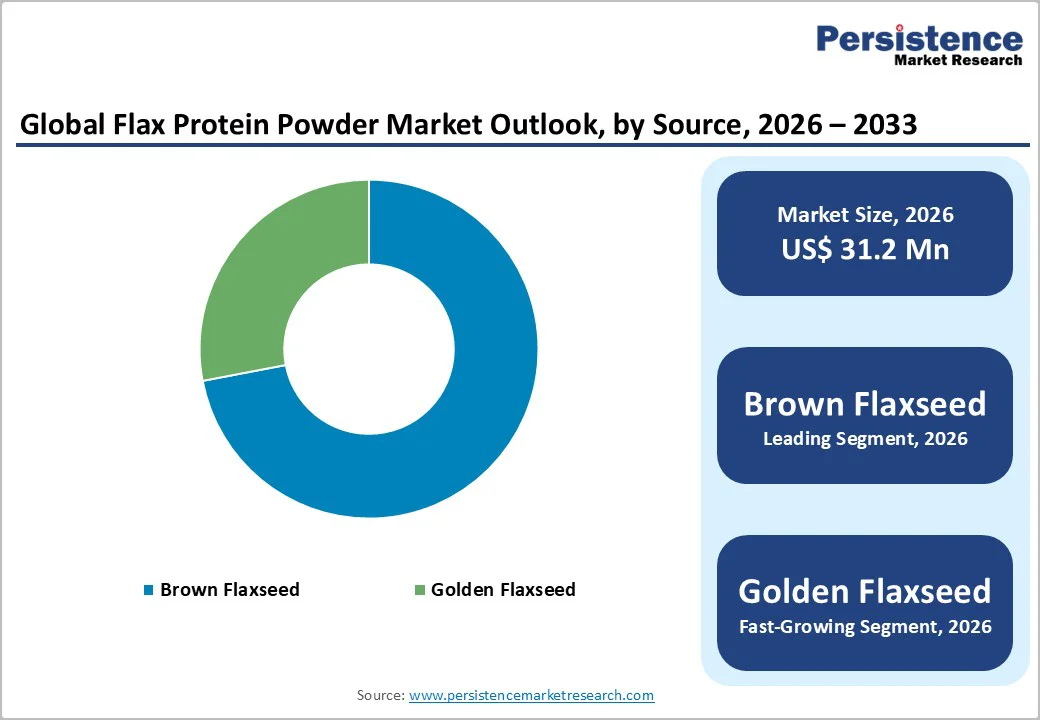
Brown flaxseed holds nearly 72% share as of 2025, reflecting its entrenched position in large-scale processing, wider cultivation footprint, and consistently higher protein yields per acre. Its dense nutrient profile, stable supply chain, and cost-efficiency make it the preferred source for manufacturers aiming for predictable batch performance in powders, blends, and fortified foods.
Brown flaxseed’s stronger availability enables smoother procurement planning and reduces volatility in raw-material pricing, strengthening its dominance across regions. Golden flaxseed maintains appeal in premium applications due to its lighter color and milder taste, gaining traction in specialized nutrition lines. Golden variants are increasingly used for clean-label positioning where aesthetics and gentle flavor matter more than output volume.
By Nature Insights
Organic flax protein powder is projected to grow at a CAGR of 7.6% during the forecast period, driven by escalating consumer demand for cleaner ingredient lists, chemical-free farming, and traceable sourcing. Shoppers seeking transparency are gravitating toward organic protein formats that align with pesticide-free and soil-friendly cultivation practices.
This shift positions organic flax protein as a premium option in shakes, baked goods, and functional nutrition, where purity narratives heavily influence purchasing behavior. Brands leveraging certified farms gain stronger credibility with athletes and lifestyle consumers prioritizing safety and sustainability.
Conventional flaxseeds continue to dominate in volume due to lower production costs and wider availability, maintaining relevance for mass-market applications where price sensitivity shapes formulation decisions.
Region-wise Insights
North America Flax Protein Powder Market Analysis
North America holds approximately 41% market share in the global Flax Protein Powder Market and leads shifting consumer preferences toward plant-based nutrition. In the US and Canada growing focus on clean-label products and sustainable agriculture fosters stronger demand for flax protein among vegans, fitness enthusiasts and environmentally conscious buyers.
Retailers and online platforms are expanding range of flax-based powders, bars and ready-to-drink blends that combine flax protein with pea or hemp for balanced amino profiles and improved texture. Prominent regional players are expanding distribution and launching flavored flax protein mixes to appeal to audiences. The trend toward hybrid blends and eco-friendly sourcing positions flax protein for broader acceptance across North American health-food channels.
Asia Pacific Flax Protein Powder Market Trends & Insights
Asia Pacific Flax Protein Powder Market is expected to grow at a CAGR of 7.8% as rising health awareness and plant-based nutrition trends gain momentum across China, India, Japan, and South Korea. In China, urban consumers increasingly replace animal proteins with flax in smoothies and baking as part of modern wellness diets. In India, growing fitness communities and rising lactose intolerance encourage batters and shakes enriched with flax protein.
Japanese and South Korean markets show shifting interest in lighter-digesting protein powders, fuelling flavored flax blends alongside traditional Soy-free snacks. E-commerce expansion enhances accessibility to imported flax products, and domestic brands are emerging with organic and hybrid blends. Regional interest in sustainability and dietary diversity drives adoption across age groups with rapid urbanization.
Competitive Landscape
The global flax protein powder market remains fragmented, with regional processors and a few integrated suppliers driving competition. Leading companies are strengthening control over sourcing, expanding certified-organic farming networks, and investing in upgraded processing lines to improve purity and functionality.
Startups are entering with focused plays in performance nutrition, clean-label snacks, and premium B2B ingredients, supported by rapid prototyping and small-batch manufacturing. Rising demand for organic flax protein encourages producers to adopt traceable cultivation and stricter agronomy practices.
Processing techniques such as cold-press defatting, low-heat drying, and enzymatic refinement help preserve omega-3 content and boost solubility. Certifications like USDA Organic and Non-GMO Project expand market acceptance. Product innovation, regulatory alignment, collaborative R&D, and co-manufacturing partnerships are accelerating commercialization and strengthening competitive positioning.
Key Development:
- In November 2025, Bioriginal Food & Science Corp., a subsidiary of Cooke Inc., unveiled the Bioriginal Group of Companies, signaling its transition into a fully unified global entity. The move consolidates innovation and supply chain strength worldwide, boosting the company’s ability to deliver sharper value across product development stages.
Companies Covered in Flax Protein Powder Market
- Cargill, Incorporated
- ADM
- Glanbia Nutritionals
- Austrade Inc.
- Richardson International
- Natunola
- Leader Foods OY
- Omega Protein Corporation
- Bioriginal Food & Science Corp.
- Others
Frequently Asked Questions
The global flax protein powder market is projected to be valued at US$ 31.2 Mn in 2026.
Surge in vegan, flexitarian, and clean-label diets is fueling overall market expansion.
The global Flax Protein Powder market is poised to witness a CAGR of 5.1% between 2026 and 2033.
A major opportunity lies in blending the ingredient into hybrid-protein systems as brands chase distinct, performance-driven formulations.
Major players in the global Flax Protein Powder market include Cargill, Incorporated, ADM, Glanbia Nutritionals, Austrade Inc., Richardson International, Bioriginal Food & Science Corp., and others.


