




- Food Ingredients & Additives
- North America Flaxseed Market
North America Flaxseed Market Size, Share, Growth, and Regional Forecast, 2026 - 2033
North America Flaxseed Market by Product Type (Brown Flax Seed, Golden Flax Seed), Nature (Organic, Conventional), Form (Whole, Powder, Oil, Other), Application (Whole Seeds, Ground & Meal, Flaxseed Oil), End-user (Food Industry, Animal Feed / Pet Food, Cosmetics & Personal Care, Industrial Uses, Others) and Regional Analysis from 2026 - 2033

North America Flaxseed Market Share and Trends Analysis
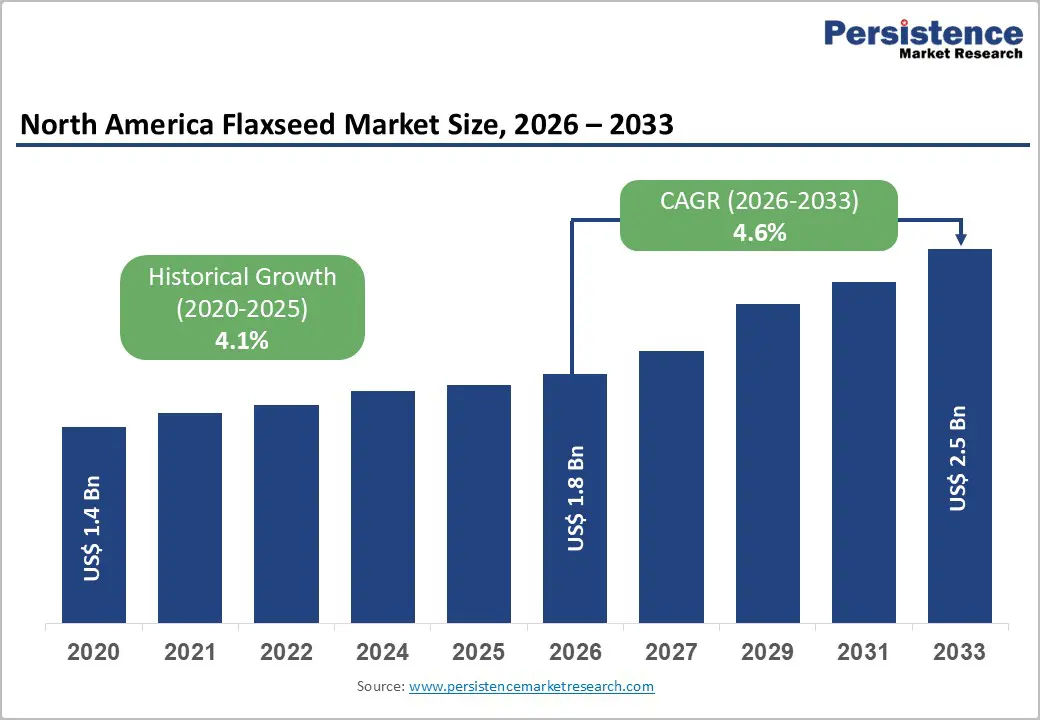
The North America Flaxseed Market size is expected to be valued at US$ 1.8 billion in 2026 and projected to reach US$ 2.5 billion by 2033, growing at a CAGR of 4.6% between 2026 and 2033.
Flaxseed is emerging as a powerhouse ingredient in the North American nutrition economy, bridging agriculture with functional food innovation. Expanding applications across food, wellness, and personal care industries continue to strengthen the region’s strategic importance in the global flaxseed value chain.
Key Industry Highlights
- Leading Region: United States, holding 82% market share, driven by strong flaxseed production in North Dakota, expanding demand for omega-3-rich functional ingredients, and widespread use across bakery, nutraceutical, and pet food industries.
- Fastest-Growing Region: Canada, fueled by rising prairie harvest volumes, expanding acreage in Saskatchewan, and increasing integration of flaxseed into clean-label foods and nutritionally enriched consumer products.
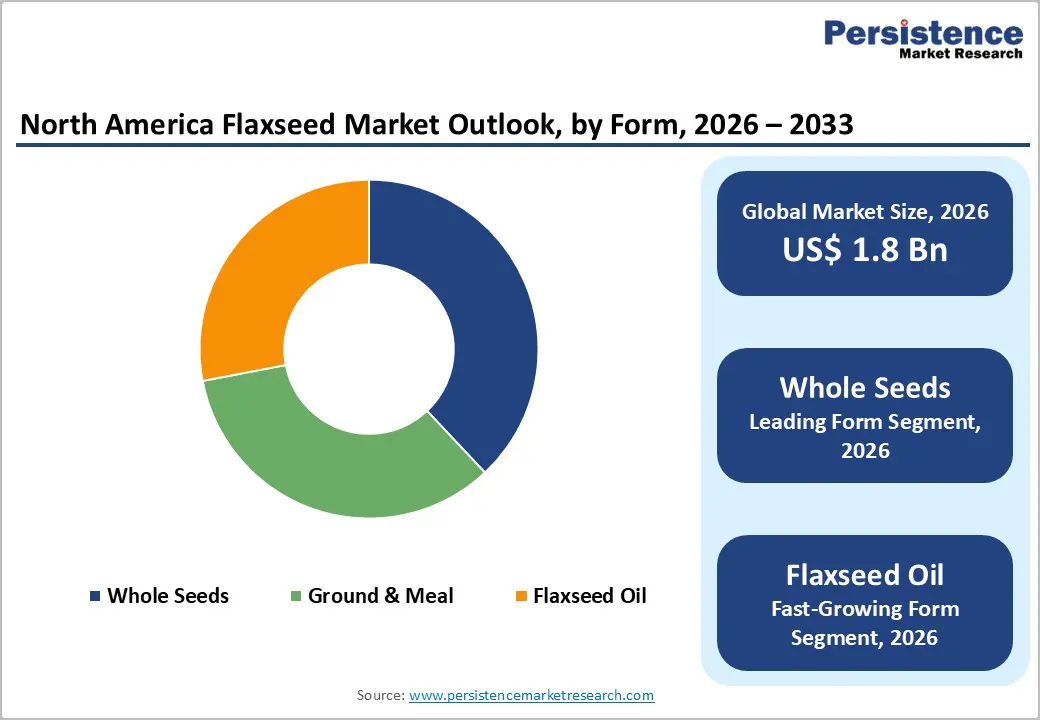
- Leading Form Segment: Whole Seeds dominate the market with around 38% share, supported by long shelf life, ease of storage and transportation, and versatile usage in food processing, animal nutrition, and household consumption.
- Fastest-Growing End Use Segment: Cosmetics & Personal Care, projected to grow at a CAGR of 6.3%, driven by rising demand for plant-derived oils and botanical ingredients in skincare, hair care, and clean beauty formulations.
- Market Drivers: Rising consumer demand for plant-based omega-3 and functional foods is accelerating flaxseed usage in cereals, bakery products, plant-based foods, and fortifi
- ed health products.
- Opportunities: Innovation in cold-pressed, organic, and value-added flaxseed products is creating premium growth avenues through nutraceutical oils, egg replacers, protein blends, and functional baking ingredients.
| Key Insights | Details |
|---|---|
|
North America Flaxseed Market Size (2026E) |
US$ 1.8 Bn |
|
Market Value Forecast (2033F) |
US$ 2.5 Bn |
|
Projected Growth (CAGR 2026 to 2033) |
4.6% |
|
Historical Market Growth (CAGR 2020 to 2025) |
4.1% |
Market Dynamics
Driver - Rising consumer demand for plant-based omega-3 and functional foods
Golden grains packed with nutrition are rapidly finding a larger place in North American diets. Flaxseed has emerged as a preferred plant-based source of omega-3 fatty acids, lignans, and dietary fiber, attracting consumers seeking functional foods that support heart health and overall wellness. The shift toward plant-forward eating patterns, driven by vegetarian, vegan, and flexitarian lifestyles, has significantly boosted the incorporation of flaxseed into everyday products. Food manufacturers increasingly integrate flaxseed into cereals, bakery goods, smoothies, nutrition bars, and dairy alternatives to deliver enhanced nutritional value while meeting clean-label expectations.
At the same time, growing interest in preventive health and natural nutrition continues to accelerate flaxseed consumption across the region. Consumers are actively looking for ingredients that contribute to cholesterol management, digestive health, and balanced diets. This trend encourages food processors to develop innovative formulations using ground flax, flax meal, and cold-pressed flaxseed oil. Retailers and health food brands are also expanding their portfolios with fortified products and convenient ready-to-use flaxseed ingredients, strengthening demand across the North American flaxseed market.
Restraints - Price volatility and weather-related fluctuations impacting flaxseed crop yields
Unpredictable harvest cycles often cast a shadow over the stability of the flaxseed supply chain. Flaxseed cultivation across North America remains highly sensitive to weather variability, including drought conditions, excessive rainfall, and unexpected temperature shifts during the growing season. These climatic disruptions can significantly reduce crop yields, tightening raw material availability for processors and food manufacturers that depend on consistent seed supplies.
Price volatility emerges as a direct consequence of these agricultural uncertainties. When harvest volumes fluctuate, market prices for flaxseed and related derivatives such as flax meal and flax oil can swing sharply, complicating procurement planning for ingredient buyers. Food manufacturers using flaxseed in bakery, cereals, and functional foods may face higher input costs, which can affect product pricing strategies and profit margins across the North American flaxseed market.
Opportunity - Innovation in cold-pressed, organic, and value-added flaxseed products
A new wave of product innovation is unlocking premium growth avenues for the North America flaxseed market. Companies are increasingly investing in cold-pressed extraction technologies that preserve delicate omega-3 fatty acids, lignans, and natural antioxidants, enabling the production of high-quality flaxseed oils for functional foods and dietary supplements. Organic flaxseed cultivation is also gaining traction as consumers prioritize transparency, chemical-free farming, and traceable ingredient sourcing. This shift encourages brands to launch certified organic flaxseed oils, milled flax blends, and nutrient-dense seed mixes targeting health-focused shoppers.
Beyond basic seed formats, manufacturers are developing value-added products such as flax-based egg replacers, protein powders, fortified baking mixes, and ready-to-use smoothie boosters. These innovations enhance convenience while expanding flaxseed applications across plant-based cooking, sports nutrition, and clean-label packaged foods, creating attractive opportunities for ingredient suppliers and food manufacturers.
Category-wise Analysis
By Form Insights
Whole seeds hold approx. 38% market share as of 2025, reflecting their widespread use across food processing, animal nutrition, and household consumption. These seeds maintain their natural structure and nutrient stability during storage, making them a preferred option for long-distance trade and bulk supply. Food manufacturers frequently incorporate whole flaxseeds into bakery products, cereals, and snack bars to enhance texture and nutritional value. Their long shelf life and minimal processing requirements also make them economically attractive for producers and exporters across major flax-growing regions.
Another factor supporting the dominance of whole seeds is their versatility in both industrial and consumer applications. Households increasingly add them to smoothies, oatmeal, and salads as a simple nutritional boost. Meanwhile, feed manufacturers use whole flaxseeds to enrich livestock diets with omega-3 fatty acids, supporting stronger demand across the global flaxseed market.
By End-user Insights
From beauty serums to botanical skincare, flaxseed is quietly gaining attention as a powerful plant-derived cosmetic ingredient. Cosmetics & Personal Care are expected to grow at CAGR of 6.3%, reflecting rising demand for natural oils rich in omega-3 fatty acids and antioxidants. Flaxseed oil is increasingly used in moisturizers, hair care products, facial serums, and anti-aging formulations due to its skin-soothing and hydration-supporting properties. Clean beauty movements across North America are encouraging brands to replace synthetic ingredients with plant-derived alternatives that align with consumer expectations for transparency and sustainability.
Product developers are also exploring innovative formulations that incorporate flaxseed extracts, lignans, and cold-pressed oils into premium skincare lines. These ingredients help improve skin elasticity, scalp nourishment, and barrier protection. As beauty brands focus on botanical actives and eco-conscious formulations, flaxseed is emerging as a valuable ingredient for next-generation personal care products.
Regional Insights
U.S. Flaxseed Market Trends and Insights
The U.S. dominates with an 82% market share as of 2025, transforming the agricultural landscape into a major source of functional nutrition. The United States Department of Agriculture confirms that North Dakota leads domestic production, providing the bulk of seeds for high-demand wellness sectors. Rising interest in heart-healthy Omega-3 fatty acids drives massive expansion in the bakery and pet food industries. Manufacturers prioritize golden flax varieties for their mild flavor, catering to a sophisticated consumer base that seeks plant-based protein sources.
Technological advancements in cold-milling processes ensure the preservation of essential lignans, which is a key trend in the premium nutraceutical space. Regulatory clarity from the FDA regarding nutritional labeling supports this surge, allowing brands to highlight specific digestive benefits. Farmers increasingly adopt regenerative practices to meet the rigorous standards of sustainability-focused buyers. This innovation ecosystem fosters a robust climate for value-added products, positioning American flaxseed as a global benchmark for quality and safety.
Canada Flaxseed Market Trends and Insights
Canada is expected to show promising growth at CAGR 6.5% as of 2025, driven by a remarkable resurgence in prairie harvest volumes. This agricultural revival stems from expanded acreage and favorable weather conditions across Saskatchewan, which currently produces the vast majority of the nation’s supply. Beyond traditional exports, the domestic landscape is shifting as food processors integrate flaxseed into diverse clean-label products. Consumers are increasingly seeking nutrient-dense ingredients rich in alpha-linolenic acid and lignans for heart health.
Modern industrial applications are also expanding, utilizing flaxseed oil for sustainable bio-composites and high-quality coatings. While international trade faces logistical shifts, Canada maintains a competitive edge through rigorous quality standards and superior oil content. Growing demand for functional pet foods further bolsters this positive economic trajectory.
Competitive Landscape
The North America flaxseed market exhibits a moderately fragmented structure, with several established agribusinesses and specialty ingredient suppliers competing alongside regional processors. Leading companies are focusing on expanding portfolios of clean-label flaxseed ingredients such as cold-milled flax meal, organic whole seeds, and nutrient-rich flaxseed oil to align with evolving consumer health priorities. Brands are emphasizing scientifically recognized benefits including omega-3 fatty acids, dietary fiber, and lignan content to position flaxseed as a functional nutrition ingredient. Certifications related to organic farming, non-GMO sourcing, and sustainable agriculture are becoming key differentiators in retail and ingredient supply chains. Many companies are also strengthening direct-to-consumer sales channels through online platforms, subscription wellness packs, and transparent product storytelling that highlights traceability, farm origin, and nutritional integrity.
Companies Covered in North America Flaxseed Market
- ADM
- NOW Foods
- Shape Foods Inc.
- Johnson Seeds
- The Linseed Farm
- Vandaele Seeds
- Adora Farm
- Viva Naturals
- Flax Farm Ltd
- Waltanna Farms
- Golden Valley Flax
- Others
Frequently Asked Questions
The North America Flaxseed market is projected to be valued at US$ 1.8 Bn in 2026.
Rising consumer demand for plant-based omega-3 and functional foods drives the demand for North America Flaxseed Market.
The North America Flaxseed market is poised to witness a CAGR of 4.6% between 2026 and 2033
Innovation in cold-pressed, organic, and value-added flaxseed products is the key market opportunity


