




- Nutraceuticals & Functional Foods
- Acerola Extract Market
Acerola Extract Market Size, Share, and Growth Forecast, 2026 – 2033
Acerola Extract Market by Product Type (Powder, Liquid, Others), Application (Dietary Supplements, Beverages, Food Additives, Cosmetics & Personal Care, Others), End‑User (Food & Beverage Manufacturers, Pharmaceutical & Nutraceutical Industries, Cosmetics & Personal Care), and Regional Analysis for 2026-2033

Acerola Extract Market Share and Trends Analysis
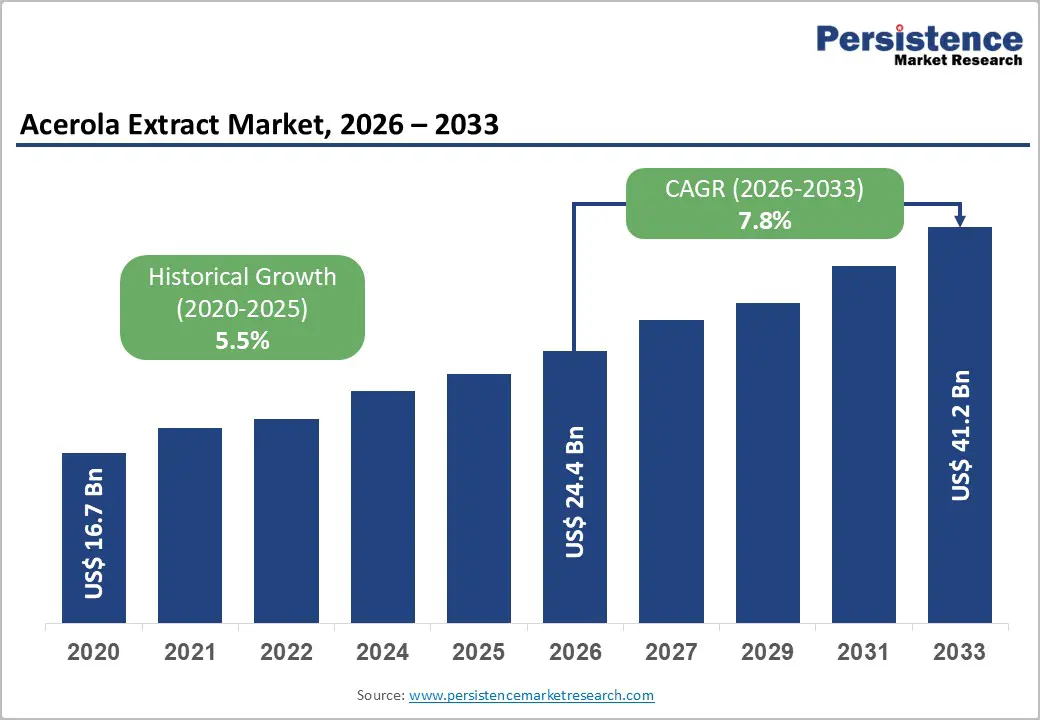
The global acerola extract market size is likely to be valued at US$ 24.4 billion in 2026, and is projected to reach US$ 41.2 billion by 2033, growing at a CAGR of 7.8% during the forecast period 2026−2033.
Market growth is primarily driven by increasing awareness of natural vitamin C supplementation and preventive healthcare adoption, which accelerates demand across dietary supplements and functional foods. Rising health-conscious populations in developed and emerging regions contribute to broadening the consumer base, while expansion of digital commerce platforms enhances product accessibility and retail penetration. Technological integration in extraction and stabilization processes enables higher potency formulations, supporting efficacy and clinical acceptance. Regulatory frameworks facilitating safe production and distribution further reinforce adoption across food, beverage, and nutraceutical industries. Healthcare infrastructure expansion, particularly in Asia Pacific, allows manufacturers to reach institutional buyers such as hospitals and pharmacies efficiently.
Key Industry Highlights
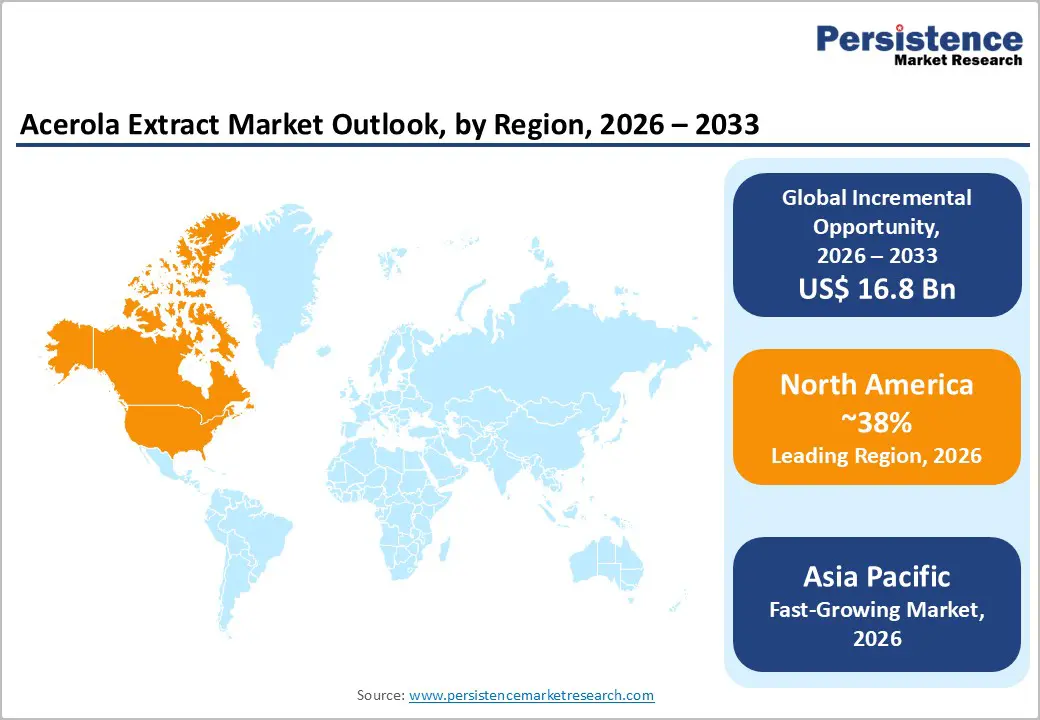
- Dominant Region: North America is projected to lead with an estimated 38% market share in 2026, driven by high supplement consumption and advanced supply chains.
- Fastest-growing Regional Market: Asia Pacific is forecasted to be the fastest-growing market for acerola extract between 2026 and 2033, fueled by rising health awareness.
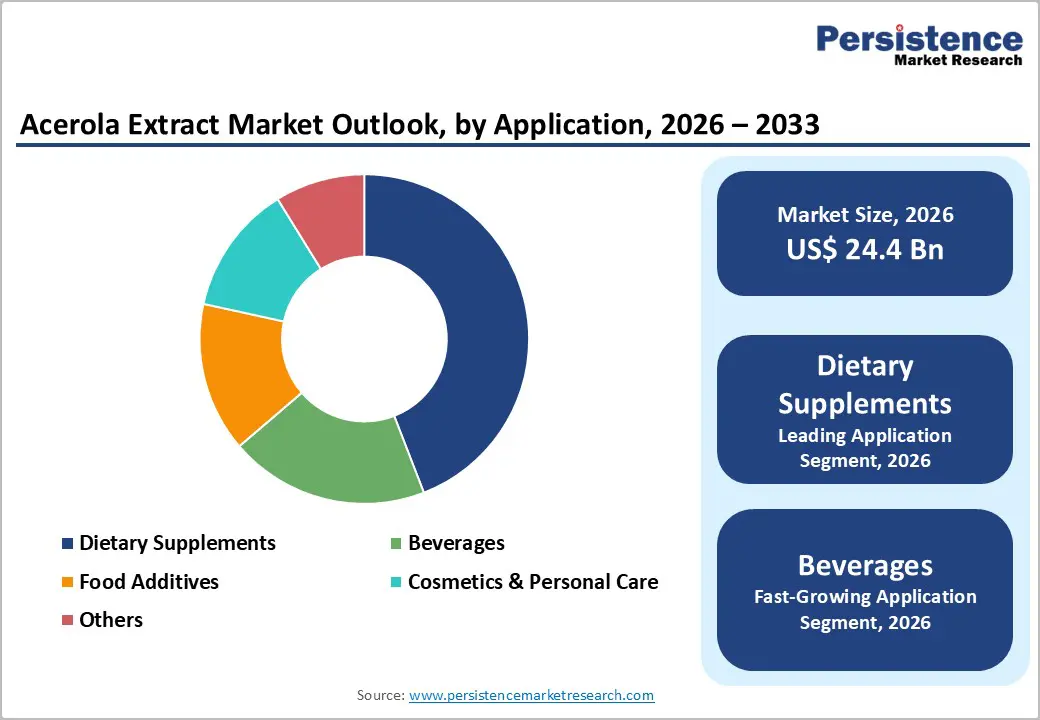
- Leading Application: Dietary supplements are set to lead with over 45% market revenue share in 2026, supported by consumer trust and product accessibility.
- Fastest-growing Application: Beverages are expected to be the fastest-growing application between 2026 and 2033, driven by convenient acerola extract products.
| Key Insights | Details |
|---|---|
|
Acerola Extract Market Size (2026E) |
US$ 24.4 Bn |
|
Market Value Forecast (2033F) |
US$ 41.2 Bn |
|
Projected Growth (CAGR 2026 to 2033) |
7.8% |
|
Historical Market Growth (CAGR 2020 to 2025) |
5.5% |
Market Factors – Growth, Barriers, and Opportunity Analysis
Increasing Health Awareness and Preventive Nutrition
Growing emphasis on preventive nutrition stems from recognition in official U.S. dietary policy that diet quality is directly linked to chronic disease risk reduction and overall health outcomes. The Dietary Guidelines for Americans, updated by the U.S. Department of Agriculture (USDA) and Department of Health and Human Services (HHS), provide federally endorsed advice on healthy eating patterns that help reduce risks of cardiovascular disease, type-2 diabetes, obesity and other diet-related chronic illnesses. These Guidelines encourage consumption of nutrient-rich foods such as fruits, vegetables and whole foods to meet nutrient needs and support health across all life stages.
Federal nutrition research and survey data support preventive approaches and show that dietary choices remain a major modifiable factor in public health. The National Institutes of Health (NIH) Office of Dietary Supplements reports that about half of U.S. adults and one-third of children use dietary supplements to fill nutrient gaps and promote health, with many doing so to reduce future health risks rather than react to illness. This pattern signals that consumers are increasingly integrating nutrient-focused choices into daily routines to safeguard health and maintain well-being.
Rising Demand for Natural Vitamin-C Sources
Consumer preference for naturally derived vitamin C has emerged as a significant growth driver due to increased attention to nutrient sufficiency and immune support. Whole-food sources rich in vitamin C provide bioavailable nutrients and synergistic compounds, making them a valuable addition to fortified beverages, dietary supplements, and functional foods. Public health guidance prioritizes plant-based consumption to support antioxidant activity, collagen synthesis, and iron absorption, making naturally concentrated extracts a strategic choice for health-focused product development. Rising interest in botanical ingredients aligns with preventive nutrition strategies and lifestyle-driven health priorities.
Regulatory guidance reinforces emphasis on ingredient transparency and nutrient quality. The Dietary Guidelines for Americans 2020–2025 recommend increasing intake of fruits and vegetables to achieve adequate vitamin C levels. Demand aligns with clinical evidence of vitamin C’s role in immune modulation and oxidative stress reduction. Manufacturers focus on botanical sources to meet these nutritional priorities while promoting clean-label positioning. Products featuring naturally sourced vitamin C are increasingly perceived as premium and health-oriented, attracting consumers prioritizing dietary compliance and functional benefits.
Limited Raw Material Availability
The production of acerola extract relies heavily on the acerola cherry, a tropical fruit primarily cultivated in specific regions such as Brazil, Mexico, and parts of the Caribbean. Seasonal harvesting cycles limit consistent supply year-round, leading to fluctuations in raw material availability. Climatic conditions, including temperature variations, rainfall patterns, and storm susceptibility, significantly influence crop yield and quality. Agricultural land dedicated to acerola cultivation often competes with other high-demand crops, constraining expansion of production capacity. Supply chain challenges, including transportation logistics and cold-chain requirements, further exacerbate scarcity, increasing operational complexity and costs for manufacturers.
Agricultural practices in major growing regions remain largely traditional, limiting scalability and efficiency in meeting global demand. Pest infestations and plant diseases affect fruit quality, reducing usable yield for extraction purposes. Export regulations and trade barriers in key producing countries introduce delays and unpredictability, affecting timely procurement for manufacturers. Limited investment in advanced cultivation techniques and controlled-environment agriculture restricts the ability to stabilize year-round output. Consequently, manufacturers encounter higher procurement costs, inventory planning difficulties, and vulnerability to price volatility.
High Production and Processing Costs
Production and processing of acerola extract requires significant capital investment due to specialized extraction techniques and stringent quality control measures. Maintaining the high vitamin-C content demands precise temperature control and rapid handling to prevent nutrient degradation. Advanced technologies such as freeze-drying, spray-drying, and microencapsulation increase operational complexity and energy consumption. Sourcing fresh acerola cherries from limited growing regions introduces logistical challenges, including cold-chain transportation and storage, which further drive up costs. Equipment maintenance, skilled labor, and compliance with food safety and international standards contribute to elevated operational expenditures compared with synthetic alternatives.
Limited harvesting seasons and geographic concentration of acerola cultivation create supply volatility that directly impacts processing costs. Variability in fruit quality necessitates additional sorting and testing, leading to increased wastage and reduced yield per batch. Market demand for clean-label and organic extracts requires adherence to strict agricultural practices, certified inputs, and traceable production processes. All these factors increase unit cost and restrict scalability in regions where infrastructure for large-scale production is underdeveloped.
Expansion in Cosmetics and Personal Care
Natural vitamin C supports key antioxidant and structural pathways in skin health that drive demand in beauty and personal care products. Government research notes that vitamin C acts as an antioxidant and supports immune and cellular functions, which underpin its use in formulations targeting oxidative stress and skin resilience. On average, adult diets require a consistent intake of vitamin C to maintain systemic and integumentary health, a factor reflected in the 2025 U.S. NIH nutrient fact sheet, which highlights its antioxidant role in biological processes. In topical applications, scientific data show vitamin C aids collagen synthesis and neutralizes oxidative factors linked to aging and environmental stress at the epidermal level, making it a reliable ingredient for serums and creams that aim to support youthful appearance and skin integrity.
Consumer interest in clean and naturally derived antioxidants supports the integration of plant-based vitamin C sources into product portfolios with strong marketing narratives around skin protection and quality. The documented antioxidant mechanisms of vitamin C in dermal function provide a rational basis for claims related to photoprotection, collagen support, and free radical mitigation attributes that resonate with beauty product positioning centered on visible skin benefits. Scientific insights into antioxidant behavior and vitamin C’s role in structural protein synthesis give product developers quantifiable performance levers, aligning ingredient selection with measurable biological activity that consumers seek in advanced personal care formulations.
Innovation in Extraction and Stabilization Technologies
Advanced extraction and stabilization technologies significantly elevate the commercial utility of plant-derived vitamin C sources by enhancing recovery yield and preserving nutritional integrity throughout processing. Conventional extraction techniques often expose sensitive compounds to heat, oxygen, and prolonged solvent contact, leading to rapid degradation of labile nutrients such as ascorbic acid and polyphenols. Research highlights that modern approaches, such as ultrasound-assisted and microwave-assisted extraction, increase the yield of bioactive compounds while minimizing exposure to damaging conditions, enabling manufacturers to deliver products with higher and more consistent potency.
The capability to consistently deliver high-quality, nutrient-dense ingredients resonates with regulatory expectations and consumer demand for transparent, traceable, and effective natural ingredients. Government-supported food research projects explicitly target the stabilization of sensitive nutrients to enhance shelf stability and reduce waste while expanding applications of natural antioxidants across food and supplement categories. The USDA’s National Institute of Food and Agriculture (NIFA) supports work focused on stabilizing delicate plant bioactives to improve shelf life and reduce food waste, demonstrating the recognized value of advanced processing in public-sector research agendas.
Category-wise Analysis
Product Type Insights
Powder is likely to be the leading segment with an estimated 55% of the acerola extract market revenue share in 2026, due to its versatility and stability across multiple applications. Powdered acerola extract can be incorporated easily into dietary supplements, beverages, and food formulations without compromising potency or shelf life. Manufacturers benefit from streamlined logistics, lower transport costs compared with liquids, and extended storage periods, which reduces operational risk. Clinical acceptance is high because the standardized powder maintains bioactive compound integrity, ensuring consistent vitamin C delivery.
Liquid is expected to witness the fastest growth between 2026 and 2033, as rising demand for ready-to-drink supplements and functional beverages accelerates adoption. Liquid acerola extract offers rapid integration into beverages, syrups, and liquid nutritional formulations, supporting convenient consumption and immediate bioavailability. The segment benefits from expansion of digital retail platforms and home delivery channels, which allow consumers to access liquid formats with ease. Technological innovations, including cold-press extraction and stabilization, maintain potency and flavor, enhancing product quality perception.
Application Insights
Dietary supplements are poised to lead with a forecasted over 45% market share in 2026, owing to strong consumer trust and regulatory frameworks supporting safe vitamin C supplementation. Acerola extract is widely integrated into capsules, tablets, and powdered blends targeting immunity, wellness, and preventive health. Consumer preference for measurable, convenient dosages reinforces adherence, while clinician recommendations for preventive nutrition increase credibility. Market adoption is supported by established retail channels, including pharmacies, health stores, and e-commerce platforms, allowing consistent accessibility.
Beverages are anticipated to be the fastest-growing segment between 2026 and 2033, driven by consumer preference for functional and convenient nutrition. Incorporation of acerola extract in ready-to-drink juices, smoothies, and fortified water aligns with lifestyle trends emphasizing hydration and wellness. Retail penetration, especially in convenience stores and online channels, supports rapid expansion. Cultural acceptance of fruit-based beverages in Asia Pacific and Latin America reinforces adoption, while brand differentiation through organic, low-sugar, or clean-label formulations attracts health-conscious consumers.
Regional Insights
North America Acerola Extract Market Trends
North America is expected to lead with an estimated 38% of the acerola extract market share in 2026, supported by the United States and Canada as major consumers of botanical-derived vitamin C. Dominance reflects high penetration of dietary supplements and functional food sectors, coupled with consumer preference for natural ingredients with scientifically validated health benefits. Advanced supply chains and well-developed cold-chain logistics ensure consistent availability of high-quality raw materials, enabling manufacturers to maintain nutrient integrity in finished products. Federal initiatives promoting preventive health and nutritional awareness further stimulate demand, while established e-commerce networks accelerate market reach for new formulations.
Key factors driving market dominance include regulatory clarity, investment in research, and adoption of advanced extraction technologies that preserve nutrient potency. FDA guidelines for dietary supplements provide predictable compliance standards, reducing barriers for product launch and scaling. High consumer focus on immunity, skin health, and antioxidant intake encourages development of diverse formats, from powders and capsules to fortified beverages. Scientific institutions and private manufacturers in the United States and Canada collaborate to optimize bioavailability, shelf life, and formulation versatility.
Europe Acerola Extract Market Trends
Europe is witnessing steady growth in acerola extract demand, led by Germany, France, and the United Kingdom, where consumer focus on preventive health and functional nutrition is intensifying. High awareness of antioxidant-rich natural ingredients drives inclusion in dietary supplements, fortified foods, and beverages targeting immunity and skin wellness. Regulatory clarity around novel foods and dietary ingredients provides predictable pathways for product launch, supporting innovation and diversification in formulation types. Germany’s well-established nutraceutical industry invests in research to optimize extraction methods and enhance bioactive retention, enabling manufacturers to deliver high-potency ingredients that meet strict quality and efficacy standards.
Investment in advanced processing infrastructure in France and the United Kingdom facilitates production of stable, concentrated extracts suitable for functional beverages, dietary capsules, and cosmetic applications. According to Eurostat data, per capita spending on health-related food products exceeded € 420 in 2025, reflecting robust consumer willingness to invest in functional nutrition. Collaborative efforts between universities and private enterprises focus on improving bioavailability, shelf life, and formulation versatility, driving product differentiation. Retail modernization and expansion of specialty health outlets and e-commerce channels increase accessibility and trial of new formulations.
Asia Pacific Acerola Extract Market Trends
Asia Pacific is forecasted to be the fastest-growing market for acerola extract between 2026 and 2033, stimulated by rising consumer interest in natural health ingredients in China. Increasing disposable income and urbanization support higher spending on preventive nutrition and wellness products through retail and digital channels. Awareness of plant-derived vitamin C and antioxidant-rich compounds drives adoption in dietary supplements, functional beverages, and fortified foods. Government initiatives promoting immunity and metabolic health strengthen demand for bioactive ingredients, while digital commerce platforms expand access to premium formulations for diverse demographic segments.
Strong investments in manufacturing infrastructure and ingredient optimization accelerate adoption in food, beverage, and personal care applications in India and Japan. Collaboration between academic institutions and industry players advances extraction and stabilization technologies, improving bioavailability, shelf life, and functional versatility of finished products. Regulatory frameworks streamline approvals for botanical ingredients, reducing time to commercialization and enabling introduction of region-specific formulations.
Competitive Landscape
The global acerola extract market structure is moderately consolidated, with leading players capturing an estimated 40–45% of global revenue in 2026. Key participants such as Nutrilite (Amway), Dohler GmbH, Diana Food S.A.S, Naturex, Florida Food, Inc., and Niagro shape market dynamics through strategic differentiation in extraction processes, product quality, and regulatory adherence. Advanced extraction technologies and standardized quality control measures allow these companies to deliver consistent, high-potency ingredients suitable for functional foods, beverages, dietary supplements, and personal care applications.
Fragmentation among smaller regional producers persists, offering collaboration and co-manufacturing opportunities for larger firms to expand product portfolios and market reach. Strategic partnerships and alliances enable leading companies to access niche segments, including organic, clean-label, and specialty formulations. Emphasis on clinical validation, supply chain reliability, and brand credibility allows top-tier firms to secure long-term contracts with manufacturers, retailers, and healthcare distributors. Innovation in stabilization, encapsulation, and bioavailability further differentiates offerings, creating barriers to entry for new competitors.
Key Industry Developments
- In August 2025, Clarins launched its Multi-Active Glow Serum campaign, highlighting Acerola seed extract for enhanced antioxidant hydration and radiance-boosting benefits in its new bi-phase skincare formulation.
- In June 2025, Amway India expanded its Acerola extract-rich product lineup by launching Nutrilite Triple Protect, a plant-based supplement featuring sustainably sourced Acerola Cherry extract to support immunity, skin health, and gut balance.
- In June 2025, Liz Earle unveiled new Glow range skincare products featuring acerola extract, positioned to deliver vitamin C–rich brightening benefits and enhanced radiance in daily beauty routines.
Category-wise Analysis
How is the Acerola Extract Market Classified according to Product Form-
The market for acerola extract is bifurcated into two key product forms such as powder and liquid. Powdered acerola extract offers convenience and versatility, making it a popular choice among manufacturers of dietary supplements and food products. Its ease of handling and long shelf life make it a preferred option for both consumers and producers.
Liquid acerola extract appeals to beverage manufacturers seeking to infuse their products with natural antioxidants and vitamin C. Its liquid form allows for seamless integration into various beverage formulations, catering to health-conscious consumers seeking functional beverages. This segmentation underscores the significance of product form diversity in meeting diverse industry needs and consumer preferences.
How is the Acerola Extract Market Segmented Based on Application Type-
The market for acerola extract further stratifies based on diverse applications, including food supplements, beverages, confectionery products, snacks, meat preservation, and bakery preservation. Among these segments, the food supplements category emerges as a dominant force, fueled by growing consumer awareness regarding health and wellness.
Acerola extract's rich vitamin C content positions it as a sought-after ingredient in the supplements industry, driving its demand and market share. Additionally, the beverages segment witness robust growth, driven by the rising trend of functional beverages and natural ingredients. Acerola extract adds value to beverages by offering antioxidant properties and enhancing nutritional profiles, thereby amplifying its market penetration and revenue generation potential.
Companies Covered in Acerola Extract Market
- Nutrilite (Amway)
- Dohler GmbH
- Diana Food S.A.S
- Naturex
- Florida Food, Inc.
- Niagro
- Blue Macaw Flora
- NutriBotanica
- The Green Labs LLC
Frequently Asked Questions
The global acerola extract market is projected to reach US$ 24.4 billion in 2026.
Rising demand for natural vitamin C sources and antioxidant-rich ingredients is driving market growth.
The market is poised to witness a CAGR of 7.8% from 2026 to 2033.
Expansion in functional foods, beverages, and clean-label personal care products presents key market opportunities.
Some of the key market players include Nutrilite (Amway), Dohler GmbH, Diana Food S.A.S, Naturex, Florida Food, Inc., and Niagro.


