




- Home Care & Utilities
- Toilet Rim Block Market
Toilet Rim Block Market Size, Share, and Growth Forecast, 2026 – 2033
Toilet Rim Block Market by Product Type (Solid Rim Blocks, Liquid Rim Blocks, Gel Rim Blocks, Automatic Rim Blocks), Fragrances (Citrus, Floral, Oceanic, Active Fresh Flowers), and Regional Analysis for 2026 – 2033

Toilet Rim Block Market Size and Trends Analysis
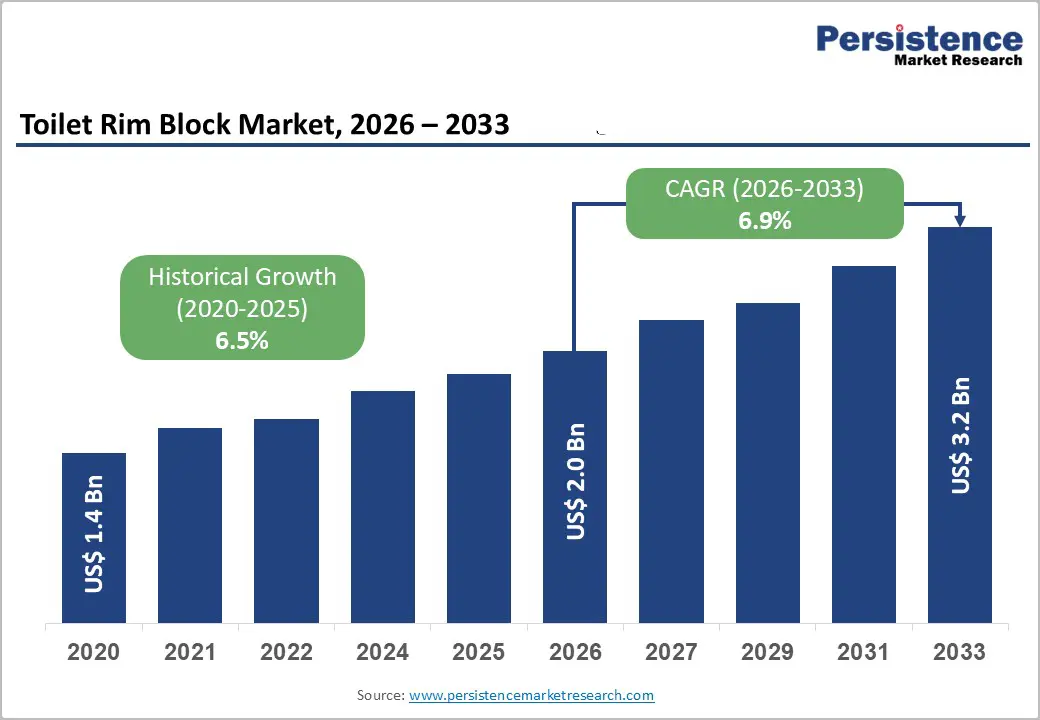
The global toilet rim block market size is likely to be valued at US$2.0 billion in 2026 and is expected to reach US$3.2 billion by 2033, growing at a CAGR of 6.9% during the forecast period from 2026 to 2033, driven by Rapid urbanization and rising disposable incomes in emerging economies have spurred demand for convenient and time-saving cleaning solutions. Innovation in product formulations, particularly eco-friendly, biodegradable, and multi-functional rim blocks, is propelling market expansion. Growing awareness about the importance of sanitation and hygiene drives the demand for products that simplify toilet maintenance while ensuring optimal cleanliness and freshness. Key features of toilet rim blocks include their ease of use, long-lasting effectiveness, and versatility in addressing various toilet cleaning needs. Consumers appreciate the convenience these products offer, as they eliminate the need for manual scrubbing and frequent application of cleaning agents.
Key Industry Highlights:
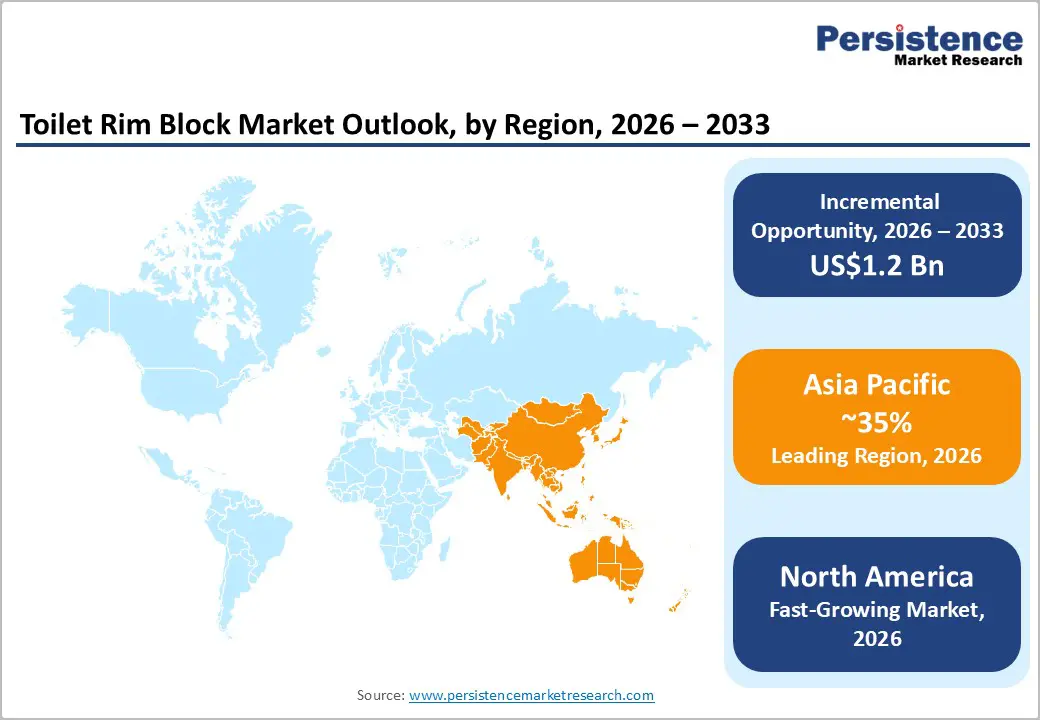
- Leading Region: Asia Pacific is anticipated to be the leading region, accounting for a market share of 35% in 2026, driven by rapid urbanization, rising hygiene awareness, and strong government initiatives promoting sanitation.
- Fastest-growing Region: North America is likely to be the fastest-growing region in the toilet rim block in 2026, supported by high consumer spending, stringent hygiene regulations, and strong demand for eco-friendly and premium cleaning products.
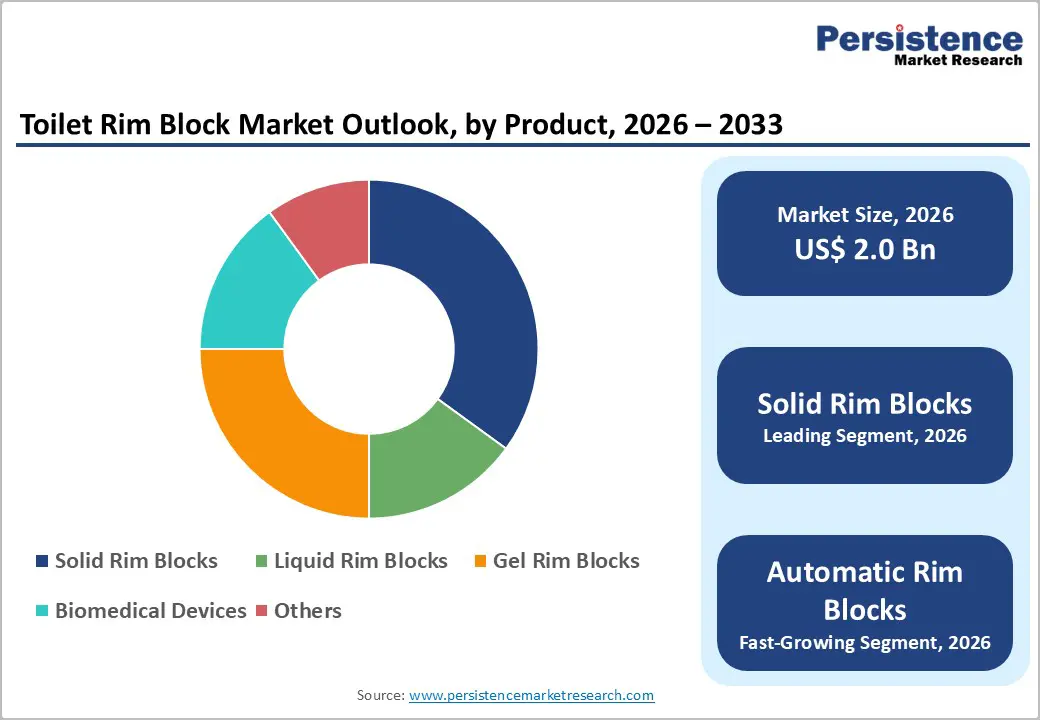
- Leading Product Type: Solid rim blocks are projected to represent the leading product type in 2026, accounting for 45% of the revenue share, driven by their cost-effectiveness, ease of use, and widespread adoption in residential settings.
- Leading Fragrances: Citrus fragrances are anticipated to be the leading fragrance type, accounting for over 35% of the revenue share in 2026, supported by their refreshing appeal, natural disinfectant properties, and strong consumer preference in residential markets.
| Key Insights | Details |
|---|---|
| Toilet Rim Block Market Size (2026E) | US$2.0 Bn |
| Market Value Forecast (2033F) | US$3.2 Bn |
| Projected Growth (CAGR 2026 to 2033) | 6.9% |
| Historical Market Growth (CAGR 2020 to 2025) | 6.5% |
Market Factors – Growth, Barriers, and Opportunity Analysis
Technological Advancements in Product Formulations
Modern innovations focus on enhancing product efficacy, longevity, and consumer convenience, allowing rim blocks to deliver superior cleaning, deodorizing, and antibacterial performance in a single application. The development of automatic rim blocks with smart-release technology ensures continuous dosing of active ingredients, reducing manual maintenance and improving hygiene in high-traffic commercial restrooms. Advancements in gel and liquid-based formulations enable faster dissolution, effective stain removal, and compatibility with hard water conditions, appealing to urban households facing diverse water quality challenges. Research in eco-friendly and biodegradable chemicals has allowed manufacturers to meet growing environmental regulations and consumer demand for sustainable hygiene products, providing a competitive edge in regions with strict chemical usage guidelines, such as North America and Europe.
Another significant impact of technological innovation in toilet rim blocks is the ability to cater to premium and multifunctional product segments, driving higher revenue growth. Companies are integrating multi-layered formulations that combine cleaning, antibacterial, fragrance, and descaling functions into a single block, reducing the need for multiple products in households and commercial facilities. The introduction of smart or automatic rim blocks with adjustable release rates has been particularly effective in commercial and institutional settings, ensuring consistent hygiene while minimizing chemical waste. Fragrance technology has also evolved, allowing for slow-release aromatic compounds that maintain freshness for longer durations, addressing consumer preferences for a pleasant restroom experience.
Supply Chain and Competition Pressures
Raw materials for rim blocks, including surfactants, fragrances, and biodegradable polymers, are often sourced internationally, exposing manufacturers to volatility in pricing, logistical delays, and currency fluctuations. Disruptions in chemical supply chains from Asia, a major production hub, can delay production schedules in North America and Europe, leading to temporary shortages or increased prices. Transportation and warehousing costs have risen due to higher fuel prices and stricter safety regulations for chemical handling. These supply chain constraints affect both established players and emerging brands, particularly in regions with high import dependency.
Intense competition exacerbates restraints on the toilet rim block market, creating pricing pressures and necessitating constant innovation. Leading companies such as Reckitt Benckiser, SC Johnson, P&G, and Henkel dominate major markets, leveraging strong brand recognition, distribution networks, and economies of scale. This leaves limited room for smaller or new entrants, forcing them to compete on pricing, product differentiation, or regional targeting. High competition drives aggressive marketing campaigns, promotional discounts, and product bundling, which can compress profit margins. Regional players in Asia Pacific and India are adopting cost-leadership strategies, producing rim blocks at lower prices to capture market share, intensifying competitive pressures.
Sustainable and Eco-Friendly Product Innovations
Increasing awareness about chemical pollution, water contamination, and the environmental impact of traditional cleaning agents has prompted manufacturers to develop formulations that are biodegradable, non-toxic, and phosphate-free. Companies such as Ecover and Seventh Generation are pioneering rim blocks that use plant-based surfactants and recyclable packaging, addressing the growing eco-conscious consumer segment. In regions, including Europe and North America, stringent environmental regulations and certifications, such as EcoLabel and EPA Safer Choice, further encourage manufacturers to adopt green formulations. This trend not only satisfies regulatory compliance but also strengthens brand image and consumer loyalty.
Technological advancements enable further innovation in sustainable toilet rim blocks, creating opportunities for multifunctional, eco-friendly products. Gel-based and liquid rim blocks are being reformulated using biodegradable polymers and slow-release fragrances to reduce chemical waste while maintaining performance. Integration of natural antibacterial agents, such as citric acid or plant extracts, provides effective hygiene solutions without compromising environmental safety. Emerging markets, particularly in Asia Pacific, show rising demand for eco-friendly products, supported by government initiatives promoting sustainable sanitation and urban hygiene programs, such as India’s Swachh Bharat Mission, which encourages safe and environmentally responsible cleaning solutions.
Category-wise Analysis
Product Type Insights
Solid rim blocks are expected to lead the toilet rim block market, accounting for approximately 45% of revenue in 2026, driven by their affordability, durability, and ease of use. These products are widely adopted in residential households where consumers prefer long-lasting and low-maintenance cleaning solutions. Their simple formulation and compatibility with standard toilet designs further support mass adoption across both developed and emerging regions. The segment benefits from strong penetration in supermarkets and convenience stores, where impulse purchases remain high. For example, Reckitt Benckiser’s Harpic solid rim block range has gained strong consumer acceptance due to its reliable performance and wide fragrance portfolio.
Automatic rim blocks are likely to represent the fastest-growing segment in 2026, supported by rising demand for hands-free and technologically enhanced hygiene solutions. Growth is supported by changing consumer lifestyles, increasing preference for convenience, and higher adoption in commercial and institutional environments such as hotels, offices, and healthcare facilities. Automatic rim blocks offer controlled and consistent release of cleaning agents, reducing manual intervention and improving hygiene standards in high-traffic restrooms. Smart product designs and modern aesthetics also align with premium bathroom upgrades and smart home trends. For example, Henkel’s Bref Power Aktiv automatic rim blocks, which integrate multi-chamber technology to deliver cleaning, fragrance, and limescale protection simultaneously.
Fragrances Insights
Citrus fragrances are projected to lead the market, capturing around 35% of the revenue share in 2026, supported by their association with freshness, cleanliness, and natural disinfecting properties. Consumers widely perceive citrus scents as effective at neutralizing odors while delivering a refreshing bathroom experience, making them a preferred choice for daily household use. This fragrance type performs particularly well in warm and humid climates, where odor control is a primary concern. Citrus-based rim blocks are also favored due to their compatibility with both solid and liquid formulations, enabling broad product availability. For example, SC Johnson’s Duck citrus rim block variants are widely recognized for combining strong cleaning performance with long-lasting freshness.
Active fresh flowers are likely to be the fastest-growing fragrances in 2026, driven by increasing premiumization and consumer demand for wellness-oriented bathroom care solutions. Floral fragrances are commonly associated with freshness, comfort, and a calming sensory experience, making them appealing to consumers who seek more refined and pleasant restroom environments. Advances in fragrance encapsulation and slow-release scent technology have improved fragrance longevity while maintaining balanced intensity. This segment is especially popular among urban households and premium users who prioritize ambiance in addition to hygiene performance. For example, Unilever’s Domestos and Cif floral-fragrance toilet rim and toilet hygiene variants emphasize long-lasting floral freshness combined with effective cleaning.
Regional Insights
North America Toilet Rim Block Market Trends
North America is likely to be the fastest-growing region in the toilet rim block in 2026, driven by heightened hygiene awareness, strong consumer spending on premium home care products, and rising demand for eco-friendly and technologically-advanced cleaning solutions. High awareness of sanitation standards, reinforced by ongoing public health concerns and the lasting impact of the COVID-19 pandemic, has encouraged the adoption of products that go beyond basic odor control to offer antibacterial protection and consistent freshness. For example, Clorox Company’s toilet rim block initiatives focus on combining powerful cleaning action with fresh scent profiles to address hygiene and sensory preferences effectively.
Alongside product performance, channel and format innovation are shaping the North American toilet rim block market trajectory, with online and direct-to-consumer models growing in significance. E-commerce platforms now play a larger role in product discovery and repeat purchase behavior, especially among younger, tech-savvy consumers seeking convenience and subscription-based offerings. This shift has encouraged brands to invest in digital marketing and streamlined fulfillment strategies to enhance customer engagement and loyalty. Commercial and institutional segments, including hospitality, healthcare, and corporate facilities, are adopting higher-performance rim block solutions to meet stringent cleanliness protocols and regulatory guidelines.
Europe Toilet Rim Block Market Trends
By 2026, Europe is expected to be a key market for toilet rim blocks, driven by stringent environmental regulations, heightened consumer awareness of hygiene, and a growing demand for sustainable and premium toilet care products. European consumers are increasingly favoring rim blocks that not only offer effective cleaning but also have a lower environmental impact, with a preference for biodegradable ingredients and recyclable packaging. Retailers and mass merchandisers are expanding shelf space for eco-friendly cleaning products, giving these sustainable rim blocks more visibility. For example, General Fresh’s Total Force toilet rim block range blends powerful fragrance and aesthetic appeal, while also emphasizing performance features that attract consumers seeking both effective and visually appealing bathroom care solutions.
The toilet rim block market in Europe is evolving with a focus on product diversification and performance innovation, driven by varying consumer preferences and the competitive landscape between local and international brands. European shoppers are no longer satisfied with just basic cleaning and deodorizing; many are looking for rim blocks that provide added benefits such as limescale protection, unique fragrance profiles, and longer-lasting freshness. As a result, manufacturers are exploring a variety of scent combinations tailored to local tastes, while also improving chemical formulations to ensure effectiveness across different water hardness levels commonly found throughout Europe.
Asia Pacific Toilet Rim Block Market Trends
The Asia Pacific region is anticipated to be the leading region, accounting for a market share of 35% in 2026, driven by rising urbanization, increased hygiene awareness, and expanding middle-income consumer segments across countries such as China, India, and Southeast Asian economies. Urban households are increasingly adopting convenient toilet care products that combine cleaning efficacy with long-lasting fragrance, reflecting a shift toward premium and value-added hygiene solutions. Competition intensifies, and product differentiation through unique fragrances and multifunctional benefits becomes more pronounced. For example, Domestos Power 5 Toilet Rim Block Ocean Scent, which is marketed by Unilever and enjoys a strong presence in regional retail channels due to its recognizable brand and trusted performance.
Product innovation and sustainability are key trends shaping the Asia Pacific toilet rim block market. Manufacturers are increasingly focusing on eco-friendly formulations and biodegradable components to align with rising environmental awareness among consumers, especially in markets such as Japan, South Korea, and parts of Southeast Asia. Fragrance innovation remains important, with preferences for both traditional citrus and oceanic scents as well as newer botanical and fresh profiles gaining traction in urban markets. Premiumization is evident as consumers become more willing to pay for features such as anti-limescale protection, longer-lasting scent release, and color-enhanced cleaning experiences.
Competitive Landscape
The global toilet rim block market exhibits a moderately fragmented structure, driven by the presence of several established multinational manufacturers alongside a broad set of regional and private-label players competing for market share. Leading firms compete in a landscape where innovation, sustainability, and distribution strength are critical differentiators, while consumer demand for effective, long-lasting cleaning and fragrance solutions fuels ongoing product development. Rising preferences for biodegradable and eco-friendly formulations have prompted many companies to reformulate their offerings, appealing to environmentally conscious buyers and aligning with regional regulatory trends on chemical safety and packaging waste reduction.
With key leaders including Reckitt Benckiser Group plc, Procter & Gamble Co., Unilever PLC, SC Johnson & Son, Inc., and The Clorox Company, the competitive landscape is shaped by large players leveraging strong brand portfolios and expansive distribution networks. These players compete through product innovation, strategic marketing, sustainability initiatives, and channel expansion to strengthen their positions and attract a wider consumer base. Smaller and regional companies also play an important role, often focusing on niche segments or local preferences to differentiate themselves and grow market share.
Key Industry Developments:
- In July 2025, Henkel launched a significant sustainability initiative aimed at increasing the use of renewable raw materials in its Bref toilet rim blocks throughout Europe. The company has implemented a mass balance approach, which involves replacing a portion of fossil-based raw materials with renewable alternatives in both the cleaning formulas and the rim block casings, all of which are verified using certified calculation methods. In partnership with suppliers such as Moeve and BASF, Henkel introduced a new surfactant made from 68% renewable raw materials for the majority of its toilet rim blocks. The company is also continuing its efforts to replace fossil-derived ingredients across its entire product range.
- In March 2025, Unilever's Domestos, the UK’s top toilet and bleach brand, expanded its Power Foam product line with the introduction of Domestos Bleach Foam, the first bleach-based variant in the range. This new product combines the powerful bleach performance of Domestos with the innovative 360-degree upside-down spray technology of Power Foam, allowing for effective germ elimination, stain removal, and improved whitening, even in hard-to-reach areas of the bathroom. Domestos Bleach Foam features a thick foam formula that covers larger surfaces and provides longer-lasting cleanliness compared to traditional liquid bleach, enhancing both cleaning efficiency and user convenience.
Companies Covered in Toilet Rim Block Market
- Henkel AG & Co. KGaA
- Reckitt Benckiser Group plc
- S. C. Johnson & Son, Inc.
- Procter & Gamble Co.
- Unilever PLC
- Church & Dwight Co., Inc.
- Kao Corporation
- Ecover Belgium NV
- The Clorox Company
- Seventh Generation, Inc.
- Diversey, Inc.
- Ecolab Inc.
- Nice Group Co., Ltd.
- Dabur India Ltd.
- Godrej Consumer Products Limited
Frequently Asked Questions
The global toilet rim block market is projected to reach US$2.0 billion in 2026.
Rising hygiene awareness, demand for convenient and long-lasting toilet freshness, and increasing adoption of innovative and scented bathroom cleaning solutions.
The toilet rim block market is expected to grow at a CAGR of 6.9% from 2026 to 2033.
The development of eco-friendly and biodegradable formulations, premium fragrance variants, smart and long-lasting dispensing technologies, and expanding demand from urban households in emerging economies.
Henkel, Reckitt Benckiser, S.C. Johnson, P&G, Unilever, Church & Dwight, and Kao are the leading players.


