




- Home Care & Utilities
- Toilet Cistern Block Market
Toilet Cistern Block Market Size, Share, and Growth Forecast 2026 - 2033
Toilet Cistern Block Market by Product Type (Bleach, Citrus, Jasmine and Violet), by End User (Commercial, Corporate Offices, Public Toilets, Industrial Usage, Household), by Sales Channel (Hypermarkets, Supermarkets, Independent Retailers, Multi Brand Stores, Specialty Retail Stores, Online Sales, Company Website, 3rd Party Online Sales), by Regional Analysis, 2026 - 2033

Toilet Cistern Block Market Size and Trend Analysis
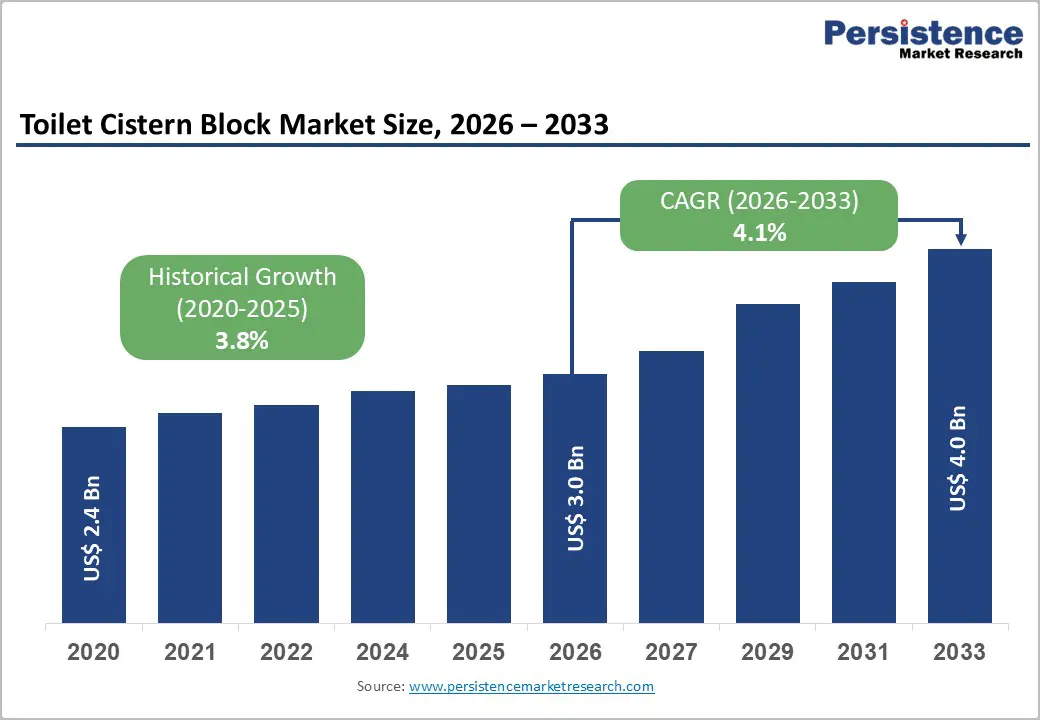
The global toilet cistern block market size is expected to be valued at US$ 3.0 billion in 2026 and is expected to reach US$ 4.0 billion by 2033, growing at a CAGR of 4.1% during the forecast period from 2026 to 2033. Growing consumer awareness about hygiene and sanitation is driving demand, supported by urbanization and an increased focus on home cleanliness post-pandemic.
More than 3.6 billion people worldwide now use improved sanitation facilities, creating a strong need for convenient and effective cleaning solutions. Rising interest in sustainability is also influencing the market, as manufacturers develop eco-friendly formulations and reduce chemical usage. These trends, combined with evolving lifestyles and heightened hygiene standards, are fueling steady adoption of cistern blocks globally.
Key Market Highlights
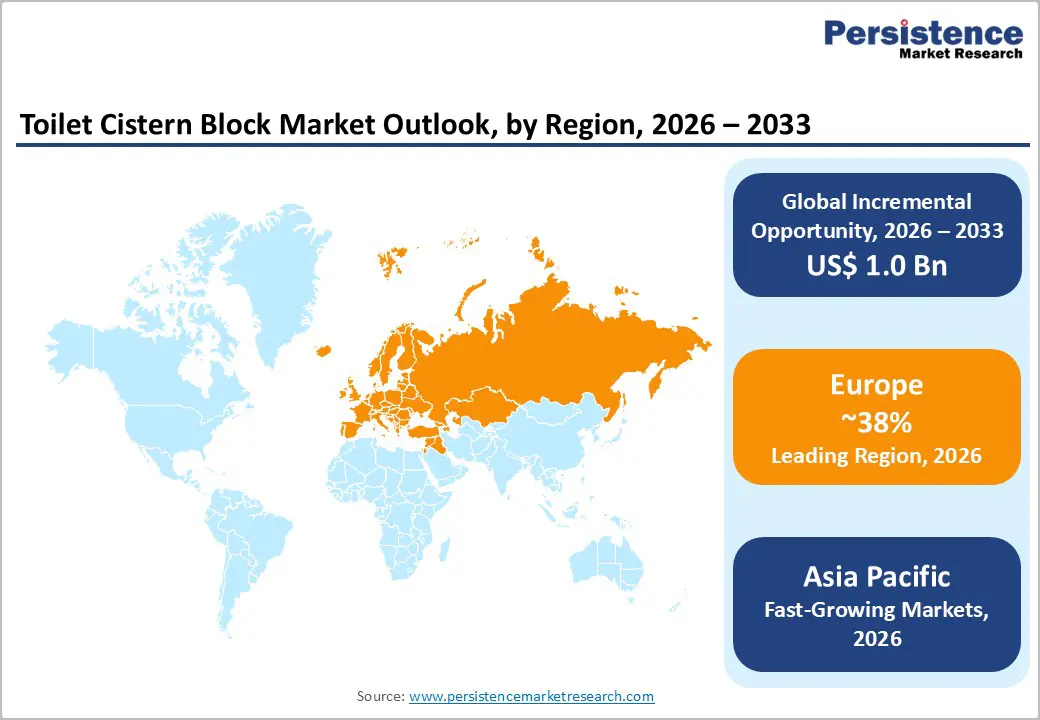
- Leading Region: Europe leads with 38% share in 2025, driven by strict regulations and high hygiene standards across Household and Commercial sectors.
- Fastest-Growing Region: Asia Pacific grows fastest with an 18% share in 2025, fueled by rapid urbanization and sanitation initiatives in India and China.
- Leading Product Category: Bleach dominates Product Type with 45% share, valued for its strong disinfection performance in high-traffic areas.
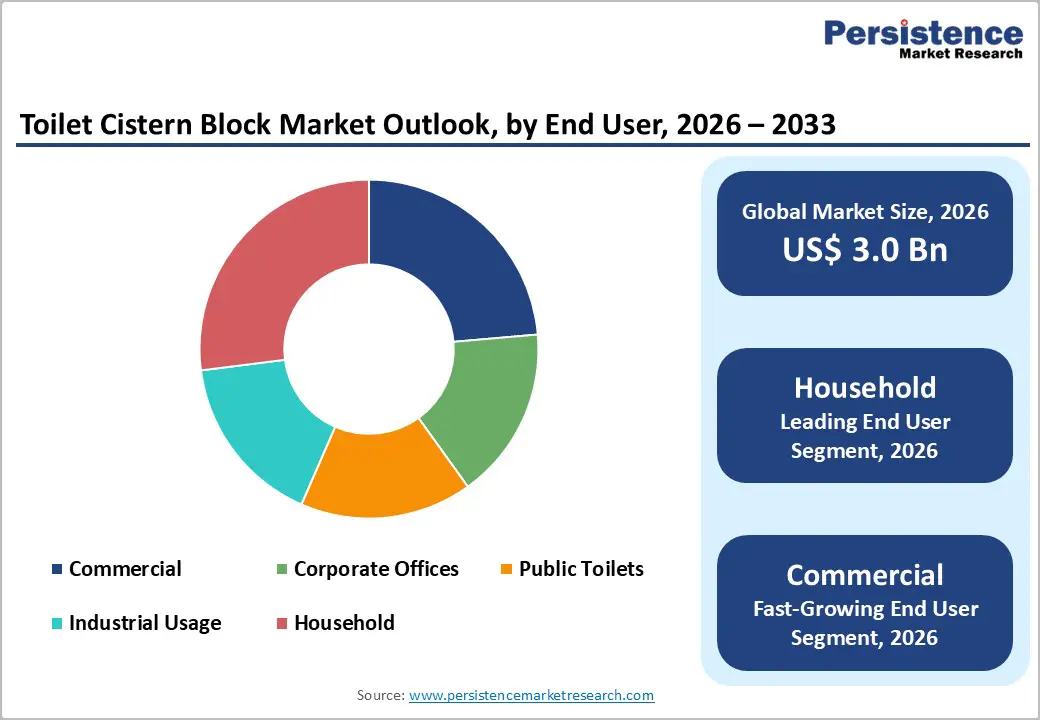
- Leading End-User Category: Household leads at 52% share in 2025, driven by daily convenience and automatic cleaning preferences.
- Key Market Opportunity: Eco-friendly formulations tap growing demand, aligning with sustainability trends and consumer preference for green products.
| Global Market Attributes | Key Insights |
|---|---|
| Toilet Cistern Block Size (2026E) | US$ 3.0 billion |
| Market Value Forecast (2033F) | US$ 4.0 billion |
| Projected Growth CAGR (2026 - 2033) | 4.1% |
| Historical Market Growth (2020 - 2025) | 3.8% |
Market Dynamics and Market Drivers
Rising Hygiene Awareness and Continuous Demand for Convenient Sanitation Solutions Post-Pandemic
Heightened global focus on hygiene, amplified by COVID-19, strongly drives the toilet cistern block market. Households worldwide have embraced improved sanitation practices, extending to automatic toilet cleaning products. Cistern blocks provide effortless, continuous disinfection by releasing cleaning agents with every flush, reducing the need for frequent manual cleaning. Their convenience particularly appeals to busy urban consumers seeking time-saving hygiene solutions.
Manufacturers respond with long-lasting formulations that can remain effective for weeks, enhancing user satisfaction and encouraging repeat purchases. In densely populated regions, these products offer reliable odor and limescale control, making them an integral part of daily household and commercial sanitation routines. Innovation in product durability and fragrance variety continues to sustain market momentum.
Rapid Urbanization and Expanding Infrastructure Creating Strong Demand for Toilet Cistern Blocks
Accelerated urbanization worldwide is boosting the need for efficient and low-maintenance sanitation products like cistern blocks. As urban populations grow, public and private sanitation systems face higher usage, increasing the demand for cost-effective cleaning solutions. New residential and commercial developments integrate modern plumbing where cistern blocks provide consistent hygiene without labor-intensive maintenance.
Government-led sanitation initiatives in developing regions have expanded access to toilets, creating a growing user base requiring ongoing cleaning solutions. These blocks help prevent limescale buildup and maintain odor-free systems economically, making them a practical alternative to professional cleaning services. Increasing urban living standards continue to support adoption of convenient, reliable cistern cleaning products.
Market Restraints
Increasing Regulatory Pressures and Environmental Compliance Challenges Impacting Toilet Cistern Block Production
Stringent environmental regulations on chemical usage are restraining the toilet cistern block market. Governments worldwide are enforcing eco-standards that limit ingredients like phosphates and strong bleaches, requiring manufacturers to reformulate products. Consumers are increasingly aware of chemical safety, preferring gentler, eco-friendly alternatives, which slows adoption of conventional blocks and fragments market demand. Compliance with these regulations also increases production complexity and operational costs.
Producers must invest in safer formulations and sustainable packaging to meet evolving standards, which can challenge smaller players with limited R&D budgets. Balancing regulatory compliance with performance and fragrance appeal continues to be a key obstacle in expanding traditional cistern block offerings.
Volatility in Raw Material Costs Posing Profitability Challenges for Manufacturers
Fluctuating prices of raw materials, including surfactants, fragrances, and active cleaning agents, create hurdles for toilet cistern block producers. Supply chain disruptions and global petrochemical price swings increase production costs, which are often passed on to consumers, impacting affordability in price-sensitive regions.
Small and medium manufacturers are particularly vulnerable, as margin pressures reduce their ability to compete effectively. In markets where inflation is high, such as parts of Latin America and Africa, rising costs can slow volume growth and limit market penetration, making raw material stability a critical factor for sustained profitability.
Market Opportunities
Rising Consumer Demand for Eco-Friendly and Sustainable Toilet Cistern Block Formulations
Market players have significant opportunities by developing eco-friendly cistern blocks using biodegradable and plant-based ingredients. Consumers increasingly prefer sustainable products, and innovations like citrus- or herbal-based blocks align with global initiatives for reduced chemical use and zero-waste practices. Investing in green formulations allows companies to target premium segments, enhance brand visibility, and meet regulatory expectations while supporting environmentally responsible sanitation solutions.
Developing certified organic or sustainable products can attract environmentally conscious households and commercial facilities, strengthening customer loyalty. This shift not only addresses consumer preferences but also differentiates brands in competitive markets, creating long-term growth potential for manufacturers embracing sustainability.
Expansion of Online Sales Channels Driving Market Growth and Direct-to-Consumer Engagement
The rapid rise of e-commerce presents strong opportunities for toilet cistern block manufacturers. Online platforms, including company websites and third-party marketplaces, enable direct-to-consumer distribution, reaching both household and commercial users efficiently. Consumers increasingly value convenience and doorstep delivery, supporting higher adoption rates for subscription and bulk-purchase models.
In regions like Asia Pacific, expanding 3rd party online sales allows companies to tap digitally active consumers and increase brand engagement. Firms leveraging digital marketing and personalized offers can achieve higher retention and repeat purchase rates, enhancing revenue streams while growing their presence in competitive sanitation markets.
Category-wise Insights
Product Type Analysis
Bleach leads the Product Type category with a 45% market share in 2025, owing to its strong disinfecting properties that eliminate 99.9% of bacteria and pathogens, including E. coli. Its cost-effectiveness compared to scented variants makes it especially popular in Public Toilets and Industrial Usage, while Commercial users appreciate its reliable hygiene performance. Regulatory and health guidelines further reinforce bleach blocks as the preferred choice for high-traffic sanitation areas.
Scented variants like Citrus, Jasmine, and Violet are emerging rapidly, driven by consumer preference for pleasant fragrances and aesthetic appeal. These blocks are gaining traction in household and office settings, where convenience and enhanced user experience are valued. Manufacturers are innovating with longer-lasting and eco-friendly scented formulations to meet this growing demand.
End User Analysis
Households dominate the End User category with a 52% share in 2025, driven by daily usage and the convenience of automatic cleaning blocks. Surveys indicate that most urban families prioritize hygiene solutions that reduce manual cleaning, making cistern blocks a staple. Urbanization and increased awareness of sanitation amplify adoption, with scented options like Citrus enhancing the home experience.
Commercial facilities, including Corporate Offices, Public Toilets, and Industrial Usage, are experiencing faster growth. The convenience of continuous disinfection and minimal maintenance appeals to facility managers, while odor control and aesthetic options improve user satisfaction. Rising focus on employee wellness and public hygiene is driving adoption in these segments.
Sales Channel Analysis
Supermarkets lead the Sales Channel category with a 38% market share in 2025, benefiting from high footfall, impulse purchases, and strong brand visibility. Major chains in Europe and North America stock a wide variety of cistern block products, with strategic promotions and shelf placement reinforcing dominance over fragmented retail networks.
Online sales channels, including company websites and third-party platforms, are the fastest-growing segment. Consumers increasingly value the convenience of doorstep delivery, subscription models, and the ability to compare variants easily. Digital marketing campaigns and e-commerce strategies are enabling brands to reach both household and commercial users more efficiently, expanding market reach.
Regional Insights
North America Toilet Cistern Block Market Trends and Insights
North America’s market is growing steadily at a 4.1% CAGR, with the U.S. as the key contributor. Strong hygiene standards enforced by EPA water quality rules promote widespread use of cistern blocks for limescale control and continuous disinfection. Household demand drives approximately 15 million toilet cleaner sales annually, while innovation hubs in California focus on antibacterial and long-lasting formulations.
Retail expansions, including supermarkets, hypermarkets, and online channels, facilitate broad product accessibility. Manufacturers are leveraging R&D investments to create premium and eco-friendly options, responding to evolving consumer preferences and maintaining market competitiveness across both household and commercial sectors.
Europe Toilet Cistern Block Market Trends and Insights
Europe leads the Toilet Cistern Block Market with a 38% share in 2025, driven by stringent environmental standards and growing consumer preference for sustainable hygiene solutions. Germany and the U.K. have been at the forefront, adopting EU Ecolabel certifications that boost eco-friendly blocks, while France and Spain align with REACH regulations for safer chemical use. Regulatory harmonization supports cross-border trade, and quality certifications like WRAS in the U.K. enhance trust in public facilities.
Premium segments, including scented and biodegradable blocks, are growing rapidly, supported by urban households and commercial establishments prioritizing hygiene and sustainability. Eco-conscious consumers are driving innovation, encouraging manufacturers to invest in long-lasting, fragrance-rich, and environmentally responsible formulations, ensuring continued market expansion across Europe.
Asia Pacific Toilet Cistern Block Market Trends and Insights
Asia Pacific is the fastest-growing region, with an 18% share in 2025, fueled by rapid urbanization and government sanitation initiatives. China and India lead the market, with China targeting 95% sanitation coverage under its 14th Five-Year Plan and India’s Swachh Bharat Mission creating strong household demand. Japan contributes with premium scented and long-lasting blocks, while ASEAN manufacturing hubs reduce production costs, supporting exports and affordability.
Emerging urban centers and rising hygiene awareness are boosting adoption in both residential and commercial segments. Growing disposable incomes, expanding retail networks, and increased interest in scented or eco-friendly products are helping manufacturers tap new consumers, making the Asia Pacific market highly dynamic and competitive.
Competitive Landscape
The toilet cistern block market is moderately consolidated, with leading players maintaining strong positions through brand recognition and extensive distribution networks. Companies focus on innovation, developing long-lasting and eco-friendly formulations to meet evolving consumer preferences. Differentiation is increasingly driven by product durability, sustainability features, and certifications that enhance credibility in both household and commercial segments.
Emerging trends include subscription-based models and direct-to-consumer online sales, allowing firms to build stronger customer engagement and loyalty. Smaller regional competitors continue to operate in local markets, creating a fragmented landscape that encourages continuous innovation and strategic partnerships to maintain competitiveness.
Key Market Developments
- In June 2025, Reckitt Benckiser launched phosphate-free Harpic blocks compliant with EU standards, focusing on eco-conscious consumers and strengthening its presence in sustainable sanitation solutions across European markets.
- In March 2024, S.C. Johnson expanded its Glade cistern line with Jasmine variants in Asia, enhancing regional product offerings and driving a 15% increase in sales through improved fragrance options and household appeal.
- In October 2023, Henkel introduced bleach-free options under Persil, supporting German sustainability initiatives, catering to environmentally aware consumers, and reinforcing its commitment to safe and eco-friendly toilet cleaning solutions.
Companies Covered in Toilet Cistern Block Market
- Reckitt Benckiser Group plc
- Procter & Gamble Co.
- Henkel AG & Co. KGaA
- S. C. Johnson & Son, Inc.
- The Clorox Company
- Unilever PLC
- Kimberly‑Clark Corporation
- Diversey, Inc.
- McBride plc
- Nice Group Co., Ltd.
- Baran Chemical Company
- Blue Moon Group
- EcoAir (SC Johnson subsidiary)
- WD‑40 Company
- Willert Home Products
Frequently Asked Questions
The global Toilet Cistern Block Market is expected to reach US$ 3.0 billion in 2026.
Key drivers include rising hygiene awareness and urbanization, with WHO noting improved sanitation access for 3.6 billion people.
Europe holds the leading position with 38% market share in 2025, due to stringent regulations.
Expansion into eco-friendly, biodegradable formulations aligns with 60% consumer preference for green products.
Major companies include Reckitt Benckiser, SC Johnson, Henkel, and Procter & Gamble.


