




- Nutraceuticals & Functional Foods
- Psyllium Husk Powder Market
Psyllium Husk Powder Market Size, Share, Growth, and Regional Forecast, 2026 - 2033
Psyllium Husk Powder Market by Nature (Organic, Conventional), Purity (Above 90%, 80% to 90%, 70% to 80%, Below 70%), Application (Food & Beverages, Dietary Supplements, Pharmaceuticals), by Distribution Channel (B2B, B2C), and Regional Analysis for 2026 - 2033

Psyllium Husk Powder Market Share and Trends Analysis
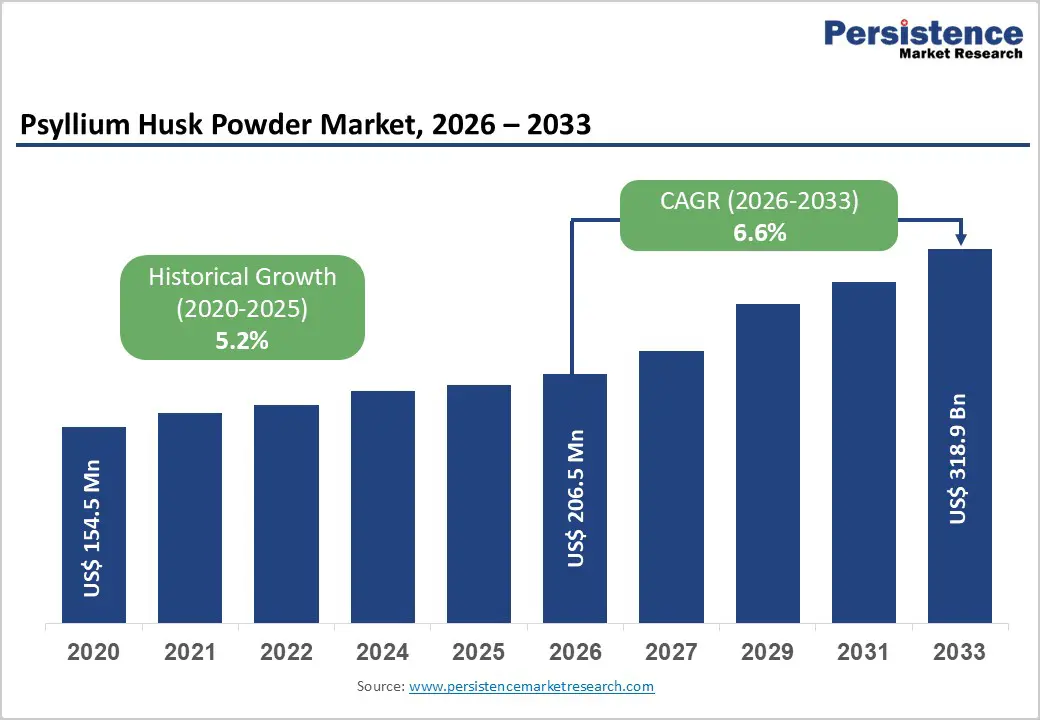
The global psyllium husk powder market size is estimated to grow from US$206.5 million in 2026 to US$318.9 million by 2033. The market is projected to record a CAGR of 6.6% during the forecast period from 2026 to 2033 due to the rising consumer preference for natural and plant-based dietary supplements, increasing health awareness, and growing demand in the food and pharmaceutical industries, particularly for digestive health and heart wellness applications.
Key Industry Highlights
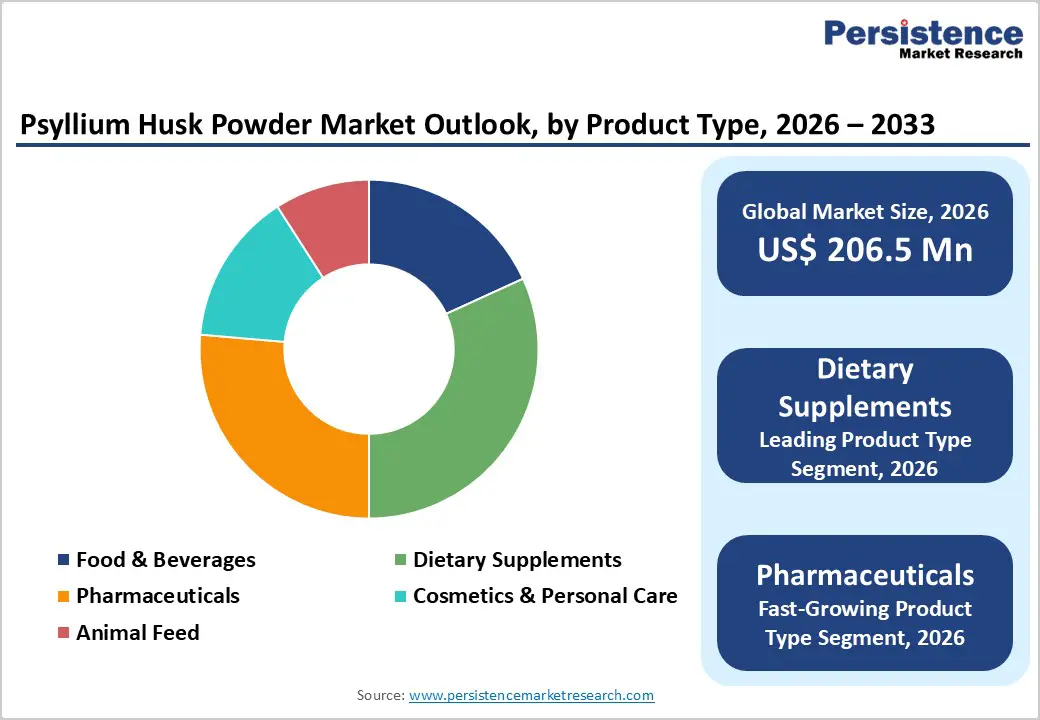
- Dominant Application: The dietary supplements segment leads the application category. Psyllium's role in promoting digestive health ensures its dominant use in the dietary supplements segment. North America remains the largest consumer market owing to its strong demand in supplements and functional foods.
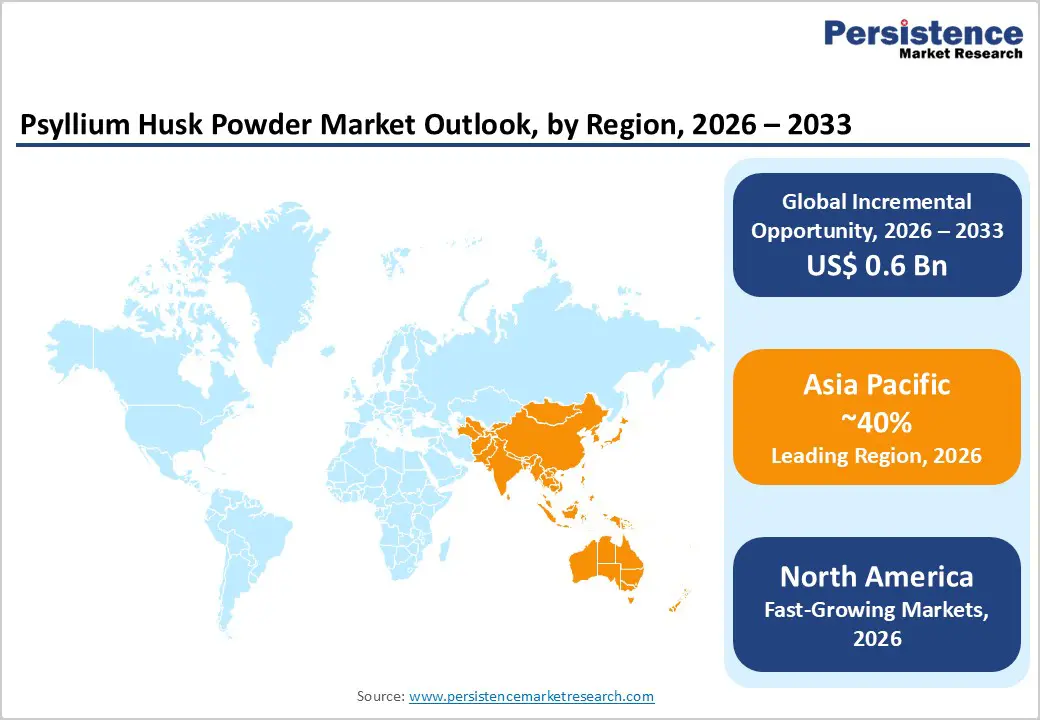
- Dominant Region: India leads global production and exports 90-95% of its psyllium output.
- Rising preference for natural laxatives like psyllium is driving global market growth due to increasing cases of constipation.
- Government initiatives in India are boosting psyllium production through support for farming and infrastructure. Rising health consciousness and demand for natural fiber supplements are fueling growth in North America’s market. FDA approval of psyllium's benefits in reducing heart disease risk enhances its acceptance in the health supplements market.
| Key Insights | Details |
|---|---|
| Psyllium Husk Powder Market Size (2026E) | US$ 206.5 Mn |
| Market Value Forecast (2033F) | US$ 318.9 Bn |
| Projected Growth (CAGR 2026 to 2033) | 6.6% |
| Historical Market Growth (CAGR 2020 to 2025) | 5.2% |
Market Dynamics
Driver - Rising Consumer Preference for Natural Laxative Solutions
Chronic constipation is a major focus of modern clinical gastroenterology practice worldwide. Constipation is one of the most common conditions diagnosed in clinical practice, and many people across the world suffer from it due to their sedentary lifestyle, a lack of physical activity, and low intake of fiber.
The growing concern over constipation and gut health has led experts to develop natural solutions to overcome this disorder. Psyllium husk powder is a natural, plant-based product that is effective in treating constipation due to its laxative properties.
Psyllium husk powder is a natural laxative that increases stool bulk and supports gut health. This has led to a positive outlook for the psyllium husk powder market, as pharmaceutical manufacturers are using these natural products to develop medicines to relieve constipation.
Restraints - Climatic and Production Risk to Hamper Supply of Psyllium Husk Powder
The psyllium crop is high-risk because the entire crop is damaged by adverse weather. The cost of inputs for producing psyllium is very high and the production process is labor-intensive, which ultimately increases the crop's price. Harvested seeds must be kept dry to ensure optimal processing of psyllium husk powder; however, the lack of a processing hub near the crop's primary growing region in Rajasthan limits production.
Changing weather conditions affect crop availability. Scanty and erratic rainfall affects production. Manufacturers of psyllium husk powder depend on the availability of psyllium seeds for processing; if the crop is destroyed, it affects the supply of psyllium husk powder, with price volatility hampering sales.
Opportunity - Incorporating psyllium into heart-healthy snacks, cereals, and beverages
With growing consumer awareness of heart health, there is an increasing demand for products that promote cardiovascular health. Psyllium, known for its cholesterol-lowering and digestive benefits, is an ideal ingredient for manufacturers developing functional foods. By adding psyllium to snacks, cereals, and beverages, companies can meet the growing demand for fiber-rich, heart-healthy options.
Additionally, psyllium’s versatility allows for its incorporation into a wide range of products, from granola bars and breakfast cereals to fiber-enriched smoothies and beverages. This trend not only addresses consumer health concerns but also aligns with the clean-label movement, offering natural and effective solutions for heart health. rephrase.
Category-wise Analysis
By Application Insights
In dietary supplements, psyllium husk is widely used for its proven digestive health benefits, particularly in promoting regular bowel movements and supporting overall gut health. Recognized by the FDA, psyllium husk is classified as a soluble fiber and is commonly found in products aimed at relieving constipation and improving digestive function. Its ability to absorb water and form a gel-like substance helps regulate bowel movements, making it an effective natural remedy for constipation.
Furthermore, psyllium is often included in weight management supplements because it helps increase feelings of fullness, potentially reducing overall calorie intake. The growing awareness of digestive health, combined with the FDA's endorsement of psyllium as a safe and beneficial ingredient, has fueled its widespread use in dietary supplements, reinforcing its market dominance.
By Nature Insights
Organic psyllium husk powder is poised for significant growth as consumer demand for organic and natural ingredients rises. As consumers become more health-conscious, they prefer items free of synthetic additives and chemicals. Organic psyllium husk, which is high in fiber and offers digestive benefits, is a strong fit for this trend. With growing awareness of the importance of gut health and the harmful effects of synthetic ingredients, consumers are turning to natural options for their daily dietary requirements.
Furthermore, the shift toward clean-label products, which are considered safer and healthier, increases demand for organic psyllium husk powder. As more consumers choose plant-based and organic alternatives, the segment is likely to rise rapidly, creating a significant opportunity for market players.
Regional Insights
Asia Pacific Psyllium Husk Powder Market Trends
Asia Pacific psyllium husk powder market is primarily driven by India's dominant role as the world’s leading producer and exporter of isabgol (psyllium). As per MOFPI, India accounts for nearly 80% of global psyllium husk powder production, with key cultivation states including Rajasthan, Gujarat, and Madhya Pradesh. Approximately 90-95% of India’s psyllium production is exported, reflecting strong global demand.
With an average annual production of 120,000 tonnes, India remains crucial to the global supply chain. The region has more than 55,000 acres of farmland under psyllium cultivation, supporting large-scale farming. Furthermore, the Rajasthan Agriculture Competitiveness Project in India received World Bank funding to promote agricultural activities in Rajasthan and support farmers in increasing production through various management programs.
Major importers of Indian psyllium products include the U.S., UK, China, France, and Norway. This export-driven growth, combined with increasing applications in dietary supplements and functional foods, positions the Asia Pacific as a key hub in the global psyllium husk powder market.
North America Psyllium Husk Powder Market Trends
North America psyllium husk powder market is witnessing steady growth, driven by rising consumer demand for natural, plant-based supplements and increased health awareness. As a major importer, the U.S. contributes significantly to the region's market expansion. Psyllium is well known for its high dietary fiber content and efficacy in improving digestive health and lowering cholesterol levels.
Its FDA-approved claim of reducing the risk of coronary heart disease further boosts its appeal to health-conscious customers. Growing interest in functional foods and supplements with scientifically validated benefits has led to the inclusion of psyllium in nutritional supplements, cereals, and health drinks. The shift toward preventative healthcare and clean-label goods is driving market demand in North America.
Competitive Landscape
The global psyllium husk powder market is fragmented, with several key players competing based on product quality, purity, price, and global distribution. Key players in the global psyllium husk powder market are becoming more export-oriented as demand for psyllium husk powder in dietary supplements increases.
Leading market players are focused on expanding their product portfolio and establishing strategic alliances to increase their market share in the global market. Furthermore, manufacturers in the global psyllium husk powder market are increasingly focused on incorporating modern technologies to improve production efficiency and deliver high-quality products across multiple end-use industries. Key players are also obtaining quality certifications and strictly adhering to industry standards and norms.
Key Industry Developments:
- In January 2024, Tata Consumer Products announced definitive agreements to acquire up to 100% equity of Organic India, a leading brand in the "better-for-you" segment. The acquisition strengthens Tata's portfolio in organic food, beverages, and herbal supplements, aligning with its strategy to expand in the health and wellness space.
- In October 2023, Z Natural Foods launched a flavored variant of psyllium husk powder, Irresistible Pineapple Orange Flavor, combining the digestive benefits of psyllium with the tropical taste of organic pineapple juice powder and zesty orange.
Companies Covered in Psyllium Husk Powder Market
- NOW® Foods
- Tata Consumer Products Limited
- Himalaya Wellness Company
- Shree Baidyanath Ayurved Bhawan Pvt. Ltd.
- Patanjali Ayurved Limited
- Yerba Prima
- Anthony’s Goods
- Prime Psyllium
- Micro Ingredients
- NKD Living
- Shaanxi GTL Biotech Co., Ltd.
- Viva Naturals
- Z Natural Foods
- Sidhpur Sat-Isabgol Factory Private Limited
- Bonvit
- Hard Eight Nutrition LLC
- Gayatri Psyllium Industries
- Swanson
- Altrafine Gums
- Satnam Psyllium Industries
- Others
Frequently Asked Questions
The global psyllium husk powder market is projected to value at US$ 206.5 Mn in 2026.
Rising consumer preference for natural laxative solutions is fueling demand for global psyllium husk powder market.
The Global Psyllium Husk Powder market is expected to witness a CAGR of 6.6% between 2026 and 2033.
Incorporating psyllium into heart-healthy snacks, cereals, and beverages is the key market opportunity for companies in the market.
Major players in the Global Psyllium Husk Powder market include NOW® Foods, Tata Consumer Products Limited, Himalaya Wellness Company, Shree Baidyanath Ayurved Bhawan Pvt. Ltd., Patanjali Ayurved Limited, Anthony’s Goods, and others.


