




- Processed Food
- Margarine Market
Margarine Market Size, Trends, Share, Growth, and Regional Forecast, 2026 - 2033
Margarine Market by Source (Soybean Oil, Palm Oil, Corn Oil, Sunflower Oil, Canola Oil, Others), by Nature (GMO Margarine, Non-GMO Margarine), by End Use, by Distribution Channel, and Regional Analysis from 2026 - 2033

Margarine Market Share and Trends Analysis
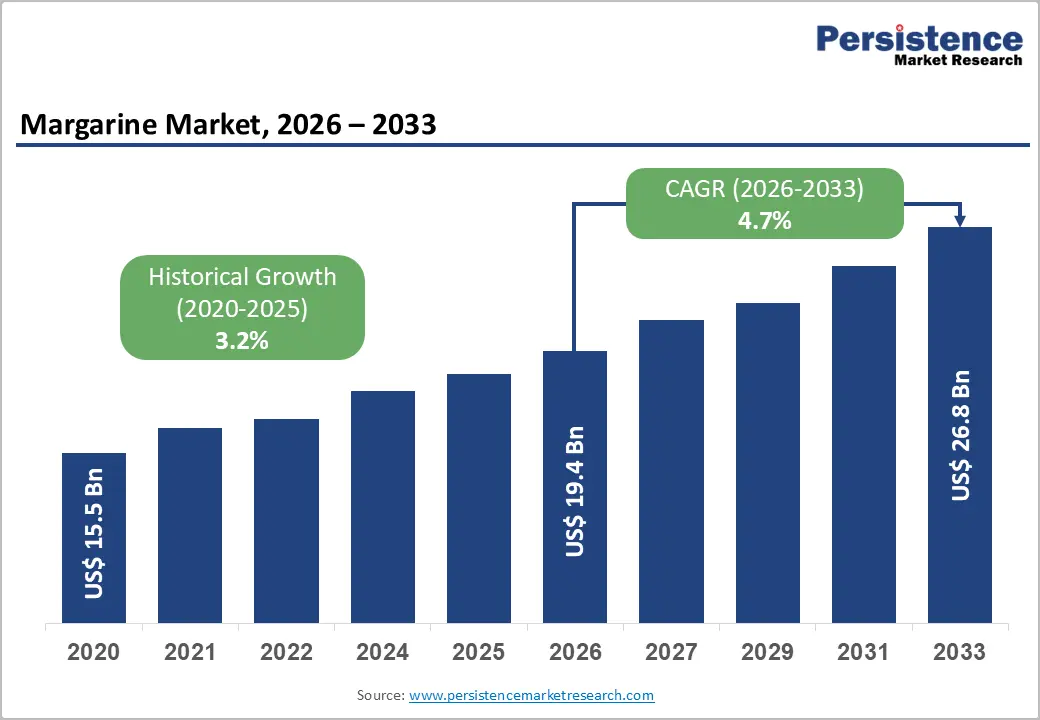
The global margarine market is projected to grow from US$19.4 billion in 2026 to US$26.8 billion by 2033, at a CAGR of 7.5% over the forecast period.
The margarine market is evolving beyond a basic butter substitute into a value-driven, innovation-focused category. Manufacturers are reformulating products to reduce trans fats, lower saturated fat, and incorporate plant-based oils, vitamins, and functional ingredients. Growing health awareness, lactose intolerance, and vegan preferences are expanding consumer adoption, particularly in urban households and foodservice. Premiumization is visible through clean-label, non-GMO, and organic margarine variants, while cost competitiveness continues to support mass consumption in bakery and industrial applications. Emerging markets are driving volume growth, supported by changing dietary habits, bakery expansion, and rising demand for affordable, versatile spreads and cooking fats.
Key Industry Highlights
- Rising demand for plant-based and vegan spreads is reshaping margarine formulations and expanding the global consumer base.
- Health-focused reformulations with low trans fat and reduced saturated fat are strengthening regulatory compliance and consumer trust.
- Bakery and confectionery industries remain major volume drivers due to margarine’s cost efficiency and functional performance.
- Premium margarine variants with organic, non-GMO, and clean-label claims are gaining traction in urban retail markets.
- Emerging economies are experiencing steady growth in consumption, driven by urbanization and changing dietary preferences.
- Foodservice demand is increasing because margarine offers stability, consistency, and lower cost than butter.
| Key Insights | Details |
|---|---|
|
Margarine Market Size (2026E) |
US$19.4 Bn |
|
Market Value Forecast (2033F) |
US$26.8 Bn |
|
Projected Growth (CAGR 2026 to 2033) |
4.7% |
|
Historical Market Growth (CAGR 2020 to 2024) |
3.2% |
Market Dynamics
Driver - Rising demand from the bakery and foodservice industries
Rising demand from the bakery and foodservice industries is a major driver of the margarine market, primarily because it delivers highly consistent functional performance across large-scale operations. Unlike butter, which is sensitive to temperature fluctuations and seasonal variability in fat composition, margarine is engineered to maintain uniform texture, spreadability, and melting characteristics, ensuring predictable results in baking and cooking. This consistency is critical for commercial bakeries producing pastries, cakes, breads, and laminated products where dough structure, lift, and crumb quality must remain identical across batches.
In foodservice environments such as quick-service restaurants, cafés, and institutional kitchens, margarine offers operational efficiency and speed: it spreads easily from refrigeration and melts evenly on grills and pans without scorching. Its controlled water and fat composition allows chefs to achieve stable emulsions in sauces, fillings, and icings, reducing product failures and ingredient waste. Margarine also supports process customization, with formulations designed specifically for puff pastry lamination, frying stability, or whipped applications, giving manufacturers greater control over product outcomes.
Additionally, margarine’s cost predictability and longer shelf life help bakeries and foodservice operators manage inventory more effectively, especially in high-volume or multi-location setups. As bakery chains and foodservice brands continue to scale globally, the need for standardized ingredients that perform reliably across diverse climates and kitchen conditions is accelerating the adoption of margarine over traditional butter.
Restraints - Intense Competition from Butter & Natural Fats
Intense competition from butter and natural fats remains one of the most persistent restraints on the global margarine market, owing to cultural habits, taste preferences, and culinary traditions. In many regions, butter is regarded as a premium, authentic, and minimally processed fat, closely associated with home cooking, bakery-quality products, and indulgence. Traditional fats such as ghee in India, olive oil in Mediterranean countries, and animal fats in parts of Europe and Latin America are embedded in regional cuisines and family recipes, making substitution difficult. These fats are often perceived as more “natural” and nutritionally superior, especially amid rising consumer awareness around clean-label foods and minimal processing. Additionally, chefs, bakers, and foodservice operators frequently favor butter for its superior flavor release, aroma, and performance in baking and cooking applications, reinforcing its dominance over margarine. The growing narrative around healthy fats has further strengthened demand for cold-pressed oils and dairy-based fats, often at the expense of margarine. Even in price-sensitive markets, consumers may prioritize familiar traditional fats over margarine due to trust and long-standing usage patterns. As a result, margarine manufacturers face ongoing pressure to justify their value, enhance sensory appeal, and overcome deeply ingrained consumer loyalties to butter and natural fats, thereby significantly limiting broader market adoption.
Opportunity - Plant-based butter replacement trend
The accelerating trend toward plant-based butter replacement represents a significant growth opportunity for the global margarine market, driven by changing dietary habits, ethical consumption, and health awareness. Consumers are increasingly reducing or eliminating dairy due to lactose intolerance, cholesterol concerns, environmental sustainability, and animal-welfare considerations. This shift has positioned vegan and dairy-free margarine as a direct, everyday substitute for traditional butter rather than a niche alternative. Unlike earlier generations of margarine, modern plant-based spreads emphasize improved taste, creaminess, and performance in cooking and baking, helping overcome long-standing perception barriers. Manufacturers are leveraging advanced oil-blending technologies using sunflower, canola, coconut, and avocado oils to closely replicate butter’s mouthfeel while maintaining clean-label positioning.
The opportunity extends beyond households to foodservice, bakeries, cafés, and quick-service restaurants, where demand for plant-based menu options is increasing rapidly. Additionally, the rise of flexitarian consumers who occasionally choose plant-based products has significantly broadened the addressable market. In emerging economies, increasing exposure to global food trends and the expansion of modern retail channels further accelerate adoption. As plant-based eating moves from lifestyle choice to mainstream behavior, dairy-free margarine is increasingly viewed as a sustainable, scalable, and affordable butter alternative, creating long-term volume and value growth opportunities for manufacturers across global markets.
Category-wise Analysis
By Source Insights
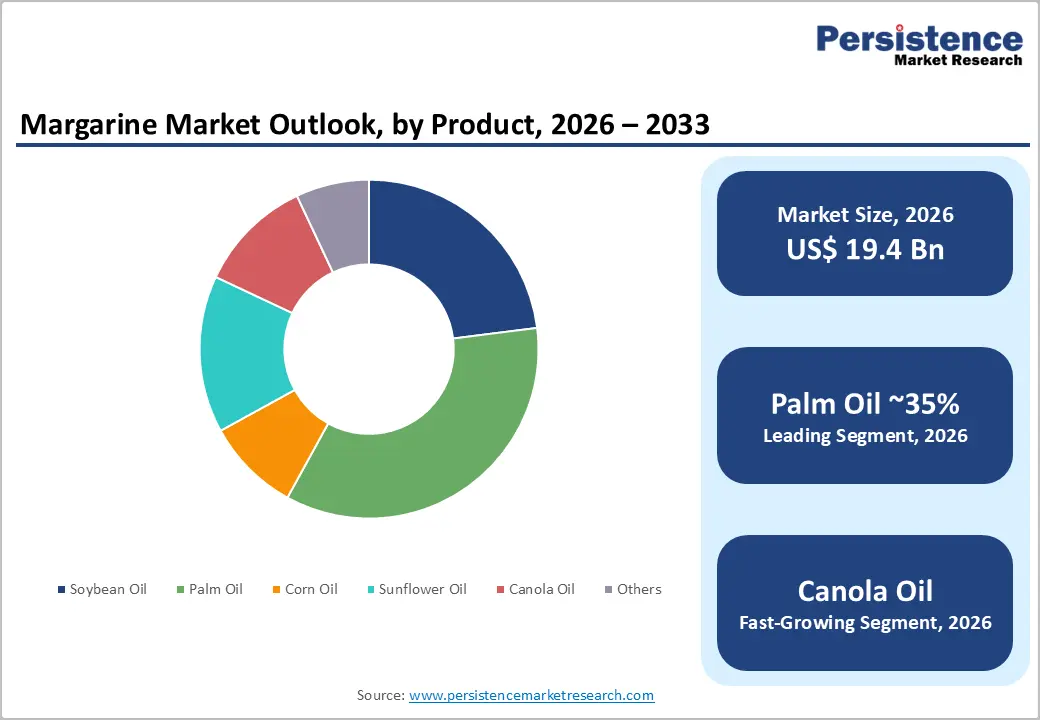
Palm oil dominates the global margarine market due to a unique combination of economic, functional, and regulatory advantages. Its semi-solid nature at room temperature provides the ideal consistency for spreads without extensive hydrogenation, allowing manufacturers to meet consumer demand for low-trans-fat products. Cost-efficiency is another key driver; palm oil is significantly cheaper than alternatives such as soybean, canola, and sunflower oils, enabling producers to maintain competitive pricing in both developed and emerging markets. Its oxidative stability and long shelf life make it highly suitable for processed foods, bakery applications, and retail distribution, reducing spoilage and logistics challenges. Additionally, palm oil’s versatility allows blending with other oils to enhance flavor, texture, and nutritional profile, catering to growing health-conscious segments seeking plant-based and cholesterol-friendly products. Regional factors also contribute: high production volumes in Southeast Asia ensure a consistent supply, while global trade networks make it easily accessible worldwide. While other oils, such as soybean and canola, offer niche health benefits, palm oil’s unmatched combination of affordability, functional performance, and adaptability ensures it retains the largest share in margarine formulations globally, thereby driving both volume and value growth for manufacturers.
By End-user Insights
Bakery products account for the largest share of the global margarine market due to their intensive, consistent, and high-volume use in commercial and industrial baking operations. Margarine is a critical functional ingredient in bread, cakes, pastries, biscuits, and cookies, where it delivers superior aeration, dough stability, and moisture retention compared to butter. Its ability to maintain performance under varying baking temperatures makes it highly suitable for automated, high-throughput bakery lines. Cost efficiency also plays a major role, as margarine offers a significantly lower and more stable price than butter, helping bakeries manage raw material costs and protect margins. In addition, margarine provides a longer shelf life and greater oxidative stability, thereby supporting extended storage and large-scale distribution of packaged bakery products. The global rise in urbanization, convenience food consumption, and on-the-go eating habits has further accelerated demand for packaged baked goods, directly increasing margarine consumption. Foodservice bakeries, in-store retail bakeries, and quick-service restaurants also prefer margarine for its consistent quality and ease of handling. While tabletop and confectionery applications are growing, bakery products remain the largest consumer of margarine worldwide, driven by volume demand, functionality, and cost advantages.
Region-wise Insights
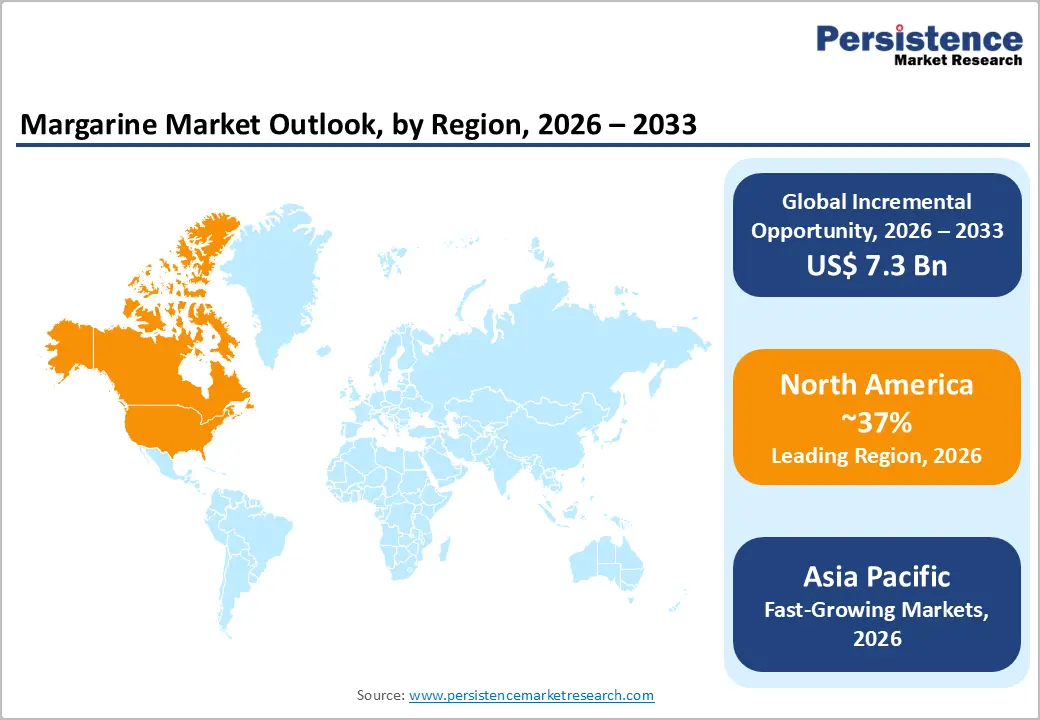
North America Margarine Market Trends
North America stands as the leading region in the margarine market, driven by a strong equine healthcare infrastructure, high horse ownership, and advanced veterinary practices. The region benefits from widespread adoption of preventive care, early disease diagnosis, and routine therapeutic interventions for performance, companion, and racing horses. Rising awareness of musculoskeletal disorders, joint diseases, parasitic infections, and gastrointestinal conditions has increased demand for anti-inflammatory drugs, vaccines, biologics, and regenerative therapies. Technological advancements such as stem cell therapy, platelet-rich plasma (PRP), and precision diagnostics are increasingly integrated into equine treatment protocols, reinforcing regional leadership.
The United States plays a central role in sustaining North America’s dominance, owing to its large equine population across racing, show jumping, breeding, and recreational segments. High spending capacity among horse owners, strong presence of specialized equine hospitals, and frequent veterinary visits support sustained therapeutic demand. Additionally, ongoing R&D, rapid regulatory approvals, and availability of branded veterinary drugs in the U.S. accelerate product adoption. Together, these factors position North America, led by the U.S., as the most mature and revenue-generating Margarine Market globally.
Asia Pacific Margarine Market Trends
The Asia-Pacific margarine market is emerging as a high-growth region, supported by rapid urbanization, changing dietary habits, and increasing consumption of processed and convenience foods. Rising middle-class populations and increasing workforce participation are driving demand for affordable, easy-to-use cooking and baking fats, positioning margarine as a practical alternative to butter. Growth in industrial bakeries, quick-service restaurants, and café chains across countries such as China, India, Indonesia, and Vietnam is significantly boosting bulk margarine consumption. Additionally, the increasing popularity of Western-style baked goods and packaged snacks is accelerating adoption across both household and foodservice segments.
Health awareness is also shaping regional trends, with growing interest in plant-based, cholesterol-free, and low-trans-fat spreads, encouraging manufacturers to introduce reformulated and fortified margarine products. Price sensitivity in several Asia-Pacific markets favors margarine over butter, thereby further strengthening demand. Expanding modern retail infrastructure, including supermarkets and e-commerce platforms, is improving product accessibility, while local production capabilities help maintain cost competitiveness. Together, these factors are transforming Asia Pacific from a traditionally low-consumption region into a strategic growth hub for global margarine manufacturers, offering long-term volume expansion and market penetration opportunities.
Competitive Landscape
The global margarine market's competitive landscape is characterized by moderate to high competition, driven by a mix of multinational players, regional manufacturers, and private-label producers. Competition is largely centered on pricing, product formulation, distribution reach, and brand positioning, with cost efficiency playing a critical role, especially in price-sensitive markets. Manufacturers compete by optimizing the sourcing of raw materials, particularly edible oils, to manage input cost volatility and protect margins.
Key Industry Developments:
- In December 2025, Lam Soon (Thailand) Public Company introduced a new Zest Gold cheese-flavoured margarine. Enriched with Omega-3, 6, and 9, the product offered a natural cheese aroma and a creamy, smooth texture that spread easily across both savoury and sweet applications.
Companies Covered in Margarine Market
- Wilmar International Ltd
- Bunge Loders Croklaan
- Conagra Foodservice, Inc.
- PURATOS
- Richardson Food & Ingredients
- NMGK Group
- EFKO Group
- Vandemoortele
- FUJI OIL ASIA PTE. LTD.
- Royale Lacroix sa.
- Aigremont
- Upfield
- ADEKA CORPORATION
- KANEKA CORPORATION
- Gagar Foods Pvt.Ltd.
- Others
Frequently Asked Questions
The global margarine market is projected to be valued at US$19.4 Bn in 2026.
Rapid growth of the bakery and packaged food industries, where margarine is a key functional ingredient.
The global margarine market is poised to witness a CAGR of 4.7% between 2026 and 2033.
Health-focused product development, including low-fat, cholesterol-free, and omega-enriched formulations.
Wilmar International Ltd, Bunge Loders Croklaan, Conagra Foodservice, Inc., PURATOS, and others.


