




- Beverages
- Hemp Seed Milk Market
Hemp Seed Milk Market Size, Share, Growth, and Regional Forecast, 2026 - 2033
Hemp Seed Milk Market by Category (Flavored, Regular), End-user (Food Processing Industry, Food Service Industry), Distribution Channel (B2B, B2C), and Regional Analysis, 2026 - 2033

Hemp Seed Milk Market Share and Trends Analysis
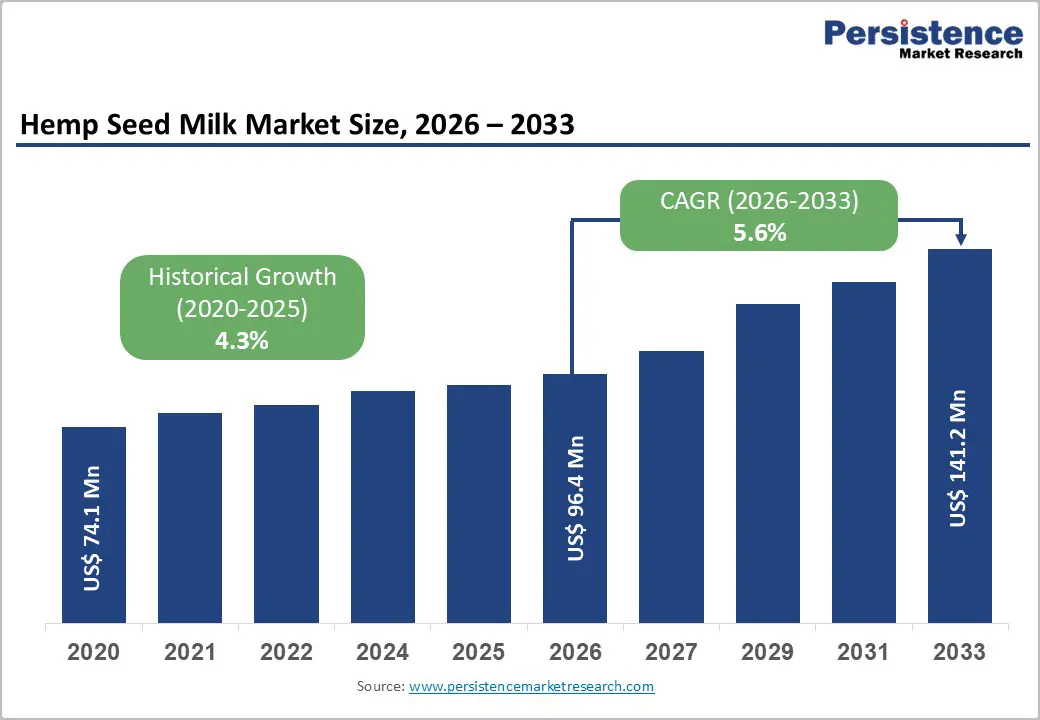
The global Hemp Seed Milk market size is expected to be valued at US$ 96.4 million in 2026 and projected to reach US$ 141.2 million by 2033, growing at a CAGR of 5.6% between 2026 and 2033. Shifting dietary patterns and sustainability awareness are reshaping the global hemp seed milk landscape. As plant-based lifestyles move mainstream, competitive intensity and regional momentum continue to redefine growth trajectories.
Key Industry Highlights:
- Leading Region: North America, holding 42% market share, driven by strong plant-based adoption in the United States and progressive hemp cultivation regulations in Canada, alongside mature retail infrastructure and expanding foodservice integration.
- Fastest-Growing Region: Asia Pacific, expanding at a CAGR of 7.2%, supported by rising lactose intolerance awareness in India, functional beverage demand in China, and premium plant-based innovation in Japan.
- Fastest-Growing End-user: Food Service Industry, projected to grow at a CAGR of 7.8%, fueled by café culture expansion, barista-friendly formulations, and diversified dairy-free menu offerings.
- Growth Indicator: Increasing lactose intolerance and dairy allergy prevalence, coupled with demand for allergen-friendly, omega-rich, and clean-label plant-based nutrition.
- Opportunities: Strategic partnerships with cafés and specialty retailers, fortified product innovation, sustainable packaging adoption, and targeted consumer education to accelerate mainstream acceptance.
| Key Insights | Details |
|---|---|
|
Global Hemp Seed Milk Market Size (2026E) |
US$ 96.4 Mn |
|
Market Value Forecast (2033F) |
US$ 141.2 Mn |
|
Projected Growth (CAGR 2026 to 2033) |
5.6% |
|
Historical Market Growth (CAGR 2020 to 2025) |
4.3% |
Market Dynamics
Driver – Increasing lactose intolerance and dairy allergy prevalence
Digestive discomfort associated with conventional dairy consumption is accelerating the shift toward plant-based alternatives, positioning hemp seed milk as a compelling substitute. A significant share of the global population exhibits lactose malabsorption, while dairy protein allergies remain prevalent among children and adults alike. Hemp seed milk offers a naturally lactose-free and dairy-free profile, making it suitable for consumers seeking allergen-conscious nutrition without compromising taste or functionality. Unlike soy or nut-based beverages, hemp milk is also free from common tree nut allergens, broadening its appeal across sensitive consumer groups.
Beyond allergen avoidance, hemp seed milk provides a favorable nutritional profile, including plant-based protein, omega-3 and omega-6 fatty acids, and essential minerals. As healthcare awareness grows and consumers increasingly self-diagnose dietary sensitivities, demand for digestive-friendly beverages continues to rise. This structural dietary shift is reinforcing long-term growth prospects within the global hemp seed milk market.
Restraints – Complex and variable hemp regulatory frameworks across countries
Regulatory fragmentation remains a structural hurdle for the global hemp seed milk market. THC limits, licensing requirements, and food safety approvals differ widely across jurisdictions, creating uncertainty for manufacturers seeking cross-border expansion. In some countries, hemp-derived ingredients are still associated with narcotics legislation, resulting in prolonged approval timelines and restrictive import policies that slow market penetration.
Compliance costs can be substantial, particularly for small and mid-sized producers that must invest in third-party testing, traceability systems, and evolving labeling standards. Inconsistent regulatory interpretations also complicate supply chain planning and distribution partnerships. Until clearer international harmonization emerges, these legal complexities will continue to constrain rapid global scaling and discourage aggressive capital investment in certain high-potential regions.
Opportunity – Strategic retail partnerships with foodservice and cafés
Out-of-home consumption channels are emerging as powerful accelerators for hemp seed milk adoption. Strategic partnerships with cafés, specialty coffee chains, smoothie bars, and quick-service restaurants enable brands to position hemp milk as a premium plant-based alternative alongside oat and almond options. Visibility on beverage menus increases trial rates, particularly among flexitarian and health-conscious urban consumers who are open to experimenting with new dairy substitutes.
Foodservice collaborations also provide scale advantages, allowing manufacturers to secure bulk supply contracts and strengthen brand credibility through association with established hospitality players. Barista-friendly formulations with improved frothing and neutral flavor profiles can further drive repeat usage in coffee applications. As cafés increasingly highlight sustainability and allergen-friendly options, hemp seed milk stands to benefit from menu diversification strategies, expanding beyond retail shelves into experiential consumption environments.
Category-wise Analysis
Product Type Insights
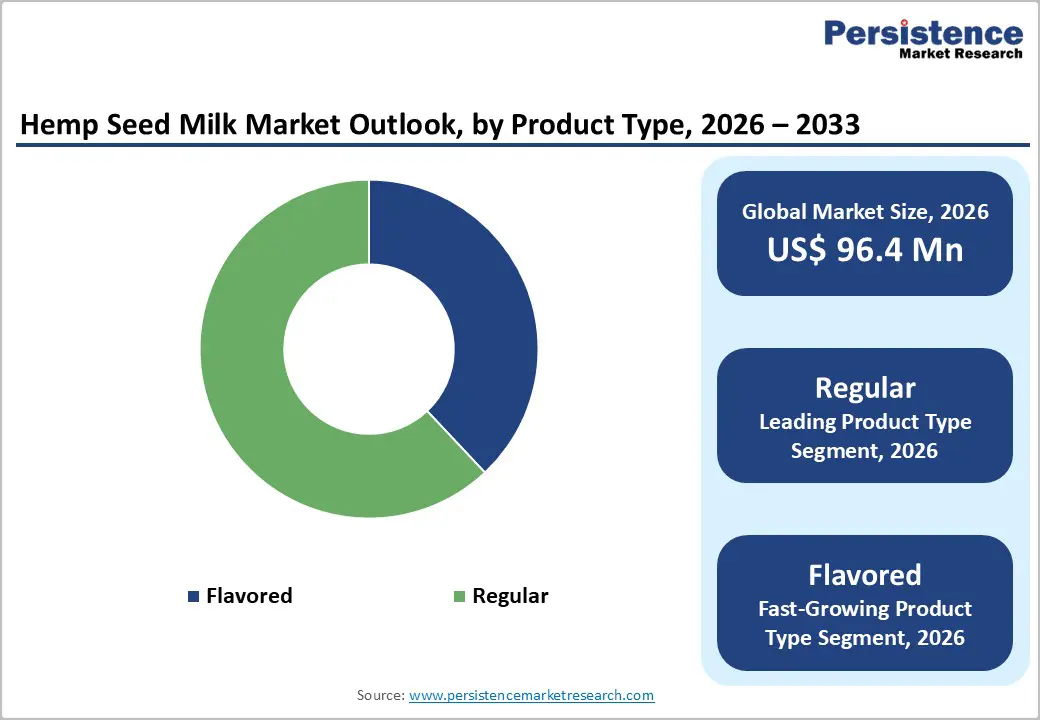
Regular hemp seed milk holds approx. 68% share as of 2025, reflecting strong consumer preference for clean, versatile dairy alternatives. Its neutral taste profile makes it highly adaptable for coffee, cereals, smoothies, and cooking applications, encouraging repeat household purchases. Consumers seeking plant-based nutrition often favor unsweetened or original variants due to lower sugar content and broader culinary flexibility. Retailers also prioritize regular formats because of higher turnover rates and consistent demand across demographics.
Flavored hemp seed milk continues to gain traction among younger consumers looking for indulgent yet dairy-free options. Chocolate and vanilla variants are particularly popular in ready-to-drink formats. Growth is supported by innovation in natural sweeteners and fortified blends targeting wellness-focused buyers.
Nature Insights
In end use food service industry is projected to grow at a CAGR of 7.8% during the forecast period in the global Hemp Seed Milk Market, reflecting the rapid evolution of plant-based menu strategies across cafés, restaurants, and quick-service chains. As consumers increasingly request dairy-free alternatives in coffee, smoothies, and specialty beverages, operators are expanding beyond almond and oat to differentiate offerings. Hemp seed milk’s creamy texture and balanced nutty flavor make it suitable for barista applications and culinary experimentation.
Rising urban café culture and premium beverage customization trends are further accelerating adoption. Foodservice players value hemp milk for its allergen-friendly positioning and sustainability appeal, which align with modern brand narratives. Bulk purchasing efficiencies and growing demand for diversified dairy alternatives are expected to strengthen its presence in out-of-home consumption channels worldwide.
Regional Insights
North America Hemp Seed Milk Market Trends and Insights
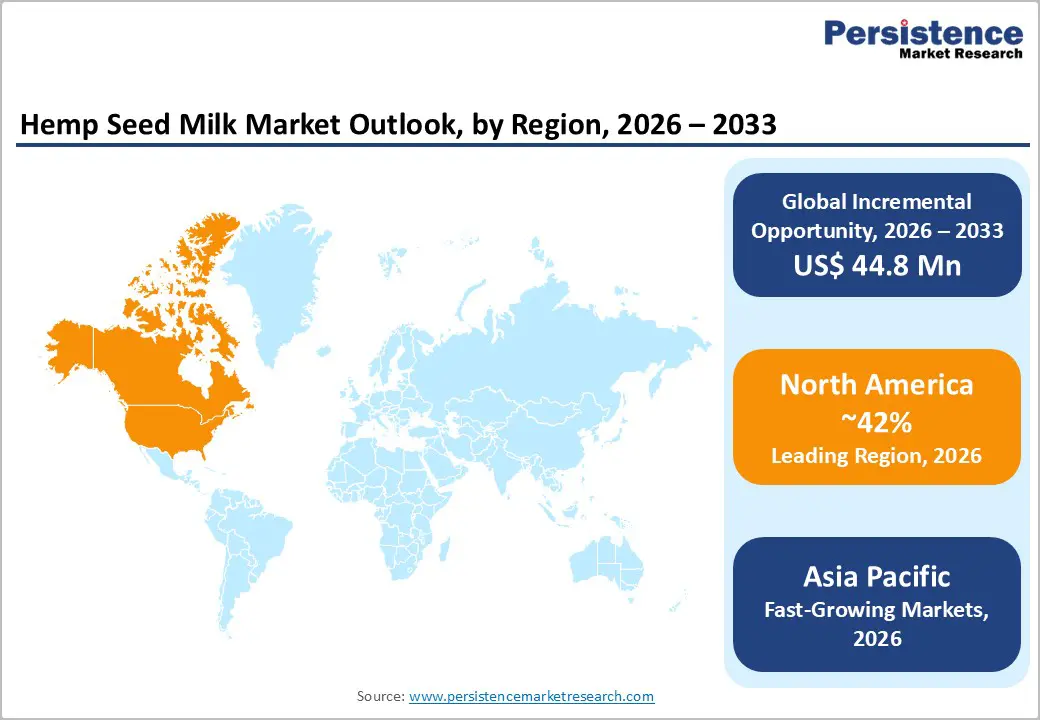
North America leads the market with 42% market share, supported by strong plant-based adoption and mature retail infrastructure. In the United States, hemp seed milk benefits from rising demand for dairy alternatives aligned with clean-label, allergen-friendly, and sustainable consumption trends. Expanding shelf space across natural grocery chains and mainstream supermarkets reflects growing consumer familiarity with hemp-derived food products. Product innovation in fortified and barista-friendly variants is further strengthening category penetration.
Canada mirrors this momentum, driven by progressive hemp cultivation regulations and a well-established hemp food industry. Canadian consumers demonstrate high awareness of plant-based nutrition and omega-rich ingredients, encouraging trial across both retail and foodservice channels. Cross-border brand expansion, increasing café adoption, and online direct-to-consumer sales are collectively reinforcing North America’s leadership position in the global hemp seed milk market.
Asia Pacific Hemp Seed Milk Market Trends and Insights
Asia Pacific is expected to grow at a CAGR of 7.2% during the forecast period, driven by expanding plant-based awareness and shifting dietary preferences across urban centers. In China, rising interest in functional nutrition and plant-derived proteins is encouraging gradual acceptance of hemp-based beverages, particularly among younger consumers exploring dairy alternatives. E-commerce platforms are playing a pivotal role in introducing niche plant-based products to wider audiences.
India is witnessing early-stage growth supported by increasing lactose intolerance awareness and a strong vegetarian population seeking diversified protein sources. Meanwhile, Japan’s mature plant-based beverage segment is fostering demand for premium, clean-label alternatives with balanced flavor profiles. Innovation in convenient packaging and fortified formulations is expected to accelerate regional penetration as health-conscious consumers explore sustainable dairy substitutes.
Competitive Landscape
The market is moderately fragmented, characterized by a mix of established plant-based beverage manufacturers and emerging hemp-focused startups competing on formulation, sourcing, and brand positioning. Leading companies are expanding production capacity, investing in improved taste profiles, and launching fortified variants enriched with vitamins and omega fatty acids to strengthen shelf differentiation. Clean label positioning remains central, with brands emphasizing minimal ingredients, non-GMO sourcing, and transparent supply chains. Startups are leveraging direct-to-consumer platforms and niche retail partnerships to build loyal communities around sustainability and allergen-friendly messaging. Environmental stewardship is a key competitive lever, as hemp’s low water requirement and soil-regenerative properties align with climate-conscious narratives. Regulatory compliance and quality certifications are increasingly used as trust signals, while ongoing consumer education efforts aim to dispel misconceptions surrounding hemp-derived food products and support mainstream acceptance.
Companies Covered in Hemp Seed Milk Market
- SunOpta
- Pacific Foods
- California Natural Products
- Living Harvest Foods
- Hudson River Foods
- Good Mylk Co.
- Braham & Murray Good Hemp
- Z-COMPANY
- EcoMil
- Golden Hemp Company LLC
- Others
Frequently Asked Questions
The global hemp seed milk market is projected to be valued at US$ 96.4 Mn in 2026.
Increasing lactose intolerance and dairy allergy prevalence is driving demand for Hemp Seed Milk market.
The Global Hemp Seed Milk market is poised to witness a CAGR of 5.6% between 2026 and 2033.
Strategic retail partnerships with foodservice and cafés is key opportunity in the Hemp Seed Milk market.


