




- Beauty & Personal Care
- Deodorant Roll-On Market
Deodorant Roll-On Market Size, Share, and Growth Forecast 2026 - 2033
Deodorant Roll-On Market by Product Type (Spray, Creams, Roll-On, Others), by Nature (Conventional, Organic), Packaging Material (Metal, Plastic, Others), End-user (Male, Female, and Regional Analysis, 2026 - 2033

Deodorant Roll-On Market Size and Trend Analysis
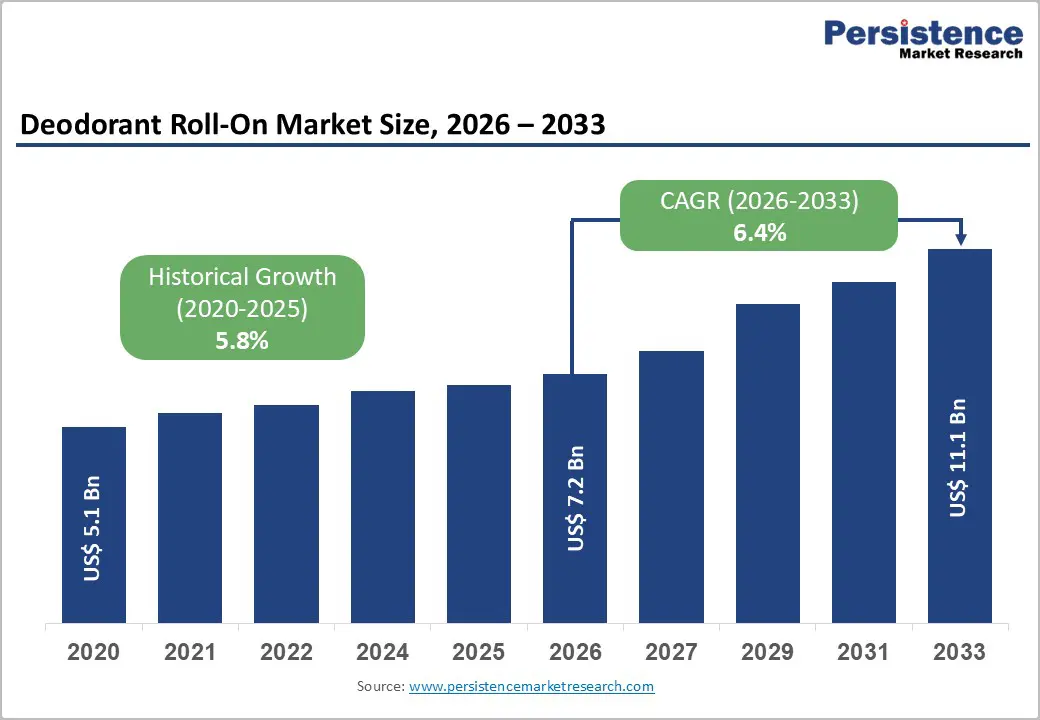
The global Deodorant Roll-On market size is expected to be valued at US$ 7.2 billion in 2026 and projected to reach US$ 11.1 billion by 2033, growing at a CAGR of 6.4% between 2026 and 2033.
This growth is primarily driven by rising consumer awareness of personal hygiene and grooming, along with rapid urbanization and increasing disposable incomes. In developing regions, expanding urban populations have significantly boosted demand for convenient hygiene solutions like roll-ons. Additionally, health-conscious consumers are favoring alcohol-free and skin-friendly formulations, while the surge in e-commerce and interest in natural ingredients further supports the market’s steady expansion.
Key Industry Highlights:
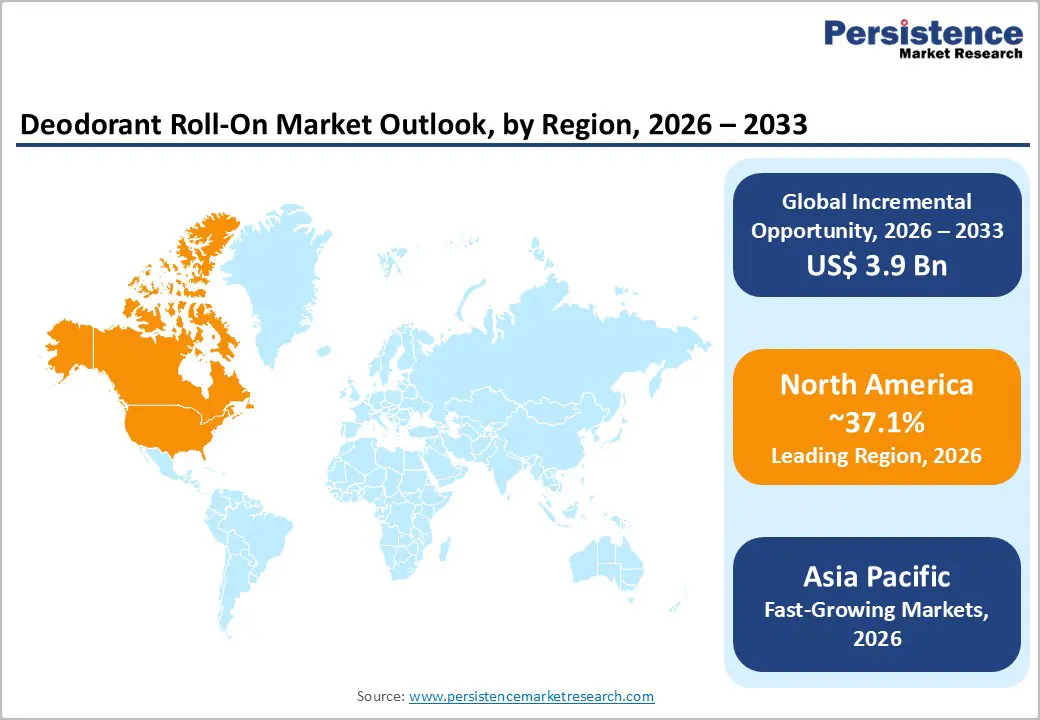
- Regional Leadership: North America leads the Deodorant Roll-On market with 37.1% share in 2025, driven by innovation hubs, regulatory updates, and strong e-commerce adoption.
- Fastest-Growing Region: Asia Pacific is the fastest-growing region with 34.6% share in 2025, fueled by urbanization, rising hygiene awareness, and increasing disposable incomes in India and China.
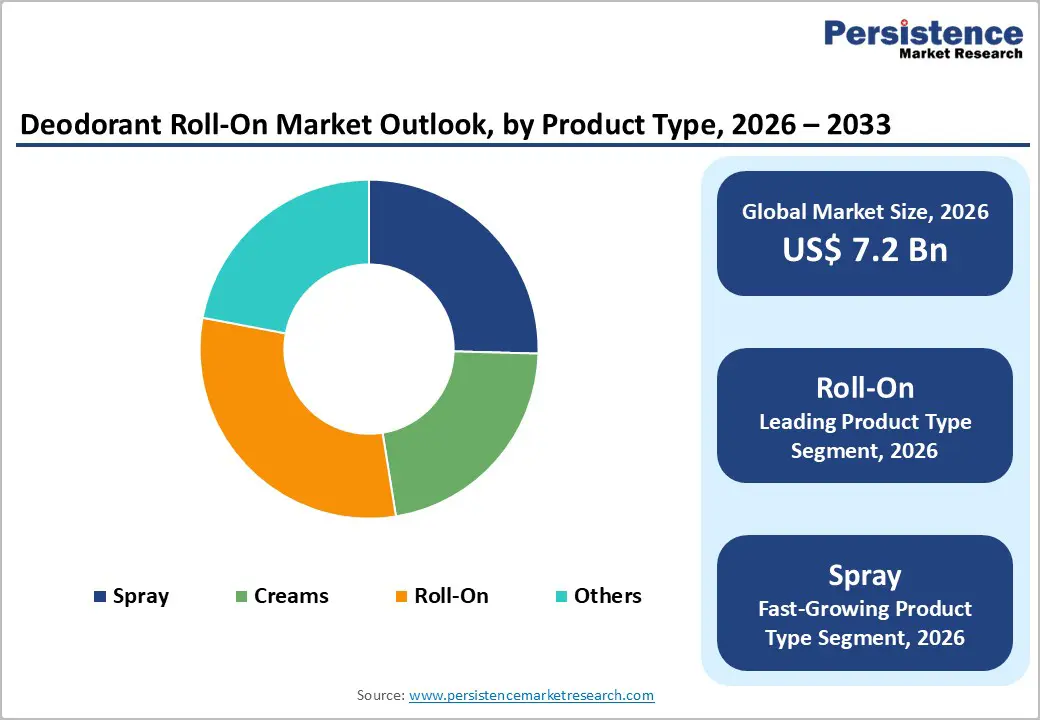
- Product Type Dominance: Roll-On deodorants dominate the product type segment with 38% share in 2025, favored for precise, mess-free application and suitability for sensitive skin.
- Nature Segment Growth: Organic and natural formulations are the fastest-growing segment, reflecting rising consumer preference for chemical-free and skin-sensitive options.
- Emerging Opportunity: The male grooming segment presents key opportunities, especially in organic and sustainable roll-on innovations catering to urban, health-conscious consumers.
| Key Insights | Details |
|---|---|
|
Deodorant Roll-On Size (2026E) |
US$ 7.2 billion |
|
Market Value Forecast (2033F) |
US$ 11.1 billion |
|
Projected Growth CAGR(2026-2033) |
6.4% |
|
Historical Market Growth (2020-2025) |
5.8% |
Market Dynamics
Drivers - Rising Preference for Convenient, Portable, and Efficient Personal Hygiene Solutions
Consumers are increasingly gravitating toward roll-on deodorants due to their mess-free application, portability, and precise coverage, making them ideal for busy, on-the-go lifestyles. Post-COVID-19 hygiene awareness has surged, with 70% of adults globally prioritizing quick-drying, long-lasting products. Brands like Unilever highlight dermatologically tested 24-hour protection, while Euromonitor International reports a 15% annual growth in portable personal care sales, reflecting strong adoption among urban millennials and Gen Z who value convenience and efficiency in daily grooming routines.
The market expansion is further reinforced as consumers seek products that minimize waste and integrate seamlessly into fast-paced lives. Roll-on formats offer targeted application, reduced product loss, and ease of use, establishing them as a preferred personal care solution across both developed and emerging urban markets.
Increasing Demand for Natural, Organic, and Skin-Sensitive Roll-On Formulations
Health-conscious trends are driving the adoption of aluminum- and paraben-free organic roll-ons, catering specifically to sensitive skin users. Regulatory frameworks like the European Commission’s Cosmetics Regulation (EC) No 1223/2009 have encouraged innovation, with 40% of new product launches in 2024 incorporating natural ingredients. Statista surveys indicate that 62% of global consumers prefer organic options in 2025, influenced by awareness of skin irritation from synthetic compounds.
This shift aligns with the growth of e-commerce platforms, where natural deodorant categories report 25% YoY growth on marketplaces like Amazon. Increasing accessibility and visibility of skin-friendly formulations, combined with rising consumer knowledge, continue to propel market demand and foster long-term adoption of natural roll-on deodorants worldwide.
Restraints - Stringent Regulatory Oversight on Chemical Ingredients Limiting Product Innovation
The deodorant roll-on market faces challenges due to strict regulations on antiperspirant actives, particularly aluminum compounds. The U.S. FDA issued warnings in 2023 regarding unverified health claims, forcing manufacturers to reformulate products at significant cost, slowing time-to-market. Environmental concerns are rising, with 30% of consumers wary of chemical residues according to Mintel’s 2024 survey, especially in highly regulated regions, which constrains adoption and caps market growth despite rising hygiene awareness.
Compliance hurdles also create delays in product launches, limiting the ability of companies to quickly introduce innovative formulas. This regulatory pressure continues to impact revenue potential and poses a notable restraint on the expansion of roll-on deodorants in global markets.
Intense Competition from Spray and Stick Deodorant Alternatives Affecting Roll-On Growth
Roll-on deodorants face strong competition from sprays and stick formats, which account for 45% market preference for quick application, according to Statista 2024 data. Sprays, with faster absorption and convenience, are increasingly favored, while Procter & Gamble’s spray innovations captured an additional 12% market share in 2025, further fragmenting demand.
Economic pressures also favor lower-cost alternatives, with consumers opting for sprays and sticks over roll-ons for affordability and immediacy. This competition restrains roll-on penetration, limiting growth despite consumer interest in skin-friendly and portable hygiene solutions, and challenges manufacturers to differentiate their offerings.
Opportunities - Significant Growth Potential in the Expanding Men’s Grooming Roll-On Segment
The male end-user segment presents a substantial opportunity for roll-on deodorants as men increasingly adopt personal care routines. Nielsen reports indicate that 35% of men aged 18-34 are switching to roll-ons for discreet and convenient application, influenced by gender-neutral and targeted marketing campaigns. Brands such as Dove Men+Care have introduced alcohol-free variants, appealing to health-conscious urban male consumers and expanding awareness in emerging markets.
Workplace policies promoting inclusive hygiene further drive adoption, creating high-margin opportunities. Manufacturers focusing on tailored formulations, fragrances, and marketing for men can capture a growing share of this underpenetrated segment and strengthen brand loyalty in the male grooming category.
Revenue Opportunities from Organic Ingredients and Sustainable Packaging Innovations
The rising demand for organic roll-ons and sustainable packaging provides a strategic growth avenue. EU directives like the Green Deal require 50% recyclable packaging, while initiatives such as the Plastic Pact show that 28% of consumers are willing to pay a premium for environmentally friendly products.
Companies experimenting with biodegradable plastics, like Henkel, and eco-certified manufacturing in Asia Pacific are aligning with these trends. Leveraging organic formulations and sustainable packaging allows brands to differentiate their products, enhance consumer appeal, and unlock new revenue streams in environmentally conscious markets.
Category-wise Analysis
Product Type Insights
Roll-on deodorants lead the market with 38% share in 2025, favored for their precise, non-aerosol application that suits sensitive skin. Clinical trials published in the Journal of Cosmetic Dermatology (2023) confirms 92% efficacy in odor control without irritation, outperforming sprays. Data from Unilever’s Rexona Roll-On indicates 25% higher repeat purchases, driven by portability and convenience. The dominance of roll-ons is reinforced by their targeted application, minimal product waste, and compatibility with modern, on-the-go lifestyles.
Natural and organic roll-on formulations are the fastest-growing segment, responding to health-conscious trends and sensitive skin needs. Consumers increasingly seek aluminum-free, paraben-free, and plant-based ingredients, while e-commerce platforms amplify accessibility and visibility. Brands are innovating with gentle, eco-friendly ingredients that appeal to conscious urban consumers, driving experimentation and adoption of healthier, sustainable deodorant options across all demographics.
Nature Insights
Conventional roll-ons dominate with 75% share in 2025, owing to affordability and proven efficacy. WHO hygiene guidelines endorse synthetic actives for broad-spectrum protection, with Procter & Gamble reporting 80% user satisfaction in stability and performance tests. Mass-market penetration in emerging economies, where 80% of consumers prioritize cost-effective hygiene solutions, sustains conventional dominance despite rising organic awareness. These products continue to benefit from wide availability, trusted performance, and consistent formulation stability, keeping them central in retail and modern personal care routines.
Conversely, organic and natural formulations are the fastest-growing segment, driven by rising consumer preference for chemical-free products and skin-sensitive options. Increasing awareness of skin irritation from synthetic compounds has encouraged manufacturers to innovate with plant-based, hypoallergenic ingredients, while sustainable production and eco-conscious branding appeal to environmentally aware consumers, fostering steady growth and expanding the target market for healthier roll-on options.
Packaging Material Insights
Plastic packaging leads with 60% share in 2025, favored for its lightweight, durable, and cost-efficient properties. Compliance with International Bottled Water Association standards and 85% recyclability per Ellen MacArthur Foundation audits highlights plastic’s suitability. Beiersdorf’s HDPE innovations reduce weight by 20%, improving logistics efficiency in Asia and enhancing supply chain sustainability. Plastic remains central due to availability, economic feasibility, and consumer familiarity, supporting both mass-market and premium products.
Sustainable and biodegradable packaging is the fastest-growing trend, with consumers increasingly demanding eco-friendly alternatives. Companies are experimenting with recyclable, compostable, and refillable materials to align with environmental policies and consumer expectations. These innovations enhance brand differentiation, cater to environmentally conscious shoppers, and expand market opportunities for roll-ons in regions emphasizing green initiatives.
End-user Insights
The female segment leads with 55% share in 2025, driven by the integration of deodorants into daily beauty routines. L’Oréal’s fragrance-infused roll-ons captured 30% of female users in 2024 sales, supported by GWI surveys showing 70% daily usage. Targeted marketing and product positioning reinforce brand loyalty, while cosmetic appeal and scent variety enhance adoption across multiple consumer groups.
The male segment is emerging as the fastest-growing category, fueled by increasing grooming awareness and discreet hygiene preferences. Brands are launching gender-specific and alcohol-free formulations to attract urban male consumers. Marketing campaigns and product innovations targeting convenience, performance, and subtle fragrance are accelerating adoption, offering manufacturers opportunities to diversify portfolios and capture underpenetrated male audiences.
Regional Insights
North America Deodorant Roll-On Market Trends and Insights
North America leads with 37.1% market share in 2025, driven by the U.S., where innovation hubs and regulatory updates fuel product development. FDA’s 2024 monograph revisions spurred 25% of new roll-on launches incorporating probiotics and skin-friendly ingredients. Colgate-Palmolive expanded natural and organic lines, aligning with NSF International certifications, while retailers such as Walmart reported 18% growth in e-commerce roll-on sales, reflecting strong online adoption.
Consumer demand emphasizes health-conscious and convenient hygiene solutions, with brands leveraging both physical and digital retail channels. Rising urban lifestyles, gym culture, and awareness of personal care trends further reinforce North America’s dominant position, making it a critical region for product innovation, premium launches, and brand loyalty in the global roll-on deodorant market.
Europe Deodorant Roll-On Market Trends and Insights
Europe’s roll-on market is shaped by stringent regulations and sustainability trends, with a CAGR of 6.4% projected between 2026 and 2033. Germany and the U.K. lead due to harmonized REACH safety regulations, while Cosmetics Europe reports that 40% of new roll-ons in France in 2025 are vegan or plant-based. Spain’s tourism sector boosts demand for convenient, travel-friendly formats, and Unilever’s sustainable packaging saw 15% adoption growth.
The EU Single Market facilitates cross-border sales, enhancing availability and competition. Consumers increasingly prefer eco-friendly, dermatologically tested products, driving innovation in natural formulations and premium offerings. Sustainability, safety compliance, and cross-border retail integration continue to propel market growth across European nations.
Asia Pacific Deodorant Roll-On Market Trends and Insights
Asia Pacific holds 34.6% market share in 2025, with India and China as key growth drivers. Urbanization has significantly increased hygiene expenditures, with China’s National Bureau of Statistics reporting a 60% rise in urban hygiene spending. Japan leads in tech-infused roll-ons, contributing to a 10% growth in premium and functional variants.
Manufacturing efficiency across ASEAN countries reduces costs by 20%, supporting both domestic sales and exports. Rising disposable incomes, urban lifestyles, and growing awareness of personal hygiene are fueling demand for convenient, high-quality roll-on deodorants, while regional innovation in natural and sustainable formulations enhances competitiveness in both domestic and international markets.
Competitive Landscape
The deodorant roll-on market is moderately consolidated, with leading players focusing on innovation and product differentiation. Companies are investing heavily in R&D for natural and skin-friendly formulations, while acquiring niche startups to enhance expertise in organic and eco-conscious technologies. Expansion strategies increasingly leverage e-commerce channels to reach broader consumer bases and enhance brand visibility in both developed and emerging markets.
Sustainability is becoming a key competitive factor, with brands introducing refillable and recyclable packaging solutions to meet environmentally conscious consumer expectations. Strategic marketing, product innovation, and sustainable practices are shaping competition and helping players maintain a strong presence in the global market.
Key Developments:
- In June 2025, Unilever launched Rexona Bio-Active Roll-On featuring prebiotics to support the skin microbiome, enhancing odor protection while promoting skin health, targeting health-conscious consumers and expanding the natural and functional roll-on segment globally.
- In March 2024, Procter & Gamble introduced Old Spice Eco-Plastic Roll-Ons in Asia, utilizing sustainable packaging that reduces carbon footprint by 30%, aligning with eco-friendly consumer trends and strengthening the brand’s presence in environmentally conscious markets.
- In October 2023, Beiersdorf expanded Nivea Pearl Roll-Ons in Europe with 24-hour technology, offering extended odor protection, improved performance, and convenience, catering to busy urban consumers while enhancing brand differentiation in the competitive roll-on deodorant segment.
Companies Covered in Deodorant Roll-On Market
- Unilever PLC
- Procter & Gamble (P&G)
- Beiersdorf AG
- Henkel AG & Co. KGaA
- Colgate‑Palmolive Company
- Reckitt Benckiser Group plc
- Kao Corporation
- Church & Dwight Co., Inc.
- Coty Inc.
- Estée Lauder Companies Inc.
- Shiseido Company, Limited
- Godrej Consumer Products Limited
- Avon Products, Inc.
- Natura & Co.
- Amway Corporation
Frequently Asked Questions
The global deodorant roll-on market is expected to reach US$ 7.2 billion in 2026.
Rising demand for portable, skin-friendly roll-ons drives growth, with 65% of consumers preferring mess-free formats.
North America leads the market with 37.1% share in 2025, driven by innovation hubs, regulatory updates, and e-commerce adoption.
Organic and natural roll-ons offer growth potential, especially in male grooming and sustainable packaging.
Leading players include Unilever, Procter & Gamble, L'Oréal, and Beiersdorf.


