Cutaneous Fibrosis Treatment Market Size, Share, and Growth Forecast for 2025 - 2032

Cutaneous Fibrosis Treatment Market by Drug Class (Corticosteroids, Anti-fibrotic Drugs, Immunotherapy), Route of Administration (Oral, Injectable, Topical) Indication (Keloid, Scleroderma, Radiation-induced Skin Fibrosis, Chronic Graft-versus-Host Disease (GvHD)-associated Cutaneous Fibrosis, Others), Distribution Channel, and Regional Analysis

ID: PMRREP33114
Calendar

March 2025

297 Pages

Author : Abhijeet Surwase

Cutaneous Fibrosis Treatment Market Outlook (2025-2032)

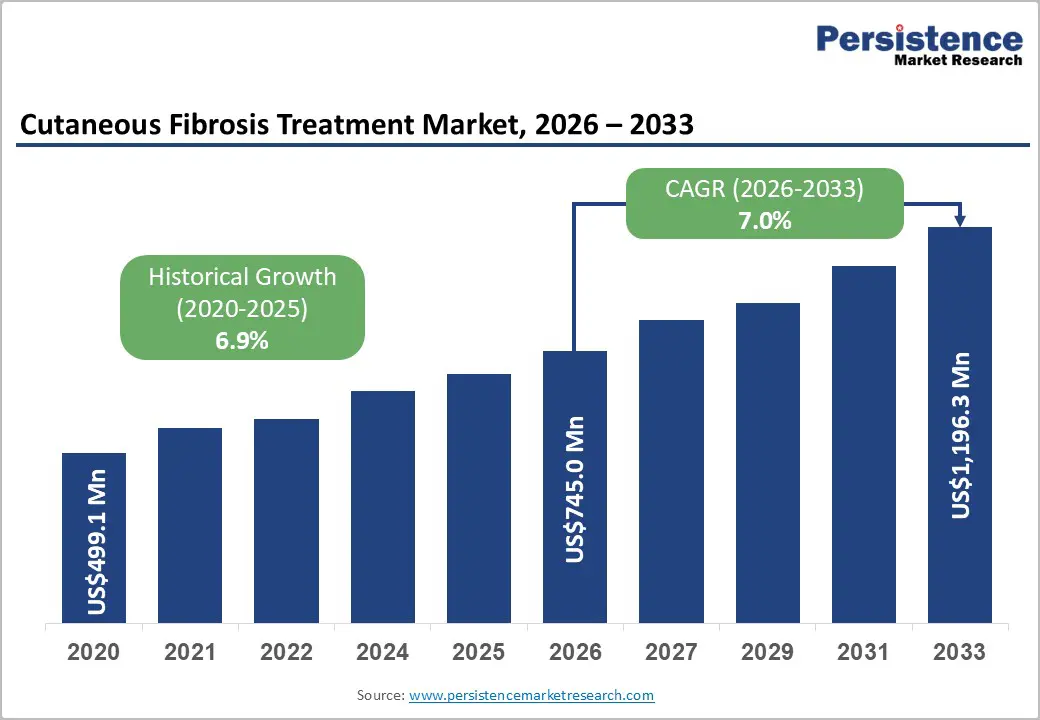
The global cutaneous fibrosis treatment market was valued at US$ 732.0 Mn in 2025, with a projected CAGR of 7.0% between 2025 and 2032, which indicates highly positive market growth.

Detailed industry analysis reveals that revenue from cutaneous fibrosis treatment will surge to a market valuation of US$ 1,173.2 Mn by the end of 2032.

In the previous decade, numerous research activities on cutaneous fibrosis treatment have been conducted to examine treatment choices and disease epidemiology, with the goal of better understanding the disease prognosis.

Although the exact incidence of cutaneous fibrosis is yet to be determined, the prevalence of related disorders, such as scleroderma and keloids, is widely known across the world. There is currently no approved treatment for cutaneous fibrosis. Since no medicine has been approved to treat cutaneous fibrosis, drug manufacturing companies are evaluating the efficacy and activity of a variety of treatments.

cutaneous fibrosis treatment market outlook, 2019-2032

Attribute Key Insights
Cutaneous Fibrosis Treatment Market Size (2025E) US$ 732.0 Mn
Market Value Forecast (2032F) US$ 1,173.2 Mn
Projected Growth (CAGR 2025-2032)

7.0% CAGR

Historical Market Growth (CAGR 2019 to 2024) 5.5%

Sales Analysis of Cutaneous Fibrosis Treatment from 2019 to 2024 Vs Market Outlook for 2025 to 2032

The global market for cutaneous fibrosis treatment expanded at a CAGR of 5.5% in 2019 to 2024.

Rising cutaneous fibrosis-related disorders are likely to fuel the growth of the cutaneous fibrosis treatment market. The development of fibrosis happens naturally throughout scar formation in wound repair, or as an organic process in pro-fibrotic diseases. Connective tissue fibrosis typically occurs in indications such as keloids, scleroderma, radiation-induced skin fibrosis, and chronic graft-versus-host disease-associated (GVHD) cutaneous fibrosis.

Cutaneous fibrosis is a rather uncommon condition. Due to a lack of understanding among healthcare professionals and the general public, cutaneous fibrosis diagnosis and treatment are usually delayed. Scleroderma and other cutaneous fibrosis-related illnesses are more common in those over the age of 35.

  • For instance, according to a recent study and meta-analysis on systemic sclerosis globally in the year 2021, among 6983 people, 61 studies of prevalence and 39 studies of incidence in the systematic review for this disease were conducted. It was found that the prevalence of systemic scleroderma ranged from 3.1 to 144.5 per 100,000 person-years with an overall pooled prevalence of systemic scleroderma of 17.6 (95% CI 15.1, 20.5) per 100,000 person-years.

High prevalence and incidence rate of systemic scleroderma disease over the world, is driving cutaneous fibrosis treatment market growth.

Systemic sclerosis treatment had previously been limited to off-label usage of generic drugs from other indications; however, lately, there has been a substantial shift in the market for this condition.

Novel therapeutics for the treatment of cutaneous fibrosis conditions are being developed by several researchers and sponsors.

  • For example, In October 2022, A biomedical engineering researcher was awarded a grant to study skin fibrosis. The funding will support innovative research aimed at developing advanced treatments to improve patient outcomes for those suffering from chronic skin fibrosis.
  • In March 2021, Genentech’s “Actemra therapy” became the first biologic therapy to be approved by the FDA for slowing down the rate of decline of pulmonary function in adults with systemic scleroderma.
  • Similarly, the first medicine for the treatment of progressive systemic scleroderma-associated interstitial lung disease was licensed in Europe in 2020.

With more drugs in the pipeline and launching stages, the cutaneous fibrosis treatment market will see decent growth over the coming years.

What Opportunities are on Offer for Cutaneous Fibrosis Drug Manufacturers?

Availability of Novel Treatment Options for Cutaneous Fibrosis

Lack of approved medicines for the treatment of skin diseases represents a major chance for revenue generation within the international market. A relatively giant patient pool in developed countries and an identical patient pool in developing countries is probably going to provide significant revenue generation opportunities.

Although cutaneous fibrosis treatment awareness in developing countries remains severely limited, and the illness is frequently left untreated due to a lack of awareness and the inconvenience of treatments, increasing cutaneous fibrosis treatment awareness within the scleroderma therapeutics market space is being seen.

Knowledge about epidemiology, treatment approach, and diagnostic tests is increasing worldwide, which is, in turn, expected to boost revenue generation. Growing diagnostics in developing countries offer great opportunities for the sale of cutaneous fibrosis treatment drugs in these regions.

How is Cutaneous Fibrosis Treatment Market Growth Being Dented to Some Extent?

“Limited Treatment Options Hurting Market Expansion”

Fibrotic diseases, including cutaneous fibrosis, present significant unmet medical needs due to the lack of approved treatments. Currently, symptomatic management remains the only available option, which does not halt disease progression. If left untreated, cutaneous fibrosis worsens over time, leading to severe complications.

Symptomatic treatment also faces challenges such as low patient compliance, reducing the treatment-seeking rate and negatively impacting the quality of life. These factors hinder market growth.

Furthermore, epidemiological data on cutaneous fibrosis is scarce, often extrapolated from related diseases. This limited data contributes to low disease awareness, particularly in developing regions, where conditions like keloids are frequently overlooked.

The absence of novel therapeutic approaches further restricts effective treatment. Factors such as delayed diagnosis, slow disease progression, and a lack of targeted treatment options continue to pose significant barriers to market expansion.

Country-wise Insights

Why are Cutaneous Fibrosis Treatment Providers Targeting the U.S. Market?

“Frequent FDA Approvals in the U.S. Market”

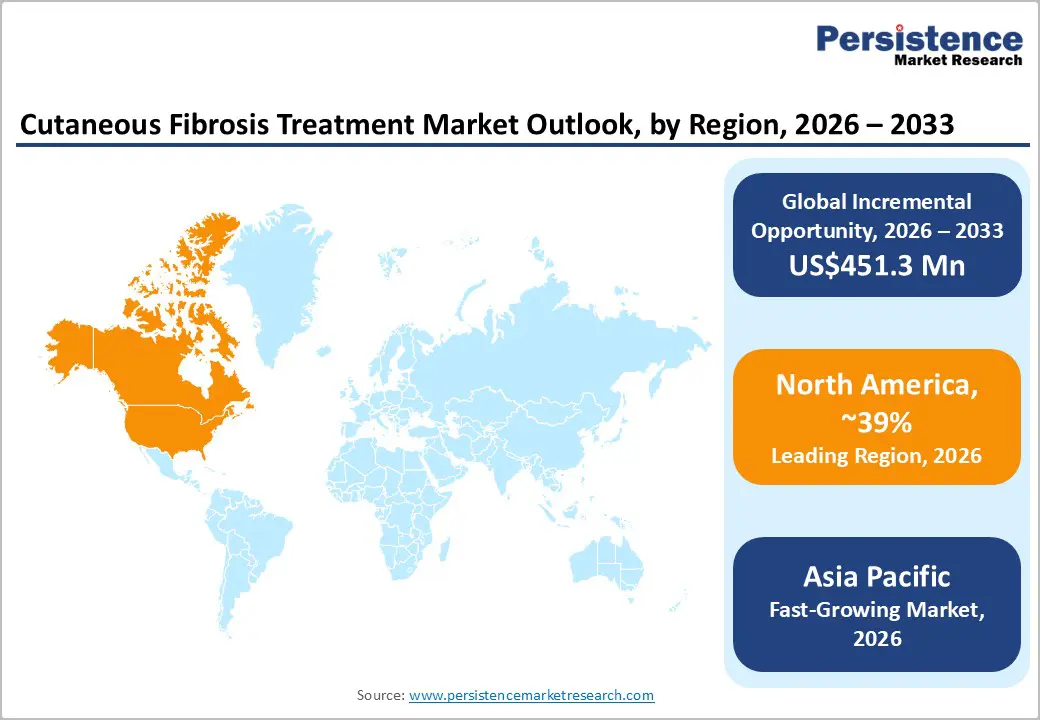
North America held a market share of 36.7% by value in the global cutaneous fibrosis treatment market in 2021, of which, the U.S. accounted for a market share of 88.5%. Higher rates of approval by the U.S. FDA lead to added product launches, making the U.S a high revenue-generating country.

  • Recent developments include Pfizer announcing in January 2022 that its drug "CIBINQO" had been approved by the US Food and Drug Administration (FDA) for once-daily oral treatment of people with moderate-to-severe atopic dermatitis (AD).

How is Demand for Cutaneous Fibrosis Treatment Shaping Up in Germany?

“Presence of Leading Cutaneous Fibrosis Treatment Drug Manufacturers in Germany”

Europe accounted for 25.8% of the market share in 2024. This high market share is attributed to the presence of several large industry players in European countries like Germany, UK, and Italy, which increases product availability in the region.

With Germany, the United Kingdom, and Italy have the highest rates of systemic scleroderma. The European cutaneous fibrosis treatment market is driven by the high rate of treatment and diagnosis, as well as invested healthcare expenditure.

Why is China Emerging as a Prominent Market for Cutaneous Fibrosis Treatment?

“High Level of Research Activities Ongoing in China”

East Asia contributed 20.1% to the market in 2024. Development of medical infrastructure and strategic planning to collaborate for expansion are key factors that are set to have a positive impact on the growth of this industry in China.

Moreover, with established studies on the global burden of the disease, compiled with the estimates of the burden of skin diseases in China (due to lack of availability of original data), incidence of cutaneous fibrosis as well as related indications within the country present lucrative growth opportunities for market players.

Category-wise Insights

Which Cutaneous Fibrosis Treatment Drug Class is Driving High Market Growth?

“Positive Treatment Outcomes through Immunotherapy Drugs”

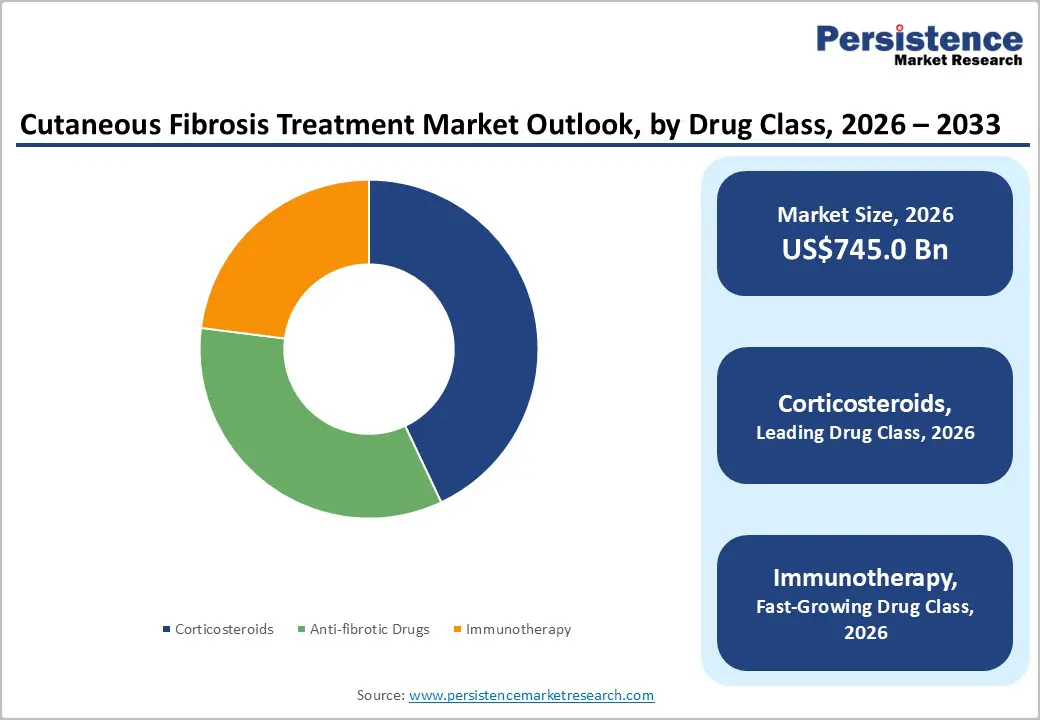
By drug class, immunotherapy drugs accounted for a revenue share of 48.6% in 2024.

Immunotherapy drugs, through several available clinical studies, have provided positive outcomes in the treatment of skin, joint, and hand function. Several techniques such as autologous stem cell transplantation have displayed enhanced therapeutic efficiency on the skin, and are set to augment the sales of immunotherapy drugs in the cutaneous fibrosis treatment market.

Which Indication Accounts for Most Demand for Cutaneous Fibrosis Treatment?

“Higher Prevalence Rate of Scleroderma Globally”

Scleroderma accounted for a revenue share of 65.8% in 2024, with the segment projected to hold on to this high market share through 2032 at a CAGR value of 7.0%.

Rising prevalence of systemic scleroderma across the globe is due to several external and internal factors such as genetics, environmental, immune system issues, and others.

The U.S. experiences a high incidence rate of systemic scleroderma across the country, followed by Australia, Europe, and Asia. High prevalence rate of scleroderma and associated indications will promote the growth of the cutaneous fibrosis treatment market over the forecasted years.

Which Route of Administration is Preferred for Cutaneous Fibrosis Treatment?

“Oral Route Continues to Remain Most Preferred”

The oral segment, by route of administration, is driving demand in the market and accounted for 70.2% market share in 2024.

Medication is commonly administered orally since it is the most comfortable and convenient method for patients. Orally-administered medication has a slower onset and a longer, but less potent effect than medications given in other ways. Oral medication is the most common route of drug administration due to its varied benefits.

cutaneous fibrosis treatment market insights and key trends

Competitive Landscape

Manufacturers of cutaneous fibrosis treatment drugs are concentrating their efforts on obtaining regulatory approvals and launching new products to expand their market position.

  • In June 2024, Researchers at the University of Texas at El Paso developed a new therapeutic approach using nanoparticles to target and rehabilitate cells responsible for fibrosis. This method aims to modify cells to prevent excess collagen production, showing promising results in treating skin and lung fibrosis.
  • In March 2024, Mirador Therapeutics, Inc. secured over USD 400.0 million to drive the development of precision medicines for immune-related disorders, including immune-mediated inflammatory and fibrotic diseases, representing a remarkable and uncommon early-stage fundraising milestone.
  • In October 2023, Kyverna Therapeutics announced that the FDA has granted clearance for the investigative use of KYV-101 in the treatment of scleroderma.

Companies Covered in Cutaneous Fibrosis Treatment Market

  • Novartis AG
  • Pfizer
  • Sanofi
  • F. Hoffmann-La Roche (Genentech, Inc.)
  • Boehringer Ingelheim International GmbH
  • Jubilant Cadista
  • Horizon Therapeutics USA, Inc.
  • Bristol-Myers Squibb Company
  • Teva Pharmaceuticals
  • Amgen
  • Johnson & Johnson Services
  • AbbVie
  • Bayer
  • Merck & Co.
  • GlaxoSmithKline
  • LEO Pharma
  • Actelion Pharmaceuticals
Frequently Asked Questions

The market is estimated to increase from US$ 732.0 Mn in 2025 to US$ 1,173.2 Mn in 2032.

The global market is driven by the rising prevalence of various skin conditions, advancements in regenerative therapies, increased research funding, and growing demand for targeted antifibrotic drugs.

The market is projected to record a CAGR of 7.0% during the forecast period from 2025 to 2032.

Novartis AG, Pfizer, Sanofi, Boehringer Ingelheim International GmbH, Horizon Therapeutics USA, Inc., Bristol-Myers Squibb Company, among others are the few leading players

By Drug Class, Immunotherapy is expected to register the fastest CAGR of 7.5% through 2032.

Cutaneous Fibrosis Treatment Industry Report Scope

Attribute

Details

Historical Data/Actuals

2019 - 2024

Forecast Period

2025 - 2032

Market Analysis Units

Value: US$ Mn/Bn
Volume: As Applicable

Geographical Coverage

  • North America
  • Europe
  • East Asia
  • South Asia and Oceania
  • Latin America
  • Middle East and Africa

Segments Covered

  • Drug Class
  • Route of Administration
  • Indication
  • Distribution Channel
  • Region

Key Companies Covered

  • Novartis AG
  • Pfizer
  • Sanofi
  • F. Hoffmann-La Roche (Genentech, Inc.)
  • Boehringer Ingelheim International GmbH
  • Jubilant Cadista
  • Horizon Therapeutics USA, Inc.
  • Bristol-Myers Squibb Company
  • Teva Pharmaceuticals
  • Amgen
  • Johnson & Johnson Services
  • AbbVie
  • Bayer
  • Merck & Co.
  • GlaxoSmithKline
  • LEO Pharma
  • Actelion Pharmaceuticals

Report Highlights

  • Market Forecast and Trends
  • Competitive Intelligence & Share Analysis
  • Growth Factors and Challenges
  • Strategic Growth Initiatives
  • Pricing Analysis & Technology Roadmap
  • Future Opportunities and Revenue Pockets
  • Industry Market Analysis Tools   

Customization & Pricing

Available upon Request

Key Segments Covered in Cutaneous Fibrosis Treatment Industry Research

Cutaneous Fibrosis Treatment Market by Drug Class:

  • Corticosteroids
  • Anti-fibrotic Drugs
  • Immunotherapy
  • Immunoglobulins

Cutaneous Fibrosis Treatment Market by Route of Administration:

  • Oral
  • Injectable
  • Topical

Cutaneous Fibrosis Treatment Market by Indication:

  • Keloid
  • Scleroderma
  • Radiation-induced Skin Fibrosis
  • Chronic Graft-versus-Host Disease (GvHD)-associated Cutaneous Fibrosis

Cutaneous Fibrosis Treatment Market by Distribution Channel:

  • Hospital Pharmacies
  • Retail Pharmacies
  • Drug Stores
  • Online Pharmacies

Region:

  • North America
  • Latin America
  • Europe
  • South Asia & Oceania
  • East Asia
  • Middle East & Africa

Related Reports

  1. Executive Summary
    1. Global Cutaneous Fibrosis Treatment Market Snapshot, 2025 and 2032
    2. Market Opportunity Assessment, 2024 – 2032, US$ Mn
    3. Key Market Trends
    4. Future Market Projections
    5. Premium Market Insights
    6. Industry Developments and Key Market Events
    7. PMR Analysis and Recommendations
  2. Market Overview
    1. Market Scope and Definition
    2. Market Dynamics
      1. Drivers
      2. Restraints
      3. Opportunity
      4. Key Trends
    3. Macro-Economic Factors
      1. Global Sectorial Outlook
      2. Global GDP Growth Outlook
    4. COVID-19 Impact Analysis
    5. Forecast Factors – Relevance and Impact
  3. Value Added Insights
    1. Product Adoption Analysis
    2. Regulatory Landscape
    3. Value Chain Analysis
    4. PESTLE Analysis
    5. Porter’s Five Force Analysis
  4. Global Cutaneous Fibrosis Treatment Market Outlook
    1. Key Highlights
      1. Market Size (US$ Mn) and Y-o-Y Growth
      2. Absolute $ Opportunity
    2. Market Size (US$ Mn) Analysis and Forecast
      1. Historical Market Size (US$ Mn) Analysis, 2019-2023
      2. Current Market Size (US$ Mn) Analysis and Forecast, 2024 – 2032
    3. Global Cutaneous Fibrosis Treatment Market Outlook: Drug Class
      1. Introduction / Key Findings
      2. Historical Market Size (US$ Mn) Analysis, By Drug Class, 2019 – 2023
      3. Current Market Size (US$ Mn) Analysis and Forecast, By Drug Class, 2024 – 2032
        1. Corticosteroids
        2. Anti-fibrotic Drugs
        3. Immunotherapy
          1. Immunoglobulins
          2. Immunosuppressants
          3. Janus Kinase (JAK) Inhibitors
          4. Others
      4. Market Attractiveness Analysis: Drug Class
    4. Global Cutaneous Fibrosis Treatment Market Outlook: Route of Administration
      1. Introduction / Key Findings
      2. Historical Market Size (US$ Mn), By Route of Administration, 2019 – 2023
      3. Current Market Size (US$ Mn) Analysis and Forecast, By Route of Administration, 2024 – 2032
        1. Oral
        2. Injectable
        3. Topical
      4. Market Attractiveness Analysis: Route of Administration
    5. Global Cutaneous Fibrosis Treatment Market Outlook: Indication
      1. Introduction / Key Findings
      2. Historical Market Size (US$ Mn), By Indication, 2019 – 2023
      3. Current Market Size (US$ Mn) Analysis and Forecast, By Indication, 2024 – 2032
        1. Keloid
        2. Scleroderma
        3. Radiation-induced Skin Fibrosis
        4. Chronic Graft-versus-Host Disease (GvHD)-associated Cutaneous Fibrosis
        5. Others
      4. Market Attractiveness Analysis: Indication
    6. Global Cutaneous Fibrosis Treatment Market Outlook: Distribution Channel
      1. Introduction / Key Findings
      2. Historical Market Size (US$ Mn) Analysis, By Distribution Channel, 2019 – 2023
      3. Current Market Size (US$ Mn) Analysis and Forecast, By Distribution Channel, 2024 – 2032
        1. Hospital Pharmacies
        2. Retail Pharmacies
        3. Online Pharmacies
      4. Market Attractiveness Analysis: Distribution Channel
  5. Global Cutaneous Fibrosis Treatment Market Outlook: Region
    1. Key Highlights
    2. Historical Market Size (US$ Mn) Analysis, By Region, 2019 – 2023
    3. Current Market Size (US$ Mn) Analysis and Forecast, By Region, 2024 – 2032
      1. North America
      2. Europe
      3. East Asia
      4. South Asia & Oceania
      5. Latin America
      6. Middle East & Africa
    4. Market Attractiveness Analysis: Region
  6. North America Cutaneous Fibrosis Treatment Market Outlook
    1. Key Highlights
    2. Historical Market Size (US$ Mn) Analysis, By Market, 2019 – 2023
      1. By Country
      2. By Drug Class
      3. By Route of Administration
      4. By Indication
      5. By Distribution Channel
    3. Current Market Size (US$ Mn) Analysis and Forecast, By Country, 2024 – 2032
      1. U.S.
      2. Canada
    4. Current Market Size (US$ Mn) Analysis and Forecast, By Drug Class, 2024 – 2032
      1. Corticosteroids
      2. Anti-fibrotic Drugs
      3. Immunotherapy
        1. Immunoglobulins
        2. Immunosuppressants
        3. Janus Kinase (JAK) Inhibitors
        4. Others
    5. Current Market Size (US$ Mn) Analysis and Forecast, By Route of Administration, 2024 – 2032
        1. Oral
        2. Injectable
        3. Topical
    6. Current Market Size (US$ Mn) Analysis and Forecast, By Indication, 2024 – 2032
        1. Keloid
        2. Scleroderma
        3. Radiation-induced Skin Fibrosis
        4. Chronic Graft-versus-Host Disease (GvHD)-associated Cutaneous Fibrosis
        5. Others
    7. Current Market Size (US$ Mn) Analysis and Forecast, By Distribution Channel, 2024 – 2032
        1. Hospital Pharmacies
        2. Retail Pharmacies
        3. Online Pharmacies
    8. Market Attractiveness Analysis
  7. Europe Cutaneous Fibrosis Treatment Market Outlook
    1. Key Highlights
    2. Historical Market Size (US$ Mn) Analysis, By Market, 2019 – 2023
      1. By Country
      2. By Drug Class
      3. By Route of Administration
      4. By Indication
      5. By Distribution Channel
    3. Current Market Size (US$ Mn) Analysis and Forecast, By Country, 2024 – 2032
      1. Germany
      2. France
      3. U.K.
      4. Italy
      5. Spain
      6. Russia
      7. Türkiye
      8. Rest of Europe
    4. Current Market Size (US$ Mn) Analysis and Forecast, By Drug Class, 2024 – 2032
      1. Corticosteroids
      2. Anti-fibrotic Drugs
      3. Immunotherapy
        1. Immunoglobulins
        2. Immunosuppressants
        3. Janus Kinase (JAK) Inhibitors
        4. Others
    5. Current Market Size (US$ Mn) Analysis and Forecast, By Route of Administration, 2024 – 2032
        1. Oral
        2. Injectable
        3. Topical
    6. Current Market Size (US$ Mn) Analysis and Forecast, By Indication, 2024 – 2032
        1. Keloid
        2. Scleroderma
        3. Radiation-induced Skin Fibrosis
        4. Chronic Graft-versus-Host Disease (GvHD)-associated Cutaneous Fibrosis
        5. Others
    7. Current Market Size (US$ Mn) Analysis and Forecast, By Distribution Channel, 2024 – 2032
        1. Hospital Pharmacies
        2. Retail Pharmacies
        3. Online Pharmacies
    8. Market Attractiveness Analysis
  8. East Asia Cutaneous Fibrosis Treatment Market Outlook
    1. Key Highlights
    2. Historical Market Size (US$ Mn) Analysis, By Market, 2019 – 2023
      1. By Country
      2. By Drug Class
      3. By Route of Administration
      4. By Indication
      5. By Distribution Channel
    3. Current Market Size (US$ Mn) Analysis and Forecast, By Country, 2024 – 2032
      1. China
      2. Japan
      3. South Korea
    4. Current Market Size (US$ Mn) Analysis and Forecast, By Drug Class, 2024 – 2032
      1. Corticosteroids
      2. Anti-fibrotic Drugs
      3. Immunotherapy
        1. Immunoglobulins
        2. Immunosuppressants
        3. Janus Kinase (JAK) Inhibitors
        4. Others
    5. Current Market Size (US$ Mn) Analysis and Forecast, By Route of Administration, 2024 – 2032
        1. Oral
        2. Injectable
        3. Topical
    6. Current Market Size (US$ Mn) Analysis and Forecast, By Indication, 2024 – 2032
        1. Keloid
        2. Scleroderma
        3. Radiation-induced Skin Fibrosis
        4. Chronic Graft-versus-Host Disease (GvHD)-associated Cutaneous Fibrosis
        5. Others
    7. Current Market Size (US$ Mn) Analysis and Forecast, By Distribution Channel, 2024 – 2032
        1. Hospital Pharmacies
        2. Retail Pharmacies
        3. Online Pharmacies
    8. Market Attractiveness Analysis
  9. South Asia & Oceania Cutaneous Fibrosis Treatment Market Outlook
    1. Key Highlights
    2. Historical Market Size (US$ Mn) Analysis, By Market, 2019 – 2023
      1. By Country
      2. By Drug Class
      3. By Route of Administration
      4. By Indication
      5. By Distribution Channel
    3. Current Market Size (US$ Mn) Analysis and Forecast, By Country, 2024 – 2032
      1. India
      2. Southeast Asia
      3. ANZ
      4. Rest of South Asia & Oceania
    4. Current Market Size (US$ Mn) Analysis and Forecast, By Drug Class, 2024 – 2032
      1. Corticosteroids
      2. Anti-fibrotic Drugs
      3. Immunotherapy
        1. Immunoglobulins
        2. Immunosuppressants
        3. Janus Kinase (JAK) Inhibitors
        4. Others
    5. Current Market Size (US$ Mn) Analysis and Forecast, By Route of Administration, 2024 – 2032
        1. Oral
        2. Injectable
        3. Topical
    6. Current Market Size (US$ Mn) Analysis and Forecast, By Indication, 2024 – 2032
        1. Keloid
        2. Scleroderma
        3. Radiation-induced Skin Fibrosis
        4. Chronic Graft-versus-Host Disease (GvHD)-associated Cutaneous Fibrosis
        5. Others
    7. Current Market Size (US$ Mn) Analysis and Forecast, By Distribution Channel, 2024 – 2032
        1. Hospital Pharmacies
        2. Retail Pharmacies
        3. Online Pharmacies
    8. Market Attractiveness Analysis
  10. Latin America Cutaneous Fibrosis Treatment Market Outlook
    1. Key Highlights
    2. Historical Market Size (US$ Mn) Analysis, By Market, 2019 – 2023
      1. By Country
      2. By Drug Class
      3. By Route of Administration
      4. By Indication
      5. By Distribution Channel
    3. Current Market Size (US$ Mn) Analysis and Forecast, By Country, 2024 – 2032
      1. Brazil
      2. Mexico
      3. Rest of Latin America
    4. Current Market Size (US$ Mn) Analysis and Forecast, By Drug Class, 2024 – 2032
      1. Corticosteroids
      2. Anti-fibrotic Drugs
      3. Immunotherapy
        1. Immunoglobulins
        2. Immunosuppressants
        3. Janus Kinase (JAK) Inhibitors
        4. Others
    5. Current Market Size (US$ Mn) Analysis and Forecast, By Route of Administration, 2024 – 2032
      1. Oral
      2. Injectable
      3. Topical
    6. Current Market Size (US$ Mn) Analysis and Forecast, By Indication, 2024 – 2032
      1. Keloid
      2. Scleroderma
      3. Radiation-induced Skin Fibrosis
      4. Chronic Graft-versus-Host Disease (GvHD)-associated Cutaneous Fibrosis
      5. Others
    7. Current Market Size (US$ Mn) Analysis and Forecast, By Distribution Channel, 2024 – 2032
        1. Hospital Pharmacies
        2. Retail Pharmacies
        3. Online Pharmacies
    8. Market Attractiveness Analysis
  11. Middle East & Africa Cutaneous Fibrosis Treatment Market Outlook
    1. Key Highlights
    2. Historical Market Size (US$ Mn) Analysis, By Market, 2019 – 2023
      1. By Country
      2. By Drug Class
      3. By Route of Administration
      4. By Indication
      5. By Distribution Channel
    3. Current Market Size (US$ Mn) Analysis and Forecast, By Country, 2024 – 2032
      1. GCC Countries
      2. Egypt
      3. South Africa
      4. Northern Africa
      5. Rest of Middle East & Africa
    4. Current Market Size (US$ Mn) Analysis and Forecast, By Drug Class, 2024 – 2032
      1. Corticosteroids
      2. Anti-fibrotic Drugs
      3. Immunotherapy
        1. Immunoglobulins
        2. Immunosuppressants
        3. Janus Kinase (JAK) Inhibitors
        4. Others
    5. Current Market Size (US$ Mn) Analysis and Forecast, By Route of Administration, 2024 – 2032
      1. Oral
      2. Injectable
      3. Topical
    6. Current Market Size (US$ Mn) Analysis and Forecast, By Indication, 2024 – 2032
      1. Keloid
      2. Scleroderma
      3. Radiation-induced Skin Fibrosis
      4. Chronic Graft-versus-Host Disease (GvHD)-associated Cutaneous Fibrosis
      5. Others
    7. Current Market Size (US$ Mn) Analysis and Forecast, By Distribution Channel, 2024 – 2032
      1. Hospital Pharmacies
      2. Retail Pharmacies
      3. Online Pharmacies
  12. Competition Landscape
    1. Market Share Analysis, 2024
    2. Market Structure
      1. Competition Intensity Mapping By Market
      2. Competition Dashboard
    3. Company Profiles (Details – Overview, Financials, Strategy, Recent Developments)
      1. Novartis AG
        1. Overview
        2. Segments and Products
        3. Key Financials
        4. Market Developments
        5. Market Strategy
      2. Pfizer
      3. Sanofi
      4. F. Hoffmann-La Roche (Genentech, Inc.)
      5. Boehringer Ingelheim International GmbH
      6. Jubilant Cadista
      7. Horizon Therapeutics USA, Inc.
      8. Bristol-Myers Squibb Company
      9. Teva Pharmaceuticals
      10. Amgen
      11. Johnson & Johnson Services
      12. AbbVie
      13. Bayer
      14. Merck & Co.
      15. GlaxoSmithKline
      16. LEO Pharma
      17. Actelion Pharmaceuticals
  13. Appendix
    1. Research Methodology
    2. Research Assumptions
    3. Acronyms and Abbreviations

Research Methodology Framework for Market Research Excellence

At Persistence Market Research, we implement a comprehensive, validated, and multi-dimensional approachto market analysis that delivers actionable insights across complex market landscapes. Our methodology combines the analytical rigor of leading consulting firms with innovative research techniques, ensuring robust market assessments that guide strategic decision-making with confidence.

Core Research Philosophy

Our methodology is built on four foundational pillars:

Research Philosophy Image

At Persistence Market Research, our methodology is designed to transcend conventional market studies by combining analytical rigor, multi-source validation, and future-focused insights.

We integrate advanced research frameworks, robust data collection strategies, cutting-edge analytics, and innovative technologies to deliver a 360-degree view of complex markets.

We integrate advanced research frameworks, robust data collection strategies, cutting-edge analytics, and innovative technologies to deliver a 360-degree view of complex markets.

Each stage spanning from strategic scoping and hypothesis-building to competitive intelligence, quality validation, and actionable recommendations is engineered to provide clients with unmatched clarity, precision, and confidence in decision-making.

By embedding innovation and technology at the core, our approach ensures that insights are not only comprehensive but also predictive, empowering businesses to seize opportunities, mitigate risks, and achieve sustainable growth

Research Philosophy Image

Capturing Key Information and Events

During this phase, key research objectives focus on essential information and data points for assessing the market, including:

Research Philosophy Image

TAM-SAM-SOM Framework Implementation

We employ both top-down and bottom-up approaches to ensure accurate market sizing.

Top-Down Market SizingBottom-Up Market Sizing
Universe Definition: Total global/regional market identificationUnit Economics: Average transaction values, purchase frequencies, customer lifecycle
Segmentation Filters: Geographic, demographic, and behavioral constraintsCustomer Segmentation: Detailed buyer persona development and sizing
Market Share Analysis: Competitive landscape assessment and share allocationPenetration Analysis: Market penetration rates by segment and geography
Growth Rate Application: Historical trends and forward-looking growth assumptionsScaling Methodology: Extrapolation techniques with confidence intervals

Validation & Cross-Verification

  • Triangulation: Comparing top-down and bottom-up results for consistency
  • Sensitivity Analysis: Testing key assumptions and parameter variations
  • Peer Benchmarking: Comparison with analogous markets and industry benchmarks
  • Expert Review: External validation through industry specialist consultation

Research Philosophy Image

Forecasting & Projection Modeling

Our proprietary forecasting models incorporate multiple variables and scenarios.

Forecasting Components

  • Historical Trend Analysis: 10-year historical growth patterns and cyclical variations
  • Driver-Based Modeling: Economic indicators, demographic shifts, technology adoption
  • Scenario Planning: Base case, optimistic, and conservative projections
  • Monte Carlo Simulations: Probability-weighted outcomes and risk assessments

Model Validation

  • Back-Testing: Historical accuracy assessment over 3–5-year periods
  • Cross-Validation: Multiple modeling approaches for result comparison
  • External Benchmarking: Comparison with established market forecasts
  • Continuous Calibration: Quarterly model updates based on new data

Comprehensive Data Collection Strategy

Our secondary research phase establishes a robust knowledge base utilizing diverse, credible sources.

Secondary Data Sourcess

  • Industry Publications & Reports
  • Government & Regulatory Data
  • Financial Intelligence (filings & reports)
  • Academic Research & Digital Intelligence

Quality Assurance Protocol

  • Source credibility assessment and publication date validation
  • Data consistency checks across multiple sources
  • Bias identification and neutralization techniques
  • Information gap tracking for primary research prioritization

Research Philosophy Image

Primary Research Excellence

Our primary research methodology employs best-in-class techniques to capture unique market insights.

Quantitative Research Methods

  • Large-Scale Surveys: Statistically representative samples with 95% confidence intervals
  • Survey Methodology: Multi-channel deployment (online, telephone, in-person)
  • Question Architecture and Response Optimization

Qualitative Research Methods

  • Executive Interviews
  • Focus Groups
  • Expert Consultations

Quality Assurance & Validation Framework

Multi-Stage Validation Process

  • Source Verification and Consistency Testing
  • Outlier Detection and Bias Assessment
  • Peer Review Process and External Validation
  • Sensitivity Analysis and Confidence Intervals

Research Philosophy Image

Methodology Validation & Credibility

Our research methodology has been extensively validated through:

  • Academic Partnerships: Collaborations with top-tier business schools and research institutions
  • Client Success Stories: Documented case studies demonstrating research impact and ROI
  • Continuous Benchmarking: Performance comparison with leading global research firms

This comprehensive methodology framework positions Persistence Market Research at the forefront of market intelligence, combining the analytical sophistication of top-tier consulting firms with innovative research techniques. Our approach ensures that every market assessment delivers precise, actionable, and strategically valuable insights that drive business success in competitive market environments.

Ready to unlock your market potential? Contact our research experts to discuss how our validated methodology can transform your strategic decision-making with data-driven market intelligence.

Copyright © 2026 Persistence Market Research. All Rights Reserved

Connect With Us -