




- Medical Devices
- Anaesthesia Laryngeal Masks Market
Anaesthesia Laryngeal Masks Market Size, Share, and Growth Forecast, 2026 - 2033
Anaesthesia Laryngeal Masks Market by Product Type (Single-use, Reusable), Material (Silicone, Polyvinyl Chloride, Latex, Others), End-user (Hospitals & Clinics, Ambulatory Surgical Centers), and Regional Analysis for 2026 – 2033

Anaesthesia Laryngeal Masks Market Size and Trend Analysis
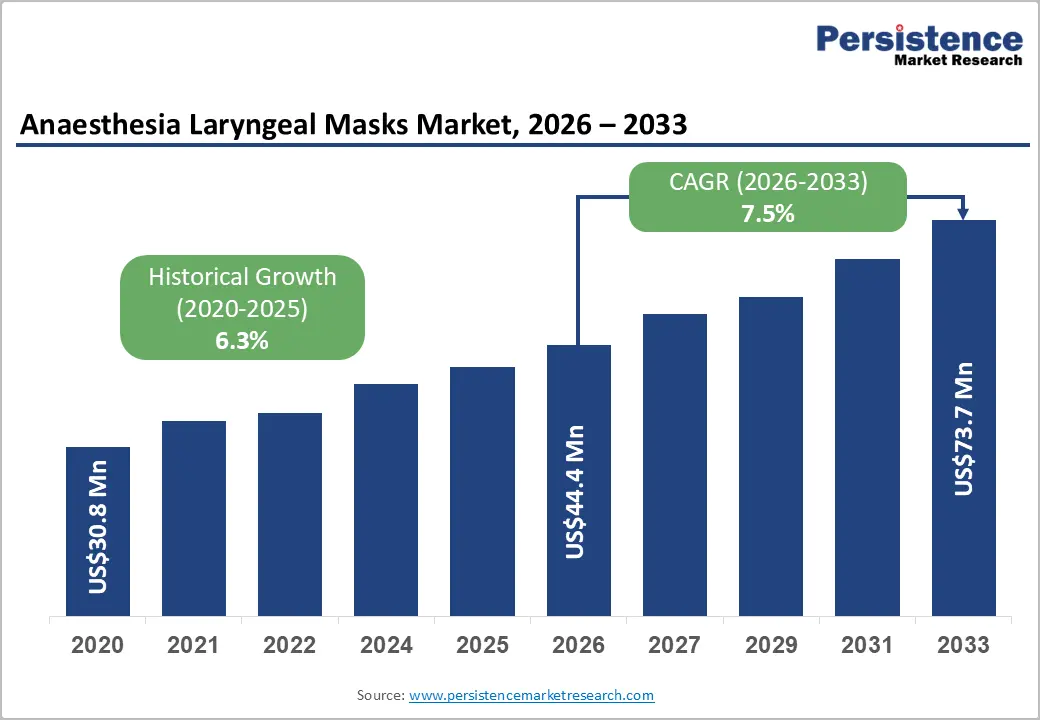
The global anaesthesia laryngeal masks market size is likely to be valued at US$44.4 million in 2026, and is expected to reach US$73.7 million by 2033, growing at a CAGR of 7.5% during the forecast period from 2026 to 2033, driven by the increasing prevalence of surgical procedures requiring airway management, rising preference for supraglottic airway devices over endotracheal intubation, growing adoption of single-use laryngeal masks to reduce cross-infection risk, and expanding ambulatory surgical centers performing short-duration surgeries. Increasing recognition of anaesthesia laryngeal masks as critical for rapid, reliable airway establishment, lower airway morbidity, and cost-effective anaesthesia delivery in emerging outpatient and emergency settings remains a major driver of market growth.
Key Industry Highlights:
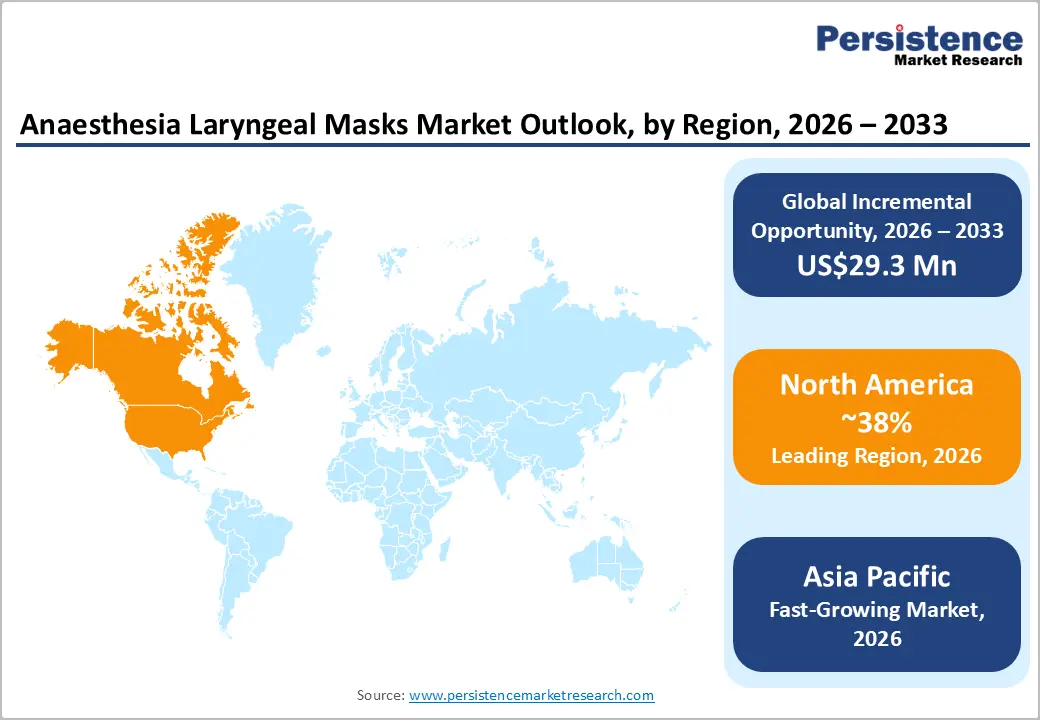
- Leading Region: North America, to account for a 38% market share in 2026, driven by high surgical volume, strong infection-control protocols, and premium demand in the U.S.
- Fastest-growing Region: Asia Pacific, fueled by rising surgical procedures, increasing ASC penetration, and growing disposable device adoption in India and China.
- Dominant Product Type: Single-use, to hold approximately 72% of the market share, as it remains the preferred choice for infection prevention.
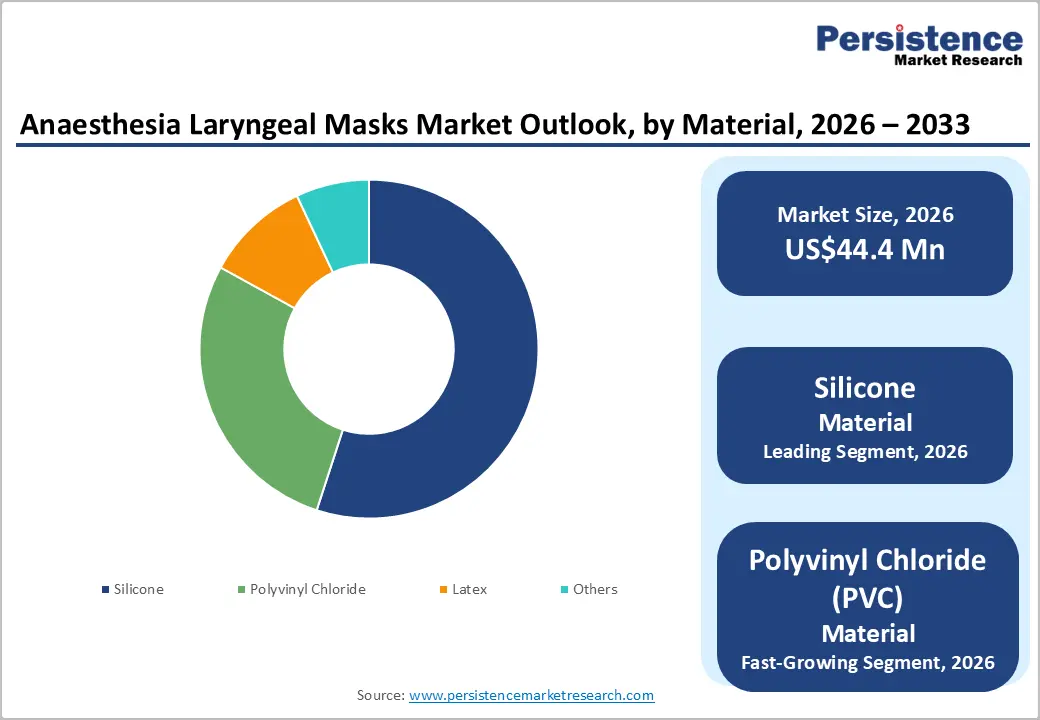
- Leading Material: Silicone, contributing nearly 55% of the market revenue, due to superior flexibility and patient comfort.
| Key Insights | Details |
|---|---|
|
Anaesthesia Laryngeal Masks Market Size (2026E) |
US$44.4 Mn |
|
Market Value Forecast (2033F) |
US$73.7 Mn |
|
Projected Growth CAGR (2026-2033) |
7.5% |
|
Historical Market Growth (2020-2025) |
6.3% |
Market Factors – Growth, Barriers, and Opportunity Analysis
Growth Analysis – Rising Surgical Volumes and Preference for Supraglottic Devices
Rising surgical volumes globally and in India are contributing to increased adoption of supraglottic airway devices (SGAs). These devices are widely used during surgeries requiring general anesthesia because they provide effective airway management while being less invasive than endotracheal intubation. As the number of surgical procedures increases, the demand for efficient and rapid airway management tools such as SGAs also grows. Government and public health data indicate a significant and increasing surgical burden in India.
According to publicly available health data compiled from the Ministry of Health and related government sources, approximately 2 crore (20 million) surgeries requiring hospitalization and anesthesia were performed in India in FY2019–2020. Among these, 80 lakhs were general surgeries, including procedures such as hernia repair, cholecystectomy, and trauma surgeries. In addition, research based on population-level healthcare schemes in India estimated that around 3,646 surgeries are required annually per 100,000 population to meet national surgical needs. Common procedures include cataract surgery, caesarean sections, fracture repair, and hernia surgery. Government health initiatives such as the National Health Mission have also expanded surgical access, leading to substantial growth in major surgeries in several states over time.
Technological Advancements in LMA Design
Continuous improvements in airway management technology have significantly enhanced the design and performance of laryngeal mask airways (LMAs). Modern LMAs incorporate advanced materials, improved sealing mechanisms, and integrated safety features to enhance patient safety and ease of use during anesthesia procedures. Second-generation LMAs, for example, include gastric drainage channels that help reduce the risk of aspiration by allowing gastric contents to bypass the airway device. Improved cuff designs and anatomically contoured shapes enable better airway sealing and ventilation efficiency during both spontaneous and controlled ventilation.
Technological innovations have also focused on enhancing insertion success and minimizing complications. Studies published by the U.S. government-supported database National Center for Biotechnology Information report that LMA placement can achieve success rates of approximately 99.8% in airway management during anesthesia, demonstrating the effectiveness of modern designs. Another analysis indicates that pulmonary aspiration associated with LMAs occurs in roughly 2 cases per 10,000 patients, suggesting a relatively low risk when used appropriately. Newer LMAs incorporate single-use sterile materials and reinforced airway tubes to reduce infection risk and improve durability in clinical settings. These innovations support safer anesthesia delivery in surgical and emergency procedures while improving patient outcomes.
Barrier Analysis – Risk of Complications & Clinical Limitations
Laryngeal mask airways (LMAs) are widely used for airway management; certain complications and clinical limitations can occur in specific patient populations. Improper placement may lead to inadequate ventilation, airway obstruction, or leakage around the cuff, particularly in patients with abnormal airway anatomy or obesity. In addition, LMAs provide less protection against gastric aspiration compared with endotracheal tubes, which can be a concern in emergency procedures or in patients with a full stomach.
Clinical studies supported by the U.S. National Institutes of Health (NIH) indicate that pulmonary aspiration associated with LMA use occurs in approximately 2 per 10,000 anesthesia cases, highlighting a low but present risk when compared with secured endotracheal intubation. Data from the U.S. Centers for Disease Control and Prevention (CDC) also emphasize that airway management complications remain a contributing factor in perioperative adverse events, particularly when devices are used in high-risk patients.
Reusable Device Reprocessing Challenges
Reusable laryngeal mask airway (LMA) devices require strict cleaning, disinfection, and sterilization processes after every use, which can create operational and safety challenges in healthcare facilities. These devices must be thoroughly decontaminated to remove biological residues and prevent cross-contamination between patients. According to guidance from the U.S. Food and Drug Administration (FDA) and Centers for Disease Control and Prevention (CDC), reusable medical devices that contact mucous membranes must undergo high-level disinfection or sterilization after each use. Inadequate reprocessing can lead to the transmission of pathogens and healthcare-associated infections.
Healthcare-associated infections remain a significant concern globally. The CDC estimates that on any given day, about 1 in 31 hospital patients in the U.S. has at least one healthcare-associated infection, highlighting the importance of proper medical device reprocessing. Reprocessing reusable LMAs also requires trained staff, specialized sterilization equipment, and additional time, which can increase operational costs for healthcare facilities.
Opportunity Analysis – Growth in Silicone Single-use Masks and ASC-Compatible Designs
Increasing surgical volumes and stricter infection-control protocols are driving the adoption of advanced anesthesia masks, particularly silicone-based and single-use designs. According to the World Health Organization, approximately 234 million surgical procedures are performed each year globally, highlighting the extensive demand for anesthesia delivery devices used during induction and airway management. Silicone has emerged as a preferred material for modern anesthesia masks because it provides improved flexibility, durability, and patient comfort compared with traditional materials.
Clinical facilities increasingly adopt silicone masks because they create a better facial seal and reduce anesthetic leakage during procedures, improving safety and efficiency in operating rooms. Healthcare facilities are expanding the use of single-use anesthesia masks to prevent cross-contamination between patients. Government infection-control guidance from the Centers for Disease Control and Prevention states that single-use medical devices are intended for one patient during a single procedure and should be discarded afterward to minimize infection risks. This policy has increased procurement of disposable masks in high-turnover care settings such as ambulatory surgical centers (ASCs).
Shift Toward Minimally Invasive & Day-Care Surgeries
Growing patient preference for faster recovery and reduced hospitalization has increased the adoption of minimally invasive and day-care surgical procedures in India. These techniques use small incisions, specialized instruments, and imaging systems, allowing surgeons to perform procedures with less tissue damage compared to traditional open surgeries. As a result, patients experience reduced postoperative pain, lower infection risk, and shorter hospital stays. In many cases, procedures that previously required 5–7 days of hospitalization can now be completed with discharge within 48 hours, significantly improving hospital efficiency and patient convenience.
Government healthcare institutions are increasingly adopting advanced surgical technologies to support this shift. For example, a major public hospital in India reported completing more than 1,000 robotic-assisted surgeries within 13 months, demonstrating the growing use of minimally invasive approaches in public healthcare systems. These procedures have shown approximately 50% reduction in post-operative pain, 40% fewer surgical site infections, and about 30% shorter hospital stays compared with conventional open surgery. The expansion of surgical infrastructure in India also supports this trend. Under the National Health Mission, the country operates 759 district hospitals, 6,155 community health centres, and over 26,000 primary health centres, enabling broader access to modern surgical care and facilitating day-care procedures across multiple levels of the public healthcare system.
Category-wise Analysis
Product Type Insights
Single-use is anticipated to dominate the market, accounting for approximately 72% of the market share in 2026. Its dominance is driven by increasing emphasis on infection prevention and operational efficiency in healthcare facilities. Disposable LMAs eliminate the need for complex sterilization processes required for reusable devices, reducing the risk of cross-contamination between patients. In surgical settings where airway devices come into direct contact with mucosal surfaces, strict infection control protocols favor single-use equipment. The Teleflex product LMA Unique™, which is a disposable laryngeal mask airway widely used in anesthesia and emergency airway management. The device is designed for single-patient use, eliminating the need for reprocessing and reducing the risk of cross-infection in hospitals.
The reusable segment represents the fastest-growing product type, due to its cost-effectiveness and sustainability benefits for healthcare facilities. Reusable laryngeal mask airways (LMAs) can typically be sterilized and used up to 40 times, making them a practical option for hospitals aiming to reduce long-term equipment costs. According to the U.S. Food and Drug Administration, reusable LMAs are designed to undergo repeated cleaning and sterilization cycles while maintaining clinical performance. LMA Classic™ was developed by The Laryngeal Mask Company Limited. This device is designed for use during general anesthesia as an alternative airway management device to endotracheal tubes or face masks. The LMA Classic™ is manufactured using medical-grade silicone and can be cleaned and steam-sterilized for repeated use, typically up to 40 times, making it cost-efficient for hospitals with high surgical volumes.
Material Insights
The silicone segment is expected to dominate the market, contributing nearly 55% of revenue in 2026, propelled by flexibility, durability, and biocompatibility. Silicone is widely used in medical airway devices as it provides a soft seal around the laryngeal inlet, improving patient comfort and reducing the risk of airway trauma during insertion. The material also withstands repeated sterilization, making it suitable for reusable laryngeal masks. Ambu A/S product Ambu Aura40™ Reusable Laryngeal Mask. This device is manufactured using medical-grade silicone, which allows the mask cuff to remain soft and flexible, helping it adapt to the patient’s airway anatomy and create a reliable seal during anesthesia procedures.
Polyvinyl chloride (PVC) represents the fastest-growing material, stimulated by its affordability, ease of manufacturing, and suitability for single-use medical devices. PVC is widely used in disposable airway devices as it provides adequate flexibility and strength while maintaining a lightweight structure for easy insertion during anesthesia procedures. The material also supports mass production, which helps healthcare facilities reduce procurement costs while meeting increasing surgical demand. LMA Unique™ is manufactured by Teleflex Incorporated. This device is a single-use laryngeal mask airway made from medical-grade polyvinyl chloride (PVC) and is widely used in operating rooms and emergency airway management. The PVC construction allows the device to be produced at a lower cost while maintaining sufficient flexibility and strength for reliable airway sealing during anesthesia.
Regional Insights
North America Anaesthesia Laryngeal Masks Market Trends
North America is projected to dominate, accounting for nearly 38% of the revenue in 2026, driven by the region’s high surgical volume, stringent infection-control protocols, and high public awareness of supraglottic airway benefits. Distribution systems in the U.S. and Canada provide extensive support for anaesthesia laryngeal masks programs, ensuring wide accessibility across single-use, silicone, and hospitals & clinics populations. Increasing demand for disposable, convenient, and easy-to-insert forms is further accelerating adoption, as these formats improve safety and reduce barriers associated with reprocessing.
Innovation in anaesthesia laryngeal masks technology, including stable gastric-access channels, improved silicone delivery, and targeted ASC enhancement, is attracting significant investment from both public and private sectors. Government initiatives and CDC campaigns continue to promote use against airway risks, infection concerns, and emerging outpatient threats, creating sustained market demand. The growing focus on PVC grades and specialty uses, particularly for hospitals & clinics and others, is expanding the target applications for anaesthesia laryngeal masks.
Europe Anaesthesia Laryngeal Masks Market Trends
Europe is driven by increasing awareness of supraglottic airway benefits, strong regulatory systems, and government-led outpatient surgery programs. Countries such as Germany, France, the U.K., and Italy have well-established anaesthesia frameworks that support routine anaesthesia laryngeal mask use and encourage adoption of innovative single-use delivery methods. These high-safety formulations are particularly appealing for hospitals & clinics populations, regulation-conscious providers, and ASC users, improving airway security and coverage rates.
Technological advancements in anaesthesia, such as laryngeal masks and enhanced cuff designs, application-targeted delivery, and improved silicone grades, are further boosting market potential. European authorities are increasingly supporting research and trials for masks against both routine and specialized needs, strengthening market confidence. The growing emphasis on convenient, disposable options is aligned with the region’s focus on preventive infection reduction and day-case expansion. Public awareness campaigns and promotion drives are expanding reach in both hospitals & clinics and ambulatory surgical centers, while suppliers are investing in PVC and novel variants to increase efficacy.
Asia Pacific Anaesthesia Laryngeal Masks Market Trends
Asia Pacific is likely to be the fastest-growing market for anaesthesia laryngeal masks, driven by rising surgical volumes, increasing government initiatives, and expanding application programs across the region. Countries such as China, India, Japan, and South Korea are actively promoting mask campaigns to address anaesthesia growth and emerging outpatient needs. Anaesthesia laryngeal masks are particularly attractive in these regions due to their cost-effective administration, ease of adoption, and suitability for large-scale hospitals & clinics and single-use drives in both urban and semi-urban populations.
Technological advancements are supporting the development of stable, effective, and easy-to-insert anaesthesia laryngeal masks, which can withstand challenging surgical conditions and minimize trauma dependence. These innovations are critical for reaching domestic hospitals and improving overall airway management coverage. Growing demand for single-use, silicone, and hospital & clinic applications is contributing to market expansion. Public-private partnerships, increased surgical expenditure, and rising investment in mask research and production capacity are further accelerating growth. The convenience of mask delivery, combined with improved safety and reduced risk of airway complications, positions it as a preferred choice.
Competitive Landscape
The global anaesthesia laryngeal masks market is characterized by strong competition between established international airway-device manufacturers and emerging regional companies. Major players such as Ambu A/S and Teleflex Incorporated maintain a significant presence in North America and Europe through extensive research and development capabilities, well-established hospital distribution networks, and a strong focus on infection-control standards. These companies continue to expand their product portfolios with advanced single-use and silicone-based laryngeal masks that improve patient safety and clinical performance.
Manufacturers in the Asia Pacific region are strengthening their position by offering cost-competitive products that help improve access to airway management devices in developing healthcare systems. The growing adoption of single-use laryngeal masks supports infection prevention strategies by reducing cross-contamination risks and eliminating complex sterilization procedures. Strategic partnerships, technology collaborations, and acquisitions are enabling companies to combine expertise, expand product offerings, and accelerate the commercialization of innovative airway devices.
Key Industry Developments:
- In January 2026, Teleflex Inc. highlighted the clinical significance of its LMA® Flexible® size 6 airway in avoiding tracheal intubation for specific patient groups.
- In December 2025, Ambu A/S was recognized as a top innovator for its differentiated single-use airway portfolio, reporting nearly 20% organic growth in its latest fiscal period.
- In September 2024, Airway Innovations Inc. launched a new line of single-use laryngeal masks featuring integrated cuff pressure monitoring.Integrated monitoring reduces the risk of post-operative sore throat and mucosal injury, directly addressing a primary clinician concern.
Companies Covered in Anaesthesia Laryngeal Masks Market
- Ambu A/S
- Besmed Health Business Corp.
- Bunzl Plc
- Cardinal Health Inc.
- Medline Industries, Inc.
- Flexicare Group Ltd.
- HiTech Medical Co. Ltd.
- HSINER Co. Ltd.
- ICU Medical Inc.
- Teleflex Inc.
Frequently Asked Questions
The global anaesthesia laryngeal masks market is projected to reach US$44.4 million in 2026.
Rising surgical volumes globally and in India are increasing the demand for supraglottic airway devices (SGAs), as they provide effective and less invasive airway management during general anesthesia.
The anaesthesia laryngeal masks market is poised to witness a CAGR of 7.5% from 2026 to 2033.
Rising surgical volumes and stricter infection-control protocols are increasing the use of advanced anesthesia masks, especially silicone-based and single-use designs.
Ambu A/S, Teleflex Inc., ICU Medical Inc., Cardinal Health Inc., and Medline Industries, Inc. are the key players.


