




- Food Ingredients & Additives
- Algae Butter Market
Algae Butter Market Size, Share, and Growth Forecast, 2026 - 2033
Algae Butter Market by Product Type (Spreadable Algae Butter, Others), Source (Plant-based, Others), Application (Food and Beverages, Others), Distribution Channel (Online, Others), and Regional Analysis for 2026 - 2033

Algae Butter Market Size and Trends Analysis
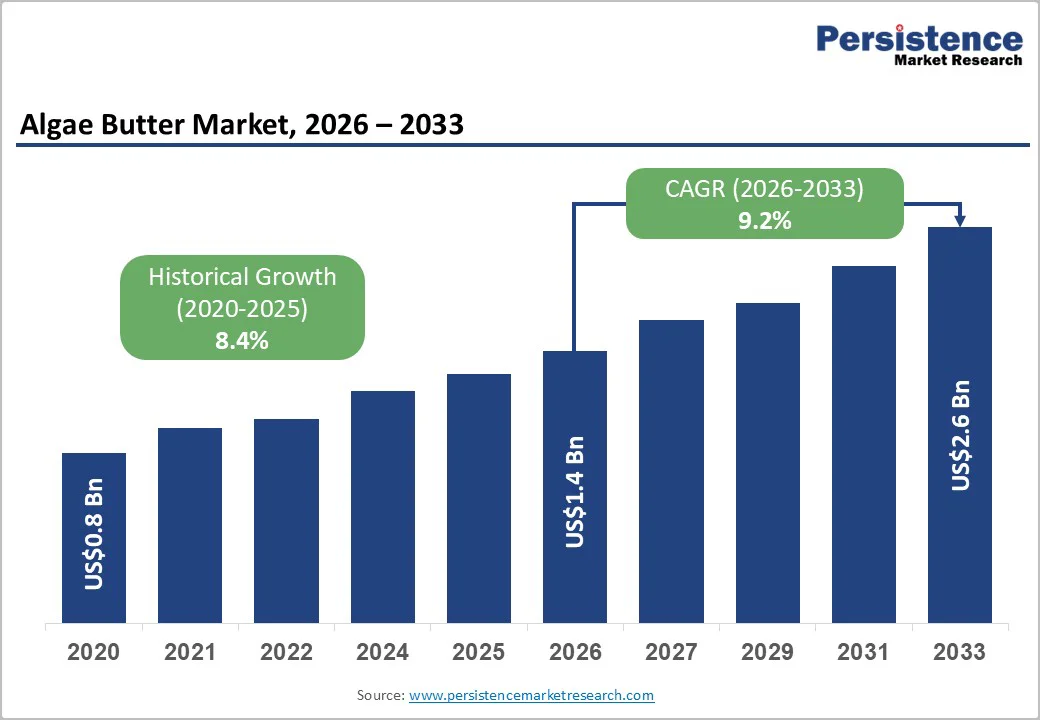
The global algae butter market size is likely to be valued at US$1.4 billion in 2026, and is expected to reach US$2.6 billion by 2033, growing at a CAGR of 9.2% during the forecast period from 2026 to 2033, driven by the increasing prevalence of plant-based alternatives, rising demand for omega-rich spreads in vegan diets, and advancements in microalgae extraction technologies.
Growing preference for eco-friendly, nutrient-rich alternatives, along with improved functional performance in cosmetic, pharmaceutical, and food applications, is propelling the market uptake of algae butter.
Key Industry Highlights:
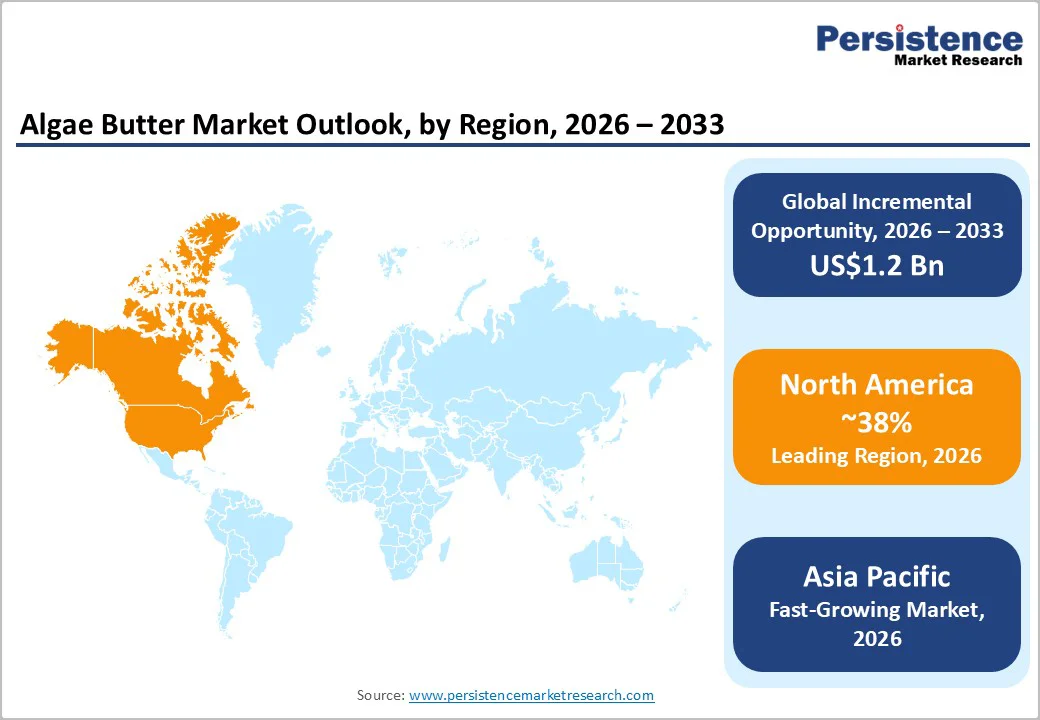
- Leading Region: North America, anticipated to account for a 38% market share in 2026, driven by advanced vegan trends, high omega supplement use, and strong R&D in sustainable sourcing in the U.S.
- Fastest-growing Region: Asia Pacific, fueled by rising plant-based adoption, urbanization-driven wellness, and growing investments in seaweed farming in China and Japan.
- Dominant Product Type: Spreadable algae butter, to hold approximately 45% of the market share, as it generates a smooth texture and flavor neutrality by closely mimicking dairy butters.
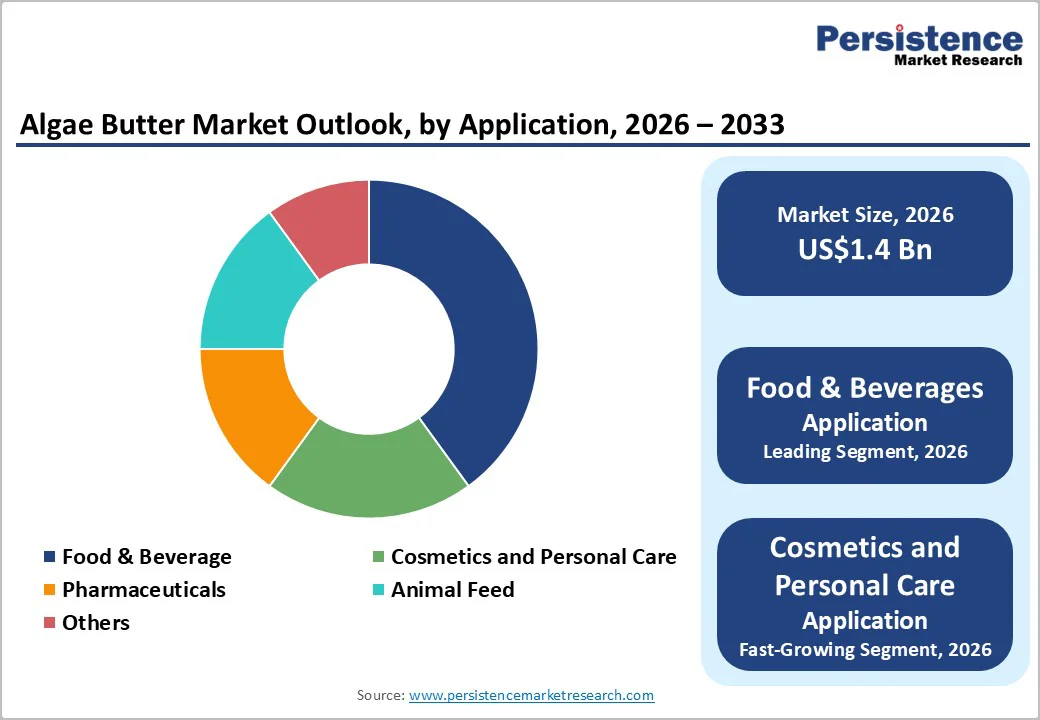
- Leading Application: The food and beverages segment is expected to account for over 40% of the market revenue in 2026, due to baking versatility, nutritional fortification, and widespread vegan recipe integration.
- Leading Source: The microalgae-based segment is expected to contribute nearly 50% of the market revenue in 2026, due to its DHA/EPA richness, scalability, and capacity for controlled nutrient profiles.
- Leading Distribution Channel: Supermarkets and hypermarkets, to hold approximately 40% share, driven by consumers requiring accessible aisles as part of routine shopping, ensuring consistent demand.
| Key Insights | Details |
|---|---|
|
Algae Butter Market Size (2026E) |
US$1.4 Bn |
|
Market Value Forecast (2033F) |
US$2.6 Bn |
|
Projected Growth (CAGR 2026 to 2033) |
9.2% |
|
Historical Market Growth (CAGR 2020 to 2025) |
8.4% |
Market Factors - Growth, Barriers, and Opportunity Analysis
Rising Prevalence of Plant-Based Alternatives and Demand for Omega-Rich Spreads
The rising preference for plant-based alternatives is quickly becoming a major opportunity for algae butter producers, driven by growing consumer demand for dairy-free, nutrient-packed options and reduced animal product reliance. Traditional dairy butters often create cholesterol concerns, especially among vegans and health enthusiasts, leading to limited appeal and higher health risks. Algae butter technologies, including spreadable grades, cooking variants, vegan formulas, microalgae sources, and seaweed blends, address these concerns by offering a creamy, omega-3 fortified alternative. These formats simplify substitution, reduce the need for flavor masks, and are particularly effective during meal prep or skincare routines where seamless integration is critical.
Algae butter significantly lowers the risk of oxidation, allergen exposure, and nutrient gaps, which remain major concerns in food and cosmetic settings. They also support improved spreadability and easier storage, especially for extra virgin and refined types, making them ideal for urban or export markets. As global wellness organizations push for broader vegan coverage and user-friendly superfoods, demand continues to expand across food & beverages, cosmetics, and pharmaceuticals.
High Development and Extraction Costs
High development and extraction costs remain a major barrier to the commercialization of next-generation algae butter. Producing advanced formulations requires specialized bioreactors, sophisticated extraction and centrifugation technologies, and extensive R&D, making costs significantly higher than conventional plant-based butters. Product stability poses additional challenges, as algae lipids are sensitive to light, heat, and moisture. Achieving vegan and quality certifications demands rigorous testing and audits, further increasing overall development and production expenses.
Meeting stringent regulatory expectations for heavy metal limits, microbial counts, and batch consistency requires multiple stability studies under various conditions and across several harvest batches. This adds both time and financial burden to development timelines. Scaling up manufacturing requires controlled fermenters, specialized dryers, and quality-assurance systems, further driving up overall costs. For smaller startups, these challenges can limit grade expansion or delay commercialization.
Innovations in Microalgae and Seaweed Delivery Platforms
Innovations in microalgae and seaweed algae butter delivery platforms are transforming the global superfood landscape by addressing two major challenges, yield variability and bioavailability barriers. Microalgae butters are engineered to achieve 20% DHA enrichment, reducing reliance on fish oils and enabling sustainable omega sources for vegan diets. Innovations, such as photobioreactor culturing, enzymatic extraction, lipid fractionation, and nano-emulsification, significantly improve potency and reduce contaminants, lowering supply costs for brands and consumer campaigns.
Advancements in seaweed-based platforms, including ulvan-rich spreads, solid butters, liquid carriers, and hybrid isolates, are enabling more targeted nutritional and cosmetic applications by improving the delivery and bioavailability of fucoidan, a compound associated with skin hydration and anti-inflammatory benefits. These formats help eliminate fishy aftertastes, extend shelf life, and enable flexible dosing without heat, making them well-suited for large-scale cosmetic use. Emerging technologies such as algal co-products, bio-adhesive gels, and advanced fortification systems are further improving delivery efficiency and functional performance.
Category-wise Analysis
Product Type Insights
Spreadable algae butter is anticipated to dominate the market, accounting for approximately 45% of the market share in 2026. Its dominance is driven by creamy texture, easy blending, and versatility, making it preferred for toast and skincare. Spreadable Algae Butter provides smooth application, ensures nutrient release, and contributes to indulgence, making it suitable for large-scale vegan campaigns. For example, Corbion (ex-TerraVia) has developed algae-derived structured fats branded as AlgaWise® Algae Butter tailored for applications such as spreads and bakery, touting properties such as neutral taste and easy melt/spread functionality, making them suitable for use on toast and other plant-based food products, trends that are increasingly highlighted in vegan and sustainable food innovation discussions.
Cooking and baking algae butter represent the fastest-growing segment, due to its heat stability and expanding use in plant-based baking. Its smoke-point profile makes it ideal for targeted sautéing, reducing splatter. Continuous innovations in refined cooking grades are further strengthening their performance, driving rapid adoption across North America and Europe, where demand for dairy-free, high-heat oils is accelerating. For example, TerraVia (formerly Solazyme), in partnership with global food company Bunge, developed algae-derived butter (often referenced as AlgaWise Algae Butter) intended to function such as a traditional structured fat (similar to shea stearin or cocoa butter) in bakery, spreads, and confectionery products. It was designed to be palm-oil-free, non-hydrogenated, and suitable for things such as icing/frosting and laminated doughs (e.g., croissants), which require a solid fat with specific melting properties for texture and performance in baking.
Source Insights
The microalgae-based segment is expected to lead the market, holding approximately 50% of the share in 2026, driven by DHA potency, large culturing programs, and strong global demand for traceable superfoods. Their dominance continues as producers expand cultivation for supplements and feeds. Rising adoption of plant-based blends and expanded pharma campaigns highlight the growing focus on premium sourcing. For example, Algama (a French company) has commercialized microalgae-based products such as The Good Spoon plant-based mayonnaise that are distributed in major U.S. and French retail locations, showing real market traction for algae food innovations.
Seaweed-based products are likely to be the fastest-growing segment, due to their fucoidan richness and expanding inclusion of marine extracts in cosmetics. The growing shift toward affordable, antioxidant platforms, along with better scalability, accelerates adoption. Advancements in hybrid seaweeds and continued progress of conventional refining entering efficiency trials drive market growth. For example, UNIQUE Biotech and Marine expanded its seaweed-based cosmetic ingredient line featuring fucoidan-rich brown algae extracts. The company reported increased demand from skincare brands developing antioxidant serums and moisturizing creams.
Application Insights
Food and beverages are expected to dominate the market, contributing nearly 40% of revenue in 2026, due to remaining the primary hub for fortification, large recipe programs, and management of diverse formulations requiring versatile fats. Their strong integration, trained chefs, and ability to handle high-volume or specialty blends drive higher consumption. Food & beverage sectors are leading virgin oil rollouts as well as administering emerging fractionated trials. For example, large processors such as Algenuity routinely incorporate refined algae butter for snacks while also participating in omega supplement trials, ensuring products receive specialized, nutrient-enhanced formulations with high efficacy standards.
Cosmetics and personal care represent the fastest-growing segment, driven by their strong beauty presence and expanding role in natural moisturizing. They offer convenient, quick, and accessible emollience, attracting users who prefer topical, low-irritant settings. Increased outreach programs, self-care focus, and wider availability of routine and luxury oils further accelerate uptake, boosting rapid adoption across both urban and semi-urban areas. For example, a premium skincare body butter enriched with Undaria seaweed extract and rich emollients such as shea butter and ceramides. This formulation deeply hydrates dry skin for extended periods and improves skin texture, showcasing real consumer demand for algae-based moisturizing products in beauty routines.
Distribution Channel Insights
The supermarket/hypermarket segment is likely to dominate the market, with approximately 40% share in 2026, due to the high volume of impulse buys and strong emphasis on accessible shelving. Shelf placements, promotional displays, and widespread access to branded aisles drive consistent demand. Rising focus on online hybrids, store exclusives, and convenience integrations further strengthens supermarket leadership. For example, algae-derived butter products are still emerging in mainstream retail, supermarkets are already stocking and promoting plant-based “butter alternatives” (many of which include novel sustainable fats and next-generation ingredients such as algae-based formulations in development).
Online retail is the fastest-growing field, driven by the rising need for direct sourcing, vulnerability to stockouts, and expanding adoption of e-commerce bundles. Improved logistics, tailored recommendations, and stronger traceability for organic use support rapid uptake. The growing use of subscription models, flash sales, and others among remote populations further accelerates market growth. For example, India’s online beauty and personal care market is one of the fastest-growing globally, with beauty ecommerce sales growing much faster than physical store sales, driven by youth, influencers, and quick commerce platforms such as Amazon, Myntra, Blinkit, Zepto, and Nykaa.
Regional Insights
North America Algae Butter Market Trends
North America is projected to account for nearly 38% of the global algae butter market in 2026, driven by the region’s advanced retail infrastructure, strong research and development capabilities, and high public awareness of superfood benefits. Distribution systems in the U.S. and Canada provide extensive support for consumption programs, ensuring wide accessibility of algae butter across food, cosmetics, and pharma populations. Increasing demand for spreadable, convenient, and easy-to-incorporate forms is further accelerating adoption, as these formats improve usability and reduce barriers associated with imports.
Innovation in algae butter technology, including stable DHA profiles, improved fractionation delivery, and targeted antioxidant enhancement, is attracting significant investment from both public and private sectors. Government initiatives and health campaigns continue to promote use against dietary gaps, skin aging, and emerging clean-beauty threats, creating sustained market demand. The growing focus on microalgae blends and industrial uses, particularly for pharma and others, is expanding the target applications for algae butter.
Europe Algae Butter Market Trends
Europe is driven by increasing awareness of nutritional benefits, strong distribution systems, and government-led sustainability programs. Countries such as Germany, France, and the U.K. have well-established wellness frameworks that support routine incorporation and encourage adoption of innovative butter delivery methods, including algae butter. These natural formulations are particularly appealing for food populations, eco-averse consumers, and cosmetic users, improving compliance and coverage rates.
Technological advancements in algae butter development, such as enhanced MCT yield, source-targeted delivery, and improved refined grades, are further boosting market potential. European authorities are increasingly supporting research and trials for butters against both routine and specialized needs, strengthening market confidence. The growing emphasis on convenient, refillable options is aligned with the region’s focus on preventive health and reducing packaging waste. Public awareness campaigns and promotion drives are expanding reach in both urban and rural areas, while producers are investing in expellers and novel variants to increase efficacy.
Asia Pacific Algae Butter Market Trends
Asia Pacific is likely to be the fastest-growing market for algae butter in 2026, driven by rising wellness awareness, increasing government initiatives, and expanding application programs across the region. Countries such as India, Indonesia, the Philippines, and Sri Lanka are actively promoting butter campaigns to address culinary traditions and emerging beauty needs. Algae butter is particularly attractive in these regions due to its local sourcing, ease of processing, and suitability for large-scale export drives in both urban and rural populations.
Technological advancements are supporting the development of stable, effective, and easy-to-extract algae butter, which can withstand challenging tropical conditions and minimize waste dependence. These innovations are critical for reaching remote plantations and improving overall yield coverage. The growing demand for virgin, cosmetics, and industrial applications is contributing to market expansion. Public-private partnerships, increased agro expenditure, and rising investment in pressing research and manufacturing capacity are further accelerating growth. The convenience of algae butter delivery, combined with improved purity and reduced risk of spoilage, positions algae butter as a preferred choice.
Competitive Landscape
The global algae butter market features competition between established nutraceutical leaders and emerging algal processors. In North America and Europe, Corbion N.V. and Bunge Limited lead through strong R&D, distribution networks, and retail ties, bolstered by innovative grades and wellness programs. In the Asia Pacific region, DSM-Firmenich advances with localized solutions, enhancing accessibility. Nutrient-enhanced delivery boosts efficacy, cuts oxidation risks, and enables mass formulations across regions. Strategic partnerships, collaborations, and acquisitions merge expertise, expand cultivations, and speed commercialization. Organic formulations solve purity issues, aiding penetration in health-focused areas.
Key Industry Developments
- In November 2025, Corbion NV announced its BRIGHT 2030 strategy at its Capital Markets Day, outlining medium-term financial targets including organic sales growth. The strategy prioritized accelerating clean-label preservation and food formulation, expanding algal fermentation beyond omega-3 oils into new high-growth segments such as pet food and human nutrition, and fostering growth in biomedical polymers.
Companies Covered in Algae Butter Market
- Corbion N.V.
- Bunge Limited
- dsm-firmenich
- Algenuity
- Cyanotech Corporation
- Qualitas Health
- AlgaTech
Frequently Asked Questions
The global algae butter market is projected to reach US$1.4 billion in 2026.
The rising prevalence of plant-based alternatives and demand for omega-rich spreads are key drivers.
The algae butter market is poised to witness a CAGR of 9.2% from 2026 to 2033.
Advancements in microalgae and seaweed delivery platforms are key opportunities.
Corbion N.V., Bunge Limited, DSM-Firmenich, Algenuity, and Cyanotech Corporation are the key players.


