




- Medical Devices
- Vaginal Applicators Market
Vaginal Applicators Market Size, Share, Growth, and Regional Forecast, 2026 to 2033
Vaginal Applicators Market by Product (Disposable Vaginal Applicators, and Reusable Vaginal Applicators), by Material (Polypropylene (PP), Polyethylene (PE), Silicone, Plastic, Metal, and Biodegradable Materials), by Application (Gels, Creams, Liquids, and Tablets) by Distribution Channel (Hospital Pharmacies, Retail Pharmacies, and Online Pharmacies), and Regional Analysis from 2026 to 2033

Vaginal Applicators Market Share and Trend Analysis
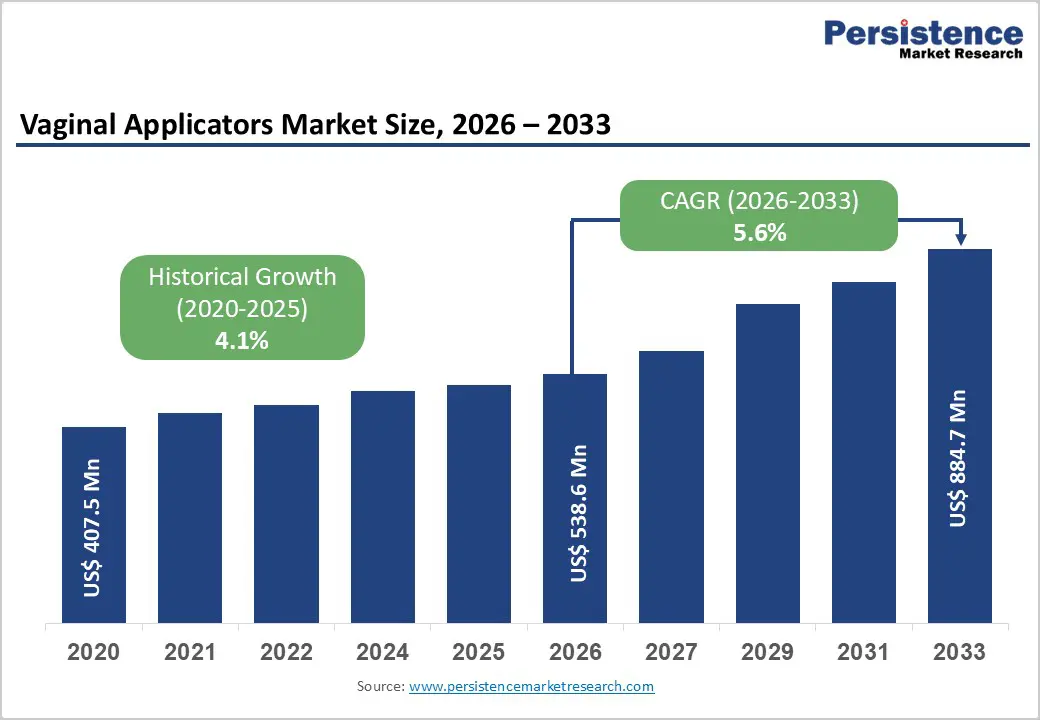
The global vaginal applicators market size is estimated to grow from US$ 538.6 million in 2026 to US$ 884.7 million by 2033. The market is projected to record a CAGR of 5.6% during the forecast period from 2026 to 2033.
Global demand for vaginal applicators is steadily expanding as the prevalence of gynecological conditions and the use of localized vaginal therapies continue to rise. These devices are widely used for administering medications such as antifungal creams, hormonal treatments, contraceptive gels, and lubricants, allowing accurate intravaginal delivery and improved therapeutic effectiveness. Increasing awareness regarding women’s reproductive health, along with greater access to medical consultation and pharmacy services, is encouraging more women to seek treatment for infections, hormonal imbalances, and menopause-related symptoms.
Growth in self-care and home-based treatment approaches is also contributing to higher product adoption, as applicators provide a hygienic and convenient way to administer topical medications. Pharmaceutical companies increasingly package vaginal medications with pre-measured applicators to ensure proper dosing and enhance patient adherence. Advancements in medical-grade plastics, ergonomic designs, and disposable packaging technologies are further improving usability and safety. Expanding pharmacy distribution networks, rising demand for over-the-counter gynecological products, and continuous innovation in drug formulations are expected to sustain steady growth across both developed healthcare systems and emerging markets.
Key Industry Highlights:
- Leading Region: North America accounts for 48.5% of global revenue, supported by strong women’s healthcare awareness, well-established pharmaceutical distribution channels, and the widespread availability of gynecological treatments through hospitals and pharmacies.
- Fastest-Growing Region: Asia Pacific represents the fastest-growing region, driven by a large female population, improving healthcare accessibility, rising diagnosis of vaginal infections, and increasing availability of pharmacy-based reproductive health products.
- Leading Product Segment: Disposable vaginal applicators remain the most widely adopted category, holding a 73.9% market share, primarily due to their hygienic single-use design, convenience, and strong compatibility with packaged pharmaceutical treatments.
- Fastest-Growing Product Segment: Reusable vaginal applicators are gaining momentum as manufacturers introduce durable, eco-friendly alternatives designed to reduce medical plastic waste while maintaining safe medication delivery.
- Leading Material Segment: Polypropylene (PP) accounts for the largest material share because of its lightweight structure, affordability, and suitability for large-scale medical-grade applicator manufacturing.
- Fastest-Growing Material Segment: Polyethylene (PE) is experiencing faster adoption due to its flexibility, chemical resistance, and increasing utilization in cost-efficient disposable medical packaging and applicator designs.
| Key Insights | Details |
|---|---|
| Vaginal Applicators Market Size (2026E) | US$ 538.6 Mn |
| Market Value Forecast (2033F) | US$ 884.7 Mn |
| Projected Growth (CAGR 2026 to 2033) | 5.6% |
| Historical Market Growth (CAGR 2020 to 2025) | 4.1% |
Market Dynamics
Driver - Rising Prevalence of Gynecological Conditions and Increasing Adoption of Self-Administered Vaginal Drug Delivery
One of the primary factors stimulating market expansion is the growing prevalence of gynecological conditions such as vaginal infections, bacterial vaginosis, yeast infections, and menopausal vaginal atrophy. These health concerns affect a substantial proportion of women globally and frequently require localized drug administration for effective treatment. Vaginal applicators play an important role in ensuring accurate dosage delivery directly to the targeted area, improving therapeutic efficiency and patient compliance. As healthcare awareness regarding reproductive health increases, more women are seeking early medical intervention and treatment for these conditions, which in turn supports demand for applicator-based drug delivery systems. Another major contributor to growth is the increasing preference for self-administration of medications in home settings. Many vaginal therapies, including antifungal creams, contraceptive gels, and hormonal treatments, are designed for patient-controlled application. Applicators provide a convenient and hygienic way to administer these formulations while maintaining consistent dosage. Pharmaceutical companies are also increasingly packaging medications with premeasured applicators to enhance ease of use and improve treatment adherence.
Additionally, expanding healthcare access, improved pharmacy distribution networks, and rising awareness campaigns focused on women’s health are encouraging wider adoption of vaginal therapeutic products. Combined with the growing availability of over-the-counter treatments and improvements in medical packaging technologies, these factors collectively generate sustained demand across both developed and emerging healthcare markets.
Restraints - Environmental Concerns, Cost Sensitivity, and Limited Awareness in Certain Regions
A key challenge is the environmental concern associated with disposable plastic applicators. Most single-use devices are manufactured using polypropylene or polyethylene materials, which contribute to medical plastic waste when disposed of after one use. Increasing environmental awareness among consumers and regulators has led to growing scrutiny of single-use plastic products across healthcare industries. In response, some pharmaceutical companies are exploring recyclable or biodegradable materials, but large-scale adoption remains limited due to manufacturing complexity and cost considerations.
Cost sensitivity also plays a role, particularly in emerging economies where healthcare spending per capita is comparatively lower. In several markets, patients may prefer lower-cost treatment alternatives that do not require specialized applicator devices. Some topical medications can be applied manually, which may reduce reliance on dedicated applicators, especially in regions with limited purchasing power. Another restraint is the relatively limited awareness of proper vaginal drug delivery methods in certain rural and underserved areas. Lack of access to gynecological consultation and insufficient patient education can reduce utilization of applicator-based therapies. Cultural sensitivities surrounding reproductive health discussions may also discourage patients from seeking treatment, indirectly affecting product adoption. These combined environmental, economic, and educational barriers may moderate market growth in specific geographic regions.
Opportunity - Development of Sustainable Applicator Materials and Expansion of Women’s Healthcare Access
Significant future potential lies in the development of environmentally sustainable and technologically improved applicator designs. As healthcare systems increasingly prioritize eco-friendly solutions, manufacturers are investing in biodegradable polymers, recyclable materials, and reusable applicator systems. These innovations can address environmental concerns associated with single-use plastics while maintaining safety and hygiene standards required for medical applications. Companies that successfully integrate sustainable manufacturing practices with user-friendly designs are likely to gain a competitive advantage in the coming years. Another major opportunity emerges from the expansion of women’s healthcare infrastructure in developing regions. Governments and global health organizations are increasingly promoting awareness programs related to reproductive health, sexually transmitted infections, and menopause management. As awareness improves, more women are seeking medical consultation and treatment, which expands the potential patient base for vaginal therapeutic products.
Pharmaceutical innovation is also creating opportunities through the introduction of new intravaginal drug formulations, including hormone therapies, probiotics, contraceptive products, and infection treatments. Many of these therapies rely on precise intravaginal delivery, which directly supports demand for specialized applicators. Additionally, the rapid growth of online pharmacies and digital health platforms is improving accessibility to women’s healthcare products, enabling discreet and convenient purchasing options. Together, product innovation, sustainable material development, and expanding healthcare access are expected to create strong long-term growth prospects for the industry.
Category-wise Analysis
By Product Insights
Disposable vaginal applicators are expected to contribute 73.9% of global market revenue in 2026, establishing them as the dominant product type in this industry. Their strong position stems primarily from the increasing emphasis on hygienic drug administration and infection control in gynecological treatments. Single-use designs eliminate the risk of cross-contamination, making them particularly suitable for pharmaceutical formulations such as antifungal creams, hormonal therapies, and contraceptive gels. Healthcare providers and pharmaceutical companies widely prefer disposable applicators because they allow accurate dosing and ensure patient safety during intravaginal medication delivery.
Growing awareness about women’s health, rising prevalence of conditions such as vaginal infections and hormonal disorders, and the expanding availability of over-the-counter therapeutic products are contributing to higher demand. Pharmaceutical manufacturers also favor disposable formats because they can be prefilled, easily packaged with medications, and distributed at large scale. Moreover, improvements in injection molding technologies and cost-efficient polymer materials have enabled large-volume production while maintaining medical-grade quality standards. Increasing home-based treatment and self-administration trends are expected to reinforce the leadership of this segment over the coming years.
By Application Insights
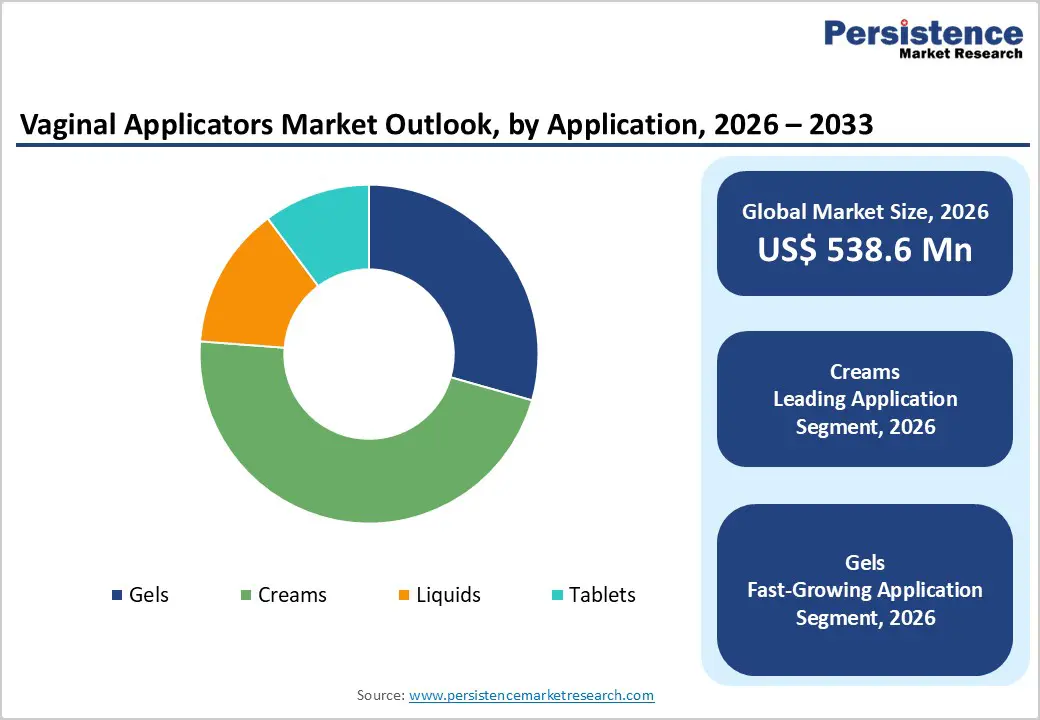
The creams segment is projected to hold 46.8% of the global market in 2026, representing the most widely used application for vaginal applicators. Cream formulations are commonly prescribed for the treatment of fungal infections, bacterial vaginosis, menopausal vaginal atrophy, and hormone replacement therapies. Their thick consistency allows controlled delivery and better retention within the vaginal canal, which improves therapeutic effectiveness and patient comfort. Because many antifungal and estrogen-based medications are formulated as creams, applicators specifically designed for accurate intravaginal administration remain essential components of treatment kits. The rising incidence of gynecological infections, particularly among reproductive-age women, continues to support strong product utilization. Increasing awareness campaigns around women’s reproductive health and improved accessibility of pharmacy-based treatments are further strengthening demand. In addition, pharmaceutical companies are expanding their portfolios of topical vaginal medications to address evolving healthcare needs, including menopause management and preventive therapies. Technological refinements in applicator design such as smoother plungers, ergonomic grips, and precise dose measurement are improving patient compliance. Collectively, these factors are expected to sustain the leading position of cream-based applications throughout the forecast period.
By Distribution Channel Insights
Hospital pharmacies are estimated to account for 44.8% of total market revenue in 2026, reflecting their central role in dispensing prescription-based gynecological medications that utilize vaginal applicators. Hospitals and large healthcare facilities remain primary points of care for the diagnosis and treatment of complex reproductive health conditions, including severe infections, hormonal disorders, and postoperative therapies. As a result, pharmaceutical products packaged with applicators are frequently distributed through institutional supply chains.
Medical professionals typically prescribe intravaginal medications following clinical evaluation, which encourages patients to obtain these products directly through hospital pharmacy systems. Hospitals also maintain consistent procurement agreements with pharmaceutical manufacturers and medical packaging suppliers, ensuring a steady supply of applicator-based drug delivery systems. Furthermore, maternity hospitals, gynecology clinics within hospital networks, and women’s health centers contribute significantly to prescription volumes. Although retail and online pharmacies are expanding their reach, hospital pharmacies continue to dominate because they provide integrated medical guidance, reliable medication sourcing, and controlled distribution channels. Their established infrastructure and strong patient trust position them as the leading distribution segment within the vaginal applicators market.
Regional Insights
North America Vaginal Applicators Market Trends
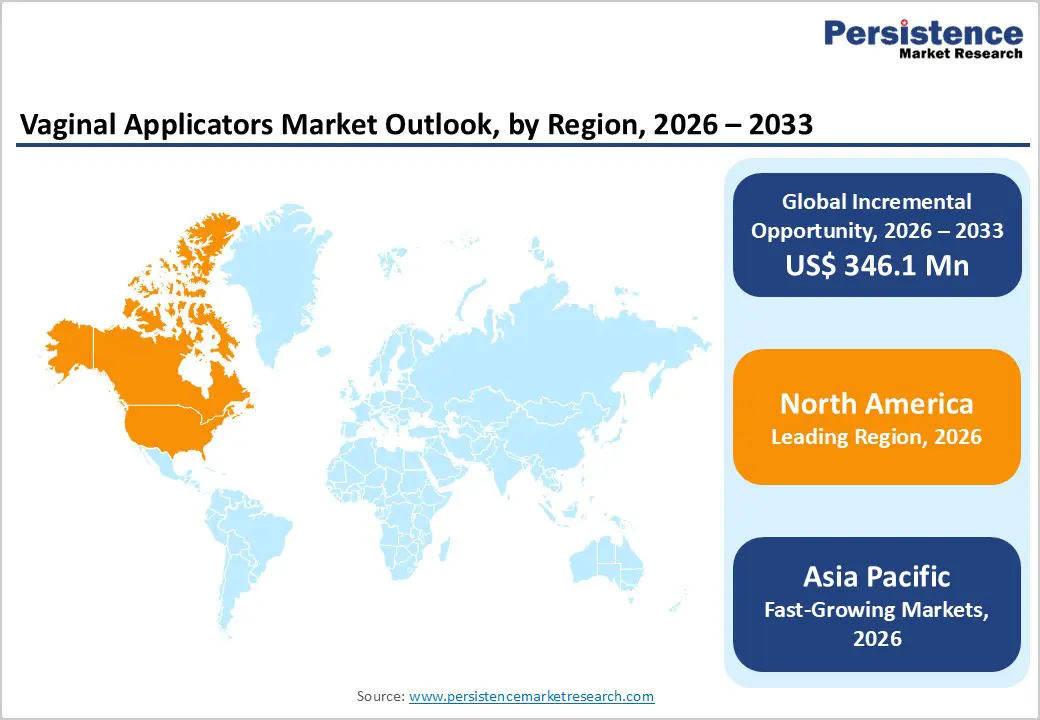
North America is expected to account for 48.5% of global revenue in 2026, with the United States representing the largest national market in the region. The strong regional presence is supported by well-developed healthcare infrastructure, high awareness regarding women’s reproductive health, and widespread access to prescription and over-the-counter gynecological medications. A significant number of vaginal treatments particularly antifungal therapies, hormone replacement products, and contraceptive gels are packaged with single-use applicators, contributing to consistent product demand. Another important factor driving regional growth is the high level of healthcare utilization among women, supported by insurance coverage and preventive healthcare programs. Gynecology clinics, maternity hospitals, and specialized women’s health centers regularly prescribe intravaginal therapies that rely on applicator-based delivery.
Pharmaceutical companies in the United States also invest heavily in formulation innovation and patient-friendly packaging solutions that enhance medication adherence. The region additionally benefits from strong regulatory oversight and advanced manufacturing capabilities that ensure product quality and safety. Growing demand for convenient self-administration therapies and rising menopausal treatment adoption further strengthen market expansion. Collectively, these structural advantages continue to secure North America’s leadership in the global vaginal applicators market.
Europe Vaginal Applicators Market Trends
Europe represents a mature yet steadily expanding market for vaginal applicators, supported by well-organized public healthcare systems and a strong emphasis on women’s health services. Countries such as Germany, the United Kingdom, France, Italy, and Spain contribute significantly to regional demand due to widespread access to gynecological care and pharmacy-based treatment options. Physicians across these countries frequently prescribe topical vaginal medications for infections, hormonal imbalance, and reproductive health management, which sustains steady consumption of applicator-based delivery devices. Healthcare frameworks across the region emphasize patient safety and regulatory compliance, encouraging the use of high-quality medical-grade applicators designed for precise dosage administration.
European pharmaceutical manufacturers also prioritize packaging innovations that enhance convenience and maintain sterility, particularly for disposable single-use devices. In addition, increased awareness campaigns related to reproductive health and menopause management have improved early diagnosis and treatment adoption among women. While growth rates are moderate compared with emerging regions, the market benefits from strong healthcare access, aging female populations, and consistent pharmaceutical demand. Continuous improvements in medical packaging technology and pharmaceutical formulations are expected to sustain gradual but stable market development throughout the forecast period.
Asia Pacific Vaginal Applicators Market Trends
Asia Pacific is projected to record the fastest expansion, registering a CAGR of approximately 7.9% between 2026 and 2033. The region’s rapid growth is closely associated with expanding healthcare infrastructure, increasing awareness of women’s reproductive health, and a large population base requiring accessible medical treatments. Countries including China, India, Japan, and South Korea are witnessing steady growth in gynecological consultations and pharmacy-based medication usage. As healthcare systems continue to modernize, more women are seeking medical treatment for infections, hormonal imbalances, and other reproductive health concerns that require intravaginal therapies. The pharmaceutical sector across the region is also growing rapidly, with local manufacturers expanding production of topical medications and personal healthcare products that include applicators.
Rising disposable incomes and urbanization are improving access to modern healthcare services, while retail pharmacy networks and e-commerce platforms are increasing product availability. Governments in several countries are actively promoting women’s health awareness programs that encourage timely diagnosis and treatment of gynecological conditions. Combined with expanding pharmaceutical manufacturing capacity and improving healthcare accessibility, these structural factors are positioning Asia Pacific as the fastest-growing regional market for vaginal applicators.
Competitive Landscape
The global vaginal applicators market is highly competitive, with strong participation from companies such as Beyond Devices S.L., Union Plastic S.A.S., SRC Medical, Inc., HTI Plastics, Ningbo Suncity Package Co., Ltd., and Tek Pak, Inc. These players leverage advanced plastic molding capabilities, extensive experience in medical-grade applicator manufacturing, established partnerships with pharmaceutical companies, and strong global distribution networks.
Competitive strategies focus on developing hygienic, single-use, and user-friendly applicator designs to improve patient convenience and dosing accuracy. Companies are also investing in sustainable materials, product customization for pharmaceutical formulations, regulatory compliance, and expanding production capacities to address growing demand for vaginal drug delivery and personal care applications worldwide.
Key Developments:
- In December 2024, ConTIPI Medical, a developer of non-surgical disposable solutions for pelvic floor disorders, in partnership with EVERSANA, a global provider of commercial services for the life sciences sector, announced the U.S. commercial launch of ProVate, a device designed to provide a non-surgical treatment option for women suffering from pelvic organ prolapse (POP).
- In January 2024, Organon announced that XACIATO (clindamycin phosphate) vaginal gel 2% became available by prescription for the treatment of Bacterial Vaginosis. The condition occurs when certain bacteria overgrow and disrupt the natural vaginal microbiome, often causing symptoms such as vaginal odor and abnormal discharge. Studies also indicate that bacterial vaginosis occurs more frequently among non-Hispanic Black and Mexican American women.
Companies Covered in Vaginal Applicators Market
- Beyond Devices S.L.
- Union Plastic S.A.S.
- SRC Medical, Inc.
- HTI Plastics
- Ningbo Suncity Package Co., Ltd.
- Tek Pak, Inc.
- CooperSurgical, Inc.
- MedGyn Products, Inc.
- Shenzhen Bona Pharma Technology Co., Ltd.
- Bioteque America, Inc.
- NeuEve LLC
- Seroflora
- Shubham Plast
- Panpac Medical Corp.
- Shako Plastick
- Others
Frequently Asked Questions
The global vaginal applicators market is projected to be valued at US$ 538.6 Mn in 2026.
Rising prevalence of gynecological disorders and increasing preference for self-administered vaginal drug delivery solutions are major drivers of the global vaginal applicators market.
The global vaginal applicators market is poised to witness a CAGR of 5.6 % between 2026 and 2033.
Development of biodegradable and reusable applicators, expansion in emerging markets, and innovation in user-friendly drug-delivery designs present major opportunities for the global vaginal applicators market.
Beyond Devices S.L., Union Plastic S.A.S., SRC Medical, Inc., HTI Plastics, Ningbo Suncity Package Co., Ltd., and Tek Pak, Inc. are some of the key players in the vaginal applicators market.


