




- Clothing, Footwear, & Accessories
- Second-Hand Footwear Market
Second-Hand Footwear Market Size, Share, and Growth Forecast, 2025 - 2032
Second-Hand Footwear Market by Product Type (Athletic Footwear, Non-Athletic Footwear, Luxury Footwear), End-User (Men, Women, Kids), Price Range (Mass Market, Luxury), and Regional Analysis for 2025 - 2032

Second-Hand Footwear Market Share and Trends Analysis
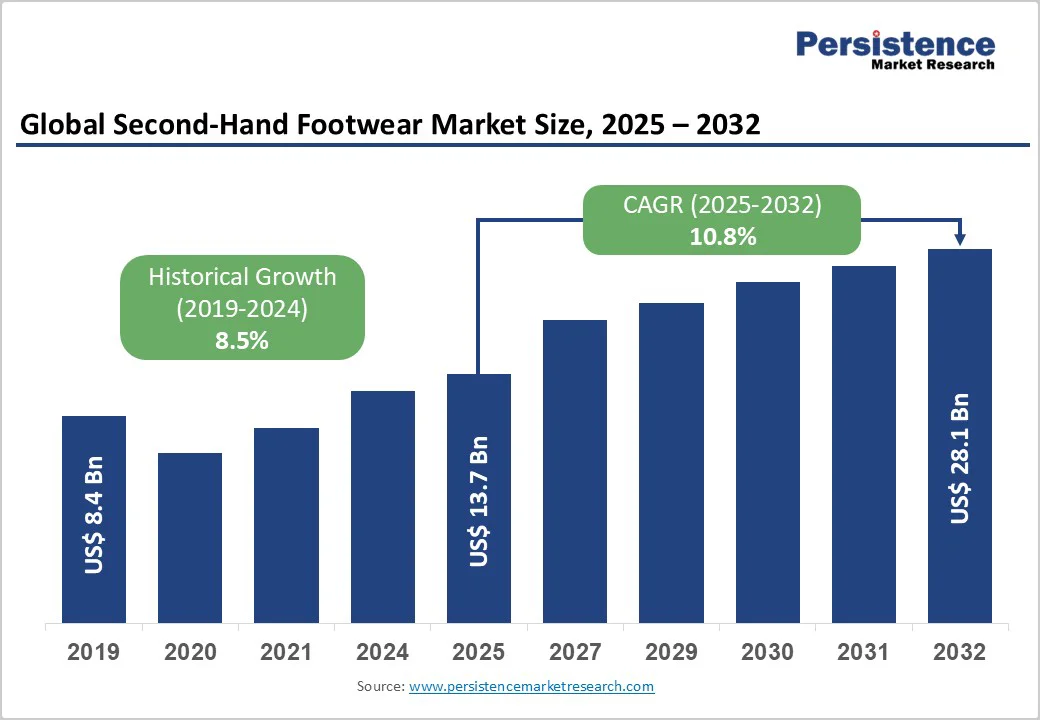
The global second-hand footwear market size is likely to be valued at US$13.7 billion in 2025, and is projected to reach US$28.1 billion by 2032, growing at a CAGR of 10.8% during the forecast period 2025-2032. The convergence of sustainability, affordability, and digital resale models drives the accelerated market expansion. Consumers are increasingly adopting recommerce across footwear due to circularity initiatives, brand-led take-back pilots, and maturing authentication systems that address concerns around quality and counterfeits, especially in the sneakers and luxury footwear segments.
Key Industry Highlights
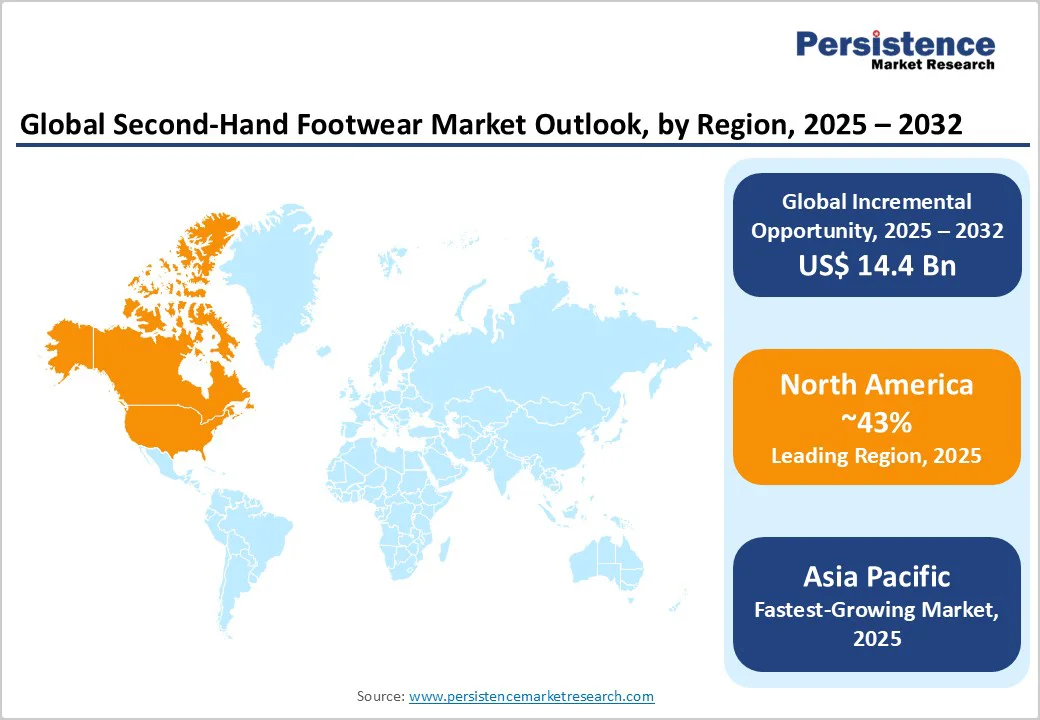
- Leading Region: North America leads the second-hand footwear market in 2025, backed by a strong resale ecosystem, advanced digital platforms, and mature thrift infrastructure led by Poshmark, The RealReal, and Goodwill.
- Fastest-growing Regional Market: The Asia Pacific market is expected to grow the fastest between 2025 and 2032, driven by urbanization, e-commerce expansion, and a growing sneaker culture in China and India.
- Dominant Sales Channel: Online platforms are slated to dominate in 2025 due to authentication, AI pricing, and social commerce.
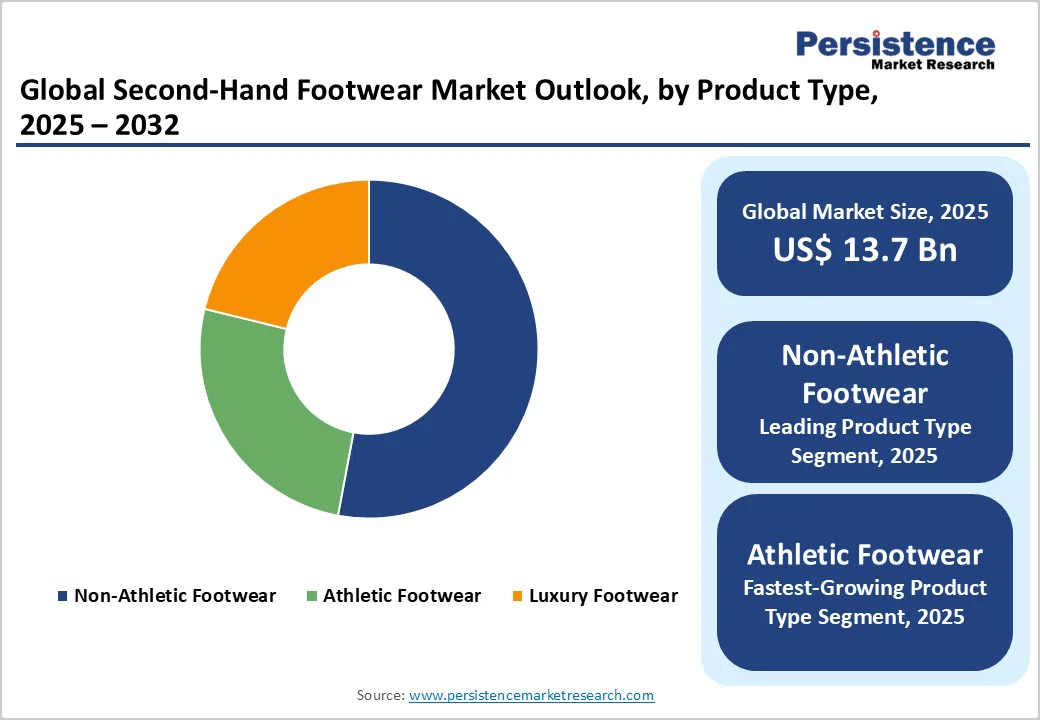
- Fastest-growing Product Type: Athletic footwear is likely to register the highest CAGR through 2032, driven by sneaker community engagement, authentication systems, and brand-led circularity pilots.
- Key Market Opportunity: Verified luxury resale is growing steadily in Europe and North America as trust, transparency, and brand partnerships strengthen the luxury and women’s premium footwear segments, creating new revenue streams.
| Key Insights | Details |
|---|---|
|
Market Size (2025E) |
US$13.7 Bn |
|
Market Value Forecast (2032F) |
US$28.1 Bn |
|
Projected Growth CAGR (2025–2032) |
10.8% |
|
Historical Market Growth (2019–2024) |
8.5% |
Market Factors - Growth, Driver, and Opportunity Analysis
Circularity, Take-Back Programs, and Sustainability Imperatives Driving Footwear Reuse
Growing sustainability pressures are reshaping consumer and brand behavior, making circularity central to the footwear ecosystem. With nearly 24 billion pairs of shoes produced each year and only a fraction recycled, landfill waste exceeding 90 million tons annually underscores the urgent need for reuse and resale pathways. Global brands are embedding circular principles through initiatives such as Nike’s Reuse-a-Shoe, adidas’ Made to Be Remade, and glue-free modular designs that extend product lifecycles. The rise of take-back programs, reverse logistics, and digital thrift infrastructure is lowering friction and cost barriers. These shifts are normalizing second-hand purchasing and positioning resale as a mainstream sustainability solution in the global footwear market.
The second-hand footwear market is also expanding rapidly on the back of technology-enabled resale platforms integrating AI pricing, authentication, and social commerce tools. Platforms such as ThredUp, Poshmark, The RealReal, and Vinted are redefining access, with ThredUp alone processing over 170 million pre-owned fashion items globally. Authentication systems using blockchain, RFID, and AI-based grading are further strengthening consumer trust by minimizing counterfeits. This transparency fuels growth across high-value sneaker and luxury footwear resale segments.
Hygiene and Authenticity Concerns Undermining Consumer Confidence
Hygiene and authenticity remain core barriers to the growth of the second-hand footwear market, as shoes are close-contact products that are often perceived as unsanitary despite cleaning and refurbishment processes. Only around 5% of shoes are recycled, and lingering hygiene doubts can deter buyers, particularly in premium and formal categories. Luxury and collectible sneakers attract counterfeits, forcing resale platforms to strengthen authentication measures through physical verification, AI-based screening, and blockchain tracking. However, these systems increase operational costs and turnaround times. Inconsistent refurbishment standards and variable condition grading, especially across borders, can erode consumer trust and limit scaling potential in global resale and recommerce channels.
Moreover, modern footwear design poses significant challenges for recycling and repair due to its multi-material construction, often involving 40–60 components bonded with strong adhesives. These complexities hinder disassembly and material recovery, making footwear less circular than apparel. As a result, a large number of used pairs cannot be efficiently refurbished or recycled, reducing the availability of quality second-hand inventory. Downcycling becomes the fallback option, limiting market supply in popular sizes and styles.
Sneaker and Performance Footwear Recommerce Emerging as a Scalable Growth Engine
The pre-owned sneaker segment is driving durable expansion of the second-hand footwear market, with U.S. secondary sneaker sales already reaching low billions and heavily favored by Millennial and Gen Z consumers. Online platforms now account for nearly half of sneaker resale activity, supported by authentication technologies, AI-driven pricing tools, and vibrant collector communities. Brands are introducing take-back, refurbishment, and designed-for-disassembly footwear lines to extend product lifecycles and encourage repeat trading. This ecosystem creates new value for refurbishers, graders, and data-driven resale marketplaces.
Luxury and premium footwear resale is accelerating as consumers embrace value-conscious and sustainable purchasing aligned with authentication assurance. Platforms such as The RealReal, Vestiaire Collective, and Farfetch-linked programs are embedding rigorous verification processes to build trust and drive participation. Luxury recommerce is now outpacing growth in firsthand sales among select consumer cohorts, particularly in women’s categories. As brands adopt certified circular models, resale liquidity improves, allowing both luxury labels and resale platforms to capture extended lifetime value across premium footwear portfolios.
Category-wise Analysis
Product Type Insights
Non-athletic footwear is poised to lead the second-hand footwear market in terms of revenue share in 2025, driven by high wardrobe turnover, a wide style variety, and strong donation flows through U.S. thrift stores and Europe’s mature resale networks. Formal, casual, and seasonal categories ensure steady availability, competitive pricing, and reliable inventory throughput.
Athletic and luxury footwear are set to be the fastest-growing product types. Sneaker resale benefits from limited editions, community marketplaces, authentication, and brand-backed refurbishment, attracting Millennials and Gen Z. Luxury footwear resale expands via verified digital platforms, boosting consumer trust and engagement. These segments are increasingly moving from niche hobbies to mainstream recommerce, providing opportunities for graders, refurbishers, and platform operators across the athletic and luxury footwear spaces.
End-User Insights
Women are likely to remain the leading consumers in the second-hand footwear market, accounting for around 52% of the market share in 2025. Their higher fashion cycle turnover, diverse style preferences, and strong engagement with digital resale platforms drive consistent market dominance. European trends highlight that a significant portion of women’s wardrobes now includes pre-owned items, reinforcing liquidity and supply continuity in this category.
The fastest-growing end-users through 2032 are likely to be kids and men. The growth of these segments is propelled by affordability, sustainability awareness, and the widening reach of online and thrift resale platforms. Kids’ footwear benefits from rapid size turnover, while men’s adoption is supported by sneaker recommerce and growing comfort with authenticated resale ecosystems.
Price Range Insights
Mass-market footwear is slated to dominate with an estimated 68% revenue share in 2025, driven by cost-conscious consumers and robust supply through thrift stores, donations, and peer-to-peer platforms. Value-driven demand remains resilient despite inflationary or trade-related pressures, ensuring steady circulation and accessibility across demographics.
Luxury footwear is expected to be the fastest-growing price segment over 2025-2032, driven by authentication technologies, brand-certified circular programs, and the appeal of affordable luxury. Europe and North America show the strongest momentum as curated resale ecosystems enhance trust, attract repeat buyers, and enable high-margin recommerce. This premiumization trend is redefining resale economics and extending the lifetime value of branded footwear.
Regional Insights
North America Second-Hand Footwear Market Trends
North America is anticipated to lead the second-hand footwear market share, anchored by the robust resale infrastructure and strong consumer acceptance in the U.S. Goodwill accounts for about 31% of secondhand clothing sales, while Poshmark and The RealReal represent 19% and 14% of digital resale, respectively. Online resale continues to outpace traditional retail, supported by consumer cost sensitivity, around 59% indicate a preference for secondhand if new apparel prices rise due to tariffs. Regulatory momentum around textile waste and extended producer responsibility further drives circular retail collaborations and innovation.
Technological advancements define the next growth phase of the regional market. Platforms are deploying AI-driven sorting, authentication, and inventory systems to streamline logistics and trust-building. The U.S. sneaker culture and high athletic footwear spending deepen recommerce liquidity, with major brand initiatives such as Nike’s Recycling + Donation program helping normalize reuse and solidify circular ownership models across footwear categories.
Europe Second-Hand Footwear Market Trends
Europe remains the global hub for circular fashion, combining cultural adoption, strong regulation, and platform maturity. Vinted’s 36% revenue growth in 2024 and multi-country expansion highlight rapid adoption, with the company’s impact report citing 679 kilotons of CO?e avoided in 2023. Around 65% of its users own wardrobes that are at least one-quarter secondhand. Inflation-driven affordability shifts have further accelerated resale, strengthening both volume and velocity of footwear transactions, particularly within the Luxury Footwear segment, where authentication and curation are key.
The region is advancing regulatory frameworks on eco-design and textile waste, encouraging standardized refurbishment and take-back systems. Germany, France, Spain, and the U.K. demonstrate high participation through both digital platforms and charity networks. These structured collection and grading systems enhance footwear quality outcomes, while Europe’s fashion heritage sustains high-value resale dynamics and trust in second-hand quality.
Asia Pacific Second-Hand Footwear Market Trends
Asia Pacific is emerging as the fastest-growing market for second-hand footwear, propelled by rapid urbanization, rising disposable incomes, and e-commerce penetration across China, India, and Southeast Asia. Urban consumers are increasingly open to resale models, with strong traction in sneaker recommerce driven by streetwear culture in Japan and China. Younger demographics favor affordability and sustainability, fostering growth in authenticated resale and affordable-luxury footwear categories.
Policy alignment and manufacturing advantages further accelerate the trend. India’s quality standards set by the Bureau of Indian Standards (BIS) are improving overall product durability, supporting more resilient secondhand supply chains. Regional brands are experimenting with circular pilots, including material recovery and take-back programs, while localized refurbishment and repair hubs reduce costs and improve throughput. Combined with rising environmental awareness and digital resale ecosystems, Asia Pacific is transitioning from emerging potential to a structured growth powerhouse for second-hand footwear.
Competitive Landscape
The global second-hand footwear market shows a fragmented-to-moderately concentrated competitive structure, shaped by both offline and digital ecosystems. Donation-based channels dominate physical resale, supported by a strong network of collection and refurbishment centers. Meanwhile, digital resale platforms enhance accessibility through advanced discovery tools, transparent pricing, and authentication features. Global supply flows are reinforced by wholesale exporters and refurbishment hubs that manage inventory intake and quality restoration across regions.
Competition increasingly hinges on technology and service differentiation. Key performance levers include authentication accuracy, refurbishment turnaround, AI-enabled pricing intelligence, and community engagement to boost trust and liquidity. Emerging business models are shifting toward subscription-based circular ownership, integrated reverse logistics, and brand-partnered recommerce initiatives that link repair, refurbishment, and resale at scale driving higher sustainability alignment and lifecycle value creation.
Key Industry Developments
- In October 2025, ThredUp enhanced its online resale platform with an AI-powered search upgrade that transforms how shoppers find secondhand fashion by interpreting style preferences beyond simple keywords. The system allows users to describe desired attributes such as color, fit, or vibe, delivering instant, curated matches and personalized recommendations similar to fast fashion apps, but with sustainable shopping benefits. The AI also helps sellers by automatically categorizing listings and improving item visibility, boosting sales potential.
- In October 2025, The Footwear Collective, in collaboration with Goodwill SoCal, launched the Footwear Futures Project in Los Angeles to promote shoe recycling and sustainability. Consumers are encouraged to donate shoes of any brand or condition at over 50 participating Goodwill locations throughout October 2025. The project aims to resell wearable shoes through existing programs and send end-of-life shoes for testing in innovative recycling methods. The initiative highlights a collective effort to extend the life cycle of footwear, reduce waste, and foster a circular future for shoe materials.
- In October 2025, AIM Group introduced Recommerce Intelligence, a new platform providing global insights and data analytics for the recommerce industry. The platform offers comprehensive market intelligence, consumer behavior analysis, and trend forecasts to support businesses operating in secondhand goods, resale, and circular economy sectors. By leveraging advanced analytics, Recommerce Intelligence aims to help companies optimize strategies, identify growth opportunities, and improve decision-making in the expanding recommerce market worldwide.
Companies Covered in Second-Hand Footwear Market
- Zagumi Trading Co.
- Guangzhou Hissen International Trade Co.
- Wuhan Haisen Renewable Resources
- Samiyatex, ThredUp Inc.
- Poshmark Inc.
- Depop
- The RealReal Inc.
- Vestiaire Collective
- eBay Inc.
- Goodwill Industries
- The Salvation Army
- Bank & Vogue Ltd.
- Farfetch UK Ltd.
- Rebelle Company
Frequently Asked Questions
The global second-hand footwear market is projected to reach US$ 13.7 billion in 2025.
Sustainability and circularity (for example, brand take-back, modular designs), affordability amid inflation, and digital resale scale with authentication and AI-powered discovery are top drivers.
The market is poised to witness a CAGR of 10.8% from 2025 to 2032.
Advent of authenticated luxury and premium recommerce across the luxury footwear and women luxury footwear markets and refurbishment and verification of performance sneakers present high-margin opportunities enabled by stronger trust infrastructure.
ThredUp Inc., Poshmark Inc., The RealReal Inc., and Vestiaire Collective are some of the key players in the market.


