




- Pharmaceuticals
- Monoclonal Antibodies Market
Monoclonal Antibodies Market Size, Share, Growth, and Regional Forecast, 2026 to 2033
Monoclonal Antibodies Market by Source Type (Human, Murine, Chimeric, Humanized), Production Type (In-vivo, In-vitro), Application (Infectious Diseases, Neurological Diseases, Autoimmune Diseases, Oncology, Others), End User (Hospitals, Specialty Centers, Others), and Regional Analysis from 2026 to 2033

Monoclonal Antibodies Market and Trend Analysis
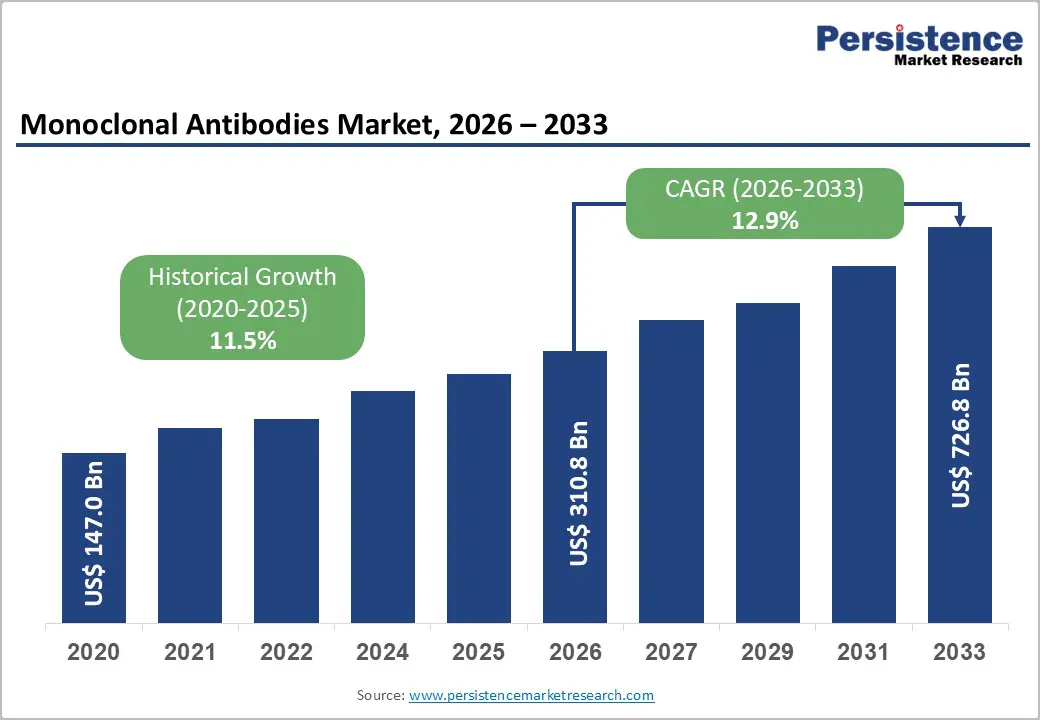
The global monoclonal antibodies market is estimated to grow from US$ 310.8 Bn in 2026 to US$ 726.8 Bn by 2033. The market is projected to grow at a CAGR of 12.9% from 2026 to 2033.
The global monoclonal antibodies industry is growing steadily, driven by rising demand for targeted therapies, increasing adoption of digital healthcare, and advancements in analytical and bioprocessing technologies. North America leads the market due to strong infrastructure, stringent regulatory standards, and high-quality manufacturing capabilities. The Asia-Pacific region is the fastest-growing region, driven by expanding healthcare facilities, supportive government initiatives, increasing patient awareness, and investments in advanced diagnostic and manufacturing solutions.
Key Industry Highlights
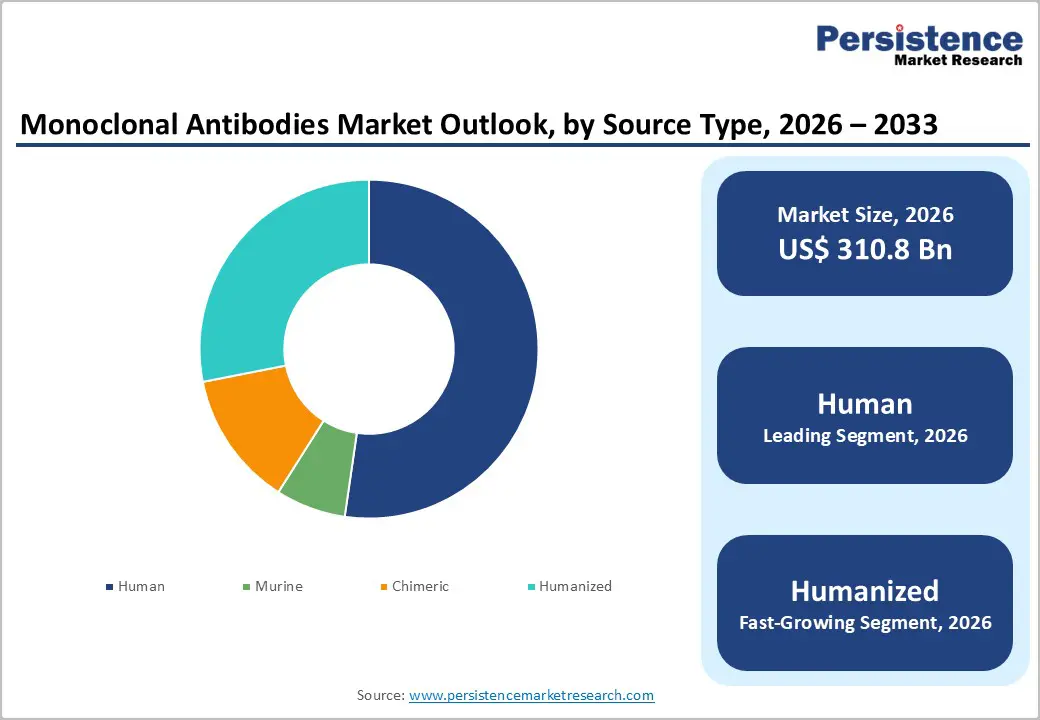
- Dominant Segment: Human monoclonal antibodies are increasingly significant due to their high specificity, reduced immunogenicity, and consistent therapeutic performance, capturing 52.3% share of the market in 2025. Derived entirely from human B-cells or humanized platforms, they are optimized for targeted disease pathways, enabling precise treatments for cancers, autoimmune disorders, and infectious diseases.
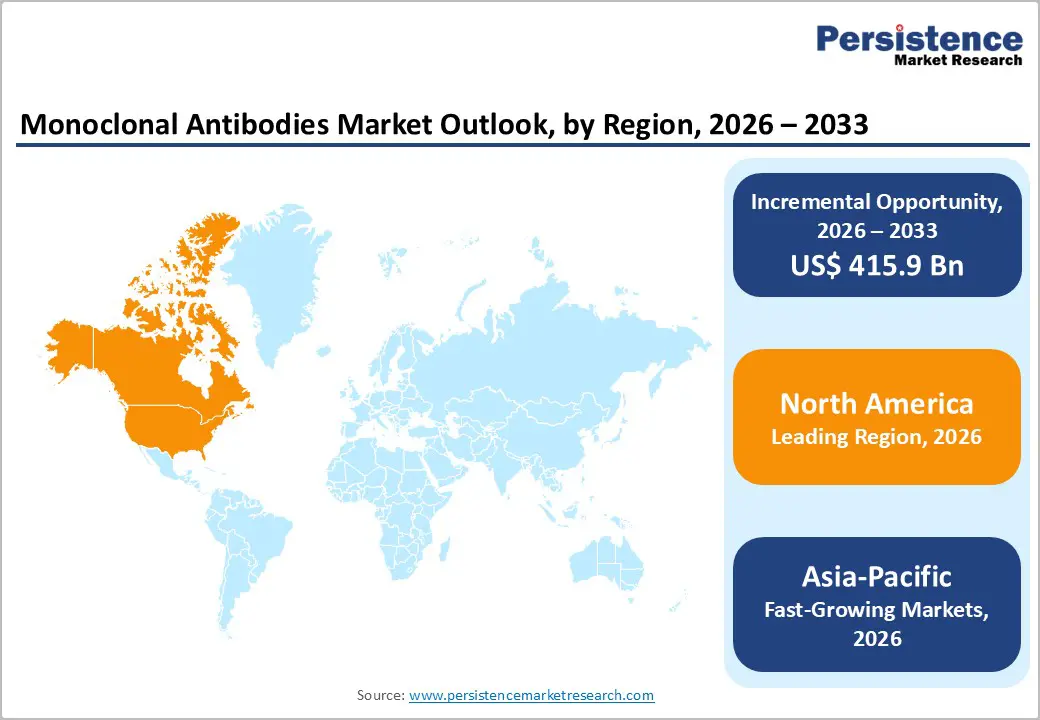
- Dominant Region: North America leads with around 45.8% share in 2025, supported by advanced biotech infrastructure, robust regulatory frameworks, and early adoption of antibody-based therapies. Asia-Pacific is the fastest-growing region, driven by expanding healthcare and biopharma facilities, government support, rising R&D investment, and scalable manufacturing adoption for novel monoclonal antibodies.
- Market Drivers: Rising demand for targeted biologic therapies, increasing biopharmaceutical investments, technological advances in antibody engineering, and the growing need for personalized and effective treatments are propelling market growth.
- Market Opportunity: Opportunities exist in next-generation mAbs for rare and chronic diseases, scalable manufacturing platforms, AI-enabled therapy optimization, integration with personalized medicine pipelines, and expansion in emerging biopharma regions.
| Global Market Attributes | Key Insights |
|---|---|
| Monoclonal Antibodies Market Size (2026E) | US$ 310.8 Bn |
| Market Value Forecast (2033F) | US$ 726.8 Bn |
| Projected Growth (CAGR 2026 to 2033) | 12.9% |
| Historical Market Growth (CAGR 2020 to 2025) | 11.5% |
Market Dynamics
Driver: Rising Demand for Targeted Therapies in Oncology, Autoimmune, and Infectious Diseases
The global burden of cancer continues to escalate, driving demand for targeted biologics such as monoclonal antibodies (mAbs). According to the World Health Organization (WHO), in 2022 there were an estimated 20 million new cancer cases globally and 9.7 million cancer deaths, illustrating the substantial therapeutic need that targeted cancer therapies aim to address. Monoclonal antibodies are increasingly integral to oncology care due to their ability to selectively target tumor antigens, reduce off target toxicity, and improve survival outcomes compared with traditional chemotherapies. Additionally, mAb therapies are widely used for autoimmune conditions such as rheumatoid arthritis and inflammatory disorders, where precision immune modulation can significantly improve disease control.
Beyond oncology and autoimmune diseases, monoclonal antibodies are also employed against certain infectious diseases. The increasing emphasis on biologics during the COVID19 pandemic highlighted mAbs as effective antiviral tools, including emergency use authorizations for SARS CoV 2 neutralizing antibodies. Although not a replacement for vaccines, these therapies contribute to the management of acute disease, particularly in high-risk populations. Combined with aging populations and rising prevalence of chronic diseases, these factors sustain robust demand for mAbs as targeted therapies across therapeutic areas, thereby driving market growth.
Restraints: High Manufacturing and Development Costs for Monoclonal Antibodies
Monoclonal antibody therapies are expensive to develop and produce, posing a significant market restraint. The development of a novel therapeutic mAb can exceed $2 billion USD, driven by extensive R&D, multi phase clinical trials, and regulatory requirements. Manufacturing biologics such as mAbs demands highly specialized infrastructure (e.g., mammalian cell culture systems, stringent bioreactor controls), sophisticated purification processes, and rigorous quality testing to ensure product consistency and safety. These complexities substantially increase both capital expenditures and operating costs.
From a commercial perspective, high development and production costs translate into expensive therapies for patients. Many therapeutic mAbs are priced above $100,000 per patient per year, making them less accessible, particularly in low and middle-income regions where health systems and insurance coverage may be limited. The combination of high R&D outlays, lengthy development timelines, and sophisticated manufacturing requirements creates barriers to entry for smaller biotech firms, slows pipeline progression, and limits affordability, restricting broader adoption and dampening market growth in cost-sensitive environments.
Opportunity: Development of Next Generation and Bispecific Monoclonal Antibodies
The next frontier in antibody therapeutics lies in bispecific and multispecific antibodies (MsAbs) that can simultaneously bind two distinct targets, offering enhanced therapeutic efficacy in complex diseases. Bispecific antibody formats expand the functional capabilities of traditional monoclonal antibodies by engaging multiple antigens or immune pathways with a single molecule. This enables, for example, the direct recruitment of T cells to tumor cells to enhance immune activation, representing a promising approach in oncology and beyond.
The FDA has already approved more than a dozen bispecific antibodies, including agents targeting CD20 and CD3 for lymphoma, confirming clinical feasibility and commercial potential. Additionally, research into multispecific constructs and engineered antibody scaffolds is expanding, with platforms designed to enhance binding, reduce resistance, and improve clinical outcomes in cases where single-target therapies are limited. As the technology matures and regulatory pathways evolve, these next-generation antibody formats offer a significant opportunity to address unmet medical needs and to unlock new therapeutic categories, substantially expanding the monoclonal antibody market.
Category-wise Analysis
By Source Type, Human Dominates the Monoclonal Antibodies Market
Human source occupies 52.3% share of the global market in 2025, because they offer reduced immunogenicity and improved safety profiles, which are critical for chronic and life threatening conditions such as cancer and autoimmune diseases. Fully human antibodies are structurally most similar to naturally occurring human antibodies, minimizing the risk of immune reactions that can limit efficacy or cause adverse events, a key regulatory and clinical priority.
Moreover, advancements in technologies like transgenic animal models and phage display libraries have expanded the pipeline of fully human monoclonal antibodies, improving binding specificity and therapeutic durability. These innovations support broader clinical acceptance and higher uptake across multiple therapeutic areas, reinforcing the human segment’s leadership in the monoclonal antibodies market.
By Production Type, In vitro production dominates mAbs manufacturing due to scalability, control, reproducibility, regulatory compliance, and high efficiency
In vitro production methods dominate monoclonal antibody manufacturing because they provide scalable, controlled, and reproducible production compared with in vivo (animal-based) approaches. Controlled cell culture systems, most commonly using mammalian cells such as Chinese hamster ovary (CHO) lines, enable tight regulation of growth conditions and consistent antibody quality, which is essential for clinical and commercial supply. This advantage has led the in vitro segment to account for an estimated 60–75% share of the production-type market in 2024–2025.
In vitro systems also facilitate regulatory compliance, reduced contamination risk, and cost-effective scale-up to meet global demand for therapeutic mAbs. They support advanced bioprocessing technologies such as single-use bioreactors and continuous manufacturing, which further enhance yield and production efficiency for large-volume biologics. These operational strengths make in vitro production the preferred choice for most commercial monoclonal antibody manufacturing.
Regional Insights
North America Monoclonal Antibodies Market Trends
North America dominates the monoclonal antibodies market with 45.8% share in 2025, due to unparalleled biomedical research capacity and high disease burden, emphasizing targeted therapies. The U.S. accounts for a large proportion of global cancer cases, over 2 million new diagnoses projected in 2025 alone, fueling demand for biologics like mAbs for oncology care. The region’s robust healthcare infrastructure and advanced R&D ecosystem are supported by major public institutions such as the National Institutes of Health (NIH) and the National Cancer Institute (NCI), which coordinate extensive research and clinical trial networks. Additionally, high healthcare spending and comprehensive reimbursement frameworks enable widespread adoption of innovative therapies, reinforcing North America’s leading share of the global market.
Europe Monoclonal Antibodies Market Trends
Europe is a significant market for monoclonal antibodies due to its robust healthcare systems, broad adoption of advanced therapeutics, and a structured regulatory environment. Countries such as Germany, France, and the United Kingdom have well-established clinical infrastructures and comprehensive public health coverage that ensure access to biologic treatments. The regional market is driven by increasing prevalence of chronic diseases, including cancer and autoimmune disorders and rising patient awareness of targeted therapies. Europe’s pharmaceutical sector benefits from coordinated clinical trial activity and regulatory oversight by authorities such as the European Medicines Agency (EMA), promoting rigorous safety standards and the adoption of innovation. With a substantial share (~28–30% globally), Europe’s reimbursement systems and research networks play a pivotal role in integrating mAb therapies into routine care.
Asia-Pacific Monoclonal Antibodies Market Trends
The Asia Pacific region is the fastest-growing monoclonal antibodies market due to rapid healthcare development, expanding biopharmaceutical capacity, and rising disease prevalence. Countries like China, India, and Japan are increasing healthcare investments and building manufacturing infrastructure for biologics, supported by evolving regulatory frameworks that streamline approvals for new therapies. The region’s large and aging population contributes to a growing patient pool with chronic conditions such as cancer and autoimmune disorders, driving demand for targeted mAb treatments. Additionally, government initiatives and expansions in clinical research increase local R&D and help reduce treatment costs, thereby boosting access and adoption. These factors underpin Asia-Pacific’s robust compound annual growth rate (often outpacing Western regions), making it the fastest-growing regional market for monoclonal antibodies.
Market Competitive Landscape
The monoclonal antibodies market is highly competitive, led by companies like Roche, AbbVie, Amgen, and Johnson & Johnson. Firms compete on innovation, pipeline diversity, and biologic engineering. Strategic collaborations, biosimilar launches, and global expansion drive market positioning, while R&D investment and regulatory approvals determine long-term leadership.
Key Industry Developments:
- In January 2026, Novartis announced that its investigational monoclonal antibody ianalumab received Breakthrough Therapy designation from the U.S. Food and Drug Administration (FDA) for the treatment of Sjögren’s disease, a chronic autoimmune condition with no approved targeted therapies. The designation was granted based on positive results from global Phase III trials, which showed clinically meaningful improvements in disease activity and reductions in patient burden.
- In November 2025, Nona Biosciences entered into a strategic research collaboration with Pfizer to accelerate preclinical antibody discovery across multiple disease targets. Under the non-exclusive agreement, Pfizer obtained global rights to access Nona’s proprietary Harbour Mice® heavy chain only antibody (HCAb) platform for generating fully human antibodies.
Companies Covered in Monoclonal Antibodies Market
- Novartis AG
- Pfizer Inc
- GlaxoSmithKline plc
- Amgen Inc.
- Merck & Co., Inc.
- Daiichi Sankyo Company, Limited
- Abbott Laboratories
- AstraZeneca plc
- Johnson & Johnson Services, Inc.
- Bayer AG
- Bristol Myers Squibb
- F. Hoffman-La Roche Ltd.
- Biogen Inc.
- Thermo Fisher Scientific, Inc.
- Novo Nordisk A/S
- Sanofi S.A.
- Biocon Biologics Ltd
- Merck KGaA
- Others
Frequently Asked Questions
The global monoclonal antibodies market is projected to be valued at US$ 310.8 Bn in 2026.
Rising demand for targeted therapies, technological advances, personalized medicine adoption, and growing biopharmaceutical investments drive growth.
The global monoclonal antibodies market is poised to witness a CAGR of 12.9% between 2026 and 2033.
Next-generation antibodies, bispecifics, AI-enabled optimization, rare disease therapies, scalable manufacturing, and emerging market expansion offer opportunities.
Novartis AG, Pfizer Inc, GlaxoSmithKline plc, Amgen Inc., Merck & Co., Inc., Daiichi Sankyo Company, Limited.


