




- Food Ingredients & Additives
- FTNF Flavor Market
FTNF Flavor Market Size, Share, Growth, and Regional Forecast, 2026 - 2033
FTNF Flavor Market by Product Type (Natural FTNF Flavors, Synthetic FTNF Flavors), Application (Dairy, Bakery, Confectionery, Snack, Beverage, Others), and Regional Analysis from 2026 - 2033

FTNF Flavor Market Share and Trends Analysis
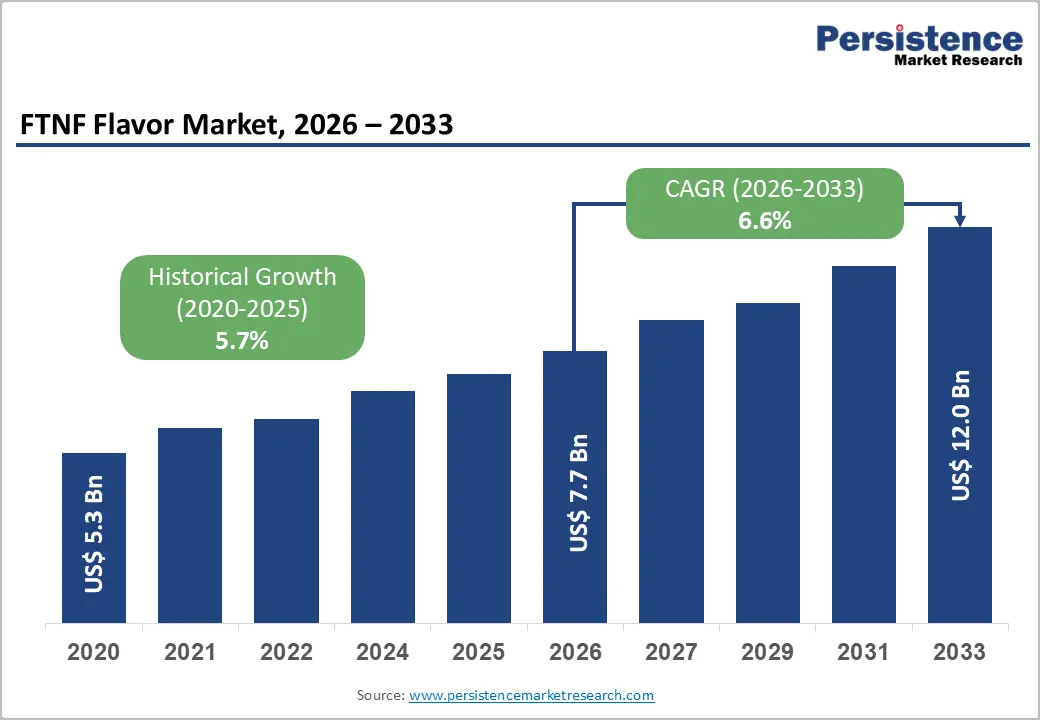
The global FTNF flavor market is estimated to grow from US$ 7.7 billion in 2026 to US$ 12.0 billion by 2033. The market is projected to record a CAGR of 6.6% during the forecast period from 2026 to 2033. The global market is steadily growing, driven by rising demand for natural, clean-label ingredients and authentic taste profiles. North America leads due to strong processed food consumption, while the Asia Pacific is the fastest-growing region. Europe shows stable growth, supported by regulatory support and increasing preference for natural flavor solutions.
Key Industry Highlights:
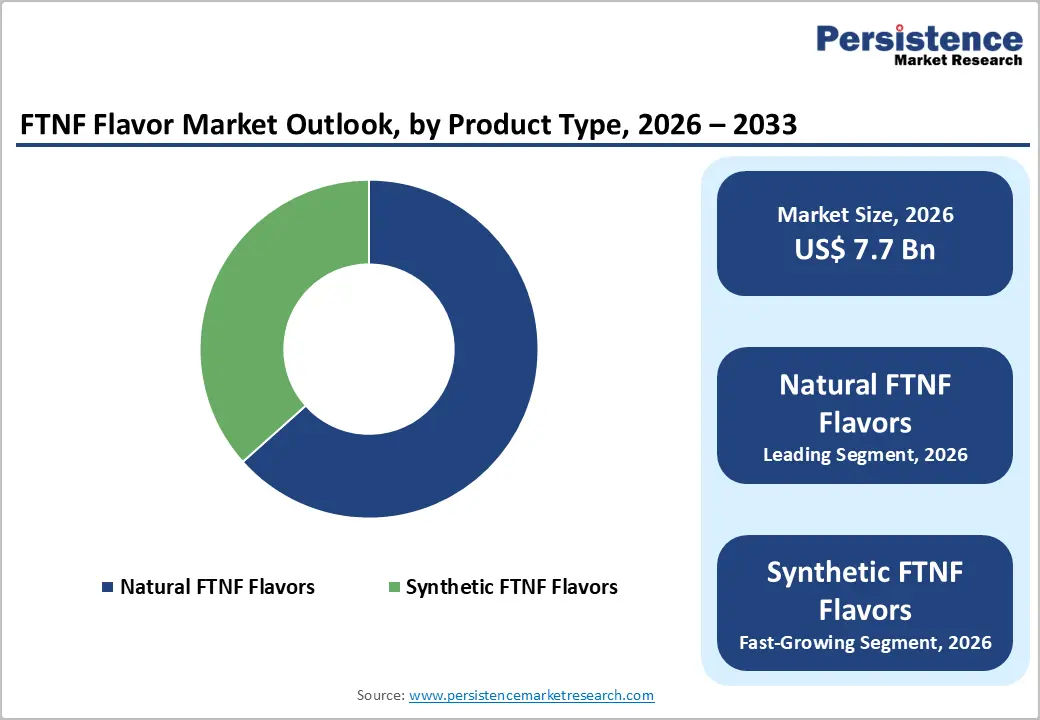
- Dominant Product Segment: Natural FTNF flavors held the largest share 63.4% in 2025, driven by strong demand for clean-label, authentic taste, and minimally processed ingredients across food and beverage applications.
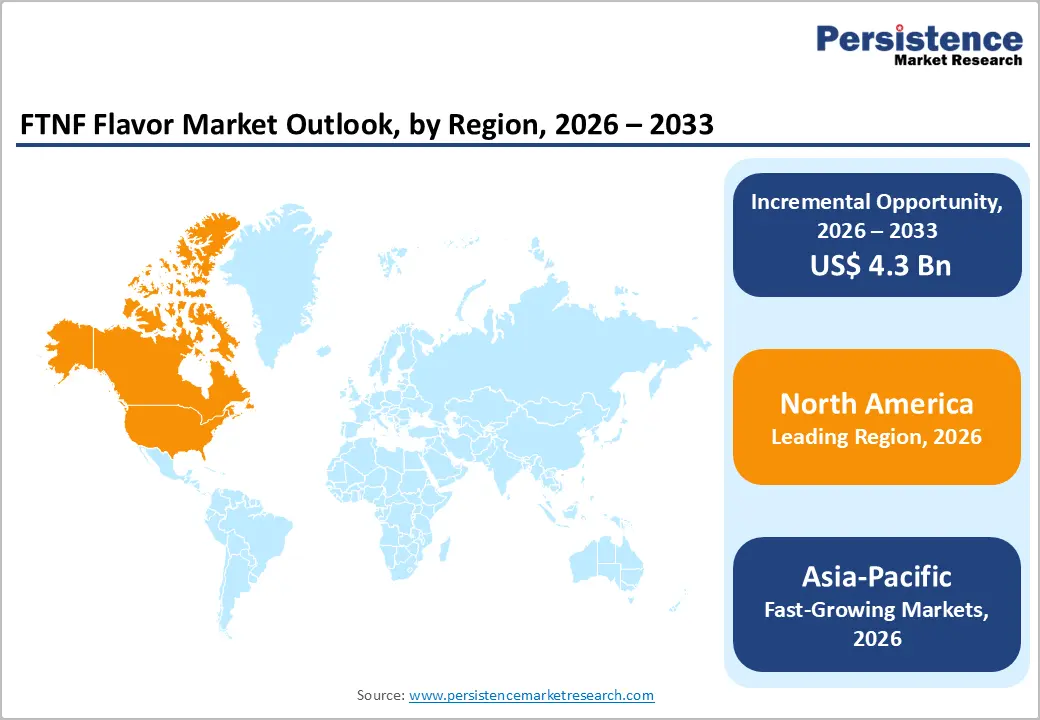
- Regional Leadership: North America held 32.5% share in 2025, supported by high consumption of processed foods, advanced flavor technologies, and strong demand for natural ingredients.
- Growth Indicator: Growth is driven by rising clean-label demand, preference for natural ingredients, expansion of processed foods, beverage innovation, and increasing regulatory restrictions on synthetic additives.
- Opportunity: Opportunities lie in premium beverages, plant-based products, functional foods, expansion in Asia-Pacific, and innovations in extraction technologies ensuring authenticity and flavor stability.
Market Dynamics
Driver: Rising Demand for Clean-Label and Natural Ingredients
The FTNF flavor market is strongly driven by increasing consumer preference for clean-label and natural ingredients. Globally, consumers are actively avoiding artificial additives and shifting toward recognizable, minimally processed components. According to the Food and Agriculture Organization, ultra-processed foods account for over 50% of caloric intake in several developed countries, triggering concerns about ingredient quality and pushing demand for natural alternatives. This shift is directly benefiting FTNF flavors, which are derived from real fruits and align with “natural origin” labeling requirements in food and beverages.
Additionally, consumer behavior data highlights a strong preference for transparency and natural formulations. Studies show that 61% of consumers prefer products with no artificial ingredients, and 37% check ingredient labels more frequently than before, reflecting growing scrutiny. In the U.S., around 20% of consumers already consume clean-label products regularly, indicating mainstream adoption. These trends are forcing manufacturers to reformulate products using FTNF flavors to meet regulatory expectations and consumer trust, making clean-label demand a primary growth driver.
Restraint: Complex Extraction and Standardization Processes
A major restraint in the FTNF flavor market is the complexity involved in extraction and standardization of natural flavors. FTNF flavors must be derived exclusively from the named fruit, requiring advanced processes such as cold pressing, distillation, and solvent extraction to maintain authenticity. These processes are technically demanding and sensitive to raw material variability. According to the United States Department of Agriculture, prices of key agricultural raw materials increased by 25–60% between 2020 and 2022, reflecting volatility in supply chains for natural inputs. This directly impacts FTNF production consistency and cost structures.
Furthermore, natural ingredients exhibit variability due to climate, seasonality, and geographic sourcing, making standardization difficult. Unlike synthetic flavors, maintaining consistent taste, aroma, and stability across batches requires extensive formulation adjustments. Regulatory bodies like the U.S. Food and Drug Administration and European Food Safety Authority impose strict compliance on natural labeling, adding further complexity. These factors increase production time, cost, and technical barriers, limiting scalability and acting as a key restraint in the FTNF flavor market.
OPPORTUNITY: Expansion in Functional and Fortified Food & Beverages
The expansion of functional and fortified food and beverages presents a major opportunity for the FTNF flavor market. Consumers increasingly demand products that provide health benefits beyond basic nutrition, such as improved immunity, digestion, and energy. According to industry-supported data aligned with global nutrition agencies, the clean-label ingredients market is projected to grow significantly, driven by demand for functional and health-oriented foods. FTNF flavors play a key role here by masking off-notes of functional ingredients while maintaining natural labeling claims.
Additionally, the rise of plant-based and fortified products is accelerating FTNF adoption. Around 62.3% of clean-label ingredients are derived from plant-based sources, indicating strong alignment with FTNF fruit-based flavors. Functional foods such as probiotic drinks, fortified dairy, and nutritional snacks increasingly require natural flavor systems to ensure consumer acceptance. Governments and regulatory bodies are also promoting healthier diets, indirectly supporting functional food growth. This creates a strong opportunity for FTNF flavors as they enable both health positioning and sensory appeal, making them essential in next-generation food formulations.
Category-wise Analysis
By Product Type, Natural FTNF Flavors are Dominant
Natural FTNF flavors dominate the market with 63.4% share in 2025, due to strong consumer preference for clean-label and natural food products. According to the U.S. Department of Agriculture (USDA), natural-labeled foods account for over 16% of total retail food spending, reflecting demand for recognizable ingredients. Additionally, rising health concerns around ultra-processed foods, highlighted by the U.S. Food and Drug Administration (FDA), are pushing consumers toward natural alternatives.
Synthetic FTNF flavors are the fastest-growing segment, driven by cost efficiency, scalability, and consistent quality. They are not limited by seasonal raw materials, ensuring a stable supply for manufacturers. Advances in flavor technology have improved their ability to replicate natural taste profiles. Increasing demand for affordable processed foods, especially in emerging markets, continues to accelerate their adoption globally.
By Application, Beverages Lead the FTNF Flavor Market
The beverage segment dominates the FTNF flavor market due to its high consumption and continuous product innovation. Beverages such as juices, soft drinks, and functional drinks rely heavily on flavor systems for taste differentiation. According to the International Food Information Council (IFIC), about 63% of consumers consider ingredients when purchasing food and beverages, with many preferring natural options. Additionally, data aligned with the Food and Agriculture Organization (FAO) indicates that processed foods, including beverages, contribute to over 50% of calorie intake in developed regions, highlighting their scale. FTNF flavors enable beverage manufacturers to deliver authentic fruit taste while maintaining clean-label claims, making this segment the largest application area.
Regional Insights
North America FTNF Flavor Market Trends
The U.S. leads the FTNF flavor market due to its large food and beverage industry, high consumer spending, and strong demand for processed foods. According to the U.S. Department of Agriculture, total U.S. food expenditure reached USD 1.8 trillion in 2023, reflecting extensive consumption of flavored products. Additionally, significant spending on dining and packaged foods drives demand for advanced flavor systems. Canada is a key market, supported by growing demand for clean-label and natural ingredients. Strict regulations by authorities such as Health Canada encourage the use of natural FTNF flavors. The country’s expanding processed food sector and increasing health awareness among consumers further contribute to steady market growth.
Europe FTNF Flavor Market Trends
Germany leads the FTNF flavor market in Europe due to its well-established food processing industry and strong demand for high-quality, natural ingredients. The country reports over EUR 227 billion in retail food sales, reflecting substantial consumption of flavored products. Additionally, strict regulations enforced by the European Food Safety Authority encourage the adoption of natural FTNF flavors across food and beverage applications.
Spain is the fastest-growing market, driven by increasing demand for clean-label and Mediterranean-style food products. Rising consumer awareness regarding natural ingredients and expanding food processing activities are boosting adoption. Growth in exports of processed foods and beverages further supports demand, making Spain a rapidly emerging market for FTNF flavors in Europe.
Asia-Pacific FTNF Flavor Market Trends
China leads the FTNF flavor market in Asia-Pacific due to its large food and beverage industry and strong manufacturing base. Rapid urbanization and rising disposable incomes have significantly increased demand for processed and packaged foods. The country’s expanding retail sector and high consumption of ready-to-drink beverages further support the adoption of FTNF flavors across multiple applications.
India is the fastest-growing market, driven by a growing middle-class population and changing dietary habits. Increasing demand for clean-label and natural products is accelerating the use of FTNF flavors. Government focus on food safety standards and the rapid expansion of the processed food and beverage sector continue to support strong market growth.
Competitive Landscape
The FTNF flavor market is moderately competitive, led by players such as Givaudan, Symrise AG, Kerry Group, International Flavors & Fragrances, and MANE. Companies focus on natural ingredient innovation, clean-label solutions, advanced extraction technologies, and expanding global distribution to meet rising demand for authentic and traceable flavors.
Key Developments:
- In February 2026, ADM unveiled key culinary trends shaping food and beverage innovation, emphasizing a shift toward bold, flavor-forward experiences. The company highlighted growing consumer demand for globally inspired tastes, fusion cuisines, and authentic ingredients. It noted that evolving preferences are pushing manufacturers to experiment with diverse flavor profiles and sensory experiences.
- In January 2026, ADM expanded its capabilities in product reformulation by investing in a new flavor facility. The move was aimed at helping food and beverage manufacturers adapt to changing consumer preferences, particularly the shift toward clean-label, reduced-sugar, and natural ingredient formulations.
Global FTNF Flavor Market – Key Insights
| Key Insights | Details |
|---|---|
|
Historical Market Value (2020) |
US$ 5.3 Bn |
|
Current Market Value (2026) |
US$ 7.7 Bn |
|
Projected Market Value (2033) |
US$ 12.0 Bn |
|
CAGR (2026-2033) |
6.6% |
|
Leading Region |
North America, 32.5% share |
|
Dominant Product Type |
Natural FTNF Flavors, 63.4% share |
|
Top-ranking Equipment |
Beverage, 34.1% |
|
Incremental Opportunity |
US$ 4.3 Bn |
Companies Covered in FTNF Flavor Market
- MANE
- ADM
- Cargill Inc.
- Dakini Health Foods
- Kerry Group
- Givaudan
- Symrise AG
- TOSHEV
- Plant Ex Ingrdients Ltd
- International Flavors & Fragrances (IFF)
- Firmenich
- Sensient Technologies Corporation
- Takasago International Corporation
- Robertet Group
- Others
Frequently Asked Questions
The global FTNF flavor market is projected to be valued at US$ 7.7 Bn in 2026.
Rising clean-label demand, natural ingredient preference, beverage innovation, processed food growth, and regulatory restrictions on synthetics.
The global FTNF flavor market is poised to witness a CAGR of 6.6% between 2026 and 2033.
Growth in functional foods, plant-based products, premium beverages, Asia-Pacific expansion, and advanced extraction technologies.
MANE, ADM, Cargill Inc., Dakini Health Foods, Kerry Group, Givaudan.


