




- Nutraceuticals & Functional Foods
- Cod Liver Oil Market
Cod Liver Oil Market Size, Share, Growth, and Regional Forecast, 2025 to 2032
Cod Liver Oil Market by Form (Liquid, Capsules / Softgels, Gummies, Others), by Source (Atlantic Cod, Pacific Cod, Arctic Cod, Farm-associated Cod, Others), by Sales Channel (B2B, B2C), and Regional Analysis from 2025 to 2032

Cod Liver Oil Market Share and Trends Analysis
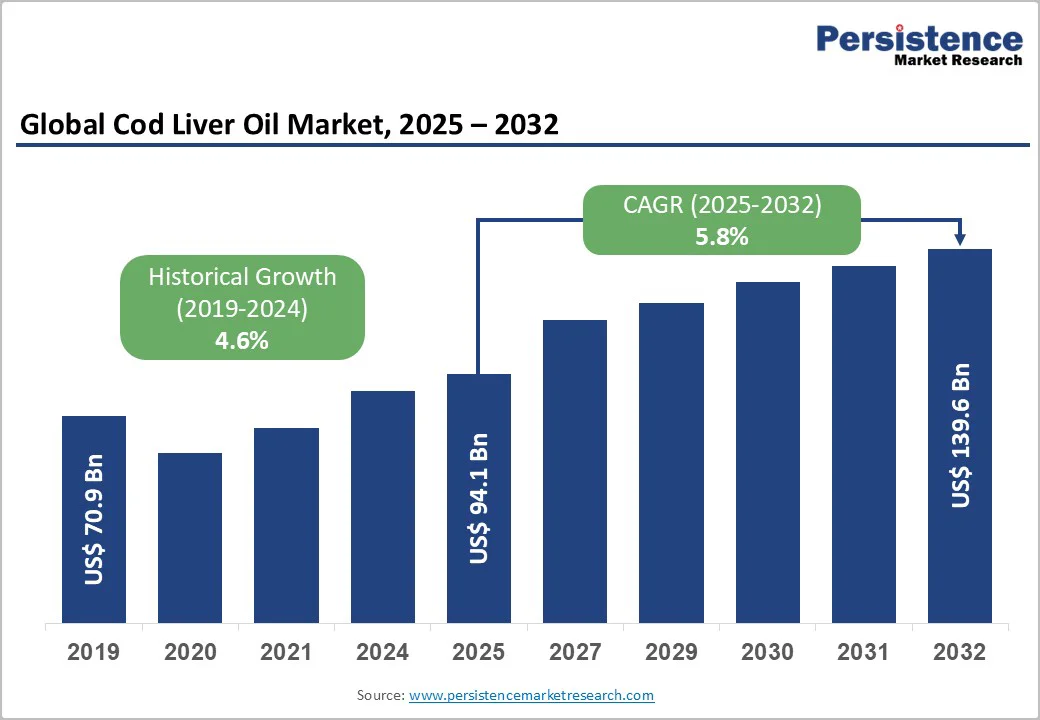
The global cod liver oil market size is valued at US$ 94.1 billion in 2025 and projected to reach US$ 139.6 billion by 2032.
The market is projected to record a CAGR of 5.8% during the forecast period from 2025 to 2032. A dynamic market shift is unfolding as sustainability pressures, science-backed innovation, and rising preventive wellness reshapes competitive priorities. Companies are recalibrating sourcing models, upgrading technology, and forming strategic partnerships to stay relevant in a fast-evolving landscape.
Key Industry Highlights
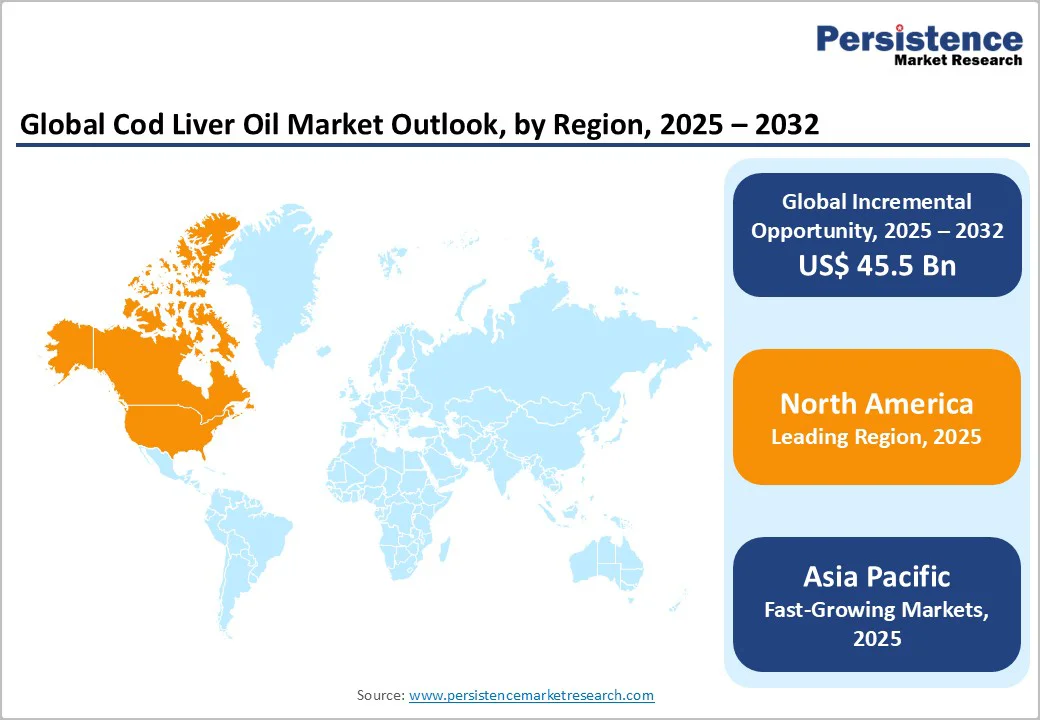
- Leading Region: North America holds approximately 38% share, supported by demand for purified formulations, traceable sourcing, and strong brand presence across the U.S. and Canada.
- Fastest-Growing Region: Asia Pacific, driven by rising preventive health adoption, clean-label preferences, and surging traction in India, China, Japan, and South Korea.
- Fastest-Growing Sales Channel: Specialty Health Stores, gaining momentum through expert-led product curation, premium offerings, and growing consumer trust in guidance-driven supplement purchases.
- Market Drivers: Lifestyle-driven adoption of cod liver oil as a daily wellness staple, supported by global interest in omega-3s, vitamin D, and immunity-focused formulations.
- Opportunities: Launching certified sustainable and traceable cod liver oil supported by MSC, Friend of the Sea, or blockchain-backed transparency to attract environmentally conscious consumers.
- Key Developments: In November 2025, Nordic Capital acquired a majority stake in Evosep to strengthen high-throughput proteomics innovation; In October 2024, KD Pharma Group completed the acquisition of dsm-firmenich’s Marine Lipids business following regulatory clearance.
| Key Insights | Details |
|---|---|
| Global Cod Liver Oil Market Size (2025E) | US$ 94.1 Bn |
| Market Value Forecast (2032F) | US$ 139.6 Bn |
| Projected Growth (CAGR 2025 to 2032) | 5.8% |
| Historical Market Growth (CAGR 2019 to 2024) | 4.6% |
Market Dynamics
Driver - Health-conscious consumers are integrating cod liver oil into daily wellness routines
Health-conscious lifestyles are reshaping supplement habits, and cod liver oil is becoming a daily essential for consumers seeking preventive wellness. People are turning to omega-3 rich formulations to support heart, brain, and immunity health as chronic lifestyle disorders rise globally.
In the U.S., wellness influencers and medical practitioners highlight cod liver oil for its vitamin D and EPA/DHA benefits, boosting everyday usage across adults and fitness-focused groups. Nordic countries continue to promote cod liver oil as part of traditional health routines, inspiring wider global adoption through digital health communities.
In Asia, growing awareness of nutritional deficiencies is pushing families to include cod liver oil in daily diets. This consistent, lifestyle-driven intake strengthens long-term category growth worldwide.
Restraints - Sustainability concerns around marine sourcing may limit market expansion
Sustainability concerns around marine sourcing are emerging as a decisive barrier to the global Cod Liver Oil market, reshaping how producers operate and how regulators intervene. Overfishing of Atlantic cod stocks in regions such as the North Atlantic and Barents Sea is triggering stricter catch quotas, limiting the availability of high-quality raw material for oil extraction.
Norway’s 2024 tightening of cod quotas and Iceland’s continued reductions reflect growing pressure to protect declining fisheries. Environmental groups are demanding transparency on by-product utilization, ecosystem impact, and traceability, pushing brands to justify their sourcing practices.
As scrutiny intensifies, manufacturers face higher compliance costs, supply instability, and reputational risks, constraining the sector’s ability to scale without robust sustainability strategies.
Opportunity - Launching certified, sustainable and traceable products to appeal to environmentally conscious consumers
Building a portfolio centered on certified sustainable and fully traceable cod liver oil is becoming a high-value opportunity as consumers increasingly demand proof of environmental responsibility. Brands that secure certifications such as MSC, Friend of the Sea, or third-party carbon-neutral labels can differentiate themselves in a category where transparency is becoming a deciding factor.
Companies are now adopting blockchain-based batch tracking, vessel-level monitoring, and QR-code traceability to show sourcing integrity from ocean to bottle. Startups can leverage small-batch, responsibly harvested cod from Icelandic or Norwegian fisheries to position themselves as premium and eco-aligned. As eco-awareness intensifies worldwide, traceable cod liver oil that verifies ethical fishing boosts credibility, pricing power, and global market access.
Category-wise Analysis
By Source Insights
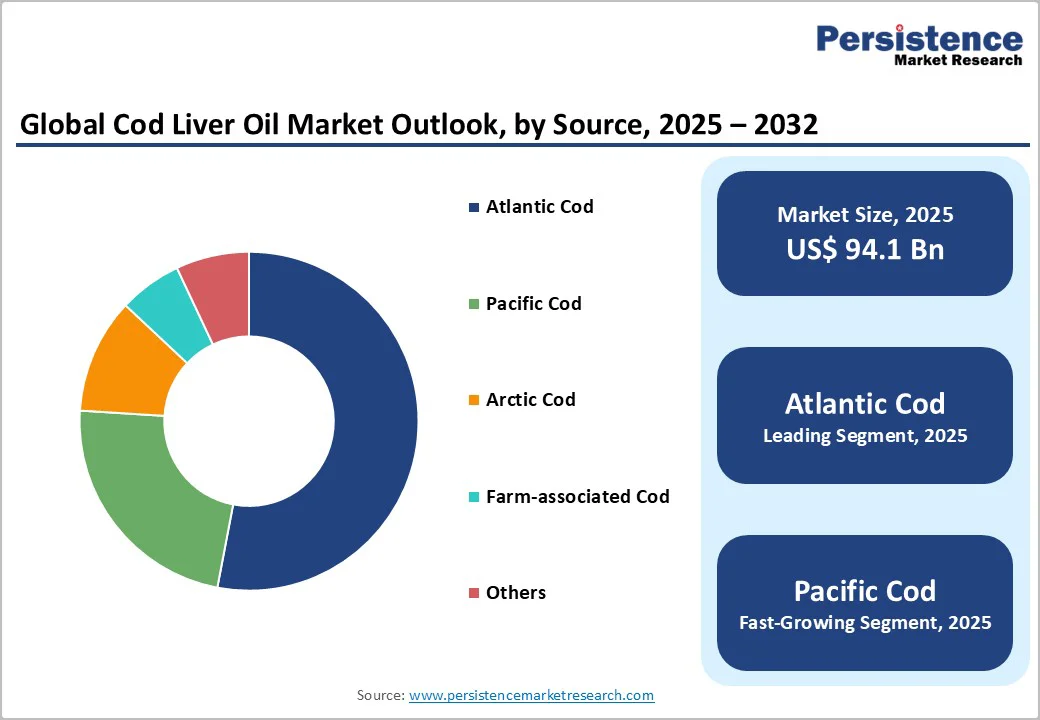
Atlantic Cod holds approx. 53% market share as of 2024, and its dominance stems from its consistent oil quality, higher natural vitamin A and D concentrations, and well-established harvesting infrastructure across Northern Atlantic fisheries. Producers rely on Atlantic Cod because supply chains, extraction facilities, and cold-processing technologies are already optimized for this species, ensuring stable yields and predictable purity.
Pacific Cod contributes moderately to the market, offering a leaner oil profile that supports specialized formulations. Arctic Cod attracts interest for its omega-3 richness but faces sourcing limitations tied to extreme environments. Farm-associated Cod remains a niche category, constrained by scale and cost. The combination of reliability, nutrient density, and historical industry integration keeps Atlantic Cod firmly at the forefront.
By Sales Channel Insights
Specialty Health Stores is projected to grow at a CAGR of 7.3% during the forecast period, setting the stage for a retail shift driven by consumers actively seeking expert guidance and premium-quality cod liver oil formulations. These stores are becoming the preferred channel as shoppers prioritize trusted environments where product purity, sourcing transparency, and clinical-grade potency are clearly explained.
Dedicated staff support, curated assortments, and access to niche brands strengthen consumer confidence, particularly for omega-3, vitamin A, and vitamin D supplements linked to targeted wellness goals. Many specialty outlets are expanding their footprint through community-focused events, tailored nutrition programs, and exclusive launches.
Their ability to combine education, credibility, and premium product offerings is positioning them for sustained momentum in the cod liver oil market.
Region-wise Insights
North America Cod Liver Oil Market Trends
North America holds approximately 38% share in the global cod liver oil market, and this leadership is evolving through a wave of premiumization and science-backed product positioning. In the U.S. and Canada, demand is shifting toward refined formulations with cleaner extraction, enhanced purity, and verified sustainability credentials. Brands such are shaping the market by emphasizing transparency, omega-3 potency, and responsible marine sourcing.
The region is witnessing a rising interest in flavored liquid cod liver oils, softgels tailored for daily wellness, and products aligned with pediatric and senior health. Retailers are expanding functional nutrition aisles, while e-commerce platforms amplify discovery through expert-led content and subscription-driven purchases that strengthen long-term engagement.
Asia Pacific Cod Liver Oil Market Trends
Asia Pacific cod liver oil market is expected to grow at a CAGR of 7.8%, and this momentum is being shaped by a rapid shift toward preventive wellness across major economies. In India, rising doctor recommendations for omega-3 supplementation are pushing consumers toward premium liquid and capsule formats. China is seeing strong traction for traceable, sustainably sourced cod liver oil driven by its booming cross-border e-commerce ecosystem.
Japan’s aging population is fueling demand for ultra-refined products with higher purity and gentler digestion profiles, while South Korea’s beauty-from-within trend is expanding cod liver oil usage in skin-health blends and functional beverages. Regional brands are focusing on clean-label formulations, eco-friendly sourcing, and child-friendly formats to capture increasingly discerning APAC consumers.
Competitive Landscape
The global cod liver oil market reflects a moderately consolidated structure where established leaders and emerging innovators are reshaping competitive dynamics through science-driven and sustainability-focused strategies. Major brands are expanding capacity, upgrading molecular distillation technologies, and strengthening traceable raw-material sourcing from responsibly managed fisheries.
Startups are securing seed funding to launch clean-label, minimally processed oils with advanced freshness-preservation methods and eco-friendly packaging. Certifications supporting purity, environmental stewardship, and ethical harvesting are becoming essential for market credibility.
Governments in coastal regions are tightening marine management guidelines, encouraging companies to adopt compliant sourcing systems. R&D pipelines are accelerating with enhanced DHA-EPA ratios, low-odor formulations, and fortified blends. Supply chains are being stabilized through diversified fishing zones and cold-chain investments, enabling consistent global distribution.
Key Industry Developments:
- In November 2025, Nordic Capital agreed to acquire a majority stake in Evosep, strengthening its position in advanced LC-MS proteomics technologies. The investment will accelerate Evosep’s global expansion and support next-generation innovation in high-throughput protein analysis.
- In October 2024, KD Pharma Group finalized its acquisition of dsm-firmenich’s Marine Lipids business after securing all required customer regulatory approvals.
- In April 2024, Bering Select introduced a new cod liver oil ingredient for pet food applications, offering a sustainable alternative amid salmon oil shortages. The launch supports the industry’s shift toward responsibly sourced omega-3 solutions.
Companies Covered in Cod Liver Oil Market
- Lýsi hf
- Möller’s (Orkla Health)
- Carlson Labs
- Nordic Naturals
- Seven Seas (P&G Health)
- Rosita Real Foods
- Twinlab
- NOW Foods
- Nature’s Way
- Vital Nutrients
- NutriGold Inc.
- Dropi
- Norwegian Fish Oil
- Wiley’s Finest
- Others
Frequently Asked Questions
The global Cod Liver Oil market is projected to be valued at US$ 94.1 Bn in 2025.
Rising health awareness is encouraging consumers to incorporate cod liver oil into their daily wellness regimens, driving growth in the global market.
The global Cod Liver Oil market is poised to witness a CAGR of 5.8% between 2025 and 2032.
Launching certified sustainable and traceable products to appeal to environmentally conscious consumers represents a major market opportunity.
Major players in the global Cod Liver Oil market include Lýsi hf, Möller’s (Orkla Health), Carlson Labs, Nordic Naturals, Seven Seas (P&G Health), Rosita Real Foods, Twinlab, NOW Foods, and others.


