




- Food Ingredients & Additives
- Agave Syrup Market
Agave Syrup Market Size, Share, Growth, and Regional Forecast, 2026 to 2033
Agave Syrup Market is segmented by Product Type (Light Agave Syrup, Amber Agave Syrup, Dark Agave Syrup), Nature (Organic, Conventional), End-use (Food & Beverages, Pharmaceutical, Personal Care & Cosmetics), by Sales Channel (B2B, B2C), and Regional Analysis for 2026 - 2033

Agave Syrup Market Share and Trends Analysis
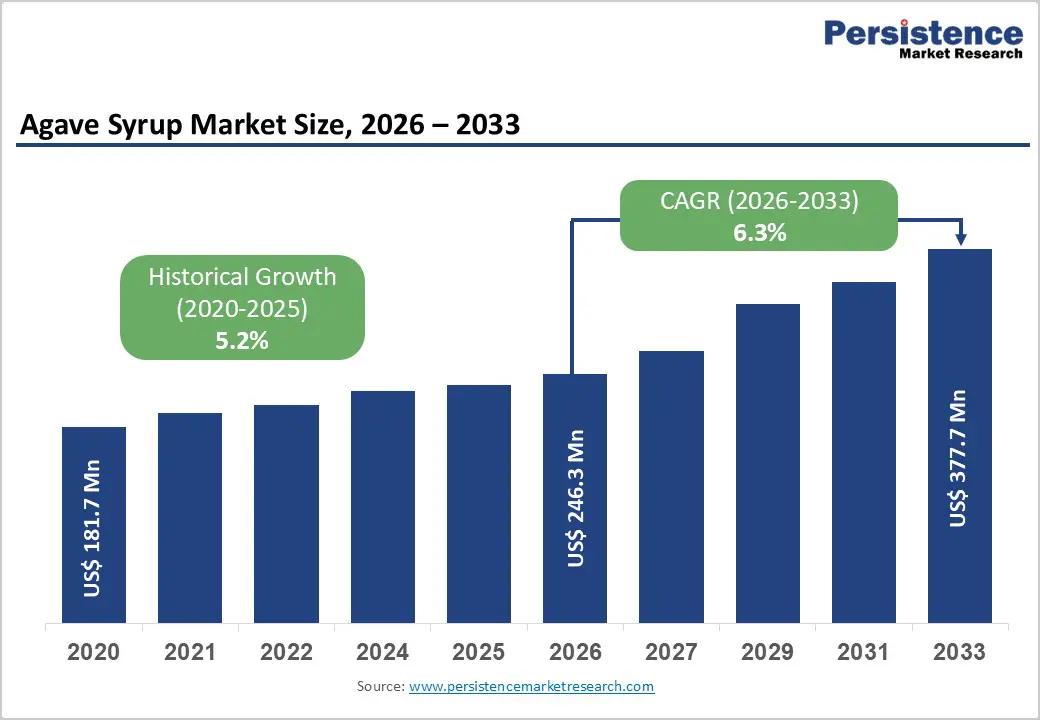
The global agave syrup market size is expected to be valued at US$ 246.3 million in 2026 and projected to reach US$ 377.7 million by 2033, growing at a CAGR of 6.3% between 2026 and 2033.
The robust growth is primarily driven by a systemic global shift toward plant-based sweeteners as consumers increasingly move away from refined sugars and high-fructose corn syrup. The rising prevalence of lifestyle-related health conditions, such as diabetes and obesity, has catalyzed the demand for low-glycemic index alternatives. Furthermore, the functional versatility of Agave Syrup in large-scale food processing and the burgeoning clean-label movement are ensuring its integration into a diverse array of premium and organic beverage formulations across international markets.
Key Industry Highlights:
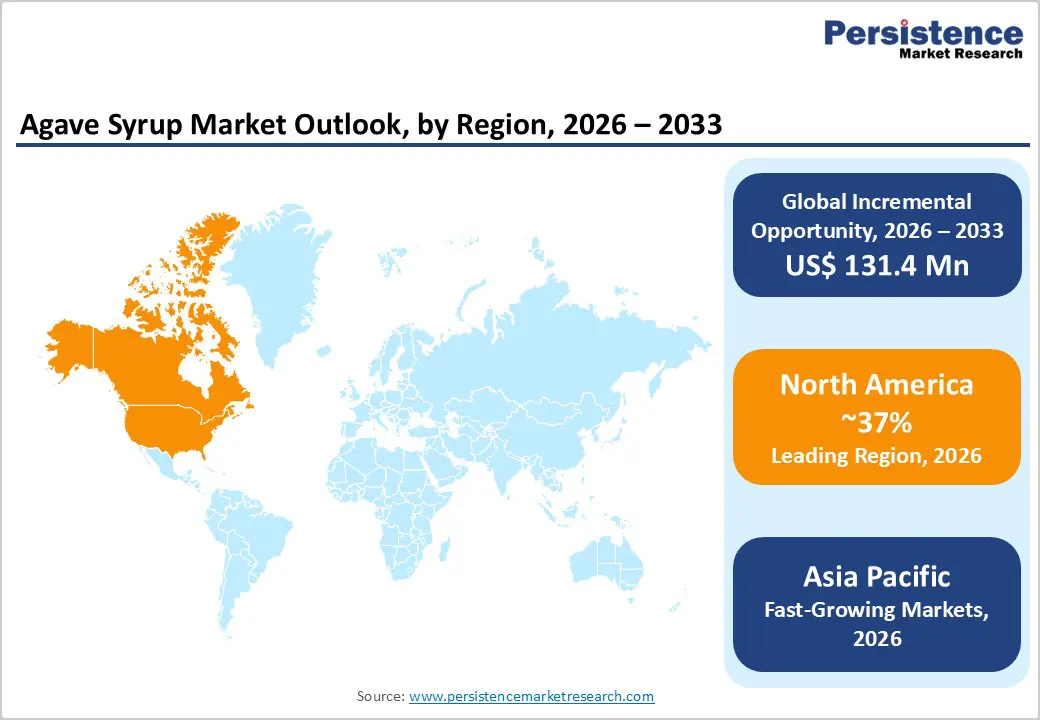
- Leading Region: North America, holding 36% market share, driven by strong health-conscious consumption patterns, proximity to agave sourcing regions, and widespread adoption across food and beverage manufacturing.
- Fastest-Growing Region: Asia Pacific, projected to grow at 7.8% CAGR, fueled by rising urbanization, increasing awareness of sugar alternatives, expanding middle-class demand, and rapid penetration of modern retail and e-commerce.
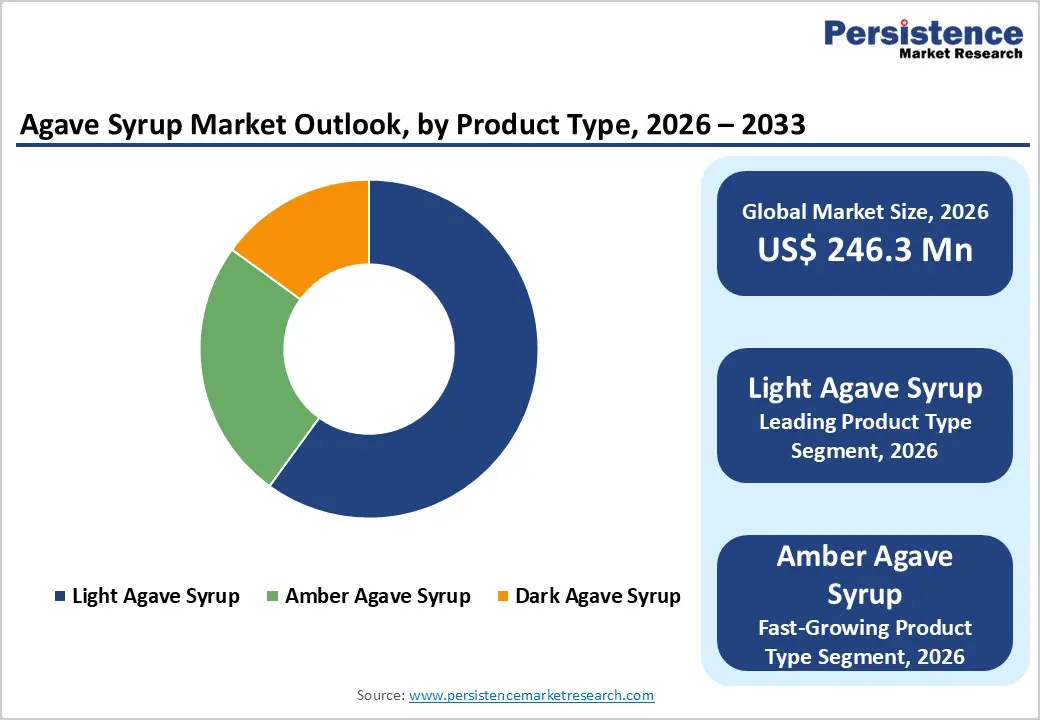
- Dominant Product Type Segment: Light Agave Syrup, accounting for approximately 54% share, supported by its neutral taste, high solubility, and broad applicability across beverages, cereals, dressings, and clean-label products.
- Fastest-Growing Nature Segment: Organic Agave Syrup, expected to grow at 8.1% CAGR, driven by surging demand for non-GMO, pesticide-free, and transparently sourced sweeteners aligned with clean-label trends.
- Growth Indicators: Rising demand for natural and low-glycemic sweeteners, supported by increasing global diabetes prevalence and consumer shift away from refined sugar and high-fructose corn syrup.
- Opportunities: Strategic partnerships with foodservice players such as Starbucks to integrate agave syrup into menus, enabling direct consumer exposure, product innovation, and stronger brand positioning.
- Key Developments: In November 2025, The Groovy Food Company launched a new syrup range, including a matcha agave variant. In July 2025, The Romantic Agave Company expanded distribution for its Beso de Agave brand in Mexico through a partnership.
| Key Insights | Details |
|---|---|
| Agave Syrup Market Size (2026E) | US$ 246.3 Mn |
| Market Value Forecast (2033F) | US$ 377.7 Mn |
| Projected Growth (CAGR 2026 to 2033) | 6.3% |
| Historical Market Growth (CAGR 2020 to 2025) | 5.2% |
DRO Analysis
Driver - Increasing consumer demand for natural and organic sweeteners
The growing consumer demand for natural and organic sweeteners is a significant driver of global agave syrup market growth. As health consciousness increases, consumers are moving away from refined sugars and high-fructose corn syrup. They are instead favoring plant-based, low-glycemic alternatives such as agave syrup. This shift is strongly influenced by the growing prevalence of diabetes. The International Diabetes Federation reports that approximately 589 million adults (aged 20-79) are living with diabetes globally as of 2024. This number is projected to surge to 853 million by 2050. In this context, agave syrup's low glycemic index and natural origin make it an attractive choice for consumers managing blood sugar levels or seeking preventive dietary solutions. Additionally, clean-label trends and the demand for transparent ingredient sourcing are prompting food and beverage manufacturers to incorporate organic agave syrup into their formulations. This positions agave as a strategic sweetening solution across functional foods, beverages, and health-focused categories.
Restraints - Delayed supply response to demand surges
Agave plants typically require 6 to 8 years to mature before they can be harvested for syrup production. This long cultivation cycle makes it difficult for producers to quickly scale supply when market demand rises.
Unlike synthetic sweeteners or fast-growing crops like sugarcane, agave's biological limitations hinder immediate production increases. Additionally, adverse weather events, competition for land use, and crop diseases further constrain yield predictability. As consumer interest in natural sweeteners grows, especially in the health and wellness sectors, the lag in supply adjustment creates pricing volatility and sourcing uncertainty for manufacturers. This structural inflexibility presents a significant challenge to sustained, scalable market growth.
Opportunity - Partnering with restaurants, cafes, and bakeries to integrate agave syrup into their menus
Partnering with restaurants, cafes, and bakeries offers a high-impact opportunity for agave syrup producers to drive adoption and enhance visibility. As foodservice establishments respond to growing consumer demand for natural, low-glycemic sweeteners, integrating agave syrup into menus enables immediate product trials and consumer education. Consider artisan coffee shops offering agave-sweetened lattes, or bakeries replacing refined sugar in pastries. These collaborations effectively cater to consumer needs through direct and experience-based engagement.
A particular example is Starbucks, which introduced agave syrup as a customizable sweetener option in select markets, leveraging rising interest in plant-based and diabetic-friendly alternatives. Such partnerships expand agave’s presence beyond traditional retail and normalize its use in mainstream culinary experiences. For producers, working directly with chefs and foodservice innovators can spur product innovation, increase volume demand, and reinforce agave syrup’s image as a premium, health-conscious sweetener. This strategic alignment can foster brand differentiation and long-term consumer loyalty in an increasingly health-aware market.
Category-wise Analysis
Product Type Insights
Light agave syrup holds approximately 54% of the market share in 2025, making it the dominant product type in the global agave syrup market. Its mild flavor profile, light color, and high solubility make it exceptionally versatile for a wide range of applications from sweetening beverages, cereals, and salad dressings to use in clean-label snacks and wellness products. Its ability to blend seamlessly without altering the taste or appearance of the final product appeals to both food manufacturers and home consumers alike.
In comparison, amber agave syrup offers a more robust, caramel-like flavor and is often favored in baking and marinades. Dark agave syrup, with its intense, molasses-like notes, is typically used in savory sauces or bold-flavored desserts. While these variants are gaining niche appeal, light agave syrup continues to dominate due to its broad functional adaptability and consumer preference for neutral-tasting natural sweeteners.
Nature Insights
Organic agave syrup is expected to reach a CAGR of 8.1% during the forecast period 2026 to 2033, driven by a significant shift in consumer behavior toward clean-label and transparently sourced food products. As health-conscious consumers increasingly scrutinize ingredient lists, demand is rising for natural sweeteners that are organic, non-GMO, and free from synthetic additives or pesticides. Organic agave syrup, derived from certified agave plants without chemical fertilizers or refining agents, aligns perfectly with this trend. Its low glycemic index and vegan-friendly profile further strengthen its appeal across the health food, beverage, and bakery segments. Manufacturers are leveraging this preference by integrating organic agave syrup into functional foods, energy bars, and plant-based dairy alternatives. Retailers are also expanding shelf space for certified organic sweeteners, particularly in North America and Western Europe, where clean label awareness is reshaping product formulation and purchase decisions across all major food categories.
Regional Analysis
North America Agave Syrup Market Trends and Insights
North America commands a significant 36% value market share in the global agave syrup market. This strong position is supported by robust health trends, well-developed food processing infrastructure, and geographic advantages. The U.S. benefits from its proximity to Mexico, the primary source of agave, which ensures a more stable and responsive supply chain. Additionally, some states, like California, have seen localized cultivation, boosting domestic supply resilience. The region's vast food and beverage manufacturing sector is increasingly incorporating agave syrup into a range of applications, from bakery goods to beverages, thanks to its clean-label status and low glycemic index.
In Canada, consumer preferences are shifting sharply toward organic and naturally sourced sweeteners, positioning agave as a preferred alternative to traditional sugars. The rising popularity of specialty diets, including vegan, keto, and gluten-free, further enhances market potential. Moreover, craft beverage makers are exploring agave syrup for its nuanced flavor, integrating it into artisanal spirits and non-alcoholic beverages. Education on the glycemic index is also heightening agave's health-driven appeal across North America.
Asia Pacific Agave Syrup Market Trends and Insights
The Asia Pacific market is expected to grow at a 7.8% CAGR over the forecast period, driven by a rapid shift toward natural sweeteners across urbanizing economies. Rising awareness around sugar reduction and metabolic health is encouraging consumers to adopt alternatives such as agave syrup in their daily diets. Expanding middle-class populations in countries like China, India, and Southeast Asia are actively seeking healthier beverage and food options, driving demand across retail shelves. Food manufacturers are incorporating agave syrup into bakery products, flavored drinks, and dairy alternatives to align with evolving consumer preferences.
The region is also witnessing strong momentum in premium and imported health ingredients, supported by e-commerce expansion and modern retail penetration. Local innovation is emerging as brands experiment with fusion beverages and functional foods using agave syrup. Regulatory support for clean-label products and growing interest in plant-based lifestyles further strengthen market growth potential across the Asia Pacific.
Competitive Landscape
The global agave syrup market is becoming increasingly competitive, with companies adopting diverse strategies to stand out and grow. Key players are prioritizing organic, non-GMO, and third-party certified clean label credentials to build trust with health-conscious consumers. Strategic investments in cultivation and vertically integrated processing ensure product consistency and transparency from farm to bottle. Brands are also diversifying their portfolios, offering light, amber, and dark syrups to meet varied culinary needs across the food and beverage sector. Marketing efforts often highlight agave's natural origin and low glycemic index, appealing to consumers managing blood sugar or pursuing wellness-focused lifestyles.
Competitors are also expanding into high-growth regions like Asia Pacific, while strengthening their positions in North America and Europe. E-commerce is emerging as a key sales driver, alongside growing demand from non-alcoholic beverage innovators. Striking a balance between premium positioning and price competitiveness remains crucial for capturing market share from both natural and artificial sweetener alternatives.
Key Developments:
- In November 2025, The Groovy Food Company unveiled a new syrup trio, including a ‘UK-first’ matcha agave variant, expanding its innovative natural sweetener portfolio.
- In July 2025, The Romantic Agave Company expanded its market presence as its agave syrup brand Beso de Agave partnered with Las Espirituosas for its debut in Mexico.
- In December 2024, Biona launched a vegan Thai Red Curry Paste, replacing sugar with agave syrup, catering to rising consumer demand for scratch cooking and vibrant flavors.
Companies Covered in Agave Syrup Market
- NOW Foods
- Diazteca Group
- Malt Products Corporation
- Madhava
- DOMINO FOODS, INC.
- Grupo Solave
- The Tierra Group
- The Agave Sweetener Company
- Cumberland Packing Corp.
- Blue Green Organics
- Hain Celestial
- Whole Earth Brands, Inc.
- Biona Organic
- Monin
- Others
Frequently Asked Questions
The global Agave Syrup market is projected to be valued at US$ 246.3 Mn in 2026.
Increasing consumer demand for natural and organic sweeteners is a major factor driving the global Agave Syrup market.
The Global Agave Syrup market is poised to witness a CAGR of 6.3% between 2026 and 2033.
Partnering with restaurants, cafes, and bakeries to integrate agave syrup into their menus is a significant opportunity in the Agave Syrup market.
Major players in the Global Agave Syrup market include NOW Foods, The Tierra Group, Cumberland Packing Corp., Hain Celestial, Whole Earth Brands, Inc., Malt Products Corporation, and others.


