




- Beauty & Personal Care
- Period Balm Market
Period Balm Market Size, Share, and Growth Forecast, 2026 - 2033
Period Balm Market by Product Type (Roller Stick and Gel), Sales Channel (Online Retailers, Pharmacy / Drug Stores, Direct Sales, and Other Sales Channels), and Regional Analysis for 2026 - 2033

Period Balm Market Size and Trends Analysis
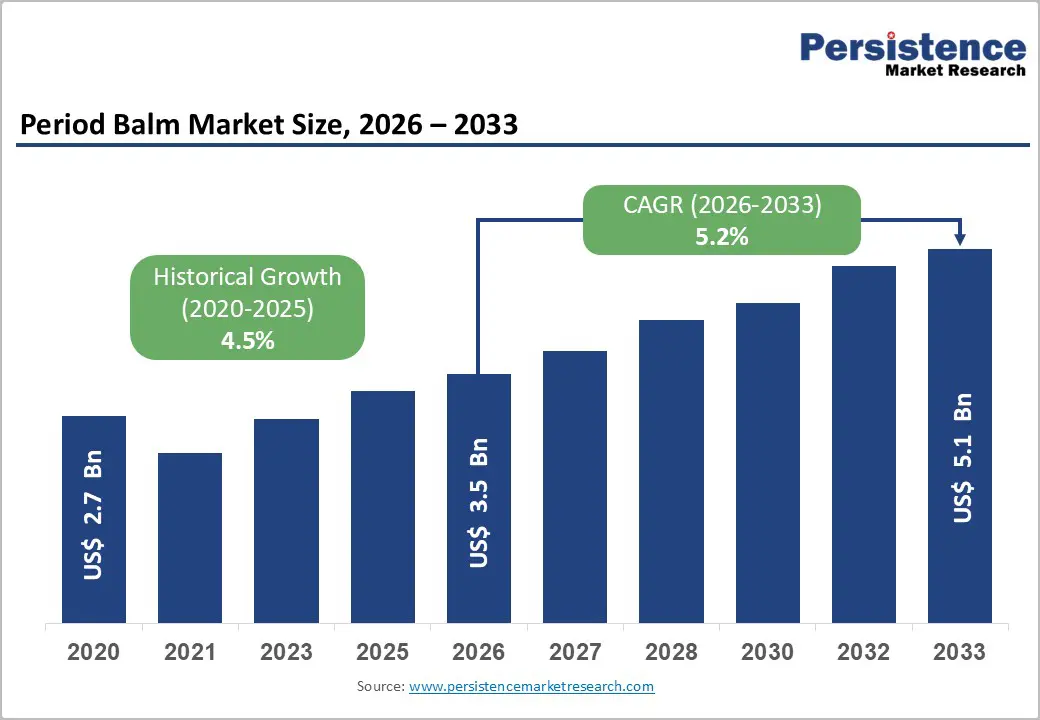
The Period Balm market size is likely to expand from US$ 3.5 billion in 2026, and is projected to reach US$ 5.1 billion reflecting a solid CAGR of about 5.2% by 2033. The growth is driven by rising diagnosis and self-recognition of dysmenorrhea and growing acceptance of topical, localized pain relief. High dysmenorrhea prevalence reported between 16% and 91% of women of reproductive age in global reviews creates a large, recurring user base seeking safer alternatives or adjuncts to oral NSAIDs.
Digital commerce is reshaping consumer access: beauty and personal care e-commerce is expected to account for around 19.2% of industry revenue in 2024 and to continue growing steadily, supporting strong online sales of menstrual pain relief balms and roll-ons. Innovation in plant-based, herbal and CBD-containing formulations is further differentiating premium offerings and attracting health-conscious consumers
Key Industry Highlights:
- Rising Burden of Dysmenorrhea: Dysmenorrhea affects 16–91% of women globally, with 5–20% experiencing severe limitations, sustaining recurring demand for topical balms alongside NSAIDs and hormonal therapies.
- Growing Demand for NSAIDs: Incomplete NSAID relief and concerns over long-term systemic use drive preference for non-pharmacological topical balms, enabling layered treatment approaches and premium recurring purchases.
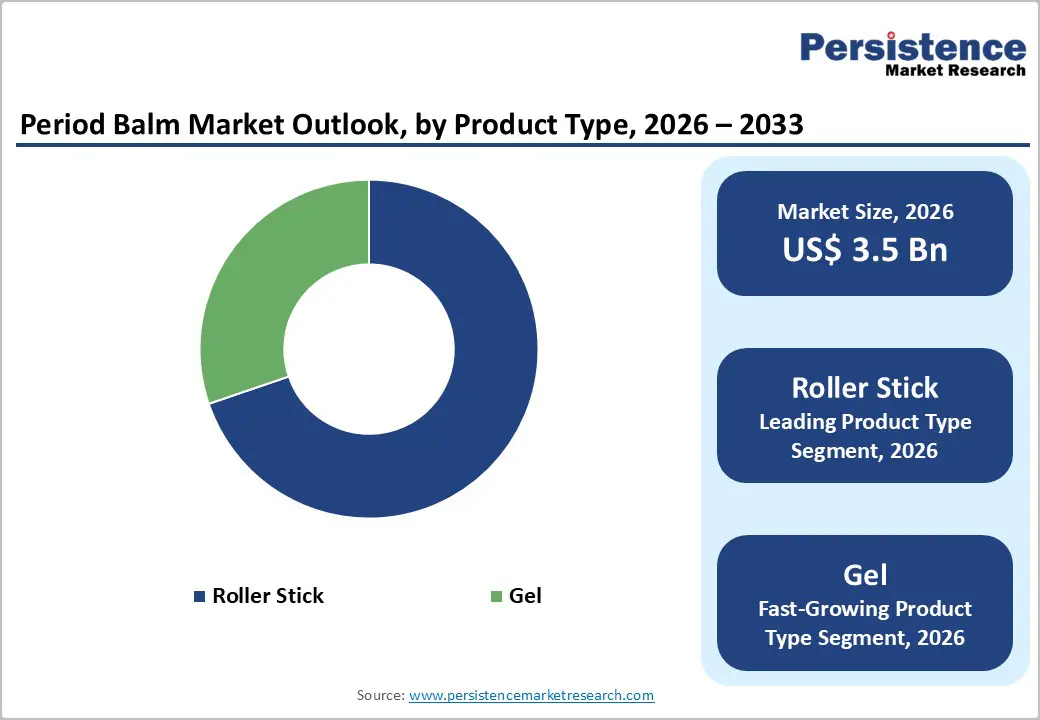
- Dominant Product: Roller-stick formats hold over 60% revenue share, favored for portability, stain-free application and discreet usage among adolescents and working women.
- Fast-growing Products: Gel and cream formulations grow fastest at approximately 6.5% CAGR, driven by fast absorption, higher active concentration and premium sensorial differentiation.
- Dominant Distribution Channel: Online retailers command over 45% revenue share, leveraging D2C storytelling, subscriptions, bundled wellness products and influencer-led education for retention and scale.
- Fast-growing Distribution Channel: Pharmacy and drug stores expand at roughly 6.3% CAGR, supported by OTC positioning, physician endorsements and integration into women’s pain-management shelves.
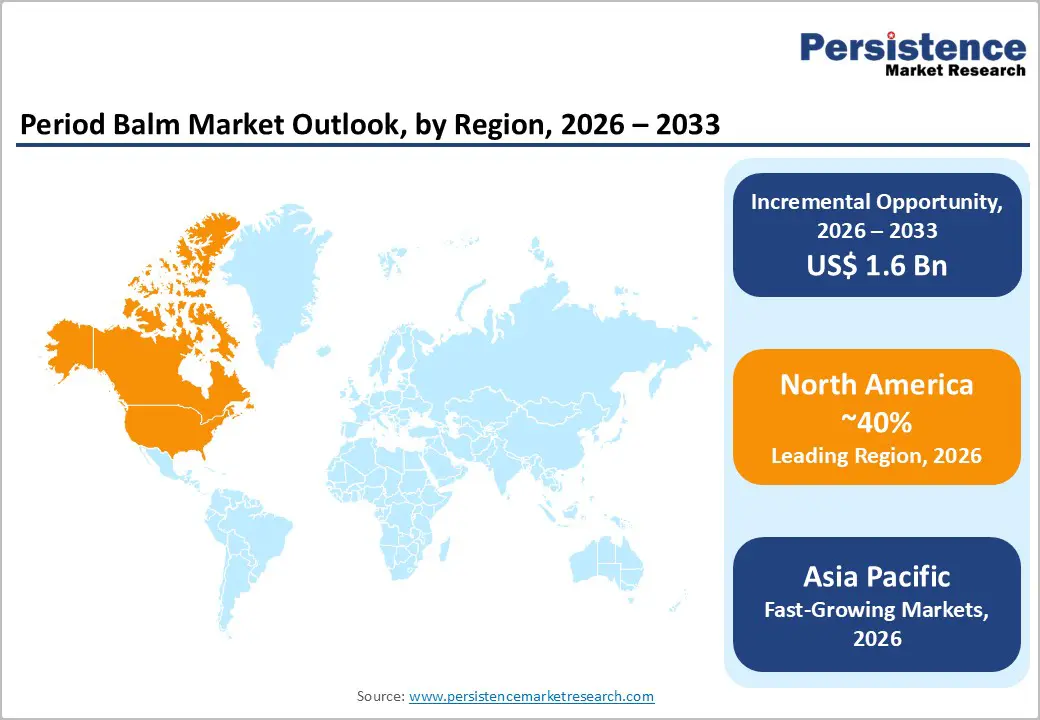
- Regional Leadership: North America holds over 40% revenue share, driven by strong e-commerce penetration, CBD innovation, high purchasing power and advanced OTC retail infrastructure.
- Fast-groing Asia Pacific: Asia Pacific grows at about 6.5% CAGR through 2033, fueled by demographic scale, digital commerce adoption and ayurvedic-herbal product alignment.
| Key Insights | Details |
|---|---|
|
Period Balm Market Size (2026E) |
US$ 3.5 Bn |
|
Market Value Forecast (2033F) |
US$ 5.1 Bn |
|
Projected Growth (CAGR 2026 to 2033) |
5.2% |
|
Historical Market Growth (CAGR 2020 to 2025) |
4.5% |
Market Dynamics
Key Growth Drivers
Rising dysmenorrhea prevalence and unmet pain-management needs
Epidemiological reviews indicate that dysmenorrhea affects a majority of menstruating women, with prevalence estimates between 16% and 91%, and severe pain limiting daily activities in 5–20% of women. The World Health Organization’s assessment across 124,259 women also highlights wide but consistently high rates, particularly among adolescents. Current clinical guidance still positions NSAIDs as the first-line therapy, often supplemented by hormonal contraceptives, yet many women report incomplete relief or concern about long-term systemic use. This persistent symptom load and the recognized role of non-pharmacological modalities (e.g., topical heat, herbal remedies, physical therapies) are creating sustained demand for topical balms, roll-ons and creams that can be layered with systemic treatments, supporting recurring purchases and premium pricing.
Expansion of beauty and personal care e-commerce
The migration of beauty and personal care purchases to online channels is a structural tailwind for period balms, which often sit within feminine hygiene, wellness, and topical analgesic sub-categories. Global beauty and personal care e-commerce is projected to reach hundreds of billions of dollars by the end of the decade, with one forecast pointing to about US$ 338.9 Bn in online beauty and personal care sales by 2029, a nearly 50% jump from 2024 levels.
In 2024, online sales are expected to contribute around 19.2% of total beauty and personal care revenue, and beauty shoppers increasingly rely on marketplaces and specialist online retailers for product discovery. As period balm brands are highly visual and story-driven, they benefit disproportionately from D2C models, influencer-led marketing, subscription programs and cross-selling with other cycle-care products, reinforcing online as the dominant and most profitable channel
Market Restraining Factors
Limited clinical evidence and heterogeneous regulatory frameworks
Although clinical literature acknowledges non-pharmacological options for dysmenorrhea, there remain significant evidence gaps regarding the long-term efficacy and safety of many herbal, aromatherapy, and CBD-based balms, particularly in adolescent users. Regulatory treatment of CBD and cannabis-derived ingredients varies widely across regions, with some markets restricting claims or distribution channels, limiting brand scalability and cross-border harmonization.
Even within cosmetics and OTC frameworks, authorities increasingly scrutinize functional claims, necessitating costly clinical studies, toxicology work, and post-market surveillance, which can be prohibitive for smaller start-ups. These hurdles slow new product approvals and can delay geographic expansion, tempering the pace of market penetration in more tightly regulated jurisdictions.
Market Opportunities
Premiumization through multifunctional, clinically supported formulations
The convergence of emergency medical services, organ transportation, and airport logistics represents a compelling opportunity for eVTOL deployment with faster commercialization and superior unit economics. The global medical air services market is projected to reach USD 8.2 billion by 2033, with Period Balm expected to capture 18–22% share by enabling rapid organ transport and emergency response. With organ viability limited to 8–12 hours, eVTOLs can reduce transport times by 65–72% versus ground ambulances in dense metros, while overcoming capacity constraints of rotor-wing helicopters.
eVTOL-enabled medical networks can expand emergency coverage by 300–400%, particularly benefiting rural and underserved regions. Importantly, regulatory approvals for medical operations are accelerated to 12–18 months, compared to 24–36 months for commercial air taxis, offering first-mover advantages. High revenue per flight hour of USD 4,200–5,800 further supports faster profitability. In parallel, airport ground transportation and last-mile logistics present scalable upside. Airport cargo and ground handling generate over USD 18 billion annually, with 15–20% potentially substitutable by autonomous cargo eVTOLs by 2035, reducing logistics costs by 25–35%. Integration with existing networks is being evaluated by FedEx, DHL, and Amazon, while urban e-commerce fulfillment alone represents a USD 12+ billion addressable market through 2033.
Category-wise Analysis
Product Type Insights
Roller-stick formats currently dominate the global Period Balm market, accounting for over 60% of total revenues, driven by their convenience, portability, and controlled, mess-free application. These formats are widely adopted across herbal, essential oil, and CBD-based brands such as BOHECO’s menstrual pain roll-on and VOIISH’s cramp relief oil roll-on, which emphasize stain-free, discreet, and on-the-go relief. Their ergonomic, user-friendly design makes them particularly appealing for use in workplaces, schools, and travel settings, thereby strengthening market penetration among adolescents and young adults segments that experience a high prevalence of dysmenorrhea and demonstrate strong preference for lifestyle-oriented, easy-to-use delivery formats.
Meanwhile, gel-based period balms often marketed as creams or lightweight therapeutic gels represent the fastest-growing segment, projected to expand at approximately 6.5% CAGR, outpacing overall market growth. Products such as Somedays’ Cramp Cream and Healthfab’s GoPainFree emphasize fast absorption, non-sticky texture, and non-greasy formulations, targeting cramps, lower abdominal discomfort, and back pain. Gel formulations allow for higher active ingredient concentration and enhanced sensorial differentiation, including cooling, warming, and aromatherapeutic effects, supporting premium positioning. Their compatibility with broader body-care routines and strong traction in e-commerce channels further enhance their growth potential in the evolving feminine wellness landscape.
Sales Channel Insights
Online retailers currently dominate the global Period Balm market, accounting for over 45% of total revenue, driven by the rapid expansion of beauty and personal care e-commerce and the pivotal role of digital marketplaces in consumer discovery. Digital-first and direct-to-consumer brands such as Enuf Period, Ladykind, Somedays, and various CBD wellness labels primarily leverage their own websites and leading online platforms to build global reach. These channels enable brands to integrate educational content, customer reviews, subscription models, and bundled offerings such as sanitary pads, menstrual cups, and supplements thereby strengthening brand engagement and repeat purchases. As a result, online platforms have become the central hub for both brand-building and long-term customer retention in the category.
Meanwhile, pharmacy and drug store channels are emerging as the fastest-growing segment, projected to expand at a CAGR of approximately 6.3%. Growth is supported by increasing OTC or quasi-drug positioning of period balms and endorsements from gynecologists and general practitioners. Products such as Control’s FDA-cleared menstrual cramp cream and herbal roll-ons approved by national regulatory bodies illustrate the shift toward medically aligned positioning. As pharmacies expand women’s wellness sections and pain-management shelves, period balms benefit from enhanced consumer trust and incremental impulse purchases alongside conventional dysmenorrhea treatments.
Regional Insights and Trends
North America leverages innovation and e-commerce to sustain category leadership
North America holds over 40% of global Period Balm revenues, supported by high purchasing power, advanced retail infrastructure, and strong adoption of OTC and wellness products. The U.S. shows high dysmenorrhea prevalence and significant work and school absenteeism, underlining the societal cost of menstrual pain and willingness to invest in relief solutions. Beauty and personal care e-commerce is highly developed, with specialist retailers like Sephora and Ulta ranking among the top global digital beauty stores, and marketplaces such as Amazon capturing a large share of health and personal care spending.
The region is a hotspot for CBD and innovative topicals, with brands such as Ladykind, Enuf Period, Somedays and Control launching targeted creams and balms formulated with cannabinoids and plant-based actives. Regulatory treatment of CBD varies by state but is gradually clarifying, encouraging investments in clinical validation, third-party lab testing and transparent labelling. Competitive intensity is high yet fragmented, with a mix of D2C start-ups, wellness brands and larger OTC companies experimenting with menstrual-specific topicals. Investment opportunities are concentrated in scaling clinically validated, CBD-enriched and omnichannel brands, as well as in partnerships with healthcare professionals to integrate balms into broader dysmenorrhea management protocols.
Asia Pacific spearheads volume-driven growth with digital-native menstrual solutions adoption
Asia Pacific is the fastest-growing region, with the Period Balm market expected to expand at roughly 6.5% CAGR over 2026–2033, driven by demographic scale, rising disposable incomes and accelerating digital adoption. Dysmenorrhea prevalence is significant across Asian countries, and awareness is gradually improving as reproductive health receives more policy focus. E-commerce adoption in beauty and personal care is robust; China, Japan and India collectively account for a large and growing share of global online beauty traffic and revenue. This underpins rapid online sales growth for period balms, particularly through regional marketplaces and social commerce.
India illustrates the convergence of ayurvedic heritage and digital retail, with brands such as Sirona (herbal pain patches and roll-ons), Healthfab (GoPainFree cream), BOHECO (BLOOM roll-on), and multiple CBD and herbal topicals distributed both online and via pharmacies. Regulatory authorities like state AYUSH departments provide a framework for herbal approvals, though CBD regulations remain more restrictive and evolving. In markets such as China, Japan, and ASEAN, opportunities lie in localized formulations, KOL-driven marketing, and cross-border e-commerce, with competition from both domestic herbal brands and global wellness entrants. Overall, Asia Pacific offers high-volume, mid-price growth opportunities, especially for brands able to align with local traditional medicine systems while leveraging modern digital distribution.
Competitive Landscape
The global Period Balm market is fragmented, with numerous small and mid-sized brands operating across herbal, CBD and conventional menthol-based segments. A significant share of visible innovation originates from D2C and digitally native brands, particularly in North America and India, which rely on online channels for rapid scaling and niche community engagement. Large consumer health and personal care multinationals remain relatively underexposed directly to period balms but hold strong adjacent positions in menstrual hygiene and analgesics, creating potential for future portfolio extensions. Competitive positioning therefore centers on formulation differentiation, clinical backing, and digital branding, rather than pure scale advantages
Key Industry Developments
- In May 2024, Zen Maitri launches Natural Period Cramp Relief Balm (Europe): Zen Maitri does sell a botanical menstrual balm designed to ease period cramps, bloating and pelvic tension with warming herbs and essential oils in a portable formulation consistent with the described product and positioning in Europe.
- In April 2025, Somedays expands Cramp Cream positioning (North America): Somedays’ Cramp Cream is indeed a plant-based topical product formulated with ingredients such as wintergreen oil, camphor bark oil, arnica flower extract and other botanicals to provide relief from menstrual cramps and discomfort. However, there’s no widely published “April 2025 press release” stating it was promoted specifically as having five times more active ingredients than alternatives that detail isn’t verifiable from the publicly available product pages.
- In February 2026, Healthfab intensifies marketing of GoPainFree Period Pain Relief Cream (India): Healthfab GoPainFree Instant Period Pain Relief Cream is marketed in India as a natural/herbal topical menstrual cramp relief product featuring ingredients like menthol, eucalyptus oil, chamomile and similar plant derivatives, positioned as an alternative to systemic pain pills with a non-sticky formula.
Companies Covered in Period Balm Market
- Lhamour
- Earth Mama Organics
- Red Moon Herbs
- Moon Mother Hemp Company
- LENA
- GladRags
- Rosebud Woman
- Other Market Players
Frequently Asked Questions
The Period Balm market is estimated to be valued at US$ 3.5 Bn in 2026.
The key demand driver for the Period Balm market is the rising preference for natural, non-systemic menstrual pain relief solutions.
In 2026, the North America region will dominate the market with an exceeding 40% revenue share in the global Period Balm market.
Among sales channels, Online Retailers have the highest preference, capturing beyond 40% of the market revenue share in 2026, surpassing other sales channels.
Lhamour, Earth Mama Organics, Red Moon Herbs, Moon Mother Hemp Company, LENA, GladRags , and Rosebud Woman are a few leading players in the Period Balm market.


