




- Medical Devices
- Perineal Care Market
Perineal Care Market Size, Share, Trends, Growth, and Regional Forecast, 2026 to 2033
Perineal Care Market by Product Type (Barrier, Cleanser, Washcloths, Others), Distribution Channel (Institutional Sales, Retail Sales) and Regional Analysis from 2026 to 2033

Perineal Care Market Share and Trends Analysis
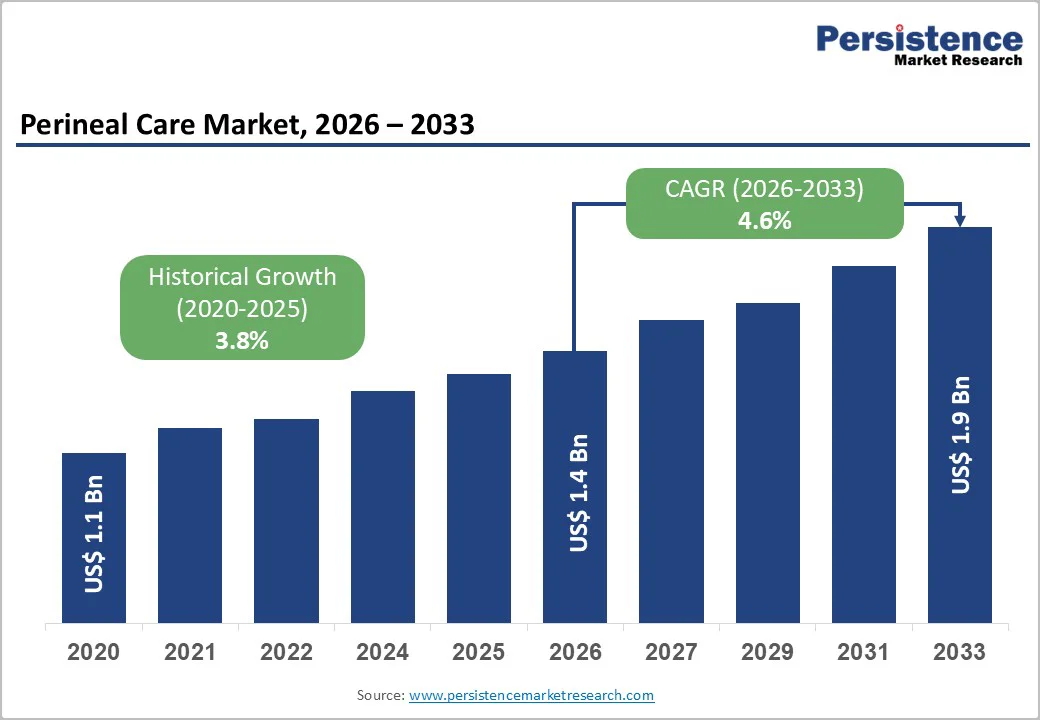
The global perineal care market size is likely to be valued at US$ 1.4 billion in 2026 to US$ 1.9 billion by 2033, growing at a CAGR of 4.6% during the forecast period from 2026 to 2033.
The market is expanding steadily, supported by rising incontinence cases, growing elderly populations, and increased awareness of skin-integrity management. North America leads due to a strong healthcare infrastructure and high product adoption. At the same time, Asia-Pacific is the fastest-growing region, driven by improving hygiene standards, rapid healthcare expansion, and rising consumer demand for convenient cleansing and protection solutions.
Key Industry Highlights:
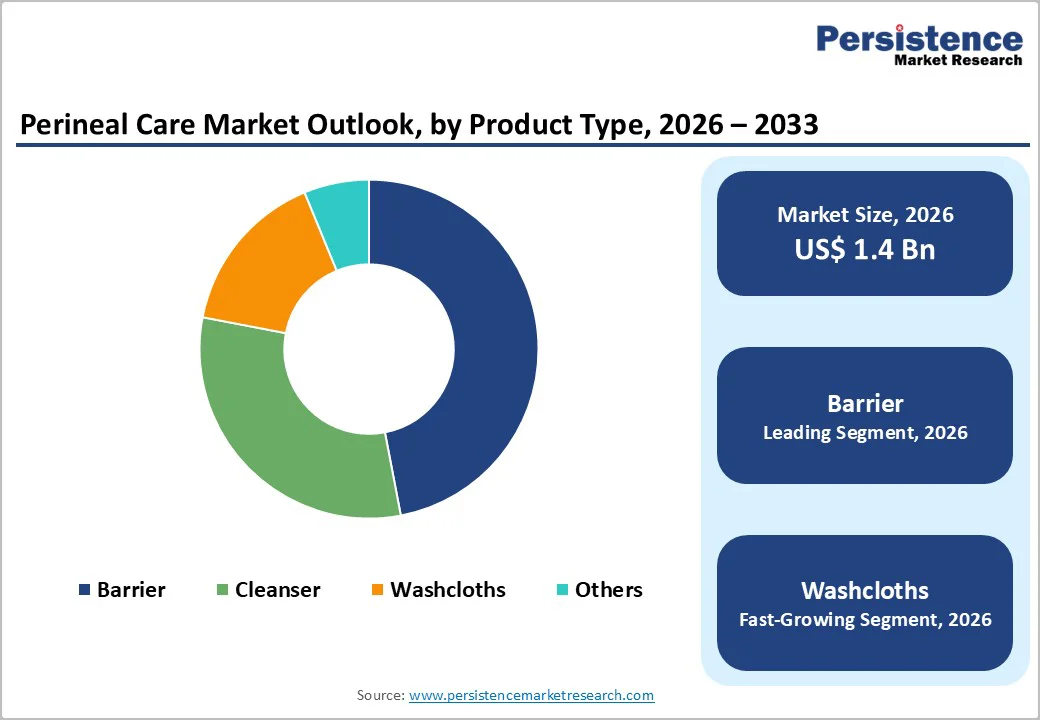
- Dominant Segment: Barrier products lead the market with a 47.0% share in 2025, driven by strong usage in incontinence care, effective skin protection, ease of application, and high adoption across hospitals, long-term care facilities, and home-care environments.
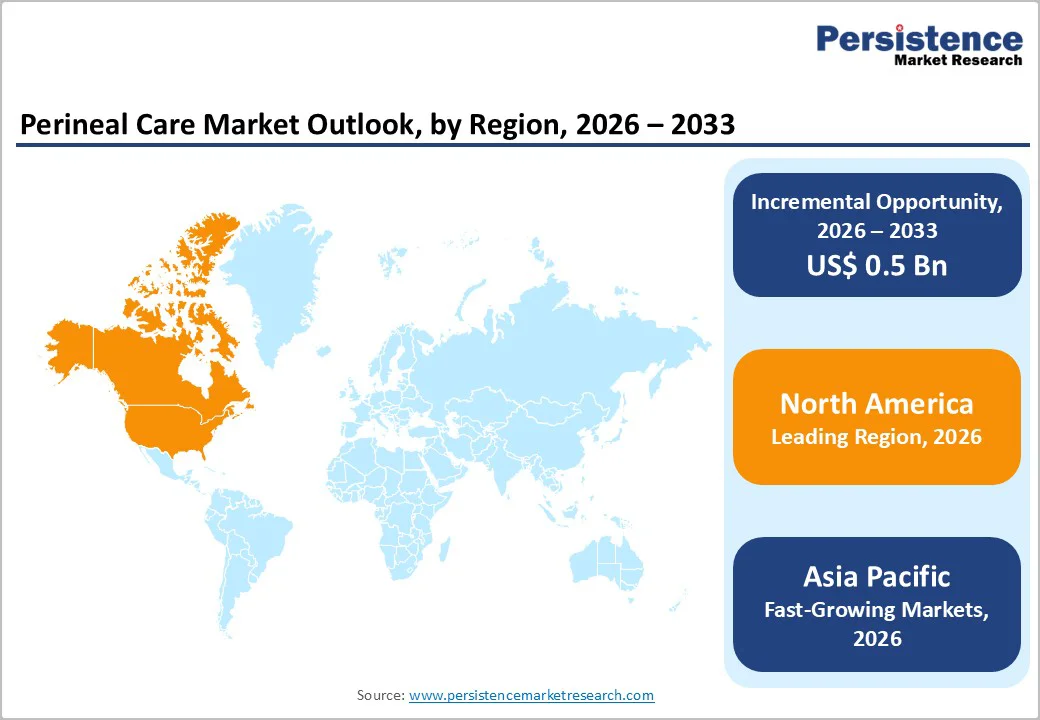
- Dominant Region: North America dominates with a 40.4% share in 2025, driven by strong healthcare infrastructure and high awareness, while Asia-Pacific grows fastest, driven by expanding healthcare access, rising incontinence prevalence, and increased demand for convenient hygiene and protection solutions.
- Market Drivers: Growth is driven by rising elderly populations, rising incontinence cases, expanding home-care demand, a focus on preventing skin damage, and ongoing product innovation in creams, wipes, and pH-balanced cleansers.
- Market Opportunity: Key opportunities include eco-friendly wipes, advanced barrier formulations, caregiver education tools, growth in emerging markets, and expanding retail and e-commerce channels supporting broader access to perineal-care products.
| Key Insights | Details |
|---|---|
| Global Perineal Care Market Size (2026E) | US$ 1.4 Bn |
| Market Value Forecast (2033F) | US$ 1.9 Bn |
| Projected Growth (CAGR 2026 to 2033) | 4.6% |
| Historical Market Growth (CAGR 2020 to 2025) | 3.8% |
Market Dynamics
Driver - Rising Emphasis on Preventing Moisture-Associated Skin Damage, Pressure Injuries, and Hospital-Acquired Infections Driving Structured Perineal Care Adoption
Rising concern over moisture-associated skin damage, pressure injuries, and hospital-acquired infections is driving growth in the perineal care market. Approximately 12.8% of hospitalized adults develop pressure injuries, emphasizing the clinical need for prevention. Among patients with urinary or fecal incontinence, nearly 20% experience incontinence-associated dermatitis, a common form of moisture-related skin damage. Elderly, immobile, or chronically ill patients are particularly at risk, resulting in longer hospital stays, higher infection rates, and increased healthcare costs. These statistics highlight the importance of proactive skin protection and perineal hygiene protocols in both institutional and home-care settings.
To address these challenges, hospitals, nursing facilities, and home-care providers are increasingly adopting structured perineal-care routines, integrating products such as pre-moistened wipes, barrier creams, and skin cleansers. These measures improve patient comfort and hygiene while reducing complications and associated costs. Widespread adoption of these protocols supports better clinical outcomes and enhances overall patient safety. As awareness grows, demand for specialized perineal care products continues to expand steadily across regions worldwide.
Restraints - Limited Awareness of Proper Perineal Hygiene Practices in Low- and Middle-Income Regions, Reducing Product Adoption Despite Rising Incontinence Prevalence
Many low- and middle-income regions continue to face poor sanitation and a lack of basic hygiene infrastructure. Globally, an estimated 1.7 billion people still lack basic hygiene services, and 611 million have no access to water or hand-washing facilities. This widespread gap in hygiene undermines awareness and practice of proper perineal hygiene. Even as urinary incontinence rates in developing countries average 27-31%, limited access to clean water, sanitation, and hygiene products reduces the adoption of perineal-care solutions. The combination of rising incontinence prevalence and low hygiene awareness poses a significant restraint to market growth.
Poor hygiene infrastructure also contributes to high rates of infection and skin problems in healthcare and home-care settings, with up to 15% of patients in low- and middle-income countries acquiring at least one infection during a hospital stay. Without safe sanitation, soap, or clean water, awareness and adoption of structured perineal-care routines remain limited. Despite rising incontinence, these structural deficiencies significantly constrain the growth potential of the perineal-care market in these regions.
Opportunity - Expansion of Home-Care and Long-Term Care Services
The global expansion of home-care and long-term care services presents a significant opportunity for the perineal care market. The population aged 60 and above is expected to double by 2050, rising from approximately 1.1 billion in 2022 to 2.1 billion, representing nearly 22% of the global population. As more seniors live longer with chronic conditions or immobility, or experience incontinence, the need for perineal-care products such as barrier creams, cleansing wipes, and protective hygiene solutions in home settings is increasing. This demographic shift is driving steady demand for convenient and effective perineal-care solutions.
In regions experiencing rapid aging, demand for structured long-term and home-care services is rising sharply. As families increasingly provide home-based care rather than institutional care, the adoption of perineal hygiene products grows. The convenience, efficacy, and protective benefits of these products make them essential for caregivers managing elderly or immobile patients. Combined with greater awareness of hygiene and the rising life expectancy of the elderly population, this trend creates a robust growth opportunity for perineal-care manufacturers targeting home-care and long-term care segments globally.
Category-wise Analysis
Product Type Insights
Barrier dominates with 47.0% share in 2025, because moisture-associated skin damage and perineal skin breakdown are highly prevalent among incontinent or immobile patients. Studies indicate that 45-50% of patients with urinary or fecal incontinence develop Incontinence-Associated Dermatitis. Prolonged exposure to urine and feces increases skin vulnerability to maceration, pH imbalance, friction, and enzymatic irritation, rapidly compromising the skin’s protective barrier. Barrier creams, films, and protective ointments help restore or reinforce the stratum corneum’s function, shielding skin from ongoing moisture and irritants. Their effectiveness in preventing dermatitis, pressure injuries, and secondary infections makes them the preferred choice in hospitals, nursing facilities, and home-care settings, driving their dominant share in the perineal-care market.
Distribution Channel Insights
Retail sales dominate the perineal care market because most individuals with urinary or fecal incontinence manage their needs at home rather than in hospitals. Studies show that approximately 45% of community-dwelling adults with fecal incontinence regularly use disposable absorbent products, while around 58% of elderly hospital patients rely on continence aids. The chronic nature of incontinence requires frequent, convenient access to products such as barrier creams, wipes, and absorbent pads, making retail pharmacies, supermarkets, and e-commerce platforms the preferred channels. Disposable products are favored for hygiene, convenience, and ease of use, particularly in home-care and long-term care settings. This widespread consumer-driven demand ensures retail remains the leading distribution channel in the global perineal-care market.
Regional Insights
North America Perineal Care Market Trends
North America dominates the perineal care market with a 40.4% share in 2025, driven by its large and aging population, many of whom experience urinary or fecal incontinence. In the U.S., over 50% of adults aged 65 and older report some form of incontinence, creating substantial demand for perineal-care products such as barrier creams, wipes, and absorbent aids. High prevalence of pressure injuries and moisture-associated skin damage among immobile or incontinent patients further drives the adoption of structured perineal hygiene routines in hospitals, nursing facilities, and home-care settings. Combined with advanced healthcare infrastructure, high hygiene awareness, and widespread access to quality products, these factors ensure that North America maintains a leading share of the global perineal-care market.
Europe Perineal Care Market Trends
Europe is a key region in the perineal care market due to its rapidly aging population, which drives sustained demand for continence and hygiene products. In the European Union, people aged 65 and older now comprise approximately 21.6% of the population, up from 16.4% two decades ago, while those aged 80 and above account for 6.1%. Urinary and fecal incontinence affect a significant portion of this demographic, with prevalence estimates ranging from 4% to 8% in the general population and reaching 43-65% among nursing-home residents. The combination of an aging population, high incontinence rates, and growing demand for structured hygiene routines makes Europe a critical and stable market for perineal-care products.
Asia-Pacific Perineal Care Market Trends
Asia Pacific is the fastest-growing region in the perineal care market, driven by its rapidly aging population and rising healthcare awareness. The number of people aged 60 and above in the area currently stands at approximately 697 million and is projected to exceed 1.3 billion by 2050, representing nearly one in four individuals. Aging increases the prevalence of incontinence, mobility limitations, and fragile skin, driving demand for perineal-care products such as barrier creams, wipes, and skin cleansers. Combined with rising life expectancy, urbanization, and expanding home-care and long-term care facilities, these factors create a large addressable market. Consequently, the region is witnessing strong adoption and growth of perineal-care products across both institutional and home-care settings.
Competitive Landscape
Leading perineal care companies invest in product innovation, clinical research, and caregiver training, collaborating with hospitals, nursing homes, and home-care providers. By focusing on hygiene, skin protection, and ease of use, they improve patient outcomes, reduce pressure injuries and infections, support caregivers, and drive adoption and growth in the global perineal care market.
Key Industry Developments:
- In October 2025, Smith+Nephew announced new scientific data supporting its ALLEVYNO COMPLETE CARE 5-Layer Foam Dressing, highlighting its effectiveness in preventing pressure injuries. The data demonstrated improved patient outcomes, reinforcing the product’s role in advanced wound management and strengthening Smith+Nephew’s portfolio in pressure injury prevention solutions.
- In October 2025, Convatec announced plans to invest over $1 billion to expand its research and development facilities, with major upgrades in the United States and the United Kingdom. The investment aimed to enhance innovation, accelerate product development, and strengthen the company’s global capabilities in medical and wound-care solutions.
Companies Covered in Perineal Care Market
- 3M Company
- Coloplast A/S
- Smith and Nephew plc.
- ConvaTec Group plc.
- Essity Aktiebolag (SCA Hygiene AB)
- Cardinal Health, Inc.
- Sage Products, LLC (Stryker Corporation)
- GOJO Industries, Inc.
- Medline Industries, Inc.
- Others
Frequently Asked Questions
The global perineal care market is projected to be valued at US$ 1.4 Bn in 2026.
Rising incontinence, aging population, pressure injury prevention, hospital-acquired infection awareness, and growing home-care and long-term care adoption drive growth.
The global perineal care market is poised to witness a CAGR of 4.6% between 2026 and 2033.
Opportunities include home-care expansion, eco-friendly wipes, emerging markets, technological innovations, e-commerce growth, and specialized barrier and cleansing product development.
3M Company, Coloplast A/S, Smith and Nephew plc., ConvaTec Group plc., Essity Aktiebolag (SCA Hygiene AB), Cardinal Health, Inc.


