




- Healthcare Services
- Mesotherapy Market
Mesotherapy Market Size, Share, Growth, and Regional Forecast, 2026 to 2033
Mesotherapy Market by Product (Mesotherapy Solutions, Mesotherapy Masks, Mesotherapy Creams, Mesotherapy Devices, and Other), by Application (Anti-Aging, Facial Rejuvenation, Stretch Marks, Acne & Scar Treatment, Fat Loss, Hair Loss, and Others), by End-user (Hospitals, Dermatology & Cosmetic Clinics, MedSpa, and Others), and Regional Analysis from 2026 to 2033.

Mesotherapy Market Share and Trends Analysis
The global mesotherapy market size is estimated to grow from US$ 810.6 million in 2026 to US$ 1,331.5 million by 2033 growing at a CAGR of 5.5% during the forecast period from 2026 to 2033.
Global demand for mesotherapy is increasing steadily, driven by rising aesthetic consciousness and growing preference for minimally invasive cosmetic and dermatological treatments. The increasing prevalence of skin aging, hair loss, acne, pigmentation disorders, and localized fat accumulation across both aging and younger populations is supporting sustained market growth. Greater awareness of non-surgical aesthetic solutions, combined with expanding access to dermatology and cosmetic clinics, is accelerating adoption globally. Wider clinical acceptance of mesotherapy for anti-aging, facial rejuvenation, and hair restoration, along with visible treatment outcomes and minimal downtime, is further strengthening demand. Rising disposable incomes, increasing healthcare and aesthetic spending, and favorable consumer perception of preventive aesthetic care are reinforcing market expansion.
Continuous innovation in mesotherapy formulations, including advanced injectable cocktails, improved safety profiles, and device-assisted delivery techniques, is enhancing treatment precision, patient comfort, and compliance. Additionally, the growing shift toward outpatient aesthetic procedures, personalized cosmetic therapies, and wellness-driven beauty approaches is further propelling the global mesotherapy market.
Key Industry Highlights:
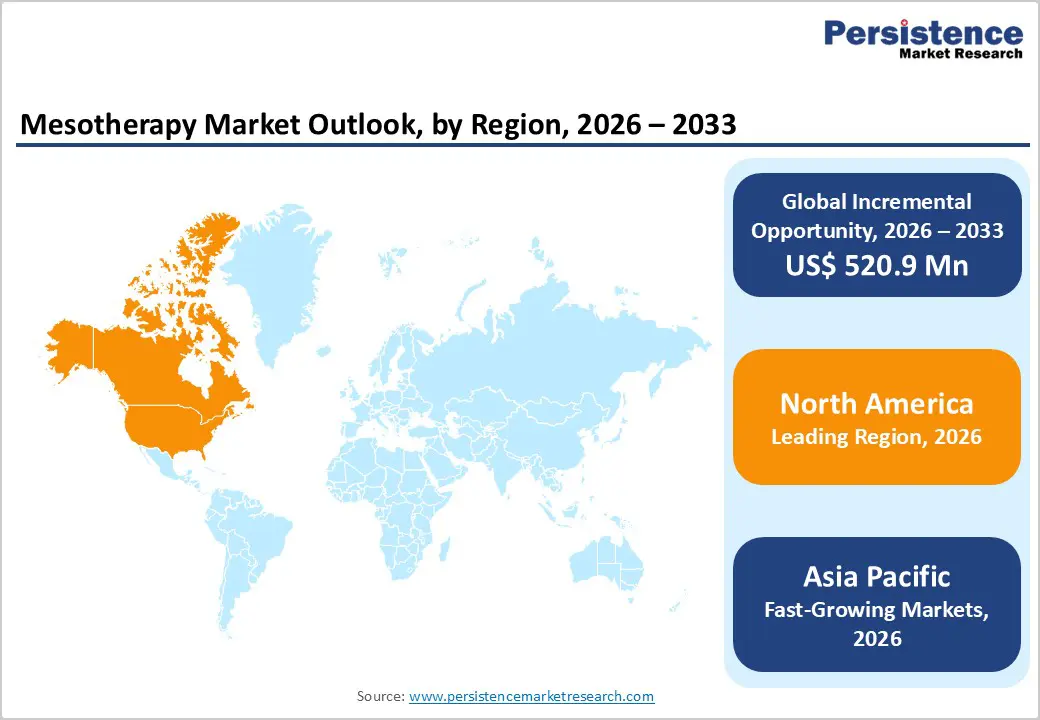
- Leading Region: North America holds the largest share at 47.3%, supported by a well-established aesthetic healthcare infrastructure, high awareness of minimally invasive cosmetic treatments, strong presence of dermatology and cosmetic clinics, and rapid adoption of advanced mesotherapy formulations and devices.
- Fastest-Growing Region: Asia Pacific is expanding fastest due to a large and increasingly beauty-conscious population, rising disposable incomes, growing influence of social media and beauty standards, improving access to aesthetic clinics, and increasing investments in cosmetic healthcare infrastructure.
- Leading Product Segment: Mesotherapy solutions dominate the market due to their broad application range, ease of formulation customization, high patient acceptance, and effectiveness across anti-aging, facial rejuvenation, hair loss, and skin revitalization treatments.
- Fastest-Growing Product Segment: Mesotherapy devices are expanding rapidly as demand increases for precise, device-assisted delivery methods that enhance treatment efficacy, consistency, and patient comfort while reducing procedural variability.
- Leading Application Segment: Anti-aging remains the top segment, driven by high consumer demand for wrinkle reduction, skin hydration, collagen stimulation, and long-term aesthetic maintenance using non-surgical approaches.
- Fastest-Growing Application Segment: Facial rejuvenation is scaling quickly as patients increasingly seek minimally invasive procedures that deliver visible improvements in skin texture, tone, and elasticity with minimal downtime.
| Key Insights | Details |
|---|---|
|
Mesotherapy Market Size (2026E) |
US$ 810.6 Mn |
|
Market Value Forecast (2033F) |
US$ 1,331.5 Mn |
|
Projected Growth (CAGR 2026 to 2033) |
5.5% |
|
Historical Market Growth (CAGR 2020 to 2025) |
4.2% |

Market Dynamics
Driver – Rising Demand for Minimally Invasive Aesthetic Procedures and Advancements in Mesotherapy Formulations
The growing global preference for minimally invasive and non-surgical aesthetic procedures is a primary driver of sustained growth in the mesotherapy market. Increasing aesthetic consciousness, aging populations, and rising focus on skin health, hair restoration, and body contouring are expanding the target consumer base across both developed and emerging economies. Mesotherapy is widely adopted for anti-aging, facial rejuvenation, hair loss management, acne treatment, and localized fat reduction due to its ability to deliver active ingredients directly to targeted tissue layers with minimal downtime. Consumers increasingly favor mesotherapy as a safer, cost-effective alternative to surgical cosmetic procedures.
Advancements in mesotherapy formulations are further strengthening market growth. Manufacturers are introducing advanced injectable solutions containing hyaluronic acid, peptides, vitamins, enzymes, antioxidants, and plant-based actives with improved stability, bioavailability, and safety profiles. These innovations enhance treatment efficacy while minimizing adverse reactions, thereby increasing physician confidence and patient acceptance. Additionally, the integration of mesotherapy with device-assisted delivery systems, such as micro-needling and electroporation, is improving precision and outcomes. Growing practitioner training programs, expanding dermatology and aesthetic clinic networks, and increasing social media influence are collectively reinforcing mesotherapy as a mainstream aesthetic treatment option globally.
Restraints – Regulatory Variability, Safety Concerns, and Inconsistent Practitioner Standards
The mesotherapy market faces several restraints related to regulatory variability, safety concerns, and inconsistent practitioner expertise. Regulatory frameworks governing mesotherapy products and procedures differ significantly across regions, with some countries lacking clear guidelines on formulation approval, practitioner certification, and treatment protocols. This inconsistency creates barriers to standardized adoption and limits market expansion in certain geographies. Inadequate regulation may also allow the circulation of substandard or counterfeit products, raising concerns about patient safety and treatment outcomes.
Safety concerns associated with improper administration remain a key challenge. When performed by inadequately trained practitioners, mesotherapy may result in adverse effects such as infections, inflammation, allergic reactions, or uneven aesthetic results. Negative patient experiences can reduce trust and discourage repeat procedures, particularly in price-sensitive markets. Additionally, limited clinical standardization and variability in treatment outcomes across providers contribute to skepticism among conservative patient groups. High dependency on practitioner skill, combined with limited reimbursement coverage and out-of-pocket payment models, further restricts accessibility. These factors collectively constrain broader adoption, especially in regions where aesthetic medicine infrastructure and regulatory oversight remain underdeveloped.
Opportunity – Expansion into Emerging Markets, Product Innovation, and Preventive Aesthetic Care
The increasing global focus on preventive aesthetic care and personalized cosmetic treatments presents significant growth opportunities for the mesotherapy market. As consumers shift from corrective to preventive approaches in skin aging, hair thinning, and body contouring, mesotherapy is well-positioned as an early-intervention solution that delivers gradual, natural-looking results. Expanding awareness of aesthetic wellness, particularly among younger demographics, is creating new demand beyond traditional anti-aging applications.
Emerging markets in Asia Pacific, Latin America, and the Middle East offer substantial untapped potential due to rising disposable incomes, rapid urbanization, and growing influence of beauty standards and social media. Expansion of private dermatology clinics, MedSpas, and medical tourism hubs is improving access to mesotherapy treatments. Manufacturers are also capitalizing on opportunities through product innovation, including pre-mixed injectable cocktails, combination therapies, and advanced delivery devices designed to enhance precision and patient comfort. Development of standardized training programs and certification initiatives further supports safe adoption. As healthcare and aesthetic ecosystems continue to evolve, these factors are expected to unlock long-term growth opportunities in the global mesotherapy market.
Category-wise Analysis
By Product Insights
Mesotherapy solutions are projected to dominate the global mesotherapy market in 2026, accounting for a revenue share of 35.0%. This leadership is primarily driven by their versatility across multiple aesthetic and therapeutic indications, including anti-aging, facial rejuvenation, hair loss, fat reduction, and skin revitalization. These solutions allow practitioners to customize treatment cocktails by combining vitamins, enzymes, hormones, hyaluronic acid, and plant extracts based on individual patient needs. High patient acceptance, visible clinical outcomes, and compatibility with both manual and device-assisted delivery methods further support adoption. Additionally, continuous innovation in formulation stability, bioavailability, and safety profiles is strengthening physician confidence. The recurring nature of treatments and repeat purchase cycles associated with injectable solutions also contribute significantly to revenue concentration, reinforcing this segment’s dominant position globally.
By Application Insights
The anti-aging segment is projected to dominate the global mesotherapy market in 2026, capturing a revenue share of 30.5%. This dominance is driven by rising consumer focus on appearance, skin health, and age-related aesthetic concerns, particularly among middle-aged and aging populations. Mesotherapy is widely adopted for wrinkle reduction, skin tightening, hydration enhancement, and collagen stimulation, offering visible results with minimal downtime compared to surgical alternatives. Strong social media influence, growing acceptance of aesthetic treatments among both men and women, and increasing disposable incomes are further accelerating demand. Clinics favor anti-aging mesotherapy due to high patient retention, repeat treatment cycles, and cross-selling opportunities with complementary cosmetic procedures. As awareness of preventive aesthetics continues to grow, anti-aging applications are expected to remain the primary revenue-generating segment within the global mesotherapy market.
By End-user Insights
Dermatology & cosmetic clinics are expected to dominate the global mesotherapy market in 2026, accounting for a revenue share of 46.3%. This leadership is attributed to the high concentration of aesthetic procedures performed in these settings and the availability of trained dermatologists and aesthetic practitioners. These clinics serve as primary access points for mesotherapy treatments, particularly for anti-aging, facial rejuvenation, acne management, hair loss, and localized fat reduction. Advanced treatment infrastructure, standardized protocols, and patient trust in specialized providers further support adoption. Additionally, cosmetic clinics benefit from flexible pricing models, bundled treatment offerings, and strong patient follow-up mechanisms, driving repeat visits. The growing number of standalone aesthetic centers and expanding MedSpa-clinic hybrids continue to reinforce dermatology and cosmetic clinics as the leading end-user segment globally.

Region-wise Insights
North America Mesotherapy Market Trends
North America is expected to dominate the global mesotherapy market with a value share of 47.3% in 2026, driven primarily by the United States. The region benefits from a highly developed aesthetic healthcare ecosystem, strong consumer awareness of minimally invasive cosmetic procedures, and widespread availability of advanced dermatology and cosmetic clinics. High disposable incomes, strong demand for anti-aging and facial rejuvenation treatments, and growing acceptance of preventive aesthetic care significantly support market expansion. Physicians in North America demonstrate high adoption of mesotherapy due to access to advanced formulations, device-assisted delivery technologies, and continuous professional training.
Favorable regulatory clarity, strong presence of leading manufacturers, and rapid uptake of innovative treatment protocols further enhance market maturity. Additionally, the region’s emphasis on outpatient aesthetic procedures, personalized treatment plans, and quality-of-life improvement continues to reinforce North America’s leadership position in the global mesotherapy market.
Europe Mesotherapy Market Trends
Europe mesotherapy market is expected to grow steadily, supported by rising demand for aesthetic treatments and a growing aging population across countries such as Germany, the U.K., France, Italy, and Spain. Strong public and private healthcare systems enable widespread access to dermatology and cosmetic services, while increasing acceptance of non-surgical aesthetic procedures supports sustained demand. European consumers show a high preference for natural-looking results and minimally invasive techniques, positioning mesotherapy as a favored option for skin rejuvenation, anti-aging, and hair loss management.
Clinical guidelines emphasizing safety, product quality, and practitioner certification strengthen patient confidence. Growth is further supported by increasing medical tourism, expanding cosmetic clinic networks, and consistent product innovation by regional and international players. As aesthetic awareness and disposable income levels continue to rise, mesotherapy adoption across Europe is expected to remain stable with gradual long-term expansion.
Asia Pacific Mesotherapy Market Trends
Asia Pacific mesotherapy market is expected to register a relatively higher CAGR of around 7.5% between 2026 and 2033, driven by the rapid expansion of aesthetic healthcare infrastructure and a large, increasingly beauty-conscious population. Countries such as China, India, Japan, South Korea, and Thailand are witnessing rising demand for non-invasive cosmetic treatments due to growing urbanization, increasing disposable incomes, and strong influence of beauty standards and social media. Expanding networks of dermatology clinics, MedSpas, and specialty aesthetic centers are improving access to mesotherapy treatments.
Government initiatives supporting healthcare modernization, increasing private sector investment, and growth in medical tourism further support market momentum. Additionally, local manufacturing, competitive pricing, and strategic expansion by global players are enhancing affordability in cost-sensitive markets. As awareness of aesthetic dermatology continues to improve, Asia Pacific is expected to emerge as the fastest-growing regional market for mesotherapy.
Competitive Landscape
The global mesotherapy market is highly competitive, with strong participation from companies such as Koru Pharma Co., Ltd., Fusion Meso, Toskani Cosmetics, Persebelle, and Dermaqual. These players leverage established global distribution networks, strong brand recognition, and diversified aesthetic and dermatology-focused product portfolios to address evolving demand for minimally invasive cosmetic and therapeutic procedures.
Their offerings emphasize advancements in formulation quality, device precision, treatment efficacy, patient safety, and procedural convenience, supporting broad adoption across dermatology clinics, cosmetic centers, MedSpas, and hospital settings. Continuous product innovation, regulatory compliance, and adherence to international quality standards remain critical to sustaining competitive positioning in the global mesotherapy market.
Key Industry Developments:
- In November 2024, Sisneo launched Mesolux, a needle-free mesotherapy system designed to deliver active ingredients of varying molecular weights into specific skin layers through controlled, non-invasive transdermal technology. The device aims to enhance treatment precision without the use of needles while offering long-term anti-aging benefits, including improved skin firmness and lifting of the facial and neck areas.
- In July 2023, PT Kalbe Farma Tbk (Kalbe) expanded into the Indonesian aesthetic treatment market with the introduction of mesotherapy products. Mesotherapy is a non-surgical aesthetic technique recognized for its effectiveness and favorable safety profile. Kalbe’s entry reflects a strategic effort to capitalize on evolving lifestyle trends, a growing younger consumer base, and the increasing prominence of medical tourism across select regions.
Companies Covered in Mesotherapy Market
- Koru Pharma Co., Ltd.
- Fusion Meso
- Toskani Cosmetics
- Persebelle
- Dermaqual
- Mesoskinline
- OstarBeauty
- Mesotech S.r.l.
- Institute BCN
- Dermoaroma
- Aemesso U.S.A. Corp
- Dermo Aroma
- Pluryal
- Others
Frequently Asked Questions
The global mesotherapy market is projected to be valued at US$ 810.6 Mn in 2026.
Rising demand for minimally invasive cosmetic and anti-aging treatments combined with growing consumer awareness and aesthetic spending globally.
The global mesotherapy market is poised to witness a CAGR of 5.5% between 2026 and 2033.
Expanding applications in hair-loss and fat-reduction therapies and penetration into emerging geographic markets
Koru Pharma Co., Ltd., Fusion Meso, Toskani Cosmetics, Persebelle, and Dermaqual are some key players.


