




- Pharmaceuticals
- Hospital Acquired Pneumonia Prevention Market
Hospital Acquired Pneumonia Prevention Market Size, Share, Growth, and Regional Forecast, 2025 to 2032
Hospital Acquired Pneumonia Prevention Market by Product (Oral Care Kits, Toothbrush, Vaccines, Swab, Moisturizer, Mouth Wash, Suction Tools, and Others), End User (Hospitals, Rehabilitation Centers, Ambulatory Surgery Centers, Home Care Settings, and Others), and Regional Analysis from 2025 to 2032

Hospital Acquired Pneumonia Prevention Market Share and Trends Analysis
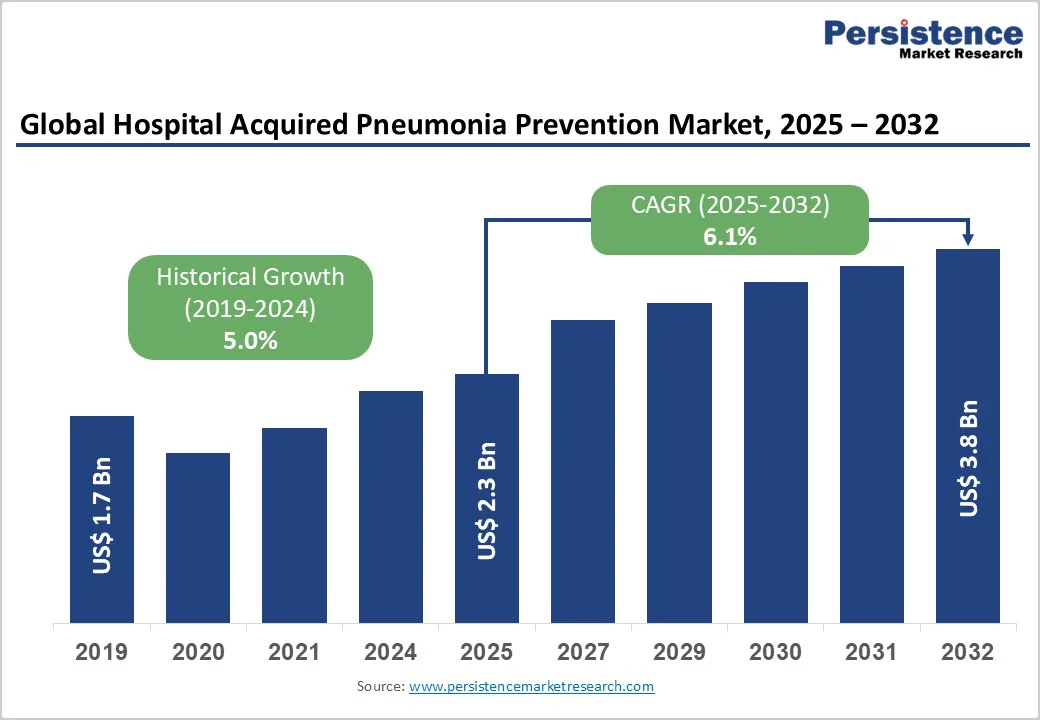
The global hospital acquired pneumonia prevention market size is valued at US$ 2.3 billion in 2025 to US$ 3.8 Billion by 2032. The market is projected to record a CAGR of 6.1% during the forecast period from 2025 to 2032.
Global demand for hospital-acquired pneumonia prevention solutions is rising as healthcare facilities increasingly adopt standardized infection-control protocols, advanced oral-care kits, and antimicrobial hygiene devices. Growing awareness of non-ventilator hospital-acquired pneumonia (HAP), stricter regulatory emphasis on patient safety, and the integration of disposable, contamination-free oral-care products are accelerating market expansion.
Additionally, improvements in hospital infrastructure, rising ICU admissions, and the prioritization of evidence-based infection-prevention programs across developed and emerging economies are increasing adoption of products and services for HAP-prevention.
Key Industry Highlights
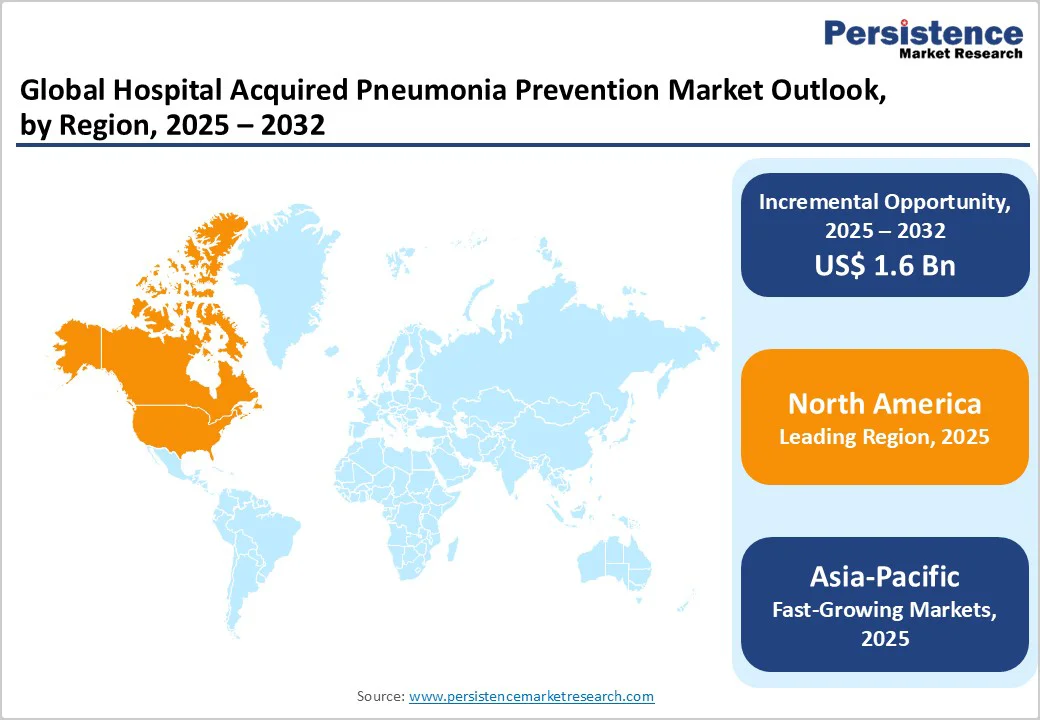
- Leading Region: North America dominates the global hospital acquired pneumonia prevention market with a 38.4% share, driven by high ICU admissions, strong implementation of oral-care protocols, advanced hospital infrastructure, and active CDC-led infection prevention initiatives.
- Fastest-Growing Region: Asia Pacific is the fastest-growing region, supported by expanding hospital capacity, rising awareness of HAP, increasing government investments in infection control, and rapid adoption of disposable oral-care kits.
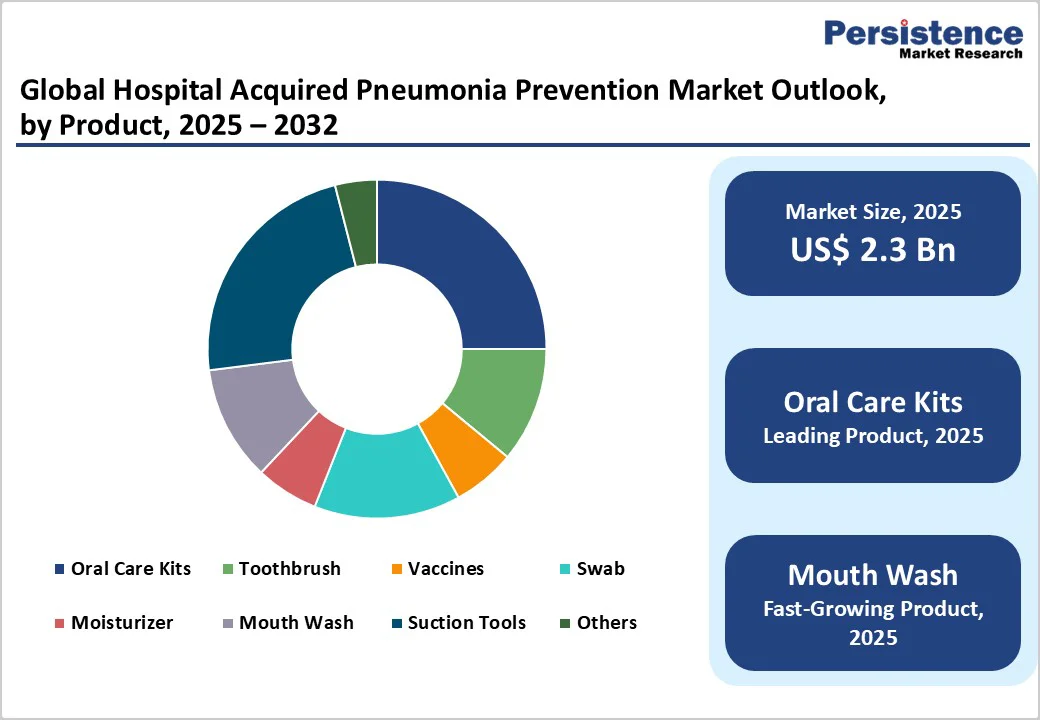
- Leading Product Segment: Oral care kits lead the market due to their comprehensive, pre-packaged, contamination-free design that supports standardized HAP-prevention protocols across ICUs and general wards.
- Fastest-Growing Product Segment: Mouth wash is the fastest-growing segment as hospitals increasingly adopt CHG-free, alcohol-free, and patient-friendly formulations that reduce mucosal irritation, enhance comfort, and improve compliance with standardized HAP-prevention protocols.
- Leading End-user Segment: Hospitals hold the largest share, driven by high inpatient volumes, increased ventilator and non-ventilator HAP cases, and strong integration of evidence-based oral-care bundles.
- Fastest-Growing End-user Segment: Ambulatory surgery centers (ASCs) are experiencing rapid growth due to increasing postoperative infection-prevention protocols and rising adoption of single-use oral hygiene products.
| Global Market Attributes | Key Insights |
|---|---|
| Hospital Acquired Pneumonia Prevention Market Size (2025E) | US$ 2.3 Billion |
| Market Value Forecast (2032F) | US$ 3.8 Billion |
| Projected Growth (CAGR 2025 to 2032) | 6.1% |
| Historical Market Growth (CAGR 2019 to 2024) | 5.0% |
Market Dynamics
Driver - Rising HAP Burden and Shift toward Standardized & Disposable Oral-Care Kits
The increasing rate of ICU admissions, prolonged ventilation support, and extended hospital stays is significantly elevating the global incidence of hospital-acquired pneumonia (HAP). This trend is pushing hospitals to implement standardized oral-care bundles, antimicrobial hygiene tools, and single-use prevention kits to minimize complications and mortality.
Strengthened awareness efforts by the Centers for Disease Control and Prevention (CDC), National Health Service (NHS), and Ministry of Health and Family Welfare (MoHFW) are further improving institutional commitment to infection control, encouraging higher spending on HAP-prevention technologies across acute and critical-care units.
For instance, the 2023 HAP Policy Project reported 412,048 HAP cases in England between April 2018 and March 2023 with an annual average of 82,410 cases.
Hospitals are increasingly moving away from conventional, manually assembled oral-care practices toward fully sealed, disposable, and pre-packaged oral-care kits. These kits typically containing suction toothbrushes, foam swabs, moisturizers, antiseptic rinses, and single-use hygiene components help reduce cross contamination and ensure consistent care protocols across nursing teams.
The rising emphasis on infection prevention, compliance with hospital quality standards, and the need to streamline oral-care workflows in ICUs and high-risk wards are accelerating the adoption of these ready-to-use kits, thereby driving market growth.
Restraints - Workforce Non-Compliance and Safety Concerns Surrounding Chlorhexidine Based Products
Oral-care protocols for preventing hospital-acquired pneumonia continue to face major implementation challenges across clinical settings. High nursing workloads, staffing shortages, and inconsistent hands-on training often lead to poor compliance with recommended oral-care frequencies and procedures.
In many hospitals, oral hygiene is deprioritized compared with other urgent interventions, resulting in variability in care delivery and reduced overall effectiveness of HAP-prevention programs.
Moreover, growing clinical concerns regarding chlorhexidine based oral solutions including mucosal irritation, hypersensitivity reactions, and uncertainty surrounding long-term safety are prompting hospitals to reassess product usage.
Some healthcare facilities are shifting toward alternative formulations such as sodium bicarbonate or non-medicated moisturizers to avoid adverse effects. Together, these workforce limitations and product-safety concerns are slowing the adoption of advanced oral-care bundles and limiting broader market penetration.
Opportunity - Expansion of CHG-Free Oral Care Solutions and Growth of Long-Term Care
The rising demand for gentle, non-irritating oral-care formulations is creating significant opportunities for manufacturers. Hospitals and elder-care facilities are increasingly shifting away from chlorhexidine-based and alcohol-containing products due to concerns over mucosal irritation, hypersensitivity, and patient discomfort.
This shift is fueling innovation in aloe-vera gels, pH-balanced rinses, herbal antimicrobial blends, and fluoride-free cleansers tailored for fragile, intubated, or post-operative patients. Companies that invest in clinically validated chlorhexidine gluconate (CHG)-free portfolios stand to capture growing preference for safer, patient-friendly alternatives.
Furthermore, the rising geriatric population and increasing rates of chronic illness are driving higher demand for oral-care solutions in long-term care homes, nursing facilities, and home-healthcare services. Bedridden and dependent patients face an elevated risk of aspiration and hospital-acquired pneumonia, creating strong market potential for disposable oral kits, moisturizer gels, suction toothbrushes, and portable suction systems.
As governments strengthen policies for elderly care and home-based management of chronic conditions, suppliers offering easy-to-use, single-use, caregiver-friendly oral-care bundles are positioned for rapid adoption across these expanding care environments.
Category-wise Analysis
By Product, Oral Care Kits Dominate Globally Due to their Standardized and Contamination-Free Approach to Effective HAP Prevention
The oral care kit segment is projected to dominate the global hospital acquired pneumonia prevention market in 2025, accounting for a revenue share of 25.0%.
The segment’s strong performance is primarily driven by comprehensive composition, convenience, and ability to standardize oral hygiene protocols in ICU and non-ICU settings. These pre-assembled kits include suction toothbrushes, swabs, moisturizers, and antiseptic mouthwashes, ensuring complete and consistent care while reducing variability in nursing practices.
Hospitals prefer them because they minimize contamination risks, improve protocol compliance, and significantly lower the likelihood of micro-aspiration and pneumonia in ventilated patients. Their ease of use, time efficiency, and strong alignment with CDC and World Health Organization (WHO) oral-care recommendations
By End-user, Hospitals Leads the Market Globally Due to High Patient Volume, ICU Admissions, and Strong Adoption of Standardized HAP-Prevention Protocols
The hospitals segment is projected to dominate the global hospital acquired pneumonia prevention market in 2025, accounting for a revenue share of 56.6%. This is due to the high volume of critically ill and ventilated patients, strict compliance requirements for infection-prevention protocols, and widespread adoption of standardized oral-care bundles to reduce HAP and ventilator-associated pneumonia incidence.
Large multispecialty hospital networks allocate significant budgets for ICU hygiene products, including oral care kits, suction tools, and antiseptic solutions, ensuring consistent demand. Additionally, frequent audits by regulatory bodies and the need to reduce the length of stay, mortality risk, and treatment costs.
Region-wise Insights
North America Hospital Acquired Pneumonia Prevention Market Trends
The North America market is expected to dominate globally with a value share of 38.4% in the 2025, with the U.S. leading the region due to its highly developed hospital infrastructure, strong ICU admission volumes, and strict infection-prevention regulations enforced by CDC and Joint Commission.
Growing adoption of standardized oral-care bundles, expanding use of disposable suction toothbrushes and CHG-based antiseptic gels, and rising focus on preventing ventilator-associated pneumonia in critical-care settings are further strengthening market growth.
Additionally, high healthcare spending, rapid integration of AI-enabled monitoring tools, and presence of major manufacturers position the region as the most mature and innovation-driven market for HAP prevention solutions.
Europe Hospital Acquired Pneumonia Prevention Market Trends
The Europe market is projected to hold 27.6% in 2025, and is expected to grow steadily, driven by strict infection-prevention regulations enforced by the European Centre for Disease Prevention and Control (ECDC) and national health agencies, along with increasing adoption of standardized oral-care protocols across ICUs and long-term care facilities.
Rising geriatric hospitalizations, higher prevalence of ventilator-associated complications, and growing preference for CHG-free and alcohol-free oral hygiene solutions are contributing to regional demand.
Additionally, strong government-backed healthcare-associated infection reduction programs, continuous staff training initiatives, and procurement of pre-packaged disposable oral-care kits are further strengthening Europe’s position as a progressive, compliance-focused market for hospital-acquired pneumonia prevention.
Asia and Pacific Hospital Acquired Pneumonia Prevention Market Trends
The Asia Pacific market is expected to register a relatively higher CAGR of around 8.4% between 2025 and 2032, driven by the rapid expansion of hospital and ICU infrastructure across India, China, and Southeast Asia, along with the rising awareness of infection prevention and control (IPC) standards in public and private hospitals.
Increasing incidence of ventilator-associated pneumonia, growing geriatric and immunocompromised patient populations, and higher adoption of cost-effective disposable oral-care kits are boosting product uptake. Moreover, government-led HAI reduction programs, improving nurse-training practices, and rising procurement of standardized oral-care bundles are strengthening market growth across the region.
Competitive Landscape
The global hospital-acquired pneumonia prevention market is highly competitive, with major players such as Stryker, Medline Industries, LP, Intersurgical Ltd., JASE Medical, and Teleflex Incorporated leading the industry through broad product portfolios, strong worldwide distribution networks, and continuous innovation in oral-care kits, suction systems, antiseptic solutions, and ICU hygiene accessories.
These companies focus on developing advanced HAP-prevention solutions including pre-packaged oral-care bundles, CHG-based antiseptics, suction toothbrushes, and airway management devices to strengthen clinical outcomes and reduce hospital infection rates.
Key Industry Developments:
- In July 2023, ReddyPort introduced a redesigned 24-hour NIV Oral Care Kit in a soft-pack format, tailored to the unique clinical needs of noninvasive ventilation patients. The updated kit retains seven appliance sleeves aligned with the standard Q4 VAP oral-care protocol, supporting consistent and protocol-driven pneumonia prevention in ventilated patients.
Companies Covered in Hospital Acquired Pneumonia Prevention Market
- Stryker
- Medline Industries, LP.
- Intersurgical Ltd
- Jase Medical
- Teleflex Incorporated.
- Hangzhou BEVER Medical Devices Co., Ltd.
- Owens & Minor, Inc.
- AirLife
- Ecolab Inc.
- ReddyPort
- Others
Frequently Asked Questions
The global hospital acquired pneumonia prevention market is projected to be valued at US$ 2.3 Billion in 2025.
Rising ICU admissions, increased HAP incidence, and the growing adoption of standardized oral-care protocols are driving the global hospital acquired pneumonia prevention market.
The global hospital acquired pneumonia prevention market is poised to witness a CAGR of 6.1% between 2025 and 2032.
Rising demand for CHG-free, alcohol-free oral-care formulations and the rapid expansion of prevention solutions in long-term care and home-healthcare settings are creating significant growth opportunities in the hospital acquired pneumonia prevention market.
Stryker, Medline Industries, LP, Intersurgical Ltd., JASE Medical, and Teleflex Incorporated are some of the key players in the hospital acquired pneumonia prevention market.


