




- Healthcare Services
- Dementia Care Products Market
Dementia Care Products Market Size, Share, Growth, and Regional Forecast, 2026 to 2033
Dementia Care Products Market by Product (Memory Exercise & Activity Products, Daily Reminder Products, Bathroom Safety Products, Dining Aids, Communication Products, Personal Safety Products, Other), End-user, and Regional Analysis from 2026 to 2033

Dementia Care Products Market Share and Trends Analysis
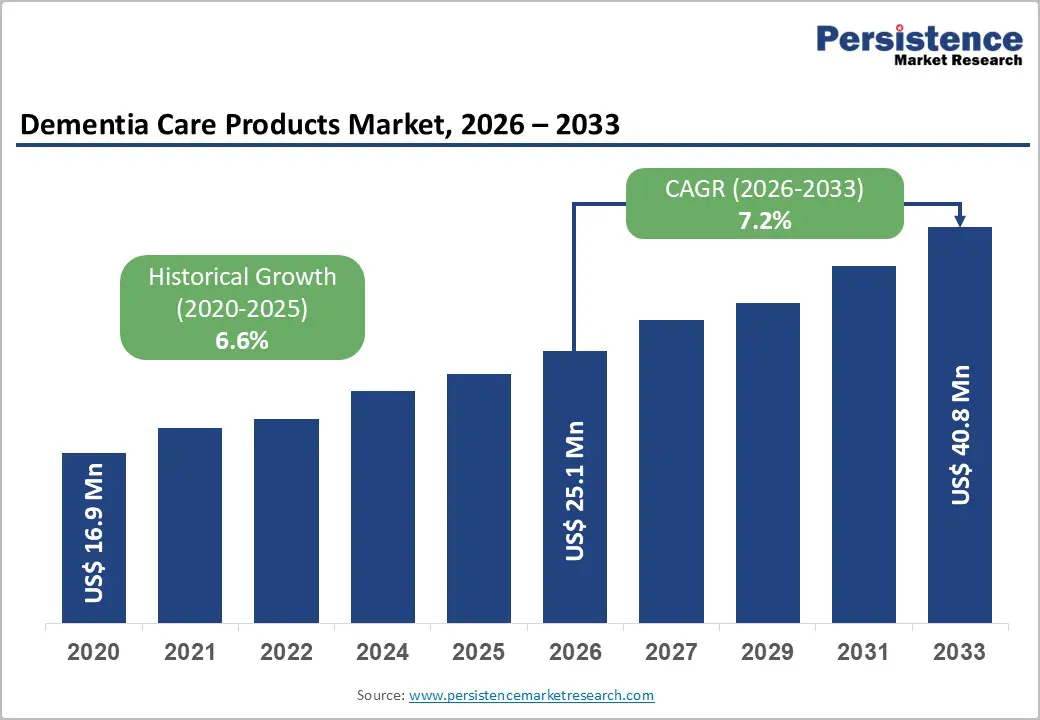
The global dementia care products market size is likely to be valued at US$25.1 million in 2026 to US$40.8 million by 2033 growing at a CAGR of 7.2% during the forecast period from 2026 to 2033.
Equine healthcare refers to the diagnosis, preventive care, treatment, and management of various health Dementia is a complex neurological condition marked by a decline in cognitive functions, impacting memory, thinking, behavior, and the ability to carry out daily tasks. Rather than a specific disease, it serves as an overarching term for a cluster of symptoms that significantly hinder an individual's daily life. Various underlying causes contribute to dementia, with Alzheimer's disease standing out as the most prevalent.
Key Industry Highlights
- Rising global dementia prevalence and rapid population aging are key demand drivers, increasing the need for daily living aids, safety solutions, and long-term supportive care products worldwide.
- Home-based care dominates the market, as families prefer cost-effective, familiar environments supported by assistive devices, monitoring tools, and easy-to-use dementia-friendly products.
- North America holds a leading market share due to strong healthcare infrastructure, high awareness levels, and early adoption of advanced dementia care technologies.
- Memory and cognitive aids are increasingly adopted to support mental stimulation, routine management, and slow cognitive decline, particularly in early-stage dementia patients.
| Key Insights | Details |
|---|---|
| Dementia Care Products Market Size (2026E) | US$25.1 Mn |
| Market Value Forecast (2033F) | US$40.8 Mn |
| Projected Growth (CAGR 2026 to 2033) | 7.2% |
| Historical Market Growth (CAGR 2020 to 2025) | 6.6% |
Market Dynamics
Driver - Integration of Smart Home and Internet-of-Things (IoT) Technologies Enhancing Patient Safety
The integration of smart home technologies and Internet of Things (IoT) solutions is transforming dementia care by significantly improving patient safety and overall quality of life. Modern smart homes can incorporate motion sensors, automated lighting, connected alarms, wearable GPS trackers, and other IoT-enabled devices to continuously monitor dementia patients in real time. These systems allow caregivers to track patient movements, detect unusual behavior, and respond immediately to emergencies such as falls, wandering, or sudden health issues. Wearable devices, for example, can alert family members or healthcare providers if a patient leaves a designated safe area or exhibits unusual activity patterns.
Additionally, IoT-enabled reminders and alerts help patients maintain daily routines, such as medication schedules, meal times, or hygiene practices, which are critical in managing cognitive decline. Integration with mobile applications and cloud-based monitoring platforms allows caregivers to access patient data remotely, reducing the need for constant in-person supervision and minimizing caregiver stress. Moreover, these technologies support predictive analytics, identifying potential risks before they result in accidents, and can be customized to suit individual patient needs, including stage-specific dementia symptoms and behavioral tendencies. The adoption of smart home and IoT-enabled dementia care products is therefore driving safer, more efficient, and personalized care, allowing patients to maintain independence while ensuring peace of mind for caregivers and families alike.
Restraints - Complexity of Using Smart Devices for Elderly Patients
One key restraint in the dementia care products market is the complexity of using smart devices, particularly among elderly patients who are not tech-savvy. Many advanced dementia care solutions, such as wearable GPS trackers, IoT-enabled monitoring systems, automated reminders, and mobile health applications, require a basic understanding of technology to operate effectively. Elderly users often struggle to navigate interfaces, adjust settings, or respond to alerts, which can lead to improper use or even avoidance of these devices. This complexity becomes more pronounced for patients with cognitive decline, memory loss, or visual and motor impairments, which are common in dementia.
Consequently, the effectiveness of such devices in enhancing safety, supporting daily routines, and providing remote monitoring can be significantly reduced if caregivers are unavailable or inadequately trained. Moreover, technical glitches, battery management, and software updates add additional layers of difficulty, potentially frustrating users and discouraging consistent use. Caregivers, too, may face challenges in setting up and maintaining these devices, particularly in multi-user households or institutional care settings. These usability barriers highlight the need for intuitive design, simplified interfaces, voice-assisted operations, and robust caregiver training programs. Until these challenges are addressed, the complexity of smart devices will remain a significant barrier to widespread adoption and optimal utilization in dementia care.
Opportunity - Collaboration with Healthcare Providers and Insurance Programs
Strategic collaboration with healthcare providers, hospitals, memory care centers, and insurance programs represents a significant growth opportunity in the dementia care products market. By partnering with medical institutions and long-term care facilities, companies can integrate their products directly into patient care plans, ensuring that dementia patients have access to essential safety, cognitive, and daily living aids. Such collaborations also allow product developers to receive valuable clinical feedback, enabling the design of more effective, user-friendly, and stage-specific solutions.
Additionally, alignment with insurance programs can facilitate product adoption by offering subsidies, reimbursements, or coverage as part of wellness and dementia management plans, reducing financial barriers for families. This approach not only increases market penetration but also strengthens brand credibility and trust among healthcare professionals and caregivers. Hospitals and memory care centers can include these products as part of standardized care protocols, while insurers can incentivize their use through discounted premiums or integrated care packages. Furthermore, partnerships can extend to caregiver training programs that provide education on proper use, safety measures, and patient engagement, thereby enhancing the overall quality of care. Leveraging such collaborations enables companies to scale efficiently, reach underserved populations, and establish long-term relationships with both healthcare ecosystems and end-users.
Category-wise Analysis
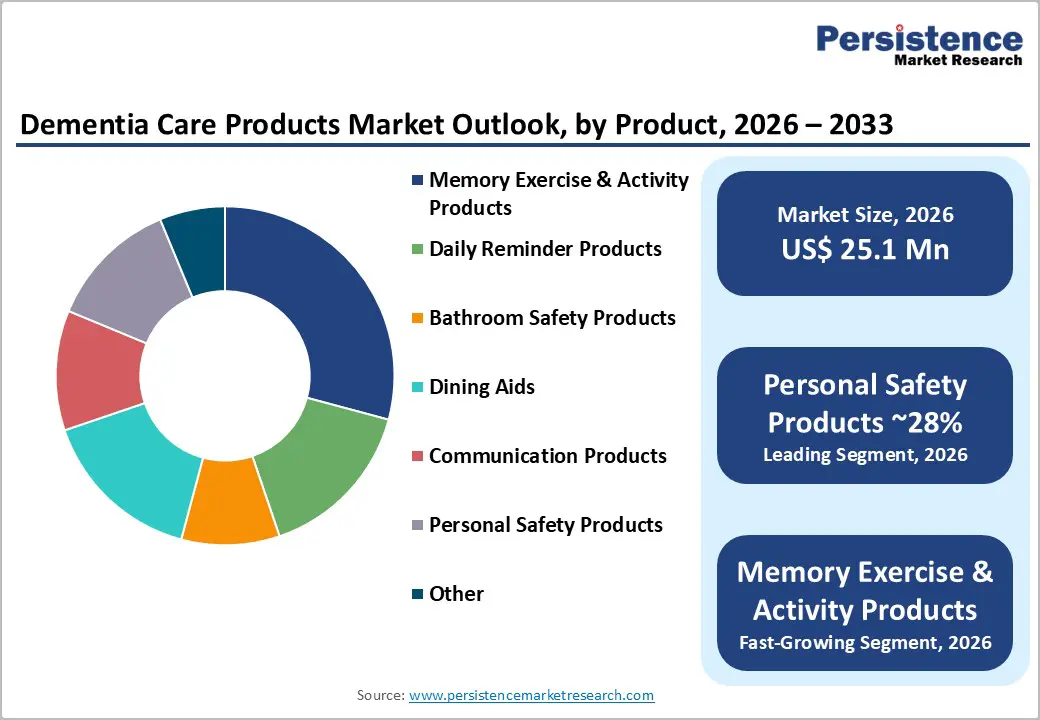
By Product, the Personal Safety Segment is leading in the Market
Personal safety products dominate the dementia care market due to their critical role in protecting patients and reducing caregiver stress. Dementia patients are highly susceptible to accidents, falls, and wandering, which can lead to severe injuries or even life-threatening situations. Products such as wearable GPS trackers, fall detection systems, emergency alert devices, and monitoring tools provide real-time oversight, enabling caregivers to intervene promptly when risks arise. This safety imperative drives strong demand in both home care and institutional settings.
Additionally, demographic trends, including the rising elderly population and increasing prevalence of dementia, have amplified awareness among families and healthcare providers about the necessity of safety-focused solutions. Technological advancements, such as integration with smart home systems, IoT-enabled monitoring, and mobile alerts, further enhance the effectiveness of these products, increasing adoption rates. Unlike other product segments that primarily support cognitive engagement or daily routines, personal safety products address immediate and tangible health risks, creating a higher perceived value and urgency. Consequently, these factors collectively position personal safety products as the largest revenue-generating segment in the dementia care products market.
By End-user, Home Care Segment Leads the Market
The home care segment leads the dementia care products market because it aligns with the growing preference for aging in place and personalized care. Most dementia patients and their families prioritize familiar home environments over institutional settings because they promote emotional well-being, independence, and comfort. Home care allows caregivers to integrate memory aids, personal safety devices, reminder systems, and daily living support products seamlessly into the patient’s routine.
Additionally, home-based care solutions are often more cost-effective compared to long-term care centers or hospitals, reducing financial strain on families while still ensuring safety and supervision. The rise of smart home technologies and IoT-enabled monitoring devices further strengthens this segment by enabling remote tracking, fall detection, and emergency alerts, reducing caregiver stress and improving patient safety. Unlike institutional care, home care offers flexibility to customize products based on the patient’s stage of dementia, mobility needs, and behavioral patterns. These factors collectively position home care as the largest and fastest-adopted end-user segment in the dementia care products market.
Regional Insights
North America Dementia Care Products Market Trends
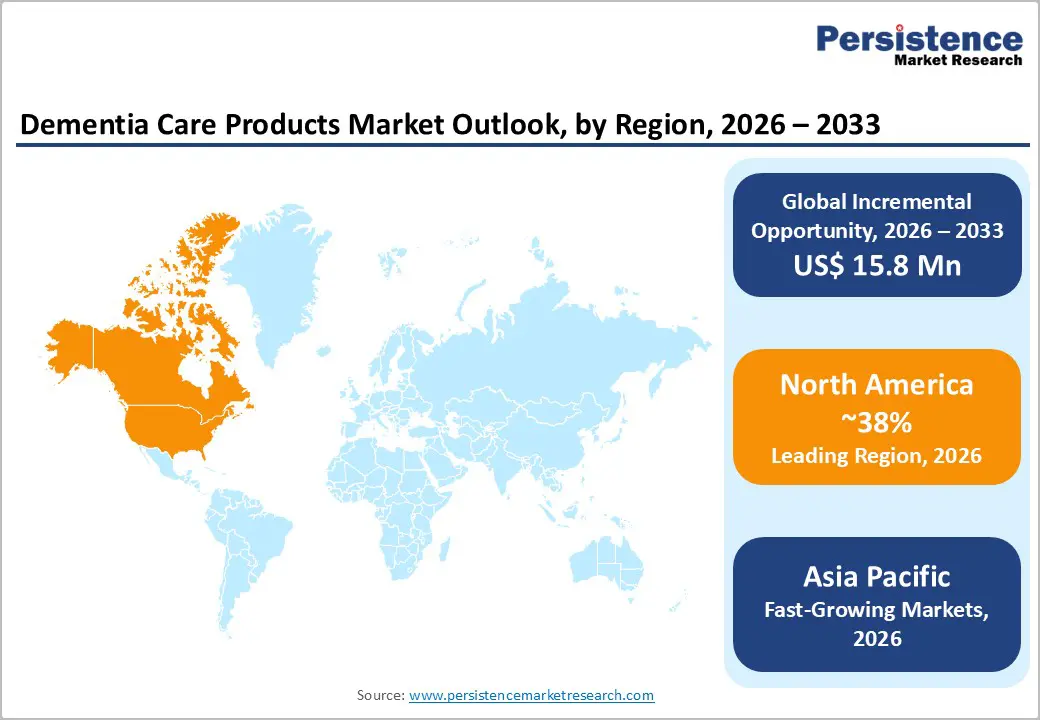
North America leads the global dementia care products market due to a combination of advanced healthcare infrastructure, high awareness of dementia management, and widespread adoption of innovative technologies. The United States, in particular, represents the largest market in the region, driven by a rapidly aging population and increasing prevalence of Alzheimer’s disease and other dementias. Caregivers and healthcare providers in the U.S. are increasingly adopting smart monitoring devices, wearable GPS trackers, fall detection systems, and cognitive support tools to enhance patient safety and independence. The presence of well-established distribution channels, including e-commerce platforms, home healthcare agencies, and specialty medical retailers, further accelerates product penetration.
Additionally, government initiatives and insurance programs supporting elderly and dementia care, along with growing investments in research and development, contribute to the region’s leadership. North American consumers are highly receptive to non-pharmacological solutions, such as memory exercise devices, activity-based products, and personalized care aids, reflecting a preference for holistic dementia management. Continuous innovation, the integration of IoT-enabled solutions, and a focus on home-based care trends ensure that North America remains the most dominant and influential market globally.
Asia Pacific Dementia Care Products Market Trends
The Asia Pacific region is emerging as one of the fastest-growing markets for dementia care products, driven by rapidly aging populations, rising dementia prevalence, and increasing awareness of elderly care solutions. Countries such as Japan, China, India, and South Korea are witnessing a significant surge in demand for home-based and institutional dementia care products, including memory aids, personal safety devices, daily reminder systems, and adaptive living tools. Growing disposable incomes, urbanization, and improved healthcare infrastructure are enabling families to invest in advanced monitoring and cognitive support devices.
Additionally, governments across the region are implementing policies and programs to support elderly care, including subsidies for assistive devices and initiatives to promote dementia-friendly communities. Technological adoption is accelerating, with IoT-enabled monitoring, wearable safety devices, and smart home integration gaining traction in urban centers. Rising private healthcare services, increasing e-commerce penetration, and educational programs for caregivers are further enhancing market expansion. With unmet needs in both rural and urban areas, and growing interest in non-pharmacological interventions, the Asia Pacific presents significant opportunities for manufacturers and service providers to innovate and capture market share in the dementia care products segment.
Competitive Landscape
The global dementia care products market is moderately fragmented, characterized by a mix of specialized manufacturers, healthcare device firms, and technology-driven startups. Companies compete primarily through product innovation, focusing on advanced safety solutions, cognitive stimulation devices, and smart monitoring technologies. Differentiation is achieved via stage-specific and customizable products, integration with IoT and smart home systems, and enhanced usability for patients and caregivers. Market players also emphasize strategic partnerships with healthcare providers, long-term care centers, and insurance programs to expand distribution and adoption.
Key Industry Developments:
- In November 2025, Chubb Life Hong Kong introduced the Side by Side Dementia Insurance Plan, which it stated was the city’s first standalone insurance policy specifically designed to support individuals diagnosed with dementia and their caregivers.
Companies Covered in Dementia Care Products Market
- Parentgiving, Inc.
- EasierLiving, LLC
- Find Memory Care
- Best Alzheimer’s Products
- NRS Healthcare
- Buddi Ltd.
- Philips Healthcare
- GE Healthcare
- Arjo
- Eugeria
- BAYADA Home Health Care
- Ravencourt Ltd.
- Pobroll
- Brain+ A/S
- Others
Frequently Asked Questions
The global dementia care products market is projected to be valued at US$25.1 Mn in 2026.
The increasing incidence of Alzheimer’s disease and other dementias, particularly among the aging population, is creating sustained demand for supportive care products worldwide.
The global dementia care products market is poised to witness a CAGR of 7.2% between 2026 and 2033.
Growing adoption of IoT-enabled monitoring, wearable safety devices, and AI-driven alert systems presents strong opportunities for advanced dementia care products.
Parentgiving, Inc., EasierLiving, LLC, Find Memory Care, Best Alzheimer’s Products, and others.


