




- Biotechnology
- Birth Tissue Products Market
Birth Tissue Products Market Size, Share, and Growth Forecast, 2026 – 2033
Birth Tissue Products Market by Product Type (Placental Tissue Products, Umbilical Cord Tissue Products, Amniotic Membrane Products), Tissue (Placenta, Amniotic Membrane, Chorionic Membrane, Amniotic Fluid, Umbilical Cord Tissue, Umbilical Veins, Wharton’s Jelly), Application (Cardiovascular Disorders, Oncology, Dermatology, Musculoskeletal, Wound Care, Ophthalmology), and Regional Analysis for 2026-2033

Birth Tissue Products Market Share and Trends Analysis
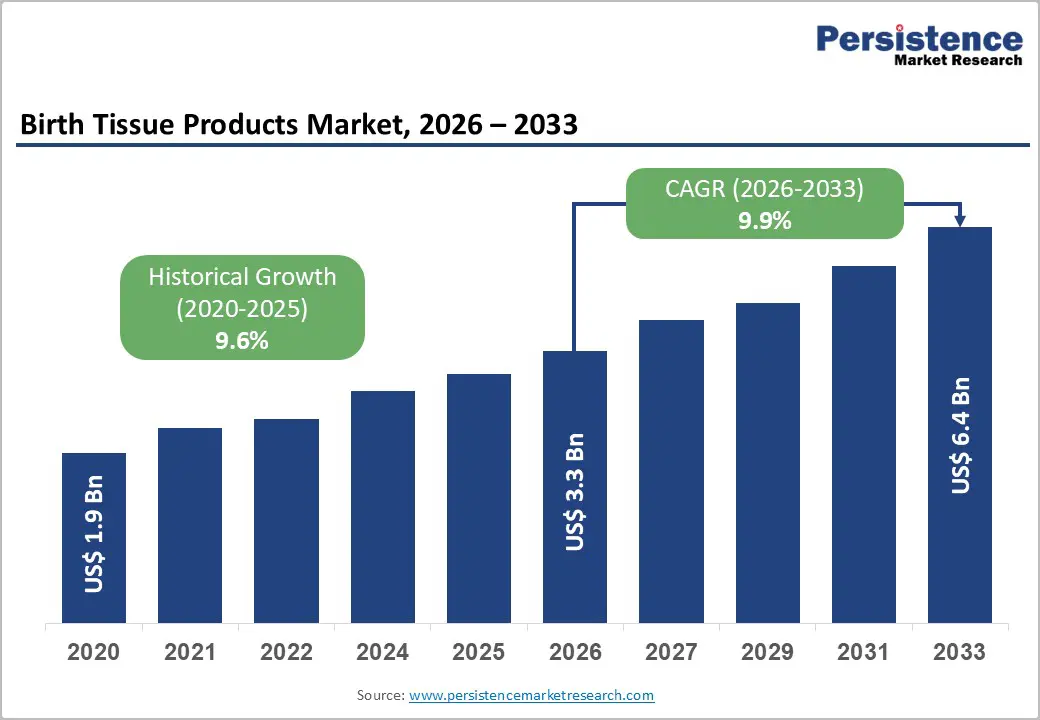
The global birth tissue products market size is likely to be valued at US$ 3.3 billion in 2026, and is projected to reach US$ 6.4 billion by 2033, growing at a CAGR of 9.9% during the forecast period 2026−2033.
The market demonstrates strong expansion potential driven by clinical validation, regulatory recognition, and therapeutic demand across regenerative medicine. Expanding awareness among healthcare providers regarding advantages of biologic matrices over synthetic alternatives increases procedural integration in surgical and outpatient settings. Technological integration involving cryopreservation, decellularization, and sterilization improves storage stability and therapeutic performance, which supports commercial scalability.
Healthcare infrastructure expansion in emerging economies improves access to advanced wound care and reconstructive therapies, thereby broadening patient eligibility. Demographic aging trends raise prevalence of degenerative disorders, which increases reliance on regenerative interventions.
Key Industry Highlights
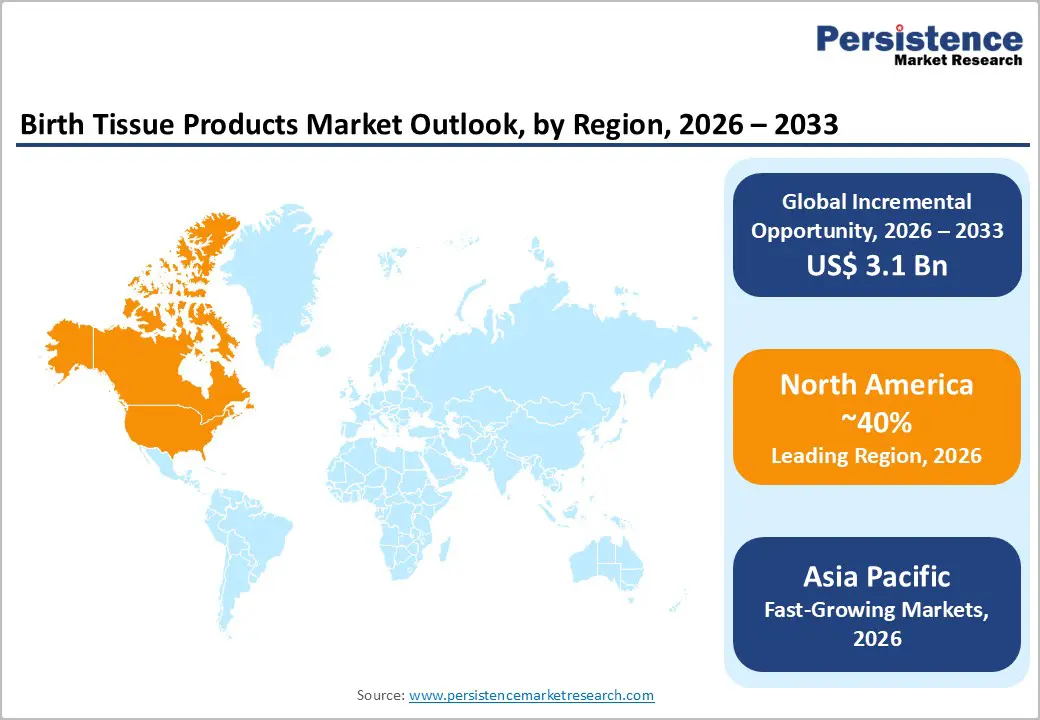
- Dominant Region: By 2026, North America is projected to hold an approximate market share of 40%, powered by advanced regulations for life-science research.
- Fastest-growing Regional Market: Asia Pacific is forecasted to be the fastest-growing between 2026 and 2033, driven by healthcare expansion and government support.
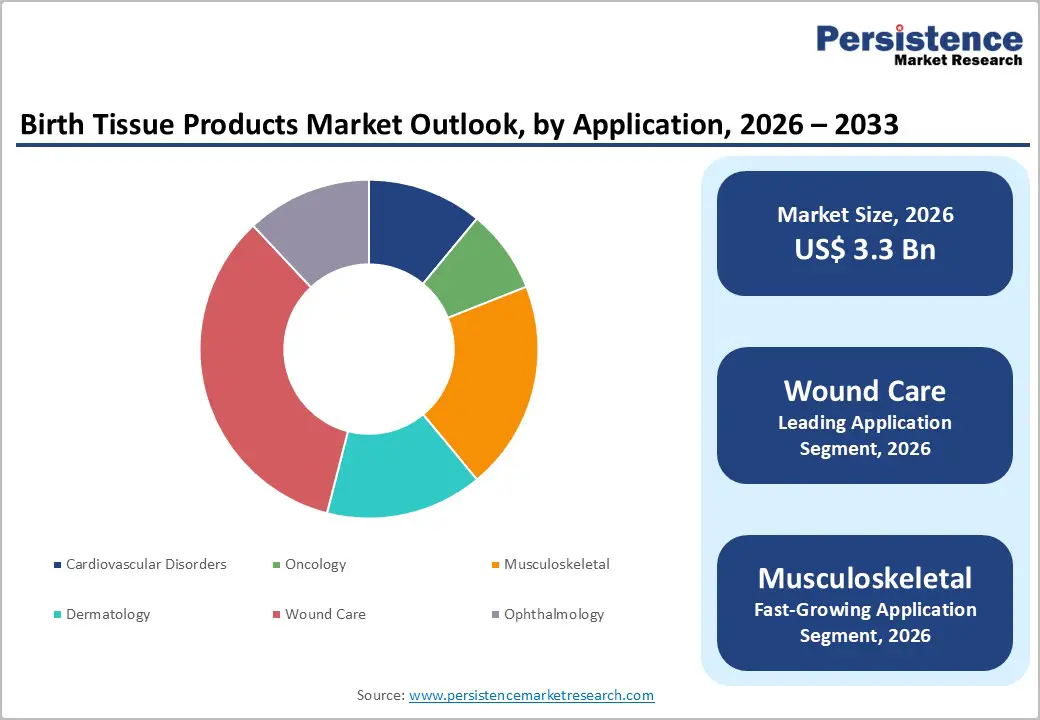
- Leading Application: Wound care is expected to lead with about 34% share in 2026, fueled by growing clinical evidence, high chronic wound burden, and faster healing outcomes.
- Fastest-growing Application: Musculoskeletal applications are expected grow the fastest through 2033, aided by rising number of orthopedic procedures and improving recovery outcomes.
- Key Drivers: Rising regenerative therapy demand, increasing surgical volume, expanding clinical evidence, and supportive regulatory frameworks are factors stimulating market growth.
- August 2025: BioLab Holdings announced that the U.S. Food and Drug Administration (FDA) Tissue Reference Group recognized five of its amniotic membrane allograft products as human cells, tissues, or cellular and tissue-based products (HCT/Ps), validating their clinical use in advanced wound care.
| Key Insights | Details |
|---|---|
|
Birth Tissue Products Market Size (2026E) |
US$ 3.3 Bn |
|
Market Value Forecast (2033F) |
US$ 6.4 Bn |
|
Projected Growth (CAGR 2026 to 2033) |
9.9% |
|
Historical Market Growth (CAGR 2020 to 2025) |
9.6% |
Market Factors – Growth, Barriers, and Opportunity Analysis
Aging Population and Rising Chronic Disease Prevalence
Demographic transition toward older age cohorts reshapes clinical demand patterns and regenerative treatment utilization. According to the World Health Organization (WHO), by 2030 one in six individuals globally will be aged 60 or above, reflecting rapid expansion of elderly cohorts and longer survival timelines. This structural shift increases incidence of degenerative disorders, impaired wound healing, orthopedic deterioration, and organ dysfunction, all of which require biologically active therapeutic solutions rather than symptomatic treatment models. Age-related molecular damage accumulation reduces tissue repair capacity and raises disease susceptibility, creating sustained clinical demand for advanced biologics capable of stimulating regeneration and reducing recovery periods. Health systems respond through investment in cell-derived and matrix-based therapies designed for surgical reconstruction, chronic wound management, and inflammatory conditions, aligning innovation pipelines with geriatric clinical requirements.
Escalating chronic disease burden intensifies this demand trajectory. Government health data indicate that in 2023 about 194 million adults reported at least one chronic condition, with prevalence reaching nine in ten among older adults. Chronic disorders dominate mortality and disability statistics globally, accounting for a major share of deaths and rising alongside population ageing. Long-duration illnesses such as cardiovascular disorders, diabetes, and neurodegenerative conditions often involve tissue degradation, impaired vascularization, and inflammation, which increases reliance on regenerative biomaterials for structural repair and functional restoration.
Advancements in Stem Cell Research and Processing Technologies
Rapid progress in stem cell isolation, cryopreservation, expansion, and characterization platforms strengthens commercial viability of biologic materials derived from perinatal sources. High-precision cell sorting, closed-system bioprocessing, and genomic stability screening raise product consistency, traceability, and regulatory alignment, which supports clinical adoption and institutional procurement. Evidence from the U.S. National Library of Medicine database shows 27 clinical trials investigating stem-cell-based therapies for advanced heart failure conducted between 2014 and 2024 across Phases I through III, reflecting expanding translational pipelines tied to improved processing methodologies. Scaling capacity through automated culture systems reduces contamination risk and labor intensity, while standardized potency assays strengthen validation pathways for therapeutic applications. Such operational enhancements elevate confidence among hospitals, biotechnology firms, and research institutes, leading to stronger procurement cycles and long-term supply contracts.
Scientific maturity across regenerative medicine expands application scope across neurology, cardiology, orthopedics, and immune disorders, stimulating demand for ethically sourced cellular materials with high differentiation potential. Controlled-rate freezing, viability analytics, and biomarker profiling enable preservation of functional integrity during storage and transport, improving clinical readiness and distribution efficiency. Regulatory bodies favor products supported by reproducible manufacturing protocols, which increases approval probability and partnership activity across public and private sectors. Investment inflows rise as technological sophistication lowers failure risk during translational research stages, strengthening commercialization outlook.
Stringent Regulatory Requirements and Compliance Burdens
Intensive regulatory oversight shapes development conditions for therapeutic materials derived from human tissue, creating structural barriers across research, processing, and commercialization stages. Federal authorities enforce extensive requirements covering donor eligibility verification, contamination prevention controls, traceability documentation, and validated manufacturing environments. Firms must align operations with detailed guidance issued by agencies such as the U.S. Food and Drug Administration, which outlines compliance expectations for human cell and tissue products through formal regulatory frameworks and inspection programs.
Classification uncertainty further intensifies restraint dynamics, since oversight pathways differ depending on processing methods, intended clinical use, and manipulation level. Regulatory authorities may assign classification under biologic or drug frameworks, triggering extensive evidence submission, facility review, and safety evaluation obligations before authorization eligibility. Documentation standards require detailed procedural records, deviation tracking, corrective action plans, and training verification logs, forming an administrative structure that demands continuous monitoring rather than periodic review.
Ethical and Legal Considerations in Tissue Sourcing
Regulatory scrutiny across human-derived biomaterial procurement creates operational drag for manufacturers, distributors, and research institutions. Multijurisdictional compliance frameworks require documented consent validation, traceability logs, chain-of-custody protocols, and ethical review clearance prior to processing or commercialization. Oversight bodies such as the Government of the Republic of Ireland’s Department of Health enforce statutory authorization standards governing removal, storage, and clinical application of donated material, establishing strict procedural thresholds. Parallel policy modernization initiatives led by Australian Law Reform Commission signal continuing legislative evolution, which forces organizations to revise contracts, supplier vetting procedures, and quality systems. Such regulatory dynamism introduces legal exposure risk, documentation burden, and approval delays that slow production timelines and complicate cross-border distribution strategies.
Public-trust dependency forms another structural constraint within procurement ecosystems relying on voluntary donation. Ethical review boards, hospital committees, and transplant authorities evaluate sourcing practices through transparency, donor dignity safeguards, and equitable allocation principles, leading to extended validation cycles prior to authorization. Negative publicity tied to misuse allegations or opaque sourcing channels can trigger reputational damage, procurement suspensions, or license reassessment by authorities. Investors and institutional partners often apply environmental, social, and governance screening criteria, which raises due-diligence thresholds for participation in biologic material supply networks.
Integration with Personalized and Regenerative Medicine Platforms
Clinical alignment between biologics-derived materials and precision therapeutics creates a strategic pathway for advanced therapy developers. Regenerative protocols rely on patient-matched cellular matrices, growth factors, and scaffold substrates that support targeted tissue repair, immune modulation, and organ restoration. Personalized platforms demand biomaterials with traceable biological origin, standardized processing, and compatibility with genomic-guided treatment design. Regulatory momentum reinforces this convergence. For instance, in 2025, the U.S. regulator issued multiple approval letters for CAR-T cell therapy Yescarta, reflecting continuing authorization activity for advanced cellular products. This pattern signals institutional validation of individualized biologic interventions, encouraging suppliers of clinical-grade biologic tissues to integrate with therapy developers, contract research networks, and translational medicine centers.
Scientific demand drivers stem from translational medicine priorities focused on disease-specific regeneration rather than generalized treatment. Clinical ecosystems increasingly require biologically active matrices capable of guiding stem cell differentiation, modulating inflammation, and accelerating epithelialization. Government-documented research activity illustrates that scale 117 stem cell-based clinical trials registered in India highlight expanding therapeutic investigation and institutional oversight structures. Such activity elevates demand for compliant biologic inputs suitable for investigational and commercial protocols. Integration with precision therapy platforms therefore functions as a growth catalyst, enabling biomaterial suppliers to position offerings within regulated clinical pipelines, support investigator-initiated trials, and align with hospital-based cell therapy units.
Expansion into Emerging Healthcare Markets
Emerging healthcare markets present a strategic gateway for growth due to structural shifts in public and private health investments across developing economies. Government health expenditure data from the WHO Global Health Expenditure Database (2025) shows health systems in over 195 countries are actively tracking spending trends, reflecting increased prioritization of health financing globally, including in low and middle income regions. Fiscal expansion and evolving health policies in these regions are driving larger pools of resources toward infrastructure, workforce development, and advanced clinical services that demand innovative therapeutic solutions like regenerative biologics. Rapid urbanization, rising incidence of chronic conditions, and a growing middle class with higher expectations for quality care are amplifying demand for advanced medical therapies outside traditional Western markets.
The economics of healthcare in emerging markets further underpin this opportunity, with WHO and World Bank monitoring indicating measurable progress in universal health coverage and service delivery improvements, even as challenges remain. Growth rates in health service coverage and expenditure translate into increasing adoption of sophisticated clinical interventions, particularly in populous nations where capacity expansion remains a priority. Enhanced government support for health financing, coupled with expanding private healthcare delivery networks, enables broader reimbursement pathways and accelerates uptake of high value medical products that improve outcomes and reduce long term costs.
Category-wise Analysis
Tissue Insights
Amniotic membrane is poised to lead with a forecasted 34% of the birth tissue products market revenue share in 2026, owing to strong clinical trust and broad therapeutic utilization. Medical professionals recognize amniotic membranes as safe biologic materials with low immunogenicity and high regenerative capacity. Cultural acceptance remains favorable because sourcing occurs through medically supervised donation programs. Retail penetration through hospital procurement systems ensures consistent availability. Preventive healthcare adoption encourages early treatment of wounds and ocular disorders, which increases utilization frequency. Digital procurement platforms enable healthcare facilities to manage inventory and place orders efficiently, reducing supply disruptions.
Wharton’s jelly is anticipated to be the fastest-growing segment between 2026 and 2033, driven by expanding regenerative medicine research. This umbilical cord-derived tissue contains extracellular matrix components and bioactive molecules that support cellular repair. Research institutions investigate therapeutic applications in orthopedics, neurology, and reconstructive medicine, which expands potential demand. Consumer awareness of regenerative therapies increases willingness to consider biologic treatments. Digital commerce channels operated by medical distributors improve accessibility for clinics seeking specialized biomaterials. Preventive treatment strategies emphasizing tissue regeneration rather than symptom management encourage adoption.
Application Insights
Wound care is positioned as the leading segment with nearly 35% of the birth tissue products market share in 2026, supported by clinical credibility and provider referrals. Chronic wounds require advanced treatment modalities capable of accelerating healing and reducing infection risk. Biologic grafts derived from birth tissues provide structural scaffolds that promote cell migration and tissue regeneration. Physicians frequently recommend these products for patients with diabetic ulcers, burns, and surgical wounds because clinical evidence demonstrates improved healing outcomes. Digital health platforms facilitate referral coordination and treatment planning, enabling efficient patient management. Cost efficiency improves when biologic therapies reduce hospitalization duration and complication rates.
Musculoskeletal is expected to emerge as the fastest-growing segment during the 2026-2033 forecast period, driven by increasing orthopedic procedures and regenerative treatment adoption. Surgeons utilize biologic matrices to support tendon repair, ligament reconstruction, and cartilage regeneration. Clinical research demonstrates potential for biologic scaffolds to enhance post-surgical recovery, which increases physician interest. Digital imaging and surgical planning tools enable precise placement of graft materials, improving treatment outcomes. Accessibility expands through specialized orthopedic centers and ambulatory surgical facilities (ASCs).
Regional Insights
North America Birth Tissue Products Market Trends
North America is expected to dominate with an estimated 40% of the birth tissue products market value, on the back of its advanced research infrastructure and high chronic disease rates. Leadership position reflects concentration of accredited tissue processing laboratories, vertically integrated biomanufacturing systems, and hospital procurement frameworks aligned with strict clinical compliance standards. High prevalence of diabetes, vascular disorders, and surgical interventions drives procedural demand for biologic graft materials used in wound management, orthopedics, and reconstructive therapies. Regulatory pathways for human cellular and tissue-based products remain clearly defined, enabling predictable approval timelines and lowering commercialization risk for suppliers.
Capital intensity further reinforces dominance, as biotechnology investment levels support automation, cryopreservation technology, and scalable processing platforms that improve batch consistency and traceability. Reimbursement structures across public and private insurers sustain premium pricing for advanced biologic implants, allowing manufacturers to maintain research funding while expanding distribution capacity. Nationwide cold-chain logistics infrastructure ensures rapid delivery of temperature-sensitive biomaterials, supporting high surgical throughput without compromising viability. Specialist surgeon density remains elevated, increasing procedural adoption and supporting professional training programs focused on regenerative techniques.
Europe Birth Tissue Products Market Trends
Europe maintains a significant market position supported by structured healthcare systems, centralized regulatory pathways, and coordinated clinical research networks. Harmonized approval mechanisms under continental health authorities enable manufacturers to commercialize biologic tissue solutions across multiple countries through a single authorization process, reducing administrative burden and accelerating time to clinical use. Strict donor eligibility screening, traceability mandates, and post-implant surveillance frameworks strengthen physician confidence and institutional procurement adoption. Publicly funded hospital systems sustain procedural demand for advanced graft materials applied in wound repair, ophthalmology, orthopedics, and reconstructive surgery. Academic medical institutions collaborate closely with biotechnology developers, generating validated clinical datasets that reinforce therapeutic credibility and facilitate guideline inclusion within standardized treatment protocols.
Industrial capability further strengthens competitive standing through dense biotechnology clusters, advanced biomaterial laboratories, and specialized tissue processing facilities operating under unified quality certifications. Government innovation grants and translational science funding support scaffold engineering, preservation technologies, and bioactive matrix development, enabling continuous product refinement. Aging demographic structure and high prevalence of chronic ulcers, degenerative joint disorders, and surgical reconstruction needs create steady procedural volumes requiring regenerative solutions. Outcome-based reimbursement frameworks incentivize adoption of biologic implants that reduce complication rates and hospitalization duration, aligning clinical and economic priorities.
Asia Pacific Birth Tissue Products Market Trends
Asia Pacific is forecasted to be the fastest-growing market for birth tissue products through 2033, stimulated by healthcare infrastructure expansion and rising medical tourism. Rapid hospital modernization across China, India, South Korea, and Southeast Asian economies increases surgical capacity and adoption of advanced biologic implants used in wound management, orthopedics, and reconstructive procedures. Government-backed regenerative medicine initiatives provide accelerated approval frameworks, funding grants, and national biomanufacturing strategies that encourage domestic production of clinical-grade tissues. Cost-efficient processing capabilities enable regional manufacturers to supply biomaterials at competitive price levels while maintaining regulatory compliance, strengthening procurement appeal for public and private hospitals.
Industrial and policy alignment strengthens expansion trajectory. National biotechnology roadmaps prioritize localized biologic supply chains, attracting venture capital, contract development organizations, and academic spin-offs into specialized innovation clusters. Training programs for surgeons and translational researchers increase clinical proficiency in regenerative techniques, enabling wider therapeutic application. Digital health platforms support patient identification and referral efficiency, improving utilization rates of advanced biologic treatments. Insurance coverage expansion across middle-income populations enhances affordability, increasing procedural throughput in urban tertiary centers.
Competitive Landscape
The global birth tissue products market structure demonstrates moderate fragmentation characterized by coexistence of multinational biotechnology manufacturers, regional tissue processing laboratories, and niche regenerative therapy developers. Market share distribution remains uneven, with leading participants such as Merakris Therapeutics, MIMEDX, Next Biosciences, NuVision Biotherapies Ltd., and Organogenesis, Inc. securing notable revenue positions through established distribution frameworks, validated clinical datasets, and multi-institution procurement contracts. Competitive stability relies on technological specialization in preservation methods, sterility assurance systems, and biologic scaffold engineering.
Strategic competition centers on differentiation through clinical validation depth, product consistency, and integration within hospital treatment protocols. Leading firms invest in controlled manufacturing automation, biologic activity retention technologies, and multicenter clinical studies that strengthen therapeutic credibility among surgeons and procurement committees. Regional processors pursue partnership agreements with research institutes and transplant centers to expand utilization pathways and reinforce credibility. Pricing power varies according to regulatory certification breadth and logistical reach, with suppliers holding broad approvals achieving stronger negotiation leverage.
Key Industry Developments
- In January 2026, StimLabs rolled out AlloCor P, the first U.S. FDA 510(k)-cleared human umbilical cord particulate device for managing acute and chronic wounds, designed to conform to complex wound geometries while supporting tissue repair through extracellular matrix components.
- In December 2025, Organogenesis announced initiation of a rolling Biologics License Application to the U.S. Food and Drug Administration for ReNu, a cryopreserved amniotic suspension allograft for symptomatic knee arthritis, with final submission modules targeted for first half of 2026.
- In September 2025, scientists from the University of Technology Sydney (UTS) successfully 3D-bioprinted miniature placentas, or placental organoids, that closely mimic early human placental tissue, enabling more accurate research into pregnancy complications such as preeclampsia and safer testing of potential treatments.
Companies Covered in Birth Tissue Products Market
- Merakris Therapeutics
- MIMEDX
- Next Biosciences
- NuVision Biotherapies Ltd.
- Organogenesis, Inc.
- Orthofix Medical Inc.
- Skye Biological Holdings, LLC
- Stryker
- Surgenex, LLC.
Frequently Asked Questions
The global birth tissue products market is projected to reach US$ 3.3 billion in 2026.
Rising demand for regenerative therapies, increasing surgical procedure volume, expanding clinical research activity, and supportive regulatory frameworks are driving market growth.
The market is poised to witness a CAGR of 9.9% from 2026 to 2033.
Integration with regenerative medicine platforms, expansion into emerging healthcare systems, advancement in biologic processing technologies, and rising adoption in surgical and wound care applications represent key market opportunities.
Some of the key market players include Merakris Therapeutics, MIMEDX, Next Biosciences, NuVision Biotherapies Ltd., Organogenesis, Inc., and Orthofix Medical Inc.


