




- Nutraceuticals & Functional Foods
- Acai Berry Market
Acai Berry Market Size, Share, Growth, and Regional Forecast, 2026 to 2033
Acai Berry Market by Form (Raw/Fresh Acai, Processed Acai), by Nature (Organic, Conventional), by End Use (Food & Beverages, Dietary Supplements, Cosmetics & Personal Care, Pharmaceuticals), and Regional Analysis from 2026 to 2033

Acai Berry Market Share and Trends Analysis
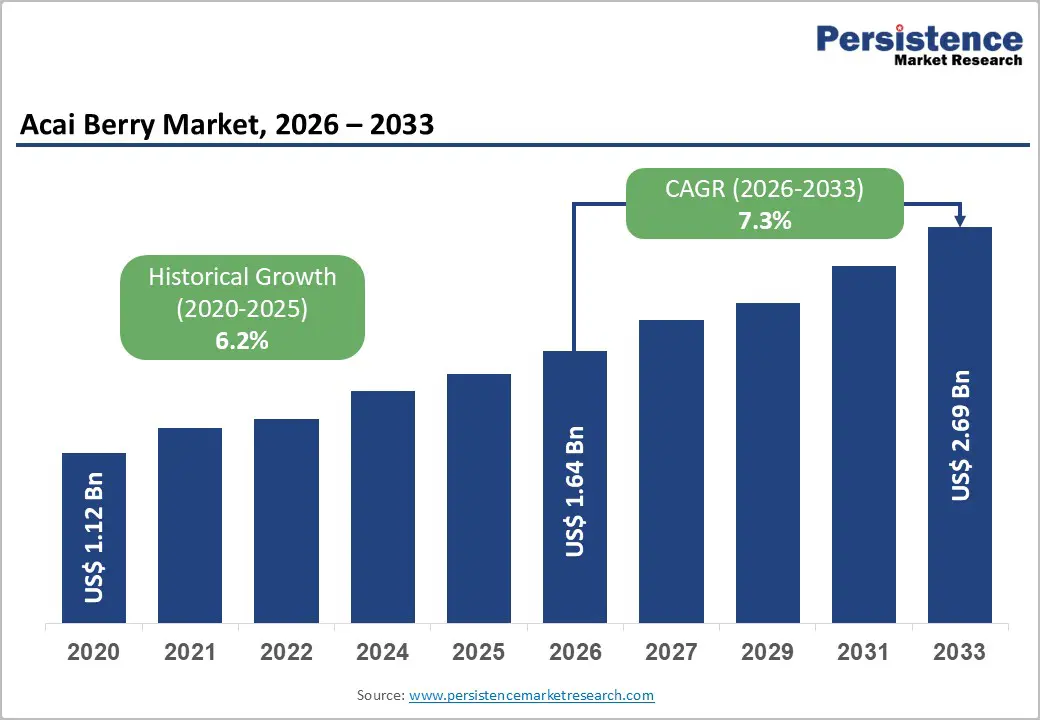
The global acai berry market size is likely to be valued at US$ 1.64 billion in 2026 and reach US$ 2.69 billion by 2033 growing at a CAGR of 7.3% during the forecast period from 2026 to 2033.
The global açaí berry market is surging as consumers increasingly embrace antioxidant-rich superfoods, blending wellness, convenience, and vibrant flavors into their daily routine. From smoothie bowls to functional snacks, açaí’s versatility and perceived health benefits are driving widespread adoption across retail and foodservice channels.
Key Industry Highlights
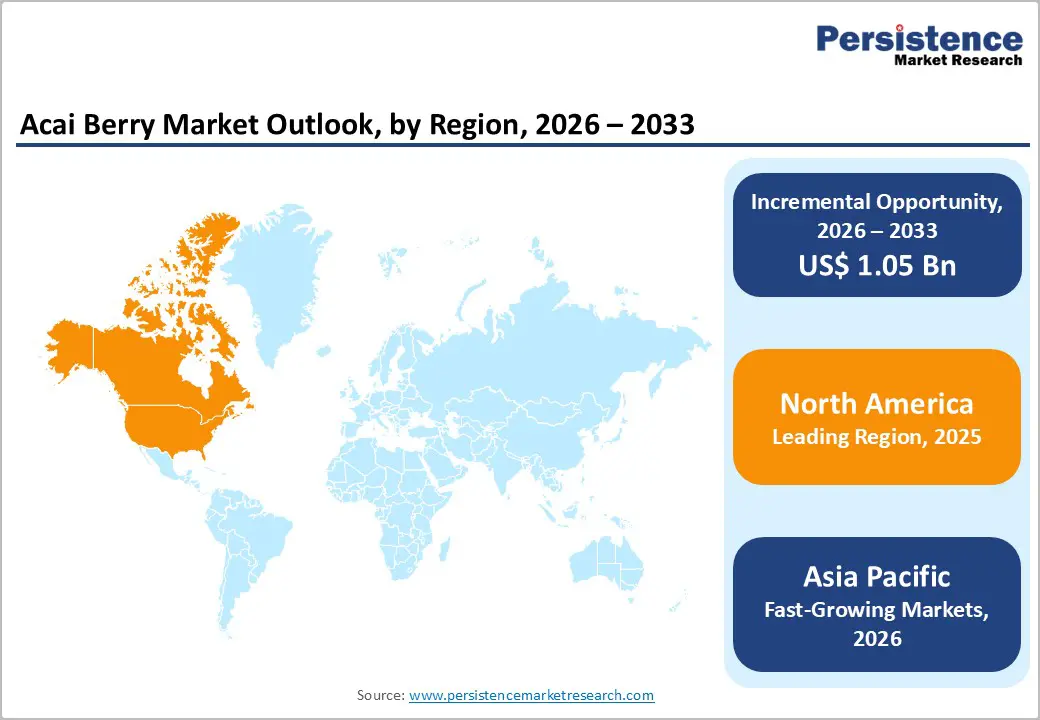
- Leading Region: North America, holding 45% market share, driven by antioxidant-focused diets, functional nutrition, and strong adoption of organic and sustainably sourced açaí.
- Fastest-Growing Region: Asia Pacific, fueled by rising urban health awareness, expanding e-commerce, plant-based lifestyles, and cross-category superfruit innovations.
- Fastest-Growing Product Type Segment: Processed açaí, encompassing frozen pulp, powders, purées, and concentrates, appealing to convenience-seeking consumers and foodservice operators.
- Market Drivers: Growing consumer focus on antioxidant-rich superfoods boosts adoption across smoothies, juices, snack bars, and wellness-oriented functional products.
- Opportunities: Leveraging D2C platforms and smoothie-bar partnerships to enhance brand visibility, loyalty, and repeat consumption.
- Key Developments: In December 2025, SAMBAZON marked 25 years of supporting Amazon harvesters; in November 2025, OAKBERRY signed a statewide development agreement in Texas; in May 2025, Prodotti Rubicone launched Top Fruit Açai paste and Soft Açai powder.
| Key Insights | Details |
|---|---|
| Global Acai Berry Market Size (2026E) | US$ 1.64 Bn |
| Market Value Forecast (2033F) | US$ 2.69 Bn |
| Projected Growth (CAGR 2026 to 2033) | 7.3% |
| Historical Market Growth (CAGR 2020 to 2025) | 6.2% |
Market Dynamics
Driver - Growing consumer focus on antioxidant-rich superfoods drives açaí consumption
Purple bowls and dark smoothies are signaling a broader nutrition shift. Growing consumer focus on antioxidant-rich superfoods is accelerating açaí consumption as health-conscious buyers seek ingredients linked to cellular protection, energy support, and overall vitality. Açaí’s dense anthocyanin profile, healthy fats, and perceived anti-aging benefits position it as a premium superfruit in everyday diets rather than an occasional indulgence.
This demand is reinforced by functional food and beverage innovation. Smoothies, frozen desserts, juices, snack bowls, and nutrition bars increasingly feature açaí to communicate clean energy and wellness cues. Fitness-oriented consumers associate açaí with recovery and stamina, while lifestyle brands leverage its natural origin and vibrant color. As antioxidant awareness becomes mainstream, açaí transitions from niche trend to habitual consumption staple.
Restraints - Competition from more established superfruits reduces shelf space and brand visibility
Crowded shelves tell a quiet story of rivalry. Competition from more established superfruits such as blueberries, pomegranates, and cranberries limits shelf space and brand visibility for açaí products across retail and foodservice channels. These fruits benefit from long-standing consumer familiarity, stable supply chains, and wide domestic cultivation, giving them priority placement and stronger buyer confidence.
For açaí, imported supply dependence and higher price positioning add further pressure. Retailers often favor faster-turning superfruits with predictable margins, while food manufacturers may hesitate to allocate formulation space to less familiar ingredients. Marketing budgets required to educate consumers and justify premium pricing remain high. This competitive intensity slows penetration, making brand differentiation and usage education critical for sustained açaí market growth.
Opportunity - Leverage D2C and smoothie-bar partnerships to build brand awareness and consumer loyalty
First taste often decides long-term loyalty. Leveraging direct-to-consumer channels and smoothie-bar partnerships presents a strong growth opportunity in the global açaí berry market. D2C platforms allow brands to control storytelling around origin, freshness, and functional benefits while capturing valuable consumer data. Subscription packs, frozen pulp bundles, and recipe-driven content encourage repeat purchases and routine consumption.
Smoothie bars, cafés, and fitness hubs serve as high-visibility trial points where açaí’s taste, color, and energy appeal are experienced firsthand. Co-branded bowls, limited-time flavors, and loyalty programs strengthen emotional connection and trust. For startups and established players alike, combining D2C reach with experiential foodservice exposure accelerates awareness, shortens adoption cycles, and builds durable consumer loyalty.
Category-wise Analysis
By Form, processed Acai dominates the global market
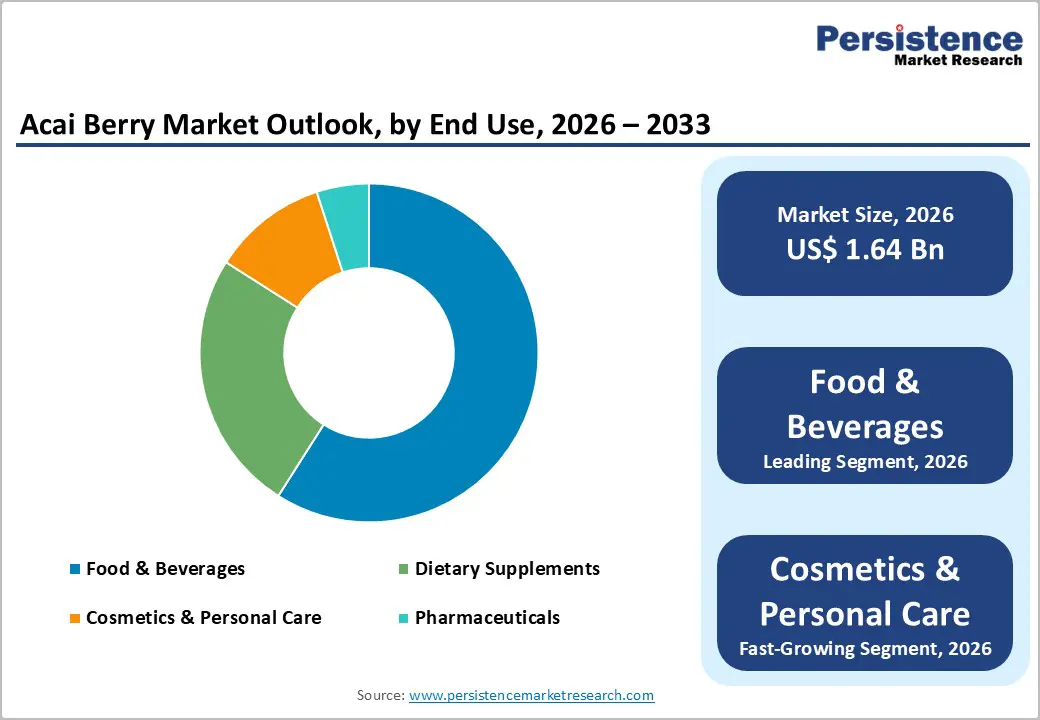
Processed açaí holds approx. 63% market share as of 2025, reflecting how functionality and accessibility shape global consumption. Açaí’s highly perishable nature makes processing essential for scale, consistency, and international trade. Frozen pulp, powders, purées, and concentrates preserve nutritional value while enabling year-round availability across smoothies, bowls, beverages, snacks, and supplements. These formats integrate easily into foodservice and retail supply chains, offering predictable quality, longer shelf life, and simplified logistics for brands operating beyond producing regions.
Raw or fresh açaí remains limited to local consumption near harvest areas due to rapid oxidation and spoilage. While prized for authenticity, fresh berries face transportation, storage, and safety constraints. As global demand favors convenience and reliability, processed formats continue to anchor market dominance.
Organic Acai is anticipated to register strong growth during the forecast period
Organic açaí is projected to grow at a CAGR of 10.2% during the forecast period in the global açaí berry market, driven by rising consumer demand for clean-label, sustainably sourced superfoods. Shoppers increasingly prioritize products free from synthetic pesticides, chemical fertilizers, and GMOs, associating organic açaí with superior health benefits, purity, and environmental responsibility. This trend is amplifying adoption across smoothies, bowls, juices, dietary supplements, and functional snacks.
Producers are responding by expanding certified organic cultivation, implementing traceable supply chains, and highlighting fair-trade practices. Brands are leveraging organic claims to differentiate offerings, justify premium pricing, and strengthen consumer trust. Growing awareness of wellness, immunity, and antioxidant-rich diets further accelerates the transition toward organic açaí in global markets.
Region-wise Insights
North America Acai Berry Market Trends
North America holds approximately 45% market share in the global açaí berry market, reflecting strong consumer affinity for antioxidant-rich superfoods and functional nutrition. In the U.S., demand for açaí is expanding across smoothie bowls, juices, and snack bars, driven by health-conscious millennials and Gen Z seeking immunity support, energy boosts, and clean-label ingredients. Retailers are emphasizing organic and sustainably sourced açaí, while digital platforms and D2C channels are enabling greater product accessibility and education on health benefits.
In Canada, consumers are gravitating toward premium, ready-to-use açaí products and fortified blends that combine berries with other superfoods. E-commerce, specialty health stores, and smoothie-bar collaborations are increasing brand visibility. Rising interest in plant-based diets and wellness-focused lifestyles continues to drive innovation and adoption across North American markets.
Asia Pacific Acai Berry Market Trends
Asia Pacific Acai Berry Market is expected to grow at a CAGR of 9.2%, driven by rising health awareness, urbanization, and expanding middle-class disposable incomes. In India, açaí is being incorporated into smoothie bowls, functional beverages, and wellness-oriented snacks, appealing to consumers seeking natural antioxidants and immunity support. E-commerce and specialty health stores are improving access to imported and organic açaí products, while plant-based lifestyle trends further boost adoption.
In China, Japan, and South Korea, premium and ready-to-drink açaí beverages are gaining traction among urban consumers seeking convenient, functional nutrition. Retailers highlight certified organic and sustainably sourced açaí to meet quality-conscious demand. Cross-category innovation, including fortified blends with superfruits or probiotics, is driving awareness and trial, positioning Asia Pacific as a fast-growing hub for açaí consumption and product experimentation.
Market Competitive Landscape
The global açaí berry market exhibits a moderately fragmented structure, with established fruit suppliers competing alongside agile startups targeting niche health and wellness segments. Leading companies are investing in sustainable farming practices, clean-label certifications, and traceable supply chains to ensure consistent quality and premium positioning. Startups focus on product innovation, introducing freeze-dried powders, ready-to-drink beverages, smoothie blends, and functional snack bars enriched with açaí. Advanced processing techniques such as low-temperature dehydration and cold-press extraction preserve nutrients and extend shelf life, enhancing consumer appeal. Expanding production capacity in key sourcing regions and complying with government regulations on organic certification, import-export standards, and labeling reinforce supply reliability. Rising consumer awareness around superfoods and transparency drives companies to differentiate through provenance storytelling and clean-label positioning.
Key Developments:
- In December 2025, SAMBAZON, a global leader in Certified Organic and Fair Trade açaí products, celebrated a major milestone: 25 years of supporting Amazon harvesters and promoting sustainable practices in the Amazon rainforest.
- In November 2025, OAKBERRY, a global leader in premium açaí and smoothies, announced a statewide development agreement in Texas with Rand Group, a U.S.-based operator of premium, lifestyle-focused brands.
- In May 2025, Prodotti Rubicone, an Italian company active in gelato and pastry ingredients since 1959 and operating in over 84 countries, launched two new açaí-based innovations: Top Fruit Açai concentrated paste and Soft Açai powder.
Companies Covered in Acai Berry Market
- SAMBAZON, Inc.
- Navitas Organics
- Tropical açaí
- Amafruits
- Acai Roots
- Nativo Acai
- The Berry Company Limited
- Sunfood Superfoods
- Organique Acai
- Others
Frequently Asked Questions
The global acai berry market is projected to be valued at US$ 2.69 Bn in 2026.
Growing consumers focus on antioxidant-rich superfoods drive consumption, driving the global Acai Berry market.
The global Acai Berry market is poised to witness a CAGR of 7.3% between 2026 and 2033.
Leveraging D2C and smoothie-bar partnerships to build brand awareness and consumer loyalty is the key opportunity.
Major players in the global Acai Berry market include SAMBAZON, Inc., Navitas Organics, Tropical açaí, The Berry Company Limited, Sunfood Superfoods, Organique Acai, and others.


