

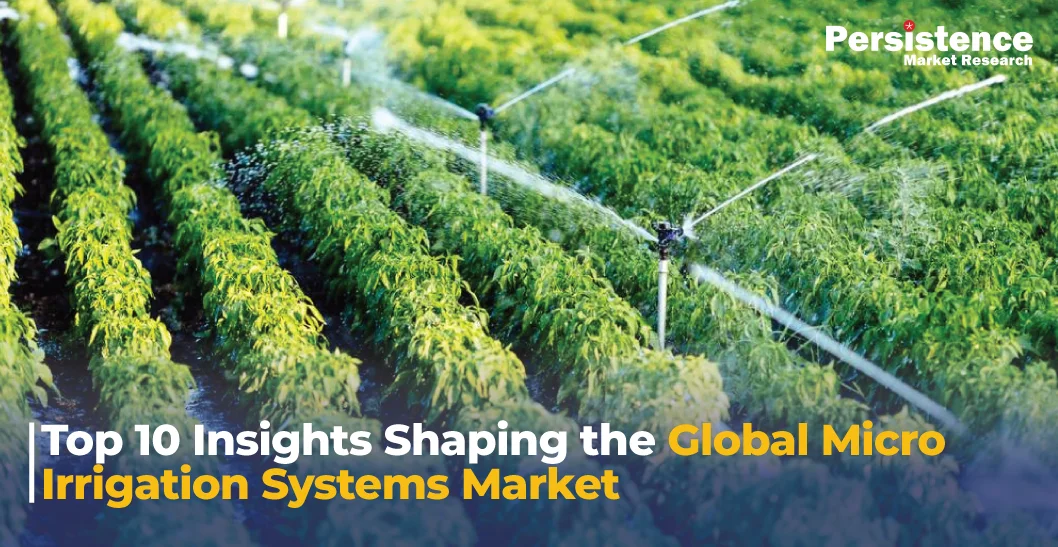
The following ten insights explain the structural trends influencing this market and provide a deeper understanding of the forces shaping its direction.
1. Water scarcity continues to be the strongest structural driver
Regions experiencing persistent water stress rely heavily on micro irrigation to maintain agricultural output. States such as Rajasthan and Gujarat in India have shifted large portions of horticulture acreage to drip systems because surface water supplies are unreliable. Producers in semi-arid districts reported water savings of more than 40 percent after switching to drip irrigation. The long-term nature of water scarcity supports consistent demand for precision systems.
2. Government subsidy programs are expanding adoption
Many countries identify micro irrigation as a tool for water conservation and food system stability. India’s Pradhan Mantri Krishi Sinchai Yojana reimburses a significant share of installation costs. California offers water-efficiency grants to support irrigation upgrades. These programs reduce upfront investment burdens, especially for small and medium growers. The scale and continuity of public support indicate sustained momentum.
3. Drip irrigation leads the market due to high efficiency
Drip systems have grown faster than sprinklers because they deliver uniform water directly to plant roots. High value crops such as grapes, bananas, tomatoes, almonds, and pomegranates rely on drip networks to achieve consistent yield and quality. Table grape producers in Chile and South Africa use subsurface drip systems to maintain berry size and sugar content under variable rainfall. Expansion of fruit and vegetable cultivation in emerging markets continues to reinforce this trend.
4. Sprinkler systems remain important for large field applications
Although drip solutions dominate high value horticulture, sprinkler and center pivot systems are widely used in crops such as wheat, maize, and soybeans. Modern pivots equipped with low-energy applicators reduce water loss and perform well on uneven terrain. Corn producers in Nebraska employ variable rate pivot systems that match irrigation volumes with soil moisture maps generated through remote sensing. These technologies help sprinklers retain a significant share of the market.
5. Smart irrigation technologies are shaping operational practices
Digital tools are turning micro irrigation into a data driven field management system. Soil moisture probes, flow meters, satellite imagery, and cloud based scheduling software are being integrated into standard irrigation infrastructure. Avocado producers in Mexico use sensor linked drip lines that adjust irrigation timing based on evapotranspiration data. This improves water use efficiency and supports consistent fruit development. The growing role of agri IoT strengthens demand for systems with software compatibility.
6. Climate change is encouraging adoption across new geographies
Irregular rainfall, heat waves, and prolonged drought cycles are leading regions with historically sufficient water supplies to adopt micro irrigation. Southern Europe has moved toward drip systems in olives, citrus, and greenhouse vegetables. Recurring drought events in Australia have driven nut and orchard growers to adopt micro sprinklers. Climate variability has become one of the most significant catalysts for system upgrades.
7. Protected cultivation is emerging as a high growth segment
Greenhouses and shade net structures depend on micro irrigation for precise fertigation and humidity control. Growth in controlled environment agriculture in countries such as China, the Netherlands, and the United Arab Emirates has boosted demand for foggers, misters, and pressure compensating drippers. A greenhouse tomato farm in the United Arab Emirates uses automated drip lines that deliver nutrient solutions in small pulses to maintain uniform fruit weight under desert conditions. The expansion of greenhouse acreage supports the premium equipment segment.
8. High installation costs remain a barrier for small growers
Despite long term benefits in water savings and yield stability, the initial cost of system components remains a challenge. Pumps, pipes, filters, valves, and control units increase the total expenditure. A vegetable grower in East Africa may need to invest an amount equal to several months of income to install a drip system. Microfinance, community irrigation models, and public subsidy programs help address this gap, but affordability remains an obstacle in many developing regions.
9. Integrated solution providers hold a competitive advantage
Leading companies supply complete irrigation ecosystems that combine hardware, software, and agronomic support. Firms such as Netafim, Jain Irrigation Systems, Lindsay Corporation, and Rivulis offer components ranging from drippers and filters to controllers and moisture sensors. Their ability to supply turnkey systems improves customer retention. New entrants often focus on modular, low cost drip kits designed for small farms and peri urban horticulture.
10. Sustainability standards influence technology selection
Global retailers and food processors increasingly require documentation of water use efficiency and environmental stewardship. Certification programs such as GlobalGAP encourage the adoption of micro irrigation because these systems generate measurable water usage data. Export oriented pomegranate farms in India adopted drip irrigation to align with buyer requirements for traceable input records. Market driven compliance expectations are reinforcing the shift toward precision water management.
These ten insights show how the micro irrigation systems market is shaped by long term environmental needs, technological innovation, and structural changes within global agriculture. The market reflects a combination of necessity and modernization as producers adapt to constrained water resources and changing climatic conditions.


