




- Home Care & Utilities
- Scented Candles Market
Scented Candles Market Size, Share, and Growth Forecast, 2026 - 2033
Scented candles Market by Product type (Tea Lights, Votive Candles, Pillar Candles, Occasional Candles, Container candles, Others), Wax Type (Paraffin Wax, Soy Wax, Beeswax, Others), Category (Mass, Premium), and Regional Analysis for 2026 - 2033

Scented Candles Market Size and Trends Analysis
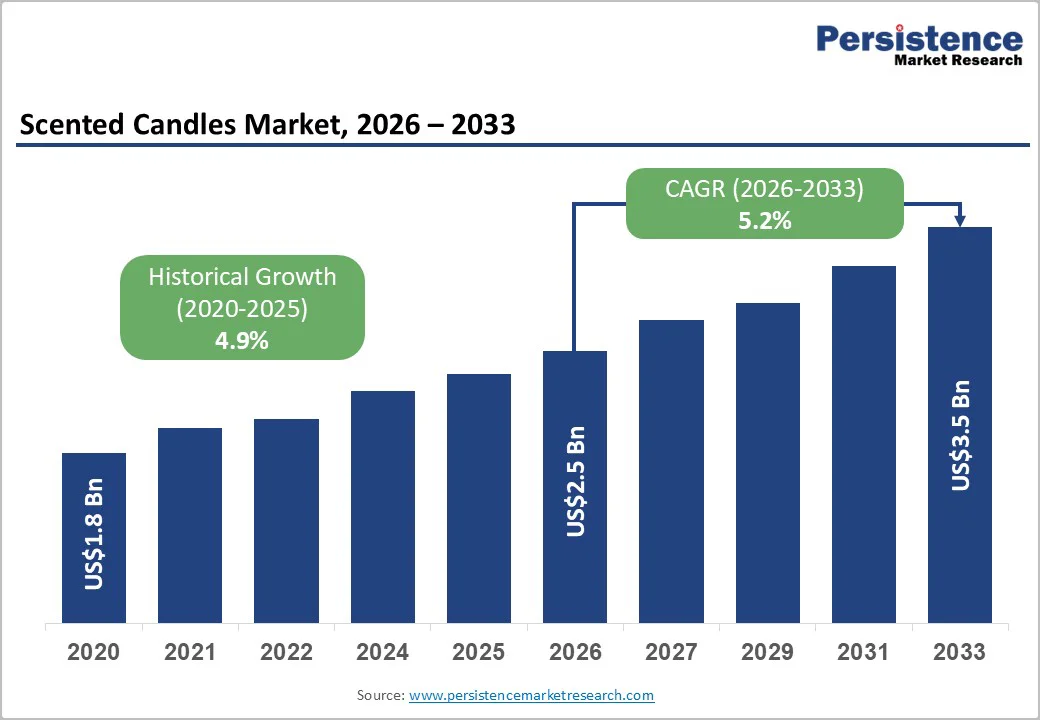
The global scented candles market size is likely to be valued at US$2.5 billion in 2026 and is expected to reach US$3.5 billion by 2033, growing at a CAGR of 5.2% during the forecast period from 2026 to 2033, driven by the rising consumer inclination toward aromatherapy, home ambience enhancement, and wellness-oriented lifestyle products.
Growing awareness of emotional and mental well-being has significantly increased demand. The increasing use of essential oils, combined with mood-enhancing fragrances such as lavender, sandalwood, and citrus blends, has strengthened consumer adoption across residential, hospitality, and spa applications. The industry also benefits from the rapid rise of premium and eco-friendly candles, where natural wax options include soy, beeswax, and coconut wax.
Key Industry Highlights:
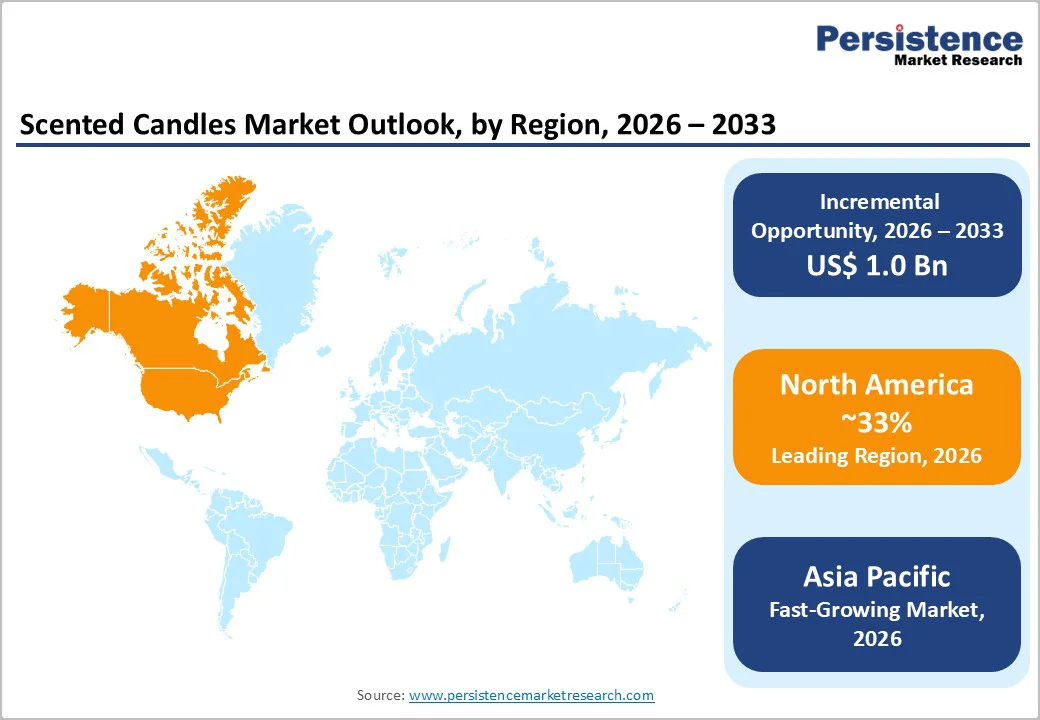
- Leading Region: North America is expected to be the leading region, accounting for 33% in 2026, driven by strong aromatherapy adoption, rising home décor spending, robust regulatory standards, and a consolidated competitive landscape led by major brands.
- Fastest-growing Region: Asia Pacific is likely to be the fastest-growing region, driven by rapid urbanization, expanding retail infrastructure, low-cost manufacturing advantages, and strong consumer adoption across China, Japan, India, and ASEAN markets.
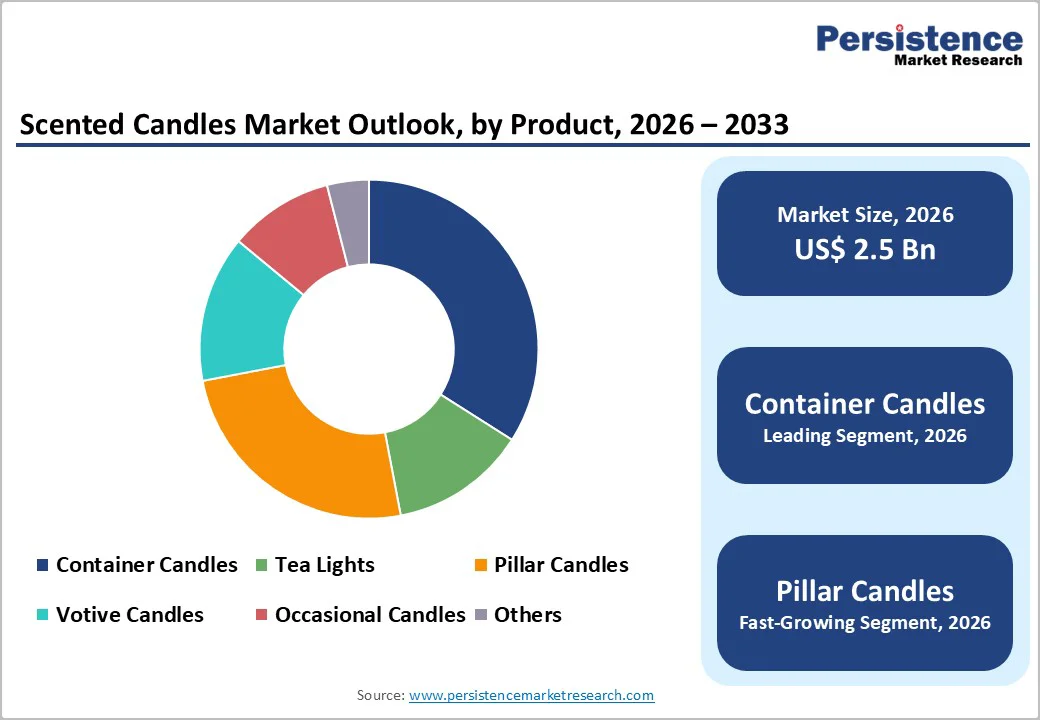
- Leading Product Type: Container-based candles are projected to represent the leading product type in 2026, accounting for 42% of the market share, driven by strong consumer preference for safe, spill-proof indoor fragrance solutions.
- Leading Wax Type: Paraffin is expected to be the leading wax type, accounting for over 45.6% of revenue share in 2026, supported by its cost-effectiveness and strong scent performance.
- Leading Category: The mass segment is expected to be the leading category, accounting for over 62% of revenue share in 2026, driven by affordability and widespread retail availability.
| Key Insights | Details |
|---|---|
|
Scented Candles Market Size (2026E) |
US$2.5 Bn |
|
Market Value Forecast (2033F) |
US$3.5 Bn |
|
Projected Growth (CAGR 2026 to 2033) |
5.2% |
|
Historical Market Growth (CAGR 2020 to 2025) |
4.9% |
Market Factors - Growth, Barriers, and Opportunity Analysis
Rising Demand for Aromatherapy and Wellness Products
The growing global inclination toward aromatherapy and wellness-centric lifestyles significantly drives the scented candles market. Consumers increasingly use scented candles infused with essential oils such as lavender, eucalyptus, sandalwood, and chamomile to support stress relief, mood enhancement, and mental well-being. Consumers now incorporate fragrance-based relaxation rituals into their daily routines, particularly after the pandemic reinforced the importance of at-home stress management. This shift has propelled scented candles into mainstream wellness categories, aligning them with self-care, meditation, and spa-like home experiences.
The wellness is reshaping purchasing behavior across regions, with North America showing high aromatherapy penetration and Asia-Pacific emerging as a fast-growing market as consumers adopt holistic wellness practices. E-commerce platforms have amplified this momentum by offering curated aromatherapy collections, subscription boxes, and influencer-driven scent recommendations. Premium brands are also leveraging this trend by launching aromatherapy-focused product lines with natural waxes and therapeutic-grade oils, increasing demand.
Environmental Concerns with Synthetic Waxes
Environmental concerns associated with synthetic waxes, particularly paraffin, represent a significant restraint in the scented candles market. Paraffin wax, which holds the largest share in mass-market production, is derived from petroleum, a non-renewable resource linked to carbon emissions and ecological degradation. When burned, paraffin candles release volatile organic compounds (VOCs) such as toluene and benzene, raising concerns about indoor air quality and long-term environmental impact. Growing consumer awareness of sustainability, coupled with stricter ecological guidelines in key markets, is pushing buyers away from synthetic waxes.
The disposal of synthetic wax candles contributes to landfill accumulation since paraffin biodegrades far more slowly than natural waxes. Environmental NGOs and consumer advocacy groups have amplified these issues, influencing purchasing behavior and encouraging retailers to prioritize clean-label alternatives. This shift has accelerated demand for natural, renewable waxes, such as soy, beeswax, and coconut wax, which are growing faster than traditional synthetic options. Manufacturers dependent on low-cost paraffin face production challenges, higher reformulation costs, and potential regulatory scrutiny.
Premium Eco-Innovations in the Hospitality Sector
The hospitality sector, including hotels, resorts, spas, and upscale restaurants, is increasingly embracing premium eco-innovations, particularly in the form of sustainable and visually appealing candles. These businesses are prioritizing products that not only enhance guest experiences but also align with their commitment to environmental responsibility. Natural waxes such as soy, beeswax, and coconut wax are preferred for their clean-burning characteristics, low emissions, and renewable sourcing, making them a perfect fit for the industry's growing sustainability initiatives. Premium fragrance offerings, such as essential-oil-infused candles, are gaining popularity for their dual purpose of enhancing ambience and promoting wellness. These candles help hotels and spas elevate their guest experience, offering both relaxation and mood enhancement.
Customizable and design-focused candle options also open up new opportunities within hospitality. Hotels, for instance, can offer signature-scent candles for special events, guest gifting, or in-room décor, blending fragrance innovation with experiential value. Leading brands such as Voluspa and Yankee Candle’s YC Collection offer customizable products that cater to these needs, enabling establishments to incorporate sustainable luxury into their brand identity. As wellness, sustainability, and immersive guest experiences take center stage in the hospitality industry, premium eco-friendly candles are emerging as a high-growth segment. This trend presents manufacturers with a unique opportunity to expand B2B sales and strengthen their market presence by tapping into growing demand for eco-conscious and luxurious products in the sector.
Category-wise Analysis
Product Type Insights
Container-based candles are expected to lead the market, accounting for approximately 42% of total revenue in 2026, driven by their superior safety, controlled burn, and suitability for indoor environments. Their popularity is reinforced by spill-proof and flame-retardant formats that reduce fire hazards and wax spillage, key factors in households with children, pets, or small living spaces. Growing e-commerce bundling strategies, such as multi-jar scented sets for gifting and wellness rituals, have increased sales momentum across North America and Europe. For example, Yankee Candle’s signature jar candles, known for long burn times and strong scent throw, remain one of the most purchased container-based products, reinforcing the segment’s leadership.
Pillar candles are likely to represent the fastest-growing product type in 2026, driven by their decorative versatility, long-burning characteristics, and suitability for events and premium décor settings. Their ability to stand independently without a jar makes them a favorite for weddings, festivals, hotel lobbies, and luxury dining environments. This trend supports strong growth in premium and artisanal pillar candles featuring intricate embossing, multi-wick designs, and metallic finishes. For example, Diptyque Paris Pillar Candles are known for hand-poured craftsmanship, subtle embossed branding, and long-lasting burn times. These pillars are popular in luxury home décor and gifting markets, especially during holidays and special events.
Wax Type Insights
Paraffin wax is projected to lead the market, capturing around 45.6% of the total revenue share in 2026. Despite growing environmental concerns and a consumer shift toward natural waxes, paraffin wax continues to dominate due to its significantly lower cost, superior scent throw, established manufacturing infrastructure, and widespread availability in mass-market retail channels, sustaining high-volume demand even as premium and eco-friendly alternatives gain momentum. Paraffin-based production enables manufacturers to offer budget-friendly products widely accessible via supermarkets, dollar stores, and online mass retail channels. Example: The Yankee Candle Company’s classic paraffin jar candles have driven consistent sales for decades due to their strong aroma diffusion and long burn duration. With low production costs and high fragrance performance, paraffin wax continues to anchor the global scented candles market.
Soy wax is likely to be the fastest-growing application in 2026, driven by consumers' increasingly shifting toward eco-friendly, clean-burning alternatives. Derived from renewable soybeans, soy wax burns longer, emits fewer toxins, and reduces soot, aligning with regulatory moves toward cleaner indoor air standards. Soy wax is becoming the preferred base for aromatherapy candles infused with essential oils. For example, NEST Fragrances’ soy-blend luxury aromatherapy candles appeal to consumers seeking clean-burning performance paired with therapeutic scent benefits. Demand continues to shift toward ethical sourcing and non-toxic home fragrance solutions.
Category Insights
The mass category segment is projected to lead the market, capturing around 62% of the total revenue share in 2026, driven by affordability, wide availability, and strong retail penetration across supermarkets, hypermarkets, discount stores, and major e-commerce platforms. Mass-market scented candles cater to budget-conscious buyers seeking frequent-use home fragrance products. This segment benefits from high volume movement, rapid product rotations, and seasonal scent launches timed with major holidays, décor trends, and gifting periods. An example in this category is Walmart’s Mainstays scented candles, which remain top sellers due to competitive pricing, frequent availability, and a broad range of scents.
The premium category is likely to be the fastest-growing segment in 2026, due to rising global interest in luxury fragrances, wellness rituals, and high-end home décor. Premium candles emphasize artisanal craftsmanship, essential-oil-based aromatherapy benefits, and aesthetically elevated packaging. Premium scented candles have become aspirational lifestyle products. A leading example is Jo Malone London’s luxury scented candles, known for sophisticated fragrance profiles and elegant packaging, positioning them as décor-enhancing prestige items.
Regional Insights
North America Scented Candles Market Trends
North America is anticipated to be the leading region, accounting for a market share of 33% in 2026, driven by high consumer adoption of aromatherapy and home décor products, reflecting lifestyle trends that prioritize wellness, self-care, and interior aesthetics. Consumers increasingly prefer candles that offer stress relief, mood enhancement, and long-lasting fragrance, particularly during post-pandemic home-centric routines. For example, NEST Fragrances' luxury candles and Bath & Body Works’ aromatherapy line have become popular for their combination of therapeutic scents and premium appeal, reinforcing the market’s shift toward wellness-driven products.
Expansion of digital retail channels and experiential marketing has transformed how consumers discover and purchase scented candles. E-commerce platforms, subscription boxes, and influencer-driven campaigns allow niche and premium brands to reach a wider audience efficiently. For example, Yankee Candle’s online seasonal collections and Voluspa’s limited-edition pillar candles have seen strong online sales during festive periods, highlighting the importance of digital-first strategies. North American consumers are increasingly investing in candles with personalized fragrances and wellness-focused properties.
Europe Scented Candles Market Trends
Europe is likely to be a significant market for scented candles in 2026, due to high consumer preference for premium, artisanal, and eco-friendly products, reflecting the region’s mature home décor and wellness culture. Consumers increasingly prioritize natural waxes such as soy, beeswax, and coconut wax, driven by sustainability awareness and indoor air quality concerns. Aromatherapy and wellness applications also play a central role, with essential-oil-infused candles gaining traction for stress relief, relaxation, and mood enhancement. For example, Diptyque Paris’ luxury scented candles and Jo Malone London’s hand-poured soy blends are popular among European consumers seeking high-quality, decorative, and functional fragrance solutions.
Growth of omnichannel retail and experiential purchasing, including boutique stores, e-commerce, and seasonal pop-ups, which enhance consumer engagement. Brands leverage curated collections, seasonal fragrances, and interactive experiences to drive sales. For example, Yankee Candle’s European flagship stores and Voluspa’s decorative gift sets attract buyers seeking both aesthetic appeal and sensory wellness. The trend toward personalized fragrances and eco-conscious packaging is also rising, enabling brands to innovate with limited-edition candles, aromatherapy blends, and sustainable designs, strengthening brand loyalty and premium positioning in Europe.
Asia Pacific Scented Candles Market Trends
The Asia Pacific region is likely to be the fastest-growing region in 2026, driven by rapid urbanization, rising disposable incomes, and increasing interest in lifestyle and wellness products. Consumers are increasingly adopting scented candles for home décor, aromatherapy, and gifting purposes, reflecting a shift toward premiumization and experiential living. Natural and eco-friendly waxes, such as soy and beeswax, are gaining popularity as awareness of sustainability grows, particularly in China, Japan, and India. Bath & Body Works’ decorative jar candles are increasingly favored in metropolitan areas for gifting and festive use.
Expansion of e-commerce and digital marketing platforms, which allow global and regional brands to reach a broader audience efficiently. Online marketplaces and subscription boxes are driving awareness and accessibility for premium and artisanal candles. For instance, Voluspa’s luxury pillar candle collections have gained traction in India and Southeast Asia through targeted digital campaigns. Growing tourism, hospitality, and wellness sectors are creating B2B opportunities for decorative and aromatherapy candles, while personalized fragrances and limited-edition offerings are becoming key differentiators for brand loyalty.
Competitive Landscape
The global scented candles market exhibits a moderately fragmented structure, driven by a mix of well-established multinational brands, mid-sized specialty companies, and a growing number of artisanal and eco-friendly entrants. Prominent brands such as Jo Malone, Voluspa, Nest Fragrances, and Chesapeake Bay Candle further shape competitive dynamics with differentiated offerings and design-led collections. With key leaders including Yankee Candle, Bath & Body Works, Diptyque, Jo Malone, and Voluspa, the market is characterized by competition through product innovation, sustainability initiatives, and omnichannel reach.
These players compete through frequent fragrance launches, seasonal and limited-edition collections, premium and artisanal lines, and enhanced retail experiences, both online and offline. Many are also investing in eco-friendly wax blends, recyclable packaging, personalization options, and omnichannel marketing to meet evolving consumer preferences for wellness and sustainability. Strategic collaborations, digital engagement, and expanded distribution partnerships further intensify rivalry, enabling both legacy and niche brands to capture consumer interest across diverse demographic and regional segments.
Key Industry Developments:
- In November 2025, Jo Malone London unveiled its “Fun & Games” Christmas Collection, which includes limited-edition and festive scented candles alongside colognes and diffusers. The holiday lineup features seasonal favorites and decorative candle formats such as Pine & Eucalyptus and Bitter Orange & Chocolate candles, positioned as festive home fragrance pieces perfect for holiday décor and gifting. These candles are available both in-store and online as part of the holiday collection, reinforcing Jo Malone’s strategy of blending classic scents with seasonal themes.
- In October 2025, Yankee Candle® announced the debut of the YC Collection, a new premium line of home fragrance products designed to elevate the traditional scented candle experience with a focus on quiet luxury for modern living. The collection blends refined design and premium fragrance profiles, featuring meticulously crafted scents developed in collaboration with world-class perfumers, housed in elegantly curved glass vessels with upscale elements such as metallic accents and a distinctive monogram.
Companies Covered in Scented Candles Market
- Colonial Candle
- Bridgewater Candle Company
- Bath & Body Works, Inc.
- Circle E Candles
- Diptyque S.A.S.
- Jo Malone London
- Malin + Goetz
- NEST Fragrances, LLC
- The Yankee Candle Company, Inc.
Frequently Asked Questions
The global scented candles market is projected to reach US$2.5 billion in 2026.
Rising consumer demand for aromatherapy, home fragrance, and wellness-focused lifestyle products.
The scented candles market is expected to grow at a CAGR of 5.2% from 2026 to 2033.
Premiumization with luxury and artisanal candles, expansion of eco-friendly and natural wax products, aromatherapy and wellness-focused blends, smart home-integrated candles, and experiential or personalized fragrance offerings.
Colonial Candle, Bridgewater Candle Company, Bath & Body Works, Inc., Circle E Candles, Diptyque S.A.S., and Jo Malone Londonare the leading players.


