




- Pharmaceuticals
- Ayurvedic Medicine Market
Ayurvedic Medicine Market Size, Share, and Growth Forecast, 2026 - 2033
Ayurvedic Medicine Market by Product Type (Healthcare Products, Personal Products), Application (Skin Diseases, Others), Distribution Channel (Supermarkets, Pharmacy & Drug Stores, Direct Selling, Beauty Salons, Others), and Regional Analysis for 2026 – 2033

Ayurvedic Medicine Market Size and Trends Analysis
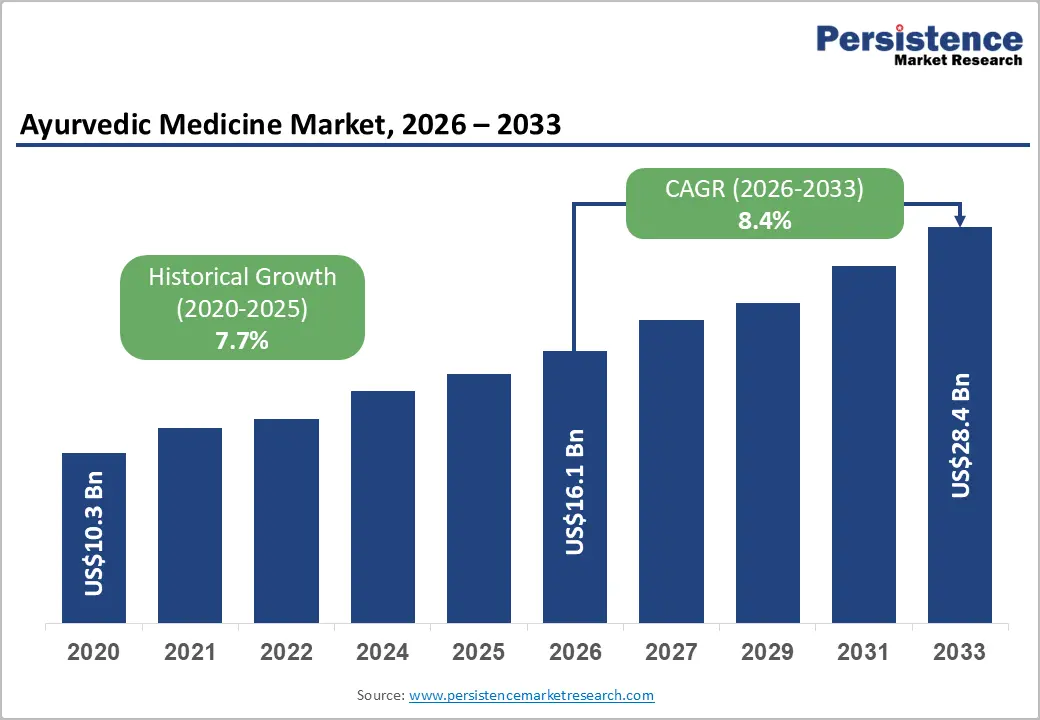
The global ayurvedic medicine market size is likely to be valued at US$16.1 billion in 2026, and is expected to reach US$28.4 billion by 2033, growing at a CAGR of 8.4% during the forecast period from 2026 to 2033, driven by an increasing prevalence of natural and holistic wellness solutions, rising demand for herbal treatments for chronic conditions, and advancements in standardized ayurvedic formulations.
Growing demand for safe, plant-based ayurvedic medicine, especially healthcare products for skin diseases and mental health, is accelerating adoption across applications. Advances in organic and evidence-based variants are further boosting uptake by offering more effective, side-effect-free options. The increasing recognition of Ayurvedic medicine as essential for preventive healthcare, particularly in emerging markets, remains a major driver of market growth.
Key Industry Highlights:
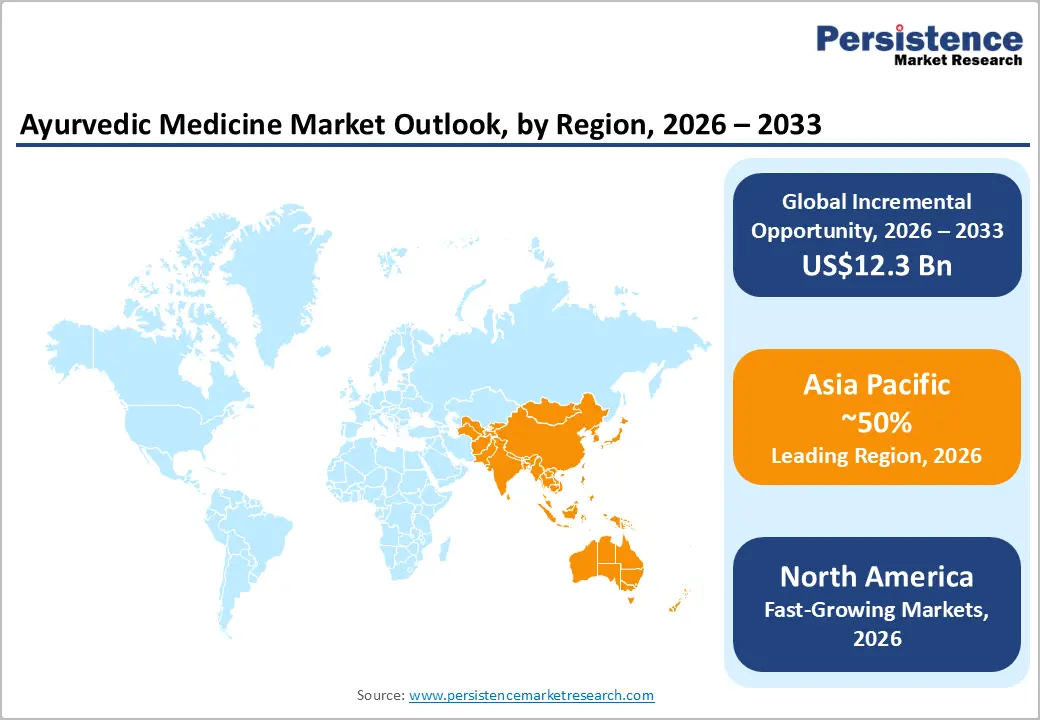
- Leading Region: Asia Pacific, anticipated to account for a 50% market share in 2026, driven by traditional roots, high domestic consumption, and strong production in India.
- Fastest-growing Region: North America, fueled by wellness trends, rising interest in alternative therapies, and growing investments in herbal supplements in the U.S.
- Dominant Product Type: Healthcare products, to hold approximately 60% of the market share, as they address therapeutic needs in chronic ailments.
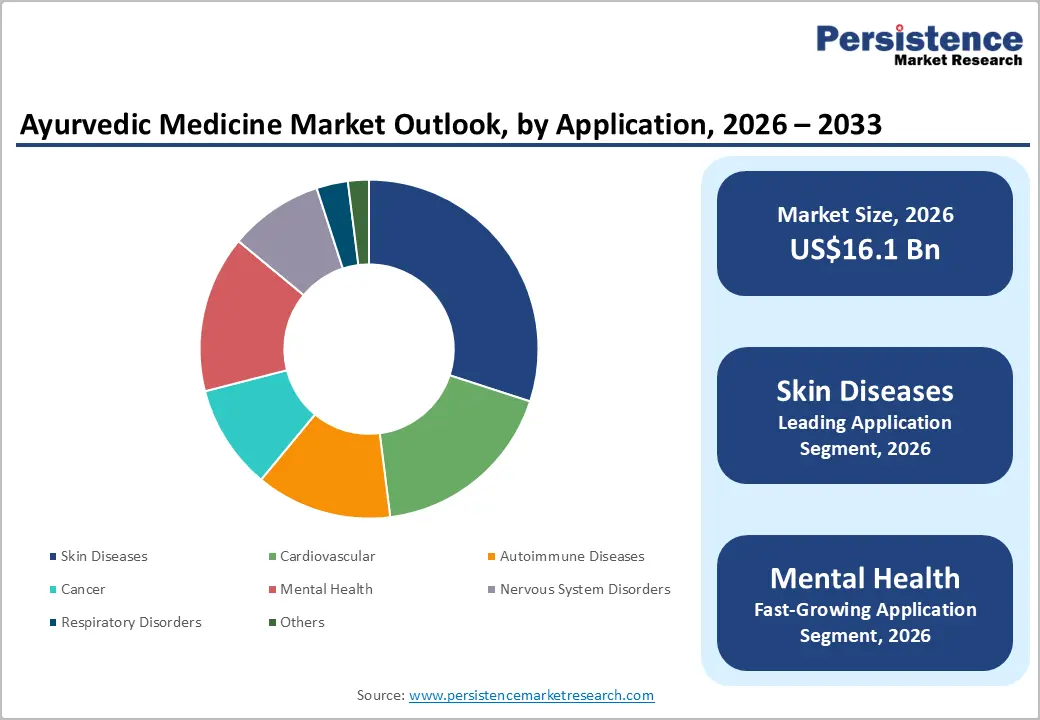
- Leading Application: Skin diseases, to account for over 30% of the market revenue in 2026, due to efficacy in dermatology and cosmetics integration.
- Leading Distribution Channel: Pharmacy & drug stores, to contribute nearly 35% of the market revenue, due to trusted medical advice and accessibility.
| Key Insights | Details |
|---|---|
|
Ayurvedic Medicine Market Size (2026E) |
US$16.1 Bn |
|
Market Value Forecast (2033F) |
US$28.4 Bn |
|
Projected Growth (CAGR 2026 to 2033) |
8.4% |
|
Historical Market Growth (CAGR 2020 to 2025) |
7.7% |
Market Factors – Growth, Barriers, and Opportunity Analysis
Increasing Demand for Natural and Holistic Wellness Solutions
The increasing demand for natural and holistic wellness solutions is being driven by a fundamental shift in how consumers perceive health and well-being. Modern lifestyles, characterized by high stress levels, sedentary habits, and rising incidence of chronic conditions, have encouraged individuals to seek preventive and long-term health approaches rather than short-term symptom relief. Natural wellness solutions, which emphasize plant-based ingredients, traditional knowledge systems, and minimal chemical intervention, are increasingly viewed as safer and more sustainable alternatives to conventional therapies.
Consumers are becoming more informed and cautious about the potential side effects associated with synthetic drugs and heavily processed products. This awareness has fueled interest in holistic practices that address physical, mental, and emotional health simultaneously. Solutions rooted in natural systems focus on restoring balance within the body, supporting immunity, improving digestion, and enhancing overall vitality, aligning well with this integrated health mindset. The global rise in self-care and wellness culture has amplified the appeal of natural remedies and lifestyle-oriented health solutions.
People are proactively adopting wellness routines that include herbal supplements, traditional therapies, mindfulness practices, and nutrition-based interventions.
Regulatory Hurdles and Compliance Issues
High development and standardization costs present a significant barrier for companies. Regulatory hurdles and compliance issues represent a significant restraint for the Ayurvedic medicine market, particularly as it expands beyond traditional domestic boundaries into global healthcare systems. Ayurvedic products are regulated differently across countries, often falling under categories such as herbal medicines, dietary supplements, or wellness products. This lack of regulatory uniformity creates uncertainty for manufacturers, as each market requires separate documentation, labeling standards, and approval pathways. Navigating these varying frameworks increases operational complexity and slows product launches.
In many regions, regulatory authorities demand detailed evidence related to safety, ingredient sourcing, manufacturing practices, and therapeutic claims. Ayurvedic formulations are traditionally based on classical texts and experiential knowledge rather than modern clinical trial models. Translating this traditional evidence into formats acceptable to contemporary regulators can be challenging, time-consuming, and costly, especially for small and mid-sized manufacturers. Strict quality and traceability requirements place pressure on supply chains, as companies must ensure consistent raw material quality and compliance with good manufacturing practices. Any deviation can lead to product recalls, import rejections, or legal penalties. Frequent updates in regulatory guidelines further add to compliance burdens, requiring continuous monitoring and investment.
Innovations in Standardized and Evidence-Based Delivery Platforms
Innovations in standardized and evidence-based ayurvedic medicine delivery platforms are transforming the global wellness landscape by addressing two major challenges, efficacy variability and regulatory barriers. Standardized platforms are engineered to achieve consistent active content, reducing reliance on variable herbs and enabling reliable dosing in supplements. Innovations, such as supercritical extraction, nano-encapsulation, liposomal delivery, and clinical validation, significantly improve bioavailability and reduce side effects, lowering compliance costs for brands and consumer campaigns.
Progress in evidence-based platforms, including clinically-tested capsules, fast-dissolve tablets, topical gels, and personalized blends, supports more credible therapy by stimulating scientific acceptance, the market’s first line of defense against skepticism. These formats eliminate inconsistency, enhance outcomes, and allow versatile use without traditional limitations, making them highly suitable for mass chronic programs. New technologies such as bio-adhesive patches, VLP-based carriers, and AI-dosing apps further enhance personalization and response.
Category-wise Analysis
Product Type Insights
Healthcare products are anticipated to dominate the market, accounting for approximately 60% of the market share in 2026. Its dominance is driven by therapeutic focus, high demand for chronic care, and regulatory support, making it preferred for medical applications. Healthcare products provide targeted relief, ensure efficacy, and contribute to wellness, making them suitable for large-scale treatment campaigns. Himalaya Wellness Company, a major Ayurvedic company, markets Liv 52, a widely recognized herbal liver support formulation that illustrates the therapeutic focus driving demand in the Ayurvedic healthcare segment. Liv 52 is formulated using a blend of traditional Ayurvedic herbs and is positioned as a hepatoprotective product supporting liver function, detoxification, and metabolic health.
Personal products represent the fastest-growing segment, due to their beauty appeal and expanding use in daily routines. Its cosmetic profile makes it ideal for targeted self-care, reducing medical dependency. Continuous innovations in formulations are further strengthening its acceptance, driving rapid adoption across North America and Europe, where demand for natural beauty is accelerating. Vedix Skincare Customized Ayurvedic Skin Care Regimen and other Ayurvedic beauty products from Forest Essentials illustrate how authentic Ayurvedic personal care lines resonate strongly with global consumers seeking natural beauty solutions.
Application Insights
Skin diseases lead the market, holding approximately 30% of the share in 2026, driven by dermatological needs, large cosmetic programs, and strong global demand for herbal remedies. Their dominance continues as brands expand beauty lines. Rising adoption of mental health support and expanded cardiovascular campaigns highlight the growing focus on multi-therapeutic benefits. Himalaya Herbals, a well-known Ayurvedic health and personal care company, has successfully positioned several of its skin care formulations to address common dermatological concerns such as acne, eczema, and other skin ailments. One of its flagship lines uses neem and turmeric extracts, herbs with traditional anti-inflammatory and antimicrobial properties that help soothe and manage skin conditions.
Mental health is the fastest-growing segment, due to strong momentum in stress relief and expanding inclusion in wellness supplements. The growing shift toward holistic platforms, along with better calm, accelerates the adoption. Advancements in adaptogenic blends and continued progress of mood trials entering consumer markets drive market growth. Products such as Siddhayu Winostress Capsules and Cureveda Stress Shield Tablets combine traditional Ayurvedic herbs such as Ashwagandha, Brahmi, Jatamansi, and Shankhpushpi, all known for their potential to lower cortisol (the stress hormone), enhance calmness, and support mental clarity. These formulations are widely available through pharmacies such as Apollo Pharmacy and serve growing consumer demand for natural stress management solutions.
Distribution Channel Insights
Pharmacies and drug stores are projected to lead the market, accounting for approximately 35% of revenue in 2026, as they continue to serve as the main destination for medical purchases, large-scale prescription programs, and the management of various products that require expert guidance. Their strong reach, trained pharmacists, and ability to handle high-volume or therapeutic blends drive higher consumption. Pharmacy channels are leading healthcare rollouts as well as administering emerging personal trials.
Apollo Pharmacy, India’s largest pharmacy chain with over 4,500 outlets nationwide, is a key example of how pharmacy and drug stores dominate revenue share in the Ayurvedic medicines market. Apollo integrates a broad range of Ayurvedic and wellness products alongside conventional pharmaceuticals, making it a one-stop destination for consumers seeking both traditional and modern treatments.
Online platforms are likely to be the fastest-growing segment, driven by their strong digital presence and expanding role in direct sales. They offer convenient, quick, and accessible purchasing, attracting buyers who prefer home and low-contact settings. Increased outreach programs, e-commerce focus, and wider availability of routine and premium products further accelerate uptake, boosting rapid adoption across both urban and semi-urban areas.
Vedix, a digital-first Ayurvedic wellness brand, has significantly expanded its reach and sales through online platforms such as its own website and major e-commerce marketplaces such as Amazon India. The company focuses on personalized Ayurvedic hair and wellness products that are sold directly to consumers, leveraging digital ordering, targeted online marketing, and quick home delivery.
Regional Insights
North America Ayurvedic Medicine Market Trends
North America is likely to be the fastest-growing region, fueled by the region’s advanced wellness infrastructure, strong research and development capabilities, and high public awareness of natural benefits. Distribution systems in the U.S. and Canada provide extensive support for supplement programs, ensuring wide accessibility of ayurvedic medicine across skin diseases, mental health, and respiratory populations. Increasing demand for organic, convenient, and easy-to-use forms is further accelerating adoption, as these formats improve acceptance and reduce barriers associated with traditional methods.
Innovation in Ayurvedic medicine technology, including stable standardization, improved capsule delivery, and targeted holistic enhancements, is attracting significant investment from both public and private sectors. Government initiatives and wellness campaigns continue to promote use against stress, skin issues, and emerging health threats, creating sustained market demand. The growing focus on mental health grades and specialty uses, particularly for personal care and others, is expanding the target applications for ayurvedic medicine.
Europe Ayurvedic Medicine Market Trends
Europe is supported by increasing awareness of holistic benefits, strong supplement systems, and government-led wellness programs. Countries such as Germany, France, and the U.K. have well-established nutrition frameworks that support routine incorporation and encourage adoption of innovative medicine delivery methods, including ayurvedic medicine. These natural formulations are particularly appealing to health-conscious consumers, especially for skin-related issues and mental health support, improving compliance and coverage rates.
Technological advancements in Ayurvedic medicine development, such as enhanced standardization, targeted delivery methods, and improved organic formulations, are further boosting market potential. European authorities are increasingly supporting research and trials for medicines against both routine and specialized needs, strengthening market confidence. The growing emphasis on convenient, clean-label options is aligned with the region’s focus on preventive health and reducing synthetic intake. Public awareness campaigns and promotion drives are expanding reach in both urban and rural areas, while suppliers are investing in extraction and novel variants to increase efficacy.
Asia Pacific Ayurvedic Medicine Market Trends
Asia Pacific is expected to dominate, holding approximately 50% of the revenue share in 2026, driven by rising traditional awareness, increasing government initiatives, and expanding application programs across the region. Countries such as India, China, Japan, and Southeast Asian nations are actively promoting Ayurvedic campaigns to address growing wellness needs and emerging chronic conditions. Ayurvedic medicine is particularly attractive in these regions due to its cultural roots, ease of scaling, and suitability for large-scale treatment drives in both urban and rural populations.
Technological advancements are supporting the development of stable, effective, and easy-to-administer ayurvedic medicine, which can withstand challenging access conditions and minimize side-effect dependence. These innovations are critical for reaching remote facilities and improving overall therapeutic coverage. Growing demand for skin diseases, cardiovascular, and mental health applications is contributing to market expansion. Public-private partnerships, increased wellness expenditure, and rising investment in standardization research and manufacturing capacity are further accelerating growth. The convenience of ayurvedic delivery, combined with improved efficacy and reduced risk of adverse effects, positions ayurvedic medicine as a preferred choice.
Competitive Landscape
The global ayurvedic medicine market features competition between established herbal leaders and emerging wellness brands. In North America and Europe, The Himalaya Drug Company and Dabur India Ltd lead through strong R&D, distribution networks, and retail ties, bolstered by innovative grades and holistic programs. In Asia Pacific, Patanjali Ayurved Limited advances with localized solutions, enhancing accessibility. Standardized delivery boosts efficacy, cuts variability risks, and enables mass integrations across regions. Strategic partnerships, collaborations, and acquisitions merge expertise, expand portfolios, and speed commercialization. Organic formulations solve purity issues, aiding penetration in premium areas.
Key Industry Developments:
- In November 2025, Dabur announced a strategic partnership with Baidyanath to co-develop and co-market a new line of Ayurvedic healthcare products, strengthening its product portfolio and market presence. Dabur also acquired Sesa Care’s Ayurvedic brands to boost its personal care segment and enhance its reach in herbal wellness offerings.
- In March 2025, Himalaya Wellness Company, a globally recognized manufacturer of herbal and Ayurvedic products, entered into a strategic distribution partnership with iHerb, a leading U.S.-based online retailer specializing in supplements and wellness products. This partnership enables Himalaya to tap deeper into North American and the Middle Eastern markets, regions where demand for natural remedies and herbal supplements is steadily rising.
Companies Covered in Ayurvedic Medicine Market
- Amrutanjan Healthcare Limited
- Maxcure Nutracedics Ltd
- Lotus Herbals
- Shree Dhootapapeshwar Ltd.
- Dabur India Ltd
- Zandu Pharmaceuticals Works Ltd.
- Shree Baidyanath Ayurved Bhawan Pvt. Ltd
- Patanjali Ayurved Limited
- The Himalaya Drug Company
- Charak Pharma
Frequently Asked Questions
The global ayurvedic medicine market is projected to reach US$16.1 billion in 2026.
The rising prevalence of natural and holistic wellness solutions and demand for herbal treatments are key drivers.
The ayurvedic medicine market is poised to witness a CAGR of 8.4% from 2026 to 2033.
Advancements in standardized and evidence-based delivery platforms are the key opportunities.
Dabur India Ltd., Patanjali Ayurved Limited, The Himalaya Drug Company, Shree Baidyanath Ayurved Bhawan Pvt. Ltd, and Charak Pharma are the key players.


