




- Food Ingredients & Additives
- Edible Oil Market
Edible Oil Market Size, Share, Growth, and Regional Forecast, 2026 - 2033
Edible Oil Market by Product Type (Palm Oil, Soybean Oil, Rapeseed Oil, Sunflower Oil, Olive Oil, Others), Processing Type (Refined, Cold-pressed) Packaging Type (Pouches, Jars, Cans, Bottles), End-user (Household retail, Industrial, Food Service), Distribution Channel (B2B, B2C), and Regional Analysis from 2026 - 2033

Edible Oil Market Share and Trends Analysis
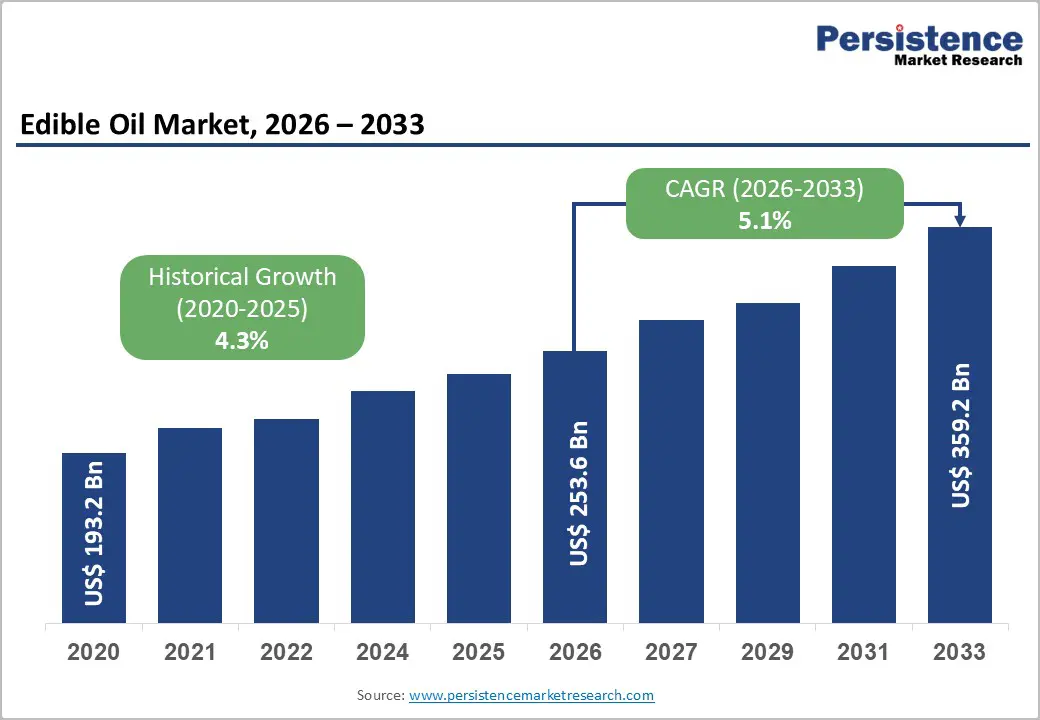
The global edible oil market is estimated to grow from US$ 253.6 billion in 2026 to US$ 359.2 billion, growing at a CAGR of 5.1% during the forecast period from 2026 to 2033.
The global edible oil market is expanding steadily, driven by rising food consumption, population growth, and increasing demand for healthier cooking oils. Asia Pacific leads due to high consumption and large-scale production, while North America is the fastest-growing region, supported by health awareness, demand for premium oils, and growing preference for plant-based diets.
Key Industry Highlights
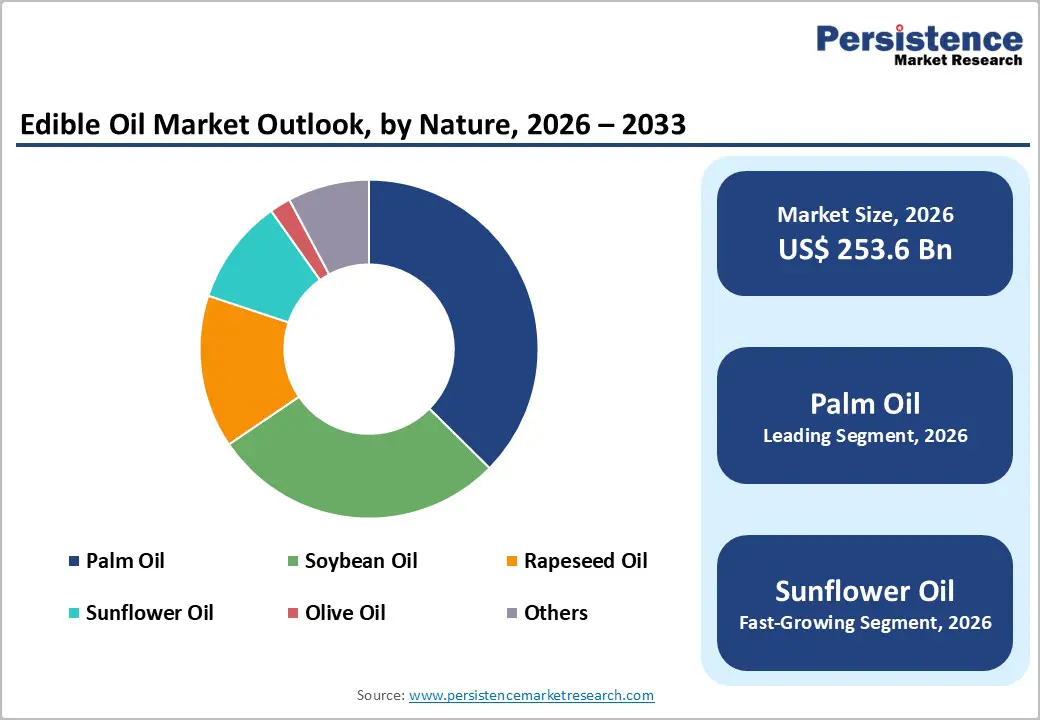
- Dominant Product Segment: Palm oil held 37.4% share in 2025, driven by its high yield, cost-effectiveness, and extensive use in cooking oils, processed foods, and foodservice applications worldwide.
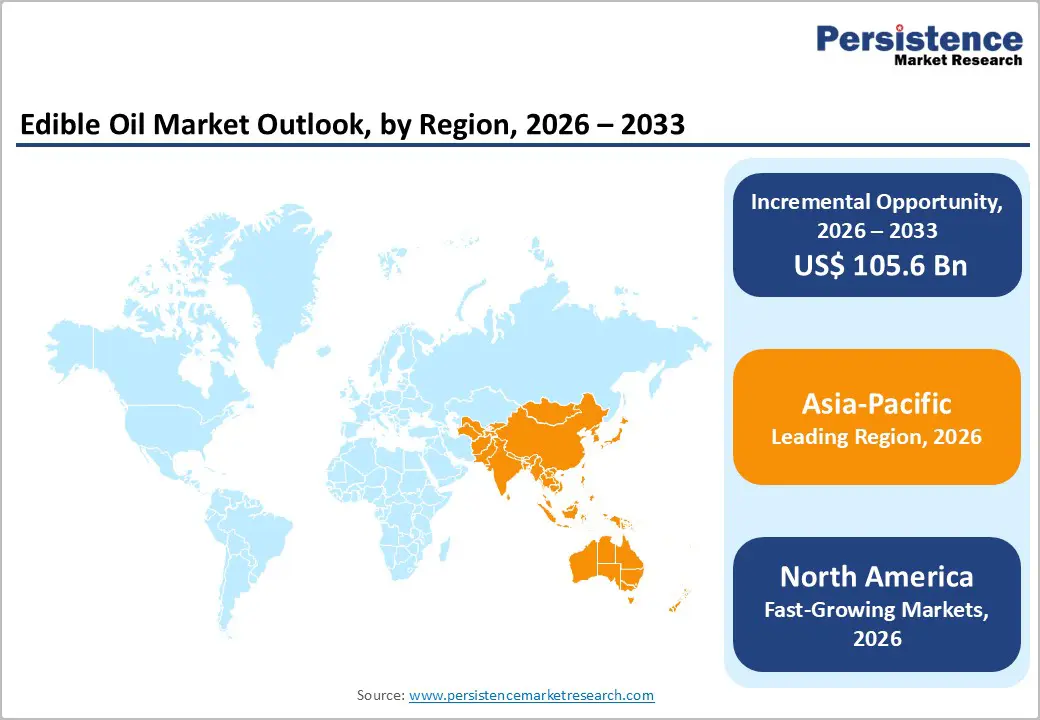
- Dominant Region: Asia Pacific led the market in 2025 with 48.2% share, supported by high consumption, large populations, and strong production in countries such as Indonesia, Malaysia, China, and India.
- Growth Driver: Growth is driven by rising global population, increasing demand for vegetable oils in cooking and food processing, expanding packaged food consumption, and growing use of edible oils in the foodservice industry.
- Market Opportunity: Opportunities include rising demand for healthier oils, expansion of cold-pressed and organic variants, innovation in fortified edible oils, and increasing consumption in emerging markets across Asia, Africa, and Latin America.
| Key Insights | Details |
|---|---|
|
Global Edible Oil Market Size (2026E) |
US$ 253.6 Bn |
|
Market Value Forecast (2033F) |
US$ 359.2 Bn |
|
Projected Growth (CAGR 2026 to 2033) |
5.1% |
|
Historical Market Growth (CAGR 2020 to 2025) |
4.3% |
Market Dynamics
Driver: Growing Demand for Vegetable Oils in Processed and Packaged Foods
The increasing consumption of processed and packaged foods worldwide is a major driver of the edible oil market. Vegetable oils are essential ingredients in processed food products such as snacks, bakery items, ready-to-eat meals, sauces, and confectionery products because they enhance flavor, texture, and shelf life. As urbanization and busy lifestyles increase globally, consumers are increasingly shifting toward convenient packaged foods, which require significant quantities of edible oils for frying, baking, and preservation. The expansion of modern retail and foodservice industries has further accelerated the demand for cooking oils used in industrial food production. This trend is particularly evident in emerging economies where rising disposable income and changing dietary habits are boosting the consumption of packaged food products.
Statistical data from global agricultural agencies highlights the magnitude of this demand. According to the Food and Agriculture Organization (FAO) and OECD-FAO Agricultural Outlook, global vegetable oil consumption exceeded 218 million metric tons in 2024, reflecting the essential role of edible oils in global food systems. Additionally, food uses such as cooking, frying, and processed food manufacturing account for about 55% of total vegetable oil consumption worldwide. Rising population and urbanization are expected to further increase the consumption of edible oils, especially in developing countries where dietary patterns are shifting toward higher intake of processed foods and vegetable oil-based cooking.
Restraint: Environmental Concerns Related to Palm Oil Production
Environmental concerns associated with palm oil cultivation present a significant restraint to the edible oil market. Palm oil is one of the most widely used edible oils globally due to its high yield and low production cost; however, its expansion has been linked to deforestation, biodiversity loss, and greenhouse gas emissions in tropical regions. Large-scale plantation development in Southeast Asia has contributed to the clearing of rainforests and peatlands, raising concerns among governments, environmental organizations, and consumers. As a result, regulatory frameworks and sustainability standards are increasingly being introduced to limit unsustainable palm oil production. These regulations can increase production costs and create supply chain challenges for edible oil manufacturers relying on palm oil.
Statistical evidence highlights the scale of the issue. Palm oil alone accounts for roughly 36% of global vegetable oil production, making it the dominant oil used in food products worldwide. However, expanding oil palm cultivation requires significant land resources, which can lead to deforestation and ecosystem degradation if not managed sustainably. Environmental research indicates that rising global vegetable oil demand could substantially increase land use pressures, potentially contributing to forest loss and higher carbon emissions if sustainable production practices are not adopted. These environmental risks have led to stricter certification systems and consumer pressure for sustainably sourced edible oils, affecting market growth and production strategies.
Opportunity: Rising Demand for Cold-Pressed and Organic Edible Oils
The increasing consumer preference for natural and minimally processed foods is creating significant opportunities in the edible oil market, particularly for cold-pressed and organic oils. Cold-pressed oils are produced without high heat or chemical refining processes, allowing them to retain natural nutrients, antioxidants, and flavor compounds. As health awareness rises globally, consumers are seeking cooking oils perceived as healthier alternatives to refined oils. This trend is particularly strong in premium food segments such as organic foods, natural products, and functional nutrition. Cold-pressed oils such as olive, coconut, and mustard oil are increasingly used in home cooking, specialty food products, and health-oriented diets, which is encouraging manufacturers to expand their product portfolios.
Reliable statistical evidence confirms this emerging trend. Research data indicates that the global cold-pressed oil market value increased from about USD 24.6 billion in 2018 and is projected to reach around USD 36.4 billion by 2026, reflecting strong consumer demand for natural oil products. In addition, government agricultural reports show a steady increase in organic oilseed production as consumers seek non-GMO and sustainably produced foods. Cold-pressed oils also retain higher levels of beneficial compounds compared with refined oils, which is one of the key factors driving their adoption among health-conscious consumers and premium food manufacturers worldwide.
Category-wise Analysis
By Product Type
Palm oil dominates the edible oil market due to its high productivity, affordability, and widespread use in food processing and cooking. Oil palm trees yield significantly more oil per hectare compared to other oilseed crops such as soybean or sunflower, making palm oil one of the most cost-efficient vegetable oils globally. Its semi-solid nature, oxidative stability, and long shelf life make it suitable for frying, baking, and packaged food manufacturing. According to the United States Department of Agriculture, global palm oil production exceeded 77 million metric tons in 2023, accounting for roughly 35–40% of total vegetable oil production worldwide. Major producers such as Indonesia and Malaysia supply most global demand, supporting its dominant market position.
By Processing Type
Refined edible oils dominate the market because refining improves oil purity, safety, flavor neutrality, and shelf stability, making them suitable for both household cooking and industrial food production. The refining process removes impurities such as gums, pigments, and free fatty acids through degumming, bleaching, and deodorization, resulting in oils with consistent taste and longer storage life. These properties are particularly important for large-scale food processing, frying, and packaged food manufacturing. According to global consumption statistics reported by the Food and Agriculture Organization, worldwide vegetable oil consumption surpassed 220 million metric tons in 2023, with most edible oils undergoing refining before entering the consumer market. Refined oils are widely used across the foodservice and packaged food industries due to their stability and standardized quality.
Regional Insights
Asia-Pacific Edible Oil Market Trends
Asia Pacific dominates the edible oil market with 48.2% share in 2025, due to its large population, high cooking oil consumption, and strong production of palm and vegetable oils. Countries such as Indonesia, Malaysia, China, and India are major producers and consumers of edible oils. According to the Food and Agriculture Organization, Asia accounts for the majority of global vegetable oil consumption because cooking oils are essential ingredients in daily diets across the region. The region also dominates palm oil production; the United States Department of Agriculture reports that Indonesia and Malaysia together produce over 80% of global palm oil supply. Additionally, rapid urbanization, expanding middle-class populations, and increasing consumption of processed foods continue to drive edible oil demand across Asia Pacific.
Europe Edible Oil Market Trends
Europe represents an important region in the edible oil market due to its strong consumption of vegetable oils, advanced food processing industry, and significant production of rapeseed oil. According to agricultural statistics from the European Commission, the European Union is one of the largest producers of rapeseed globally, with rapeseed oil widely used for cooking, food manufacturing, and bio-based applications. Countries such as Germany, France, and Poland contribute substantially to oilseed cultivation and processing. Europe is also a major consumer market for high-quality edible oils including olive oil and sunflower oil. Furthermore, the region’s strict food safety regulations and sustainability initiatives encourage the adoption of high-quality and certified edible oil products across the food and beverage sector.
North America Edible Oil Market Trends
North America is the fastest-growing region in the edible oil market due to rising health awareness, increasing demand for plant-based diets, and strong production of soybean oil. The United States Department of Agriculture reports that the United States is one of the largest soybean producers globally, supplying large volumes of soybean oil used for cooking, processed foods, and foodservice applications. In addition, consumers in the region are increasingly choosing healthier oils such as olive, avocado, and canola oil as part of balanced diets. Government dietary guidelines also encourage the replacement of saturated fats with vegetable oils. The growing packaged food sector, expanding restaurant industry, and increasing demand for healthier cooking ingredients continue to drive rapid edible oil consumption across North America.
Competitive Landscape
The edible oil market is highly competitive, led by major global producers such as Cargill, Incorporated, Archer Daniels Midland Company, Wilmar International Ltd, and Bunge Limited. These companies focus on expanding refining capacity, strengthening global supply chains, adopting sustainable sourcing practices, and developing healthier vegetable oil products to meet growing global demand.
Key Developments:
- In December 2025, Archer Daniels Midland Company (ADM) entered cottonseed oil production, expanding its edible oil portfolio. This move allows ADM to diversify its vegetable oil offerings, supplying both industrial food processors and retail markets. The company highlighted that cottonseed oil complements its existing soybean, canola, and palm oil products, addressing rising demand for versatile cooking oils globally.
- In January 2024, Cargill, Incorporated became the first global edible oils supplier to meet the World Health Organization’s best practice for eliminating industrially produced trans-fatty acids. The company successfully reformulated its vegetable oils to comply with WHO guidelines, promoting healthier consumption and supporting global efforts to reduce trans-fat intake.
Companies Covered in Edible Oil Market
- Cargill
- ADM
- Wilmar International
- Bunge
- IFFCO Group
- Olam Agri
- Marico
- Louis Dreyfus Company
- Adani Wilmar Limited
- Richardson International Limited
- Sime Darby Plantation Berhad
- IOI Corporation Berhad
- Others
Frequently Asked Questions
The global edible oil market is projected to be valued at US$ 253.6 Bn in 2026.
Rising population, increasing food consumption, growing processed food demand, urbanization, and preference for healthier cooking oils.
The global edible oil market is poised to witness a CAGR of 5.1% between 2026 and 2033.
Growing demand for healthy oils, expansion in emerging markets, premium products, fortified oils, and plant-based diets.
Cargill, ADM, Wilmar International, Bunge, IFFCO Group, Olam Agri.


