




- Processed Food
- Cold Pressed Oil Market
Cold Pressed Oil Market Size, Trends, Share, Growth, and Regional Forecast, 2026 to 2033
Cold Pressed Oil Market by Oil Type (Coconut Oil, Olive Oil, Sesame Oil, Peanut Oil, Sunflower Oil, Palm Oil, Soybean Oil, Others), by Nature (Conventional, Organic), Distribution Channel, and Regional Analysis from 2026 to 2033

Cold Pressed Oil Market Share and Trends Analysis
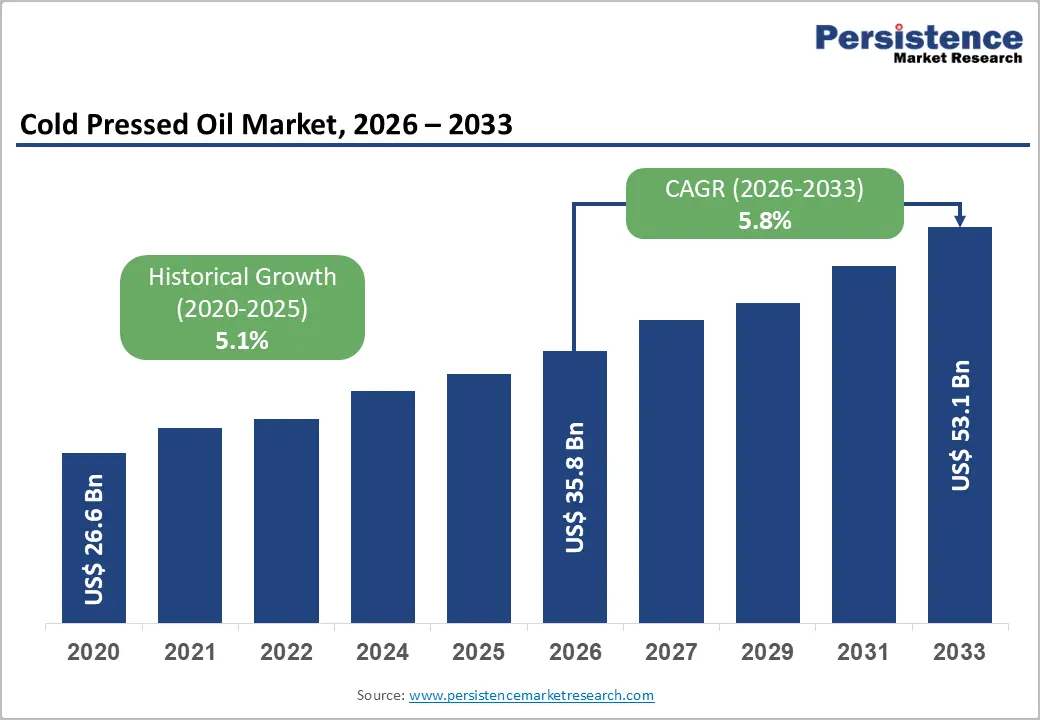
The global cold pressed oil market size is likely to be valued at US$ 35.8 billion in 2026 to US$ 53.1 billion by 2033 growing at a CAGR of 5.8% during the forecast period from 2026 to 2033.
Vegetable, nut, and seed-based cold-pressed oils are becoming increasingly popular because of their health advantages and environmentally responsible production methods. These oils are well-liked for use in food preparation, medicine, and cosmetics as they preserve vital ingredients, including vitamins, lecithin, phospholipids, and antioxidants.
Increasing application in cosmetics is notable, with brands incorporating oils like argan and jojoba for skincare and haircare. For instance, in June 2024, HPPY Skin, a cosmeceutical brand, launched a skincare line featuring cold-pressed rosehip oil, targeting eco-conscious consumers.
Sustainable extraction process aligns with the rising demand for green and cruelty-free products. Emerging markets in the Asia Pacific are set to exhibit prominent growth due to urbanization, increasing disposable income, and consumer preference for natural products.
Key Industry Highlights
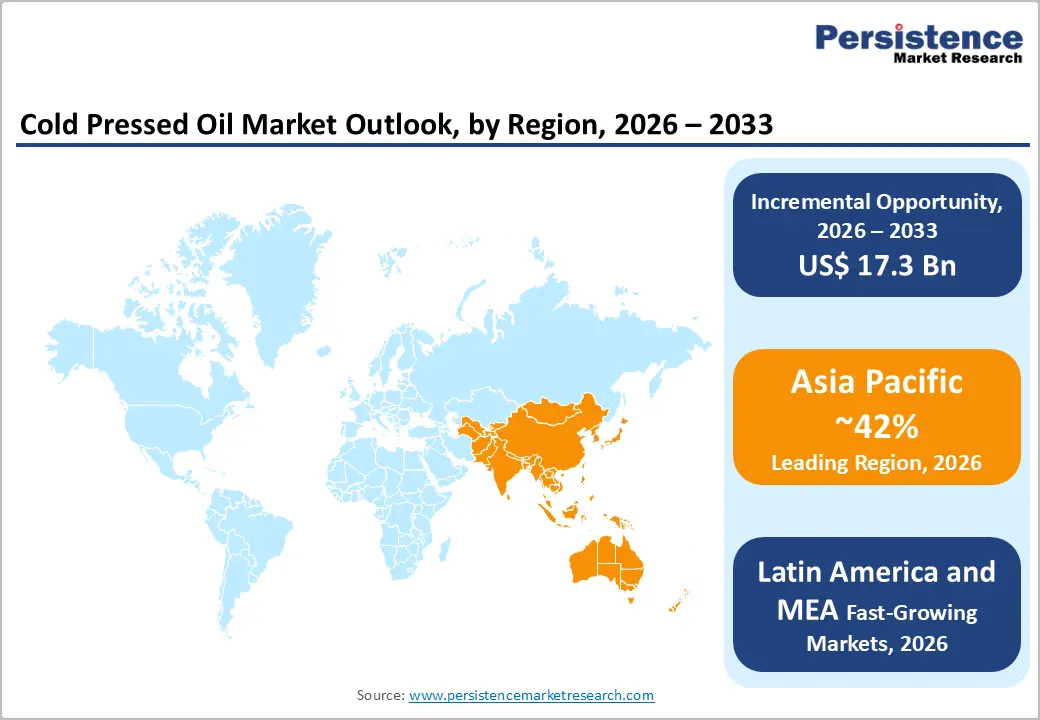
- Leading Region: Asia Pacific leads the cold pressed oil market, supported by traditional cooking practices, ayurvedic and natural dietary preferences, rising health and wellness awareness, and expanding retail and e-commerce networks.
- Fastest Growing Region: Latin America and Middle East & Africa are among the fastest-growing regions, driven by increasing demand for natural and organic oils, rising disposable incomes, and government initiatives promoting healthy dietary habits.
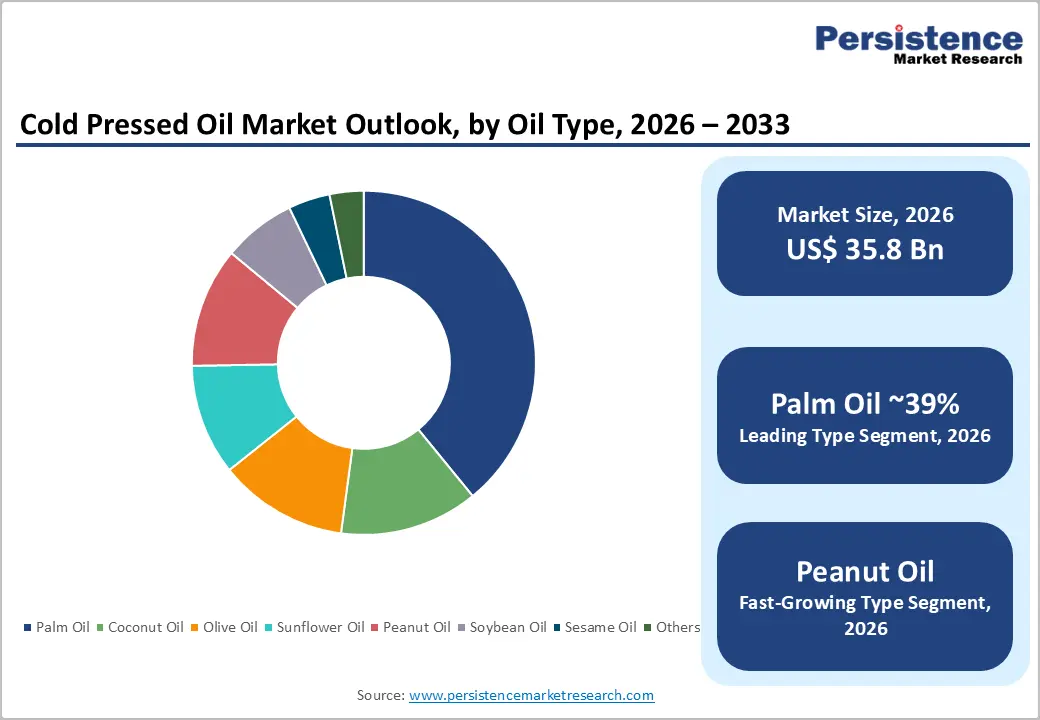
- Dominant Segment: Palm oil dominates the market, owing to its balanced fatty acid profile, natural extraction process, nutritional benefits, versatility in culinary applications, and adoption by health-conscious consumers.
- Fastest Growing Segment: Peanut and soybean oils are the fastest-growing product types, fueled by increasing adoption in emerging markets, growing awareness of their health benefits, and rising applications in cooking and industrial food processing.
| Key Insights | Details |
|---|---|
| Cold Pressed Oil Market Size (2026E) | US$ 35.8 Bn |
| Market Value Forecast (2033F) | US$ 53.1 Bn |
| Projected Growth (CAGR 2026 to 2033) | 5.8% |
| Historical Market Growth (CAGR 2020 to 2025) | 5.1% |
Market Dynamics
Driver - Rising Popularity of Organic and Chemical-free Diets to Augment Demand
Demand for organic and chemical-free cooking oils is driven by health-conscious consumers seeking clean-label products and natural food alternatives. These are aligning with the rising preference for minimally processed and sustainable food options.
- The Organic Trade Association's 2024 survey revealed a 9% annual rise in demand for organic edible oils, primarily coconut, olive, and avocado oils. This was due to their nutritional value, heart-healthy fats, and antioxidants.
- Nutiva's 2024 expansion of a USDA-certified organic cooking oil line and awareness about chemically processed oils' health impacts are driving growth due to stringent food safety standards.
E-commerce platforms play a pivotal role, making these premium oils more accessible to a broader audience.
Surging Shift toward Plant-based Diet to Push Vegetable and Nut-based Oils Demand
For ethical, environmental, and health-related reasons, cold-pressed oils including avocado, sunflower, and almond are becoming increasingly popular due to plant-based diets. These oils are said to be healthier than conventional cooking oils as they are rich in vital elements including vitamins, antioxidants, and omega-3 fatty acids.
Growth in the plant-based food sector has led to innovations in cold-pressed oil products, with new blends and formulations appearing in the market. For instance,
- In March 2024, Nutiva, a popular food brand, launched a line of cold-pressed avocado and coconut oil blends aimed at plant-based consumers. It emphasized health benefits like heart health and skin nourishment.
Restraints - High Costs and Authenticity Concerns to Hinder the Market
Reduced yield per kilogram, increased production costs, and restricted customer accessibility in price-sensitive regions are a few issues in the cold-pressed oil sector. In developing countries, the market is often dominated by unorganized players, raising concerns about the authenticity and quality of products.
Counterfeit or adulterated oils can easily infiltrate the market, erode consumer trust and complicate regulatory oversight. For instance, a 2024 report from the Food Safety and Standards Authority of India highlighted a 15% increase in cases of adulterated edible oils in local markets, with cold-pressed oils being a key target.
In regions lacking stringent quality standards, governments and industry players are implementing traceability measures. They are also promoting awareness campaigns to educate consumers about genuine products.
Opportunity - Companies Use Cold Pressed Oil in Cosmetics and Personal Care Products
The enhanced nutrient retention, natural qualities, and efficacy of cold-pressed oils in skincare, haircare, and wellness products have led to their increasing use in cosmetics and personal care goods. Rich in vitamins, antioxidants, and vital fatty acids, cold-pressed oils such as argan, jojoba, and rosehip are ideal for skin-repairing, anti-aging, and moisturizing products. For instance,
- In February 2024, L'Oréal launched a new line of skincare products featuring cold-pressed rosehip oil, emphasizing its healing and rejuvenating properties.
Demand for clean beauty and eco-friendly products accelerates the adoption of cold-pressed oils in the cosmetics sector.
Brands Adopt Traditional and Ayurveda Practices to Promote Health and Wellness
The adoption of traditional and ayurvedic practices is driving demand for cold-pressed oils. These are recognized for their health advantages and natural extraction processes, supporting holistic health solutions. For instance,
- According to a 2024 report by the Ministry of AYUSH (India), the global demand for ayurvedic products is projected to rise by 8.5% annually, with cold-pressed oils being a key aspect.
Ayurvedic treatments commonly utilize oils like sesame, coconut, and neem for their therapeutic properties, which include detoxification, skin nourishment, and immune support. Recent trends indicate a surging trend of consumers incorporating these oils into their daily diets and skincare routines. Companies like Dabur are introducing ayurvedic-inspired product lines, such as cold-pressed oils, in 2024, marketed for their health benefits.
Category-wise Analysis
By Product Type
In 2025, the palm oil segment is expected to lead the global cold-pressed oil market, capturing approximately 39% of the total share. Its growth is supported by the natural extraction process, which preserves essential nutrients and a well-balanced fatty acid profile, making it appealing to health-conscious consumers. Cold-pressed palm oil is particularly valued for its rich content of vitamin E, carotenoids, and antioxidants, which contribute to overall wellness. Its versatility in culinary applications, including frying and baking, adds to its widespread use, as it withstands high cooking temperatures without losing nutritional value.
Sustainably sourced palm oil is increasingly aligned with eco-conscious consumer preferences. For instance, in April 2024, Cargill introduced sustainably sourced cold-pressed palm oil, certified by RSPO, targeting environmentally aware buyers. Rising awareness of healthy, naturally derived oils, especially in emerging markets across the Asia Pacific, is driving adoption. Consumers are showing a preference for oils that combine health benefits with sustainable production practices, reinforcing the segment’s strong position in the market. The combination of nutritional value, culinary flexibility, and responsible sourcing is expected to continue supporting palm oil’s market leadership through the coming years.
By End-user
In 2025, B2C distribution channels accounted for 58% of global cold-pressed oil sales, reflecting growing consumer preference for convenience, product transparency, and quality. Modern retail formats, such as supermarkets, hypermarkets, and online platforms, have become primary drivers of cold-pressed oil adoption. These channels provide easy access to a wide variety of oils, catering to diverse dietary and health-conscious needs. The rise of e-commerce platforms, supported by digitalization and changing shopping behaviors, has further accelerated market growth.
For example, in July 2024, Amazon reported a 22% year-over-year increase in sales of health-focused oils, including cold-pressed varieties. Consumers are increasingly opting for eco-friendly and traceable products, seeking assurance of sustainable sourcing and natural production processes. Retailers are responding by offering transparent labeling, certifications, and detailed product information, building trust and encouraging repeat purchases. This shift towards responsible and convenient purchasing is expected to continue, reinforcing the dominance of B2C channels in the global cold-pressed oil market. The trend highlights the importance of accessibility, quality, and sustainability in shaping consumer decisions.
Region-wise Insights
North America Cold Pressed Oil Market Trends
Demand for cold-pressed oils in North America is rising in 2026. The region will likely hold an 18.5% market share in 2026. North America leads the global cold pressed oil market due to its strong agricultural base, advanced processing infrastructure, and growing consumer demand for natural, minimally processed oils. In the U.S., the USDA reports significant oilseed processing capacity, with 2.2 million tonnes of canola and over 63 million tonnes of soybeans crushed in 2024. These volumes yield over 13 million tonnes of oil, much of which can be diverted for cold pressing.
In Canada, the canola industry plays a crucial role, with government sources such as Agriculture and Agri-Food Canada reporting over 11.4 million tonnes of canola crushed in 2024, producing nearly 4.8 million tonnes of oil. Canada contributes to about 60% of global canola oil trade, supported by more than 43,000 farms and an export value exceeding CAD (Canadian Dollar) 15 billion annually. Investments of over CAD 2 billion have expanded domestic processing capacity, targeting up to 16 million tonnes by 2025.
The region’s dominance is also fueled by high health awareness and a preference for clean-label products, making cold pressed oils a staple in natural food stores and e-commerce platforms. These factors in verifiable government data collectively explain why North America remains at the forefront of the cold pressed oil market.
Asia and Pacific Cold Pressed Oil Market Trends
Asia Pacific accounted for 42% of the global cold-pressed oil market in 2025, emerging as the leading regional market. This dominance is largely driven by rising consumer awareness around natural nutrition, preventive healthcare, and clean-label food products. Increasing lifestyle-related health concerns have encouraged consumers to shift away from refined edible oils toward minimally processed, nutrient-rich alternatives.
Traditional dietary practices and long-standing ayurvedic and herbal influences in countries such as India, China, and Japan continue to support demand for cold-pressed oils, particularly coconut, sesame, groundnut, and mustard oils. These oils are widely perceived as healthier due to their natural extraction process and retention of antioxidants and essential fatty acids. In addition, growing preference for sustainably sourced and eco-friendly products has pushed manufacturers to highlight traceability, ethical sourcing, and environmentally responsible production practices.
The region has also benefited from strong retail expansion, including the rapid growth of organized grocery chains and e-commerce platforms. For instance, India recorded a nearly 20% rise in cold-pressed oil sales in September 2024, supported by nationwide campaigns promoting their health benefits. Looking ahead, the Asia Pacific cold-pressed oil market is projected to grow at a CAGR of 7.8% from 2026 to 2033, supported by changing consumer preferences and expanding distribution networks.
Competitive Landscape
Key players in the global cold pressed oil market are implementing strategies to maintain and enhance their positions in the competitive landscape. With innovation being a crucial factor, several companies are continuously developing new flavors, health-oriented options, and functional beverages.
A few brands are collaborating with celebrities and social media influencers to promote and extend their product lines. To access a large consumer base and improve their supply chain and logistics operations, businesses are giving priority to efficient distribution channels and global growth. It is especially evident in emerging areas where there is a growing demand for oil-infused beverages.
Key Industry Developments:
- In June 2025, Marico forayed into the cold pressed oil market, by launching its new Saffola Cold Pressed Oils range. This move marked a strategic expansion of its flagship Saffola portfolio, known for its heart health positioning, into the emerging cold pressed category.
- In May 2025, California Olive Ranch earned the Seed Oil Free Certified™ seal on May 27, 2025, becoming the first producer of extra virgin olive oil to receive this certification. The certification applies to the company’s entire product line including EVOO, avocado blend cooking oils, dressings, and marinades, confirming they are completely free from seed oil adulteration such as soybean, canola, sunflower, or corn oils.
- In November 2024, Egypt's Sahara Glow brand, known for its high Thymoquinone levels, extended its operations into the U.S. The brand offers natural healing creams and cold-pressed oil. It also promotes ethical sourcing and sustainable practices.
- In February 2024, Los Angeles-based Raw Sugar Living, a clean personal care brand, declared that it will be available in Canada at Shoppers Drug Mart. The brand offers vegan and cruelty-free products made with organic ingredients and patented Cold Press Technology.
- In January 2024, Starbucks, headquartered in Washington, launched Oleato beverages, a blend of Starbucks coffee and Partanna extra virgin olive oil, in all stores in the U.S. and Canada.
Companies Covered in Cold Pressed Oil Market
- ADM
- Viva Naturals
- Garden of Life
- Marico
- California Olive Ranch
- Deoleo S.A. (Bertolli)
- Pompeian
- Loriva
- Cargill, Inc
- Bunge Limited
- Patanjali Ayurved Limited
- NOW Foods
- Statfold Seed Oils Ltd
- Wilmar International Ltd
- Others
Frequently Asked Questions
The global cold pressed oil market is projected to be valued at US$ 35.8 Bn in 2026.
Growing health awareness, demand for natural, organic, and clean-label edible oils, plus rising use in cosmetics and e-commerce boosts the market.
The global market is poised to witness a CAGR of 5.8% between 2026 and 2033.
Innovative product lines (exotic, functional oils), eco-friendly certifications, direct to consumer e commerce, cosmetics/pharma applications, packaging advances, emerging markets.
Major players include ADM, Viva Naturals, Garden of Life, Marico, California Olive Ranch, Deoleo S.A. (Bertolli) and Others.


