




- Nutraceuticals & Functional Foods
- Organic Goji Berries Market
Organic Goji Berries Market Size, Trends, Share, Growth, and Regional Forecast, 2026 - 2033
Organic Goji Berries Market by Product Type (Whole, Powder, Juice, Others), End-user (Food and Beverage, Pharmaceuticals, Nutraceuticals, Personal Care and Cosmetics, Others), Distribution Channel (B2B, B2C), and Regional Analysis from 2026 - 2033

Organic Goji Berries Market Share and Trends Analysis
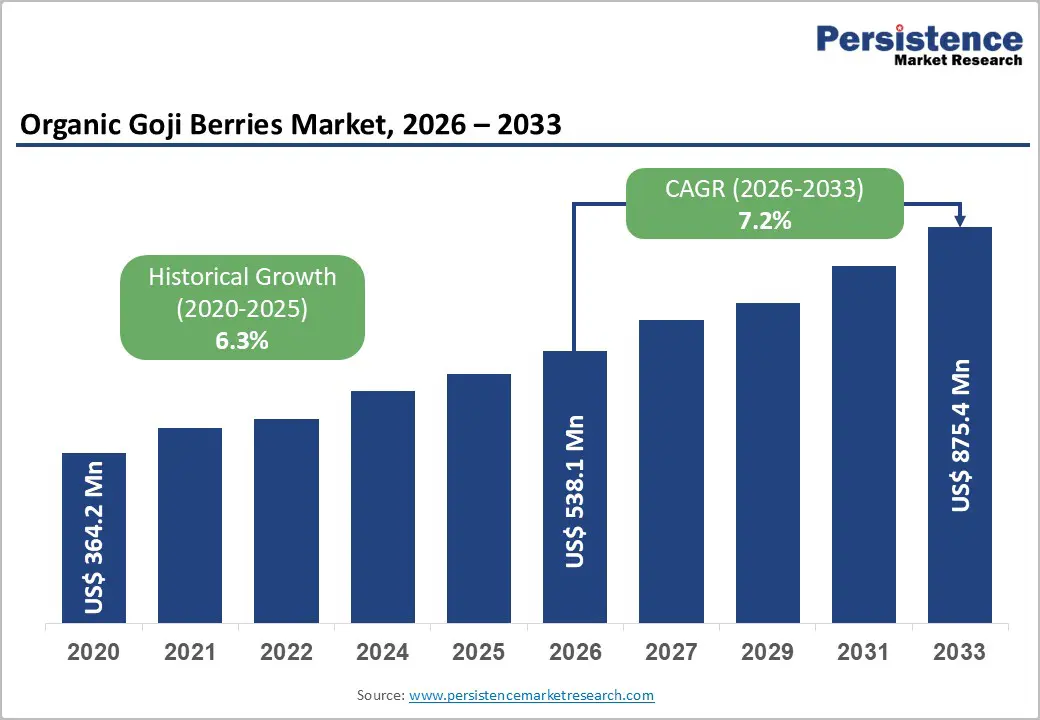
The global organic goji berries market size is likely to be valued at US$ 538.1 million in 2026 to US$ 875.4 million by 2033 growing at a CAGR of 7.2% during the forecast period from 2026 to 2033. Bright red berries are moving beyond niche wellness shelves into everyday nutrition baskets worldwide. The shift in dietary habits, clean-label demand, and digital commerce is reshaping how organic goji berries are sourced, sold, and consumed.
Key Industry Highlights:
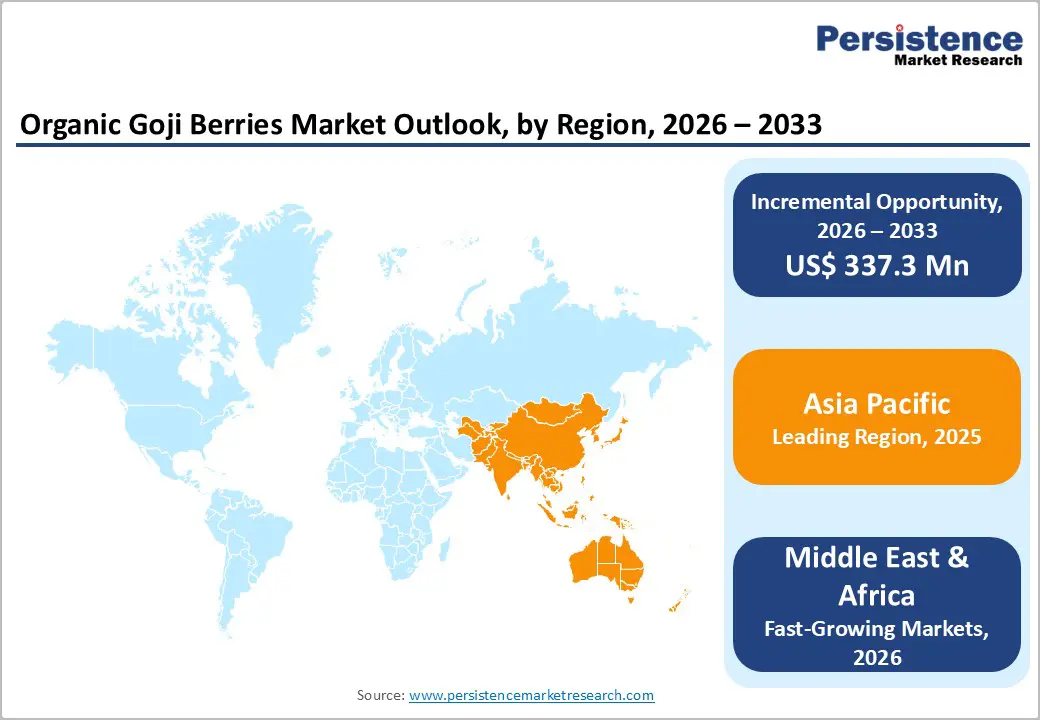
- Leading Region: Asia Pacific is likely to acquire nearly 42% share owing to the consumption trends in China, rising health awareness in India, and premium organic demand across Japan and South Korea.
- Fastest-Growing Region: Middle East & Africa, driven by increasing health consciousness, organic farming adoption in African producing countries, and expanding premium organic retail and e-commerce channels in GCC markets.
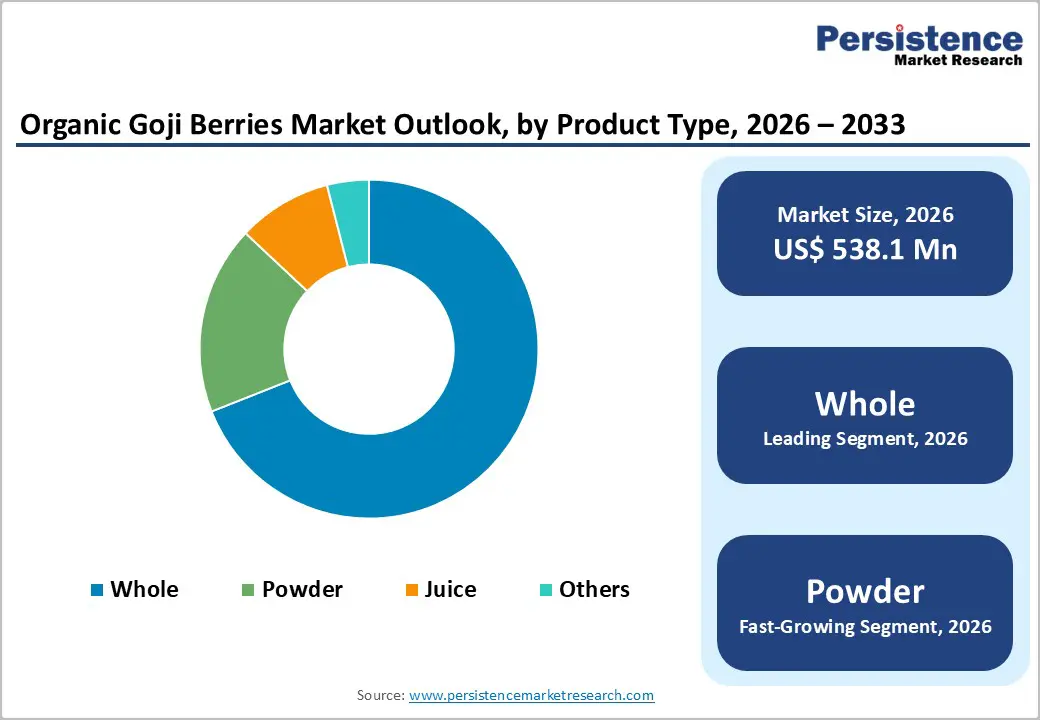
- Dominant Product Type Segment: Whole organic goji berries, accounting for about 69% market share, favored for visual appeal, minimal processing, longer shelf life, and broad usage across snacks, cereals, and home consumption.
- Market Drivers: Rising incorporation of superfruits into smoothies, cereals, and functional snacks is expanding daily usage occasions and accelerating mainstream adoption.
- Opportunities: Building vertically integrated, origin-linked supply chains enables premium traceability pricing, stronger quality control, and long-term differentiation for both established players and startups.
| Key Insights | Details |
|---|---|
|
Organic Goji Berries Market Size (2026E) |
US$ 538.1 Mn |
|
Market Value Forecast (2033F) |
US$ 875.4 Mn |
|
Projected Growth (CAGR 2026 to 2033) |
7.2% |
|
Historical Market Growth (CAGR 2020 to 2025) |
6.3% |
Market Dynamics
Driver - Increased Incorporation of Superfruits into Smoothies, Cereals, and Functional Snacks Expands Usage Occasions
Bright colors in breakfast bowls and on-the-go snacks signal a deeper shift in everyday nutrition. Increased incorporation of superfruits into smoothies, cereals, and functional snacks is expanding usage occasions for organic goji berries. Their naturally high antioxidant content, fiber, and micronutrient profile make them an easy add-in for brands targeting energy, immunity, and wellness-focused consumers.
Formulators favor organic goji berries for versatility across dried, powdered, and infused formats. Smoothie blends, granola mixes, protein bars, and snack clusters use goji berries to add visual appeal and health cues without complex reformulation. As snacking replaces structured meals and functional foods move into daily routines, organic goji berries transition from niche superfood to frequent, habitual ingredient.
Restraints - Quality variability and adulteration concerns
A vibrant red hue does not always guarantee consistent quality in the goji berry trade. Quality variability remains a key restraint for the global organic goji berries market, as differences in growing conditions, harvesting practices, and post-drying processes affect taste, nutrient density, and shelf stability. Buyers face challenges in maintaining uniformity across batches, particularly when sourcing from fragmented farming networks.
Adulteration concerns further complicate market growth. Instances of mislabeling, blending with lower-grade berries, or chemical residue contamination undermine organic claims and erode buyer confidence. Verifying authenticity requires rigorous testing, traceability, and certification, increasing procurement costs. These risks slow adoption among large food and nutraceutical manufacturers, who prioritize supply consistency and regulatory assurance before scaling organic goji berry formulations.
Opportunity - Building Vertically Integrated, Origin-Linked Supply Chains to Secure Beans and Capture Premium Traceability Pricing
Control over origin is becoming a decisive advantage in the organic goji berries market. Building vertically integrated, origin-linked supply chains allows companies to secure consistent access to high-quality berries while reducing dependence on intermediaries and volatile spot markets. Direct engagement in cultivation, drying, and primary processing improves quality control, stabilizes supply, and supports long-term farmer partnerships in key producing regions.
For both established players and emerging startups, traceability enables premium pricing. Linking goji berries to specific farms, regions, and organic practices strengthens authenticity claims demanded by food, nutraceutical, and wellness brands. Transparent sourcing enhances trust, supports sustainability narratives, and improves forecasting accuracy, transforming organic goji berries from a commodity ingredient into a differentiated, value-driven product.
Category-wise Analysis
By Product Type Insights
Whole organic goji berries account for nearly 69% share as of 2025, anchored by their versatility, visual appeal, and minimal processing requirements. Consumers associate whole berries with freshness, authenticity, and higher nutritional integrity, making them the preferred format for direct consumption and culinary use. Their long shelf life, ease of storage, and adaptability across snacks, cereals, bakery, and home cooking reinforce dominant demand.
Powdered organic goji berries serve functional nutrition and supplement formulations, valued for convenience and precise dosing. Goji juice remains niche, limited by processing complexity and shorter shelf stability. While these formats support innovation, whole berries continue to lead due to familiarity, perceived purity, and broad application across food, nutraceutical, and wellness categories globally.
Distribution Channel Insights
Online retail is projected to grow at a CAGR of 8.4% during the forecast period in the global organic goji berries market, reshaping how consumers discover and purchase superfoods. Digital platforms reduce dependence on specialty stores, enabling wider access across urban and semi-urban areas while supporting niche organic brands. Detailed product pages, certification visibility, and origin storytelling build confidence for first-time buyers seeking authenticity and quality.
Subscription models, bulk packs, and bundled wellness offerings are increasing repeat purchases and basket size. E-commerce also supports direct-to-consumer strategies, allowing brands to bypass intermediaries, manage pricing, and gather consumer insights. As health-conscious shoppers prioritize convenience and information transparency, online channels become the preferred route for regular organic goji berry consumption.
Regional Insights
Asia Pacific Organic Goji Berries Market Trends
Asia Pacific accounts for approximately 42% of the global organic goji berries market, driven by deep cultural roots, rising health awareness, and growing disposable incomes. In China, the traditional use of goji berries in herbal teas, soups, and wellness tonics is being modernized through ready-to-use snack mixes and functional formulations. India is showing rising interest in organic superfoods, with urban consumers integrating goji berries into smoothies, breakfast bowls, and nutraceutical blends for immune and energy support.
Japan and South Korea are embracing premium, certified organic formats with a strong emphasis on traceability and clean labels. E-commerce and specialty health stores are expanding access, while product innovation, such as blended powders and fortified bars, caters to busy lifestyles. Across the region, the convergence of tradition and modern wellness trends is accelerating organic goji berry adoption.
Middle East & Africa Organic Goji Berries Market Trends
Middle East & Africa Organic Goji Berries Market is expected to grow at a CAGR of 9.8%, driven by rising health awareness and expanding retail infrastructure. In key African producing regions such as Kenya and Ethiopia, smallholder farmers are adopting organic cultivation practices to supply both domestic demand and export markets, improving yields and quality. Growth of regional processing hubs is enhancing value addition and reducing reliance on imports.
In the Gulf Cooperation Council (GCC) countries, affluent consumers are increasingly integrating organic goji berries into functional beverages, smoothies, and wellness-oriented snacks. Retailers in the UAE, Saudi Arabia, and Qatar are expanding organic sections, highlighting certification and origin details that resonate with quality-focused buyers. E-commerce, specialty health stores, and expatriate demand further accelerate adoption across urban centers in the region.
Competitive Landscape
The global organic goji berries market exhibits a moderately fragmented structure, with established superfood brands, ingredient suppliers, and regional producers competing on quality, origin, and certification strength. Leading companies are prioritizing sustainable farming practices, organic certifications, and farmer engagement programs to secure reliable supply and reinforce premium positioning. Production expansion in key growing regions is being supported through partnerships and cross-border trade agreements that improve export access and supply continuity.
Collaborations across the value chain are accelerating investment in advanced processing techniques such as freeze-drying, low-temperature dehydration, and contaminant testing to improve consistency and shelf stability. Rising consumer awareness around organic integrity and traceability is pushing brands to highlight provenance and transparency. Companies that integrate cultivation, processing, and branded distribution are better positioned to differentiate and build long-term resilience.
Companies Covered in Organic Goji Berries Market
- Goji Farm USA
- Indigo Herbs
- Tibetan Goji Berry Company
- Purely Organic Foods
- CXD Goji LLC
- Navitas Organics
- Sunfood Superfoods
- Others
Frequently Asked Questions
The global organic goji berries market is projected to be valued at US$ 538.1 Mn in 2026.
Increased incorporation of superfruits into smoothies, cereals, and functional snacks expands usage occasions, fueling demand.
The global organic goji berries market is poised to witness a CAGR of 7.2% between 2026 and 2033.
Building vertically integrated, origin-linked supply chains to secure beans and capture premium traceability pricing is key the opportunity.
Major players in the global Organic Goji Berries market include Goji Farm USA, Indigo Herbs, Tibetan Goji Berry Company, Purely Organic Foods, CXD Goji LLC, and others.


