




- Nutraceuticals & Functional Foods
- Global Prebiotic Fruit Powders Market
Global Prebiotic Fruit Powders Market Size, Share, Growth, and Regional Forecast, 2026 to 2033
Prebiotic Fruit Powders Market by Flavor (Apple, Peach, Blueberry, Cranberry, Others), Application (Food and Beverages, Pharmaceutical, Nutraceutical, Others), Distribution Channel (B2B, B2C), and Regional Analysis from 2026 to 2033.

Prebiotic Fruit Powders Market
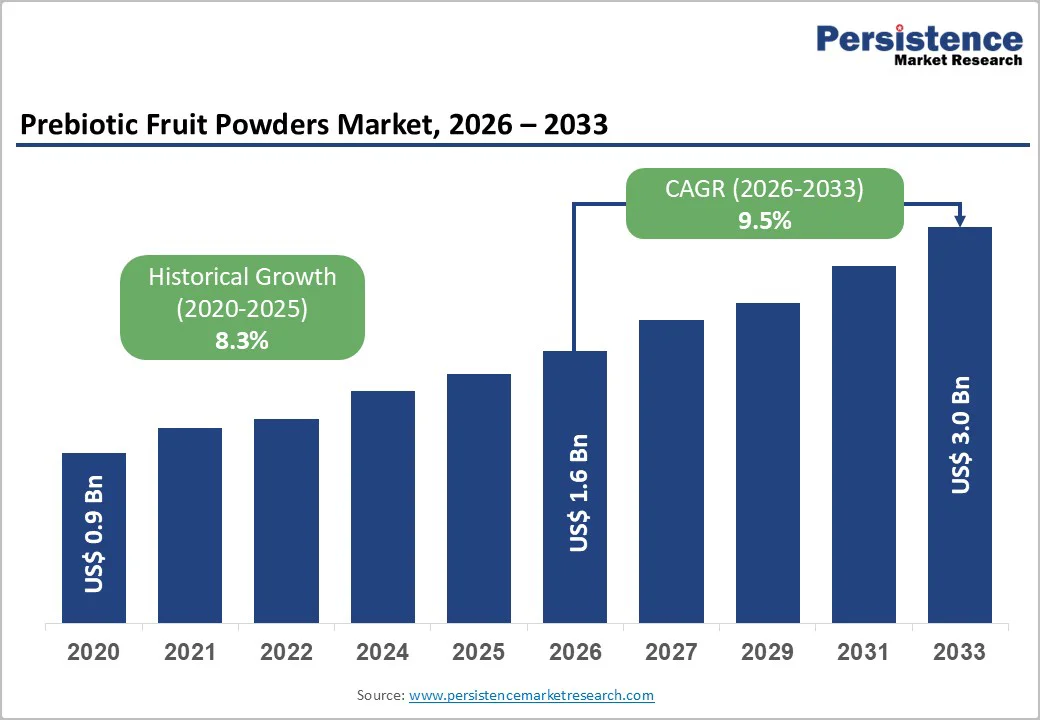
The global prebiotic fruit powders market is estimated to grow from US$ 1.6 Bn in 2026 to US$ 3.0 Bn by 2033. The market is projected to record a CAGR of 9.5% from 2026 to 2033.
The prebiotic fruit powders market is growing steadily, fueled by rising health awareness, demand for functional supplements, and adoption of gummy vitamins. North America leads with strong consumer knowledge and established distribution. At the same time, Asia-Pacific shows the fastest growth, driven by health-conscious populations, expanding e-commerce, and wider availability of innovative, plant-based, and specialty prebiotic fruit products.
Key Industry Highlights
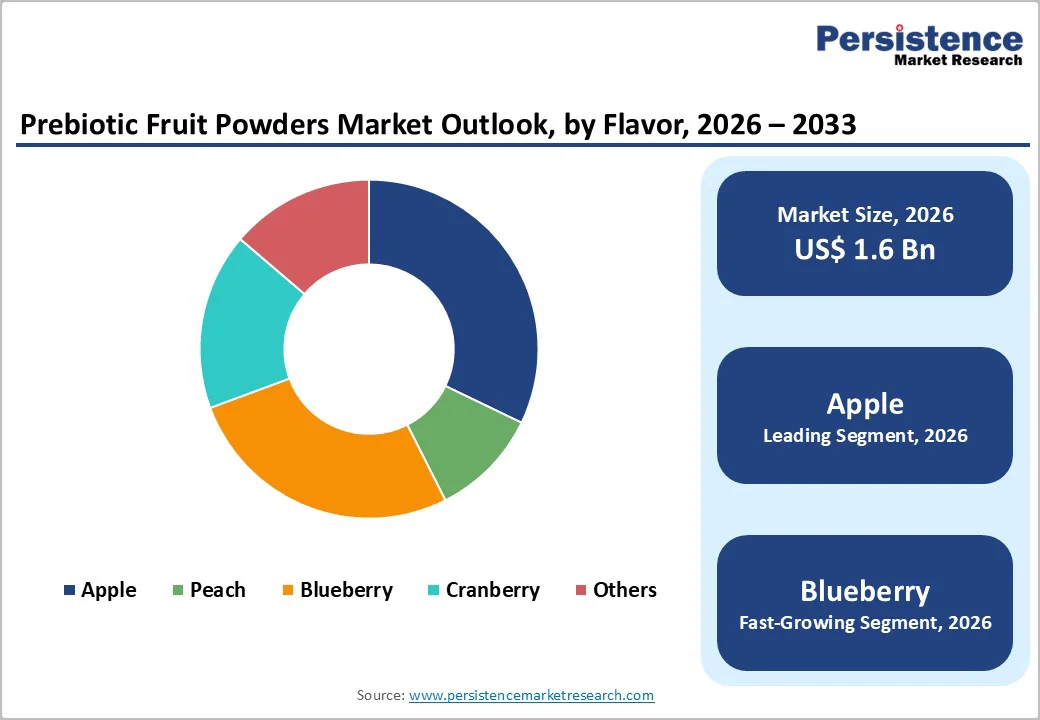
- Dominant Segment: Apple-flavored prebiotic fruit powders hold 32.2% share in 2025, driven by their mild taste, widespread consumer acceptance, and natural fiber content that supports gut health. They are widely used in food, beverage, and nutraceutical applications, making them a versatile and popular choice among functional prebiotic powder offerings.
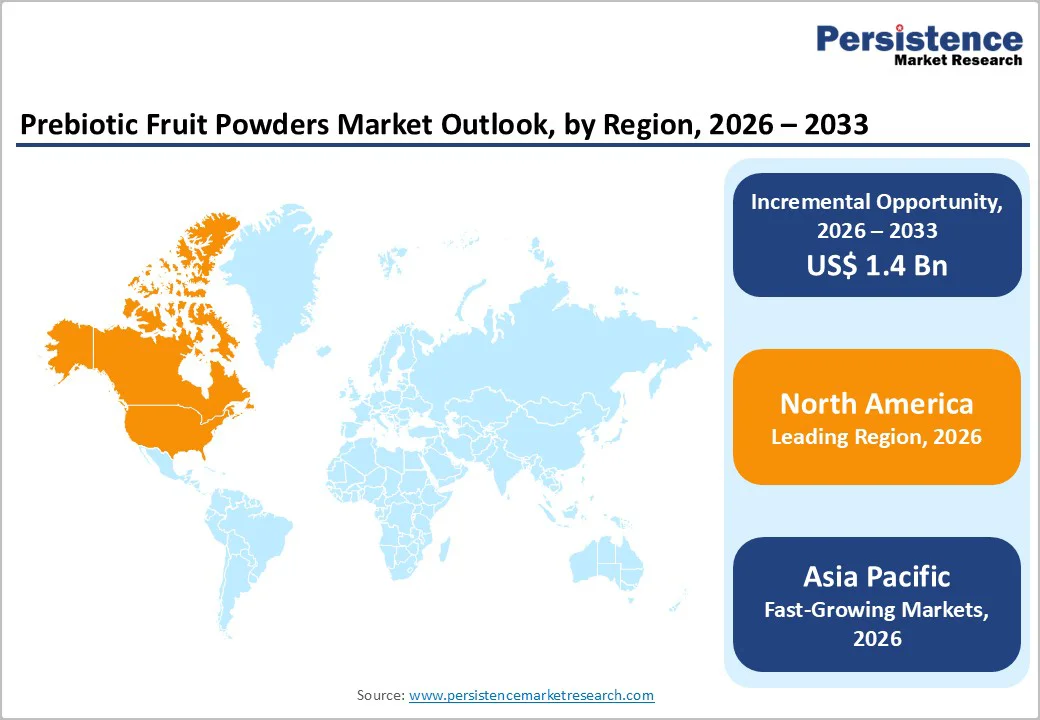
- Dominant Region: North America holds the largest share in 2025, supported by a strong health-conscious consumer base and established retail and e-commerce channels. Europe follows, while Asia-Pacific is the fastest-growing region, driven by rising health awareness, expanding e-commerce, and greater availability of innovative prebiotic fruit powders.
- Market Drivers: Growth is fueled by rising health-conscious populations, demand for functional ingredients, incorporation into foods and supplements, and preference for natural, convenient nutritional solutions.
- Market Opportunity: Key opportunities include plant-based and clean-label prebiotic powders, functional blends targeting gut and immunity, expansion in emerging markets, online retail growth, and innovation in flavor, formulation, and application across food, beverages, and nutraceuticals.
| Key Insights | Details |
|---|---|
| Global Prebiotic Fruit Powders Market Size (2026E) | US$ 1.6 Bn |
| Market Value Forecast (2033F) | US$ 3.0 Bn |
| Projected Growth (CAGR 2026 to 2033) | 9.5% |
| Historical Market Growth (CAGR 2020 to 2025) | 8.3% |
Market Dynamics
Driver – Rising consumer awareness of gut health and digestive wellness
Rising consumer awareness of gut health and digestive wellness is a key driver for the Prebiotic Fruit Powders Market. Government nutrition guidelines and scientific evidence emphasize the importance of dietary fiber, a core component of prebiotic fruit powders, for gut health. In the United States, daily fiber intake recommendations are 25 gm for women and 38 gm for men. Yet, average adult intake remains around 17 gm per day, meaning roughly 94% of Americans fall short of these guidelines. This persistent fiber gap highlights a growing public health emphasis on digestive wellness and functional ingredients that can help bridge it, supporting demand for prebiotic-rich products like fruit powders.
Scientific research further reinforces the connection between diet and gut health by showing how fiber influences the gut microbiome. Dietary fibers, including prebiotic components such as pectin found in fruit, promote beneficial bacterial growth and the production of short-chain fatty acids that support gut barrier function and immune regulation. Although consumer understanding of the gut microbiome is still developing, with surveys indicating many remain unaware of its full role, interest in digestive health is rising: a majority of adults rank digestive wellness as a high priority and are increasing their fiber intake accordingly. This combination of public health guidance and evolving consumer interest underpins the expanding market for prebiotic fruit powders.
Restraints – High cost of quality prebiotic ingredient extraction and formulation
The high cost of extracting and formulating quality prebiotic ingredients is a significant restraint on the Prebiotic Fruit Powders Market. Producing high-purity prebiotic components, such as inulin, fructooligosaccharides (FOS) or other functional fibersrequires complex extraction, purification and quality control operations. These advanced processes involve specialized equipment, energy-intensive steps and strict handling conditions to preserve functional activity, all of which increase production expenses relative to conventional food ingredients. Studies show that nearly half of prebiotic ingredient manufacturers are constrained by high processing costs, which can limit product affordability and adoption, especially in price-sensitive segments.
These elevated costs ultimately affect retail pricing and market competitiveness. For example, highpurity prebiotic concentrates can retail at substantial perkilogram prices, reflecting upstream extraction and processing costs, distribution markups and compliance expenditures. This dynamic creates barriers for smaller producers and emerging brands that cannot achieve the economies of scale, thereby restricting broader market expansion. Moreover, variations in raw material availability and seasonal supply can further inflate costs, making it difficult to maintain consistent pricing. Such economic pressures restrain market growth by limiting product access and compressing margins for producers.
Opportunity – Clean-label and plant-based on prebiotic solutions
Cleanlabel and plant-based prebiotic solutions present a strong growth avenue for the Prebiotic Fruit Powders Market. Consumer demand for transparency and simple, natural ingredients is rising globally. Research shows that nearly 30% of global food and beverage launches now feature a clean-label claim, with consumers increasingly avoiding artificial additives and favoring recognizable, minimally processed ingredients. Almost three in five consumers say clear ingredient information is important, and many reconsider purchases based on labels. This shift aligns with prebiotic fruit powders made from whole fruit sources without artificial additives, enhancing appeal among health-oriented buyers.
Simultaneously, plant-based diets are becoming mainstream, reinforcing opportunities for plant-derived prebiotic ingredients. Surveys indicate that 48% of consumers would consider eating 100% plant-based products because they view them as healthier, and plant sources already dominate prebiotic markets, accounting for over 70% of functional prebiotic ingredient demand. Plant-based consumers frequently seek products that support digestive health, immunity, and wellness, all of which are associated with fruit-derived prebiotics. This growing alignment between plant-based preferences and functional nutrition creates a strong opportunity to expand clean-label, plant-sourced prebiotic fruit powder offerings for health-conscious markets.
Category-wise Analysis
By Flavor, Apple Dominates the Prebiotic Fruit Powders Market
Apple Flavor holds a 32.2% share of the global market in 2025, driven by its naturally high dietary fiber content, particularly soluble fiber such as pectin, which functions as a prebiotic by nourishing beneficial gut bacteria and supporting digestive health. A medium apple provides about 4.4 gm of fiber, roughly 15–16?% of the recommended daily value, contributing to regularity and overall gut wellness. Additionally, apples are widely cultivated and globally familiar, making them highly acceptable in functional food formulations. Nutritional guidelines, such as those in the United States recommending two cups of fruit daily, reinforce apple consumption. Their mild, versatile taste enables use across beverages, smoothies, and supplements, combining health benefits and consumer preference, which drives their dominance in prebiotic fruit powders.
By Application, Food and beverages are gaining traction due to widespread consumption, fiber enrichment, and demand for gut-healthy functional products.
Food and Beverages dominate the Prebiotic Fruit Powders Market because this application directly aligns with widespread consumer dietary habits and public health priorities around fiber intake and digestive wellness. Dietary fibers and prebiotic fruit powders are increasingly incorporated into everyday foods such as yogurts, fortified beverages, cereals, snacks, and functional drinks to enhance nutritional profiles and support gut health. Functional foods and beverages accounted for a large share of fiber usage globally, with functional foods & drinks representing the largest application segment in the dietary fiber market, reflecting consumer demand for healthier, ready-to-consume products. Functional beverages and enriched food items drive practical use of prebiotic ingredients, translating scientific interest in fiber into mainstream consumption patterns.
Regional Insights
North America Prebiotic Fruit Powders Market Trends
North America dominates the prebiotic fruit powders market with a 33.1% share in 2025, driven by high consumer awareness of digestive health, strong demand for functional foods, and well-established dietary fiber consumption trends. In the U.S., dietary fiber intake is widely promoted by public health authorities, yet most adults consume only about 16–17 g daily, compared with the recommended 25–38 g.g, highlighting a nutritional gap that prebiotic powders help address. The region benefits from a mature retail ecosystem, including supermarkets, pharmacies, and ecommerce platforms, which ensures broad product availability. Supportive regulatory frameworks, such as U.S. FDA labeling and quality standards, build consumer trust. Combined with innovation in functional beverages, snacks, and supplements, these factors sustain North America’s leadership in the global prebiotic fruit powders market.
Europe Prebiotic Fruit Powders Market Trends
Europe is a key region in the Prebiotic Fruit Powders Market due to strong consumer focus on digestive health and dietary fiber intake. European nutritional guidelines recommend 25–35 gm of fiber daily, yet average adult consumption often falls short of these targets, with men consuming 18–24 gm and women 16–20 gm per day, highlighting a persistent fiber gap that prebiotic fruit powders can help address.
High consumer awareness and positive perceptions of fiber-rich foods drive demand for functional ingredients, as many Europeans actively seek products promoting gut health and overall wellness, making the region important for product innovation, fortified food applications, and market growth in prebiotic fruit powders.
Asia-Pacific Prebiotic Fruit Powders Market Trends
Asia Pacific is the fastest-growing region in the Prebiotic Fruit Powders Market due to rising health awareness, rapid urbanization, and increasing disposable incomes driving demand for functional nutrition and digestive wellness products. The region shows significant growth in dietary fiber consumption, reflecting greater incorporation of fiber and prebiotic ingredients into foods and supplements. Consumers in China, India, Japan, and Southeast Asia increasingly prioritize gut health amid lifestyle changes and higher prevalence of metabolic diseases, boosting the adoption of fiber-rich and prebiotic products. Government nutrition campaigns promoting healthier diets further support this trend, while urban middle-class populations embrace fortified foods, beverages, and snacks that provide convenient, functional prebiotic benefits.
Market Competitive Landscape
Leading companies in the prebiotic fruit powders market focus on innovation, safety, and consumer-friendly products, enhancing flavor, texture, and functionality. R&D ensures palatability, nutrient stability, and convenience, while collaborations with healthcare experts build credibility. These efforts boost consumer adoption, satisfaction, and daily usage, driving growth and innovation across the global prebiotic fruit powders market.
Key Industry Developments:
- In November 2025, Cargill unveiled new consumer insights and product concepts at SupplySide Global, showcasing its latest innovations in food ingredients and solutions. The company highlighted emerging trends in health, wellness, and functional nutrition, demonstrating how its ingredient portfolio can address evolving consumer preferences.
- In September 2025, BENEO secured the first?ever Thai FDA approval for an exclusive prebiotic claim for its chicory root fibre, Orafti® Inulin, marking a significant regulatory milestone in Thailand. The Thai Food and Drug Administration granted the approval after a rigorous scientific evaluation by the Centre for Nutrition Assessment and Health Claims of Thailand, making BENEO the first ingredient producer to achieve this distinction in the country.
Companies Covered in Global Prebiotic Fruit Powders Market
- Beneo GmbH
- Cargill Incorporated
- Tate & Lyle PLC
- Ingredion Incorporated
- FrieslandCampina Domo
- Royal Cosun
- Yakult Pharmaceutical Industry Co., Ltd.
- Clasado Biosciences
- Roquette Frères
- ADM (Archer Daniels Midland Company)
- Kerry Group plc
- Sensus B.V.
- Cosucra Groupe Warcoing SA
- Jarrow Formulas, Inc.
- GTC Nutrition
- Nexira
- Samyang Genex Corporation
- Farbest Brands
- Nutriagaves de México S.A. de C.V.
- Prenexus Health
- Others
Frequently Asked Questions
The global Prebiotic Fruit Powders Market is projected to be valued at US$ 1.6 Bn in 2026.
Rising gut health awareness, demand for functional foods, fiber deficiency, plantbased trends, and convenient supplementation.
The global Prebiotic Fruit Powders Market is poised to witness a CAGR of 9.5% between 2026 and 2033.
Cleanlabel, plantbased prebiotics, functional blends, emerging markets, online retail, flavor innovation, and multifunctional products.
Beneo GmbH, Cargill Incorporated, Tate & Lyle PLC, Ingredion Incorporated, FrieslandCampina Domo, Royal Cosun, Yakult Pharmaceutical Industry Co., Ltd.


