




- Beauty & Personal Care
- Organic Mascara Market
Organic Mascara Market Size, Share, and Growth Forecast, 2026 - 2033
Organic Mascara Market By Application (Volumizing, Lengthening, Curling, Others), Product Type (Liquid, Gel, Cream), Nature (Regular, Waterproof), Distribution Channel (Online, Offline), and Regional Analysis for 2026 - 2033

Organic Mascara Market Size and Trends Analysis
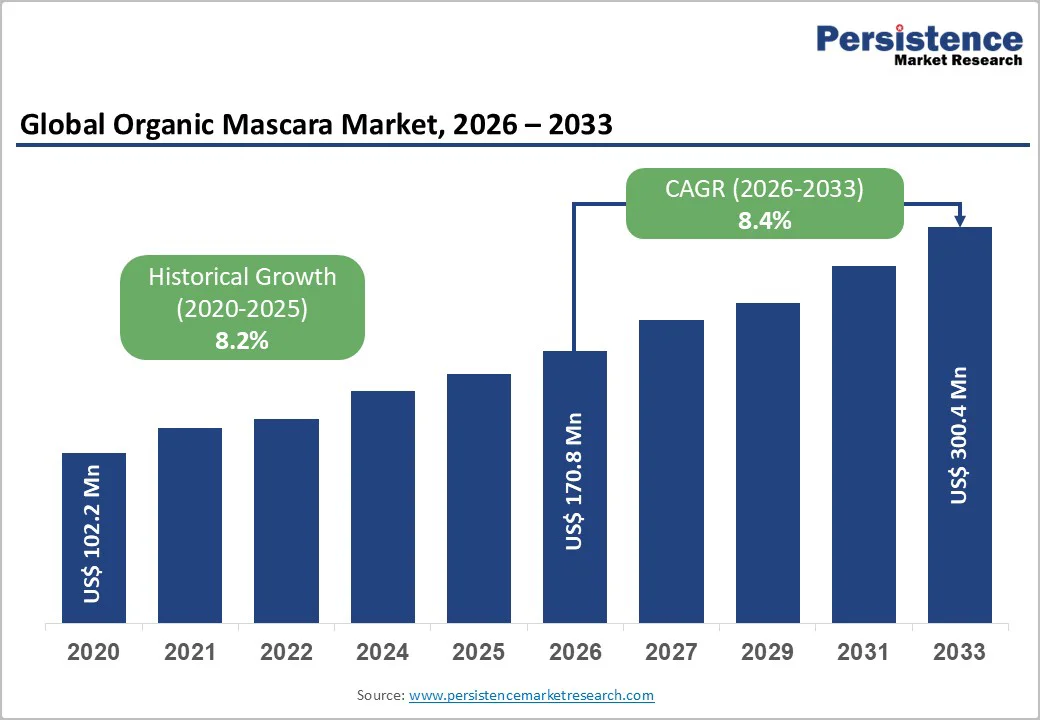
The global organic mascara market size is likely to be valued at US$170.8 million in 2026. It is expected to reach US$300.4 million by 2033, growing at a CAGR of 8.4% during the forecast period from 2026 to 2033, driven by rising consumer preference for clean beauty, demand for plant-based cosmetics, and increased awareness of the potential risks associated with synthetic chemicals, preservatives, and irritants commonly found in conventional eye makeup. Consumers are increasingly shifting toward organic, vegan, cruelty-free, and hypoallergenic formulations, especially those suitable for sensitive eyes and contact lens users.
Key Industry Highlights:
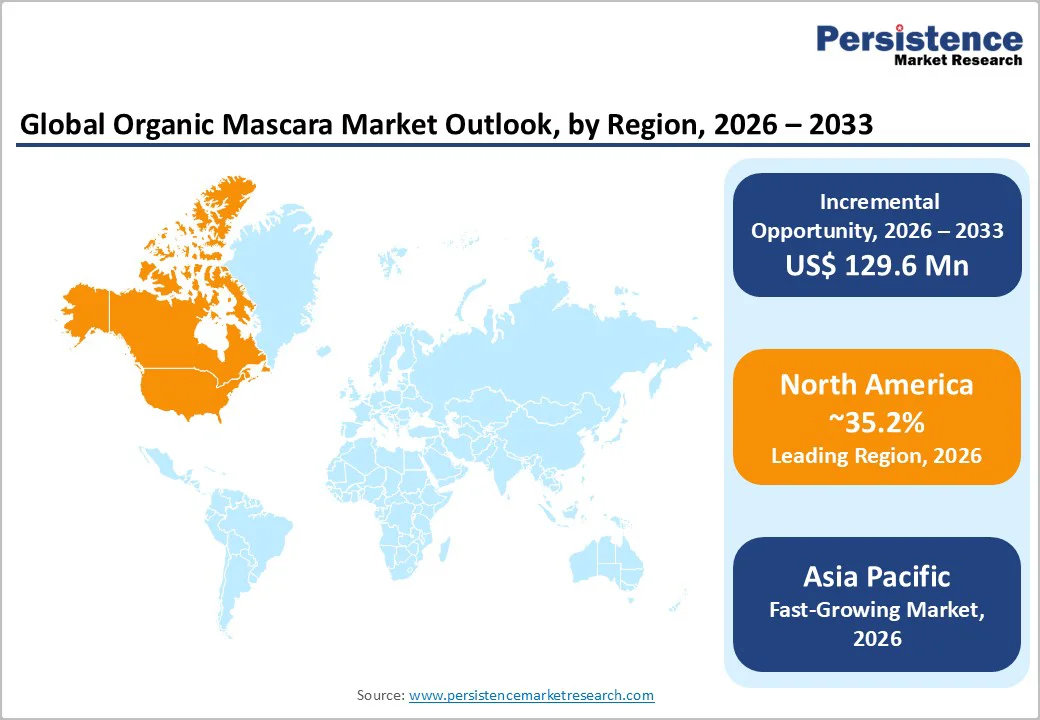
- Leading Region: North America is anticipated to be the leading region, accounting for a market share of 35.2% in 2026, driven by high clean-beauty adoption in the U.S.
- Fastest-growing Region: Asia Pacific is likely to be the fastest-growing region, supported by rising middle-class expansion, growing clean-beauty adoption, and strong regional manufacturing capabilities.
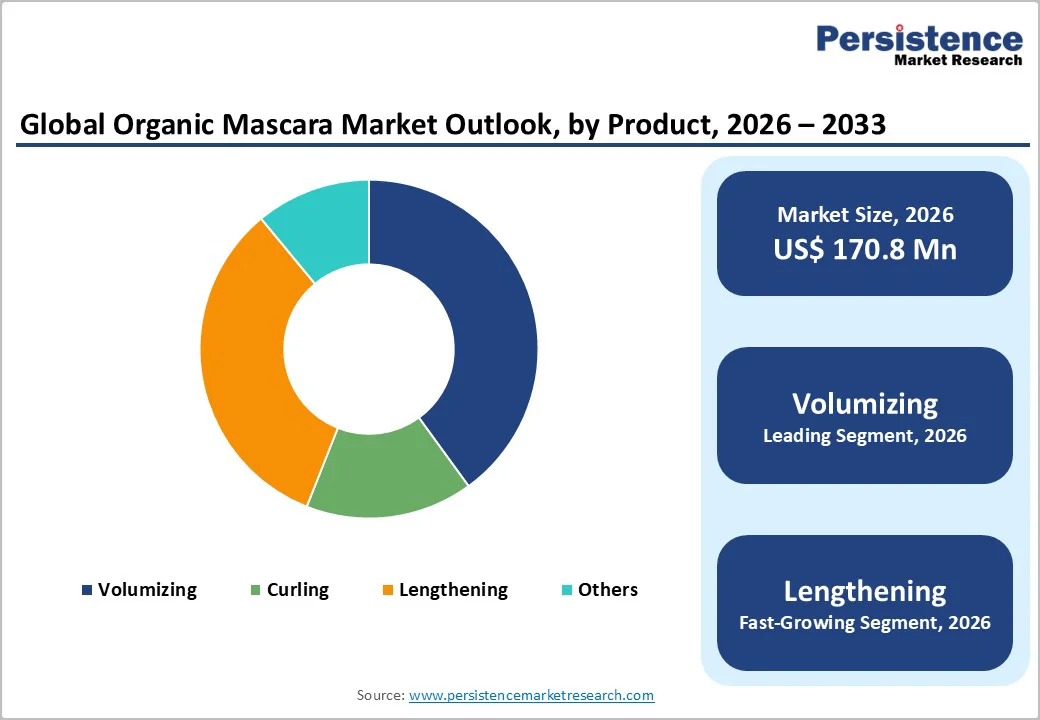
- Leading Application: Volumizing is projected to be the leading product type in 2026, accounting for 33% of the market, driven by demand for fuller lashes and natural wax-based formulations.
- Liquid is anticipated to be the leading product type, accounting for over 72.6% of revenue share in 2026, supported by the ease of
- application, versatility, and clean vegan oil bases.
- Leading Nature: Regular mascara is likely to be the leading segment in nature, contributing 60% of total revenue, driven by its daily-use suitability and easy removal.
- Leading Distribution Channel: Offline is the leading segment, contributing 65% of the total revenue, supported by in-store testing and strong specialty beauty retail penetration.
| Key Insights | Details |
|---|---|
|
Organic Mascara Market Size (2026E) |
US$170.8 Mn |
|
Market Value Forecast (2033F) |
US$300.4 Mn |
|
Projected Growth (CAGR 2026 to 2033) |
8.4% |
|
Historical Market Growth (CAGR 2020 to 2025) |
8.2% |
Market Factors - Growth, Barriers, and Opportunity Analysis
Rising Demand for Clean and Organic Mascara
Rising clean beauty demand is driving market growth, supported by a global shift toward safer, non-toxic, and eco-friendly cosmetics. Consumers are increasingly aware of the potential harmful effects of synthetic chemicals such as parabens, phthalates, sulfates, and artificial dyes commonly found in traditional mascaras. As a result, they are actively seeking products formulated with natural ingredients, including plant waxes, botanical oils, mineral pigments, and antioxidant-rich extracts. This change is especially great among millennials and Gen Z, who prioritize ingredient transparency, cruelty-free claims, and sustainable production.
The surge in digital awareness, the rise of beauty influencers, and regulatory focus on safer cosmetic formulations also strengthen the growing clean beauty movement. Consumers are demanding products that deliver performance without compromising health or environmental safety. Organic mascaras address these expectations by offering gentler formulations suitable for even sensitive eyes, contact lens users, and individuals who prefer natural alternatives. The trend aligns with broader sustainability goals, as organic beauty brands often use recyclable packaging and ethical sourcing.
Higher Production Costs
Natural and certified organic ingredients are significantly more expensive than conventional synthetic alternatives. Organic plant-based waxes, cold-pressed botanical oils, mineral pigments, and ECOCERT- or USDA-approved raw materials require specialized farming, strict chemical-free processing, and extensive quality checks. These factors directly elevate ingredient procurement costs. Organic formulations demand careful preservation methods without synthetic stabilizers, making production more complex and costly. Ingredients such as candelilla, carnauba, and rice bran wax cost more due to chemical-free harvesting and labor-intensive processing.
Manufacturing and packaging expenses further amplify the overall cost structure. Many organic mascara brands prioritize sustainable packaging, such as biodegradable tubes, recycled plastics, or refillable systems, which adds a premium. For example, obtaining and maintaining certifications such as USDA Organic, COSMOS, ECOCERT, or Leaping Bunny involves recurring audits, compliance documentation, and licensing fees. Certification processes for organic, vegan, cruelty-free, and clean label standards involve recurring audits, documentation requirements, and licensing fees, contributing to higher operational expenses.
Vegan and Cruelty-Free Innovations
Consumers increasingly demand ethical and sustainable beauty products. Vegan mascaras, formulated without animal-derived ingredients such as beeswax or carmine, cater to a growing segment of conscious buyers seeking plant-based alternatives. Cruelty-free certification, verified via agencies' third-party as Leaping Bunny or PETA, enhances brand credibility and attracts ethically minded consumers. These innovations allow brands to differentiate in a competitive market by combining performance with ethical values. Popular trends include mascaras enriched with plant oils, botanical waxes, and natural pigments that offer volumizing, lengthening, or curling effects without animal testing.
Consumers increasingly seek ethical, transparent, and sustainable alternatives that align with the broader clean-beauty movement. Online retail and social media platforms amplify these trends by providing visibility for ethical claims and enabling direct engagement with conscious buyers. Vegan and cruelty-free formulations often appeal to sensitive eyes or contact lens users, broadening their market reach. Modern beauty buyers, particularly millennials and Gen Z, increasingly prefer products free of animal-derived ingredients such as beeswax, carmine, and lanolin.
Category-wise Analysis
Application Insights
Volumizing mascaras are expected to lead the market, accounting for approximately 33% of the total revenue in 2026, driven by strong consumer preference for fuller, more dramatic lashes. The use of natural waxes such as carnauba, candelilla, and rice bran wax allows volumizing mascaras to build thickness without clumping, meeting the demand for natural yet impactful beauty effects. Consumers are willing to pay a premium for volumizing organic mascaras that combine ethical formulations with high performance. An example is ILIA Beauty’s Limitless Lash Mascara, which uses plant-based waxes to volumize lashes while maintaining a vegan, cruelty-free profile.
Lengthening mascaras are likely to be among the fastest-growing product types in 2026, driven by demand for subtle lash enhancements that complement everyday looks. Formulated with plant-based fibers such as konjac root or cellulose, these mascaras enhance lash appearance without harsh chemicals or synthetic polymers, making them appealing to sensitive eyes and contact lens users.
Lengthening mascaras also resonate with the clean beauty movement, as consumers seek products that deliver results while aligning with ethical and eco-conscious values. For example, RMS Beauty’s volumizing & lengthening mascara combines natural waxes and fibers to lengthen lashes effectively while remaining vegan and cruelty-free.
Product Type Insights
Liquid mascaras are projected to lead the market, capturing around 72.6% of the total revenue share in 2026, driven by their versatility, ease of application, and ability to deliver both volume and length without clumping. Organic liquid mascaras typically use vegan oil bases such as jojoba and castor oil to coat lashes evenly while nourishing them, appealing to consumers who value both aesthetics and lash health. Liquid mascaras are also favored in professional makeup settings and among influencers for their adaptability to layering and creating dramatic looks. A key example is Au Naturale organic liquid mascara, which uses natural pigments and oil-based formulations to provide long-lasting wear without compromising ethical standards.
Gel mascaras are likely to be the fastest-growing product type in 2026, as they offer buildable, natural-looking finishes suited for daily wear and sensitive eyes. Gel formulations often include plant-based thickeners and oils, which provide flexibility, conditioning benefits, and gentle application. Consumers seeking non-clumping, lightweight mascaras are driving demand for this segment, especially in clean beauty and vegan markets. For example, Endlessly Beautiful gel mascara uses natural plant waxes and oils to provide a soft, volumizing effect while remaining vegan and cruelty-free.
Nature Insights
Regular organic mascaras are projected to lead the market in 2026, capturing around 60% of the total revenue share, as they are preferred for daily use due to their ease of removal, cost-effectiveness, and gentle formulations. They are designed to meet the needs of consumers who require everyday lash enhancement without harsh chemicals, making them suitable for sensitive eyes. Regular mascaras often include plant-derived oils and waxes, ensuring smooth application while nourishing lashes. An example is Ecco Bella Natural Mascara, which delivers consistent lash definition with botanical ingredients and natural pigments, and is vegan and cruelty-free.
Waterproof organic mascara is likely to be the fastest-growing natural category in 2026, driven by lifestyle needs in humid regions and by consumers seeking long-lasting wear without synthetic chemicals. These mascaras use natural polymers and wax blends to resist smudging while remaining safe for sensitive eyes. For example, RMS Beauty Waterproof Mascara uses plant-based waxes and mineral pigments to provide durable, water-resistant coverage suitable for all-day wear. Rising demand in regions such as Asia Pacific and increased awareness of clean, long-lasting makeup solutions are driving this segment’s rapid expansion, as consumers increasingly prefer performance-oriented, eco-conscious products.
Distribution Channel Insights
Offline retail is projected to lead the market in 2026, capturing around 65% of total revenue, driven by consumers’ preference for in-store testing, personalized advice, and immediate product availability. Specialty beauty stores, department stores, and salons allow buyers to examine mascara textures, shades, and effects, which is especially important for natural formulations that may differ from conventional options. An example is Sephora’s clean beauty section, where brands such as ILIA and RMS Beauty showcase organic mascaras for direct consumer engagement. The dominance of offline retail reflects trust, hands-on experience, and an established retail infrastructure that supports product discovery.
Online is likely to be the fastest-growing distribution channel category in 2026, driven by convenience, wider brand accessibility, and consumer preference for researching ingredients and ethical claims before purchase. E-commerce platforms allow organic brands to reach global audiences and highlight vegan, cruelty-free, and sustainable features. For instance, Amazon’s “Natural & Organic Beauty” section and brand websites such as Endlessly Beautiful enable direct-to-consumer sales with detailed ingredient transparency. Social media marketing and influencer endorsements further accelerate adoption, making online retail a critical growth driver for organic mascaras.
Regional Insights
North America Organic Mascara Market Trends
The North America region is anticipated to be the leading region in the market with a 35.2% share in 2026, driven by rising consumer preference for clean, natural, and non-toxic cosmetics. Buyers are increasingly seeking mascaras free from parabens, sulfates, synthetic dyes, and other harsh chemicals, favoring formulations that are gentle on sensitive eyes and contact lens users. Brands that emphasize plant-based waxes, botanical oils, and mineral pigments are gaining strong traction, reflecting the demand for safe and ethical beauty solutions.
North America is the rise of e-commerce and online retail, enabling smaller organic brands to reach a broader audience with direct-to-consumer sales. Consumers increasingly research ingredients, certifications, and sustainability practices before purchase, boosting demand for mascaras with vegan, cruelty-free, and eco-friendly packaging. Brands such as Endlessly Beautiful and Au Naturale leverage digital platforms to showcase ingredient transparency and ethical production, attracting ethically conscious buyers. Sustainability trends, such as recyclable and refillable mascara tubes, combined with moral values and online influence, continue to drive growth in North America’s organic mascara market.
Europe Organic Mascara Market Trends
Europe is likely to be a significant market for organic mascara in 2026, as consumers increasingly favor cosmetics that emphasize natural ingredients, transparency, and sustainability. This trend strongly benefits organic mascaras. The region remains a top importer of vegetable and essential oils used in natural cosmetics, accounting for roughly 48% of global import volume and 42% of value for these ingredients. Many beauty product launches now carry ethical and environmental claims (e.g., vegan, cruelty-free, and clean-formulation), reflecting widespread consumer prioritization of health, ecological impact, and ingredient safety.
European regulatory frameworks enforce strict cosmetic-safety and labeling standards, which build trust in organic and natural products, a strong tailwind for mascara brands highlighting clean, compliant formulations. There is also a growing adoption of eco-friendly packaging, refillable containers, zero-waste formats, and ethical sourcing, aligning with broader green-beauty and sustainability trends across the industry. Digital retail and e-commerce channels are also playing a growing role: they help indie and niche organic beauty brands reach a broader, Pan-European audience, offering transparency about ingredients and ethical certifications, a factor that resonates with younger, socially conscious consumers.
Asia Pacific Organic Mascara Market Trends
The Asia-Pacific region is expected to be the fastest-growing, driven by consumer awareness of clean beauty and natural cosmetics. People increasingly prefer makeup and personal care products free from harmful chemicals, synthetic dyes, and irritants. This shift is powered by cultural acceptance of traditional natural ingredients (e.g., herbal, plant-based, botanical) in markets such as India, China, Japan, and Southeast Asia. Organic mascaras formulated with plant-derived waxes, oils, and pigments are finding growing demand due to their perceived health and environmental benefits.
Asia Pacific’s organic mascara market is growing rapidly, driven by the rapid expansion of e-commerce and digital beauty retail. Online platforms in major markets (e.g., China, India, and Southeast Asia) provide easier access to niche organic and cruelty-free beauty brands, and reach beyond metro areas, helping smaller and indie brands scale quickly. Social media, influencer marketing, and mobile-first consumer behavior amplify awareness about natural, organic mascara options, making these products fashionable and desirable among younger, image-savvy customers. The region sees rising demand for waterproof and long-wear makeup, as humid climates prioritize durability.
Competitive Landscape
The global organic mascara market exhibits a moderately fragmented structure, driven by a mix of established players, indie brands, and regional newcomers all targeting the growing demand for clean, natural, and sustainable cosmetics. In this landscape, some companies have built strong reputations for organic and ethical formulations.
For example, RMS Beauty is known for mascaras made with plant-derived oils and waxes, appealing to consumers seeking clean beauty solutions. With key leaders including Ecco Bella, ILIA Beauty, RMS Beauty, Au Naturale, Lotus Herbals Limited, JOSIE MARAN COSMETICS, Odylique, Endlessly Beautiful, Skin2Spirit, and EVXO Cosmetics competing.
These players compete through continuous product innovation, such as developing vegan, biodegradable, or waterproof organic mascaras, and by prioritizing ingredient transparency, clean-label certifications, and sustainable/eco-friendly packaging to meet rising consumer expectations. They also leverage diverse distribution strategies, including strong offline presence (specialty stores, clean-beauty boutiques) and expanding online/digital channels, which allows smaller indie brands to scale and reach global audiences.
Key Industry Developments:
- In March 2025, Ilia, a prominent clean beauty brand, launched its cult-favorite Limitless Lash Mascara in a new rich chocolate brown shade called "Before Dawn" in response to significant customer demand. This launch capitalizes on the growing brown mascara trend for a more natural look.
- In January 2025, Nude by Nature, a leading Australian clean beauty brand, launched its Lift & Curl Serum Mascara, designed to provide natural lash lift and curl without harsh chemicals. The brand supported the launch with a high-impact guerrilla marketing campaign to promote its new serum mascara, which focuses on providing lift and curl without harsh ingredients.
Companies Covered in Organic Mascara Market
- Ecco Bella
- Lotus Herbals Limited
- Odylique
- JOSIE MARAN COSMETICS
- Au Naturale, LLC
- RMS Beauty
- Endlessly Beautiful
- Skin2Spirit
- EVXO Cosmetics
Frequently Asked Questions
The global organic mascara market is projected to reach US$170.8 million in 2026.
Rising consumer demand for clean, natural, and cruelty-free beauty products drives the organic mascara market.
The organic mascara market is expected to grow at a CAGR of 8.4% from 2026 to 2033.
Vegan and cruelty-free formulations, sustainable and eco-friendly packaging, and product innovations such as waterproof and long-wear organic mascaras present the strongest growth opportunities.
The key players include Ecco Bella, Lotus Herbals Limited, Odylique, JOSIE MARAN COSMETICS, Au Naturale, LLC, RMS Beauty, and Endlessly Beautiful.


